

The Ecological Approach to Brazilian Jiu-Jitsu and Grappling — Part 2: Learning, Affordances, and Constraints
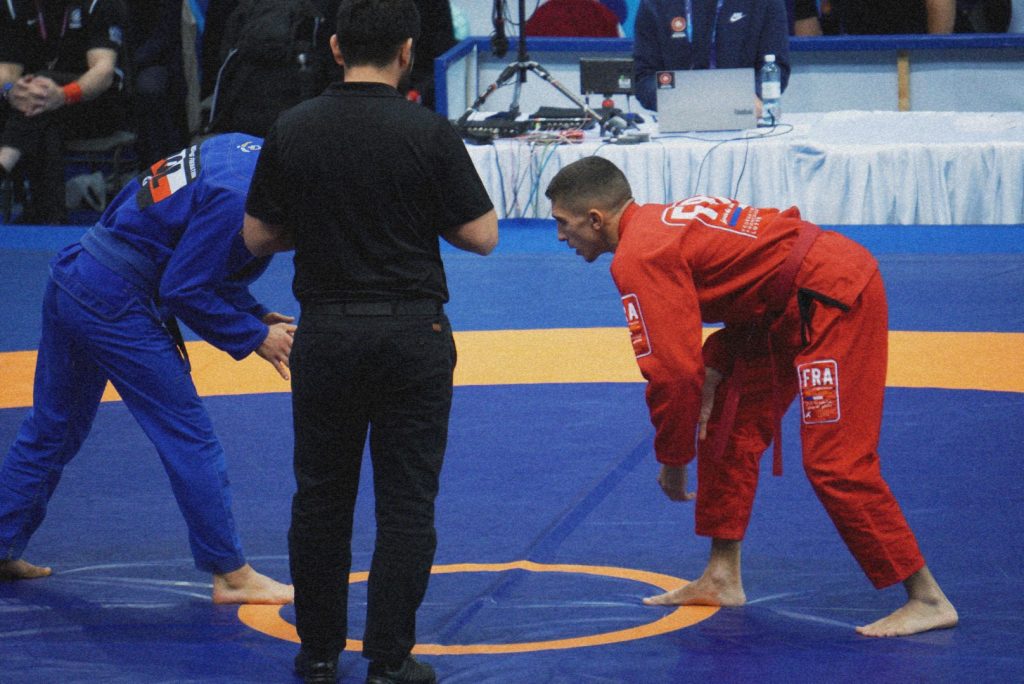
Affordances, Representative Learning Design, the Constraints-Led Approach, and constraint-based games applied to learning in grappling and Brazilian jiu-jitsu.
← Read Part 1: Foundations and Conceptual Framework
Abstract
This second part of our study of the ecological approach to grappling and Brazilian jiu-jitsu examines how practitioners gradually learn to act within the adversarial systems characteristic of these disciplines. Part 1 addressed the functional organization of combat, particularly through the Modern Grappling Conceptual Framework. The focus now shifts to the development of skill: how do practitioners learn to perceive meaningful changes in an interaction, adjust their actions accordingly, and sustain their intentions as the configuration of the exchange changes?
Learning, in this account, involves more than progressively building a repertoire of techniques. Techniques offer possible solutions to recurring functional problems, but knowing them does not fully explain skilled performance. Practitioners must also recognize when an opportunity for action becomes available, possess the coordination patterns needed to exploit it, adjust those patterns to the immediate conditions of the interaction, and reorganize them when they cease to serve their function. Learning thus changes what practitioners perceive, what they can do, and how perception and action are coupled during exchanges with an opponent.
The analysis draws on ecological psychology, dynamical systems theory, research on motor coordination, and their contemporary integration within ecological dynamics. Affordances, perception–action coupling, the perceptual-motor workspace, intrinsic dynamics, the education of attention, and calibration provide a conceptual basis for describing learning as a progressive change in the relationship between practitioners and their environment during combat. As experience broadens the range of responses available to practitioners, it also enables them to detect more relevant information, gain access to new coordination patterns, and adjust their actions more precisely to what the situation affords.
Affordances occupy a central place in this account. They are understood as possibilities for action that arise from the relationship between a situation’s properties and an actor’s capabilities. The existence of an affordance must be distinguished from its perception, its realization through action, and the success of the action itself. An opportunity may go unnoticed, or practitioners may perceive it before they have developed the coordination needed to exploit it. Even an available coordination pattern may be insufficiently calibrated to the particular conditions of an exchange. These distinctions help identify the changes through which expertise develops.
Perception–action coupling is central to the analysis because, in grappling and Brazilian jiu-jitsu, action continually changes what can be perceived. Changing a connection, shifting a point of support, applying pressure, altering an angle, or eliciting a reaction changes both the system’s mechanical relationships and the information available to each combatant. Action serves an exploratory as well as an instrumental function. This is particularly evident in the tactile and somatosensory interactions that characterize these disciplines, where contact enables practitioners to influence an opponent’s organization while also sensing how it changes.
This perspective also extends the Create → Capture → Convert model introduced in Part 1. Here, the model provides a functional architecture of adaptation rather than a prescribed technical sequence. Create refers to changes in the system that can generate or amplify particular possibilities. Capture denotes the temporary stabilization of a favorable relationship, while Convert concerns the use of the configuration that actually emerges from the interaction. The model offers a way to examine both the organization of performance and how practitioners learn to produce, recognize, stabilize, and exploit functional relationships during combat.
Dynamical systems theory helps explain why this development does not follow a perfectly linear course. Coordination patterns emerge, stabilize, are disrupted, and reorganize in response to the constraints encountered. Expertise involves a fundamental tension: patterns of coordination must become sufficiently stable to withstand variation in the interaction while remaining flexible enough to change when the situation demands it. Adaptive skill is expressed in the ability to preserve a function across different configurations, even as the form of action varies.
These principles have direct implications for practice design. Representative Learning Design calls for learning tasks to be assessed in terms of the information–action relationships they preserve, rather than their visual resemblance to combat alone. Within this framework, the Constraints-Led Approach offers a way to manipulate constraints associated with the practitioner, the task, or the environment to direct exploration toward specific functional problems. A task’s effectiveness can never be taken for granted. It constitutes a pedagogical hypothesis whose effects must be examined through the adaptations it produces.
Coaches remain actively involved in guiding exploration. They identify the problem practitioners face, determine which properties of the situation can be changed, observe the solutions that emerge, and revise the task when the resulting adaptations depart from the intended function. Demonstration, explanation, feedback, questioning, guided practice, modified sparring, and constraint manipulation can serve complementary purposes. Their usefulness is judged primarily by the change they enable in the practitioner, rather than by their association with a particular method.
The approach is applied to the five functional macro-systems of the Modern Grappling Conceptual Framework: engagement and entries, guard structures, passing systems, top controls, and submission systems, together with the transitions between them. These macro-systems are treated as functional environments for organizing learning problems, relevant information, coordination patterns, and relationships between opponents, rather than as closed categories of techniques. Constraint-based games and other modified learning tasks can then be designed around the functions practitioners are learning to achieve, allowing solutions to extend beyond the reproduction of a predetermined technique.
The analysis also considers how learning is organized across a curriculum. A pedagogy informed by ecological dynamics requires functional problems to recur and evolve over time, with enough continuity to support sustained exploration and enough variation in the conditions under which they must be solved. This requires more than a succession of constraint-based games. Progression may involve changes in uncertainty, time pressure, partner variability, the range of available possibilities, or the complexity of transitions. These changes are intended to help learning extend beyond the specific conditions in which it was first developed.
The argument remains deliberately critical. Compatibility with the principles of ecological dynamics guarantees neither a task’s effectiveness nor the superiority of the approach that informed it. A representative task may elicit unexpected adaptations, and a poorly adjusted constraint may stabilize a solution that depends artificially on the rules of the exercise. Demonstration or more closely guided practice may sometimes make a coordination pattern accessible when spontaneous discovery would be difficult. The aim is to develop a framework that clarifies what different forms of intervention actually change in practitioners’ activity, moving beyond a simple opposition between technical instruction and an ecological approach.
This second part thus connects a theory of how combat is organized with a theory of how practitioners learn to act within it. Developing expertise in grappling and Brazilian jiu-jitsu involves becoming increasingly sensitive to relevant information, expanding and differentiating one’s possibilities for action, calibrating coordination patterns more accurately, and reorganizing them as an opponent changes the problem to be solved. The growth of a technical repertoire is one part of this process. Teaching can therefore be understood as the design of conditions in which adaptive skill develops, becomes stable without becoming rigid, and remains effective as the forms of combat change.
About the Author

Founder and Head Coach of IMPACT in Aix-en-Provence, Florian Pourhadi has completed extensive academic and professional training in sport. Following university studies in sport and exercise science (STAPS), he earned the DEJEPS advanced sports coaching diploma across several specialisms. An educator and certification assessor in the sports sector, he is also a third-degree judo black belt and a Brazilian jiu-jitsu black belt under Zakaria Tarik Arhab of Z Team. His competitive record includes two UWW Grappling Gi world silver medals and a world bronze medal in No-Gi.
Discover Florian Pourhadi’s full background
Preface
This second part builds on the Modern Grappling Conceptual Framework. Part 1 sought to clarify the functional organization of grappling and Brazilian jiu-jitsu during exchanges between opponents. The aim was to identify the recurring problems that structure combat, describe the relationships through which an advantage can be created or stabilized, and provide a framework for understanding how an interaction changes over time. The focus now turns to how practitioners gradually acquire the ability to act within that organization.
This shift is essential because a theory of activity is not yet a theory of learning. Precisely describing the relationships that underlie effective performance does not explain how practitioners gradually become able to perceive and act on them. Explaining how an expert developed that capacity is a scientific problem in its own right: the problem of learning.
The Modern Grappling Conceptual Framework is therefore used here to ask a different set of questions. Its functional categories, macro-systems, and Create → Capture → Convert model provide a basis for investigating how skill develops, extending their role in describing the organization of combat. Moving from Part 1 to Part 2 therefore shifts the inquiry from modeling the activity to examining the conditions under which practitioners learn to perform it.
The inquiry draws primarily on ecological psychology, dynamical systems theory, research on motor coordination, and their contemporary integration within ecological dynamics. Together, these fields offer concepts well suited to studying learning in activities where conditions cannot be assumed to remain stable or fully predictable. In grappling and Brazilian jiu-jitsu, the environment is continually reshaped by an opponent who also perceives, anticipates, and adapts.
A distinction is needed, however, between the scientific foundations of these concepts and the status of their application here. They have their own theoretical histories and, in many cases, experimental support from the fields in which they were developed. Applying them systematically to grappling and Brazilian jiu-jitsu extends them to a new domain. Integrating them with the Modern Grappling Conceptual Framework constitutes, more specifically, a modeling proposal. Theoretical coherence alone does not establish the empirical validity of that proposal. Validation requires studies specifically designed around the populations, situations, and problems examined here.
The same care is needed when moving from theory to pedagogical intervention. A task may be consistent with principles of ecological dynamics without producing the intended learning. A constraint may change activity in an unexpected way, a rule may encourage a strategy closely tied to the exercise, and a solution that succeeds in modified conditions may cease to be effective once those modifications are removed. Each learning task should therefore be treated as a pedagogical hypothesis whose effects must be observed, assessed, and revised where necessary.
This position also avoids casting technical instruction and the ecological approach as opposing methods. Demonstration, explanation, questioning, guided practice, modified sparring, constraint manipulation, and more open exchanges may serve complementary purposes. Their relevance depends on the role each plays in learning and the changes it enables practitioners to make. A coherent pedagogy begins with a learning problem and selects the means most likely to help practitioners address it, rather than defining itself primarily through allegiance to a method.
The approach developed here remains ecological while recognizing the place of guidance within exploration and the coach’s role within processes of self-organization. It aims to avoid turning ecological principles into doctrine. The purpose is to provide a framework precise enough to examine what learning situations make possible, how they guide activity, and what they actually change. Such a framework can inform teaching across methods, without requiring one pedagogy to replace another.
The article proceeds from the theoretical foundations of learning to their implications for practice. It first examines the relationships between perception, action, and constraints, then considers how coordination patterns develop, stabilize, and reorganize. These foundations support the subsequent discussion of the representativeness of learning tasks, constraint manipulation, the design of games built around interaction with an opponent, and their organization within a curriculum.
The article seeks to connect two questions that must first be kept distinct: how are grappling and Brazilian jiu-jitsu organized as adversarial systems, and how do practitioners gradually develop the capacity to act within them? Its ambition is to clarify this relationship without proposing another “ecological method.” The pages that follow address the second question.
Theoretical Framework
The theoretical framework developed in Part 2 builds on the Modern Grappling Conceptual Framework while shifting the focus of the inquiry. Part 1 sought primarily to clarify the functional organization of grappling and Brazilian jiu-jitsu in exchanges between opponents. The question now concerns how learners gradually become able to perceive and act within that organization, then develop the capacity to adapt as configurations, force relationships, and the possibilities available to them change.
This shift requires a clear account of what learning means. Its scope extends beyond the accumulation of technical solutions or improvements in reproducing them. Through experience, relationships that were previously difficult to distinguish gradually become meaningful for action. Some coordination patterns become available, while others lose their relevance or are reorganized, and practitioners progressively refine how they regulate their activity in relation to what the situation affords and what they themselves can achieve. Newell (1986) and Pacheco, Lafe and Newell (2019) provide a basis for understanding learning as a progressive transformation of the relationships among perception, action, coordination, and constraints within a continually changing adversarial system.
This account depends on keeping distinct objects of analysis at their appropriate levels. A technique is not a coordination pattern, and the availability of a coordination pattern does not, by itself, constitute skill. Likewise, a precise description of expert performance does not explain how that expertise developed. Ecological dynamics offers a productive framework for examining perception, action, and constraints, while leaving other dimensions of human learning open to investigation. The history of technical forms, their transmission within communities of practice, learners’ embodied experience, and the activity that actually develops in a teaching situation raise questions of their own. The framework remains grounded primarily in ecological psychology, movement science, and ecological dynamics, drawing on other traditions where they illuminate dimensions these approaches do not directly seek to explain.
Technique, Transmission, and the Development of Skill
The distinction becomes particularly clear when we examine what a technique is. In his essay on “techniques of the body,” Marcel Mauss shows how ways of using the body are learned, circulated, stabilized, and transformed within social groups that give them recognizable forms (Mauss, 1936). These ways of acting cannot be understood solely as biomechanical responses produced independently by individuals. Applied cautiously to grappling and Brazilian jiu-jitsu, this perspective suggests that a technique has a history extending beyond any single performance. An arm drag, a knee cut, or a guard configuration can be named, demonstrated, and discussed because it belongs to a culture of practice in which particular solutions have become sufficiently established to be transmitted.
Recognizing this historical and social dimension still leaves an important distinction between technique and skill. A community can transmit a form of action without directly transmitting the ability to use it effectively amid the uncertainty of an exchange with an opponent. Practitioners may learn the general organization of a solution, understand its main mechanical relationships, and reproduce it under relatively stable conditions, yet remain unable to recognize when it becomes relevant against an opponent who resists, anticipates, or changes the configuration.
Tim Ingold’s work helps clarify what develops through this process. His concept of enskilment challenges the view that learning consists primarily of receiving representations that have already been formed and subsequently applying them in action. Skill develops through sustained engagement with a practice environment, as learners gradually come to notice what matters for action (Ingold, 2000). The concept of the education of attention makes this process more explicit by describing how particular relationships become increasingly discernible and meaningful to the learner (Ingold, 2001).
This perspective has direct implications for grappling and Brazilian jiu-jitsu. A demonstration may suggest a way forward, reveal a possible organization of action, or draw attention to a relationship that practitioners have not yet noticed for themselves. It supports learning while leaving practitioners to discover how that relationship acquires practical value through experience. What is transmitted gives them access to resources. Skill develops as they become able to draw on those resources in situations that never recur in exactly the same form.
Embodied Experience and the Practitioner’s Changing Relationship to the Situation
Phenomenology addresses another dimension of this transformation. For Merleau-Ponty, habit involves a change in the body’s relationship to its world, beyond the automated repetition of an already established behavior. Certain possibilities for action become part of how a person inhabits and acts within an environment (Merleau-Ponty, 1945). Contemporary research on bodily skill acquisition extends this insight through the concepts of body schema, embodied habit, and practical knowledge. These concepts help clarify what develops as action becomes less dependent on an explicit representation of each of its components (Purser, 2018).
In grappling and Brazilian jiu-jitsu, this account gives depth to a change familiar to experienced practitioners. A configuration that initially had to be understood through several separate reference points may gradually be experienced as a coherent whole in action. A change in tension, a shift in hip position, or the closing of a space no longer appears as an isolated cue to which a learned rule must be applied. Experience changes how the situation itself is encountered, as practitioners develop new ways of orienting themselves and acting within it.
Phenomenology provides a language for describing what it means, in embodied experience, to become capable of perceiving and acting differently. It is used here for that purpose, without replacing an ecological explanation of perception or merging the two approaches. Similarities in how the two traditions discuss embodiment or engagement with the world should not obscure their different theoretical purposes.
Ecological Psychology, Affordances, and the Education of Attention
James J. Gibson’s ecological psychology provides the principal foundation for analyzing the functional relationship between perception and action in Part 2. The environment is understood through the possibilities for action, or affordances, that it offers relative to an organism’s capabilities, rather than as a collection of physical properties to which the actor must subsequently assign meaning (Gibson, 1979). Research in sport has developed this account by emphasizing the relationship between affordances, the actor’s actual capabilities, and the information through which those affordances can be perceived during action (Fajen, Riley & Turvey, 2009).
A distance or bodily orientation has no universal functional meaning in itself. Whether an opening offers an opportunity depends on the person who might exploit it, because the possibilities available arise from the relationship between the current configuration and that practitioner’s capabilities for action. Two combatants in apparently comparable situations may therefore face different possibilities. Their coordination patterns, bodily characteristics, current states, and learning histories need not be the same.
Learning involves becoming more sensitive to information that makes these possibilities detectable, while refining how action is adjusted to what practitioners can actually achieve. The distinction between attunement and calibration is useful here. Attunement concerns the progressive refinement of sensitivity to task-relevant information. Calibration concerns the adjustment of action to the actor’s capabilities and the immediate properties of the situation. Pacheco, Lafe and Newell extend this account by describing skill acquisition as a search within a perceptual-motor workspace whose structure itself changes through experience (Pacheco, Lafe & Newell, 2019).
The education of attention can be understood more precisely in these terms. Asking practitioners to attend more closely to cues identified in advance by a coach captures only part of the process. What changes is their sensitivity to relationships that matter for action: differences that were previously imperceptible become discernible, while other information loses its significance. Ingold’s account shares some of these concerns with the Gibsonian tradition while retaining a distinct emphasis on the broader history of practice and cultural transmission within which attention is educated.
Coordination, Constraints, and the Dynamics of Learning
Bernstein’s work brings the organization of movement into focus. Skilled action requires the motor system to manage numerous degrees of freedom whose relationships change with the conditions under which action takes place. Mastery is expressed in the ability to preserve a function despite this variability, rather than in the mechanical reproduction of an ideal bodily configuration (Bernstein, 1967).
The familiar idea of “repetition without repetition” is particularly relevant here. A function can remain stable as the means of achieving it are reorganized, even when the outward form of movement changes. This account is well suited to grappling and Brazilian jiu-jitsu, where body types, resistance, angles, and the relative distribution of forces continually vary.
Newell’s model develops this analysis by treating coordination patterns as emerging from the interaction among individual constraints, task constraints, and environmental properties (Newell, 1986). These constraints shape which patterns become more accessible or stable and which lose their functional value. Their influence does not amount to automatically determining a single response.
The practitioner’s perceptual-motor workspace changes through experience. The coordination patterns available at the outset necessarily shape early attempts without setting a permanent limit on what can be achieved. New patterns emerge, some become stable, and others are gradually abandoned as practitioners discover solutions better suited to the problem. Pacheco, Lafe and Newell describe search, coordination, and control as dimensions that change together during skill acquisition, rather than as successive stages in a uniform progression (Pacheco, Lafe & Newell, 2019).
Variability consequently takes on a broader role than it is sometimes assigned in prescriptive accounts of movement. Alongside deviations from an ideal form that might need to be reduced, variation can provide a means of exploring different ways of organizing movement and discovering the conditions under which a function can be preserved. Its value depends on what it contributes to that process. The challenge is to explore while remaining engaged with the problem, then stabilize patterns that retain enough flexibility to adapt as constraints change.
Coadaptation and Ecological Dynamics
Ecological dynamics places these changes within the system of interaction in which they take shape. Action need not originate in an abstract decision made beforehand among internally represented alternatives. It may emerge as the coupling between actor and environment evolves and the possibilities available change in the course of activity (Araújo, Davids & Hristovski, 2006).
This proposition is particularly relevant to grappling and Brazilian jiu-jitsu because the opponent is an active part of the environment. Each practitioner acts on the situation while the other attempts to control it. A pull shifts the opponent’s points of support. The resistance it elicits immediately changes the distribution of forces and may create a new possibility, while an opportunity available only moments earlier may disappear or change.
The environment relevant to action therefore arises, to a considerable extent, from what the two combatants do together. Krabben, Orth and van der Kamp approach combat sports through the concept of interpersonal synergy. They propose that some behaviors emerge from the system formed by the participants, rather than from the simple combination of two independent actions (Krabben, Orth & van der Kamp, 2019).
This changes the learning problem. Being able to produce a coordination pattern in several contexts is only part of the requirement. Practitioners must also adjust it in relation to the effects it has on the opponent and the responses through which that opponent immediately changes the situation. Action both transforms the interaction and reveals properties of it.
Perception–action coupling must be understood through this reciprocal process. Each action changes the information available to guide the next. Altering a connection, shifting a point of support, or redirecting pressure changes both the mechanics of the exchange and what the combatants can perceive. This relationship is particularly evident in grappling sports, where contact itself supplies a substantial part of the relevant information, beyond what can be obtained by observing an opponent from a distance.
Touch, Proprioception, and the Neurophysiological Level
Gibson distinguished active touch from the passive reception of tactile stimulation, showing that perception through touch involves exploratory activity by the perceptual system (Gibson, 1962). Later research on haptics developed this relationship between exploration and perception, describing how information from the skin, muscles, tendons, and joints contributes jointly to the experience of contact and the control of action (Lederman & Klatzky, 2009). More recently, Klatzky has emphasized the reciprocity of this relationship: action organizes tactile experience, while haptic information in turn helps guide motor activity (Klatzky, 2025).
This research is particularly relevant to grappling and Brazilian jiu-jitsu. A physical connection establishes a mechanical relationship with the opponent while providing information about how that relationship is changing. By applying pressure, maintaining a grip, or making contact with a segment of the opponent’s body, practitioners influence the system’s organization while becoming sensitive to the resulting changes in tension, displacement, and orientation. Contact is both a means of acting and an integral part of perceiving the situation.
Sensorimotor neuroscience addresses some of the mechanisms involved in these changes. Research on motor learning shows that practice is accompanied by functional and structural reorganization of the nervous system, documenting the plasticity associated with skill acquisition and consolidation (Dayan & Cohen, 2011). Lederman and Klatzky (2009) and Klatzky (2025) also describe the extensive tactile and proprioceptive processing involved in haptic perception and its continuous integration with motor activity.
These findings address a different level of explanation from ecological dynamics and do not constitute its neurobiological validation. Identifying the neural changes that accompany learning does not, by itself, explain the functional organization of the coupling between practitioners and their environment. Equally, an account framed in terms of affordances or ecological dynamics still needs to consider the bodily mechanisms that make activity possible. The perspectives are complementary only insofar as their different explanatory scales remain distinct.
Situated Activity, Experience, and Learning
Similar questions arise when attention shifts from the combatant’s activity to the learning environment. A coach may design a task in detail, yet the activity that develops can differ from what was anticipated. Research in education and the analysis of activity has repeatedly shown that task prescriptions alone cannot account for what participants actually do. In physical education and sports coaching, Gal-Petitfaux and Saury developed an approach attentive to the situated nature of activity and to the meanings participants construct through their engagement (Gal-Petitfaux & Saury, 2002).
Research on coaches’ and teachers’ activity similarly shows how intervention changes with the context and the events that unfold within it (Saury & Gal-Petitfaux, 2003). Astier and colleagues emphasize a broader distinction between the relatively objective properties of the environment and the situation as it is constituted in the participant’s experience. Their use of arena and setting offers a useful way to examine this difference (Astier et al., 2003).
This distinction is essential when learning environments are designed through constraints. Changing a task property does not directly program the change that will follow. Coaches alter selected conditions, while practitioners encounter the environment with their histories, available coordination patterns, expectations, and the meanings the situation holds for them. Two people working under the same rules may therefore encounter different problems.
The status of a task depends on whose perspective is considered. For the coach, it is a structured set of learning conditions organized around a pedagogical intention. For the practitioner, it becomes a concrete situation whose meaning develops through activity. Learning takes shape in the relationship between the practitioner and this adapted environment, rather than residing in a rule or constraint considered in isolation.
From a Theory of Learning to Pedagogical Design
Several contemporary pedagogical approaches put these principles to work in practice, although they must remain distinct from theories that seek to explain learning itself. The Constraints-Led Approach aims to reshape the space for exploration and facilitate the emergence of adaptive coordination patterns by modifying selected constraints, without prescribing a single movement form in advance. Contemporary accounts place the design of the practice environment at the center of coaching, with particular attention to the relationship between the constraints introduced and the functional behaviors they are intended to encourage (Renshaw, Davids, Newcombe & Roberts, 2019).
Nonlinear pedagogy follows this orientation by treating the learner, task, and environment as components of a system whose development need not follow a uniform course. Learners may follow different trajectories, with qualitative reorganizations sometimes emerging after periods of relative stability (Chow, Davids, Button & Renshaw, 2022).
Representative Learning Design asks a different but equally important question: what needs to be preserved when a practice task simplifies the target activity? Representativeness cannot be judged by outward resemblance to combat or by whether the task reproduces every aspect of it. The task’s relevance depends on preserving the information–action relationships through which practitioners must regulate their activity (Pinder, Davids, Renshaw & Araújo, 2011).
Simplification can therefore preserve the substance of the learning problem. Temporarily narrowing the range of possibilities or focusing activity on a specific problem may make particular relationships easier to explore. Difficulties arise when a modification changes the situation’s informational structure so substantially that a learned solution loses its value as soon as the exercise’s specific rules are removed. Representativeness depends chiefly on the functional relationships preserved between perception and action, rather than on the number of features reproduced.
A learning task should, in this sense, be treated as a pedagogical hypothesis. It embodies the coach’s expectations about the changes certain conditions might facilitate, but those expectations must still be tested against what practitioners actually do. A constraint may guide activity in an unexpected direction, and a solution that appears robust within a game may depend heavily on its rules. Conversely, a carefully chosen modification may make a relationship perceptible when it remained inaccessible during sparring that allowed too wide a range of responses.
Practice design consequently involves a continual movement between intervention and observation. Coaches alter the environment, observe what emerges, and adjust the task in response. A task’s structure alone does not establish its pedagogical value. That value must be assessed through the changes it actually produces and what remains of those changes when practice conditions are altered.
Distinguishing Levels of Analysis
The coherence of this framework depends on preserving distinctions between levels of analysis. Ecological psychology offers an account of affordances, information, and the relationship between perception and action (Gibson, 1979). Dynamical approaches address the formation and reorganization of coordination patterns (Newell, 1986). Their integration within ecological dynamics makes it possible to study activity as the product of a system in which possibilities emerge through continually changing relationships between the actor and the environment (Araújo, Davids & Hristovski, 2006).
In anthropology, Mauss (1936) and Ingold (2000, 2001) examine how technical forms take shape and are transmitted within a culture of practice. The phenomenological work of Merleau-Ponty (1945) and Purser (2018) turns attention to embodied experience and to how habit changes the practitioner’s relationship to the situation. Situated approaches to activity investigate what actually develops in teaching situations, without assuming that their structure determines participants’ experience. This concern informs the work of Gal-Petitfaux and Saury (2002) and Astier and colleagues (2003).
Neuroscience addresses another level by documenting sensorimotor mechanisms and the neurophysiological changes associated with learning (Dayan & Cohen, 2011). Representative Learning Design (Pinder et al., 2011), the Constraints-Led Approach (Renshaw et al., 2019), and nonlinear pedagogy (Chow et al., 2022) focus more directly on the design and analysis of practice environments. The coherence of this work rests on using each perspective where its level of analysis is relevant, while retaining its distinct assumptions. It does not depend on treating them as different vocabularies for a single theory.
Relationship to the Modern Grappling Conceptual Framework
The Modern Grappling Conceptual Framework operates at its own level of analysis. Its macro-systems and guiding principles form a proposed functional account of how grappling and Brazilian jiu-jitsu are organized. They map problems specific to the activity, creating a basis from which learning processes can be investigated. This proposal is not deduced from Gibson, Bernstein, or Newell and should not be presented as a necessary consequence of ecological theory.
Guard structures, passing systems, top controls, and submission systems can be treated as functional regions of activity in which particular perceptual-motor relationships become especially important. Each macro-system defines a set of problems that may be addressed through different forms of organization, depending on the practitioner’s characteristics and the changes introduced by the opponent. This allows the macro-systems to be understood in functional terms, beyond a catalog of techniques.
Culturally transmitted techniques retain their value within this account. They embody collective experience and give practitioners access to forms of organization they might not discover spontaneously. Knowing a technique, however, remains distinct from being skilled in its use. A technique becomes functional when practitioners recognize the conditions under which it can be used, adjust it to the current configuration, and abandon or transform it when changes in the interaction undermine its effectiveness.
The Create → Capture → Convert model serves a similar purpose. It provides a functional framework for understanding changes in the interaction. It is not a compulsory sequence of techniques or a mental program that combatants consciously execute step by step. Create refers to changes that may generate or amplify particular possibilities. Capture concerns the temporary stabilization of a relationship that has become favorable. Convert denotes the use of that organization when it makes functional progression possible.
The learning challenge extends beyond detecting opportunities that are already present. Practitioners must gradually learn to act on the configuration itself and thereby change the landscape of possibilities. Expertise is expressed in the ability to elicit a response, recognize what it makes possible, and exploit the resulting relationship before the opponent can reorganize it.
An Integrated Conception of Skill
These contributions suggest that learning in grappling and Brazilian jiu-jitsu can be understood as the progressive development of an adaptive capacity within an adversarial system. That capacity draws on a historically transmitted technical heritage, yet develops through experiences that change both what practitioners can perceive and what they can achieve. Its development cannot be equated with the acquisition of that heritage alone.
Skill is relational. It is expressed in how practitioners organize their activity in relation to the possibilities arising from their own resources, the environment, and the opponent’s activity. Neither the practitioner’s body nor the situation alone is sufficient to account for it. A practitioner may know a technique extremely well without yet being able to use it functionally, while the same function can be preserved through very different coordination patterns.
Becoming skilled involves learning to recognize the problem encountered, organize an appropriate response, and transform that response as the relationship changes. Increasingly faithful reproduction of predetermined responses captures only part of this development. Technical instruction remains a legitimate resource, while exploration cannot be treated as an absolute principle. The value of each intervention must be considered in relation to what it makes possible within a particular learning trajectory.
A demonstration may give practitioners access to a form of organization they have not yet been able to construct for themselves. An explanation may redirect attention toward a decisive relationship. Later exchanges with an opponent may reveal that the organization remains too dependent on particular conditions. Coaching then involves continuing the inquiry, rather than treating the solution as definitively acquired.
The proposed framework brings together several levels of analysis while preserving their distinctions: the history and transmission of techniques, practitioners’ embodied experience, perception–action relationships, coordination dynamics, the sensorimotor mechanisms involved in coordinating action, and the activity that develops within teaching situations. Each provides a partial account of the phenomenon. Bringing them together is productive when the object of explanation, scale of analysis, and underlying assumptions are made explicit.
This framework extends the Modern Grappling Conceptual Framework while shifting the question pursued in Part 1. It examines how practitioners’ relationship to the adversarial systems of grappling and Brazilian jiu-jitsu changes through experience, building on the earlier account of how those systems are organized. Becoming more skilled requires learning to perceive the relationships that temporarily structure an exchange, act on them to create new possibilities, and reorganize activity when the opponent changes the conditions of the problem.
References for the Theoretical Framework
Araújo, D., Davids, K., & Hristovski, R. (2006). The ecological dynamics of decision making in sport. Psychology of Sport and Exercise, 7(6), 653–676. https://doi.org/10.1016/j.psychsport.2006.07.002
Astier, P., Gal-Petitfaux, N., Leblanc, S., Sève, C., Saury, J., & Zeitler, A. (2003). Les approches situées de l’action : quelques outils. Recherche & Formation, 42, 119–125. https://doi.org/10.3406/refor.2003.1833
Bernstein, N. A. (1967). The Co-ordination and Regulation of Movements. Pergamon Press.
Chow, J. Y., Davids, K., Button, C., & Renshaw, I. (2022). Nonlinear Pedagogy in Skill Acquisition: An Introduction (2nd ed.). Routledge.
Dayan, E., & Cohen, L. G. (2011). Neuroplasticity subserving motor skill learning. Neuron, 72(3), 443–454. https://doi.org/10.1016/j.neuron.2011.10.008
Fajen, B. R., Riley, M. A., & Turvey, M. T. (2009). Information, affordances, and the control of action in sport. International Journal of Sport Psychology, 40(1), 79–107.
Gal-Petitfaux, N., & Saury, J. (2002). Analyse de l’agir professionnel en éducation physique et en sport dans une perspective d’anthropologie cognitive. Revue française de pédagogie, 138, 51–61. https://doi.org/10.3406/rfp.2002.2863
Gibson, J. J. (1962). Observations on active touch. Psychological Review, 69(6), 477–491. https://doi.org/10.1037/h0046962
Gibson, J. J. (1979). The Ecological Approach to Visual Perception. Houghton Mifflin.
Ingold, T. (2000). The Perception of the Environment: Essays on Livelihood, Dwelling and Skill. Routledge.
Ingold, T. (2001). From the transmission of representations to the education of attention. In H. Whitehouse (Ed.), The Debated Mind: Evolutionary Psychology versus Ethnography (pp. 113–153). Berg.
Klatzky, R. L. (2025). Haptic perception and its relation to action. Annual Review of Psychology, 76, 227–250. https://doi.org/10.1146/annurev-psych-011624-101129
Krabben, K., Orth, D., & van der Kamp, J. (2019). Combat as an interpersonal synergy: An ecological dynamics approach to combat sports. Sports Medicine, 49(12), 1825–1836. https://doi.org/10.1007/s40279-019-01173-y
Lederman, S. J., & Klatzky, R. L. (2009). Haptic perception: A tutorial. Attention, Perception, & Psychophysics, 71(7), 1439–1459. https://doi.org/10.3758/APP.71.7.1439
Mauss, M. (1935). Les techniques du corps. Journal de psychologie normale et pathologique, 32(3–4), 271–293.
Merleau-Ponty, M. (1945). Phénoménologie de la perception. Gallimard.
Newell, K. M. (1986). Constraints on the development of coordination. In M. G. Wade & H. T. A. Whiting (Eds.), Motor Development in Children: Aspects of Coordination and Control (pp. 341–360). Martinus Nijhoff. https://doi.org/10.1007/978-94-009-4460-2_19
Pacheco, M. M., Lafe, C. W., & Newell, K. M. (2019). Search strategies in the perceptual-motor workspace and the acquisition of coordination, control, and skill. Frontiers in Psychology, 10, Article 1874. https://doi.org/10.3389/fpsyg.2019.01874
Pinder, R. A., Davids, K., Renshaw, I., & Araújo, D. (2011). Representative learning design and functionality of research and practice in sport. Journal of Sport & Exercise Psychology, 33(1), 146–155. https://doi.org/10.1123/jsep.33.1.146
Purser, A. (2018). ‘Getting it into the body’: Understanding skill acquisition through Merleau-Ponty and the embodied practice of dance. Qualitative Research in Sport, Exercise and Health, 10(3), 318–332. https://doi.org/10.1080/2159676X.2017.1377756
Renshaw, I., Davids, K., Newcombe, D., & Roberts, W. (2019). The Constraints-Led Approach: Principles for Sports Coaching and Practice Design. Routledge.
Saury, J., & Gal-Petitfaux, N. (2003). L’organisation temporelle et spatiale de l’activité : le cas des entraîneurs sportifs et des enseignants d’éducation physique. Recherche & Formation, 42, 21–33. https://doi.org/10.3406/refor.2003.1824
Table of Contents
- Abstract
- About the Author
- Preface
- Theoretical Framework
- PART 1 — Introduction
- Part 2 — Foundations of Ecological Learning in Grappling and Brazilian Jiu-Jitsu
- Part 3 — Affordances, Information, and Perception–Action Coupling
- Part 4 — The Dynamics of Motor Learning in Grappling and Brazilian Jiu-Jitsu
- Part 5 — Designing Representative Learning Situations
- Part 6 — The Constraints-Led Approach: Designing, Observing, and Revising Learning Situations
- Part 7 — Learning Through the Five Functional Macro-Systems of Grappling and Brazilian Jiu-Jitsu
- Part 8 — Designing Learning Situations in Grappling and Brazilian Jiu-Jitsu: A Practical Methodology
- Part 9 — The Scope, Limits, and Conditions of Validity of Ecological Pedagogy in Grappling and Brazilian Jiu-Jitsu
- Part 10 — From Constraint-Based Games to the Curriculum: Organizing Learning Over Time
- Part 11 — Integrative Synthesis: From a Model of Combat to a Theory of Its Learning
- Part 12 — General Conclusion: From the Functional Organization of Combat to Learning Interaction
- FAQ — The Ecological Approach to Grappling and Brazilian Jiu-Jitsu
PART 1 — Introduction
Part 1 of this study of the ecological approach to grappling and Brazilian jiu-jitsu approached these disciplines as dynamic adversarial systems whose organization is continually reshaped by the combatants’ actions. The Modern Grappling Conceptual Framework provided a way to clarify the functional problems that arise within this interaction and to describe the relationships through which an advantage can be created, stabilized, and converted.
This account invites a reconsideration of the place traditionally given to techniques. Their effectiveness cannot be understood as an intrinsic property of an isolated movement form. Techniques are also historically developed forms of action, recognized and transmitted within communities of practice, that embody possible responses to recurring problems in combat. With appropriate caution, they can therefore be related to Mauss’s “techniques of the body”: learned, socially constituted ways of acting whose significance extends beyond biomechanics alone (Mauss, 1936).
A technique’s social and historical foundations do not, by themselves, define skill. A technique can be described, demonstrated, and reproduced. Skill is expressed in the ability to organize action in ways that preserve a function as conditions change. Coordination occupies an intermediate level: it is the momentary organization of movement components that makes action possible. Competence has a broader scope, involving the ability to draw on these skills within classes of complex, relatively open situations.
These distinctions are essential to understanding learning. Teaching a technique does not directly confer the skill needed to use it. Practitioners may know a pass, entry, or submission in detail yet be unable to recognize when it becomes relevant against an active opponent. Conversely, a function may be preserved through substantially different bodily organizations when the situation demands it. The distinction between a technique available within a culture of practice and a skill that can actually be used in combat thus brings the learning problem into focus.
The problem takes a particular form in grappling and Brazilian jiu-jitsu because the environment includes an opponent who also perceives the situation and changes the conditions to which practitioners must respond. A pull alters the opponent’s points of support. The ensuing reaction almost immediately redistributes the forces, and the resulting configuration may open a possibility that did not exist moments earlier. The opponent’s role therefore goes beyond introducing an external disturbance to a preexisting technique. The opponent participates directly in shaping the problem that action must solve, a view informed by Araújo, Davids and Hristovski (2006) and Krabben, Orth and van der Kamp (2019).
In such an environment, experience must change both what practitioners can perceive and what they can organize when an opportunity appears. Coordination patterns develop within this relationship and must remain flexible enough to retain their function as the interaction changes. Learning therefore involves more than expanding a repertoire of responses. Ecological psychology (Gibson, 1979), dynamical approaches (Newell, 1986), and research on motor coordination (Pacheco, Lafe & Newell, 2019) offer a basis for understanding the changing relationship among what practitioners perceive, what they can achieve, and the constraints to which their actions must continually adapt.
From an ecological perspective, an affordance is a possibility for action that exists in relation to an actor’s capabilities, rather than a property of the environment considered independently of that actor (Gibson, 1979). Research on action in sport extends this view by examining the relationships among information, individual capabilities, and the control of action (Fajen, Riley & Turvey, 2009). The same distance or opening may therefore have different functional meanings for different practitioners. It can be exploited when the situation’s current properties match what the person perceiving it can actually do.
Experience changes this relationship. Information that previously did little to guide activity becomes increasingly useful for distinguishing relevant possibilities, while practitioners refine their sensitivity to the configurations that matter for action. The objective nature of the situation remains the same, while its functional organization differs for practitioners whose perceptual and action capabilities have developed. The change lies in the practical significance these relationships now have for the practitioner, without implying the mental construction of a different world.
Phenomenology addresses another aspect of this transformation. For Merleau-Ponty, habit is more than the automation of repeated responses: it changes the body’s relationship to its environment as ways of orienting within it become embodied (Merleau-Ponty, 1945). Contemporary research on bodily skill acquisition develops this insight by showing how practical knowledge can emerge without depending continuously on an explicit representation of action (Purser, 2018). Here, phenomenology describes how skill development transforms the embodied experience of a situation, a question distinct from that of explaining affordances.
In combat, this change may be experienced as increasing familiarity with configurations that once required conscious analysis. What initially appeared as a series of separate cues may become a coherent whole that is immediately meaningful for action. This description of embodied experience remains distinct from an ecological account of the information specifying possibilities for action. The two approaches address the same phenomenon at different levels, with different theoretical aims.
Tim Ingold’s concepts of enskilment and the education of attention introduce a further perspective on learning. In this account, learning develops through sustained engagement with a practice environment and cannot be reduced to the transfer of content from expert to novice. Over time, relationships that previously remained in the background become perceptible and meaningful (Ingold, 2000, 2001). This view shares concerns with the ecological tradition while placing them within a broader history of cultural transmission and participation in a shared world of practice.
A demonstration or explanation can guide activity, suggest possible solutions, or temporarily draw attention to an important relationship. Practitioners still need to learn for themselves what makes a solution relevant in a particular situation. A technique can be transmitted as a resource, while skill develops through activity.
Learning also changes the coordination patterns available to practitioners. Bernstein’s work emphasizes that effective action need not reproduce the same movement form on every occasion. What matters is the ability to preserve a function despite changes in the system (Bernstein, 1967). Newell extends this account by examining how coordination patterns emerge through interactions among individual constraints, task constraints, and environmental properties (Newell, 1986). Learning can thus be understood as a progressive transformation of the perceptual-motor workspace, where particular patterns become available, gain relative stability, and can be reorganized as situational demands change (Pacheco, Lafe & Newell, 2019).
Expertise cannot be understood simply as the elimination of variability. The same function can be maintained through different bodily organizations, and one dimension of adaptability is the ability to change the means of acting while preserving what needs to be achieved. Skill develops through the interplay between stabilizing coordination patterns robust enough to support action and retaining the capacity to reorganize them when they no longer address the problem.
In grappling sports, much of the information relevant to action is generated and picked up through physical contact. Gibson’s account of active touch showed that tactile perception involves more than the passive reception of stimulation (Gibson, 1962). Research on haptics has since clarified how cutaneous and proprioceptive information jointly contribute to the control of action, as described by Lederman and Klatzky (2009) and Klatzky (2025). A physical connection in grappling and Brazilian jiu-jitsu therefore provides both a means of acting on the opponent and information about changes in the opponent’s organization.
Through pressure and grips, practitioners can produce mechanical effects while also sensing resistance, tracking changes in orientation, and detecting the consequences of their own actions. Contact thus has a distinctive perceptual as well as mechanical role. Perception and action continually shape one another within the exchange, rather than occurring in a simple sequence.
At a different level of analysis, the neuroscience of motor learning documents the functional and structural changes that accompany skill acquisition, showing that experience also modifies the sensorimotor systems supporting action (Dayan & Cohen, 2011). This work concerns the bodily mechanisms associated with learning, at a different level from the functional relationships between organism and environment. It neither provides neurobiological validation of ecological dynamics nor offers a competing explanation of those relationships.
Pedagogical intervention raises a further issue: practitioners may not encounter the difficulty a coach anticipated, even in a carefully designed task. Their histories, available coordination patterns, and the meaning the situation holds for them shape what they actually do. Situated approaches distinguish the task as designed from the activity that develops and the learner’s unfolding experience, as discussed by Gal-Petitfaux and Saury (2002) and Astier and colleagues (2003).
On this account, manipulating constraints cannot be equated with directly programming behavior. A modified task may make particular relationships accessible, temporarily simplify a problem, or guide exploration toward a specific region of activity. These changes do not guarantee that practitioners will encounter the difficulty the coach envisaged or that a coordination pattern will emerge in the expected form. A task must be judged by the activity it actually elicits and by the extent to which the adaptations developed within it remain functional as its specific conditions change.
A simple opposition between technical instruction and the ecological approach is inadequate for this kind of analysis. Depending on the problem and the circumstances, a demonstration may give practitioners access to a previously unavailable way of organizing action, while an instruction can draw attention to a neglected relationship. Modified sparring may then test that organization, revealing how well it retains its function as the opponent is given greater freedom. The central task is to identify the intended change, understand what currently limits it, and design conditions that may help it develop, without assuming that one method is intrinsically superior.
Part 2 begins by examining what is learned and clarifying the distinctions among technique, coordination, skill, and competence. It then turns to affordances, information, and perception–action coupling, followed by the dynamics through which coordination patterns develop and reorganize. These foundations support a closer examination of the representativeness of learning tasks, the manipulation of constraints, and the progressive organization of problems across a curriculum.
The broader aim is to connect a theory of how combat is organized with a theory of how practitioners change through learning. Part 1 examined the relationships that temporarily structure exchanges between opponents. Part 2 asks how practitioners gradually learn to perceive those relationships, exploit them, and transform them.
The inquiry therefore extends from the organization of grappling and Brazilian jiu-jitsu to how experience gradually changes practitioners’ relationship to these systems. Learning involves becoming able to recognize possibilities, act on the relationships through which they emerge, and reorganize activity when the interaction changes the nature of the problem.
Part 2 — Foundations of Ecological Learning in Grappling and Brazilian Jiu-Jitsu
Having examined the functional organization of grappling and Brazilian jiu-jitsu in Part 1, we now turn to how practitioners learn to act within it. Understanding the structure of an exchange leaves open the question of how practitioners become more effective, precise, and adaptable. This shift requires us to clarify what is learned. Learning involves more than acquiring a repertoire of techniques, memorizing them, and reproducing them when the situation appears to call for them.
A technique has a history, a form that can be transmitted, a vocabulary, and mechanical principles that can be explained. Since Mauss (1936), the human sciences have shown that ways of using the body are also social and cultural constructions acquired within traditions of practice. Yet being able to describe or reproduce a form does not ensure that it can be used effectively against an opponent who acts, resists, and continually changes the interaction. Learning entails a deeper transformation: practitioners become able to distinguish new possibilities for action, organize their bodies to exploit them, adjust their coordination as the exchange changes, and recognize when a previously effective organization must be modified or abandoned.
In the terms used by Pacheco et al. (2019), the practitioner’s perceptual-motor workspace is gradually reconfigured. Some possibilities become accessible, some information becomes more valuable, and some coordination patterns become robust enough to remain functional as conditions change. This transformation has a history. Practitioners bring established coordination patterns, perceptual habits, bodily characteristics, a technical culture, and previous experiences to every situation. These shape both what they notice and the solutions they are drawn toward. Learning can thus be related to Ingold’s account of enskilment, in which capabilities for action develop alongside ways of attending to the practice environment (Ingold, 2000, 2001).
Grappling and Brazilian jiu-jitsu add a crucial feature to this process: the environment in which skill develops includes an opponent who also perceives, acts, and adapts. Every attempt therefore changes the problem it seeks to address. Competence develops within a system of coadaptation in which each practitioner’s possibilities continually depend on the other’s activity, as discussed by Araújo et al. (2006) and Krabben et al. (2019).
This part first examines what is learned and the principal scientific frameworks through which its development can be understood. It then considers the perceptual-motor workspace, the processes through which intention, perception, and coordination become differentiated, and the implications of this account for teaching.
2.1. The Nature and Status of What Is Learned
2.1.1. From Acquiring a Technique to Developing Skill
Techniques can be named, described, demonstrated, and transmitted. This capacity for formalization is a fundamental teaching resource: it allows historically developed solutions to be shared, makes mechanical relationships visible, and offers practitioners an initial framework for approaching an unfamiliar problem. Mauss (1936) showed that techniques of the body are learned, historically established, and socially transmitted, rather than simply determined by anatomy. Grappling and Brazilian jiu-jitsu follow this pattern. Their communities develop systems of positions, grips, concepts, and ways of acting that together form a technical culture that can be passed on.
Recognizing this cultural dimension still leaves a distinction between knowing a technique and being skilled in its use. An arm drag, knee cut, leg attack, or guard recovery depends on relationships that no demonstration can fix once and for all. Distance, orientation, the distribution of support, directions of force, the quality of connections, and freedom of movement all change with the opponent’s activity. An action acquires its value within the configuration in which it occurs.
Practitioners may know every step of a guard pass yet fail to perceive when it becomes available against active defense. Conversely, substantially different movement patterns may serve an equivalent function if both disrupt the defensive structure, cross a line, or stabilize a favorable relationship. This account follows Bernstein’s work on dexterity: mastery involves solving a motor problem despite changing conditions, rather than reproducing exactly the same movement in every circumstance (Bernstein, 1967, 1996). What needs to remain stable is not necessarily the observable form of action, but the function it preserves.
This perspective leaves a place for demonstration, explanation, and practice under controlled conditions. A demonstration may reveal an unfamiliar organization of action, an instruction may temporarily draw attention to an important relationship, and a simplified task may make a new coordination pattern accessible. Explicit knowledge also remains indispensable for understanding rules, maintaining safety, sharing a technical vocabulary, and conceptualizing mechanical relationships. The difficulty arises when transmitting that knowledge is assumed to transmit skill itself.
Merleau-Ponty’s concept of embodiment offers a way to describe this distinction (Merleau-Ponty, 1945). An organization initially understood from the outside may gradually become directly available to the body. Purser (2018) describes a similar process in the acquisition of complex bodily skills: knowing what to do differs substantially from having embodied it sufficiently for action to become available. The neuroscience of motor learning provides a complementary account at another level. Practice produces lasting changes in the sensorimotor networks supporting acquired coordination patterns and their consolidation (Dayan & Cohen, 2011). These biological mechanisms alone do not determine the functional value of a pattern in a particular situation, which also depends on relationships with the task and the opponent.
What is learned therefore extends beyond the form of an action to the perceptual, mechanical, and decision-making conditions that make it functional. Technique remains a culturally transmitted and potentially invaluable resource. Skill consists in recognizing when that resource becomes relevant, organizing the body to exploit it, adjusting its use as conditions change, and relinquishing it when the relationships that gave it value no longer hold.
2.1.2. Grappling and Brazilian Jiu-Jitsu as Distinctive Learning Environments
Skill becomes more complex in sports involving direct opposition because practitioners face an opponent whose behavior changes in response to their own. A pull shifts the opponent’s points of support, the resulting resistance changes the available directions of force, and this reorganization may close the initial opportunity while creating another. Each action changes the very situation it is intended to address.
Krabben et al. (2019) examine this relationship through the concept of interpersonal synergy. The relevant functional unit includes the system temporarily formed by the combatants’ interaction, beyond either individual considered alone. A clinch, guard, or control position may remain recognizable for several seconds even as its supports, tensions, and orientations continually change. Guard and back control are thus relational configurations whose stability depends on how both bodies are organized, rather than simply positions one partner “possesses.”
Contact deepens this interdependence because it serves mechanical and perceptual functions simultaneously. A connection allows force to be applied while also providing information about the opponent’s orientation, tension, movement, and resistance. From Gibson’s work on active touch to subsequent research on haptic perception, touch is understood as closely linked to movement: acting on something also contributes to perceiving its properties. This relationship is explored by Gibson (1962) and Lederman and Klatzky (2009).
This feature connects grappling to forms of bodily learning studied in anthropology, where practitioners develop meaningful distinctions through practical engagement, including distinctions that propositional knowledge alone cannot convey. Learners work with and against other bodies whose responses help shape what they become able to perceive. The partner is part of the learning environment, with a role extending beyond providing resistance against which to test a technique.
There is an immediate teaching implication. Performing a sequence perfectly with a cooperative partner may support the initial acquisition of a coordination pattern without yet preparing the practitioner to regulate it against resistance. Predetermined responses keep some of the information normally needed for action constant, or remove it altogether. Representative Learning Design examines whether these information–action relationships are preserved in practice tasks (Pinder et al., 2011). As the learning problem shifts toward control and adaptability, partners need a meaningful capacity to change the conditions under which action occurs.
Learning therefore concerns both finding a solution and remaining effective within a system that changes precisely because one acts on it. Adaptability is part of skill in opposition, rather than an optional addition acquired after mastery.
2.1.3. The Changes That Constitute Learning
An account of learning that extends beyond acquiring a technical form must specify what actually changes in the practitioner. One change concerns access to possibilities for action. An unfamiliar or previously unimaginable organization may enter the range of possible solutions, without the practitioner yet recognizing when it becomes relevant.
A second change concerns perception. Practitioners become sensitive to particular information and learn to distinguish when an opportunity can be exploited. Ecological accounts describe aspects of this development through attunement and calibration, which are examined below. At the same time, a correctly identified opportunity may remain unusable if the practitioner lacks the bodily organization needed to exploit it. A new coordination pattern must then emerge, become accessible, and gain enough stability to remain available under less favorable conditions.
The development of control extends this process. Practitioners learn to vary a coordination pattern’s range, rhythm, direction, or timing as the exchange changes, beyond producing it in relatively fixed conditions. Skill emerges as perception, coordination, and control become sufficiently integrated to recognize and exploit an opportunity, preserve the relevant function under perturbation, and abandon or reorganize the response when the problem changes.
These changes need not follow a fixed sequence. They develop at different rates, overlap, and reorganize one another. A new coordination pattern may make previously inaccessible information perceptible, while finer perceptual discrimination may open the way to a new bodily organization. What practitioners become able to do changes what they can perceive, just as what they learn to perceive changes what they become able to do.
Development also unfolds over several timescales. Some adjustments occur within an attempt, others between trials, and some become apparent only after several sessions or a delay. The distinction between performance and learning is therefore essential. Closely guided practice may produce immediate success that disappears when its supporting conditions are removed. Conversely, unstable exploration may precede the emergence of a more robust pattern. Classic motor learning research distinguishes performance during acquisition from changes that persist and transfer, as discussed by Salmoni et al. (1984) and Soderstrom and Bjork (2015).
Learning must ultimately be examined through what remains when conditions change, including retention, transfer, the capacity to regulate action, and adaptability.
2.2. Positioning the Framework Within Motor Learning Research
2.2.1. Contributions and Limits of Information-Processing Models
Cognitive and information-processing models have profoundly shaped motor learning research. They have supported rigorous investigations of memory, attention, planning, feedback, and decision-making, and their diversity is poorly served by the caricature of a movement simply being recorded and replayed. Schmidt’s (1975) schema theory, for example, does not posit a separate program for every possible movement. It seeks to explain how regularities developed through experience allow new variants within a class of actions to be produced.
Computational neuroscience subsequently developed more sophisticated accounts built around internal models, sensorimotor prediction, and state estimation, as illustrated by Wolpert et al. (1995) and Shadmehr and Krakauer (2008). This work offers important explanations of particular mechanisms of motor control. Explicit knowledge also remains indispensable in teaching grappling and Brazilian jiu-jitsu: practitioners need to understand rules, remember safety procedures, develop a shared vocabulary, and reason about particular problems.
The disagreement with an ecological perspective concerns the causal and explanatory role assigned to representations in regulating action, rather than the existence of cognition. In a dynamic exchange, some information that makes action relevant becomes available only as the combatants begin acting on one another. Distance, support, tension, and orientation change throughout the sequence. An initially coherent organization may consequently lose its value before an anticipated plan has been completed.
Ecological psychology shifts the unit of analysis toward the relationship among organism, task, and environment. Its focus is on how information available within the interaction supports continuous regulation, rather than on a program specifying the details of action beforehand. This shift does not justify artificially merging theoretical frameworks. Internal models in computational neuroscience and Gibson’s account of direct perception rest on different theoretical commitments, even when they illuminate distinct levels of sensorimotor control.
The practical question therefore extends beyond choosing between “cognitive training” and “ecological training.” An explanation, demonstration, or concept may change practitioners’ intentions and guide their search without ensuring that they can regulate action as the situation changes. Knowing about a situation differs from knowing how to regulate one’s behavior within it. An important part of learning concerns this gap between knowledge of action and regulation in the unfolding situation.
2.2.2. The Complementary Contributions of Gibson, Bernstein, Newell, and Kelso
The contemporary ecological approach to motor learning developed at the intersection of several traditions, each addressing different dimensions of action. Their complementarity is valuable precisely because their concepts remain distinct. Treating them as a single theory would obscure that value.
James J. Gibson’s ecological psychology offers a relational account of perception. An affordance is a possibility for action that depends on properties of both the environment and the actor. A distance or opening becomes an opportunity relative to what the person acting can achieve (Gibson, 1979). Learning includes becoming more sensitive to the information through which these possibilities can be detected.
Nikolai Bernstein addresses a different problem: how the body’s many degrees of freedom are organized. Effective action requires components to work together so that some functions are preserved while other features remain free to vary, rather than each muscle or joint being controlled independently (Bernstein, 1967, 1996). “Repetition without repetition” captures this logic. Learning involves solving a problem anew under conditions that are never exactly the same, rather than reproducing an identical movement form on every occasion.
Karl Newell’s work focuses on the conditions that make coordination patterns accessible. The interaction among individual, task, and environmental constraints shapes which patterns are more or less likely at a given moment (Newell, 1986). A constraint changes the conditions under which patterns may emerge and stabilize. It does not operate as a command dictating the movement.
J. A. Scott Kelso’s work examines the temporal dynamics of these patterns: their stability, loss of stability, and transitions to other forms of coordination (Kelso, 1995). Gradual changes in conditions may produce qualitative changes in behavior. These concepts provide powerful tools for understanding coordination, provided their application to grappling remains appropriately cautious.
An affordance, a constraint, a coordination pattern, a collective variable, and an attractor describe different things. Calling a habit an “attractor” does not establish that an attractor has been formally identified. This distinction matters particularly in combat sports, where multiple contacts, numerous degrees of freedom, and continuous coadaptation make dynamical formalization especially difficult (Krabben et al., 2019).
These frameworks are productive because they illuminate different levels of the same problem. Gibson addresses possibilities for action and their perception, Bernstein the functional organization of movement, Newell the range of coordination patterns shaped by constraints, and Kelso their stability and transitions. Their value lies in distinguishing levels of analysis while preserving what each explains. A common vocabulary alone cannot provide that differentiation.
2.2.3. From Scientific Frameworks to Pedagogical Design
The pedagogical implications of these foundations have been developed through Representative Learning Design (Pinder et al., 2011), the Constraints-Led Approach (Renshaw et al., 2019), and nonlinear pedagogy (Chow et al., 2022). These frameworks are closely related but not interchangeable. The Constraints-Led Approach focuses chiefly on manipulating constraints to guide exploration. Nonlinear pedagogy provides a broader framework for organizing learning, while Representative Learning Design examines whether practice preserves the information–action relationships of the target activity.
A theory of how coordination emerges does not, by itself, provide a ready-made teaching method. Moving from theory to intervention requires a pedagogical hypothesis. When coaches change a task, they anticipate that particular information will become more relevant, certain coordination patterns more accessible, or some strategies less attractive. What practitioners actually do may contradict those expectations.
Educational research introduces a crucial distinction between the prescribed task and the practitioner’s actual activity, as discussed by Gal-Petitfaux and Saury (2002) and Astier et al. (2003). Two learners working under the same rule may encounter different problems, prioritize different information, and stabilize different solutions. Constraints guide activity without mechanically determining what will be learned.
Representative Learning Design adds a further requirement. A situation can be simplified while preserving the information–action relationships on which the target function depends (Pinder et al., 2011). Visually realistic practice may be poorly representative if the partner’s responses are predetermined. Conversely, a highly simplified task may retain considerable value if it preserves the information needed to regulate action in relation to the problem.
Pedagogical reasoning thus follows a sequence that remains open to revision: theoretical framework → applied hypothesis → task design → actual activity → observation → revision. This approach guards against treating ecological principles as doctrine. The presence of opposition, variability, or a scoring system does not automatically make a task worthwhile. Its value depends on the changes it actually brings about.
2.3. Learning as Search Within the Perceptual-Motor Workspace
2.3.1. Defining the Perceptual-Motor Workspace
The perceptual-motor workspace comprises the possibilities for perception and action that a person can currently explore in relation to a particular problem (Pacheco et al., 2019). It is distinct from the physical space occupied on the mat, and it is neither uniform nor stable. Some coordination patterns are immediately accessible because they extend familiar ways of organizing action. Others remain fragile, costly, or highly dependent on specific conditions. A possibility may even exist mechanically without yet being available to the practitioner in action.
Two learners performing the same task may therefore explore different workspaces. Their movement histories, bodily characteristics, established coordination patterns, and previous experiences shape what seems immediately accessible. An experienced judoka may detect opportunities to disrupt balance early while finding the organization of an open guard less familiar. Conversely, a practitioner with considerable mobility may readily access certain ranges of motion without yet having the control needed to use them effectively.
Ingold’s account of enskilment helps explain how this differentiation develops over time, as learning changes how people attend to their practice environment (Ingold, 2000, 2001). Merleau-Ponty describes its experiential dimension: the body encounters a practical field organized around available possibilities, rather than a neutral space (Merleau-Ponty, 1945). These accounts do not describe exactly the same phenomenon as Pacheco and colleagues’ perceptual-motor workspace. Considered together, however, they highlight a shared concern: situations are always encountered through the bodily history of the person acting within them.
Above all, the perceptual-motor workspace evolves. Practitioners explore through the possibilities already available to them, but that exploration changes the possibilities through which subsequent searches can unfold. Learning changes the landscape of possible solutions, rather than simply filling a space fixed in advance.
2.3.2. Intrinsic Dynamics as the Starting Point for Search
Intrinsic dynamics refers to the coordination tendencies already present when a practitioner encounters a new task, as discussed by Kelso (1995) and Pacheco et al. (2019). These tendencies depend on bodily history, established coordination patterns, and individual characteristics. Every new problem is approached through an organization that already has a history.
A spontaneous response need not indicate an absence of coordination. A beginner who straightens the arms when losing balance is using an available pattern, even if that pattern becomes functionally costly in grappling. Coaching therefore needs to do more than suppress the response. If no alternative is accessible, “do not straighten your arms” identifies what to avoid without solving the coordination problem. The challenge is to allow a competing pattern to emerge and become available enough to offer an alternative to the established response.
The history shaping these tendencies extends beyond biomechanics. Mauss showed that ways of using the body are socially learned. Working within a different theoretical tradition, Bourdieu (1980) used the concept of habitus to examine how durable dispositions guide action without requiring constant deliberation. Habitus and intrinsic dynamics must nevertheless remain distinct. The former belongs to a social theory of dispositions, while the latter describes tendencies in perceptual-motor organization. Relating them highlights how spontaneous coordination patterns may reflect a history extending beyond the present configuration.
Previous experience can therefore both help and hinder learning. Wrestling or judo may make some patterns immediately accessible while encouraging responses poorly suited to a new problem. Learning often involves expanding the range of solutions and refining the conditions under which each remains useful, without erasing earlier coordination patterns. A pattern becomes problematic when it continues to be used after the relationships that made it effective have disappeared.
The term attractor requires particular care. In dynamical systems, it has a formal meaning distinct from a habit or technical preference. In an activity as complex as grappling, “recurring tendencies” or “established coordination patterns” are generally more rigorous descriptions when the variables needed to identify an attractor formally have not been established.
2.3.3. Search as a Directed Process
Understanding learning as search does not imply random trial and error. Exploration is directed by goals, task constraints, intrinsic dynamics, and the information produced through action. Practitioners explore selected possibilities because they appear compatible with their aims or extend patterns already available to them. They never search the full range of theoretically possible solutions.
Intention can organize activity without taking the form of a conscious plan. It may concern preserving a connection, preventing rotation, crossing a structure, or creating an asymmetry. Action itself contributes to the search: pressure elicits resistance, a pull changes support, and a change of angle reveals a configuration’s stability. Every attempt has instrumental and exploratory dimensions. Practitioners act on available information while also helping produce the information that will guide the rest of the exchange.
Search unfolds over several timescales, with changes occurring within an attempt, between trials, or across sessions. The first appearance of a solution is therefore only part of its discovery. Practitioners must find it again, differentiate it, and gradually learn to regulate it across varied configurations.
Coaching guidance is integral to this process. A demonstration can reveal a possibility, an instruction can temporarily make a relationship more salient, and a rule change can direct activity toward another part of the problem. A simple opposition between discovery and guidance misses how search is organized. The more useful questions concern what actually directs the search and which relationships that direction leads practitioners to explore.
An open task is not necessarily a rich one: it may simply allow familiar solutions to be repeated indefinitely. Conversely, a highly constrained task can support deep exploration if several functional patterns remain possible within a sufficiently well-defined problem.
2.3.4. Distinguishing Goal Space, Task Space, Activity, and Perceptual-Motor Workspace
A rigorous analysis distinguishes levels that can easily be conflated. Goal space concerns the intended functional change, such as exposing the back, recovering guard, crossing a structure, or preventing rotation. Task space comprises the teaching conditions designed to bring practitioners into contact with that problem: starting position, each partner’s permitted actions, success criteria, duration, and scoring.
What practitioners actually do unfolds between these levels. A shared task can be used in markedly different ways, with a rule interpreted, bypassed, or exploited in a manner the coach did not anticipate. The perceptual-motor workspace concerns the solutions a particular individual can perceive, produce, and explore within that activity.
The levels are closely related but distinct. A task described as guard-passing practice might award a point as soon as the passer gets beyond the feet. Practitioners may become extremely effective at crossing that line without learning to control the relationships through which the defender can bring the knees back inside. The stated goal remains guard passing, while the task actually selects a different activity.
The teaching implication is substantial. The goal specifies the intended change, the task organizes conditions, activity concerns what practitioners actually do with those conditions, and the perceptual-motor workspace concerns the possibilities an individual can explore within them. Coaches need to align these levels rather than assume they will coincide.
2.4. How Practitioners Change Through Learning
2.4.1. Exploration and the Education of Intention
Exploration is always directed by an intention. What practitioners seek to produce or preserve helps determine which information acquires functional value. That intention need not take the form of a conscious decision made before action: it may organize activity while remaining largely embodied.
Asking what a practitioner is trying to achieve can therefore be more informative than immediately identifying the technique being used. Learning may change both the available means and how the problem itself is understood.
A beginner may initially understand back control as getting both hooks in. This offers a useful goal until opponents begin reorienting despite that configuration. The problem then changes. The chest-to-back relationship, trunk orientation, hip control, and whether the defender can turn the chest toward the attacker become more important than the formal presence of the hooks.
The principal change may concern what practitioners seek to preserve, with the technique itself remaining similar. This shift also changes perception. Once the intention is to prevent the defender from reorienting, pelvic rotation, shoulder movement, changes in connections, and the establishment of a point of support acquire greater informational value.
The education of intention and the education of attention are closely linked. Coaches can support this development by changing success criteria or asking questions that direct search toward functions. They cannot ensure that their pedagogical intention will become the intention organizing the learner’s activity. Their role is to create situations in which the problem becomes salient enough for practitioners to develop a more precise functional understanding of it.
2.4.2. Discovering and Stabilizing Perception–Action Relationships
Discovering a functional relationship does not yet establish that it has been learned. An isolated success may depend on favorable circumstances or a particular feature of the task. A more significant change occurs as practitioners begin to find the relationship again and preserve it despite variations.
In a dynamical account, stability means preserving a function under perturbation, rather than remaining motionless or repeating an action exactly (Kelso, 1995). This is consistent with Bernstein’s “repetition without repetition”: solving the same problem generally requires slightly different movements because the conditions never recur in exactly the same form.
Variability should therefore not automatically be treated as error. Some variation in skilled performance helps preserve the functional outcome, while other fluctuations may indicate that a pattern is not yet stable. The relevant questions concern what varies and what remains functional through that variation.
Stability must also be distinguished from rigidity. A solution may look highly consistent under unchanged practice conditions and collapse as soon as a perturbation is introduced. Robustness requires the function to survive some diversity of conditions, without implying that the solution should be maintained indefinitely. Expertise includes detecting when the relationships supporting a pattern no longer hold. Robust skill supports persistence under relevant perturbations while allowing practitioners to change course when the problem has changed.
2.4.3. The Education of Attention and Perceptual Attunement
Learning changes what practitioners become sensitive to. The process involves more than perceiving ever greater quantities of information. A situation contains countless visual, tactile, and proprioceptive variations, only some of which have functional value for the action in progress.
Attunement describes the development of sensitivity to informational variables that are more relevant to regulating action (Jacobs & Michaels, 2007). A beginner passing guard may attend almost exclusively to the feet. With experience, the knees’ freedom of movement, pelvic orientation, the continuity of frames, or changes in tension may become more informative. Expertise can therefore involve becoming sensitive to information that specifies the functional problem more clearly, rather than simply “seeing more.”
Ingold’s education of attention offers a complementary perspective. Teachers can draw attention to distinctions and guide novices toward what merits notice, but learners must still develop the ability to find those relationships in new situations (Ingold, 2001). Attunement belongs to an ecological theory of perceptual learning, while the education of attention belongs to an anthropology of learning. Keeping them distinct allows their relationship to illuminate both practitioners’ perceptual development and how a culture of practice helps direct it.
In grappling, this development is also profoundly multimodal. Once bodies make contact, vision is no longer the only source of information. Work by Gibson (1962), Lederman and Klatzky (2009), and Klatzky (2025) describes how haptic perception brings together cutaneous, proprioceptive, and kinesthetic information that itself depends on exploratory movement.
An underhook, wrist control, or chest contact provides more than a means of applying force. Each continually supplies information about the direction of resistance, weight shifts, and changes in the configuration. Some actions have a dual function: they seek to change the opponent while revealing how the opponent is organized. Practitioners act on what they perceive and also act in ways that help them perceive more effectively.
2.4.4. Exploitation and Calibration of Action
Sensitivity to relevant information does not ensure that action is appropriately adjusted. Attunement concerns the informational variables to which practitioners become sensitive, while calibration concerns how that information is related to their actual capabilities for action. This distinction draws on Jacobs and Michaels (2007) and Fajen et al. (2009).
Two practitioners may detect the same opening while having different possibilities for action. Morphology, speed, coordination, fatigue, and current position all change the relationship between what is perceived and what can be achieved. Affordances are fundamentally relational.
A shot to the legs may be effective from a particular distance while the opponent is committed to a movement, then cease to be effective when the opponent regains a stable base, even if the visible geometry remains similar. Calibration has a temporal dimension: it concerns what the situation is becoming as well as what it currently is. During an exchange, calibration also concerns the opponent’s possibilities, since an opportunity often depends on what each combatant can achieve relative to the other.
Expertise may allow practitioners to operate closer to certain action boundaries. Krabben et al. (2019) relate this capacity to brinkmanship: acting near a limit while retaining a sufficiently accurate assessment of what remains possible. This concept does not endorse maximizing risk. Some boundaries in grappling involve joints or the cervical spine, and their limits cannot be learned through full exposure to the consequences of exceeding them.
Safety makes clear why ecological learning retains a place for explicit instruction. Rules, submission signals, and particular forms of knowledge must be communicated precisely so that exploration remains compatible with practitioners’ physical safety. Expert calibration involves adjusting action to what the situation actually allows while recognizing early enough when an opportunity ceases to be functional or safe.
2.5. Coordination, Control, and Skill
2.5.1. Acquiring a Coordination Pattern
Coordination concerns how the components of the bodily system are functionally organized in relation to task demands. It addresses Bernstein’s classic question of how an organism with numerous degrees of freedom produces coherent action without controlling each component separately (Bernstein, 1967, 1996).
This question distinguishes understanding from the possibility of acting. Practitioners may understand why a knee must return between the bodies to reconstruct guard yet remain unable to organize their support, hips, and trunk sufficiently to do so under pressure. The principle is understood, and the intention may also be appropriate. The coordination pattern is simply not yet sufficiently accessible.
Temporarily reducing complexity may help. Stabilizing certain relationships, limiting a defensive response, or slowing the exchange may give practitioners enough room to develop a new pattern. A demonstration may also reveal a possible coordination pattern without transferring it directly into the observer’s body.
Phenomenology describes this acquisition as a process of embodiment. A coordination pattern that initially feels unfamiliar and costly may become available without requiring conscious monitoring of every component. The substantial variability sometimes accompanying this process need not indicate a deficiency. A new coordination pattern may take several forms before a more stable organization emerges.
Acquiring coordination makes a pattern possible. Skill also requires being able to control it.
2.5.2. Developing Control of Coordination
Control develops as practitioners learn to adjust an available coordination pattern to changes in the situation. Beyond reconstructing guard, they must regulate the range, direction, speed, or timing of that organization in response to pressure and the opponent’s actions. Coordination provides a possible solution. Control allows it to be modified during the exchange.
Entirely cooperative practice offers limited opportunities to develop this regulation because the information that should guide action remains stable. The opposite extreme can be equally unhelpful. Immediately introducing maximal opposition may produce so many simultaneous changes that a new coordination pattern breaks down before practitioners can understand what disturbed it.
The teaching problem concerns the structure of the variability introduced, rather than an abstract quantity of resistance. Moderate opposition can be exceptionally informative if it varies along the dimension practitioners need to learn to regulate. Conversely, intense sparring may produce extensive activity with little learning about the target problem.
Useful uncertainty makes the intended adjustment necessary while keeping the relationship between action and consequence intelligible. This also distinguishes intensity from complexity. A low-intensity task may require fine perceptual discrimination, while physically demanding practice can remain highly predictable.
With experience, control may become more prospective. Information may support adjustments before an opponent’s change is fully realized. Control should therefore remain distinct from automatization: a coordination pattern can become familiar without becoming adaptable. What characterizes control is the capacity for functional adjustment in relation to available information.
2.5.3. Developing Functional Skill
Skill emerges as coordination, control, and perception become sufficiently integrated to solve a family of problems under varied conditions. Practitioners can recognize when guard recovery is available, adjust their organization, preserve its function under perturbation, and relinquish that intention when another possibility becomes more relevant. This extends beyond producing the recovery itself.
This account follows Bernstein’s concept of dexterity, which concerns solving problems as conditions change, beyond reproducing a form perfectly. Stability must remain compatible with flexibility. A pattern that collapses under slight perturbation lacks robustness, while one that persists after its supporting conditions have disappeared lacks adaptability.
Skill therefore includes the capacity to transition, which is particularly important in grappling. Even a guard recovery that a practitioner has mastered may become a poor choice if the opponent changes the configuration enough to create a more functional opportunity for reversal or escape. Being skilled involves knowing when to maintain an organization and when to leave it.
This definition also incorporates attunement and calibration. Even mastery of a coordination pattern has limited value if practitioners fail to detect when it is available or misjudge the boundaries of its use. Skill is relational: it appears in the fit among the practitioner’s capabilities, the situation’s properties, and the opponent’s activity.
Distinguishing coordination, control, and skill provides a useful way to analyze learning difficulties (Pacheco et al., 2019). Two outwardly similar failures may reflect very different problems: an unnoticed opportunity, an unavailable coordination pattern, insufficient control, poor calibration, or an inability to change solutions. These categories do not form a hierarchy or a set of universal developmental stages. An expert may show considerable skill in a familiar system and encounter a basic coordination problem moments later in an unfamiliar family of actions.
Coordination, control, and skill are functional levels of analysis, not rigid stages in a linear progression.
2.6. Methodological Implications for Teaching
2.6.1. Diagnosing the Learning Problem Before Selecting an Exercise
Similar observable errors may arise through different mechanisms. Seeing a practitioner fail does not reveal what needs to be learned next. An available opportunity may go unnoticed, attention may be directed toward less relevant information, or an understood solution may remain unavailable because the necessary coordination is lacking. A pattern may be available but insufficiently controlled. An action may also be organized correctly yet poorly calibrated, or pursued after the conditions that made it functional have disappeared.
Saying that a technique “does not work” describes an outcome without identifying the learning problem. Distinguishing perception, coordination, control, calibration, and adaptability provides a means of functional diagnosis.
That diagnosis must remain provisional. Coaches infer the mechanisms organizing a learner’s activity from observed behavior, how it changes under different conditions, and, where useful, what practitioners can express about their experience. They do not access those mechanisms directly. The resulting hypothesis guides the intervention.
An unfamiliar possibility may warrant a demonstration. A perceptual difficulty may call for a task that makes particular relationships easier to distinguish. An inaccessible coordination pattern may require a temporary reduction in complexity. An available pattern that is poorly controlled calls for more relevant variation, while a calibration problem may be explored by changing action boundaries.
The value of an exercise format depends on the problem. Open sparring may be excellent for testing an established skill and ineffective when the target problem rarely occurs. A highly constrained task may facilitate the emergence of a coordination pattern, then become limiting if retained after the focus has shifted to control or adaptability.
The first teaching question becomes: “What currently limits this practitioner’s activity, what needs to change, and which conditions could both test that hypothesis and support development?” Decisions about which technique to demonstrate or which ecological game to use follow from that inquiry.
2.6.2. Designing the Task as a Hypothesis
Every teaching task rests on a hypothesis, whether or not it is stated explicitly. Changing a starting position, restricting a response, modifying scoring, or giving a partner greater freedom assumes that activity will change in a particular direction. Stating the hypothesis clearly requires coaches to specify what they intend to bring about.
For example, a passing task that begins beyond the line of the feet may be intended to emphasize the relationship among the passer’s hips, the opponent’s knees, and opportunities to reconstruct guard. The hypothesis may nevertheless be wrong. Practitioners may find a strategy that satisfies the rule while bypassing the intended problem, or become highly effective within the task without retaining that effectiveness once its specific constraints are removed.
Circumventing the problem also provides information about task design, beyond any error attributed to the practitioner. If everyone plays the game in an unexpected way, insisting more strongly on the instructions is not necessarily the best response. Coaches first need to examine what the rules actually make advantageous.
This changes the role of scoring. A points system evaluates performance and also helps define what practitioners seek to achieve and, consequently, what they attend to. Representative Learning Design provides an important criterion here: a task may be simplified while keeping the information and possibilities that organize success connected to the target problem.
The central question is whether the relationships that make success possible in the task will remain relevant after its specific conditions are removed. Visual resemblance to combat alone cannot answer it.
Task design must remain open to revision through a continuing loop: functional diagnosis → hypothesis about change → task design → actual activity → observation → revision. This is a discipline of pedagogical design that remains responsive to what occurs, rather than a closed method.
2.6.3. Observing a Learning Trajectory Beyond an Isolated Outcome
Improvement during an exercise does not necessarily demonstrate learning. Classic motor learning research distinguishes performance during acquisition from changes that persist after the conditions supporting that performance have disappeared. This distinction is developed by Salmoni et al. (1984) and Soderstrom and Bjork (2015).
Practitioners may quickly discover an effective strategy within a game and show little transfer once its rules are removed. Conversely, instability may accompany substantial development when replacing a familiar pattern temporarily reduces success. A short-term decline in performance need not indicate a lack of learning, just as immediate success does not establish it.
Observation needs to follow the trajectory of activity. Coaches can examine what practitioners attempt spontaneously and which solutions gradually disappear or become more frequent. They can also track which changes begin to elicit earlier responses, and under which conditions a new pattern withstands pressure or breaks down.
Retention examines what remains after a delay. Transfer concerns what persists when the partner, starting position, pace, or particular responses change. Adaptability extends the inquiry to the capacity to reorganize action in real time when a new configuration appears.
Transfer can involve reconstructing a function through a different organization, or recognizing that the initially learned solution is no longer relevant. It need not mean reproducing the same solution across increasing numbers of situations. The ability to transition between solutions is therefore an important indicator of expertise.
Following a trajectory also requires recognizing individual differences. Practitioners exposed to the same tasks may develop along different paths because their intrinsic dynamics and histories differ. A curriculum can organize the problems learners encounter without implying that everyone will solve them in the same sequence or at the same pace.
The relevant criterion extends beyond improved performance on an exercise to what practitioners become able to perceive, coordinate, control, and reorganize as the conditions of the problem change.
2.7. Conclusion to Part 2
Learning in grappling and Brazilian jiu-jitsu can be understood as a progressive transformation of the practitioner’s perceptual-motor workspace. It changes which possibilities practitioners can perceive, which coordination patterns they can access, and how they control those patterns. It also shapes their sensitivity to information and the precision with which they relate that information to their own capabilities for action. This account draws on Gibson (1979), Newell (1986), Kelso (1995), and Pacheco et al. (2019).
Progress includes an increasingly differentiated capacity to recognize, organize, regulate, and transform action, beyond accumulating techniques. This development always builds on an existing history. Mauss’s techniques of the body, Ingold’s enskilment, and intrinsic dynamics in movement science emphasize, from different theoretical traditions, that learning develops through resources and tendencies already present.
These levels of analysis need to remain distinct. Anthropology examines the historical and cultural development of ways of acting. Phenomenology describes changes in the practical field and embodied experience. Ecological psychology studies the relationships among information, affordances, and action. Dynamical approaches to movement analyze coordination, stability, and transitions. Neuroscience addresses mechanisms of plasticity and sensorimotor control. Educational research examines the relationships among prescribed tasks, actual activity, and pedagogical intervention.
These perspectives are not components of a single theory. Their value lies in illuminating distinct aspects of learning without reducing the social to the motor, lived experience to a dynamical variable, or behavior to neural mechanisms alone.
At the functional level, practitioners learn to explore, differentiate, stabilize, control, calibrate, and reorganize relationships within an exchange. Skill is an adaptive capacity to preserve functions while varying the means used, with enough sensitivity to changes in the system to recognize when another organization becomes necessary. It extends beyond making a movement form automatic or accumulating responses.
In combat sports, this capacity is deeply relational. The opponent helps define the problem rather than merely introducing an external disturbance to an already organized action. The opponent’s actions continually change available information, possibilities for action, and the coordination patterns that can remain functional.
This feature extends the Modern Grappling Conceptual Framework developed in Part 1. Its five macro-systems and Create → Capture → Convert logic describe functional regions of combat. An analysis of learning helps explain how practitioners may gradually become able to act within them without memorizing every possible configuration. They learn to attend to relevant relationships, develop coordination patterns through which those relationships can be exploited, preserve functions under perturbation, and reorganize activity as the problem changes.
There are important methodological implications. The designed task differs from the activity that actually develops, and that activity does not, by itself, establish learning. Coaches cannot infer learners’ development directly from an exercise’s rules. The task is a hypothesis whose effects must be observed, tested, and revised.
Fluency during a session is also insufficient as a measure of learning. Retention, transfer, adaptability, and the capacity to change solutions provide more demanding criteria for assessing the depth of development.
An important question remains: if learning changes what practitioners become able to perceive and do, what exactly do they learn to perceive in an exchange?
How can distance, orientation, pressure, or a change in tension indicate whether an action is available? How do these properties acquire significance relative to the practitioner’s capabilities? How do vision, proprioception, and contact work together in regulating activity? How can action itself reveal the possibilities a situation affords?
Answering these questions shifts the analysis toward the structure of the information that organizes activity. It requires examining affordances, ecological information, attunement, calibration, and the continuous coupling of perception and action.
Having examined how the perceptual-motor workspace changes through learning, we now need to understand how it becomes perceptually structured during interaction.
These questions guide Part 3 — Affordances, Information, and Perception–Action Coupling.
References for Part 2
Araújo, D., Davids, K., & Hristovski, R. (2006). The ecological dynamics of decision making in sport. Psychology of Sport and Exercise, 7(6), 653–676. https://doi.org/10.1016/j.psychsport.2006.07.002
Astier, P., Gal-Petitfaux, N., Leblanc, S., Sève, C., Saury, J., & Zeitler, A. (2003). Les approches situées de l’action : quelques outils. Recherche & Formation, 42, 119–125. https://doi.org/10.3406/refor.2003.1833
Bernstein, N. A. (1967). The co-ordination and regulation of movements. Pergamon Press.
Bernstein, N. A. (1996). On dexterity and its development. In M. L. Latash & M. T. Turvey (Eds.), Dexterity and its development (pp. 3–244). Lawrence Erlbaum Associates.
Bourdieu, P. (1980). Le sens pratique. Les Éditions de Minuit.
Chow, J. Y., Davids, K., Button, C., & Renshaw, I. (2022). Nonlinear pedagogy in skill acquisition: An introduction (2nd ed.). Routledge.
Dayan, E., & Cohen, L. G. (2011). Neuroplasticity subserving motor skill learning. Neuron, 72(3), 443–454. https://doi.org/10.1016/j.neuron.2011.10.008
Fajen, B. R., Riley, M. A., & Turvey, M. T. (2009). Information, affordances, and the control of action in sport. International Journal of Sport Psychology, 40(1), 79–107.
Gal-Petitfaux, N., & Saury, J. (2002). Analyse de l’agir professionnel en éducation physique et en sport dans une perspective d’anthropologie cognitive. Revue française de pédagogie, 138, 51–61. https://doi.org/10.3406/rfp.2002.2863
Gibson, J. J. (1962). Observations on active touch. Psychological Review, 69(6), 477–491. https://doi.org/10.1037/h0046962
Gibson, J. J. (1979). The ecological approach to visual perception. Houghton Mifflin.
Ingold, T. (2000). The perception of the environment: Essays on livelihood, dwelling and skill. Routledge.
Ingold, T. (2001). From the transmission of representations to the education of attention. In H. Whitehouse (Ed.), The debated mind: Evolutionary psychology versus ethnography (pp. 113–153). Berg.
Jacobs, D. M., & Michaels, C. F. (2007). Direct learning. Ecological Psychology, 19(4), 321–349. https://doi.org/10.1080/10407410701432337
Kelso, J. A. S. (1995). Dynamic patterns: The self-organization of brain and behavior. MIT Press.
Klatzky, R. L. (2025). Haptic perception and its relation to action. Annual Review of Psychology, 76, 227–250. https://doi.org/10.1146/annurev-psych-011624-101129
Krabben, K., Orth, D., & van der Kamp, J. (2019). Combat as an interpersonal synergy: An ecological dynamics approach to combat sports. Sports Medicine, 49(12), 1825–1836. https://doi.org/10.1007/s40279-019-01173-y
Lederman, S. J., & Klatzky, R. L. (2009). Haptic perception: A tutorial. Attention, Perception, & Psychophysics, 71(7), 1439–1459. https://doi.org/10.3758/APP.71.7.1439
Mauss, M. (1935). Les techniques du corps. Journal de psychologie normale et pathologique, 32(3–4), 271–293.
Merleau-Ponty, M. (1945). Phénoménologie de la perception. Gallimard.
Newell, K. M. (1986). Constraints on the development of coordination. In M. G. Wade & H. T. A. Whiting (Eds.), Motor development in children: Aspects of coordination and control (pp. 341–360). Martinus Nijhoff. https://doi.org/10.1007/978-94-009-4460-2_19
Pacheco, M. M., Lafe, C. W., & Newell, K. M. (2019). Search strategies in the perceptual-motor workspace and the acquisition of coordination, control, and skill. Frontiers in Psychology, 10, Article 1874. https://doi.org/10.3389/fpsyg.2019.01874
Pinder, R. A., Davids, K., Renshaw, I., & Araújo, D. (2011). Representative learning design and functionality of research and practice in sport. Journal of Sport & Exercise Psychology, 33(1), 146–155. https://doi.org/10.1123/jsep.33.1.146
Purser, A. (2018). ‘Getting it into the body’: Understanding skill acquisition through Merleau-Ponty and the embodied practice of dance. Qualitative Research in Sport, Exercise and Health, 10(3), 318–332. https://doi.org/10.1080/2159676X.2017.1377756
Renshaw, I., Davids, K., Newcombe, D., & Roberts, W. (2019). The constraints-led approach: Principles for sports coaching and practice design. Routledge.
Salmoni, A. W., Schmidt, R. A., & Walter, C. B. (1984). Knowledge of results and motor learning: A review and critical reappraisal. Psychological Bulletin, 95(3), 355–386. https://doi.org/10.1037/0033-2909.95.3.355
Schmidt, R. A. (1975). A schema theory of discrete motor skill learning. Psychological Review, 82(4), 225–260. https://doi.org/10.1037/h0076770
Shadmehr, R., & Krakauer, J. W. (2008). A computational neuroanatomy for motor control. Experimental Brain Research, 185(3), 359–381. https://doi.org/10.1007/s00221-008-1280-5
Soderstrom, N. C., & Bjork, R. A. (2015). Learning versus performance: An integrative review. Perspectives on Psychological Science, 10(2), 176–199. https://doi.org/10.1177/1745691615569000
Wolpert, D. M., Ghahramani, Z., & Jordan, M. I. (1995). An internal model for sensorimotor integration. Science, 269(5232), 1880–1882. https://doi.org/10.1126/science.7569931
Part 3 — Affordances, Information, and Perception–Action Coupling
The preceding part described learning in grappling and Brazilian jiu-jitsu as a progressive transformation of the practitioner’s perceptual-motor workspace. With experience, some coordination patterns become more accessible, control grows more precise, and their use becomes increasingly responsive to changes in the exchange. A crucial question remains: what information do practitioners use to regulate their actions as the situation unfolds?
This question is particularly important in grappling sports because the environment to which practitioners respond is continually shaped by their own activity. Points of support shift, connections form or break, bodily orientations change, and the forces each combatant applies continually alter how the other body is organized. Some changes are immediately visible. Others first become perceptible through variations in pressure, tension, mobility, or the quality of a connection. An opportunity to pass, recover guard, take the back, or apply a submission may emerge, change, and disappear within moments.
Understanding skill therefore requires more than identifying the movements technically available. We need to examine how practitioners become sensitive to relationships that reveal changes in the interaction, how particular possibilities acquire value relative to their capabilities and intentions, how their actions change what they can subsequently perceive, and how this sensitivity develops through experience. Araújo et al. (2006) and Krabben et al. (2019) provide foundations for examining these questions.
Ecological psychology offers several useful concepts. An affordance is a possibility for action defined in relation to properties of both the environment and the actor. Ecological information concerns perceptible structures that may reveal the relevant properties of that relationship. Attunement describes a shift in sensitivity toward more functional informational variables, while calibration concerns adjusting perception to the actor’s actual capabilities. These distinctions draw on Gibson (1979), Fajen (2005), Jacobs and Michaels (2007), and Fajen et al. (2009).
These concepts are closely related but distinct. A possibility may exist without being perceived, or be perceived without being accurately calibrated to the practitioner’s capabilities. It may also be correctly identified while the coordination pattern needed to exploit it remains inaccessible. Even when initiated at the right moment, an action remains subject to the opponent’s responses, which may change its relevance before it is completed.
Ecological psychology does not, however, exhaust the question of expert perception. Practitioners learn within a particular technical culture, alongside coaches and partners, through categories, bodily habits, and forms of engagement that gradually shape their attention. Ingold’s anthropology of enskilment helps examine how a community of practice contributes to the education of attention (Ingold, 2000, 2001). Merleau-Ponty’s phenomenology offers a way to describe how some relationships gradually cease to require explicit analysis and become immediately meaningful within the body’s practical field. This dimension is explored by Merleau-Ponty (1945) and Purser (2018).
Educational research adds another reason for caution. The information a coach believes a task makes perceptible may differ from the information around which the learner’s activity actually develops. A gap remains between the prescribed task, the activity it elicits, and what is ultimately learned. Pedagogical intention alone cannot close that gap: it must be investigated through observation of actual activity, as discussed by Gal-Petitfaux and Saury (2002) and Astier et al. (2003).
Movement science connects perceptual changes to the organization and reorganization of coordination patterns, while neuroscience and research on haptic perception illuminate particular sensorimotor mechanisms and forms of learning-related plasticity. Relevant contributions include Bernstein (1967, 1996), Dayan and Cohen (2011), and Klatzky (2025). These levels of explanation must remain distinct. Describing the neural mechanisms of touch does not validate Gibson’s theory of direct perception, just as a phenomenological account of bodily experience does not establish an affordance experimentally.
This part brings these perspectives into dialogue while preserving their differences. Its aim is to understand how, in grappling and Brazilian jiu-jitsu, a physical and relational configuration gradually becomes a world of functionally differentiated possibilities for the person acting within it.
3.1. The Nature and Status of Affordances
3.1.1. A Relationally Defined Possibility for Action
James J. Gibson’s concept of affordance invites us to describe an environment through both its physical properties and the possibilities for action it offers a particular organism. A surface may support locomotion, an object may be graspable, or an obstacle may be negotiable. An affordance cannot be attributed exclusively to either the environment or the individual. It is a functional relationship between particular properties of the situation and the actor’s capabilities (Gibson, 1979).
Warren’s (1984) classic stair-climbing experiments illustrate this relational dimension. The point at which a step becomes difficult to climb depends on more than its absolute height. It also depends on how that height relates to the observer’s bodily characteristics. The environment is thus perceived at a scale relevant to action.
Applied to grappling and Brazilian jiu-jitsu, this account cautions against treating positions as static configurations. A gap between an opponent’s elbow and trunk does not universally afford an underhook. Whether it can be exploited depends on relative distance, bodily orientation, existing connections, available mobility, how long the opening lasts, and the coordination patterns the practitioner can actually access.
The same apparent configuration may therefore offer a functional possibility to one practitioner without having equivalent value for another. Body proportions, strength, mobility, experience, and skill repertoire all change the relationship between a situation’s properties and what an actor can achieve within it.
Rietveld and Kiverstein (2014) develop this argument through the notion of a landscape of affordances. Their account extends the Gibsonian framework by emphasizing that the possibilities to which individuals can respond also depend on their skills and the practices in which they participate. This is a productive way to approach expertise in grappling, provided it is not uncritically equated with Gibson’s original formulation.
Experienced practitioners do not simply encounter the same environment as novices while drawing on a larger store of techniques. Their history of practice allows them to respond to relationships that do not yet have functional value for beginners.
Ingold’s account of enskilment approaches this problem from another theoretical tradition. Novices gradually learn to inhabit a practice environment in which previously unremarkable differences acquire new relevance. Bringing these approaches together does not make them a common theory. It allows them to address a shared question: how does the history of skill development change what becomes meaningful for perception and action?
The relational nature of affordances implies neither arbitrariness nor subjectivism. Distances, forces, orientations, and speeds have real physical properties, just as practitioners have actual capabilities. An affordance concerns the relationship between these two sets of properties.
Two reductions must therefore be avoided. One treats a position as a container of techniques, as though half guard inherently offered a universal list of sweeps, back takes, or submissions. The other reduces an affordance to a mental representation, as though knowing intellectually that a possibility exists were enough to make it functional.
An affordance is a relational possibility for action. Perceiving, selecting, and exploiting it are distinct problems.
3.1.2. Distinguishing Availability, Perception, Selection, Execution, and Success
The existence of a possibility does not ensure that it will be perceived, nor does perception ensure that it will be selected or effectively exploited. A chosen action may remain inaccessible because the necessary coordination pattern is lacking. An action initiated at the right moment may still lose its relevance as the opponent changes the situation.
Keeping these distinctions clear prevents the concept of affordance from becoming so broad that it appears to explain every behavior indiscriminately.
Consider a shot to the legs as the opponent shifts weight. One practitioner may fail to detect the change that makes the action possible. Another may detect it without having the speed or coordination needed to close the distance. A third may have access to both the information and the coordination pattern but commit too late. A fourth may initiate the entry correctly, only for a defensive response to change the conditions to which the action must then adapt.
A functional analysis must therefore distinguish whether a possibility is available, whether it can be perceived, whether the information used is relevant, and how accurately it is calibrated to the practitioner’s capabilities. It must also examine the coordination pattern needed to act and how that pattern is continuously regulated during the interaction.
Phenomenology offers a complementary level of description. In Merleau-Ponty’s account of the body schema, skilled actors need not turn every possibility into an explicit judgment before acting. Some relationships become directly available as practical orientations for activity (Merleau-Ponty, 1945). Purser (2018) describes a similar transformation in bodily learning, distinguishing what can be articulated conceptually from what gradually becomes embodied through practice.
This phenomenological description does not provide an ecological explanation of perception. It characterizes the experience of a skill becoming available: what once had to be sought and consciously controlled may gradually present itself as immediately relevant to action.
The teaching implication is substantial. Demonstrating a technique may reveal a previously unknown possibility without ensuring that practitioners can recognize when it becomes available, calibrate their action to the available window, or continue regulating it as the partner changes the situation.
Knowing that a possibility exists, learning to perceive it, and learning to act in relation to it are different achievements.
3.1.3. A Landscape of Competing Possibilities: Relevance and Priority
A configuration in grappling or Brazilian jiu-jitsu rarely offers only one possibility. When a defender pushes to stand up, the same organization may create opportunities to change angle, take the back, reorganize control, isolate a limb, or attack.
Detecting an opening is therefore only part of the problem. Practitioners act within a field of competing possibilities that differ in both feasibility and value.
Committing both arms to an attack may weaken control. Immediately pursuing the back may require giving up an established position. Maintaining a dominant structure may, in turn, restrict access to a more decisive but riskier attack. Intention and context help determine which available possibilities take priority.
Araújo et al. (2006) approach decision-making in sport as the regulation of behavior in relation to available possibilities and situational constraints, rather than an abstract choice made before action. Withagen et al. (2012) extend this discussion by distinguishing an affordance’s availability from the strength with which particular possibilities invite action. Feasible possibilities are not all equally salient in guiding behavior.
Research on skilled intentionality develops this issue further. It proposes that skill includes responding selectively to a field of relevant affordances within a much broader landscape, as discussed by Rietveld and Kiverstein (2014) and van Dijk and Rietveld (2017).
This theoretical extension is particularly useful for thinking about grappling, but its status must remain explicit. It offers a contemporary philosophical and ecological framework for examining the situated relevance of possibilities. It does not provide experimental evidence specific to Brazilian jiu-jitsu.
Expertise probably does not consist in perceiving as many openings as possible. It appears instead in the capacity to differentiate possibilities, recognize which are worth pursuing at a particular moment, and remain sensitive to changes that alter their value.
These priorities also depend on the rules and strategic context. The score, time remaining, fatigue, risk of losing position, and permitted actions all change the relevance of a particular possibility. What matters in an exchange is therefore shaped by interacting biomechanical, temporal, regulatory, and intentional dimensions.
3.2. Ecological Information and the Regulation of Action
3.2.1. Distinguishing an Affordance from Information About It
An affordance concerns what a situation allows an actor to do. Information concerns what enables practitioners to become sensitive to the relevant properties of that situation and regulate their behavior in relation to them. This distinction draws on Gibson (1979) and Fajen et al. (2009).
Suppose an opponent’s base becomes momentarily vulnerable to disruption. Several changes may accompany this development: altered pressure through a connection, a shift of the pelvis, a change in trunk orientation, reduced support at one contact point, or an accelerating movement.
These changes are not the affordance itself. They are perceptible relationships that may reveal the conditions under which an action becomes possible.
This distinction matters greatly in teaching. Telling a novice to “attack when the opponent is off balance” may establish a general intention without helping the learner distinguish the relationships that reveal that loss of stability. Guiding exploration toward variations in support, tension, or orientation seeks to make these changes easier to discriminate.
Coaches should nevertheless avoid treating every observation as an established perceptual variable. A decrease in pressure may accompany several different actions. A shoulder rotation may precede different behaviors. A change in tension may reflect a mechanical consequence, preparation for action, or a feint.
Information acquires meaning in relation to the functional problem, the context, and how the interaction unfolds over time.
3.2.2. Specifying Information, Functional Information, and Perceptual Hypotheses
In ecological psychology, specifying information has a particularly exacting meaning. A variable’s frequent occurrence before a successful action does not establish that it specifies the property the practitioner seeks to perceive.
Such a claim requires a rigorous demonstration of the relationship between an informational structure and the property it indicates, followed by evidence that this information can support perception or the control of action. This requirement follows from Gibson (1979) and Jacobs and Michaels (2007).
This requirement is especially important when ecological terminology is applied to grappling and Brazilian jiu-jitsu, where the perceptual variables associated with particular combat configurations remain poorly characterized experimentally. It is reasonable to propose that a change in tension, orientation, pressure, or distance may have informational value. Calling that change specifying information without verification would be a much stronger claim.
The terminology must therefore preserve different degrees of certainty. Where the relationship has not been established empirically, terms such as perceptual variable, potentially informative relationship, candidate functional information, or informational hypothesis are more rigorous.
This caution makes the model amenable to empirical inquiry. Which changes in tension do experienced practitioners actually use to detect the onset of rotation? Which visual–haptic relationships distinguish a guard structure that can still be recovered from one that is already compromised? Which changes reveal a loss of stability early enough for a practitioner to regulate a sweep?
Framed this way, these propositions become testable hypotheses rather than assumed properties of Brazilian jiu-jitsu.
3.2.3. Perceiving How a Configuration Changes
Relevant information often lies in how a configuration changes over time, rather than in its state at a single instant.
A foot’s direction and speed of movement may be more informative than its position. A gap between two bodies tells us little about whether it can be exploited unless we also know whether it is opening or closing. Similarly, a given level of tension may be less informative than an increase, decrease, or change in its direction.
Control thus has a prospective dimension. Fajen (2005) shows that perceiving possibilities for action often involves assessing the relationship between the actor’s capabilities and a situation that continues to change.
This principle appears especially important in grappling and Brazilian jiu-jitsu. Experienced practitioners may become sensitive to a defensive line being reestablished, a connection beginning to lose its function, a pelvis starting to reorient, or a base approaching its stability limit.
This is a highly plausible theoretical application of prospective control principles, although the precise variables used in these situations still require empirical characterization.
The teaching implication remains substantial. Practice organized exclusively around static positions may underrepresent an essential dimension of the exchange. Positions remain valuable descriptive units, but the information regulating action often lies in the transitions that produced them or signal their imminent loss.
Learning to perceive an exchange involves learning to recognize both a configuration and what it is becoming.
3.3. The Education of Attention: How Relationships Become Meaningful
3.3.1. From Visible Form to Functional Relationships
Novices often attend to the most visible features of a demonstration: where a hand is placed, the path of a knee, the type of grip, or the final shape of the position. This can be valuable when a new coordination pattern needs to be developed. It becomes insufficient, however, when success depends primarily on relationships that vary from one attempt to the next.
A knee cut, for example, does not work simply because the knee follows a particular path. Its effectiveness also depends on the relationship between the hips, the defender’s opportunities to recover guard, the organization of the frames, and control of bodily orientation.
Learning can then be understood as a gradual shift from reproducing visible features toward becoming sensitive to the relationships that determine their function.
Expertise does not require disregarding detail. The importance of a detail becomes conditional: a hand position matters because it serves a function within a particular configuration, rather than merely reproducing the form shown by the coach.
Phenomenology offers a useful perspective here. For Merleau-Ponty, the skilled body inhabits a practical space structured by accessible possibilities, as well as a geometrical space.
In a grappler’s experience, a distance may therefore become more than an interval between two bodies. It may be immediately experienced as “too far to maintain the connection,” “still enough room to bring the knee back in,” or “already favorable for rotation.”
Phenomenology does not demonstrate the existence of particular ecological variables. It does, however, describe how an environment can gradually come to be experienced through practical meanings.
3.3.2. Attunement and Perceptual Differentiation
Attunement describes the development of perceptual sensitivity toward more functional variables (Jacobs & Michaels, 2007).
A novice guard player may treat almost every movement by the passer as a comparable threat. With experience, the practitioner may learn to distinguish movements that genuinely change access to the hips or the integrity of defensive structures from those that merely alter the position’s appearance.
Novices readily react to whatever moves. More experienced practitioners gradually become sensitive to what changes the possibilities for action.
This differentiation helps explain the apparent economy of expert behavior. Reacting less need not mean perceiving less. It may reflect a greater capacity to distinguish changes that demand a response from those that can safely be left unanswered.
Attunement must nevertheless remain distinct from conscious attention. Practitioners need not deliberately focus their awareness on a variable to become functionally sensitive to it. Nor is attunement equivalent to declarative knowledge: a combatant may detect the deterioration of a connection very precisely without being able to articulate all the physical relationships guiding the adjustment.
3.3.3. Ingold: Educating Attention Within a Practice
Ingold’s anthropology addresses another dimension of this problem: how a practice gradually teaches its members what is worth noticing.
Learning involves more than accumulating responses. Novices are guided toward differences that gradually acquire particular value, sometimes explicitly and sometimes through repeated participation alone. Experts, teachers, and the practice environment all contribute to an education of attention through which previously undifferentiated changes become perceptually meaningful (Ingold, 2001).
This account should not be equated with the concept of attunement developed by Jacobs and Michaels. The two concepts come from distinct theoretical traditions and address different questions. Bringing them into relation nevertheless reveals complementary dimensions of perceptual learning. Ecological psychology seeks to characterize changes in sensitivity to informational variables, while anthropology examines how a social and material practice gradually directs what becomes worthy of attention.
Technical categories contribute to this education without producing it on their own. Naming a “knee line,” a “chest-to-back connection,” or a “frame structure” does not automatically create the corresponding perception. These concepts can, however, guide exploration, establish a shared vocabulary between coach and practitioner, and make relationships available for discussion, comparison, and transmission.
Language is thus neither the origin of perception nor merely an external commentary on action. It can support the education of attention, provided the named relationship is subsequently encountered, tested, and differentiated in practice.
3.3.4. Distinguishing Instruction from Perception
This distinction matters directly in teaching. Coaches may seek to direct attention toward a relationship by asking, “What happens to that point of support when you pull?” “When does the knee regain enough room to come back inside?” or “When does the chest-to-back connection begin to break down?”
These interventions do not directly prescribe a motor response. They suggest a direction for perceptual exploration, inviting practitioners to examine a particular change in the interaction.
There is no guarantee, however, that the learner’s activity will become organized around that relationship. Situated research in education emphasizes the need to distinguish the prescribed task from the activity that actually develops, as discussed by Gal-Petitfaux and Saury (2002) and Astier et al. (2003).
Practitioners may understand an instruction perfectly without changing how they regulate action. They may succeed by using different information, discover an unexpected strategy, or organize their activity around a concern the task design did not anticipate.
The education of attention cannot therefore be deduced from the content of an instruction. It must be inferred cautiously from changes in activity.
3.4. Calibration: Relating Information to Actual Capabilities for Action
3.4.1. Perceiving Relative to One’s Own Capabilities
Becoming sensitive to relevant information is only part of the problem. That information must also be related to the actor’s actual capabilities. This is the problem addressed by calibration (Fajen, 2005).
Two practitioners may detect the same opening without being able to exploit it from the same distance, at the same speed, or under the same constraints. Body proportions, strength, mobility, speed, and available coordination patterns all change the limits of what is feasible.
Calibration involves more than recognizing in the abstract that an action is available. It concerns the fit between detected information and what this individual can actually achieve in the current state and situation.
Warren’s (1984) work provides a classic example of this scaling to the body. An action boundary need not be defined by an absolute environmental dimension. It may instead depend on the relationship between that dimension and the actor’s properties.
Phenomenology describes the experiential dimension of this relationship. Experienced practitioners can feel whether a distance is within reach without consciously calculating how far their body can extend or move. Through practice, this relationship becomes incorporated into the body schema and directly available as an orientation for action.
Neuroscience approaches the same phenomenon at another level of analysis. Motor learning involves plasticity and reorganization within systems supporting skill acquisition, consolidation, and retention (Dayan & Cohen, 2011). These mechanisms help explain how actors’ capabilities change through practice, without providing an ecological explanation of calibration.
3.4.2. Prospective Calibration and Action Boundaries
Many actions in combat must begin before their outcomes can be known with certainty. Guard recovery often starts before the passer has fully stabilized the position. A shot to the legs must begin before the distance has been fully closed. A chest-to-back connection may likewise need reinforcement while the defender’s rotation is still only partially developed.
Practitioners therefore regulate their behavior in relation to action boundaries: the limits beyond which a possibility is no longer feasible.
Part of expertise may consist in calibrating these boundaries more precisely. Two practitioners can detect the same change yet act differently. One intervenes prematurely because they underestimate what they can still do. The other acts too late because they overestimate the time or space that remains.
Krabben et al. (2019) use the concept of brinkmanship to discuss performance near functional limits in combat sports. Operating close to a boundary should not be understood as systematically seeking danger. It may instead reflect a more precise assessment of what remains controllable and how long a possibility will stay available.
3.4.3. A Landscape That Changes with the Practitioner’s State
An actor’s capabilities are never entirely stable. During an exchange, fatigue, pain, stress, temporary losses of strength or mobility, and the progressive deterioration of coordination patterns may all change them.
An action accurately calibrated at the start of a match may become too slow, too costly, or simply inaccessible a few minutes later, even when the external configuration appears similar.
Calibration must therefore be understood as an ongoing process. Practitioners learn both what they can do in general and how to reassess what they can still do here and now, as their own state and their opponent’s state change.
This dynamic dimension rules out treating affordances as a stable map permanently attached to an individual. The landscape of possibilities is continually reconfigured as the situation, the opponent, and the practitioner’s own body change.
3.5. Perception–Action Coupling: How Action Changes What Can Be Perceived
3.5.1. Continuous Regulation
A simplified account of behavior might distinguish three successive moments: perceiving a situation, choosing a response, and executing it. This description may capture some forms of conscious deliberation, but it becomes insufficient when the interaction changes as action unfolds.
In an ecological account, perception and action are reciprocally coupled. Information regulates action, while action changes the information that becomes available. This relationship is central to Gibson (1979) and Araújo et al. (2006).
Pulling an arm therefore involves more than carrying out a previously formed decision. The pull changes the opponent’s base, redistributes tension, and alters bodily orientations. These new properties can immediately influence whether the practitioner continues, modifies, or abandons the action.
The next movement thus depends, at least in part, on the consequences of the preceding one.
Dynamical approaches to movement extend this analysis by emphasizing that coordination is more than a vehicle for decisions. It has its own organization, degrees of stability, and possibilities for transition, as discussed by Bernstein (1967, 1996) and Kelso (1995).
Perception–action coupling is a continuous relationship between changing information and changing coordination.
3.5.2. Exploratory Action and Active Sensing
Some actions have a perceptual function as important as their mechanical effect. A pull may move the opponent while revealing the direction of resistance. Pressure may reduce space while indicating how much mobility remains. A threat may constrain the defense while revealing what the partner is most concerned to protect.
This principle connects with ecological research on active exploration and active touch. It also has parallels, across different theoretical traditions, with research on active sensing, in which sensorimotor activity is organized to improve the acquisition of information (Prescott et al., 2011).
The relationship needs to be stated carefully. Ecological psychology and some contemporary theories of active sensing do not necessarily share assumptions about representation, computation, or inference. They do converge on a broader observation: perception depends partly on the actions through which an organism samples and transforms its environment.
This idea opens a productive line of inquiry in grappling. Particular pressures, connections, or pulls may be understood as simultaneously mechanical and exploratory actions, changing the situation while informing practitioners about the organization they encounter.
The precise perceptual role of these actions nevertheless remains an applied hypothesis in grappling that requires empirical characterization.
3.5.3. Exploration as a Reciprocal Process
Exploration is never one-sided, because the opponent also perceives.
A practitioner who pulls to probe a structure simultaneously gives the defender information about the direction of the action. A threat intended to elicit a response also reveals something of the attacker’s aims. Every attempt changes both the shared system and what each combatant can perceive within it.
This reciprocity is central to the model of interpersonal synergies proposed by Krabben et al. (2019).
It also creates a particular difficulty: information about the system’s present state does not provide certainty about the opponent’s future intentions. Practitioners may deliberately loosen a connection, offer space, or produce a reaction specifically to elicit a response they anticipate.
Expertise cannot therefore be reduced to reading signs assumed to reveal the opponent’s intentions directly. It depends on regulation that remains open to revision, sufficiently sensitive to the current interaction to support action and sufficiently flexible to change as the dynamics unfold.
3.6. Active Touch, Haptics, and Somatosensation
3.6.1. Perception Beyond Vision
Bodily contact has a particularly important perceptual role in grappling and Brazilian jiu-jitsu. The direction of pressure, a change in tension, a segment becoming rigid, a shift in support, or the onset of rotation may be detected even when the relevant body parts are not directly visible.
Reducing this process to the passive reception of cutaneous input would be misleading. Haptic perception draws on information from contact, proprioception, exploratory movements, and motor control, as described by Lederman and Klatzky (2009) and Klatzky (2025).
Within ecological psychology, Gibson’s (1962) concept of active touch and Turvey’s (1996) concept of dynamic touch help explain how perceivers’ movements make properties of what they encounter accessible. These approaches are conceptually distinct from contemporary neuroscientific models of haptic perception. They nevertheless converge on an essential point: touching and acting are deeply interdependent.
In a body lock, for example, forces transmitted between the bodies may indicate how the opponent’s weight is distributed. During back control, a subtle change in the chest-to-back relationship may precede a visible rotation.
These examples are theoretically plausible, but the current literature has not specifically established the proposed haptic variables in Brazilian jiu-jitsu.
3.6.2. The Lived Body as a Perceptual Instrument
Phenomenology brings into view an aspect of touch that an informational vocabulary may leave in the background. Practitioners do more than receive signals at the surface of a passive body. They perceive with an actively engaged body whose posture, tension, points of support, and possibilities for movement help structure experience itself.
Contact thus changes both what practitioners can do and what they can feel. A more stable mechanical connection may make particular variations easier to discriminate. Deliberately relaxing control may, in some situations, make other information accessible by allowing more movement.
The organization of contact therefore helps constitute the perceptual field itself.
This idea offers a productive meeting point for phenomenology, ecological psychology, and haptic science, provided the theoretical differences between these traditions are preserved.
3.6.3. A Central Hypothesis for Grappling: Mechanical Action as a Means of Perception
The relationship between mechanical action and perception leads to one of this article’s central propositions.
In grappling and Brazilian jiu-jitsu, some actions may serve three functions simultaneously: mechanically changing the opponent’s organization, restricting or opening possibilities for action, and making properties of that organization more perceptible.
A pull may seek to disrupt the base while revealing the direction of resistance. Pressure may restrict a rotation while helping the practitioner detect its onset. A connection may reduce certain degrees of freedom while providing a privileged haptic channel through which changes become perceptible.
This proposition is consistent with theories of active touch, contemporary haptic research, and the general principle of perception–action coupling. Its status must nevertheless remain clear: it is a theoretical hypothesis applied to grappling, not an established experimental finding.
This qualification preserves the proposition’s value by turning an intuition into a research program. It invites precise questions about contact configurations, the haptic variables experts use, and the perceptual changes associated with learning.
3.7. Create → Capture → Convert: Transforming the Landscape of Possibilities
3.7.1. How Experts Shape the Landscape of Affordances
An overly passive reading of affordances might suggest that combatants simply wait for openings and then exploit them. Much of grappling, however, consists in changing constraints to make particular possibilities more likely.
Pressure may elicit resistance, a threat may compel the opponent to protect a target, a pull may reorganize the base, and an angle change may force reorientation. Openings can therefore be prepared through the very activity intended to exploit them.
In this sense, action continually transforms the landscape of affordances.
This transformation remains relational. Creating a possibility for oneself may simultaneously give the opponent an opportunity to counter. Combatants shape a shared system in which both partners’ possibilities change together, rather than manufacturing opportunities in a passive environment.
3.7.2. Create: Transforming and Probing
The first term of the Modern Grappling Conceptual Framework can thus be understood in two ways. Create first concerns a mechanical function: changing the system’s organization to bring about a favorable possibility. That change may also serve an exploratory function when it elicits a response that reveals the opponent’s organization.
A threat may constrain posture while revealing how the defender prioritizes protection. A pull may shift a point of support while indicating the direction in which the opponent seeks to preserve stability.
Creating can mean both transforming the system and probing it.
This second function is a proposal specific to the Modern Grappling Conceptual Framework. It is compatible with the principles of active touch, exploratory action, and active sensing, without providing experimental validation of the model itself.
3.7.3. Capture: Functional Stability in a Dynamic Exchange
A newly created possibility may disappear almost immediately unless a relationship is established that prolongs its availability. Capture concerns this transition from a fleeting possibility to an organization stable enough for action to continue.
Stability here does not mean immobility. A chest-to-back connection may remain functional while points of support continue to shift. Similarly, a passing line may remain controlled despite local variations in pressure, distance, or orientation.
Capture can thus be understood as functional stabilization within a system that remains dynamic.
Practitioners seek to reduce the opponent’s capacity to break the favorable relationship while continuing to perceive, adjust, and, where necessary, change their own organization.
3.7.4. Convert: Exploiting the Interaction’s Actual Outcome
Convert concerns exploiting the configuration actually produced by the interaction, which may differ substantially from what was anticipated when the action began.
An initial opening may disappear while creating another. An unexpected defensive response may make a different function more relevant. An attempt to create one possibility may even produce a more valuable opportunity than the one originally sought.
Converting therefore means remaining responsive to the interaction’s actual outcome, even when this requires departing from the scenario that motivated the initial action.
At this level, attunement, calibration, and adaptability converge functionally. Practitioners must recognize the new organization, assess what it now makes possible, and change their behavior accordingly.
The Modern Grappling Conceptual Framework can therefore be read as an architecture of regulation: transform the field of possibilities, stabilize particular relationships, and exploit what has actually become functional.
Create → Capture → Convert does not describe a sequential mental process. The three functions may overlap, recur, temporarily change order, or reorganize recursively during the interaction.
3.8. Implications for Designing Learning Tasks
3.8.1. Defining What Needs to Become Perceptible
Task design should begin with more than a decision about which technique to practice. Coaches also need to identify the changes practitioners must become sensitive to in order to regulate action effectively within the proposed problem.
In a guard-retention task, for example, the goal may be to bring the knee back inside. The intended perceptual change may nevertheless concern very different relationships: the progressive loss of available space, the loss of a favorable pelvic orientation, the crossing of a line, or the deterioration of a connection.
These perceptual hypotheses are not equivalent and need not lead to the same learning task.
Designing a task thus means formulating a hypothesis about the information–action relationship to be made more accessible. The teaching problem extends beyond eliciting a movement form to creating conditions in which learners can encounter, distinguish, and gradually learn to regulate a relationship.
3.8.2. Preserving Contingency in the Opponent’s Responses
When the goal is to learn to regulate action against an opponent, the opponent’s responses must depend, at least partly, on what the practitioner does. This dependence is the principle of contingency.
An entirely predetermined response may be useful for making a coordination pattern accessible or introducing a new organization of action. It becomes much less informative when the learning problem concerns when to initiate, modify, or abandon that pattern.
Preserving contingency does not require immediately restoring the full complexity of combat. A task can restrict the available options while retaining a genuine causal relationship between one partner’s action and the other’s response. A partner may have only two escape options, for example, while remaining free to choose between them according to what the other practitioner actually does.
What matters is preserving the functional relationship among action, consequence, and information, so that what practitioners perceive continues to depend on what they do. A task need not be “free,” in the sense of unconstrained, to preserve that relationship.
3.8.3. Designing Informative Variability
Variability has teaching value when it changes something practitioners need to learn to discriminate. Adding partners, directions, or responses therefore does not, by itself, ensure richer learning.
The important question becomes: which differences should practitioners learn to perceive as meaningful?
When working on maintaining a chest-to-back connection, it may be more useful to start with two clearly distinct directions of rotation than to allow every possible escape immediately. Practitioners can then repeatedly encounter the changes characteristic of each response, learn to distinguish them, and gradually adjust control.
Complexity can subsequently be reintroduced without variability becoming mere noise.
This progression does more than make an exercise harder. It creates informative variability: variation structured around the differences practitioners must learn to perceive and regulate.
3.8.4. Observing What Learners Actually Do
Even a theoretically well-designed task cannot guarantee the intended learning. Practitioners may exploit an unforeseen property of a rule, respond to different information, or develop a successful strategy without genuinely encountering the target problem.
Educational research requires a clear distinction here between what the coach designed and what the learner actually does with the situation.
Observing that “the right information was present in the exercise” is insufficient. Coaches also need to establish which relationships appear to organize practitioners’ activity, which solutions they favor, what prompts their adjustments, and what they gradually learn to disregard.
Task design should therefore be treated as a hypothesis about change. Observed activity provides a means of testing that hypothesis and revising the design when the resulting behavior departs from the intended problem.
3.8.5. Assessing Perceptual-Motor Transfer
Evidence of perceptual change becomes convincing only if that change retains some value when the particular conditions that produced it are altered.
Can practitioners still detect the relationship with a different partner? Does their behavior remain functional when several responses become possible again? Can they recognize a comparable function across different bodily configurations?
Transfer should therefore be assessed through more than the reproduction of a technique. It also concerns the capacity to find the relevant information–action relationship again in a broader, less constrained environment.
A task can produce highly effective attunement to a regularity that exists only because the game has made it artificially reliable. Local success then conceals a narrow dependence on the task’s particular properties.
Transfer must extend beyond the movement form to the capacity to differentiate and exploit a functional relationship as conditions change.
3.9. Conclusion to Part 3
The concept of affordance allows grappling and Brazilian jiu-jitsu to be understood as a continually changing landscape of possibilities for action, defined by the relationship between properties of the interaction and the combatants’ capabilities. This account draws on Gibson (1979), Warren (1984), and Fajen et al. (2009).
This relationship is never fixed. Practitioners’ bodily and technical histories change the possibilities to which they become able to respond. The anthropology of enskilment and contemporary work on landscapes of affordances thus offer ways to understand expertise as a progressive transformation of what becomes functionally meaningful within a practice, as discussed by Ingold (2000, 2001) and Rietveld and Kiverstein (2014).
This account must remain distinct from Gibsonian affordances in the strict sense. Research on skilled intentionality provides a productive contemporary extension of the ecological framework for examining selectivity and the sociomaterial dimension of relevant possibilities. It does not provide experimental validation specific to grappling situations.
Expert perception cannot be understood as the passive reception of an environment already fully organized for the perceiver. Action itself helps produce information. Pushing, pulling, connecting, releasing, or changing an angle mechanically transforms the situation while making properties of the interaction more accessible.
This relationship is particularly evident in touch. Research on active touch, dynamic touch, haptic perception, and active sensing emphasizes the role of the perceiver’s activity in acquiring information. Substantial theoretical differences remain, but this point is shared across the work of Gibson (1962), Turvey (1996), Lederman and Klatzky (2009), Prescott et al. (2011), and Klatzky (2025).
Grappling thus suggests a productive hypothesis: some actions may simultaneously change the opponent mechanically, transform the field of possibilities, and make the opponent’s organization more perceptible.
This is one of the present framework’s central theoretical propositions. It has not yet been demonstrated experimentally in the specific configurations of Brazilian jiu-jitsu. Its value lies in the research program it makes possible, examining relationships among contact, forces, haptic information, and perceptual expertise.
Phenomenology illuminates another aspect of the problem. As skill develops, some relationships become sufficiently embodied that they no longer require explicit prior analysis. The practical world becomes differentiated in relation to what the body becomes able to accomplish within it, as described by Merleau-Ponty (1945) and Purser (2018).
Neuroscience characterizes particular mechanisms and biological changes associated with sensorimotor learning without, on its own, settling theoretical debates about the nature of perception (Dayan & Cohen, 2011).
These perspectives can illuminate shared phenomena while retaining their explanatory autonomy.
At the functional level of combat, expertise can thus be described as a growing capacity to detect relevant relationships and calibrate the perception of possibilities to one’s own capabilities. It also involves actively shaping the landscape of affordances, stabilizing particular relationships, and reorganizing action as the exchange changes.
This account also develops the Modern Grappling Conceptual Framework. Create can be understood as a mechanical and potentially informational transformation of the system. Capture concerns the functional stabilization of a favorable relationship, while Convert involves exploiting the configuration actually obtained.
Create → Capture → Convert is neither a conscious mental program nor a mandatory technical sequence. It offers a functional architecture for understanding processes that overlap, recur, and continually reorganize during the interaction.
A central teaching problem remains: if skill depends on particular information–action relationships, how can the complexity of an exchange be reduced to make those relationships learnable without removing the very information that gives them value?
Addressing this question requires identifying what can be simplified without destroying the perceptual problem and how contingency in the opponent’s responses can be preserved. It also means organizing variability to make particular distinctions more accessible, then assessing whether a relationship that became functional within a task retains its value once that task’s specific constraints are removed.
These questions lead directly to an examination of representative learning tasks, functional simplification, and transfer.
References for Part 3
Araújo, D., Davids, K., & Hristovski, R. (2006). The ecological dynamics of decision making in sport. Psychology of Sport and Exercise, 7(6), 653–676. https://doi.org/10.1016/j.psychsport.2006.07.002
Astier, P., Gal-Petitfaux, N., Leblanc, S., Sève, C., Saury, J., & Zeitler, A. (2003). Les approches situées de l’action : quelques outils. Recherche & Formation, 42, 119–125. https://doi.org/10.3406/refor.2003.1833
Bernstein, N. A. (1967). The co-ordination and regulation of movements. Pergamon Press.
Bernstein, N. A. (1996). On dexterity and its development. In M. L. Latash & M. T. Turvey (Eds.), Dexterity and its development (pp. 3–244). Lawrence Erlbaum Associates.
Dayan, E., & Cohen, L. G. (2011). Neuroplasticity subserving motor skill learning. Neuron, 72(3), 443–454. https://doi.org/10.1016/j.neuron.2011.10.008
Fajen, B. R. (2005). Perceiving possibilities for action: On the necessity of calibration and perceptual learning for the visual guidance of action. Perception, 34(6), 717–740. https://doi.org/10.1068/p5405
Fajen, B. R., Riley, M. A., & Turvey, M. T. (2009). Information, affordances, and the control of action in sport. International Journal of Sport Psychology, 40(1), 79–107.
Gal-Petitfaux, N., & Saury, J. (2002). Analyse de l’agir professionnel en éducation physique et en sport dans une perspective d’anthropologie cognitive. Revue française de pédagogie, 138, 51–61. https://doi.org/10.3406/rfp.2002.2863
Gibson, J. J. (1962). Observations on active touch. Psychological Review, 69(6), 477–491. https://doi.org/10.1037/h0046962
Gibson, J. J. (1979). The ecological approach to visual perception. Houghton Mifflin.
Ingold, T. (2000). The perception of the environment: Essays on livelihood, dwelling and skill. Routledge.
Ingold, T. (2001). From the transmission of representations to the education of attention. In H. Whitehouse (Ed.), The debated mind: Evolutionary psychology versus ethnography (pp. 113–153). Berg.
Jacobs, D. M., & Michaels, C. F. (2007). Direct learning. Ecological Psychology, 19(4), 321–349. https://doi.org/10.1080/10407410701432337
Kelso, J. A. S. (1995). Dynamic patterns: The self-organization of brain and behavior. MIT Press.
Klatzky, R. L. (2025). Haptic perception and its relation to action. Annual Review of Psychology, 76, 227–250. https://doi.org/10.1146/annurev-psych-011624-101129
Krabben, K., Orth, D., & van der Kamp, J. (2019). Combat as an interpersonal synergy: An ecological dynamics approach to combat sports. Sports Medicine, 49(12), 1825–1836. https://doi.org/10.1007/s40279-019-01173-y
Lederman, S. J., & Klatzky, R. L. (2009). Haptic perception: A tutorial. Attention, Perception, & Psychophysics, 71(7), 1439–1459. https://doi.org/10.3758/APP.71.7.1439
Merleau-Ponty, M. (1945). Phénoménologie de la perception. Gallimard.
Prescott, T. J., Diamond, M. E., & Wing, A. M. (2011). Active touch sensing. Philosophical Transactions of the Royal Society B: Biological Sciences, 366(1581), 2989–2995. https://doi.org/10.1098/rstb.2011.0167
Purser, A. C. E. (2018). ‘Getting it into the body’: Understanding skill acquisition through Merleau-Ponty and the embodied practice of dance. Qualitative Research in Sport, Exercise and Health, 10(3), 318–332. https://doi.org/10.1080/2159676X.2017.1377756
Rietveld, E., & Kiverstein, J. (2014). A rich landscape of affordances. Ecological Psychology, 26(4), 325–352. https://doi.org/10.1080/10407413.2014.958035
Turvey, M. T. (1996). Dynamic touch. American Psychologist, 51(11), 1134–1152. https://doi.org/10.1037/0003-066X.51.11.1134
van Dijk, L., & Rietveld, E. (2017). Foregrounding sociomaterial practice in our understanding of affordances: The Skilled Intentionality Framework. Frontiers in Psychology, 7, Article 1969. https://doi.org/10.3389/fpsyg.2016.01969
Warren, W. H., Jr. (1984). Perceiving affordances: Visual guidance of stair climbing. Journal of Experimental Psychology: Human Perception and Performance, 10(5), 683–703. https://doi.org/10.1037/0096-1523.10.5.683
Withagen, R., de Poel, H. J., Araújo, D., & Pepping, G.-J. (2012). Affordances can invite behavior: Reconsidering the relationship between affordances and agency. New Ideas in Psychology, 30(2), 250–258. https://doi.org/10.1016/j.newideapsych.2011.12.003
Part 4 — The Dynamics of Motor Learning in Grappling and Brazilian Jiu-Jitsu
The preceding parts have shown that learning in grappling and Brazilian jiu-jitsu involves more than gradually acquiring, memorizing, and reproducing a repertoire of techniques. It changes how practitioners perceive situations, organize their actions, distinguish available possibilities, and adjust coordination to the constraints imposed by an active opponent. A crucial question remains: how do these transformations develop over time?
A previously inaccessible coordination pattern may emerge, become more reliable, and eventually withstand increasingly substantial perturbations. Other patterns may work at one point in the learning process yet become limiting when used beyond their domain of stability. Some solutions are refined through repetition, while others must be partly abandoned, reorganized, or replaced. Learning thus involves successive processes of stabilization, differentiation, and reorganization that cannot be described as continuous accumulation alone.
This dynamic calls for caution when interpreting improved performance as learning. Immediate success may depend heavily on the regularities of a particular exercise or partner, while a temporary decline may accompany a deeper change in perceptual-motor organization. Soderstrom and Bjork (2015) emphasize that conditions favoring short-term performance do not necessarily produce the most durable learning. What practitioners achieve today therefore provides only an imperfect indication of what they will be able to retrieve, adapt, or reconstruct tomorrow.
Movement science offers several frameworks for understanding these changes. Bernstein placed the coordination of an organism’s many degrees of freedom at the center of the problem. Skill involves solving a problem reliably under conditions that are always slightly different, rather than reproducing exactly the same movement (Bernstein, 1967, 1996). Newell (1986) developed this perspective by describing coordination as emerging from individual, task, and environmental constraints. Dynamical approaches subsequently examined how patterns stabilize, lose stability, and give way to new forms of coordination, as illustrated by Haken, Kelso, and Bunz (1985) and Kelso (1995).
These accounts offer productive tools for thinking about grappling and Brazilian jiu-jitsu, provided their concepts retain more than a metaphorical meaning. A position does not become an “attractor” simply because practitioners repeatedly return to it, nor does a change of technique automatically constitute a “bifurcation.” Using these terms requires a distinction between what has been formally established in research and what remains a functional modeling hypothesis when applied to grappling.
Learning also changes the perceptual space within which action becomes possible. Relationships that were difficult to distinguish become more salient, changes in pressure or orientation gradually acquire practical significance, and previously unnoticed possibilities enter the field of action. Ecological psychology allows the development of coordination to be related directly to changes in the information practitioners become sensitive to.
Other traditions illuminate this transformation at different levels. Phenomenology describes how a coordination pattern gradually ceases to be experienced as a set of actions requiring conscious organization and becomes an embodied possibility within the person’s practical relationship to the world. This dimension is explored by Merleau-Ponty (1945) and Purser (2018). Anthropology shows that embodiment develops through techniques of the body, training traditions, and forms of attention transmitted within communities of practice, as discussed by Mauss (1936) and Ingold (2000, 2001). Educational research examines why learners’ actual development cannot be mechanically deduced from the tasks teachers design, a distinction emphasized by Gal-Petitfaux and Saury (2002) and Astier et al. (2003).
Neuroscience adds a complementary level of explanation by describing mechanisms of plasticity, acquisition, and consolidation associated with motor learning (Dayan & Cohen, 2011). It illuminates biological processes that make particular changes possible without replacing analyses of coordination, lived experience, or teaching and learning activity. These levels can be related, but they address different objects and mechanisms.
The central question can now be stated more precisely: how does a perceptual-motor organization become stable enough to be used again, robust enough to tolerate perturbation, and flexible enough to reorganize when the problem changes? This combination of stability, robustness, and adaptability is regularly associated with expert movement systems, as discussed by Seifert, Button, and Davids (2013) and Ranganathan, Lee, and Newell (2020).
This question guides the following examination of motor learning in grappling and Brazilian jiu-jitsu. The analysis considers how coordination patterns emerge and stabilize, how exploration and variability contribute to robustness, how practitioners move between patterns, why progress is nonlinear, and what these changes imply for teaching.
4.1. Motor Learning as a Transformation of Coordination
4.1.1. Understanding What Changes Through Learning
Describing learning as the accumulation of techniques gives a deceptively simple account of what changes in a practitioner. Experience certainly increases the number of situations that can be recognized, coordination patterns that can be accessed, and technical solutions that can be performed. Yet an expanded repertoire alone does not capture changes in perception, movement control, the understanding of the problem, or how possibilities for action become organized during an exchange.
Experienced practitioners are distinguished by more than the number of responses they know. In an apparently identical situation, they may perceive differences novices cannot yet distinguish, give different weight to particular information, and organize action around relationships that remain largely unnoticed by less experienced partners. Learning changes the structure of the problem practitioners encounter as much as the number of solutions available to them.
This transformation also concerns how coordination patterns are produced. An action that initially required deliberate control of several components may become more integrated, with some parts of the movement no longer managed independently. Progress can therefore occur through reorganizing existing capabilities, as well as adding new movements. Some patterns become more economical, easier to access, or effective across a broader range of constraints.
Bernstein’s account moves the analysis beyond the storage of movement forms. The control problem concerns organizing the system’s many degrees of freedom to preserve a function despite inevitable situational variation (Bernstein, 1967, 1996). Faithfully reproducing a given configuration is insufficient. Progress involves being able to recover an effective organization under conditions that are never exactly the same.
There is a perceptual dimension to this development. As practitioners become sensitive to particular relationships, what once seemed a confused array of movements and contacts becomes differentiated. Pelvic orientation, a change in tension, the quality of a point of support, or the gradual loss of a connection may acquire previously absent practical significance. Learning changes which information can actually be used to regulate action.
Phenomenology describes this development through lived experience. Coordination patterns that initially demanded sustained attention may become embodied enough to change how the situation itself is experienced. The body gradually becomes a medium through which possibilities present themselves directly as accessible, urgent, or of little relevance, rather than remaining solely an object of explicit control. This transformation is explored by Merleau-Ponty (1945) and Purser (2018).
This embodiment remains inseparable from its technical environment. Ways of gripping, distributing pressure, using weight, recognizing advantageous positions, and interpreting defenses develop within communities that transmit techniques of the body and direct attention toward particular properties of the interaction. Mauss (1936) and Ingold (2000, 2001) illuminate these cultural dimensions. Skill always develops within a history of practice.
This account changes how progress is understood in grappling and Brazilian jiu-jitsu. Practitioners may learn new techniques without substantially reorganizing the problem they face. Conversely, profound change may occur without a dramatic expansion of their repertoire. They may begin to detect the loss of a connection earlier, distinguish several ways an opponent rebuilds a defensive structure, or recognize that different coordination patterns can preserve the same function.
The transformation therefore extends well beyond acquiring additional solutions. Coordination patterns are reorganized, information becomes easier to discriminate, possibilities for action are redistributed, and bodily habits change through engagement with a particular technical environment. Progress changes how a problem is perceived, organized, and solved. Practitioners may consequently relate to an otherwise comparable situation in a fundamentally different way.
4.1.2. Stability as a Relational Property
Stability can be misleading when understood as a fixed form reproduced identically on every occasion. Against an active opponent, a system need not remain motionless to remain stable. What matters is its capacity to preserve a function as the situation continually changes.
This property is relational. A coordination pattern is stable in relation to a particular set of constraints and the perturbations and variations it can withstand. It may be highly reliable in one context yet fragile when a partner changes pace, an orientation shifts, or an unexpected defensive response occurs.
Stability must therefore be assessed within the domain in which it is expressed. A narrow domain increases the risk that repeated success conceals dependence on the initial conditions. An organization that preserves its function across several variations demonstrates broader robustness.
This distinction is readily apparent in grappling and Brazilian jiu-jitsu. A control may seem firmly established against a familiar response, then lose effectiveness when the defender rebuilds a connection or reorients the pelvis differently. The coordination pattern was not necessarily “wrong.” Its domain of stability may simply have remained narrow.
It is therefore useful to distinguish stability, robustness, and adaptability. Stability refers to the capacity to maintain a sufficiently coherent organization under certain conditions. Robustness concerns its resistance when those conditions are perturbed, whereas adaptability entails the capacity to modify the organization itself when the initial solution ceases to function. These properties are related, but they are not interchangeable.
This distinction explains why a highly stable pattern can become limiting. Familiarity may lead practitioners to keep using a solution after the constraints have changed enough to make another organization more relevant. Stability becomes rigidity when it reduces their capacity to recognize that the problem has changed.
Movement science has long emphasized the organization of variation around reliable functions, rather than the elimination of all variation. Seifert et al. (2013) describe expert movement systems as combining stability and adaptability. Ranganathan et al. (2020) characterize behavioral flexibility through the capacity to preserve performance while changing movement organization when the context requires it.
Phenomenology adds that stability also concerns a situation becoming familiar and immediately intelligible. As a coordination pattern stabilizes, some relationships cease to require explicit monitoring and recede into the background of experience. Attention can then become available for finer changes in the interaction.
This familiarity remains dependent on a practice environment. A pattern may become highly stable within a technical culture because particular situations, partners, and forms of resistance recur there. Anthropology thus highlights how bodily stability partly embodies the history of a particular environment.
Coaches therefore need to ask under which conditions a solution continues to serve its function, which perturbations it can tolerate, and when it must be reorganized, as well as whether it “holds.” A stable skill can persist while retaining the capacity to change. Stability does not require an immobile organization.
4.1.3. Using Dynamical Models with Appropriate Caution
Attractors, transitions, bifurcations, order parameters, control parameters, and metastability offer an appealing vocabulary for describing combat sports. They appear well suited to explaining a configuration’s stabilization, an abrupt coordination change, or a transition between solutions. Their apparent descriptive power nevertheless requires restraint. These concepts derive their meaning from precise formal frameworks and cannot be transferred uncritically to phenomena that merely resemble them.
Haken, Kelso, and Bunz’s (1985) work on bimanual coordination provides an instructive example. They identify a collective variable, the relative phase between the limbs’ movements, and show how progressively increasing movement frequency can produce a qualitative transition between coordination modes. Bifurcation here involves a defined order parameter, a manipulated control parameter, and a measurable change in the system’s dynamics. An observable change alone is insufficient. Kelso’s (1995) later work maintains this requirement for formalization.
Grappling and Brazilian jiu-jitsu present far greater complexity: numerous degrees of freedom, multiple contacts, continually changing force relationships, competing intentions, changes of pace, and an opponent whose behavior responds continuously to what is perceived. Calling a position an attractor or a technique change a bifurcation therefore requires more than an intuitive resemblance. Researchers would need to identify relevant collective variables, specify the parameters capable of changing their stability, and demonstrate empirically how the system evolves as those parameters change.
Pacheco et al. (2019) emphasize the difficulty of characterizing the perceptual-motor workspace as the number of relevant dimensions increases. Richer problems make it harder to define the variables structuring search and isolate those organizing transitions. In combat sports, Krabben, Orth, and van der Kamp (2019) treat combatants as a coadaptive interpersonal system and discuss relational variables that may help describe the exchange. Their work also shows that formally identifying order and control parameters remains an open problem.
The Modern Grappling Conceptual Framework can serve a heuristic purpose here. It identifies candidate functional relationships whose evolution appears to organize combat, including distance, orientation, connection quality, the stabilization of asymmetry, and the capacity to prevent an opponent from rebuilding a defensive structure. These relationships can inform hypotheses. They should not be presented as established dynamical parameters before research has shown that they meet the relevant criteria.
Self-organization requires similar care. A coordination pattern may emerge through interacting constraints without making the coach unnecessary or giving every spontaneous behavior teaching value. Constraints structure a space of possibilities, make some patterns more likely than others, and guide activity without mechanically determining a single response.
This clarification also guards against artificially merging levels of analysis. Phenomenology examines how action is experienced and embodied. Neuroscience investigates biological mechanisms of plasticity, control, and consolidation. Educational research analyzes activity within environments designed by teachers, while dynamical systems theory examines the formation, stability, and transformation of coordination. These perspectives can inform one another while retaining their distinct explanatory roles.
Dynamical concepts will therefore be used here in two distinct ways. When referring to phenomena formally established in research, they retain their strict theoretical meaning. When applied to grappling and Brazilian jiu-jitsu without direct measurement of the relevant dynamics, they remain functional modeling hypotheses.
This distinction gives the theoretical framework a more rigorous foundation by turning appealing analogies into questions that can be investigated. Which variables genuinely structure the interaction? Which relations become stable enough to organize action? Which perturbations destabilize them, and which transformations allow another organization to emerge? Dynamical concepts can become genuinely productive for the study of grappling and Brazilian jiu-jitsu when they are used to formulate questions of this kind.
4.2. Exploration and the Organization of Degrees of Freedom
4.2.1. How Exploration Becomes Selective
Against an active opponent, the theoretically possible coordination patterns far exceed what any practitioner can explore. No one can test every joint orientation, level of force, rhythm, direction, or combination of contacts that might arise. Exploration is selective from the outset: it cannot open the entire field of possibilities indiscriminately.
This selection depends largely on existing capabilities. Available coordination patterns, movement histories, goals, task constraints, and sensitivity to information guide which regions of the perceptual-motor workspace practitioners are likely to explore. In Pacheco et al.’s (2019) model, search is structured by both the individual’s intrinsic dynamics and the organization of the problem. It cannot be reduced to random variation.
Exploration can concern several levels of activity. Practitioners may adjust an available pattern by changing the intensity, direction, or timing of pressure, or leave one family of solutions to try another. A deeper change occurs when they redefine the problem itself. What initially seemed to require an immediate pass may become a question of first preventing the defender from rebuilding a defensive structure.
This transformation matters because learning does not always mean finding a better answer to an unchanged question. Practitioners may also learn to recognize that the question itself was poorly framed. A situation first interpreted as “I must pass now” may gradually be understood as “I must first prevent this recovery.” This changes both what is perceived as relevant and which coordination patterns are likely to be used.
Phenomenology describes this shift as a change in the field of practical possibilities. An apparently single course of action may differentiate into several paths, some becoming more salient as the situation develops. The practitioner experiences a differently organized field of what is possible, urgent, or secondary. The problem presents itself differently, as well as allowing a different solution.
Exploration remains shaped by the actor’s technical history. Practice traditions, established coordination patterns, and trained forms of attention make some regions of the field immediately accessible while leaving others difficult even to imagine. Enskilment describes this progressive education of attention and action through engagement with an environment organized by a community of practice (Ingold, 2000, 2001).
The exploration a coach intends must also be distinguished from what learners actually do. Instructions to “search,” “test,” or “find another solution” do not ensure productive inquiry. Practitioners may reproduce a familiar pattern in slightly different forms, vary their actions without understanding the effects, or concentrate on preserving immediate success.
The amount of visible variation is therefore insufficient evidence of productive exploration. Changes in action need to generate distinguishable consequences through which practitioners can discover what alters the functional relationship. Useful exploration makes the effects of action easier to perceive, rather than merely increasing variety. It helps practitioners distinguish which changes affect what they can accomplish.
4.2.2. The Degrees-of-Freedom Problem
Bernstein’s degrees-of-freedom problem remains a major starting point for understanding coordination. The body has numerous joint and muscular possibilities, yet action requires them to be organized coherently enough to produce a functional effect. Skill brings order to this potential complexity by coordinating possibilities in relation to the problem, rather than simply suppressing them (Bernstein, 1967, 1996).
A classic motor learning hypothesis proposes that beginners sometimes temporarily reduce the number of degrees of freedom they actively use. Vereijken et al.’s (1992) study of learning on a ski simulator helped establish this idea. Some learners initially restricted particular movement components before gradually reintegrating them into a more flexible organization.
This trajectory has often been overextended into a general model of motor development. There is no basis for assuming that all learning proceeds from an initially “frozen” body toward an increasingly “freed” organization. The systematic review by Guimarães et al. (2020) shows that freezing and freeing strategies depend on the task, its constraints, and individual characteristics. Konczak, Vander Velden, and Jaeger’s (2009) work on violin playing even suggests that greater expertise may involve maintaining or strengthening particular joint restrictions when they support the required precision.
The question is therefore how practitioners organize their bodily possibilities so that some patterns become more reliable, others easier to adjust, and particular components less costly to control independently. Progress need not involve continually “freeing” more movement. It concerns how degrees of freedom are coupled, redistributed, or temporarily restricted in relation to a function.
This qualification is important in grappling and Brazilian jiu-jitsu, where some rigidity may be locally functional. Beginners may grip a connection too tightly, restrict rotation, or lock particular points of support because they cannot yet preserve the same function through a more flexible organization. These strategies may become costly or limiting if retained, but they need not be interpreted as errors from the outset.
The anatomical number of degrees of freedom must also be distinguished from the number of variables controlled independently. Several components may form a synergy in which their combined variation helps stabilize a function. An effective organization need not reduce the range or richness of visible movement. Linking components around a common objective may instead reduce the effective complexity of control.
This distinction helps explain why expert movement can appear freer and more organized at the same time. Expertise involves coordinating possibilities coherently enough to preserve a function while retaining room for adjustment as constraints change. Using more possibilities indiscriminately would not achieve the same result.
In lived experience, this development also changes the sense of control. Practitioners gradually cease to experience every body part as a separate unit requiring conscious organization. Functional groupings become more immediately available, and the body increasingly feels like an integrated means of acting on the situation, rather than a collection of segments.
Technical traditions help shape these organizations. Ways of distributing tension, using weight, stabilizing posture, or relaxing parts of the body are learned within a culture of practice and its particular history of techniques of the body (Mauss, 1936). What counts as an “effective” organization is never entirely independent of the environment in which the skill developed.
A further distinction separates simplifying a task externally from simplifying the practitioner’s control problem. A task the coach regards as elementary may still demand a great deal of organization from a beginner. An expert, by contrast, may organize an apparently richer configuration around a few highly familiar functional relationships.
Development cannot be summarized as a progression from rigidity to freedom. It changes how movement is organized so that degrees of freedom become more usable, more effectively coordinated, and more closely adjusted to the functions practitioners seek to preserve or establish.
4.2.3. Simplifying the Task Without Prescribing the Entire Solution
Reducing complexity may make a problem accessible, provided it preserves the relationships practitioners need to perceive and control. Coaches can narrow the objectives, restrict responses, change the available space, or choose a more favorable starting position while allowing the task to involve more than reproducing a demonstrated form.
Consider back control. To focus on preserving the defender’s unfavorable orientation, submissions can temporarily be removed. The task then centers on preventing the partner from regaining a favorable orientation. The situation is simpler, but the exchange remains genuinely contested: the defender acts, the attacker adjusts, and success depends on how their interaction develops.
The framework proposed by Newell (1986) clarifies this logic. Coordination patterns emerge through the interaction of constraints associated with the individual, task, and environment. Modifying one of these dimensions therefore changes the landscape of possible solutions rather than directly imposing a response on the practitioner. A well-designed task can make certain coordination patterns more accessible or certain relations more salient without mechanically determining what must be produced.
The difficulty is to reduce complexity while preserving the problem’s functional structure. An easier task may remain representative when it retains the information to which action normally responds. A visually realistic task may lose that value if it removes the uncertainty, contingency, or response possibilities that organize the activity.
Representative Learning Design addresses this issue directly (Pinder et al., 2011). Representativeness is measured not by visual resemblance between the exercise and the target situation, but by the preservation of functional relations between information and action. A relatively simplified task can therefore remain highly relevant when it preserves the properties to which practitioners must actually adjust during an exchange.
This perspective also clarifies the relationship between guidance and discovery. When a coordination pattern remains inaccessible, additional guidance may make particular relationships perceptible or temporarily reduce the number of problems demanding attention. The decisive question concerns what happens when that assistance is no longer needed. If the function can be preserved only while the initial prescription remains in place, learning still depends on the arrangement that supported it.
Reintroducing complexity involves more than increasing difficulty. It can reveal new distinctions. A second defensive response may require practitioners to differentiate configurations previously treated as equivalent. A different partner may show that a connection sufficient against one body type is inadequate against another. A small change in starting position may expose a dependency concealed by repeated practice under the same conditions.
Simplification thus becomes a means of organizing access to the problem rather than avoiding it. It can focus attention on particular relations, make their consequences more perceptible, and enable practitioners gradually to construct an organization that would remain inaccessible if the initial situation were too rich.
Educational research nevertheless requires a distinction between the designed task and the activity that emerges. Practitioners may bypass a constraint, pursue another objective, or find an unforeseen strategy that produces success without engaging with the intended problem. Gal-Petitfaux and Saury (2002) and Astier et al. (2003) examine this distinction. The design remains a pedagogical hypothesis whose value must be judged through the activity it actually elicits.
Every simplification also reflects an interpretation of the problem. Temporarily removing a variable, prohibiting a response, or prioritizing a criterion already assigns different importance to aspects of the activity. These choices belong to a technical culture with particular ways of defining problems, setting priorities, and recognizing what should be stabilized.
For practitioners, simplification can also amplify perception. By reducing the number of simultaneously relevant dimensions, it may make a relation previously obscured by the complexity of opposition far more distinct. What was difficult to discriminate can then become salient enough to be explored, compared, and gradually embodied.
This value has limits. Repeating a simplified task for too long may stabilize its artificial regularities. Consolidation makes the coordination patterns actually practiced more accessible, whether or not they remain appropriate beyond the initial arrangement (Dayan & Cohen, 2011). A task that helps learners discover a relationship may therefore become restrictive if the removed constraints never return.
Simplification is consequently transitional. It makes relationships accessible enough to learn, then gradually gives way to conditions in which they can be found again, adjusted, and tested. Effective simplification preserves enough of the problem’s structure for learning to remain meaningful when complexity returns. Making the exercise easier is only part of its purpose.
4.3. Stabilizing Coordination and Developing Robustness
4.3.1. From an Isolated Success to a Reproducible Relationship
An isolated success reveals little about the durability of learning. It may result from a brief opportunity, a partner’s error, or an exceptionally favorable configuration. It shows that a solution was possible under those conditions, but leaves open whether practitioners can find it again when the same problem takes a slightly different form.
A coordination pattern that recurs under similar conditions becomes more readily available, although repetition alone cannot establish robustness. We need to observe how it responds to changes in pace, orientation, partner, or defensive response, and how much variation it can withstand while preserving its previous function.
Several properties may develop at different rates. Reproducibility means that a pattern can be found again. Stability concerns its persistence within a particular domain of conditions, while robustness concerns its capacity to absorb more substantial perturbations. Adaptability becomes decisive when preserving the function requires a change in the organization itself.
These properties need not develop in a fixed chronological sequence. A highly reproducible pattern may depend heavily on one configuration, while an organization that remains variable may already show valuable adaptability. Learning is therefore better described through the properties a pattern acquires than through an assumed sequence of universal stages.
Bernstein’s “repetition without repetition” captures this distinction (Bernstein, 1996). Repeated practice involves recovering an organization that fulfills the same function despite inevitable contextual variation. The movement form need not remain identical: ranges of motion, points of support, tensions, and trajectories may change while the objective remains stable.
In grappling and Brazilian jiu-jitsu, a control may remain functional while foot placement, pelvic angle, pressure distribution, or the type of connection changes. What stabilizes may be a functional relationship preserved through several movement organizations. A precise bodily configuration need not be reproduced on every occasion.
The practitioner’s experience changes alongside this development. As a relationship becomes familiar, the problem no longer needs to be reconstructed from the beginning on every attempt. Properties become immediately recognizable, responses more accessible, and particular forms of deterioration easier to detect. Stabilization therefore changes both movement organization and how practitioners encounter the situation and recognize what matters within it. Merleau-Ponty (1945) and Purser (2018) illuminate this experiential dimension.
Familiarity also reflects the technical environment in which it developed. Repetition is organized through particular ways of teaching, correcting, naming, and prioritizing problems. A culture of practice may favor the stabilization of some coordination patterns while leaving others relatively unexplored. What becomes familiar to the body partly reflects that history.
Visible repetition alone cannot demonstrate learning. A pattern may recur because the task continues to reproduce the same regularities. Establishing what has stabilized requires enough variation to test whether the function remains accessible when familiar cues change or disappear.
Neuroscience offers a complementary perspective. Consolidation helps particular coordination patterns persist over time, without ensuring that they will be equally effective in substantially different contexts (Dayan & Cohen, 2011). A skill can therefore be retained durably while remaining closely tied to its acquisition conditions.
The important question is whether practitioners can recover what made a previous success functional as the situation changes. Stabilization becomes meaningful when they can reliably reestablish the relationship they seek to preserve without depending on the recurrence of one precise configuration.
4.3.2. How Stability Can Conceal Dependence on Constraints
High performance in training can suggest that a skill is securely established when it still depends on the task’s particular regularities. Practitioners may anticipate the starting position, expect a particular defense, use the exercise’s familiar rhythm, or benefit from a partner’s recurring behavior. This is genuine adaptation, although its usefulness may remain much more local than the performance suggests.
Identical outcomes can therefore conceal different organizations. One success may reflect an information–action relationship robust enough to be recovered across configurations. Another may depend on narrow cues or incidental regularities that disappear after a small task change. The immediate quality of performance cannot, by itself, show what has stabilized within the skill.
Soderstrom and Bjork’s (2015) distinction between learning and performance is especially relevant here. Rapid or dramatic improvement during acquisition may conceal substantial contextual dependence. More demanding practice may temporarily reduce success while requiring practitioners to develop an organization less tightly tied to the exercise’s regularities. Conditions that support immediate success do not necessarily produce the most durable learning.
Retention provides one way to examine stability. A pattern available after a delay differs from a success that disappears once the immediate conditions of practice are removed. Persistence alone remains insufficient, however, because a durably retained skill can still be highly specific to the context in which it developed.
Transfer examines another dimension. Does the function remain accessible with a different partner, a slightly altered starting position, or a new defensive response? A pattern that is highly reliable in a narrow environment may break down when previously stable properties become unpredictable.
Pacheco et al.’s (2019) model offers a way to describe this difference through a domain of stability within the perceptual-motor workspace. A pattern may work reliably in a restricted region and lose effectiveness rapidly beyond it. Learning may therefore require both strengthening the locally effective solution and gradually extending the domain in which its function remains available.
In lived experience, this contextual dependence may remain unnoticed for a long time. A frequently encountered situation becomes so familiar that action appears self-evident, yet this sense of obviousness does not guarantee that the same problem will be recognized when it appears in another form. Robustness therefore requires a growing capacity to identify functional relations beyond the superficial features of a configuration.
Contextual dependence also extends beyond the individual. A training culture may develop considerable expertise within a relatively homogeneous environment of partners, rules, and styles of opposition. This specialization can be a strength, although its limits may become apparent in a substantially different combat ecology. Acquired stability retains traces of the technical environment in which it developed.
Variation can serve a diagnostic purpose here. Changing partners, slightly altering the starting position, or adding a second defensive response tests what remains functional when familiar regularities are unavailable. These changes can reveal dependencies concealed by repeated use of the same task, as well as increasing difficulty.
The variation needs to be targeted enough for its effects to remain interpretable. If several dimensions change at once and performance collapses, identifying what supported the earlier stability becomes difficult. A modification’s value lies in how precisely it tests a potentially important relationship, rather than in its intensity alone.
Neuroscience supports caution at another explanatory level. Consolidation may make a pattern particularly persistent without ensuring spontaneous generalization to new contexts (Dayan & Cohen, 2011). An organization can therefore be deeply stabilized while remaining locally adapted.
Assessing stability therefore requires a broader question. It is no longer enough to observe that a solution is reproduced successfully. We must determine which properties of the situation can change without causing the acquired function to disappear, because the extent of that domain progressively reveals the skill’s robustness.
4.3.3. Stabilize Before Perturbing, or Stabilize Through Perturbation?
Whether a coordination pattern should first be stabilized before being exposed to more substantial perturbations is a recurrent question in training. It is often framed as a choice between two options: first secure a relatively reliable organization and then introduce variability progressively, or expose practitioners to changing conditions from the outset so that a solution does not become rigid. Presented in these terms, the opposition is too stark to account for the actual diversity of learning trajectories.
When a pattern is difficult to access, reducing complexity may help practitioners distinguish relationships, limit the number of simultaneous problems, and develop an initial usable organization. Research on degrees of freedom nevertheless shows that this reduction follows no universal sequence. A skill need not always be “frozen” before being progressively freed, as illustrated by Vereijken et al. (1992) and Guimarães et al. (2020).
Simplification is valuable partly because it remains provisional. It makes a coordination pattern accessible without defining the skill’s final form. Once particular relationships are sufficiently available, perturbations may help consolidate them by requiring practitioners to distinguish what must be preserved from what can vary without compromising the function.
Perturbation can help construct the organization, as well as test it. A small change in the opponent’s response may expose the limits of a previously sufficient connection. An angle change may show that an apparently essential component can vary, while another, less visible feature matters more to success. Stability develops through variations close enough to the familiar problem for their effects to remain interpretable.
Perturbations serve different purposes. Some test a relatively stable organization, others reveal an unnoticed difference, and others prompt renewed search when the dominant pattern reaches its limits. Depending on the practitioner and the problem, perturbation may support consolidation, expose a dependency, or open another region of the solution space.
Guadagnoli and Lee’s (2004) Challenge Point Framework is useful here. Functional difficulty depends on the relationship between task demands and the practitioner’s available resources. The same variation may provoke adaptation in one person, be almost insignificant for another, and destabilize a third so extensively that little usable information remains.
Calibrating a teaching task therefore means genuinely testing the practitioner’s organization while keeping the problem interpretable. Too little perturbation leaves familiar regularities intact, while too much may create general disorganization with little opportunity for precise learning. The important consideration is the quality of the differences made perceptible through instability, as well as the amount of instability introduced.
The exercise’s objective characteristics cannot establish this balance on their own. Educational research distinguishes the difficulty a coach intends from the difficulty a practitioner experiences. Two people facing the same task may encounter different problems because their resources, habits, and interpretations differ.
From a phenomenological perspective, productive perturbation preserves enough continuity for practitioners to recognize what they are trying to maintain. Too great a disruption may make changes difficult to discriminate and the experience practically incoherent. Learning requires a disturbance that remains intelligible: what changes must retain a connection to what the practitioner already understands.
Training cultures organize this relation between stability and perturbation in very different ways. Some place considerable emphasis on cooperation, repetition, and the progressive increase of resistance, while others introduce opposition and uncertainty very early. Such choices reflect pedagogical traditions as well as different conceptions of what it means to construct, stabilize, and test a skill.
Neuroscientific studies of acquisition, consolidation, and adaptation likewise caution against assuming that one sequence suits every task and practitioner. These processes can unfold over different timescales and interact with practice conditions in complex ways.
The practical question concerns when a pattern needs to become more accessible, when greater variability would help, and which perturbations can extend its functional domain while keeping the problem interpretable. Stabilization may precede perturbation or develop through it. Robustness grows through an appropriately adjusted alternation between preserving an organization and testing it.
4.4. Movement Variability, Flexibility, and Functional Degeneracy
4.4.1. The Functional Value of Variability
Movement variability was long assessed against an ideal of exact repetition, making deviations easy to interpret as imperfect execution. Contemporary approaches have revised this view by showing how differences between repetitions can contribute to adaptive action. This does not make every variation functional or valuable for learning. Both interpretations require attention to what the variation actually does.
Bernstein showed that performance can remain stable while its components vary between attempts (Bernstein, 1967, 1996). Effective coordination may therefore include substantial variation while preserving what matters for success. The nature of these fluctuations still needs to be examined: some reflect fine adaptation to circumstances, while others indicate that the organization remains unstable or insufficiently controlled.
Analysis should address the structure of variability, rather than its quantity alone. Some dimensions may vary substantially without compromising the function, while a small change in a critical relationship can disrupt the action. Comparable amounts of visible variation may have different functional meanings depending on which components change and how those changes are coordinated.
This account is consistent with research on synergies, where movement elements can covary to stabilize a relevant variable. Some variability actively helps preserve the function by allowing components to compensate for changes elsewhere. It is more than a fluctuation the system tolerates. The central issue concerns how relationships are organized to preserve a functional outcome, as well as how closely movements conform to a model.
Evidence on expertise nevertheless cautions against equating progress with increasing variability. Marineau et al.’s (2024) scoping review found that, in most of the sports studies examined, more expert performers showed less overall movement variability than less experienced performers. This finding is compatible with adaptability. Expertise may involve more precise regulation, with some dimensions becoming more stable while others remain available for adjustment.
Ranganathan et al.’s (2020) concept of behavioral flexibility captures this distinction. A flexible system can change its organization when required while preserving reliable performance. It need not vary continually. Flexibility involves selective variability where it supports adaptation, rather than an indiscriminate increase in differences between executions.
In grappling and Brazilian jiu-jitsu, a control may remain functional while points of support, angles, muscular tension, and connections continually change against resistance. Those variations may be what preserves the essential relationship. Activity that varies extensively without maintaining orientation, connection, or relevant control has no special functional value merely because its form is less stereotyped.
From the practitioner’s perspective, organizations that look different to an observer may feel like variants of the same way of acting. Experienced practitioners may substantially alter movement form while retaining continuity in their intention and their recognition of the function being performed. Observable diversity and practical unity concern different levels of analysis.
Interpretations also depend on the technical norms used to observe action. Cultures of practice establish correctness criteria, preferred forms, and sometimes aesthetic ideals that may lead a functional deviation to be labeled an “error.” The anthropology of techniques of the body helps distinguish functional necessities from historically developed judgments about proper movement form.
The same distinction matters in teaching. Departing from a demonstration is not inherently defective, and reproducing it faithfully does not establish that practitioners understand what makes the pattern effective. Assessment becomes more informative when it examines the consequences of variation and the capacity to preserve or reestablish the function.
Variability acquires meaning through what changes, when it changes, and the consequences of that change. It may indicate productive exploration, precise adaptation, a fragile coordination pattern, or unfocused variation. Its value depends on how it is organized around the function practitioners seek to preserve.
4.4.2. Variability in Movement Execution, Tasks, and Partners
Variability encompasses several distinct phenomena. Execution varies when a practitioner produces slightly different patterns in response to a comparable problem. Task variation comes from rules, starting positions, space, time limits, or success criteria. Partner variation is particularly important in combat sports because another person’s characteristics and choices directly change the perceptual-motor environment.
Execution variability concerns adjustments across attempts. Points of support, ranges of motion, tensions, trajectories, and timing may change while the intended function remains intact. Such variation may reflect fine adaptation or reveal a still-fragile pattern. Its significance depends on how it affects the function practitioners seek to preserve, as well as on its magnitude.
Task variability acts at another level. Changing the starting position, adding a response, reducing space, or modifying success criteria redistributes possibilities for action and makes particular relationships more salient. These changes may require practitioners to distinguish situations previously treated as equivalent. They can shift the problem itself, as well as adjust its difficulty or intensity.
Partner changes introduce a diversity that is harder to reduce to a few parameters. Mass, height, strength, and reach are only part of it. Each practitioner’s rhythm, distribution of tension, tactical habits, movement history, and technical preferences change the available information. Partners with similar bodily characteristics may consequently offer very different learning environments.
This matters especially in grappling and Brazilian jiu-jitsu, where the partner actively helps shape the task. Partners perceive, anticipate, resist, and continually adjust to what they encounter. A variation introduced by one person immediately changes the other’s affordances and may quickly reorganize the entire situation.
Each person’s technical history further contributes to this diversity. Partners bring bodily habits, preferred ways of engaging in opposition, and responses shaped by their training environments. Interindividual variability therefore involves more than biomechanical or physiological differences. It also bears the mark of the cultures of practice within which bodies have been formed.
This heterogeneity helps explain why apparently similar configurations can feel different. Pressure readily absorbed against one partner may be much more restrictive against another, even without greater force. The difference may lie in the interaction’s overall organization, its timing, or the combination of points of support.
Greater exposure to diversity is not automatically better for learning. The amount of variation built into a task tells us little about the richness of the problem practitioners actually encounter. Many partners may elicit the same responses, while one partner capable of genuinely varying behavior may provide an unusually rich environment.
Variation in the design must therefore be distinguished from variation that changes activity. Numerous external changes may leave a dominant solution untouched. A small modification may require substantial reorganization if it affects a functional relationship previously treated as stable.
Movement science also suggests adjusting diversity to the practitioner’s current organization. Varied contexts may support adaptation and some forms of generalization, but excessive successive changes can prevent a fragile pattern from becoming accessible enough to use. The teaching challenge is to select variations that progressively extend the domain in which the function remains available, rather than simply accumulate differences.
Variability can thus help practitioners differentiate the problem. Changing a rule, position, or partner is useful when it reveals something new, requires adjustment, or exposes a hidden dependency. Variation becomes productive for learning when it changes what practitioners must perceive and how they organize and regulate action.
4.4.3. Functional Degeneracy
In biological and motor systems, degeneracy does not mean deterioration. It describes the capacity of different structures or coordination patterns to produce the same function, or a sufficiently similar function to address the same problem. This involves a deeper diversity of organizations than variation in how a movement is executed.
Execution variability may involve changing a pattern’s parameters while retaining its essential structure. Degeneracy allows substantially different organizations to fulfill a comparable function. In back control, different combinations of connections, points of support, upper-body control, and pelvic control may preserve the defender’s unfavorable orientation without reproducing the same technical architecture.
This plurality is valuable for expertise. Seifert et al. (2013) identify degeneracy as a property that helps expert movement systems remain functional when components become unavailable, ineffective, or unsuitable for a new configuration. Practitioners can substantially reorganize action while preserving the intended function, reducing dependence on a single means of achieving it.
Functional equivalence must always be defined relative to a criterion. Two patterns may fulfill a comparable function yet differ in energy cost, how quickly they can be established, safety, or the transitions they allow. Degeneracy does not make solutions interchangeable in every consequence. Their equivalence depends on the functional level at which the problem is analyzed.
This distinction clarifies the value of the Modern Grappling Conceptual Framework. Organizing the analysis around functional problems explains why techniques with different appearances may belong to the same solution space. Different patterns can limit guard recovery, stabilize an asymmetry, or preserve a favorable orientation through different points of support, connections, and trajectories.
Degeneracy also refines the analysis of individualization. Practitioners with different morphologies, movement histories, or technical cultures may develop dissimilar yet effective solutions to the same problem. One may emphasize pressure, another mobility, and another angles or connections. Differences that fulfill the intended function do not necessarily require correction.
This plurality need not be experienced as a deliberate choice between explicitly represented options. With expertise, different organizations may become available within the practical field and emerge as the situation changes, without conscious comparison before every transition. Several means of addressing the problem gradually become embodied possibilities for action.
These possibilities are also historically and culturally situated. Technical traditions may develop different solutions to comparable problems, emphasizing particular force relationships, control structures, or transitions. Degeneracy can therefore appear in the diversity of solutions stabilized by communities of practice, as well as in an individual’s organization.
This perspective prevents a common confusion between technical richness and functional richness. Practitioners may know a large number of techniques that nevertheless depend on the same relations and fail under the same perturbations. Conversely, a narrower repertoire may offer considerable robustness if it allows a function to be preserved through several genuinely distinct organizations.
The teaching question therefore concerns the diversity of organizations practitioners can access when conditions change, alongside the number of techniques they know. This is especially valuable against an opponent actively seeking to neutralize established patterns and remove the conditions that make them effective.
A system’s robustness therefore rests not only on its capacity to withstand perturbations through the same organization. It may also derive from the ability to change structure while preserving function. Degeneracy describes precisely this capacity to preserve what must be accomplished even as the means used to accomplish it change profoundly.
4.5. Transitions Between Coordination Patterns, Metastability, and Nonlinearity
4.5.1. Metastability: Sustaining Action While Remaining Ready to Change
Effective skill depends on a delicate balance between stability and readiness for change. It must withstand the ordinary perturbations of an exchange while remaining open to reorganization as conditions change. A fragile pattern falls apart after small deviations, whereas a rigid one persists after it becomes unsuitable. Metastability offers a way to examine this tension between sustaining an organization and remaining available to alternatives.
In dynamical systems, metastability concerns regimes in which several organizational tendencies remain simultaneously accessible without one configuration durably dominating the dynamics. This differs from permanent disorder or simple alternation between independent solutions. The system retains coherence while remaining sensitive enough to current conditions to reorganize as they evolve.
Kelso (1995) uses this concept to describe the coexistence of integration and relative autonomy among a system’s components. A pattern may preserve local stability while allowing another organization to emerge when the dynamics permit. Metastability thus offers a way to understand stability that remains open to change.
Applied cautiously to grappling and Brazilian jiu-jitsu, this idea illuminates how practitioners can maintain an effective organization while remaining available to several developments. A passer may preserve functional pressure on the pelvis without committing so completely that a defensive change removes every opportunity to redirect the pass, move toward the back, or return to another form of control.
The important issue concerns how solutions remain connected, as well as how many are available. A fragile pattern requires action to be rebuilt after every perturbation, while a rigid one prevents new possibilities from being exploited. Between these extremes, an organization may retain enough continuity for change to occur without a complete break in the action.
Metastability and functional degeneracy describe different properties. Degeneracy concerns distinct organizations fulfilling comparable functions. Metastability concerns a system remaining available to several possible organizations and able to move among them as constraints change.
Seifert et al. (2013) help relate these properties without collapsing the distinction. Their account of expert movement systems emphasizes maintaining particular relationships while preserving opportunities for reorganization. Expertise depends on how a pattern’s stability leaves paths to other organizations open, as well as on the strength of that stability.
Combat sports add complexity because the environment itself acts. The opponent perceives, anticipates, and continually changes behavior, so each practitioner’s organization develops in relation to the other’s. Krabben, Orth, and van der Kamp (2019) emphasize this coadaptation and the need to understand combat as an interpersonal system whose dynamics exceed either participant’s isolated actions.
It would nevertheless be premature to claim that metastable regimes have been formally identified in grappling. The collective variables needed to characterize them remain largely undetermined. Here, metastability is a functional modeling hypothesis that can guide analysis, rather than an experimentally established property of every technical transition.
This distinction makes the question more precise without diminishing the concept’s usefulness: under what conditions can an organization remain stable enough to support action while retaining enough flexibility for another pattern to become accessible as the interaction changes?
In lived experience, this availability need not involve consciously comparing alternatives. Experienced practitioners may remain fully engaged in one organization while becoming sensitive to another course of action that gains relevance as the situation changes. A transition can develop within the continuity of action without requiring a separate moment of decision.
Technical history helps determine which transitions become accessible. Some cultures of practice develop dense networks of transitions within a region of combat, while others concentrate on stabilizing a narrower range of solutions. Readiness for change is itself developed through a particular history of learning.
This has a direct teaching implication. Knowing two techniques in succession does not establish the transition between them. Practitioners must learn to perceive both the deterioration of the first organization and the conditions that make the second more functional. Otherwise, two thoroughly familiar solutions may remain disconnected in practice.
Neuroscience may illuminate mechanisms of flexibility, selection, and motor reconfiguration associated with these changes. A neural mechanism cannot, on its own, establish a metastable regime at the behavioral level. Relating these levels of analysis is useful precisely when their explanatory differences remain clear.
Used in this functional sense, metastability offers a productive account of expert adaptability. An organization needs to persist long enough to support effective action and remain open enough for change to occur before it is too late. This is a form of stability compatible with reorganization and continuity of action.
4.5.2. Learning When to Change Solutions
Less experienced practitioners often respond to increasing resistance by applying more force in the same direction. Such persistence may be useful while the organization remains effective. Once the constraints have changed sufficiently, however, intensifying the same action may strengthen the opponent’s structure, increase effort unnecessarily, and reduce the opportunities to transition.
Learning includes recognizing when the current solution is no longer the most relevant, as well as mastering several solutions. Practitioners may know many technical sequences but struggle to move between them at the right moment. They may know that a particular defense conventionally invites a second attack without perceiving the changes that make the transition necessary in the actual exchange.
In a combination learned as a sequence, the second action has its place because it comes “after” the first. In a functional transition, its emergence depends on a change actually perceived in the situation. A connection deteriorates, an orientation becomes less favorable, pressure ceases to produce the expected effect, or one space closes as another opens. The change in coordination then derives its relevance from the dynamics of opposition itself.
This logic directly extends the account of metastability. An organization must remain exploitable for as long as it functions without capturing activity so completely that another solution becomes inaccessible when the configuration changes. Expertise lies partly in detecting the deterioration of a relation early enough to engage another coordination before the preceding organization has collapsed entirely.
Transition timing is therefore a learning problem in its own right. A passer may continue making effective progress while the defender tries to rebuild a particular structure. If the defense reorganizes and exposes the back, following exactly the same trajectory may become less useful than exploiting the newly available configuration. This problem recurs throughout grappling and Brazilian jiu-jitsu.
Experienced practitioners therefore do not necessarily seek to complete what they initially set out to do. They remain responsive to what the interaction has actually produced. This responsiveness accords with the Create → Capture → Convert logic, in which action progressively transforms the system, elicits particular responses, stabilizes advantageous relations, and then exploits the configuration actually obtained. This architecture should not be understood as a sequential mental program, but as a functional description of how the interaction changes.
Changing at the right moment requires perceptual as well as motor learning. Practitioners must detect both declining effectiveness in the current organization and increasing availability of another path. A late transition follows the first solution’s compromise. A better-regulated transition begins while enough continuity remains to preserve some of the existing relationships.
The experience of failure changes accordingly. For novices, a pattern may seem to work and then abruptly stop working. With experience, deterioration can become more gradual and intelligible. Cues acquire significance earlier, and another possibility may begin to stand out before the first has been entirely lost.
Movement science describes this development as reorganization in which not every component of action must be abandoned. Some relations may be retained while others change, partly explaining the fluidity of many expert transitions. This fluidity does not arise solely from speed or the absence of hesitation, but from the capacity to transform an organization while preserving sufficient functional continuity.
Technical cultures contribute through chains, systems, and “responses to reactions” that offer preferred routes among solutions. These can be taught as sequences to reproduce or as frameworks for learning which changes in the opponent make a transition relevant. The latter approach gives those technical structures a more directly perceptual role.
Technical culture then contributes to the perception of the relationships that justify a transition, alongside transmitting which action should follow another.
The design of practice then becomes decisive. An exercise that systematically prescribes “A then B” may improve the fluidity of the combination without teaching practitioners to recognize whether B has actually become necessary. Allowing the defender several incompatible responses changes the problem fundamentally because the attacker can no longer know in advance which transition to produce and must retain enough control to adjust to what actually emerges.
The transition thus becomes contingent on how the interaction develops rather than prescribed by the structure of the exercise. Until the dynamical variables required to characterize changes of regime formally have been established in grappling, however, it remains more rigorous to speak of a functional transition than of a bifurcation.
Neuroscience may document mechanisms of selection, inhibition, and motor reconfiguration involved in leaving a dominant response. These mechanisms do not exhaust the explanation. A transition’s relevance also depends on changing relationships between the practitioners and on when those relationships become perceptible.
Behavioral flexibility concerns when and how an organization changes. It is manifested not in the frequency of change, but in the capacity to avoid remaining captive to a familiar solution after the conditions that made it functional have disappeared (Ranganathan et al., 2020). Learning to transition means becoming sensitive to the point at which an organization gradually ceases to be the best way of preserving the function, then reorganizing before failure makes change unavoidable.
4.5.3. Nonlinear Progress
Progress rarely follows an even trajectory. Improvement may give way to an apparent plateau, a temporary decline, or reorganization that reduces effectiveness before a more robust solution develops. These fluctuations may accompany changes in coordination itself and need not be treated as anomalies.
Dynamical approaches help explain why growing skill need not appear as continuous improvement in outcomes. When a dominant pattern becomes less stable, several alternatives may temporarily coexist, some dimensions may fluctuate more widely, and performance may become less consistent before a new pattern consolidates.
Phase transition and bifurcation still require precise use when describing these changes. In the systems studied by Haken, Kelso, and Bunz (1985), these terms denote transformations characterized through identifiable order parameters and control parameters. In grappling and Brazilian jiu-jitsu, a sudden decline in performance, a change of strategy, or the emergence of a new solution is therefore insufficient to establish that a phenomenon of this kind has occurred.
The more general idea that motor reorganization can make a learning trajectory discontinuous remains entirely relevant. When practitioners begin to abandon a once-effective way of solving a problem that has become limiting, they may lose some of the effectiveness that organization provided without yet possessing a sufficiently stable alternative. The observed decline in performance may correspond to a period during which several coordination patterns are being reevaluated, placed in competition, or recomposed.
Here again, learning must be distinguished from performance. A temporary fall in success cannot establish a loss of skill, just as immediate improvement cannot ensure lasting change (Soderstrom & Bjork, 2015). Assessment needs to follow sufficiently extended trajectories and examine the capacity to recover, adapt, or reestablish a function as conditions change.
This situation often arises in grappling and Brazilian jiu-jitsu when a familiar organization is called into question. Practitioners who have relied almost exclusively on heavy pressure and highly direct progression may, for example, become temporarily less effective while integrating greater mobility, changes of angle, or transitions. The old solution loses some of its automatic character before the new organizations possess equivalent reliability.
This period may also transform the experience of the problem. A previously familiar situation can become less obvious because practitioners begin to perceive distinctions that were not yet accessible. What appears externally as a loss of spontaneity may correspond to a phase in which the practical environment becomes more differentiated and several new possibilities still have to be organized.
These reorganizations also depend on practitioners’ technical histories. Transforming a habit does not always mean correcting a local movement. It may call into question ways of distributing effort, orienting attention, constructing force relations, or interpreting particular responses from an opponent that have gradually become embodied through practice. The older and more integrated these habits are, the more their transformation may produce a noticeable period of disorganization.
For the coach, a decline in performance should not automatically be read as evidence that a practice design is ineffective. What is actually changing in activity must be observed. Is the practitioner exploring a new organization? Beginning to distinguish configurations previously treated as identical? Is a solution that had become overly dependent on context losing its dominance? Such changes may be valuable before they improve results.
The reverse caution matters equally. Prolonged stagnation or persistent decline does not demonstrate productive reorganization. It may indicate a poorly adjusted task, excessive difficulty, irrelevant information, or fatigue that prevents a more functional organization from developing.
Fluctuations require interpretation within the learning process. Some situations benefit from preserving enough instability to explore several patterns. Others require reduced complexity so that relationships become clear enough for a viable organization to be rebuilt. Neither a positive nor a negative judgment can be assigned to instability in advance.
Progress therefore involves stabilization, challenges to established solutions, and partial reorganization. Practitioners need not improve on every attempt for learning to occur. They gradually become able to solve a wider range of problems, or problems with greater variability and demands, even when that development includes temporary periods of instability.
4.6. Exploration, Exploitation, and the Development of Expertise
4.6.1. Exploration: Opening the Space of Possibilities
An available coordination pattern may not meet the current demands. It may work within a narrow range, become less suitable as constraints change, or restrict access to potentially more relevant organizations. Exploration can loosen the hold of familiar solutions and make alternatives accessible that continued exploitation of the same pattern would be unlikely to reveal.
Exploration serves more than the pursuit of novelty. It temporarily moves activity away from familiar, stable regions so that other patterns can emerge, be compared, and be evaluated. The shift may concern a pressure angle, connection timing, or point of support. It may also involve leaving an entire family of solutions that has become overly dominant.
Exploration becomes particularly valuable when familiar solutions narrow how a practitioner approaches a problem. An effective solution tends to draw activity toward the configurations in which it works best. This specialization can become a strength, but it may also make practitioners less sensitive to transformations that should prompt a change in strategy. Exploration reopens the field of possibilities and calls into question some of the self-evident assumptions built through experience.
In grappling and Brazilian jiu-jitsu, this often occurs when a practitioner tries to draw different problems back toward the same dominant organization. A passer accustomed to imposing heavy pressure may continue seeking that form of engagement even though the opponent’s defense has made a more mobile transition available. A guard player may likewise reconstruct a preferred system almost automatically when another configuration has already become more favorable. Exploration becomes relevant precisely when learning requires practitioners to escape the attraction exerted by their most familiar solutions.
The pedagogical challenge is to create conditions in which the dominant organization ceases to be invariably the most advantageous response without making the task incoherent. Changing a rule, a starting position, an objective, or some of the partner’s available options can temporarily shift the balance of the situation and make other coordination patterns sufficiently relevant to be genuinely tested.
Such an intervention must nevertheless preserve continuity with the problem under study. If the constraint transforms the situation so radically that its original functional relations disappear, the emerging solutions may no longer clarify the original problem. Opening the space of possibilities remains productive when it leads practitioners toward other ways of addressing a recognizable problem, rather than toward a succession of behaviors generated only by the artificial features of the practice design.
Exploration has lasting value when some discoveries can subsequently be developed. A pattern that appears once or twice remains fragile until it has been tested across variations, calibrated, and stabilized enough to become available against an active opponent. Opening possibilities prepares further work through which some will be selected, refined, and made more reliable.
Exploration thus acquires its full function when it enables practitioners to leave the solutions that already organize their activity, if only temporarily, and discover coordination patterns that can subsequently be put to sustained use.
4.6.2. Exploitation: Refining Solutions That Work
Some patterns need to be revisited often enough to become reliable, economical, and readily available when required. Exploitation describes this sustained development of an already functional organization. It becomes better controlled, more finely differentiated, and capable of withstanding a broader range of variations. Opening new possibilities is therefore only one dimension of learning.
Developing a pattern in depth involves practice under sufficiently similar conditions to clarify what makes it effective. Practitioners identify what must remain stable and which components can adjust without compromising the function. Repetition deepens their understanding of the organization and its requirements, rather than mechanically fixing the movement form.
Bernstein’s notion of “repetition without repetition” finds a direct application here (Bernstein, 1996). What recurs is never the exact movement, but the need to solve the problem again in a context that always varies slightly. Each attempt can then refine the boundaries of the coordination pattern, reveal more precisely what it can tolerate, and help practitioners recognize the conditions under which it begins to lose effectiveness.
In grappling and Brazilian jiu-jitsu, this work develops a control, guard, or passing system already partly available. Practitioners need to maintain or reestablish it when the opponent shifts points of support, changes pace, alters connections, or reorganizes the relationship. Recovering the initial configuration is only the starting point.
Exploitation helps a solution become a dependable functional resource. An organization initially effective in a narrow configuration may become available across variations of the same problem. Practitioners also refine their recognition of when it remains relevant and how far it can be adjusted.
This dynamic nevertheless carries its own risk. The more effective and familiar a solution becomes, the more strongly practitioners tend to rely on it. A thoroughly exploited coordination pattern may become so dominant that it is recruited in situations where the conditions of its effectiveness are no longer truly present. What constituted a strength may then begin to blunt sensitivity to differences that should call for another organization.
The teaching task is to retain openness around stable solutions while allowing them to develop in depth. A pattern remains worth refining when it helps practitioners understand a family of situations and extend its functional range. It becomes restrictive when familiarity encourages them to treat meaningfully different configurations as equivalent.
Experienced practitioners show this tension clearly. A dominant solution can quickly organize the complexity of a familiar problem, providing a substantial advantage. The same ready availability may delay recognition of new constraints when those constraints continue to be interpreted through the familiar pattern.
Exploration and exploitation continually inform one another. Exploration makes organizations accessible, while exploitation develops their properties, boundaries, and conditions of use. Further refinement can make a pattern’s limits more perceptible, and those limits may open new directions for exploration.
In lived experience, an embodied pattern may require less explicit attention to maintain. Familiarity can free attention for finer changes in the exchange, provided the organization remains responsive to contextual change. Developing a solution in depth may enrich perception while stabilizing action.
Technical cultures strongly influence which positions, systems, and controls receive sustained development. They create particularly dense regions of expertise in which subtle adjustment becomes possible, while leaving other regions comparatively unexplored. The depth of this specialization reflects the organization of practice.
Practice design needs to support depth while retaining openness. A consolidation task should preserve enough variation to require regulation of the pattern, rather than mechanical reproduction. Exploitation then involves calibration, differentiation, and testing, alongside repeated exposure to the problem.
To exploit a solution is to develop a more precise understanding of what it permits, requires, and tolerates, and to recognize when its limits make another path necessary.
4.6.3. Expertise: Expanding the Repertoire and Refining Selectivity
A larger repertoire contributes to expertise when practitioners can recognize the conditions that make each solution relevant. Experience therefore needs to refine priorities among possibilities, as well as increase their number. The capacity to choose meaningfully develops alongside the available means of action.
This selectivity rests on an increasingly fine differentiation of situations. Configurations that appear similar to beginners gradually become distinguishable through the orientation of the pelvis, the quality of a connection, the distribution of weight, the availability of space, or the way an opponent organizes resistance. What changes with expertise is therefore not only the number of available responses, but the precision with which relevant differences become perceptible.
This development may even produce an apparent reduction in the variety expressed. Once certain relations are recognized more rapidly, a large number of theoretically possible actions cease to be equally relevant. Experienced practitioners need not explore every available option. They can concentrate their activity on a smaller set of solutions whose relevance is more precisely fitted to the present problem.
Marineau et al. (2024) report that experts often exhibit less overall movement variability than less experienced practitioners. They invite us to abandon the idea that progress necessarily means producing ever more diversity. Expertise may instead appear as a reduction in certain fluctuations alongside a sustained capacity to adapt where adaptation is required.
Ranganathan et al.’s (2020) account of behavioral flexibility clarifies this relationship. An expert system preserves organizations while they remain functional and changes what the evolving constraints require. Flexibility concerns the quality of regulation between stability and transformation, rather than the frequency of change.
Seifert et al. (2013) likewise describe expert movement systems as capable of combining stability, adaptability, and functional degeneracy. The richness of expertise consequently depends not simply on how many options are available, but on how those options are structured, related, and selected in relation to situational demands.
In grappling and Brazilian jiu-jitsu, a position gradually ceases to be a uniform category. A guard once experienced as “the same situation” becomes differentiated through leg position, inside control, hip orientation, connections, and available points of support. Experts perceive more precisely why particular responses are relevant in that configuration and why others are not. Their advantage extends beyond possessing additional responses to the named guard.
The expansion of the repertoire thus produces a paradoxical form of simplification. As experience grows, practitioners have less need to consider explicitly the full set of theoretically possible actions. Many of those actions lose their relevance as soon as particular relations have been recognized. The complexity of the problem has not disappeared, but is organized through more discriminating perception.
From a phenomenological perspective, this organization takes the form of a more highly structured practical field. Possibilities do not all present themselves with equal weight. Some become immediately salient, while others remain in the background without requiring an exhaustive conscious comparison. Expert action then appears less as the outcome of a calculation among numerous options than as a refined sensitivity to what the situation currently makes possible.
Ingold’s concept of enskilment illuminates this development from another angle. Becoming skillful does not consist merely in acquiring new solutions, but in learning to orient attention toward relations that gradually become meaningful within a given practice (Ingold, 2000, 2001). Technical cultures participate directly in this education of selectivity by teaching practitioners to distinguish some problems, overlook others, and organize their activity around particular priorities.
This structuring also has limits. A tradition may refine perception exceptionally in some regions of combat while leaving others relatively undifferentiated. Expertise remains partly situated within a technical ecology. High performance under one ruleset or within one family of problems may therefore lose some advantage when the environment’s regularities change substantially.
Teaching for expertise should therefore not pursue the indefinite accumulation of techniques. It has more to gain by expanding the repertoire when such expansion answers a real functional difference, while refining the criteria by which practitioners know when an organization should be selected, adjusted, or abandoned. A new solution genuinely enriches the system when it is accompanied by a clearer understanding of the conditions that make it preferable to already available alternatives.
The same logic applies to variety introduced in practice. Exposing experienced practitioners to more situations is worthwhile only when those situations reveal distinctions to which their current organization does not yet respond adequately. Novelty is not a value in itself. It becomes useful when it requires practitioners to redraw the boundaries of what they had previously regarded as familiar.
Expertise can thus be understood as an increasingly structured organization of diversity. Practitioners possess a richer repertoire, but above all a more refined capacity to recognize which solutions are worth pursuing in the present situation. Becoming an expert therefore means not only possessing more solutions, but establishing a more precise relation between the possibilities available and the conditions that justify their use.
4.7. Failure, Functional Limits, and the Role of Perturbations
4.7.1. When Failure Becomes Informative
Failure is often presented as an almost natural source of progress. Its value depends on whether an unsuccessful attempt actually makes useful information available. A failed action can indeed reveal the limits of a coordination pattern, a shift in the balance of forces, or the appearance of an opposing response that had not been adequately anticipated. Yet practitioners must still be able to relate what has just occurred to the relations that led to the loss of function.
This connection often remains unclear, especially while activity is poorly differentiated. Practitioners may lose a position without knowing whether the difficulty arose from their orientation, the quality of their connections, poor timing, an ineffective distribution of pressure, or a change in the opponent they have not yet learned to perceive. The outcome of the action is obvious, while its functional causes are far less so.
Similar failures may arise from different causes, while the same organizational weakness can have different consequences depending on the partner’s response. Correcting only the visible outcome risks addressing a symptom while leaving the relationship supporting success unidentified. This distinction is central to understanding what needs to be learned.
Loss of side control, for example, may follow from space near the elbow, inadequate hip orientation, poorly distributed pressure, or a late response to defensive recovery. Each cause may require a different adjustment and sensitivity to different information. Telling practitioners to “control better” gives little guidance about what they need to recognize or change.
Failure becomes more informative when its conditions can be progressively distinguished. A targeted variation, temporarily fewer possible responses, or another attempt from a comparable configuration may help reveal what caused the functional loss. The aim is to make relationships clear enough to interpret while preserving the uncertainty of an active exchange.
Educational research distinguishes the practitioner’s experience from the outcome a coach observes externally. A task intended to reveal one problem may be experienced differently. Learners may attribute failure to a secondary cause, a more immediately felt difficulty, or a goal of their own. Observed errors provide clues about activity, rather than direct proof of what has been misunderstood.
Attention therefore needs to include how practitioners interpret the event. Resistance that once felt undifferentiated may come to indicate a lost connection, altered orientation, or closing space. Learning can make failures more intelligible, as well as less frequent, by changing what the practitioner recognizes within them.
The categories of success and error themselves remain partly dependent on technical cultures. A form of action deemed incorrect in one school may be tolerated or even valued in another if it preserves a function considered more important. This diversity warns against too readily equating deviation from a formal norm with functional loss.
A failure that reveals a limit differs from repeated exposure to a situation that persistently exceeds the resources available. When practitioners can no longer identify what is changing, accumulating losses does not necessarily produce more learning. It may instead generate strategies of survival, delay, or avoidance that enable them to remain in the exercise without truly encountering the problem it was designed to address.
Failure’s teaching value depends on the relationships it makes discernible. An unsuccessful attempt becomes informative when practitioners begin to understand how their organization and the changing interaction produced the loss of function, and which adjustments might change the outcome.
4.7.2. Learning Near Functional Limits
A task can be especially productive near a functional limit, where the current organization still works but begins to reveal its shortcomings. An unchallenged solution offers little new information. Immediate collapse may be equally unhelpful if practitioners lack the resources to recognize what is missing or envisage another organization.
Near this boundary, some relationships become easier to interpret. Practitioners still recognize the function they are trying to preserve, yet encounter enough resistance to require an adjustment in their organization. Difficulty then acquires particular value, not because it simply increases the effort demanded, but because it progressively reveals the conditions on which the stability of action depends.
This is apparent when a control begins to deteriorate before being fully lost. The defender regains orientation, rebuilds a point of support, or opens space, requiring the attacker to redistribute pressure. While the interaction remains interpretable, practitioners can learn to detect deterioration earlier and intervene before the situation changes completely.
The functional limit should therefore not be confused with final failure. It may appear well before the final outcome, at the point where particular relations begin to lose effectiveness. With experience, practitioners can become sensitive to these earlier transformations and adjust their action before disorganization becomes manifest.
This account converges with Guadagnoli and Lee’s (2004) Challenge Point Framework, in which appropriate difficulty depends on task demands relative to the practitioner’s resources. One situation may be too simple for one person, sufficiently demanding for another, and practically unintelligible for a third. The exercise’s objective features cannot define the learning zone alone.
Educational research leads to the same conclusion. Two practitioners confronted with identical rules do not necessarily encounter the same problem because they organize attention, resources, and priorities differently. What constitutes a functional limit for one may already have become a familiar situation for the other.
Observation should consequently focus less exclusively on the final outcome and more on how activity changes as this limit approaches. Does the practitioner apply more force, alter support points, change connections, begin to delay, or perceive a possible transition? Such changes often provide a more informative account of the state of learning than the simple opposition between success and failure.
Phenomenologically, this is a moment when familiar action becomes less self-evident. A familiar coordination pattern becomes less transparent, while certain forms of resistance gradually acquire new meaning. Practitioners may then gain access to distinctions that remained invisible for as long as the habitual solution worked without difficulty.
Technical culture shapes how this limit is interpreted. Some traditions emphasize maintaining a position until its possibilities are exhausted, while others encourage earlier transitions. The same deterioration may therefore prompt an attempt to strengthen the current organization or a judgment that another solution has become preferable.
The teaching challenge is to work close enough to functional limits for relationships to become perceptible, without creating disorganization so extensive that activity becomes purely defensive or arbitrary. A predetermined failure rate is not the objective. The task should allow precise exploration of the boundary between what still works and what no longer does.
This boundary shifts as learning develops. A perturbation that once demanded full attention may become routine, allowing new constraints and a broader range of situations to be introduced.
A functional limit is most productive for learning when action can continue, the current organization is challenged enough to reveal its shortcomings, and the effects of adjustment remain interpretable.
4.7.3. Introducing Perturbations Without Unnecessary Disorganization
Introducing a perturbation into a learning situation is useful only if it requires practitioners to adjust their organization without making the problem impossible to interpret. A constraint that is too weak may leave established coordination patterns untouched, while one that is too strong risks producing a general collapse from which precise information is difficult to extract. Between these extremes, some variations can selectively challenge the relevant organization while preserving enough continuity for practitioners to understand what is changing.
The quality of a perturbation therefore depends less on its intensity than on its precision. A slight alteration in the starting angle, the addition of one defensive response, a restriction on an area of action, or a change in timing may be enough to place a particular functional relation under strain. The value of the practice design then lies in its capacity to shift the demands while preserving the problem.
This distinction matters because an apparently minor modification can profoundly alter activity when it affects a central relation, whereas a much more conspicuous change may remain comparatively secondary if it does not affect what practitioners actually use to control the situation. The pedagogical difficulty created by a perturbation cannot therefore be read directly from the outward appearance of the exercise.
In grappling and Brazilian jiu-jitsu, this point becomes clear when work begins from a control position. Allowing the defender an additional escape will have little effect if that response never genuinely threatens the attacker’s organization. Conversely, a very slight change in hip orientation, support, or the quality of a connection may be enough to disrupt the control’s overall balance if it affects the precise relation that had sustained its function.
A perturbation should therefore be understood as a hypothesis about what actually organizes activity. The coach assumes that changing a particular constraint will make a dependency more visible, destabilize a solution that has become too comfortable, or open a new space for exploration. Nothing guarantees, however, that practitioners will encounter the task in this way. They may circumvent the constraint, alter their objective, or develop a compensatory strategy that preserves success without bringing them into genuine contact with the intended problem.
These responses are not necessarily errors. They show how learners use the task and which resources they draw on to sustain activity. Educational research treats the gap between intended and actual activity as important evidence in its own right, rather than simply an anomaly to eliminate.
At the level of experience, a productive perturbation must also preserve a form of continuity. Practitioners must still be able to recognize what they are trying to maintain, perceive what is changing, and relate the consequences observed to the adjustments they make. If the disruption is too abrupt, differences become difficult to interpret and the experience may lose any structure the practitioner can use.
Perturbation must be distinguished from overload. Adding constraints, increasing pace and resistance, and changing the starting position simultaneously can make practice harder without enriching learning. Too many concurrent changes obscure the source of disorganization and make the effects of adjustment difficult to interpret.
An informative progression often begins by varying a relation that can be identified with sufficient clarity, then combining several sources of perturbation once particular reference points have become more stable. The aim is not to avoid complexity indefinitely, but to enable practitioners to enter it with enough resources for the transformations they encounter to remain interpretable.
Technical history also shapes this adjustment. A major perturbation for one practitioner may be routine for another because their training environments have not exposed them to the same regularities. A change of partner, rules, or style of opposition can consequently reveal dependencies that remained almost invisible within a more homogeneous practice environment.
The relevance of a perturbation changes with learning. A constraint that once profoundly disorganized a practitioner may gradually become routine, while a difference formerly of secondary importance acquires greater weight as the organization becomes more refined. The practice design must therefore remain open to revision on the basis of what activity actually shows, rather than being applied according to an entirely predetermined progression.
Useful perturbation makes reorganization necessary while keeping the difference sufficiently targeted. Practitioners can still perceive what changes, understand the consequences of adjustment, and retain continuity in the problem they are trying to solve.
4.8. Individualization and Learning Trajectories
4.8.1. Different Forms of Activity Within the Same Task
Identical rules, instructions, and material conditions can produce different activity in different practitioners. Although apparently obvious, this distinction is easily underestimated. It places a firm limit on attempts to infer an exercise’s learning effects from its formal characteristics alone.
Two practitioners need not perceive the same possibilities, encounter the same difficulties, or use the same resources within a shared task. Movement history, expertise, technical habits, morphology, and the meaning each person assigns to the situation all change how the problem is encountered.
Combat sports make this difference especially clear. One starting position may occupy a beginner almost entirely with survival, while an experienced practitioner perceives opportunities for progression, control, and transition. The external conditions remain the same, but the practical fields within which the two people act differ.
Educational research emphasizes this difference between the prescribed task and actual activity. Gal-Petitfaux and Saury (2002), as well as Astier et al. (2003), show that an instruction can orient activity without determining it completely. Practitioners interpret the situation through their own concerns, resources, and the meanings they attribute to it, so that the same practice design can give rise to very different organizations.
Unexpected effects therefore require investigation before a constraint is judged too weak, too strong, or poorly chosen. Coaches first need to understand what practitioners sought to preserve, which information they used, and how they tried to succeed, bypass the difficulty, or remain engaged. These observations clarify the activity through which the task’s effects developed.
Phenomenology examines this difference through experience. The same physical configuration may present different possibilities according to what each practitioner has embodied. An obvious opening for one person may remain practically invisible to another because it has not yet become part of that person’s field of action.
Anthropology leads to a similar conclusion. The technical environments in which practitioners have been formed exert a lasting influence on their attention, expectations, and ways of constructing a problem. The same situation may therefore be approached through very different habits depending on traditions of practice, dominant styles, or technical norms progressively incorporated.
Within a group, this heterogeneity is immediately visible. Some practitioners try to impose their dominant solution, others favor avoidance, while still others use the same task as a space for exploration. The fact that everyone follows the same rules does not mean that they encounter the same problem or learn the same thing.
Coaches therefore work beyond the initial design. They observe emerging activity, identify ways learners bypass the problem, detect hidden dependencies, and revise the task when its effects depart substantially from the intended issue. Designing the situation begins an ongoing process of intervention.
A task opens some possibilities, makes others more difficult, and changes the likelihood of particular patterns emerging. It cannot determine in advance what each practitioner will develop. Its role is to shape conditions for activity rather than mechanically produce a prescribed learning outcome.
This gives differentiation a practical basis without requiring a separate exercise for every learner. The same task can be adjusted through constraints, success criteria, or uncertainty according to what practitioners actually do and need. Differences in observed activity guide these adjustments.
The central question then becomes less “Which exercise should be prescribed?” than “What activity is this exercise actually bringing forth in this practitioner, at this particular moment in the learning process?” From this point onward, the task ceases to be treated as a solution in itself and becomes a revisable instrument in the development of skill.
4.8.2. Functional Phases and the Limits of Universal Stages
Motor learning models often divide development into ordered stages. These divisions can make changes easier to understand, but they become reductive when treated as universal sequences everyone must follow. Their descriptive usefulness needs to be distinguished from such a claim.
In activities as open as grappling and Brazilian jiu-jitsu, transformations are rarely homogeneous across the entire repertoire. Practitioners may possess highly stable organizations within one family of situations while remaining strongly exploratory in another. They may adapt with great subtlety within a guard system, yet revert to much more rigid responses as soon as the exchange moves into less familiar territory. To speak of the practitioner’s general “stage” therefore erases an important part of this heterogeneity.
It is more productive to reason in terms of functional phases, defined in relation to the problem under study and the present state of activity. In some situations, the priority is simply to make a coordination pattern accessible. In others, the main need is to improve control, broaden the range over which it remains stable, differentiate among several responses, or learn to move from one organization to another when constraints change.
These functions may overlap and recur. A mastered pattern may require renewed exploration when a new constraint disrupts its usual conditions. A new solution may consolidate quickly when it draws on familiar patterns. Learning therefore need not move uniformly from undirected exploration toward definitive mastery.
The problem of degrees of freedom illustrates this absence of a single trajectory particularly well. Some tasks may prompt an initial reduction in the components effectively used, while others require a more distributed organization from the outset. The findings of Guimarães et al. (2020), like those of Konczak et al. (2009), specifically caution against treating freezing and freeing as mandatory stages in a general course of motor development.
The same caution applies to variability. Beginners are not necessarily more variable than experts in every dimension, nor does an increase in variation automatically signal a phase of productive exploration. The review by Marineau et al. (2024) shows instead that sporting expertise is frequently accompanied by reduced overall variability, which requires changes to be interpreted in relation to function and task structure rather than through a single developmental trajectory.
This conception also clarifies the relations among acquisition, control, and skill. Acquisition may be understood as the emergence of, or access to, a coordination pattern that was not previously available. Control refers to the capacity to produce it more reliably and regulate its components. Functional skill appears when that organization can be used, adjusted, or abandoned appropriately across sufficiently varied conditions. These dimensions have logical relations without forming three neatly separated chronological stages.
In grappling and Brazilian jiu-jitsu, practitioners may thus discover a new way of retaining guard while already possessing enough resources to stabilize it rapidly. Conversely, a coordination pattern known for years may remain highly dependent on a particular partner, pace, or configuration. How long a solution has been known does not directly indicate its robustness, just as novelty does not necessarily make it elementary.
At the level of experience, this heterogeneity appears as regions of combat that do not possess the same degree of familiarity. Some configurations already belong to a structured and immediately intelligible practical world, while others remain more confused, less differentiated, or more costly to organize. Progress transforms these regions locally before it may eventually produce a broader reorganization.
Training history helps shape this distribution. A technical culture may develop some forms of attention and coordination at a very early stage, while other problems remain peripheral for a long time. Learning trajectories therefore reflect both the constraints of the activity and the environments in which practitioners have been formed.
This redirects the teaching question. It becomes less useful to ask which overall “stage” a practitioner has reached than to identify what that person’s activity needs in a given situation. Depending on the case, the coach may need to make a relation more perceptible, allow a coordination pattern to emerge, consolidate an existing organization, unsettle a solution that has become too context-dependent, or open a new field of exploration.
Functional phases thus retain the descriptive value of progression models without attributing to them a universality they cannot support. They designate what, at a given moment and in relation to a particular problem, must become accessible, more stable, more differentiated, or more adaptable for skill to continue developing.
4.8.3. Assessing Progress Within Families of Problems
Level categories such as “beginner,” “intermediate,” and “expert” are useful for organizing practice, but quickly prove inadequate when the aim is to describe learning with precision. They readily suggest that a global level could summarize all of a practitioner’s resources, even though those resources remain profoundly heterogeneous across situations and families of problems.
One practitioner may be stable in some configurations, adaptable in others, and highly context-dependent elsewhere. A history of exposure, practice, and problem solving creates uneven regions of familiarity. Capability is distributed across those regions rather than uniformly across the activity.
This heterogeneity supports describing progress through families of problems, rather than a general status assigned to the individual. The question becomes less “What is this practitioner’s level?” than “What can this practitioner currently perceive, stabilize, transform, or reconstruct within this particular configuration?” This shift affords a more precise description of learning and prevents convenient pedagogical categories from being mistaken for properties of the entire perceptual-motor system.
The Modern Grappling Conceptual Framework offers a useful structure through its five macro-systems. These define broad functional families without assuming uniform progress within them. A robust guard may coexist with difficulty in engagement, while command of several top controls may coexist with limited capacity to convert those advantages into submissions.
Even within a single macro-system, acquisitions often remain highly local. Practitioners may retain guard effectively in certain configurations yet lose that capacity rapidly when an opponent alters a type of connection, changes the primary direction of pressure, or changes the pace or timing of the exchange. A general judgment such as “good guard” then reveals far less than an identification of the conditions under which the function remains genuinely available.
This mode of reasoning also helps explain discrepancies between overall experience and local performance. A long-time practitioner may become almost a novice when confronted with a problem far removed from the regularities that structured prior practice, while someone less experienced may already show considerable skill within a family of situations explored extensively. Years of practice, rank, and training volume remain informative, but they do not suffice to characterize the functional state of a particular skill.
Anthropology helps explain how such profiles arise. Technical cultures distribute training time, attention, and value unevenly across different regions of combat. Some families of problems are encountered early, studied at length, and described with great precision, while others remain peripheral. A practitioner’s skills thus bear the imprint of this history of training.
Familiarity is also local in experience. One configuration may immediately orient action, while an apparently similar one leaves the practitioner uncertain how to proceed. General expertise does not erase differences between more and less structured regions of the practical field.
Differentiation can follow this understanding. Practitioners of the same rank may encounter different problems within one task. Practitioners of different ranks may work productively on the same situation when it brings each into contact with a relevant functional limit.
Assessment can then focus on the domain within which a function remains accessible. With which partners, at what intensities, under which perturbations, and from which configurations does the organization continue to work? Which changes, conversely, are enough to destabilize it or make another solution necessary? Such analysis describes the state of skill far better than a global judgment of “mastery.”
Progress may thus be understood as a transformation of the functional domain itself. A coordination pattern first becomes accessible, then more reliable, more differentiated, and capable of operating under more varied conditions. At a certain point, progress may also mean recognizing sooner the situations in which that organization should no longer be maintained and a transition has become preferable.
Expertise thus resembles an uneven map of familiar and unfamiliar regions connected by capacities for transition, adaptation, and reorganization. The quality of those connections also reflects individual history. Development need not resemble a uniform ascent toward general competence.
Progress is described more precisely through the problems practitioners encounter. They become able to organize, differentiate, and transform a growing range of situations with greater stability, subtlety, and adaptability. These changes give concrete meaning to becoming “better.”
4.9. Pedagogical Implications: Observing, Testing, and Supporting Transformation
4.9.1. Observing Activity Alongside Outcomes
Learning tasks are often assessed through readily available indicators: success or failure, the duration of a control, speed of execution, number of repetitions, or the capacity to reach a prescribed objective. These data are useful, but provide an incomplete account of what is actually changing. The same outcome may be produced by very different organizations, some already robust and others still narrowly dependent on present conditions.
Observing activity means examining how practitioners produce success or failure. Relevant questions concern the information they respond to, preferred patterns, abandoned solutions, and moments of hesitation. Coaches can also observe how perturbations are absorbed and which strategies preserve function as the situation develops.
In grappling and Brazilian jiu-jitsu, two practitioners may maintain the same position for an equivalent length of time even though their organization of action differs. One may preserve function through a relatively adaptable organization, while the other compensates by producing more force, deliberately limiting the exchange, or exploiting a particular regularity in the partner. The observable result is similar, but what it reveals about the state of learning is very different.
This distinction becomes especially important when interpreting improvement. A higher success rate may mean that practitioners perceive relevant relations more effectively and regulate their organization with greater precision. It may also result from a circumvention strategy, an implicit narrowing of the problem, or more effective exploitation of the practice design’s particular features. Without observing activity, these interpretations are difficult to distinguish.
Gal-Petitfaux and Saury (2002) and Astier et al. (2003) show why activity cannot be reduced to either the prescribed task or the final result. Actors construct the situation through their resources, concerns, and meanings. A task’s teaching value depends on what it elicits and how that activity changes, rather than being inherent in its design.
Some important developments may also remain inconspicuous to an outside observer. Practitioners may begin to detect the deterioration of a connection earlier, distinguish two forms of pressure previously conflated, or recognize that a transition has become possible before these changes produce an immediate improvement in outcomes. Learning may thus precede its visible expression in performance.
The converse is also possible. A remarkably fluid success may conceal an absence of new learning when practitioners are simply reproducing a well-established organization in especially favorable conditions. The moments at which that organization is placed under strain then become particularly informative because they reveal how it resists, reorganizes, or reaches its limits.
Interpretive caution nevertheless remains necessary. Observing hesitation, variation, or a change of strategy does not provide direct access to the causal mechanism that produced it. Analysis is inevitably indirect. It becomes more robust when supported by targeted changes in the task and by observation of how activity shifts when particular constraints are altered.
Practitioners’ verbal accounts can complement this observation without being treated as exact records of what organizes action. They may reveal what the practitioner was trying to do, what they believe they perceived, or how they interpret a difficulty. Considered alongside the behavior actually observed, such accounts can sometimes help explain why a situation did not produce the anticipated effect.
Coaches’ observations are also situated. What coaches identify as good action, significant error, or secondary detail depends partly on their technical history and the norms of their community of practice. Observing activity therefore also requires reflexivity concerning the categories through which that activity is described.
Monitoring can include changes such as reduced dependence on force, earlier detection of a lost connection, improved transitions, greater tolerance of partner variation, or preserved function in unfamiliar configurations. These indicators address transformations in activity itself.
Outcomes establish what happened. Observing activity provides a fuller account of how it happened and what appears to be changing within the practitioner’s organization.
4.9.2. Testing What Has Changed by Varying a Constraint
Observation supports hypotheses about what appears to have changed, which can then be tested. One especially informative method is to modify a constraint in a sufficiently targeted way to examine whether the function remains accessible when one of the customary conditions of success changes.
Such variation first serves a diagnostic purpose. It helps distinguish an organization that has become more robust from success still tightly bound to the initial context. If practitioners preserve function despite a change of partner, orientation, pace, or defensive response, one may reasonably suppose that some part of their organization has expanded beyond the exact conditions in which it was constructed.
The quality of this test nevertheless depends on the constraint selected. When several dimensions change simultaneously, interpretation quickly becomes ambiguous because a decline in performance may have different origins. A more circumscribed modification, by contrast, makes it easier to identify what truly supported previous success and what was merely a secondary regularity of the practice design.
These tests can be simple. A guard player accustomed to one passing direction can face a second option. A stable control can be tested from a different angle. A new partner may alter pace, pressure, or responses enough to expose hidden dependencies. Each variation examines a particular aspect of grappling or Brazilian jiu-jitsu skill.
These variations are primarily intended to provide information about the skill developed, beyond any increase in difficulty. A decline in performance may reveal that the coordination pattern remains highly local, while preservation of the function suggests that it already tolerates a broader range of transformations.
Neither result establishes the underlying mechanism by itself. Success under new conditions cannot prove that the hypothesized changes occurred, and isolated failure cannot establish an absence of learning. A new constraint may be temporarily misunderstood or require reorganization still in progress.
It is therefore often more informative to repeat these tests across several closely related variations. One can then observe whether the function remains relatively stable, deteriorates progressively, or collapses as soon as a particular property changes. This profile offers a far clearer account of the skill’s domain of effectiveness than a binary result obtained from a single situation.
The variations also test the coach’s interpretation. If changing a supposedly central constraint has little effect, the analysis may be incomplete or the selected variable less important than expected. The practitioner’s response provides evidence for revising the hypothesis.
The task becomes an instrument of inquiry. The coach formulates a hypothesis about what organizes activity, changes one condition, observes how the practitioner adapts, and revises the interpretation where necessary. This loop transforms practice design into a dynamic process rather than the application of an exercise assumed to be effective in advance.
Some transformations may nevertheless appear before they are clearly expressed in performance. Practitioners may begin to distinguish two configurations formerly conflated, recognize deterioration earlier, or perceive another possibility without yet being able to respond to it reliably. Variation can therefore reveal a change in perception before any marked improvement in outcomes appears.
Technical history also matters when interpreting these tests. A constraint may be especially destabilizing because it affects a region seldom explored in the practitioner’s training environment, while another is absorbed almost immediately because it already belongs to ordinary experience. The observed change then reveals as much about the trajectory of practice as about the isolated skill under consideration.
Varying constraints therefore helps map learning’s boundaries. The question concerns how far a function remains accessible as conditions change, and what its resilience or fragility reveals about the organization developed. Continued success is one part of that inquiry.
4.9.3. Discovery, Consolidation, and Testing as Pedagogical Functions
It is useful to distinguish three broad pedagogical functions that recur in the organization of learning: discovery, consolidation, and testing. This distinction describes neither three universal stages nor a fixed chronology. Rather, it clarifies what a given situation is intended to elicit and prevents the same exercise from being used indiscriminately for objectives that are not identical.
Discovery concerns making a relationship accessible enough to guide activity. This may involve perceiving information that was previously poorly differentiated, gaining access to a new coordination pattern, understanding that a problem can be organized differently, or exploring a still unfamiliar region of the field of possibilities. The task then plays an opening role by creating conditions in which particular relationships can be encountered, tested, and gradually integrated into activity.
Discovery need not involve high intensity to be demanding. A simplified task may require a substantial change in how the problem is understood. Intense opposition may offer little discovery when it repeatedly drives practitioners back toward familiar patterns and leaves few alternatives to explore.
Consolidation addresses a different requirement. A newly accessible relation often remains fragile, local, or costly to maintain. It must be revisited under conditions similar enough to become more reliable while being exposed to variations substantial enough to prevent it from stabilizing only within a narrow configuration. Consolidation therefore means deepening the conditions under which the function can be recovered, regulated, and preserved.
This work often involves a form of calibration. Practitioners gradually learn to adjust the intensity, direction, timing, or quality of their connections in relation to changes in the situation. What initially demanded considerable attention becomes more economical, and that newfound availability can free resources for perceiving other dimensions of the interaction.
Testing examines the properties that have actually developed. A coordination pattern may appear fully mastered as long as conditions remain close to those under which it was learned. Modifying particular constraints then makes it possible to examine whether the function remains available when the regularities of the practice design change.
Testing remains integral to learning and can itself provoke transformation. A new condition may reveal a previously invisible dependency, disclose a distinction that has not been perceived adequately, or open another space for exploration. Testing is thus a moment when organization is tested and may also be reorganized.
The three functions interact cyclically. Testing may trigger a new discovery, consolidation may expose the limits of a coordination pattern, and a discovery situation may already begin stabilizing certain relations. Their value lies less in the order of their succession than in the possibility of identifying what activity needs at a particular moment.
In grappling and Brazilian jiu-jitsu, the same family of problems may consequently be approached through each of these functions in turn. Practitioners may first discover that a certain orientation limits an opponent’s guard recovery, then consolidate that relation against several closely related responses before verifying it with different partners or in less predictable configurations. If the function collapses, the work has not simply returned to its starting point. The perturbation may reveal a dimension of the problem that had not yet been perceived and initiate a new phase of exploration.
Learning need not follow a fixed sequence in which instruction supplies a solution, repetition fixes its form, and open practice merely checks acquisition. Each function may change perception and the organization of the problem. Testing itself can therefore become an occasion for learning.
Educational research requires a distinction between the function intended by the coach and the function the practice design actually produces. A task designed to promote discovery may mainly consolidate an already familiar coordination pattern in an experienced practitioner, while a situation conceived as testing may become profoundly exploratory for someone else. Pedagogical function therefore never exists independently of the activity that actually emerges.
This distinction also changes the nature of guidance. In a discovery situation, intervention may seek to make a relation more perceptible or redirect attention toward a previously neglected property. During consolidation, a less directive presence may allow practitioners to multiply adjustments and progressively refine their organization. During testing, by contrast, intervening too quickly risks concealing precisely the dependencies one sought to observe.
Discovery, consolidation, and testing continually recur within learning. Discovery makes a relationship accessible, consolidation makes it more reliable and adaptable, and testing examines the conditions under which it remains functional. Their relationship is cyclical rather than a fixed sequence of separate moments.
4.10. Conclusion
Motor learning in grappling and Brazilian jiu-jitsu changes more than the number of techniques practitioners can reproduce precisely. It transforms coordination and perception, how problems are understood, the stability and effective domain of solutions, and the capacity to reorganize as constraints change. These dimensions together describe a deeper development of skill.
Such a conception requires us to abandon the idea that progress must be continuous. An immediate improvement in performance does not guarantee that lasting learning has taken hold, while a period of instability, diminished success, or increased variability may accompany a deeper transformation of perceptual-motor organization. The trajectory depends on the problem being addressed, the coordination patterns already available, the practitioner’s history, and the constraints with which activity is confronted.
Movement science can describe part of these transformations by showing how coordination patterns emerge, stabilize, and reorganize. Bernstein, Newell, Kelso, and the scholarship that extends their perspectives invite us, in particular, to conceive of skill as an organization capable of solving the degrees-of-freedom problem, preserving certain functions despite variation, and changing when the conditions supporting a coordination pattern no longer obtain. Concepts drawn from dynamical systems must nevertheless retain the rigor of their theoretical status. Notions such as attractor, bifurcation, and metastability cannot simply be transposed into grappling as metaphors without specifying the variables to which they might actually correspond.
Ecological psychology simultaneously redirects attention toward relations between information and action. Learning changes what practitioners become capable of perceiving as relevant in a situation and how action is regulated in relation to that information. Variations in pressure, orientation, connection, or distance that once appeared as a poorly differentiated whole may gradually acquire functional significance precise enough to guide adjustment.
Variability needs to be assessed through its structure, function, and consequences. Its value depends on what varies, how those variations are organized, and which functions they allow practitioners to preserve. Expert coordination may be extraordinarily stable in some dimensions while remaining highly flexible in others. Adaptability can therefore be measured neither by the quantity of variation produced nor by the fidelity with which a movement form is repeated.
Expertise appears instead as an increasingly structured organization of diversity. Practitioners possess more solutions, but above all become capable of distinguishing more precisely the conditions that make each of them relevant. Progress consists as much in expanding the space of action as in recognizing its boundaries more clearly, deepening certain coordination patterns, and knowing when to abandon those that no longer fit the problem.
Exploration and exploitation acquire meaning within this dynamic. Exploration makes insufficiently available possibilities accessible, while exploitation deepens already functional organizations, clarifies their conditions of effectiveness, and progressively reveals their limits. These processes do not form separate phases. They continually sustain one another because deepening a solution makes its boundaries more perceptible, and those boundaries can in turn open new directions of inquiry.
Stability is a relational property. A coordination pattern is never stable in itself, but only in relation to a set of constraints and perturbations it can tolerate. A highly reliable solution within a narrow configuration may rapidly lose its function when the partner, pace, or orientation changes. Robustness is therefore constructed through the progressive expansion of the domain within which the function remains accessible.
Perturbations are valuable when they are sufficiently targeted to be interpretable. Their significance comes not from the disorder they introduce, but from their capacity to reveal an organization’s dependencies, make particular distinctions perceptible, and provoke the necessary readjustments. Failure itself becomes genuinely informative only when it enables practitioners to understand more clearly what, in their activity and in the changing interaction, led to the loss of function.
This requirement leads directly back to practice design. Educational research reminds us that a task never mechanically produces the expected activity. The practice environment constructed by the coach introduces particular constraints and orients certain possibilities, but practitioners engage with them through their own history, resources, and concerns. The task should therefore be treated as a pedagogical hypothesis whose relevance must continually be tested against the activity actually observed.
Designing practice then becomes a process of continual revision. The coach formulates a hypothesis about the relation to be made accessible, constructs a situation in which it may appear, observes what practitioners actually do with it, and adjusts the design if the resulting activity diverges too far from the intended problem. This loop among design, observation, and revision restores pedagogical intervention to the center of the ecological approach without implying that learning can be prescribed directly.
Phenomenology and anthropology illuminate how these transformations change the experience of inhabiting a practice environment. Learning changes what appears obvious, possible, urgent, or secondary. This development belongs to a technical and cultural history that shapes bodily uses, forms of attention, and ways of recognizing problems. Skill is therefore never independent of the environment in which it was constructed.
At another level, neuroscience illuminates some of the mechanisms of plasticity, acquisition, and consolidation that make these transformations possible. It contributes a complementary understanding without replacing the analysis of coordination, lived experience, or pedagogical activity. The coherence of the framework lies precisely in articulating these levels of analysis rather than reducing them to a single language.
Within this architecture, the Modern Grappling Conceptual Framework provides a functional organization of activity around broad families of problems. Its five macro-systems situate the regions in which practitioners explore, stabilize, differentiate, and transform their coordination patterns, while the Create → Capture → Convert logic helps describe how an interaction can be progressively changed, stabilized, and then exploited. It is not a sequential mental program, but a functional structure through which certain transformations in active opposition can be made intelligible.
A question remains: if learning depends on the quality of information–action relationships, how can practice simplify a problem enough to make it accessible while preserving the information and possibilities for action that give it meaning?
Part 5 addresses this question through representative learning tasks and Representative Learning Design. It examines how to simplify environments for learning while preserving the functional relationships essential to the target activity.
References for Part 4
Astier, P., Gal-Petitfaux, N., Leblanc, S., Sève, C., Saury, J., & Zeitler, A. (2003). Les approches situées de l’action : quelques outils. Recherche & Formation, 42, 119–125. https://doi.org/10.3406/refor.2003.1833
Bernstein, N. A. (1967). The co-ordination and regulation of movements. Pergamon Press.
Bernstein, N. A. (1996). On dexterity and its development. In M. L. Latash & M. T. Turvey (Eds.), Dexterity and its development (pp. 3–244). Lawrence Erlbaum Associates.
Dayan, E., & Cohen, L. G. (2011). Neuroplasticity subserving motor skill learning. Neuron, 72(3), 443–454. https://doi.org/10.1016/j.neuron.2011.10.008
Gal-Petitfaux, N., & Saury, J. (2002). Analyse de l’agir professionnel en éducation physique et en sport dans une perspective d’anthropologie cognitive. Revue française de pédagogie, 138, 51–61. https://doi.org/10.3406/rfp.2002.2863
Guadagnoli, M. A., & Lee, T. D. (2004). Challenge point: A framework for conceptualizing the effects of various practice conditions in motor learning. Journal of Motor Behavior, 36(2), 212–224. https://doi.org/10.3200/JMBR.36.2.212-224
Guimarães, A. N., Ugrinowitsch, H., Dascal, J. B., Porto, A. B., & Okazaki, V. H. A. (2020). Freezing degrees of freedom during motor learning: A systematic review. Motor Control, 24(3), 457–471. https://doi.org/10.1123/mc.2019-0060
Haken, H., Kelso, J. A. S., & Bunz, H. (1985). A theoretical model of phase transitions in human hand movements. Biological Cybernetics, 51(5), 347–356. https://doi.org/10.1007/BF00336922
Ingold, T. (2000). The perception of the environment: Essays on livelihood, dwelling and skill. Routledge.
Ingold, T. (2001). From the transmission of representations to the education of attention. In H. Whitehouse (Ed.), The debated mind: Evolutionary psychology versus ethnography (pp. 113–153). Berg.
Kelso, J. A. S. (1995). Dynamic patterns: The self-organization of brain and behavior. MIT Press.
Konczak, J., Vander Velden, H., & Jaeger, L. (2009). Learning to play the violin: Motor control by freezing, not freeing degrees of freedom. Journal of Motor Behavior, 41(3), 243–252. https://doi.org/10.3200/JMBR.41.3.243-252
Krabben, K., Orth, D., & van der Kamp, J. (2019). Combat as an interpersonal synergy: An ecological dynamics approach to combat sports. Sports Medicine, 49(12), 1825–1836. https://doi.org/10.1007/s40279-019-01173-y
Marineau, E., Ducas, J., Mathieu, J., Rodriguez, A., Descarreaux, M., & Abboud, J. (2024). From novice to expert: How expertise shapes motor variability in sports biomechanics—a scoping review. Scandinavian Journal of Medicine & Science in Sports, 34(8), e14706. https://doi.org/10.1111/sms.14706
Mauss, M. (1935). Les techniques du corps. Journal de psychologie normale et pathologique, 32(3–4), 271–293.
Merleau-Ponty, M. (1945). Phénoménologie de la perception. Gallimard.
Newell, K. M. (1986). Constraints on the development of coordination. In M. G. Wade & H. T. A. Whiting (Eds.), Motor development in children: Aspects of coordination and control (pp. 341–360). Martinus Nijhoff. https://doi.org/10.1007/978-94-009-4460-2_19
Pacheco, M. M., Lafe, C. W., & Newell, K. M. (2019). Search strategies in the perceptual-motor workspace and the acquisition of coordination, control, and skill. Frontiers in Psychology, 10, Article 1874. https://doi.org/10.3389/fpsyg.2019.01874
Pinder, R. A., Davids, K., Renshaw, I., & Araújo, D. (2011). Representative learning design and functionality of research and practice in sport. Journal of Sport & Exercise Psychology, 33(1), 146–155. https://doi.org/10.1123/jsep.33.1.146
Purser, A. C. E. (2018). ‘Getting it into the body’: Understanding skill acquisition through Merleau-Ponty and the embodied practice of dance. Qualitative Research in Sport, Exercise and Health, 10(3), 318–332. https://doi.org/10.1080/2159676X.2017.1377756
Ranganathan, R., Lee, M.-H., & Newell, K. M. (2020). Repetition without repetition: Challenges in understanding behavioral flexibility in motor skill. Frontiers in Psychology, 11, Article 2018. https://doi.org/10.3389/fpsyg.2020.02018
Seifert, L., Button, C., & Davids, K. (2013). Key properties of expert movement systems in sport: An ecological dynamics perspective. Sports Medicine, 43(3), 167–178. https://doi.org/10.1007/s40279-012-0011-z
Soderstrom, N. C., & Bjork, R. A. (2015). Learning versus performance: An integrative review. Perspectives on Psychological Science, 10(2), 176–199. https://doi.org/10.1177/1745691615569000
Vereijken, B., van Emmerik, R. E. A., Whiting, H. T. A., & Newell, K. M. (1992). Free(z)ing degrees of freedom in skill acquisition. Journal of Motor Behavior, 24(1), 133–142. https://doi.org/10.1080/00222895.1992.9941608vior, 24(1), 133–142.
Part 5 — Designing Representative Learning Tasks
The preceding parts have described learning in grappling and Brazilian jiu-jitsu as a progressive change in how practitioners relate to the problems they encounter. A growing technical repertoire and more precise reproduction of movement forms are only part of that development. Practitioners also learn to distinguish previously inaccessible relationships, adjust action as those relationships change, stabilize coordination patterns, and reorganize them when the conditions supporting their effectiveness begin to shift.
This account raises a central teaching problem. If skill develops through the information–action relationships of an active exchange, which features must practice preserve for learning to remain functional when practitioners return to the complexity of the target activity?
Representative Learning Design offers a productive framework for addressing this question. It develops Brunswik’s representative design (Brunswik, 1956) into an approach to sports learning that preserves the functional relationships needed to regulate action. The aim extends beyond reproducing the outward appearance of competition, as explained by Pinder et al. (2011).
This requirement leaves room for practice that is simpler than full combat. It asks what can temporarily be removed, simplified, or stabilized while preserving the relationships that structure the problem. Information may be physically present without becoming functional for the practitioner. A realistic task may elicit different activity from the target situation, while a useful short-term simplification may introduce artificial regularities that later limit transfer.
The difficulty is compounded by the fact that the same situation never exists in quite the same way for everyone. What practitioners perceive, what they experience as possible, and how they engage depend on their learning history, bodily resources, familiarity with the problem, and the technical habits they have progressively embodied.
The anthropology of skill illuminates this dimension. Ingold describes learning as enskilment: practitioners gradually learn to orient themselves within a practice environment, distinguish previously subtle relationships, and act with increasing precision. This involves an education of attention, as discussed by Ingold (2000, 2001) and Woods et al. (2021).
Mauss’s techniques of the body likewise remind us that ways of acting are never purely individual or culturally neutral. They are constructed within traditions, institutions, and modes of transmission that help determine what a given community of practice will recognize as important, effective, or legitimate (Mauss, 1936).
Phenomenology offers another perspective. A relationship may be objectively present without yet appearing as a practical possibility to the person acting. With experience, configurations cease to be encountered only as separate elements. They acquire a functional unity through which action can be directly oriented (Merleau-Ponty, 1945).
Educational research introduces a final and indispensable distinction among the task as designed, the activity actually produced, and the transformations arising from that activity. An instruction never mechanically determines what learners will do, still less what they will learn (Gal-Petitfaux & Saury, 2002).
Movement science and neuroscience also emphasize that learning remains partly dependent on its acquisition conditions. Generalization is neither automatic nor uniform. It depends on relationships shared across contexts, how action has been calibrated, and the regularities practitioners have actually learned to respond to. Fajen (2005) and Heald et al. (2023) illuminate these issues at different levels.
The central question is therefore:
Which relationships must practitioners encounter, learn to distinguish, and gradually embody to remain effective when the specific conditions of practice change or disappear?
Representative Learning Design structures this analysis. Anthropology, phenomenology, educational research, movement science, and neuroscience help clarify its conditions, limits, and implications. Their contributions need to be related while preserving distinctions between levels of analysis that overlap only partly.
5.1. The Nature and Status of Representative Learning Design
5.1.1. From Brunswik’s Representative Design to Sports Learning
Representative Learning Design draws on Egon Brunswik’s concept of representative design. His concern was the relationship between an experimental environment’s properties and those of the environment to which the findings were intended to generalize. Visual realism alone could not establish that correspondence (Brunswik, 1956).
This distinction matters because a compelling appearance of realism may conceal information or behavior of marginal relevance to the target activity. A substantially simplified task may instead preserve a central relationship that regulates action, despite looking quite different from full combat.
Pinder et al. (2011) brought this problem into sports learning through Representative Learning Design. They emphasize functional perception–action coupling and action fidelity: correspondence between the actions afforded by practice and those practitioners must regulate in the target activity.
A task is representative when the relationships organizing behavior within it retain a comparable function in the intended environment. Outward resemblance to competition cannot establish this on its own (Pinder et al., 2011).
In grappling and Brazilian jiu-jitsu, a demonstration may reproduce the final form of a guard pass precisely without requiring practitioners to detect the active rebuilding of a defensive line. Visual similarity may be high while the perceptual-motor problem remains substantially different.
A simpler task may restrict defensive options while preserving a genuine contest over maintaining or rebuilding that line. Although it resembles full combat less closely, it may preserve more of the functional relationship practitioners need to regulate.
A further difficulty appears at this point. The objective presence of information in the environment does not mean that practitioners use it. Learning specifically entails a transformation in what they progressively become sensitive to.
Ingold develops this issue through the practitioner’s engagement with a taskscape. Becoming skilled involves learning to orient within that environment, recognize relationships, pursue previously inaccessible courses of action, and embody them in movement. It cannot be reduced to receiving increasingly accurate representations. Ingold (2000, 2001) and Woods et al. (2021) describe this development through enskilment and the education of attention.
Brunswik, Pinder, and Ingold nevertheless address different questions. Brunswik formulates a methodological problem about the representativeness of research environments. Pinder and colleagues apply that question to sports practice design. Ingold examines more broadly how skill develops through continuous engagement with an environment. Their work should not be treated as versions of a single theory.
Relating these accounts clarifies the teaching problem. Placing relevant information within a task is only a first condition. Practice also needs to support learners in becoming sensitive to the relationships that matter and learning to act in relation to them.
Representative Learning Design concerns functional correspondence. What practitioners learn to perceive and regulate in practice needs to correspond to what they must perceive and regulate in the target activity. This requirement is more specific than a general demand for realism (Pinder et al., 2011).
5.1.2. Distinguishing Representativeness from Realism
Realism concerns the overall resemblance between a training task and the target activity. Representativeness concerns the relationships practitioners need to regulate to solve a particular problem. The distinction is central to interpreting practice design (Pinder et al., 2011).
Free sparring may display a very high degree of realism because it preserves almost all the possibilities of grappling and Brazilian jiu-jitsu. Yet it may have relatively little relevance to a specific pedagogical objective if the target situation rarely occurs, practitioners systematically avoid it, or they continue to rely almost exclusively on already well-stabilized solutions.
A simplified guard-recovery task can remove much of combat’s complexity while preserving the functional relationship to be developed. Representativeness depends on the relevance of retained dimensions to a function, target environment, and practitioner, rather than their number alone. Pinder et al. (2011) and Krause et al. (2019) develop this account.
This distinction also clarifies demonstration’s role. A demonstration may reveal a bodily organization, offer a possible solution, or draw attention to an important relationship. It does not, by itself, create the need to identify when that solution becomes relevant against a responsive opponent. These forms of practice can address different learning needs and should be related accordingly.
Educational research extends this call for caution. A task may appear perfectly realistic to its designer while eliciting activity far removed from what was intended. Practitioners may devise a local strategy, circumvent the problem, or give the success criterion a meaning different from the one imagined by the coach (Gal-Petitfaux & Saury, 2002).
Phenomenology examines this gap through experience. A situation objectively close to competition may feel different to the person acting within it. Some relationships remain difficult to grasp, while a simpler task may make a previously obscured possibility immediately intelligible (Merleau-Ponty, 1945).
Anthropology adds that judgments of realism reflect technical culture. Gi, No-Gi, rulesets, schools, and training habits create different practice environments and different embodied expectations about what feels familiar or obvious.
The teaching question concerns how much complexity, and which dimensions of it, must remain for the function to retain its meaning and become learnable. Reproducing as many features of combat as possible is not sufficient to answer it.
A task is representative relative to the problem under study when it preserves the relationships practitioners will need as the target activity’s complexity returns. Retaining a greater number of combat features does not necessarily improve that correspondence.
5.1.3. Functional Correspondence as a Hypothesis
To claim that a task preserves information relevant to combat is always to formulate a hypothesis.
A coach may design a situation on the assumption that distance, orientation, or a variation in pressure plays a decisive role in regulating action. That variable may indeed be present in the environment without being the one on which practitioners actually rely when they act.
Three levels must remain distinct: what the coach intends to make relevant, what the task makes available, and what practitioners actually learn to use. Pinder et al. (2011) and Jacobs and Michaels (2007) help clarify these differences.
This caution matters especially in grappling and Brazilian jiu-jitsu, where multimodal interactions depend on the recent history of the exchange. A visible positional change may accompany tactile, proprioceptive, or tension-related changes only partly accessible to an observer. The apparently decisive visual variable may be an outward expression of a relationship the practitioner perceives differently.
Ecological psychology specifically calls for such caution. The presence of information in the environment is not enough to establish that it effectively regulates action. Perceptual learning may instead progressively alter the variables to which individuals become sensitive and the weight assigned to each in their behavior (Jacobs & Michaels, 2007).
Educational research distinguishes the prescribed task from the situated activity that develops within it. Learners interpret and appropriate the conditions, sometimes finding ways around the intended problem. Pedagogical intention cannot determine that activity completely (Gal-Petitfaux & Saury, 2002).
The task should therefore be treated as a pedagogical hypothesis to be tested. Coaches propose a function to develop, construct conditions that may make it accessible, and observe the resulting activity. Targeted constraint changes can then test whether behavior develops as the hypothesis predicts.
Krause et al.’s (2018) Representative Practice Assessment Tool follows this approach. It seeks to make representativeness assessable through systematic examination of task goals, the behavior elicited, and competitive demands.
Behavioral observation does not directly reveal the mechanisms regulating action. Similar outcomes can arise through different information, coordination patterns, or strategies. Two practitioners may succeed in one task for functionally different reasons.
Practitioners’ accounts can complement observation by describing what they perceived, sought, or felt. These accounts should be considered alongside behavior rather than treated as exact records of what regulated action during the exchange.
Phenomenology gives lived experience an essential descriptive role without treating it as an exhaustive causal explanation. It asks how situations appear to practitioners, what becomes salient, and which possibilities feel immediately available. Anthropology adds that the vocabulary used to describe that experience is historically and culturally developed.
Neuroscience calls for similar caution. An observed behavioral change cannot identify its underlying neural mechanism on its own. Levels of analysis can complement one another while retaining their explanatory differences.
Progressively changing a task offers a useful way to test the hypothesis. A different partner, starting position, defensive response, timing, or scoring consequence can reveal what remains functional when particular practice conditions change.
These changes cannot conclusively identify the operating mechanism. They can weaken some interpretations, support others, and progressively clarify the conditions in which the function remains available.
Representativeness cannot be established from the designer’s intention alone. It remains a functional hypothesis whose value is examined through actual activity, changes to practice conditions, and the capacity of the acquired skill to remain effective across those changes.
5.2. The Dimensions of Representativeness
5.2.1. Preserving Information That Regulates Action
A learning task is valuable when practitioners become sensitive to variations that remain functionally important in the target activity. Several levels need to be distinguished: information may be present without being discriminated, noticed without supporting effective regulation, or integrated sufficiently to guide a rapid and appropriate adjustment. These distinctions draw on Gibson (1979) and Jacobs and Michaels (2007).
The teaching problem extends beyond retaining what the coach identifies as the “right information.” Practice needs to help learners differentiate it, experience its consequences, and calibrate action to its variations. Representativeness therefore concerns the environment’s structure and the learning opportunities it offers the people acting within it.
In a guard-recovery task, several transformations may become decisive: the progressive crossing of the knee line, a change in the distance between the two practitioners’ hips, a shift in the passer’s direction of pressure, the loss of a frame, the opening of inside space, or an alteration in their relative orientation. All may be present simultaneously without becoming informative at the same moment or carrying the same importance for every practitioner.
Attunement concerns the refinement of sensitivity toward information useful for regulating action. Experience may reduce reliance on coarse, unreliable, or incidental cues as relationships more closely connected to the intended function become perceptible. This is a qualitative change in what becomes relevant to action, rather than a general increase in attention (Jacobs & Michaels, 2007).
Ingold’s education of attention addresses a related dimension. Becoming skilled involves orienting sensitivity toward environmental properties that acquire significance through practice. A task can make differences harder to overlook as their consequences become clearer within activity, rather than relying solely on explicitly naming them as important. Ingold (2001) and Woods et al. (2021) develop this account.
In grappling and Brazilian jiu-jitsu, this transformation is particularly apparent in tactile and proprioceptive perception. Bodily proximity, multiple points of contact, and the frequency of positions in which vision is only partly usable lend special importance to tension, variations in pressure, shifts in support, and relative movement. A reorganization by the opponent that a novice barely detects may become immediately meaningful to an experienced practitioner through a very slight variation in contact.
It would nevertheless be reductive to attribute the regulation of action to a single sensory channel. Perception in grappling and Brazilian jiu-jitsu is multimodal. Visual, tactile, proprioceptive, and vestibular information may jointly contribute to the organization of behavior, with their relative weight varying according to distance, position, and the nature of the connections. The relevant question concerns which relationships become accessible within the present sensory configuration and how they contribute to movement regulation.
This multimodality requires representativeness to be considered with care. A task may retain the general form of a position while removing particular contacts and thereby profoundly change how action is regulated. Conversely, a simplified situation that maintains the essential connections may preserve much of the problem’s perceptual structure despite removing several other dimensions of combat.
Perceptual-motor calibration presents a second essential issue. Becoming sensitive to information is not yet enough. Practitioners must learn to relate it to their own possibilities for action. A distance one person can cover may be too great for another, an opening immediately usable by an experienced practitioner may remain inaccessible to a beginner, and the same pressure may call for different adjustments depending on the bodily and technical resources available (Fajen, 2005).
Information becomes genuinely functional when practitioners progressively learn what it means for them, given their morphology, the coordination patterns they command, their level of control, and the resources they can use within the present configuration (Fajen, 2005).
Such individualization does not preclude shared functional analysis. Certain relations may play a central role for very different practitioners even when each exploits them through partly distinct coordination patterns. The coach’s task is then to identify properties general enough to structure the problem without confining the response to a single movement form.
Within the Modern Grappling Conceptual Framework, relations of distance, orientation, connection, base, control of defensive lines, and stabilization of an asymmetry can serve this heuristic purpose. They support hypotheses about what organizes a family of situations without assuming that every practitioner must produce exactly the same coordination pattern in response.
A distinction must also be drawn between information that regulates action and an artificial cue. A task may inadvertently make a signal highly predictive even though it has little value in the target activity. An invariable starting position, a fixed order of responses, or a partner’s stereotyped rhythm can become exceptionally effective reference points within an exercise even though they disappear as soon as the context changes.
Representativeness therefore requires attention to the functional validity of the cues used. If a task can be solved through regularities peculiar to its design, it risks producing a local adaptation rather than genuinely transferable skill.
Slightly varying the starting point, changing partners, introducing an additional response, or altering the timing of the problem can then test what actually supports success. If practitioners continue to organize themselves functionally across these changes, it becomes more plausible that they depend on general relations rather than a cue narrowly tied to the task.
Coaching therefore involves more than providing a list of signals to monitor. Prescribing attention too narrowly may restrict opportunities to discover relationships better suited to the practitioner’s own organization.
Preserving information that regulates action consequently means more than maintaining particular signals within a task. It means constructing conditions in which practitioners can distinguish the relations that matter, calibrate their action to them, and continue to depend on them when the superficial features of the practice design change.
5.2.2. Preserving Information–Action Coupling
The presence of relevant information is insufficient if practitioners cannot act on that information and experience the consequences of their action. Video, demonstration, and explanation can make important relations visible, orient attention, and enrich understanding of the problem. On their own, however, they do not reproduce the dynamics through which perception and action continually transform one another in interaction (Pinder et al., 2011).
In a genuinely interactive situation, action changes the environment, and this change makes new information available that in turn guides subsequent adjustments. Perception is not an isolated stage preceding action. It becomes more precise through engagement itself, as the consequences of movement reconfigure the situation (Gibson, 1979).
Grappling and Brazilian jiu-jitsu make this reciprocal relationship especially clear. When practitioners alter a connection, move their hips, or change the direction of pressure, they do not simply produce a movement intended to achieve an outcome. At the same time, they transform the possibilities available to the partner, whose response immediately changes the situation that must continue to be perceived and regulated.
Contingency requires the partner’s behavior to respond meaningfully to the practitioner’s actions. A partner contributes more than a quantity of resistance: responses also depend on available possibilities and the function being pursued in the task (Krabben et al., 2019).
During cooperative technical repetition, practitioners may learn to organize certain components of movement, feel an alignment, or experience a distribution of pressure. They need not, however, determine whether the action is genuinely available, whether the partner has just changed organization, or whether the situation now calls for a transition toward another solution.
Cooperative and representative practice can serve different learning functions. Cooperation may help make a coordination pattern accessible. Contingent interaction becomes essential when practitioners need to select, maintain, or transform that pattern under the uncertainty of an active exchange. The relationship between these forms of practice is more useful than an absolute opposition.
This distinction reflects the one developed in Part 4 among the acquisition of a coordination pattern, control of that pattern, and functional skill. An organization may become technically available before practitioners know how to recognize when it should be engaged, under which conditions it must change, or the point beyond which it is no longer relevant.
This also distinguishes declarative knowledge from regulation during the exchange. Practitioners may explain what should be done and identify relevant relationships verbally, yet struggle to use that knowledge within the time constraints imposed by an active opponent.
Phenomenology deepens this point. As skill develops, action is no longer necessarily experienced as a sequence of explicitly recalled instructions. Particular coordination patterns become progressively embodied, and the situation begins to present itself directly as a field of possibilities oriented toward action (Merleau-Ponty, 1945).
Educational research adds a further precaution. A task may contain a relevant perception–action relation without practitioners engaging with it as expected. They may anticipate the partner’s response from a fixed rule, exploit a regularity peculiar to the practice design, or pursue an objective different from the one initially envisaged by the coach (Gal-Petitfaux & Saury, 2002).
Action itself also helps structure perception. In exploring distance, pressure, or connection, practitioners do not merely test a movement solution. They generate sensory consequences through which they progressively differentiate configurations and calibrate their responses more precisely.
This dimension is especially important in contact situations, where much of the useful information exists only through bodily engagement itself. Some relations become genuinely perceptible only because practitioners act, elicit a response, and then adjust their behavior to what has emerged.
Perceptual-motor learning nevertheless remains sensitive to the regularities and context within which it was constructed, helping to explain why an organization effective in one particular situation does not automatically generalize to every other situation (Heald et al., 2023).
This contextual dependence does not diminish the value of learning. It simply means that a coordination pattern developed within a specific environment must gradually be tested in situations where particular properties of the original context have been changed.
Preserving information–action coupling therefore means retaining enough contingency for practitioners to learn how their own actions transform the situation and how the transformations they provoke must, in turn, reorganize their behavior.
5.2.3. Preserving Temporal Constraints
Possibilities for action are not defined solely by their spatial configuration. They are also available within a window of time, sometimes extremely brief, that directly conditions their functional value. An opening for a submission, an opportunity to recover, or a window in which to consolidate control may disappear before practitioners have finished analyzing the situation.
A task may reproduce an exchange’s spatial configuration while changing its temporal demands substantially. Unlimited time to observe, deliberate, and act removes part of the original learning problem.
Slowing a situation down is not, in itself, a teaching error. It may afford the time needed to distinguish relations practitioners cannot yet perceive or to gain access to a coordination pattern that remains unavailable at full speed. The real issue is to understand what slowing makes possible and what it temporarily suspends.
As particular relations become more discriminable, temporal pressure can be progressively reintroduced so that practitioners learn to recognize the same transformations within time frames closer to those of the target activity.
This development directly concerns perceptual attunement. Through experience, practitioners may become sensitive to earlier transformations in the situation and initiate an adjustment before the change has fully taken shape.
During guard recovery, for example, a beginner may react only after the knee line has already been crossed, whereas a more experienced practitioner becomes sensitive to changes that precede that crossing. Expertise cannot therefore be reduced to faster execution. It also lies in the capacity to perceive sooner the relations that make action relevant (Fajen, 2005).
Timing remains relational. The relevant moment depends on the partner: a pattern appropriate now may lose its value fractions of a second later after a change in support, orientation, or connection (Krabben et al., 2019).
Time also operates on several levels. It determines when an action should begin, but also how long a relation must be preserved to acquire genuine functional significance.
The scoring system therefore has a temporal dimension that is often underestimated. Awarding a point as soon as a position is briefly reached does not produce the same activity as requiring that position to be maintained for several seconds against active defensive recovery. In the first case, the issue is primarily initial access. In the second, practitioners must do more to stabilize the function over time.
Temporal pressure also changes the nature of decisions. When it rises too quickly, practitioners may retreat to their dominant habits and narrow their exploration instead of developing new organizations.
Adding speed does not automatically make a situation more representative or more useful for learning. Functional difficulty always remains relative to the relation between task demands and the practitioner’s resources (Guadagnoli & Lee, 2004).
Timing therefore needs precise adjustment rather than serving as a general measure of realism. Slowing practice can make relationships perceptible, increasing speed can test their availability under pressure, and requiring an advantage to be maintained can reveal whether the organization has become robust.
Preserving temporal constraints therefore means maintaining, or progressively restoring, the timing relations that determine when a possibility appears, how long it remains exploitable, and when an organization must change.
5.2.4. Preserving the Opponent’s Intentions
Against an active opponent, the partner is never merely a source of resistance. The partner’s behavior pursues goals, reorganizes as the situation changes, and continually alters the other practitioner’s possibilities for action.
Speaking of intention does not imply that an explicit mental plan lies behind every action and is directly accessible to an observer. Intention can be understood more modestly as the functional orientation of behavior toward an outcome.
A partner instructed merely to “resist at 50 percent” receives a quantitative indication without necessarily being given a clear function around which that resistance should be organized. The partner may apply considerable force, slow the exchange, or adopt behaviors with little coherence in relation to the problem under study.
By contrast, a defender whose objective is to bring the knees back between the two bodies organizes support points, frames, tension, and orientation in relation to that function. Resistance ceases to be diffuse and becomes structured by a goal.
A percentage of intensity cannot fully describe the functional structure of resistance.
The conception of combat sports as interpersonal synergies illuminates this property. Each fighter’s behavior continually depends on the other’s, so some organizations exist only through this reciprocal coadaptation (Krabben et al., 2019).
A task may therefore preserve an appearance very close to combat while losing much of its representativeness if the objectives assigned to the partners no longer correspond to the functions organizing the target activity.
Objectives should be precise enough to structure the exchange without entirely prescribing how to act. A clearly defined function still leaves several coordination patterns possible and thereby preserves the uncertainty inherent in interaction.
This organization directly transforms the landscape of affordances. The possibilities available to one practitioner depend partly on what the other is actually trying to accomplish.
Phenomenology can describe this relation from the standpoint of lived experience. An opponent acting toward a coherent goal is experienced neither as an inert mass nor as a simple opposing force. The opponent’s manner of yielding, resisting, accelerating, or reorienting forms a temporal and bodily organization that practitioners progressively learn to recognize.
This does not mean directly “reading” an opponent’s intention. Practitioners become sensitive to regularities expressed in behavior that are sufficiently stable to begin guiding action.
Anthropology adds that ways of expressing and interpreting intentions develop within technical environments. Training cultures may emphasize sustained pressure, rapid angle changes, forms of delay, or particular defensive responses. Mauss (1936) and Ingold (2000) illuminate these cultural dimensions.
Educational research also directs attention to the activity actually produced. The objective assigned to the partner remains a prescription, and nothing guarantees that it will be taken up exactly as the coach imagined (Gal-Petitfaux & Saury, 2002).
The scoring system plays a decisive role here because it redefines which outcomes become worth pursuing, tolerating, or avoiding. The same stated intention may consequently produce very different behavior depending on the consequences the practice design attaches to success or failure.
Preserving the opponent’s intentions therefore means organizing the task so that the partner’s behavior is oriented toward functions sufficiently close to those of the target activity for the information, perturbations, and possibilities for action it produces to retain genuine learning value.
5.2.5. Preserving Affective and Strategic Constraints Where Necessary
A learning task may reproduce the positions, possibilities for action, and physical resistance of combat with great fidelity while eliciting appreciably different behavior as soon as the meaning of the situation changes.
Uncertainty about the outcome, the score, fatigue, the prospect of losing, time remaining, and being observed by others can alter risk taking, modes of exploration, attentional priorities, and favored strategies. Affect is not necessarily noise superimposed on an already formed skill. It can help transform the very organization of activity.
The concept of Affective Learning Design proposed by Headrick et al. (2015) specifically extends Representative Learning Design to this dimension by recognizing that certain affective and cognitive properties of target performance may also contribute to the representativeness of a learning task.
The observations reported by Maloney et al. (2018) in taekwondo illustrate this issue. Comparing training tasks with simulated competition among experienced fighters, the authors show that affective and cognitive differences may be accompanied by measurable changes in interpersonal behavior, particularly in engagement distances, attack frequency, and the predictability of movement.
In grappling and Brazilian jiu-jitsu, the consequences can be highly concrete. A transition explored readily in training may be abandoned when a close score makes positional loss too costly. An open guard used creatively in a low-stakes round may be relinquished as soon as fatigue rises or error carries heavier consequences.
Strategy then becomes inseparable from affect. A possibility for action is never evaluated solely in terms of what it makes technically possible. Its value also depends on the score, time remaining, the risk associated with failure, the practitioner’s state of fatigue, and the available alternatives.
Preserving strategic constraints means retaining, where relevant, differences in what actions cost and what they make possible.
The pedagogical challenge is to adjust this dimension with the same precision as other constraints. A task designed for discovery may reduce the cost of error to encourage exploration, while a situation intended to test the robustness of a skill may restore higher stakes, temporal pressure, or strategic cost.
Phenomenology emphasizes that a task also has a felt quality beyond its objective rules. The same configuration may feel open, urgent, threatening, or controllable according to the practitioner’s history, fatigue, and interpretation of the stakes.
Anthropology adds a collective dimension to this analysis. Communities of practice develop different attitudes toward risk, failure, caution, aggressiveness, and experimentation, and these dispositions eventually orient how practitioners inhabit the situation.
This does not require anxiety or pressure to be increased systematically. Poorly adjusted exposure may restrict exploration, reinforce stereotyped responses, and make practice an ordeal rather than a productive learning environment.
Preserving affective and strategic constraints therefore means recognizing that stakes, risk, score, fatigue, and the lived meaning of the situation can alter the information perceived, the intentions pursued, and the coordination patterns that become genuinely available.
5.3. Simplification and Decomposition: Two Different Operations
Reducing complexity is almost unavoidable in learning. Constantly confronting practitioners with the full demands of combat risks burying important relations in the multiplicity of events until they become difficult to discern.
Two commonly conflated operations need to be distinguished: decomposing a technical form and simplifying a functional problem.
Decomposition and functional simplification act on different aspects of learning. Decomposition separates movement components for practice. Functional simplification reduces the number of simultaneous problems while preserving the relationships that make the selected problem coherent. Both may improve accessibility without serving the same purpose.
This distinction is particularly important in grappling and Brazilian jiu-jitsu, where a technique never exists independently of the situation that makes it relevant. A sequence may be reproduced with great precision in a stable configuration without practitioners learning to recognize when it becomes available, adapt it to a different response, or abandon it when another organization becomes preferable.
5.3.1. Decomposing a Technical Form
Decomposing a technique means isolating particular components of its visible organization: hand placement, hip orientation, the trajectory of a limb, the sequence of several phases, or the desired final position.
Decomposition may help when a coordination pattern is difficult to access. Practitioners may need to explore a connection slowly, feel a direction of force, understand a mechanical relationship at a joint, or become familiar with a bodily organization before using it against an active opponent.
Movement science helps explain the value of this reduction. Bernstein’s degrees-of-freedom problem shows that learning entails the progressive organization of a system possessing an extremely large number of movement possibilities (Bernstein, 1967).
A complex pattern cannot always be understood as the sum of independent submovements. Some relationships become functional only within the whole action, and changing one component may alter the value of the others (Bernstein, 1967).
In grappling and Brazilian jiu-jitsu, repeating only the final phase of a guard pass may improve the local coordination pattern required for that phase. It does not necessarily teach practitioners what makes this organization available or how it must change when the defender rebuilds a different defensive structure.
Decomposition therefore acts primarily on the accessibility of a bodily organization and much less directly on its selection and regulation in context.
Phenomenology adds an important qualification. When a coordination pattern is still new, practitioners may experience their body as a series of segments they are explicitly trying to organize. Through experience, these components progressively cease to be apprehended separately and become integrated into a more integrated bodily organization whose coherence is increasingly tied directly to the problem encountered (Merleau-Ponty, 1945).
Educational research calls for the same caution. Practice of isolated components remains a particular task prescription within which learners may devise effective strategies that do not necessarily correspond to those they will need in a more open situation (Gal-Petitfaux & Saury, 2002).
Decomposition can therefore be useful within its scope. The difficulty arises when making a movement organization accessible is assumed to be sufficient, on its own, to develop the complete skill.
5.3.2. Simplifying a Functional Problem
Functional simplification follows a different logic. Rather than isolating components of a technique, it seeks to reduce the number of problems present simultaneously while preserving the relations that enable practitioners to regulate the function under study.
Newell’s framework helps explain this operation. Changing constraints related to the individual, task, or environment transforms the range of possible coordination patterns and the difficulty of the problem without imposing a single solution (Newell, 1986).
This perspective aligns especially well with Representative Learning Design. A task may be greatly simplified while preserving the information–action relations that give behavior its meaning and organize success in the target activity (Pinder et al., 2011).
In grappling and Brazilian jiu-jitsu, particular submissions, transitions, or dimensions of the scoring system can therefore be removed temporarily while a genuine contest is maintained around controlling a defensive line, rebuilding guard, or stabilizing an orientation.
The difference from decomposition then becomes especially clear. In a decomposed task, practitioners often know which organization they are expected to produce. In a functionally simplified situation, they primarily know the problem they must solve, while how they solve it remains partly open and continues to depend on the transformations generated by the partner.
This openness preserves uncertainty relevant to regulation. Practitioners still need to distinguish changes, adjust action, and sometimes leave an inadequate solution to develop another.
Phenomenology helps explain why such reduction can be especially productive. By limiting the number of simultaneous transformations, the task can make perceptible a relation previously obscured by complexity, allowing practitioners to experience more clearly what changes when a connection deteriorates, a space reopens, or an orientation becomes favorable.
This also connects with the education of attention. Simplification can organize an environment so that differences become easier to distinguish without being identified explicitly beforehand. Ingold (2001) and Woods et al. (2021) provide a framework for considering this process.
Educational research nevertheless reminds us that practitioners can always reinterpret or circumvent a simplification designed to be functional. A local strategy may appear, a rule may be exploited in an unexpected way, or the target problem may be avoided if the practice design opens an easier route to success (Gal-Petitfaux & Saury, 2002).
Reducing complexity consequently always carries a cost. Removing particular responses from the opponent also changes the value of other behaviors. A risky posture may become temporarily viable, a normally indispensable connection may lose importance, or a highly advantageous solution within the task may become immediately fragile when other threats reappear.
Functional simplification creates a deliberately modified environment intended to make particular relationships more accessible for a time. It should therefore be understood through that purpose, rather than as full combat reproduced in miniature.
Learning also remains sensitive to the conditions in which it was constructed. An organization that is perfectly stable within a reduced situation may retain a strong dependence on that context and rapidly lose value when constraints change (Heald et al., 2023).
A simplification that is useful initially may consequently become limiting when maintained for too long. A task that first made a relation perceptible may eventually stabilize an overly local organization if complexity is never restored.
Simplification should be planned with the gradual return of complexity in mind. Removed constraints need to be reintroduced so that practitioners can test what remains functional, what needs recalibration, and what should be abandoned.
Simplifying a functional problem thus means temporarily reducing environmental complexity without eliminating the relations that give the problem its coherence, making particular possibilities more perceptible and open to exploration while preparing for their progressive reintegration into a more open situation.
5.3.3. Preserving Functional Structure During Simplification
The distinction between technical decomposition and functional simplification leads to a more difficult question: how far can a situation be reduced without destroying what gives it learning value?
There is no universal answer. What can be removed without major consequences in one situation may become decisive in another, and a simplification perfectly suited to one practitioner may prove too impoverished, or still too complex, for another.
A useful reduction must first preserve enough uncertainty for practitioners to still need to adjust to what their partner does. If everything becomes entirely predictable, the task progressively ceases to require genuine regulation and risks becoming simple reproduction.
It must also retain consequences sufficiently close to those of the target activity for the behavior produced to preserve its functional value. An action that would normally be risky may become artificially advantageous if the response that would punish it has been removed, while an essential protection may become pointless when the corresponding threat no longer exists in the practice design.
Finally, complexity must be capable of being progressively reintroduced. A reduced task has greater value when the relations constructed within it continue to organize action as new constraints are reintroduced.
Reintroducing complexity is one of the most informative tests of a simplification. Immediate loss of the function raises questions about what the task supported. Continued availability through reorganization suggests that a broader relationship was preserved. Pinder et al. (2011) and Krause et al. (2019) inform this approach.
Practice design thereby becomes a dynamic process. The coach reduces particular dimensions, observes what this transformation makes possible, and then gradually restores constraints to examine which relationships withstand the change, what reorganizes, and what instead reveals an overly narrow dependence on the original practice design.
Throughout this process, difficulty must remain relative to the practitioner’s present resources and the problem under consideration. This is precisely the point made by the Challenge Point Framework, according to which the conditions most conducive to learning depend on the interaction between the practitioner’s level and the functional complexity of the task (Guadagnoli & Lee, 2004).
Practice needs a balance between accessibility and preserved structure. Excessive simplification may change the problem’s nature, while premature complexity may obscure the relationships organizing the target function even though all the features of combat remain present.
Useful simplification consequently means reducing complexity enough to make a problem perceptible and open to exploration while preserving the relations that must continue organizing action when the task becomes progressively more open.
5.4. Live Practice as a Continuum
5.4.1. The Dimensions of Live Practice
In combat sports, the term aliveness is frequently used to distinguish situations in which the partner acts autonomously and adaptively from those in which the response is known in advance and remains largely cooperative.
The distinction captures an important difference, but becomes too broad when all training is divided into two mutually exclusive categories.
Between an entirely cooperative demonstration and free sparring lies a whole continuum of intermediate situations. A partner may have one or several responses available, act at reduced speed, pursue a clearly defined intention, or produce more diffuse resistance. Uncertainty, intensity, freedom of choice, timing, and the number of available opposing responses can therefore vary independently.
Aliveness is better understood as a multidimensional continuum than a binary property.
This reformulation matters because the mere presence of an active partner does not guarantee the quality of learning. A task may be highly intense yet almost entirely predictable. Conversely, a low-intensity situation may require genuine adaptation if the partners pursue incompatible objectives and must continually adjust their behavior to one another.
It is useful, then, to distinguish several dimensions of live interaction: autonomy, uncertainty, contingency, intensity, and the functional coherence of intentions.
The conception of combat sports as interpersonal synergies explains why contingency occupies such an important place. Each fighter’s behavior continually depends on the other’s, and some organizations take form only through this reciprocal coadaptation (Krabben et al., 2019).
Recent applications of ecological dynamics to MMA extend this idea through the concept of alive movement problems, meaning problems open enough to require fighters to perceive transformations in the interaction and continually reorganize their solutions (Yearby et al., 2024).
Drilling and sparring can serve different learning needs. Cooperative repetition may make a coordination pattern accessible, help practitioners experience a relationship, or temporarily stabilize an organization. Free sparring may contribute little to a specific problem when that problem seldom occurs or practitioners repeatedly return to their most familiar solutions.
The pedagogical question can then be stated more precisely: what degree of openness must be preserved at this moment in learning for practitioners genuinely to encounter the intended learning problem?
Phenomenology reminds us that this degree of openness does not depend solely on the objective number of available options. A relatively simple situation may constitute an exceptionally rich environment for a novice, while the same configuration feels almost immediately intelligible to an experienced practitioner.
Educational research calls for the same caution. A formally open task may produce highly stereotyped activity if practitioners always reproduce the same solutions, while an apparently more closed task may prompt genuine exploration when it confronts someone with a relation they do not yet know how to regulate.
Anthropology also emphasizes that categories such as drilling, sparring, games, and positional sparring do not have the same meaning everywhere. They belong to training cultures that differ in what they regard as legitimate to explore, repeat, risk, or stabilize.
The issue concerns which dimensions of interaction to open, limit, or temporarily stabilize for the current learning problem. A division into two exercise categories cannot specify those choices.
Live practice requires practitioners to perceive, produce, and regulate mutually contingent changes around a shared functional problem. This account draws on Krabben et al. (2019) and Yearby et al. (2024).
5.4.2. Live Practice and Functional Representativeness
Active opposition generally increases the amount of variation, uncertainty, and perturbation to which practitioners must respond. By itself, however, it does not guarantee that the resulting behavior will retain its value in the target activity (Pinder et al., 2011).
A live exchange requires practitioners to adapt, but this alone does not identify what they are learning to adapt to. Dynamic, competitive tasks may direct attention toward regularities of little relevance beyond their particular design.
The problem becomes clear when the rules permit success by circumventing the target function. A game may, for example, generate high intensity and genuine uncertainty while rewarding behaviors that immediately lose their value when a single constraint changes.
This does not make scoring or artificial rules inherently defective. Every learning task rests on a set of constraints that makes some behaviors more probable than others. The issue is whether those constraints bring activity closer to the function under study or allow practitioners to avoid it.
The distinction between performance within the task and learning the target skill becomes particularly important here. Practitioners may become highly proficient at a game without that improvement reflecting a transformation general enough to remain useful elsewhere.
Educational research takes the analysis further. A scoring rule does not merely record what has just occurred. In advance, it shapes which outcomes are worth pursuing, tolerating, or avoiding and thereby helps organize activity itself (Gal-Petitfaux & Saury, 2002).
This property explains why two situations with identical starting positions may produce very different behavior simply because their success criteria or the consequences assigned to actions are not the same.
Representativeness cannot therefore be proportional to the number of options permitted or the openness of the practice design. A highly open task may allow practitioners almost continually to avoid the relation to be developed, while a more restricted task may instead make that relation frequent, discernible, and difficult to circumvent.
The ecological approach brings us back here to the role of constraints. They shape the landscape of possibilities for action by altering what becomes accessible, costly, advantageous, or irrelevant within the situation.
Phenomenology adds an important dimension to this analysis. An apparently minor change in scoring or consequences can profoundly alter how the situation is experienced, as particular possibilities suddenly become risky, urgent, or negligible.
Anthropology emphasizes that repeated exposure to particular training rules progressively helps stabilize habits, styles of play, and technical preferences that may extend far beyond the practice design in which they first emerged.
Movement and learning sciences consequently invite us to observe not only what practitioners succeed in doing, but what they learn to pursue, avoid, tolerate, and regard as viable.
Changing rules and observing what remains functional can expose these dependencies. A strategy that disappears after a single constraint changes may have relied closely on the original design. Pinder et al. (2011) and Krause et al. (2019) provide a basis for examining such correspondence.
Such dependence does not necessarily mean that the task was useless. Above all, it clarifies what the task actually stabilized and how far the learning constructed within it can generalize.
A task becomes representative to the extent that the adaptations it promotes sufficiently preserve their function when its particular rules are changed or removed.
5.4.3. Progressively Restoring Complexity
A simplified situation acquires its full meaning only if it can eventually be reconnected to the complexity of the target activity.
Restoring complexity should be distinguished from a general and indiscriminate increase in difficulty. Simultaneously adding more speed, fatigue, opposing responses, and transitions may make a task far more demanding without revealing what is actually destabilizing the acquired organization.
A useful progression instead reintroduces particular dimensions in a targeted manner so the coach can observe how the coordination pattern withstands the change, transforms, or gives way to another as constraints evolve.
Robustness concerns preserving a function as conditions change, rather than maintaining an invariant movement form. This is the significance of functional stability under perturbation in the present context (Bernstein, 1967).
Generalization should therefore be understood as a partial phenomenon. Some components may remain relatively stable, others may require recalibration, while certain organizations may lose almost all relevance when the context changes.
Practice variability can play an important role in this process, provided it is not turned into an abstract principle. Introducing different partners, altering pace, or varying starting positions has value only when such transformations require practitioners to distinguish what belongs to the function from what depended only on the initial situation.
Phenomenology helps explain why restoring complexity may be accompanied by a period of disorganization. A relation that became familiar within a reduced environment may temporarily lose its self-evidence when new dimensions of the problem reappear. This disturbance does not necessarily signal regression. It may correspond to the reorganization of action within a broader field of possibilities.
Anthropology also invites us to recognize that restoring complexity may confront practitioners with styles, rhythms, or technical habits different from those to which they had adapted. Changing partners or practice cultures can thereby alter the regularities to which practitioners must become sensitive.
Educational research reminds us that an objective increase in complexity does not necessarily produce the same activity in everyone. An additional constraint may constitute a productive perturbation for a practitioner who is already relatively stable while making the problem very difficult to interpret for another.
This requirement accords with the Challenge Point Framework, according to which functional difficulty always depends on the relation between task demands and the practitioner’s resources (Guadagnoli & Lee, 2004).
Motor learning also remains sensitive to the context in which it is expressed. An organization constructed under highly specific conditions may therefore require genuine recalibration when particular cues, timing relationships, or possibilities for action change (Heald et al., 2023).
Restoring complexity consequently fulfills a dual function. It contributes to skill development by progressively expanding the conditions under which that skill can remain functional, while also serving as a diagnostic instrument that reveals what remains robust and what still depends too narrowly on the original task.
Restoring complexity can be approached as a series of functional tests. Each modification examines which relationships persist, which require recalibration, and which need reorganization. Difficulty may increase, but it is not the sole purpose of the progression.
Progressively restoring complexity thus means reintroducing the dimensions of combat in a sufficiently targeted way for practitioners to expand, transform, or abandon the organizations constructed within the simplified task while preserving continuity with the original functional problem (Krause et al., 2019).
5.5. Gi, No-Gi, and Representativeness Relative to the Target Context
5.5.1. The Same Function, Different Information and Constraints
Gi and No-Gi share many of the functional problems that structure grappling and Brazilian jiu-jitsu: controlling distance, creating asymmetry, disrupting the base, establishing connections, crossing defensive lines, preventing defensive recovery, stabilizing a favorable orientation, and progressively isolating a target.
This functional continuity does not mean that their perceptual-motor environments are identical.
In Gi, the fabric contributes directly to how action is organized. Sleeves, lapels, pants, and the jacket offer additional surfaces through which to transmit forces, stabilize distance, slow rotation, control orientation, or prolong particular connections.
In No-Gi, some of these possibilities disappear or become far less stable. Practitioners must establish more of their connections through direct bodily controls, transforming not only the technical solutions available, but also the information on which their regulation can rely.
The difference between Gi and No-Gi therefore concerns more than the technical repertoire. It may affect the very structure of the information accessible to practitioners and how that information acquires value for action.
This difference should not, however, be turned into an absolute division between disciplines assumed to follow entirely separate principles. In their comparison of simulated Gi and No-Gi matches, Coswig, Bartel, and Del Vecchio (2018) found numerous physiological and technical-tactical similarities overall, alongside some differences, particularly in successful takedowns and pause times.
Those findings do not establish that the two environments are functionally interchangeable. The indicators studied remain comparatively broad and do not precisely identify which perceptual information supports action in each context.
Research devoted to competitive No-Gi likewise suggests that its distinctive technical-tactical organizations should be taken seriously without assuming that Gi alone can explain the observed behavior (Spanias et al., 2022).
The question can be reformulated more productively through affordances. The same bodily configuration does not offer exactly the same possibilities depending on whether practitioners can use a lapel, sleeve, or pant leg to create and maintain a connection (Gibson, 1979).
Calibration becomes especially important in this context. A functional distance in Gi does not necessarily have the same value in No-Gi when the duration, strength, or precision of connections changes. What remains accessible in one environment may require substantial reorganization in the other (Fajen, 2005).
Phenomenology allows this transition to be described as a transformation of the practical world itself. Possibilities that seemed immediately available cease to be so, while others must gradually become familiar and immediately meaningful as practitioners learn to reorient themselves within the changed context.
Gi and No-Gi also belong to partly different technical ecologies. Traditions, styles, training habits, and judgments about effective or legitimate solutions help shape each environment, alongside the material differences. Mauss (1936) and Ingold (2000) illuminate these cultural dimensions.
The same function may consequently extend across both contexts without being regulated in the same way. Controlling distance, stabilizing an orientation, or restricting the opponent’s movement may remain common problems even as the information, connections, and coordination patterns through which they are solved change, sometimes profoundly.
This distinction also provides a better account of transfer. What generalizes from one environment to the other may exist at the level of a relatively abstract function, while the means used to fulfill it require more substantial recalibration.
Representativeness across Gi and No-Gi should therefore be assessed at the level of the function being developed. The same function may extend across both contexts, while the information, connections, and coordination patterns through which it is regulated may require substantial recalibration when the equipment or rules change.
5.5.2. Rules Transform Possibilities
A ruleset is not an external layer that merely frames an already constituted technical activity. It participates directly in the organization of combat and, as such, acts as an ecological constraint on activity (Newell, 1986).
The same bodily configuration may therefore acquire a very different meaning under different rulesets.
Rules first transform the field of affordances by defining what can actually be exploited. A biomechanically possible action may lose all practical relevance if it is prohibited, penalized, or made strategically too costly.
Scoring operates in a comparable way. It does not merely record what has occurred. In advance, it changes the value of possibilities for action, making particular options more urgent, riskier, or more advantageous according to the state of the match.
Match time also contributes to this redistribution. A perfectly rational strategy early in a match may become inappropriate when only seconds remain in which to score or preserve an advantage.
Rules create a landscape in which actions differ in value. Possibilities depend on what the body permits and on what the situation allows, rewards, penalizes, or makes strategically relevant.
This dimension explains why two matches presenting very similar bodily configurations may develop in radically different ways under different rules.
Changing a rule changes a task constraint and redistributes which coordination patterns, strategies, and decisions are likely to emerge. This follows the constraints framework of Newell (1986) and its application to representative practice in Pinder et al. (2011).
Educational research adds an important qualification. A rule never acts mechanically on behavior. It is interpreted, embodied, and exploited by practitioners through their experience, habits, and understanding of the practice design’s consequences.
Phenomenology, for its part, describes how these constraints eventually become integrated into the fighter’s practical world. Some possibilities gradually cease to appear relevant, while others acquire immediate strategic value without requiring each consequence to be explicitly recalculated.
Anthropology also emphasizes that rules do more than organize activity on a particular occasion. Over time, they also help shape styles of practice, technical preferences, and ways of interpreting effectiveness.
The representativeness of a learning task must therefore be assessed at this level as well. A task may preserve the physical configuration of a problem while profoundly changing its meaning if the consequences of the rules that give it value are absent or altered.
It would nevertheless be counterproductive to turn every situation into a complete simulation of competition rules too early. Particular rules may be temporarily suspended to broaden exploration, make a function more accessible, or permit experimentation.
Such suspension has value only if its effects are understood. Removing a rule always means temporarily redistributing possibilities, and what survives when that constraint is restored must subsequently be observed.
The reintegration of rules then becomes a test of transfer. It makes it possible to examine whether the function studied remains accessible when the costs, prohibitions, and strategic priorities of the target activity return.
Rules consequently transform the value of possibilities for action, intentions, the relation to risk, and the timing of the exchange. Preparing for a particular competitive environment entails learning to act within a space of possibilities already structured by the consequences of rules and strategy.
5.5.3. The Target Population Matters as Much as the Discipline
The representativeness of a situation depends as much on the practitioner for whom it is intended as on the discipline, ruleset, or material environment in which it takes place.
Affordances are relational: possibilities for action depend on the actor’s capabilities, experience, morphology, and resources available at that moment. Gibson (1979) and Fajen (2005) provide the basis for this account.
A task cannot therefore be called representative in itself. It is representative only in relation to what a particular practitioner can genuinely perceive, explore, and regulate within it.
This idea directly reflects the Challenge Point Framework, according to which the value of a learning task depends on the fit between the task’s functional complexity and the learner’s present resources (Guadagnoli & Lee, 2004).
Experience profoundly changes how a situation is encountered. Where an expert distinguishes almost immediately a shift in orientation, lost connection, or transient opening, a novice may experience only an undifferentiated sense of disorganization.
Perceptual attunement plays a central role here. Over time, practitioners become sensitive to differences that previously passed unnoticed, and certain relations progressively acquire clearer functional value (Jacobs & Michaels, 2007).
Calibration also transforms this relation. The same distance, opening, or pressure does not carry exactly the same meaning for every practitioner because its value depends on the possibilities for action available to each (Fajen, 2005).
This interindividual variability does not prevent shared functional analysis. It simply requires function to be conceived at a sufficiently general level to remain preserved across partly different coordination patterns.
Age, safety, morphology, competitive experience, and familiarity with particular forms of opposition also alter a task’s relevance. A situation suited to an experienced adult may be unnecessarily complex, difficult to read, or simply inappropriate for a younger or less experienced practitioner.
Phenomenology helps explain why the same task may assume very different meanings depending on who encounters it. What appears to one person as an immediately usable opening may, for another, remain opaque or fail to be experienced as a possibility.
Educational research, for its part, directs observation not only toward the practitioner’s official level, but toward the activity actually produced within the practice design. Two people of the same rank or with the same number of years in practice may organize their action in very different ways.
Practitioners also bring different technical histories. Judoka, wrestlers, MMA fighters, and jiu-jitsu practitioners trained in different schools approach a shared problem through different embodied repertoires and perceptual-motor habits. Mauss (1936) and Ingold (2000) help explain these differences.
The target population cannot therefore be defined solely by rank or years of practice. It must also be understood through prior experiences, movement habits, modes of engagement, and the constraints specific to each group.
Designing situations for a group consequently requires a compromise. The problem under study may remain common, while particular constraints are adjusted to preserve functionally relevant difficulty for each practitioner.
Evidence from motor learning and memory further reinforces this point because adaptations remain dependent on the history of contexts to which practitioners have been exposed and the regularities they learned within them (Heald et al., 2023).
A situation is therefore representative for a particular practitioner at a particular moment in development, relative to possibilities for action, a learning history, and a level of complexity that person can work with productively.
5.6. Analyzing a Target Situation Before Designing an Exercise
5.6.1. Identifying the Function to Be Learned
Task design begins by specifying what practitioners need to learn to accomplish.
“Working on guard passing” remains far too general, by itself, to guide task design rigorously. It designates a broad region of activity without specifying the problem practitioners must learn to recognize, regulate, or solve.
A technique most often refers to an identifiable organization of action. A function instead designates the problem that organization enables practitioners to address within a given configuration.
The same function may be fulfilled by several techniques, while the same technique may serve different functions depending on the circumstances. This shift in perspective is decisive because it prevents the form of a solution from being confused with the problem it addresses.
The Modern Grappling Conceptual Framework makes it possible to organize analysis at precisely this level by grouping activity around families of functional problems rather than an inventory of techniques.
This mode of reasoning accords with Bernstein’s view that functional movement cannot be reduced to faithful reproduction of a predetermined form. It involves solving a motor problem under changing conditions (Bernstein, 1967).
Newell extends this logic by showing that coordination patterns emerge from the interaction among constraints related to the individual, the task, and the environment. The form action takes therefore always depends on the configuration within which it must function (Newell, 1986).
This has a direct implication for task design. Beginning from a technique readily leads to the construction of a situation designed to elicit its reproduction. Beginning from a function instead opens the possibility of designing an environment in which several organizations can emerge, be compared, and be evaluated through their actual effectiveness.
Techniques remain valuable resources within this analysis. Many have been developed and stabilized through accumulated experience, histories of practice, and traditions of transmission.
Mauss’s techniques of the body describe historically and socially developed ways of acting, embodied within communities and traditions. This perspective helps explain how technical resources take shape through practice (Mauss, 1936).
Ingold examines skill as developing through an education of attention, rather than being transmitted as a finished object. Environmental relationships become easier to perceive and possibilities for action more directly available through engagement. Ingold (2000, 2001) and Woods et al. (2021) develop this perspective.
Educational research also distinguishes the technique as prescribed from the activity actually produced by the practitioner. Two people facing the same instruction may use the “same” technique while pursuing different functions or relying on appreciably different organizations (Gal-Petitfaux & Saury, 2002).
Identifying the function therefore sharpens diagnosis. Rather than concluding that a “technique does not work,” the coach can seek to understand which relation is no longer controlled, when the organization becomes insufficient, and which transformation causes it to lose value.
An apparently uniform technical failure may conceal very different problems: a lost connection, poor management of distance, inability to stabilize an orientation, late perception of an opposing transformation, or difficulty preserving a function when a second threat appears.
Function should not, however, be treated as the fixed essence of a technique. It remains an analytical construct, useful insofar as it makes activity intelligible and supports hypotheses that can be tested against what practitioners actually produce.
The analysis then benefits from asking several questions. What must remain stable in this situation? What may be transformed? Which threats make the present organization insufficient? Which information appears to enable practitioners to maintain the function? Under what conditions does that function cease to be viable?
Identifying function before technique thus means first defining the problem practitioners must learn to regulate, then treating techniques as possible organizations whose value depends on the conditions under which they genuinely preserve or transform that function.
5.6.2. Describing Information–Action Relationships
Once the function has been defined with sufficient precision, a more refined hypothesis can be formulated about the information–action relations that enable practitioners to preserve it, transform it, or recover it as the situation evolves.
In grappling and Brazilian jiu-jitsu, useful information often lies in changing relationships whose significance depends on both practitioners’ movements. Describing these relationships therefore differs from compiling a fixed catalog of signals paired with predetermined responses. Isolated states may reveal less than the way the interaction develops.
This conception directly reflects the ecological approach to perception, according to which action is organized through relations available in the environment rather than a simple succession of discrete stimuli (Gibson, 1979).
It also requires a distinction between what is potentially available and what actually regulates behavior. Information may be present without being used, while a relation the coach regards as central may remain practically invisible to the practitioner.
This is precisely where attunement enters. Through experience, practitioners refine their sensitivity to differences that genuinely carry useful information for action and progressively learn to disregard cues that are less reliable or too dependent on a particular context (Jacobs & Michaels, 2007).
A task can support this process when it makes certain transformations frequent and consequential enough to become progressively discriminable. Practitioners then do more than “know” that a relation is important. They begin to experience its significance within the unfolding interaction itself.
The education of attention offers a related perspective. Practice can organize an environment in which differences become more perceptible, intelligible, and connected to action, alongside producing repeated behavior. Ingold (2001) and Woods et al. (2021) provide a basis for considering this role.
This perspective also redefines the function of instruction. Verbal guidance may temporarily orient attention toward an important relation, but it does not determine in advance what practitioners will ultimately learn to perceive. When overly detailed, it may even confine exploration within the coach’s categories.
Verbal accounts and discussion remain useful. It can help make a relation explicit, support comparison across several attempts, or direct attention toward a transformation that had previously gone unnoticed. Its value then lies in its capacity to support experience rather than replace it.
Calibration constitutes another essential dimension of this relation. Information becomes genuinely functional only when practitioners learn to relate it to their own capacities for action (Fajen, 2005).
An opening, distance, or variation in pressure consequently does not have the same meaning for everyone. What one practitioner can exploit may remain out of reach for another, and the same relation may call for different responses according to morphology, level of expertise, or already available coordination patterns.
The multimodal character of the activity must also be kept in mind. In grappling and Brazilian jiu-jitsu, visual, tactile, proprioceptive, and vestibular information is continually integrated, with its relative importance varying according to position, distance, and the nature of the connections.
Particular perceptual manipulations may therefore help make a relation more accessible. Temporarily reducing vision, altering a connection, or imposing a particular starting position may help make information noticeable that remained obscured by complexity.
Such manipulations should nevertheless be interpreted as design experiments, not faithful reproductions of combat. They themselves alter the perceptual environment and may consequently produce modes of regulation that do not fully reappear in the target activity.
Research on learning and memory also reminds us that learning remains sensitive to regularities in the context within which they were constructed (Heald et al., 2023).
Descriptions of information–action relationships remain hypotheses. Coaching expertise is valuable for identifying candidate relationships, but cannot directly reveal what regulates an individual practitioner’s action.
Video observation supplies part of the answer, but remains limited when much of the information is tactile or tied to variations in tension that are difficult to see. Verbal accounts complement the analysis without amounting to a direct reading of the perceptual mechanism.
Analysis therefore benefits from combining several sources: observable behavior, transformations of the practice design, reported experience, and the effects produced when the supposedly important relation is altered.
Varying that relation then provides a particularly useful means of testing it. If a slight change in the practice design leads to systematic reorganization of behavior, the hypothesis becomes more plausible. If it produces no effect, other properties of the situation may play a more decisive role.
The exercise thereby ceases to be solely a means of practice. It also becomes an instrument for investigating activity through which the coach can progressively refine their understanding of what practitioners are learning to perceive and regulate.
Causal caution nevertheless remains necessary. Even when a relation appears to organize action, several information sources may be redundant or partially substitute for one another. The aim is not necessarily to identify a single universal variable, but to understand more clearly the set of relations stable enough to support the function under study.
Describing information–action relations thus means formulating hypotheses about what practitioners must learn to distinguish, how those differences can transform action, and the conditions under which such regulation remains functional as context changes.
5.6.3. Specifying What Is Removed and What Is Preserved
Every simplified situation rests on selection. Designing a task necessarily means deciding which dimensions of the problem will be retained, reduced, or removed so that particular relations become more accessible.
Removing a constraint never simply makes a task “easier.” Every removal changes the environment for action and redistributes the value of the behaviors that remain available.
The analysis needs to consider what simplification makes accessible alongside what it changes, weakens, or distorts.
In this sense, simplification produces a selective transformation of the problem’s ecology.
In a guard-passing situation, for example, temporarily removing submissions may allow the passer to explore particular forms of pressure or stabilization more freely. Yet this change also alters the value of certain postures because an exposure that would normally be costly may become temporarily viable.
Restricting the defender’s responses has the same kind of effect. A reduction intended to make a relationship more discernible may also create affordances that would not exist, or not in the same way, in a more open exchange.
An apparently minor rule can therefore profoundly reorganize activity.
Educational research specifically calls for these unexpected effects to be taken seriously. A prescription never mechanically produces the behavior imagined by its designer. Practitioners may exploit a rule, assign it a different meaning, or discover a path to success the coach had not anticipated (Gal-Petitfaux & Saury, 2002).
Each restriction can then be examined through a few simple questions. Why was this dimension removed? Which relation is the task intended to make more accessible? Which artificial behavior might this removal favor? When will the dimension need to be restored?
These questions prevent constraints from becoming mere devices designed to force the appearance of predetermined behavior. A restriction acquires genuine pedagogical value only when it possesses an identifiable function within the organization of the problem.
Representative Learning Design thereby seeks a minimal structure that preserves the relations necessary for the activity under study without claiming to reproduce every dimension of combat (Pinder et al., 2011).
Newell’s constraints framework reminds us, in parallel, that every change to the task transforms the space of coordination patterns likely to emerge. This transformation may be intended, but must be acknowledged as such (Newell, 1986).
The question of what must be preserved is therefore not reducible to maintaining a particular form. Several organizations may fulfill the same function, while an overly restrictive task risks eliminating this functional diversity by turning an open problem into the compulsory reproduction of a single solution.
Conversely, an overly open situation may allow practitioners continually to avoid the relation under study. The problem then becomes too rare or too difficult to isolate to support genuine exploration.
Design needs to preserve the intended function while making it accessible. Excessive reduction can change the problem itself, while excessive complexity can make the target relationship too difficult to encounter.
The practitioner’s level becomes decisive here. A restriction appropriate for a beginner may rapidly become superfluous for someone more experienced, while a task too open for the former may constitute an environment the latter can explore productively.
Phenomenology adds a further dimension to this analysis. Removing a constraint changes not only the objective structure of a task. It may also transform what becomes salient in the practitioner’s experience.
Research on learning and memory nevertheless reminds us that behavior constructed within a profoundly altered environment may remain tied to that context’s particular regularities (Heald et al., 2023).
The quality of a restriction therefore also depends on what happens when it disappears.
A useful teaching rule should include a planned route to its removal. Its purpose is to make a relationship temporarily accessible before gradually giving way to more open conditions, rather than becoming a permanent feature of practice.
Three questions become especially useful in assessing its relevance: What does this restriction make easier to perceive or regulate? Which artificial adaptations does it produce? Does what has been learned remain functional when the restriction is removed?
Progressively restoring removed dimensions makes the task a means of testing transfer. This helps reveal whether the function depends on a broader relationship or remains closely tied to artificial features of the initial design (Krause et al., 2019).
Specifying what is removed and what is preserved thus means treating every restriction as a hypothesis about the minimal structure required to learn a function, then testing that hypothesis as the temporarily removed dimensions are progressively restored.
5.7. Case Study: Preventing Guard Recovery
5.7.1. The Target Problem
Consider a common guard-passing situation. The passer has cleared an initial defensive line formed by the defender’s feet or distal connections, but the advantage remains unstable enough for the defender to recover guard.
The problem concerns stabilizing an advantage that can still be reversed. “Finishing the pass” requires the passer to address the defender’s remaining opportunities to recreate the space needed for a functional guard.
This formulation isolates a functional region of combat without claiming to reduce the entire passing system to a single configuration. Above all, it shifts analysis from a final position toward a still-contested problem.
It is precisely this reversibility that gives the situation its pedagogical value. If the pass were already fully stabilized, much of the problem would have disappeared. Conversely, if the defender retained every guard possibility intact, the task would still concern an earlier phase of passing.
The knee line can serve here as a useful functional abstraction, provided it is not turned into a rigid geometric boundary. The issue is not simply whether the passer’s hips have moved beyond the knees, but whether the defender can still reestablish a structure capable of reorganizing distance, connections, or orientation.
The problem thereby becomes fully relational. The value of a position depends not on the absolute placement of either passer or defender, but on what each can still do from the present configuration.
The passer must consequently preserve several relations at once without managing any one independently of the others. Controlling an orientation may open space elsewhere, reinforcing a connection may temporarily reduce the mobility required for transition, and preventing the return of a knee may require pressure to be reorganized on another part of the body.
The situation cannot therefore be reduced to applying a single predefined solution. What becomes functional continually depends on the transformations produced by the defender.
In this sense, it involves genuine coadaptation. The passer’s actions change the partner’s possibilities for guard recovery, while each recovery attempt in turn alters the conditions under which the advantage can be stabilized (Krabben et al., 2019).
This coadaptation distinguishes the functional problem from predetermined technical repetition. The question is no longer merely whether practitioners can produce a given organization, but whether they can maintain, modify, or abandon it in step with changes in the exchange.
Several information–action relations then become candidates for analysis: the changing distance between the hips, the relative orientation of the two bodies, the availability of inside space, the position of the frames, the direction of the forces produced, and the defender’s capacity to reestablish a defensive line between the two bodies.
None of these relations should, however, be elevated into universal information that alone “controls” the pass. Its importance may vary with position, adopted strategy, practitioner experience, and the recent history of the exchange.
The problem should also be formulated from the defender’s perspective. The defender is not merely trying to “stop the pass,” but to restore the relationships that make a functional guard possible again.
This symmetry allows both partners to pursue genuinely opposing functions. The defender remains an actor in the task rather than simply an obstacle for the passer.
Timing also transforms the function under study. Briefly reaching a favorable configuration does not yet mean that the advantage has been converted. The passer must maintain it long enough for the principal possibilities for guard recovery to lose their effectiveness.
This distinction reflects the relation between Capture and Convert in the Modern Grappling Conceptual Framework. Capturing an advantage is not always enough to make it durable. Conversion requires the resulting organization to withstand the opponent’s attempts long enough to become functionally stable.
The target problem is therefore to stabilize a still-reversible passing advantage by reducing the defender’s possibilities for guard recovery while continually adjusting to the transformations through which the defender seeks to restore a functional guard structure.
5.7.2. An Initial Simplified Task
Starting from this target problem, an initial task can be constructed by removing several dimensions of combat while preserving the central relation between stabilizing the pass and recovering guard.
The partners might begin, for example, in a configuration where the passer has already cleared the defender’s feet while the knee line remains partly accessible to the defender. The task then concerns not the entire pass, but the intermediate zone in which an advantage has been gained without yet being truly converted.
Several dimensions are deliberately set aside: initial entry into the pass, particular longer-range transitions, submissions, and some of the consequences of the rules that might alter the value of behavior in full combat.
The task needs to retain the core features of the target function: opposing goals, mutually contingent actions, and a genuine possibility of guard recovery (Pinder et al., 2011).
The task therefore continues to require a genuine perception–action relation. The passer does not know exactly how the defender will attempt to recover guard, while the defender must adapt to the means used to prevent that recovery.
The starting position needs to remain unsettled enough for either partner to achieve the assigned function, without restoring the full complexity of combat.
If the passer starts with the pass almost secured, the task may become little more than holding an advantage already won. Starting too early may instead allow the demands of clearing the initial defensive lines to obscure the intermediate problem the task is meant to isolate.
The success criterion must be designed with equal precision. If the pedagogical objective concerns the capacity to convert an advantage, scoring should reward stabilization of the position more than merely reaching it briefly.
This also requires defining what counts as “successful guard recovery.” The momentary return of one knee does not necessarily establish that a functional guard has been recovered, just as maintaining top position for a fraction of a second does not prove that the pass has been securely established.
The criterion must therefore remain functional. Has the defender restored relations that once again support the organization of distance, connections, or orientation? Has the passer instead reduced those possibilities long enough to stabilize the advantage?
Timing becomes decisive here. Requiring a minimum stabilization period can distinguish access to a position from its effective conversion and compel the passer to withstand guard-recovery attempts rather than merely reach a favorable configuration.
At an initial stage, particular defensive responses may be limited temporarily to make the problem easier to interpret. The number of possible guard-recovery directions might be reduced, for example, or certain secondary transitions momentarily neutralized.
Such restrictions make sense only if they remain explicitly temporary. Preventing particular responses also changes the value of the passer’s behavior, and an organization effective in this reduced version may become insufficient when the task becomes more open.
Later changes should be considered from the outset. Restrictions temporarily make relationships accessible without defining the problem permanently.
This logic clearly distinguishes functional simplification from technical decomposition. Practitioners are not given a solution whose successive steps they must reproduce. They encounter a reduced problem whose solution remains partly open.
The diversity of the organizations produced consequently retains its full importance. Several ways of managing distance, pressure, connections, or orientation may preserve the same function, and this diversity is precisely one of the design’s strengths.
The reduced character of the task may also support the education of attention. With fewer possibilities present, particular defensive transformations become more frequent and discernible, which may help the passer progressively distinguish relations previously perceived only within far more complex activity.
Concentrating the problem in this way nevertheless carries a risk. If the starting position is always identical, the defender repeats the same responses, or timing becomes too predictable, practitioners may learn to exploit cues peculiar to the exercise rather than the functional structure to be developed.
It is therefore useful to introduce a minimum of variation in starting positions, partners, or permitted responses even at an early stage, preventing success from resting on mere anticipation of the practice design.
The coach’s role is then to maintain the intended learning problem, as well as respond to individual movements. Do both partners retain credible possibilities? Do the rules make the function frequent enough without imposing a single solution? Does success actually depend on the relations the task is intended to develop?
The initial simplified task is a pedagogical prototype. Its theoretical coherence matters, but its value also depends on the activity it produces and how it can be revised in response to what that activity reveals.
An initial simplified task is relevant when it lowers complexity enough to make the problem intelligible while preserving a genuinely contingent exchange within which the target function can still succeed, fail, and change.
5.7.3. Behaviors to Observe
Success rate alone cannot establish the quality of learning. It describes the outcome of the task, but reveals far less about the relations actually exploited, the coordination patterns used, and the transformations structuring activity.
Observation must therefore address not only what is achieved, but how that outcome is constructed.
For the passer, a first question concerns how the advantage is maintained. Does stabilization rest on continuous pressure that is difficult to adapt, on sufficiently refined perception of guard-recovery attempts, or on an organization capable of changing as soon as the defensive structure changes?
A second question concerns precisely the capacity to adjust to the variations produced by the defender. An organization may work when only one opposing response is available and prove far more fragile as soon as the partner changes direction, modifies the frames, or rebuilds a different line of defense.
The timing of adjustments also deserves particular attention. Two practitioners may outwardly produce similar responses even though one acts early enough to preserve the advantage while the other intervenes after the defensive structure has already reorganized.
The defender must be observed with equal precision. A task cannot be considered genuinely functional if one of the two goals becomes practically unattainable or the partner no longer possesses credible means of transforming the situation.
The quality of the practice design consequently also depends on the defender’s capacity to recover guard coherently enough to require the passer to perceive, adjust, and sometimes abandon the initial organization.
The diversity of solutions produced constitutes another important indicator. It should not be interpreted naively as automatic evidence of better adaptation. Several coordination patterns may fulfill the same function, but such variability has value only when it remains organized by the demands of the problem.
The concept of functional degeneracy helps interpret what is observed. Different organizations may preserve the same function, meaning that robust skill is not necessarily recognized by repetition of an identical form from one attempt to the next.
Conversely, high variability may also indicate instability that remains poorly controlled. A distinction is therefore needed between functional diversity among solutions and simple disorganized fluctuation.
Recurring errors can be especially informative in this respect. If the same kind of failure reappears across slightly different configurations, it may reveal a more general difficulty in how practitioners perceive or regulate the problem.
Circumvention strategies deserve the same attention. When practitioners discover a way to succeed without engaging with the relationship the coach intended to develop, it is often more productive to question the practice design than to conclude that they have failed to respect the “spirit” of the exercise.
This precaution directly reflects educational research. A prescribed task never mechanically produces the expected activity, and how practitioners use that task is precisely part of what must be observed (Gal-Petitfaux & Saury, 2002).
Phenomenology adds an experiential distinction. Outwardly similar behaviors may feel different: one may involve consciously searching for a response, while the other draws on an organization already available in practice.
Verbal accounts can then provide useful evidence, provided they are not treated as direct access to the mechanisms of action. They primarily help clarify what practitioners say they perceived, sought, or experienced within the situation.
Combining observable behavior, transformations of the task, and reported experience then becomes especially useful.
Movement science also invites observation of the stability of function across varying coordination patterns (Bernstein, 1967). If practitioners preserve their advantage while changing points of support, connections, or directions of pressure in response to opposing transformations, this flexibility may indicate a higher degree of control than simple formal reproduction.
The tempo of action also provides valuable information. A systematically late response may reveal that particular transformations are still perceived only after producing their consequences, whereas an earlier adjustment may indicate that practitioners are becoming sensitive to prospective information.
Economy of effort can also be observed, with caution. An apparent reduction in energy expenditure may accompany better organization, but never constitutes, by itself, proof of expertise or effectiveness.
Fatigue may also become a useful diagnostic instrument. A coordination pattern that remains functional only at low intensity may reveal dependence on resources that become unavailable as the constraint increases.
The development of behavior across attempts often matters more than the result of an isolated repetition. What deserves observation is how practitioners explore, stabilize, abandon, or progressively transform particular organizations.
A temporary decline in performance may even accompany favorable development. When practitioners cease to exploit a highly effective local strategy in order to explore a more general but still unstable organization, their success rate may fall even as learning advances. This distinction recalls the difference between immediate performance and lasting learning (Soderstrom & Bjork, 2015).
Observing a representative task therefore means examining which relations practitioners learn to exploit, how their coordination patterns change when the opponent varies behavior, and whether the function remains accessible beyond the particular regularities of the practice design.
5.7.4. Testing Representativeness by Changing the Task
A learning task can often be evaluated more effectively by transforming it progressively than by judging its representativeness from appearance alone.
Changing the task provides a means of testing what has developed. The question concerns what persists when conditions supporting the original success change, alongside whether practitioners succeed within the initial design.
A first transformation may consist in restoring an additional defensive option. The defender might, for example, be allowed a second form of guard recovery, a transition to another structure, or a threat requiring the passer to redistribute attention and resources.
The objective is not simply to make the situation “more difficult.” It is to test what actually became stable within the preceding task.
If the passer’s organization continues to preserve the function despite this new possibility, learning appears to extend beyond the narrowest regularities of the original practice design. If it immediately collapses, by contrast, the rupture reveals the solution’s dependence on particular properties that had remained constant.
Such fragility does not necessarily mean that the first task was poorly designed. Above all, it clarifies what the task achieved. A simplification may have fulfilled its role perfectly by making a relation accessible while remaining insufficient to produce immediately a robust skill under broader constraints.
A second transformation may concern the starting position. Beginning slightly earlier or later in the sequence makes it possible to examine whether practitioners still recognize the same functional problem when its visible form varies.
This alteration is particularly valuable because it prevents practitioners from associating a solution with a fixed snapshot of the situation. What must progressively become stable is not an image of the starting point, but the capacity to recognize the relations that give the problem its coherence.
Changing partners constitutes another especially rich test. The same problem can be expressed through very different morphologies, rhythms, levels of pressure, technical habits, and forms of resistance.
If the function remains accessible across these variations, it becomes more plausible that practitioners depend on relations general enough to extend across those differences.
Anthropology reminds us here that changing partners may also mean changing technical histories, at least in part. A practitioner from judo, wrestling, MMA, or another jiu-jitsu school may organize the same problem through rhythms and habits that alter the regularities to which the partner must become sensitive.
Timing can likewise be transformed. Progressively reducing the time available, changing the duration required for stabilization, or introducing a scoring constraint makes it possible to test the function under different forms of pressure.
Adding strategic consequences can similarly reveal fragilities that remained invisible in a task where errors carried little cost.
It is preferable, however, not to transform every dimension simultaneously. If the starting position, partner, time, scoring, and permitted responses all change at once, it becomes difficult to determine what actually produced the observed reorganization.
Transformation should therefore preserve some diagnostic value. Altering one or two dimensions at a time offers a clearer account of what supports the stability of the function and what makes it fragile.
This approach brings pedagogical design closer to quasi-experimental reasoning. The coach formulates a hypothesis about what has been learned, alters a property of the practice design, observes the effects of that change, and then refines the interpretation.
This is not scientific experimentation in the strict sense. Situations remain complex, variables are not fully controlled, and several relations may evolve simultaneously.
This mode of reasoning nevertheless encourages a useful discipline: not drawing conclusions too quickly from success observed in a single context.
Movement science leads us here to consider the robustness of skill in functional terms. An organization need not retain exactly the same form to demonstrate stability. It may instead change profoundly while preserving the target function.
Visible movement variation should therefore not be interpreted too quickly as a loss of learning. Under some conditions, it may specifically demonstrate the practitioner’s capacity to reorganize coordination as the context changes.
Phenomenology helps explain the temporary disorientation that sometimes accompanies these transformations. A previously familiar situation may suddenly cease to feel self-evident as particular regularities disappear, requiring practitioners to reorganize their practical grasp of the problem.
A momentary decline in performance may then accompany generalization in progress rather than genuine regression.
Educational research gives transformation another function: it can reveal circumvention strategies that remained invisible in the initial task. An organization that appeared perfectly adapted may prove far more local when the rules that made it advantageous change.
Research on learning and memory likewise reminds us of the partial context dependence of learning (Heald et al., 2023).
Progressively restoring complexity specifically allows that dependence to be tested.
Moving toward a more open round then constitutes an important step, but should not be understood as a simple “final examination.” The very nature of the problem changes when the function under study is no longer continuously imposed by the task.
Within the reduced situation, practitioners knew that guard recovery was the central problem. In a more open round, they must now recognize when that function becomes relevant among other competing possibilities.
This shift adds a requirement for selection to the work of regulation already developed.
One possible progression might therefore move from a coordination pattern accessible within a highly simplified task to responses against several forms of guard recovery, then to different partners and more variable starting positions, and finally to selection of the function within a more open exchange.
This progression should not, however, be turned into a universal sequence of stages. Depending on the practitioner, the problem, and the objectives of the session, some dimensions may be introduced earlier, removed again, or developed in parallel.
Finally, no transformation can definitively demonstrate which mechanism a practitioner uses. It instead provides a series of tests that make some interpretations more plausible and weaken others.
Assessing representativeness involves examining whether learned functions remain available as practitioners recalibrate and reorganize action. Progressively changing or removing simplifying constraints tests this capacity more directly than judging the initial design’s appearance alone (Krause et al., 2019).
5.8. Assessing Representativeness and Transfer
5.8.1. Assessment Before and During Practice
The representativeness of a situation cannot be assessed solely at the moment of design.
Before implementation, coaches propose which information, intentions, timing relationships, and consequences should be preserved. This defines the task’s presumed representativeness, based on analysis of the target activity and the design choices made. Pinder et al. (2011) and Krause et al. (2018) provide a basis for this assessment.
Yet a task may be perfectly coherent in theoretical terms and, once implemented, produce activity appreciably different from what had been anticipated.
Assessment must therefore continue after implementation through analysis of the functionality actually observed.
This second stage shifts the focus. The question is no longer simply whether the practice design contains the elements the coach intended to preserve, but what practitioners actually do with that environment, what they learn to exploit within it, and which organizations they stabilize.
The distinction between these two levels is fundamental.
Educational research has specifically shown that the activity actually produced may diverge substantially from the task as prescribed. A rule may be interpreted differently than expected, a success criterion may give rise to a local strategy, and a relation the coach considered central may ultimately play a far more secondary role in practitioners’ action.
Observed functionality then becomes more important than the apparent fidelity of the practice design.
The Representative Practice Assessment Tool developed by Krause et al. (2018) directly reflects this logic by offering a structured means of examining the correspondence between the demands of the learning environment and those of the target activity.
In grappling and Brazilian jiu-jitsu, this assessment should be conceived as multidimensional. A task may be highly representative positionally while far less so temporally. It may preserve coherent opposing intentions while removing a threat whose absence profoundly changes the value of actions.
Representativeness cannot therefore be reduced to a single overall score. It is distributed across several dimensions whose importance varies with the problem under study.
Nor must every dimension be maximized for a task to be useful.
Presumed representativeness can be understood as an account of the tradeoffs made during design. Some properties are deliberately retained, others simplified, and others removed temporarily to make particular relationships more accessible.
Examining observed functionality means comparing those intentions with what actually happens.
Assessment asks what the exercise enabled practitioners to stabilize, perceive, or transform, rather than relying on a general judgment that it is a “good exercise.”
This shift is methodologically important. It prevents tasks from being treated as objects with fixed, intrinsic qualities and invites us instead to regard them as practice designs whose value depends on the activity they elicit in particular practitioners.
Phenomenology adds the level of lived experience to this analysis. A task the coach regards as clear may be felt by practitioners as confusing, artificial, or difficult to interpret. Conversely, a highly reduced situation may allow them to experience with new clarity a relation that had previously been difficult to grasp.
Brief verbal feedback can therefore enrich the analysis, provided it is not treated as an exhaustive measure of what actually regulates action.
Anthropology likewise reminds us that the criteria used to judge a task are influenced by training cultures. What one school regards as “realistic,” “useful,” or “sufficiently open” depends partly on technical and pedagogical traditions that are never entirely neutral.
Movement science also invites us to look beyond immediate success and examine functional stability under variation. A task acquires particular value when the organizations constructed within it remain available despite changes in partner, position, timing, or constraints.
This perspective directly reflects the distinction between performance and learning.
High success in the initial task may indicate highly effective adaptation to the practice design without guaranteeing that the function has acquired genuine robustness.
Assessment should therefore incorporate contextual transformations, sometimes after a delay, to examine what actually remains available beyond the exact conditions of the original practice (Krause et al., 2019).
This logic can be applied at different scales. Coaches may adjust a constraint during the same session, revisit a task after several weeks, or observe how a function spontaneously reappears during a more open round.
Design, observation, and revision thereby cease to be three entirely separate phases. They form a continuous loop in which every task generates information useful for designing the next.
The learning task then becomes both a means of intervening in activity and a means of understanding more clearly how that activity is organized.
Assessing a situation in two stages thus means distinguishing what the coach believes has been preserved from what practitioners have actually learned to exploit, then using the gap between those levels to revise the practice design.
5.8.2. Transfer Is Not All or Nothing
Transfer can be partial. A skill need not be either fully available or entirely absent in a new context. Pinder et al. (2011) and Krause et al. (2019) support an assessment that examines this range of functional correspondence.
Between these extremes lie many forms of partial generalization, in which some dimensions of a skill remain functional while others require recalibration or reorganization, or temporarily lose effectiveness.
This conception is especially important in grappling and Brazilian jiu-jitsu, where situations continually vary with partners, morphologies, rhythms, rulesets, styles of practice, and starting positions.
The relevant question is therefore not whether a skill “transfers” as an indivisible whole, but which dimensions of the organization remain functional when particular properties of the context change.
This formulation reflects the distinction among coordination, control, and functional skill. A coordination pattern may remain available without yet being appropriately selected in a new environment, while a function may remain stable through a substantial transformation in the coordination pattern supporting it.
Transfer cannot therefore be assessed solely through reproduction of the technical form.
The concept of functional degeneracy specifically explains why several different organizations may continue to fulfill the same function as constraints evolve. Continuity of skill may thus appear through transformation of its form rather than through strict preservation.
The same logic applies to perception. Practitioners may need to learn to recognize a functional relation in configurations appreciably different from those encountered during initial learning.
Perceptual attunement must then broaden. What was learned through a relatively narrow set of regularities must become recognizable across a wider range of situations.
Practice variation can probe the boundaries of generalization and reveal dimensions that remain closely tied to the acquisition context. Its purpose extends beyond increasing the number of experiences.
Changing partners already provides an especially rich test in this respect. The same function must be recovered despite differences in morphology, rhythm, pressure, style, or experience.
Moving between Gi and No-Gi may require still more substantial recalibration. Some functions remain shared, while the connections, usable surfaces, and information supporting their regulation may change profoundly.
A change of rules adds another dimension to the problem. A technically available coordination pattern may lose its value if strategic consequences, scoring, or permitted possibilities are no longer the same.
Phenomenology approaches transfer through the recovery of a practical grasp of the problem in a new form. Practitioners may encounter a different configuration while recognizing a sufficiently similar functional structure to reorganize action.
Anthropology reminds us that this movement may also cross technical cultures. A resource drawn from judo, wrestling, MMA, or another jiu-jitsu school cannot always be transferred unchanged, but can be reinterpreted and reconfigured within a new practice environment.
Educational research similarly approaches transfer as reconstruction within a new setting, rather than the unchanged movement of a learned skill between contexts.
Perceptual-motor calibration plays a central role here. A function may be recognized while distances, forces, timing relationships, or possibilities for action must be adjusted to new conditions (Fajen, 2005).
Robust skill is therefore characterized not by an ability to remain identical, but by a capacity to preserve particular functions by changing when context requires it.
Research on learning and memory shows, in parallel, that the expression of skill depends partly on context and the regularities shared by acquisition and retrieval situations (Heald et al., 2023).
Such context dependence does not imply the absence of transfer. It instead requires precision about what generalizes, under which conditions, and through what degree of transformation.
Even a failure to transfer may become informative. When an organization collapses within a new context, that rupture helps identify the dimensions to which learning remained too strongly attached.
Strong specificity is not always problematic. Some skills are intended for a particular environment and need not generalize widely to remain relevant.
Transfer should therefore not be elevated into an abstract ideal of maximization. Its value depends on the function under study, the contexts practitioners will actually encounter, and the degree of generality being sought.
Transfer is consequently better examined through more precise questions: Which relations remain perceptible? Which coordination patterns require recalibration? Which functions remain stable? Which dimensions continue to depend on the original context?
5.8.3. Distinguishing Immediate Performance from Lasting Learning
A rapid increase in success during a task is never sufficient, by itself, to establish that lasting learning has occurred.
This distinction is fundamental in motor learning. Performance observed during practice and learning that persists beyond the immediate conditions of that practice are not the same (Soderstrom & Bjork, 2015).
In grappling and Brazilian jiu-jitsu, the two can easily be confused. Practitioners may quickly understand the rules of a game, anticipate particular responses, or exploit a local regularity, creating the impression of substantial progress even though part of the improvement remains closely tied to the practice design.
The decisive question then becomes: What part of this improvement remains available when the particular conditions supporting success in the task disappear?
Introducing a delay offers one initial answer. If the function remains accessible after an interval long enough for the immediate effects of practice to dissipate, the hypothesis of more lasting learning becomes more plausible.
Slightly changing the context provides a second level of testing. Changing partner, starting position, or timing can reveal whether success depended primarily on familiarity with the practice design or on relations general enough to be recognized elsewhere.
Finally, bringing the function into a more open exchange adds another demand. Practitioners must no longer regulate the problem only when it is presented explicitly, but recognize when it becomes relevant among other possibilities.
The distinction between performance and learning also requires caution in interpreting difficulty. A very easy task may produce repeated successes without requiring sufficiently fine discrimination, while an excessively difficult one may generate such profound disorganization that the consequences of action cease to be genuinely interpretable.
The pedagogical objective can therefore be neither to maximize error nor to accumulate successes.
This qualification reflects the Challenge Point Framework, according to which functional difficulty conducive to learning depends on the relation between task complexity and the practitioner’s resources at a particular moment (Guadagnoli & Lee, 2004).
It also explains why a temporary decline in performance may sometimes accompany a valuable transformation. When a new constraint is introduced, practitioners may momentarily lose effectiveness because the previously stable organization must be recalibrated or replaced.
Such deterioration does not necessarily indicate regression. It may express movement from a highly local adaptation toward a more general organization that remains unstable but is potentially more robust.
Educational research calls for the same caution. Practitioners may learn to become exceptionally proficient at a task without that performance corresponding exactly to the function the coach believed was being developed.
Practice variability and contextual interference warrant particular attention here. Highly stable and predictable organization may facilitate immediate performance by reducing the demands of discrimination and reorganization, while more variable practice may, under some conditions, promote retention or transfer.
These effects must nevertheless be interpreted with restraint. A recent meta-analysis found that the advantage of contextual interference for transfer appears more clearly in laboratory studies than in applied settings, where its effect is small and statistically uncertain, while appearing negligible among younger participants (Czyż et al., 2024).
Variability is therefore not a general prescription. Its value depends on what it actually requires practitioners to differentiate, its fit with the problem under study, level of expertise, and learning context.
In grappling and Brazilian jiu-jitsu, an overly stable task may rapidly become predictable and favor adaptations narrowly tied to the partner’s habits or the starting configuration. Conversely, multiplying positions, responses, and partners too early may prevent a still-fragile relation from becoming perceptible enough to be genuinely explored.
The issue lies less in the quantity of variation than in its organization. Some regularities need to remain stable long enough to become intelligible, then be progressively perturbed to test how far they remain functional.
Phenomenology illuminates the difference between mere familiarity with a practice design and a deeper transformation in the experience of the problem. A situation may become comfortable because its regularities are known without practitioners yet being able to recognize the same function when it appears in another form.
Anthropology also emphasizes that training cultures construct their own criteria of good performance. Apparent fluidity, speed of execution, intensity, or immediate success may be valued to the point of obscuring what has actually been learned.
Movement science also clarifies what is meant by retention. What must persist is not necessarily an identical movement form, but the possibility of reestablishing a functional organization when the problem reappears.
Neuroscience contributes a useful distinction among acquisition, consolidation, and reexpression of learning, while reminding us that retrieval of a skill remains sensitive to the context in which it is used (Heald et al., 2023).
For coaches, this means interpreting what is visible during a session with appropriate caution.
Testing can be integrated naturally into training by reintroducing the function after a delay, in a slightly different form, or within less constrained exchanges.
Durability should not be confused with automaticity. A lasting skill is not necessarily a response triggered mechanically whenever a signal appears. It may instead manifest as an improved capacity to select, inhibit, or transform an organization according to context.
Not confusing immediate performance with lasting learning therefore means assessing what remains available after a delay, under contextual variation, and when the function must be recovered without explicit indication of the expected solution.
5.9. Limitations and Critical Considerations
Representative Learning Design provides an demanding framework for thinking about learning tasks, but it is neither an automatic method nor a guarantee of pedagogical effectiveness. Its strength lies precisely in requiring hypotheses about which relationships need to be preserved and testing those hypotheses against actual activity.
A first difficulty concerns identifying the information that actually regulates action.
In grappling and Brazilian jiu-jitsu, interactions are rapid, multimodal, and closely dependent on the recent history of the exchange. A variation in pressure may combine with a change in orientation, distance, or connection while several information sources become available at once. Determining with certainty what practitioners are genuinely sensitive to is therefore especially difficult.
Expert analysis remains valuable as a source of functional hypotheses. It cannot directly reveal the mechanisms regulating action, a distinction informed by Jacobs and Michaels (2007) and Fajen (2005).
This caution becomes even more important whenever causal language is used. Observing that a behavioral change accompanies a transformation of the task does not, by itself, establish what actually produced that change.
The multimodal character of the activity further complicates interpretation. Several information sources may be redundant, complementary, or partially interchangeable depending on the configuration. What appears decisive in one situation may lose importance in another without the function itself disappearing.
A second limitation lies in the relational and multidimensional character of representativeness.
A task may preserve some dimensions of combat with great fidelity while substantially altering others. It may, for example, retain opposition and the starting position while changing timing, strategic consequences, or the diversity of opposing responses.
It is therefore imprecise to call a task “representative” in general without specifying what it represents, for which practitioner, and in relation to which function.
Nor can all dimensions of representativeness always be maximized simultaneously. Increasing fidelity to competition rules, speed, uncertainty, and affective pressure may bring some properties closer to competition while making other relations less accessible to a relatively inexperienced practitioner.
Maximum resemblance to competition does not therefore necessarily create the best learning conditions at a given moment.
Krause et al. (2019) and Guadagnoli and Lee (2004) help clarify why greater representativeness need not create better conditions for learning at a particular moment.
The same reservation applies to variability. A pedagogy inspired by ecological approaches could easily turn variation into a new norm and assume that the more perturbations, partners, or possibilities a task contains, the better it becomes.
Available evidence does not justify any general prescription that more variability is invariably preferable. Its value depends on the problem under study, level of expertise, and what the variation actually requires practitioners to differentiate (Czyż et al., 2024).
Uncertainty calls for the same caution. An overly predictable task may impoverish exploration, but excessive uncertainty may make the problem very difficult to interpret and prevent practitioners from relating their actions to their consequences.
A third difficulty concerns the side effects of constraints.
Every rule introduced into a situation transforms the field of possibilities and may generate adaptations the coach did not anticipate.
This phenomenon should not be regarded as an anomaly in the practice design. It is an integral part of what the task produces.
Circumvention strategies become especially instructive in this respect. When practitioners find a way to succeed without genuinely encountering the target problem, they reveal a possibility created by the very structure of the task.
Rather than immediately treating this as behavior to correct, it may be more productive to interpret it as information about the design of the situation.
This observation requires pedagogical humility: a task does not necessarily do what its designer thinks it does.
Educational research has specifically shown the gap that may exist among the prescribed task, actual activity, and learning (Gal-Petitfaux & Saury, 2002).
A fourth precaution concerns transfer.
It would be excessive to assume that a well-designed and theoretically representative task automatically guarantees generalization of learning to combat.
Empirical studies devoted to Representative Learning Design remain less numerous than its theoretical developments, and available findings do not describe a simple relation in which every increase in representativeness mechanically improves retention or transfer (Krause et al., 2019).
A clear distinction must therefore be maintained between theoretical plausibility and empirical demonstration.
To our knowledge, experimental evidence devoted directly to Representative Learning Design in grappling and Brazilian jiu-jitsu remains very limited.
A substantial proportion of the proposals developed in this part must consequently be understood as reasoned extrapolations from theoretical frameworks and findings obtained in other sports or learning contexts, not as a body of evidence already robustly validated specifically in grappling and Brazilian jiu-jitsu.
This limitation does not invalidate their pedagogical interest. It simply requires a clear distinction among what has been established empirically, what is theoretically plausible, and what remains a working hypothesis.
A fifth difficulty lies in the temptation to turn a scientific approach into a methodological opposition between approaches labeled “ecological” and “traditional”.
Such a dichotomy would be conceptually limiting.
The fact that cooperative repetition is not highly representative of particular combat demands does not make it pedagogically useless. It can help make a coordination pattern accessible, explore a direction of force, or temporarily reduce complexity.
Demonstration likewise has legitimate functions, whether offering an initial orientation, making a possible organization visible, or directing attention toward a relation that is difficult to perceive.
Verbal explanation may also support learning, particularly when it names a problem, compares several attempts, or gives practitioners reference points through which to orient their exploration.
What matters is the learning function an intervention serves and the dimensions of skill it cannot develop on its own. The labels “ecological” and “non-ecological” do not answer those questions.
A final precaution concerns the practitioner’s place in the design process.
A pedagogy theoretically grounded in adaptation and exploration can paradoxically become highly prescriptive if the coach claims to determine in advance the relevant information, important affordances, and solutions that should emerge.
The coach creates conditions in which functional solutions can emerge, be observed, tested, and revised. This involves more than trying to determine an optimal organization from outside the learner’s activity.
The coach’s expertise is expressed differently in this process.
That expertise lies particularly in the capacity to analyze a problem, propose a relevant task, observe unexpected effects, alter constraints, and recognize when the task itself must change.
Finally, no discussion of representativeness should obscure the imperatives of safety, ethics, and the practitioner’s long-term development.
A situation may be highly representative of competition and still remain inappropriate for a child, beginner, or practitioner who cannot yet control particular forms of risk.
Fidelity to the target activity does not take priority over conditions that make sustainable learning possible.
The ultimate question is never merely whether a task functionally resembles combat, but whether it constitutes a relevant, sufficiently safe learning experience adapted to the practitioner who encounters it.
These limitations call for a more differentiated view of practice than a simple division between “ecological” and “traditional” exercises.
Representative Learning Design supplies neither a list of good tasks nor a recipe for design. Above all, it offers a more demanding way of questioning what we do, what we believe we are preserving, and what practitioners actually learn to exploit.
Representativeness should therefore be understood not as a mark of quality, but as a hypothesis concerning the functional correspondence between a learning task and the target activity, relative to the practitioner, the function under study, and the transformations actually observed.
5.10. Conclusion to Part 5
Designing a representative learning task does not mean reproducing combat with the greatest possible resemblance. Representativeness concerns more fundamentally the functional correspondence between the relations encountered in the task and those on which practitioners must learn to depend in the target activity (Pinder et al., 2011).
What matters first is therefore not the visible form of the situation, but the organization of available information, possibilities for action, intentions, contingency, timing, and consequences that gives activity its structure.
From this perspective, a substantially simplified task may possess substantial learning value when it preserves a decisive perception–action relation. Conversely, an exercise that closely resembles combat in appearance may produce fragile adaptations when success depends primarily on regularities peculiar to the practice design.
Representative Learning Design therefore imposes genuine design discipline. It requires explicit consideration of what is to be preserved, what can temporarily be changed, and why particular dimensions of the problem are removed or retained.
The task then ceases to be a mere vehicle for repeating a known solution. It simultaneously becomes a learning environment and an instrument for investigating activity.
Its representative value can no longer simply be assumed. It must be tested.
It is tested first through the activity that actually emerges within the practice design. Do practitioners encounter the intended problem? Do the rules make particular relations more perceptible without confining action to a single response? Does the behavior produced remain coherent with the function the task was intended to develop?
It is then tested through progressive transformation of the task. Changing partners, altering the starting position, restoring an opposing response, or modifying scoring makes it possible to examine what persists when the conditions that initially facilitated success become less stable.
Transfer can be tested throughout learning, rather than reserved for a final assessment. These tests progressively inform the design and revision of practice tasks (Krause et al., 2019).
The aim is not to recover the same technical form everywhere. It is to observe what remains functional when conditions change, what must be recalibrated, and what requires more substantial reorganization.
A skill may preserve its function while changing appreciably in form, just as a visually identical technique may lose relevance when the structure of the problem has changed.
Transfer is therefore necessarily heterogeneous. Some relations generalize widely, others remain more dependent on context, while particular coordination patterns must be almost entirely rebuilt as the material environment, rules, or interpersonal conditions changes.
This conception leads to more precise questions than that of global transfer: What transfers, under which conditions, through what degree of transformation, and on the basis of which relations shared across situations?
The same caution applies when interpreting performance. Success observed during a task is not in itself evidence of lasting learning, just as a temporary decline in effectiveness under a new constraint does not necessarily mean regression.
Analysis must address what remains available after a delay, what withstands a change of context, and what can be recovered when the practice design no longer explicitly signals the problem.
Practice variability must be understood in the same spirit. Its value lies neither in quantity nor unpredictability, but in the distinctions it actually requires practitioners to construct. Useful variation reveals what must remain stable and what can change without loss of function.
Representativeness therefore has meaning only in relation to a precise problem, a target environment, and a particular practitioner.
The relationship between task and practitioner also connects Representative Learning Design with enskilment. Learning changes how practitioners inhabit their environment: previously indistinct relationships become perceptible, and embodied possibilities begin to orient the experience of combat directly. Ingold (2001) and Woods et al. (2021) provide a framework for understanding this development.
The learning task can then contribute to an education of attention. It does not simply transmit solutions. It helps transform what can be perceived, what becomes meaningful, and how practitioners orient themselves within a continually changing field of possibilities.
Techniques remain valuable historical and practical resources, developed through collective experience and transmission. Their role becomes clearer when mastery includes recognizing the conditions that make them relevant, recalibrating their use, and leaving them when the problem changes. This preserves their value without treating them as universally sufficient solutions.
The Modern Grappling Conceptual Framework can be related to Representative Learning Design at this level.
The Modern Grappling Conceptual Framework provides an architecture for identifying the broad families of problems practitioners encounter: constructing an advantage during engagement, organizing or rebuilding a guard, dismantling a defensive structure through passing, stabilizing an asymmetry from top position, and progressively developing the conditions for submission.
Representative Learning Design adds a complementary question to this architecture, shifting analysis toward the conditions of learning:
Which relationships must practitioners encounter, perceive, and learn to regulate to become effective within each family of problems?
This question prevents the macro-systems from becoming, in turn, mere technical categories. It requires examination of what must be perceived, controlled, and transformed within each while leaving open the possibility that different coordination patterns may solve the same problem.
It also leads us to reconsider the function of the coach, whose role can be reduced neither to transmitting solutions nor to organizing structureless exploration. The work lies in constructing environments constrained enough to make particular problems accessible, yet open enough for practitioners to remain required to perceive, choose, adjust, and reorganize their action.
Knowing which relationships to preserve raises a further practical question: how can teaching make those relationships accessible to learners?
How can a starting position be changed without predetermining the solution? How can particular responses be restricted without eliminating coadaptation? How can scoring, space, time, or objectives orient search without turning a constraint into disguised prescription? How should the task be revised when observed behavior diverges from the function the coach sought to make more accessible?
The analysis thereby shifts from representativeness toward constraint design.
Part 6 will therefore examine the Constraints-Led Approach not as a collection of “constraint-led games,” but as a methodology for designing, observing, and revising learning environments in response to the transformations they actually produce.
Having considered which relationships a learning task should seek to preserve, the question now becomes one of intervention. How can the environment be deliberately transformed to make particular possibilities more accessible, particular relations more informative, and particular problems more frequently encountered without removing practitioners’ need to perceive, choose, and adapt?
References for Part 5
Bernstein, N. A. (1967). The co-ordination and regulation of movements. Pergamon Press.
Brunswik, E. (1956). Perception and the representative design of psychological experiments (2nd ed.). University of California Press.
Coswig, V. S., Bartel, C., & Del Vecchio, F. B. (2018). Brazilian Jiu-Jitsu matches induced similar physiological and technical-tactical responses in gi and nogi conditions. Archives of Budo, 14, 291–301.
Czyż, S. H., Wójcik, A. M., & Solarská, P. (2024). The effect of contextual interference on transfer in motor learning: A systematic review and meta-analysis. Frontiers in Psychology, 15, Article 1377122. https://doi.org/10.3389/fpsyg.2024.1377122
Fajen, B. R. (2005). Perceiving possibilities for action: On the necessity of calibration and perceptual learning for the visual guidance of action. Perception, 34(6), 717–740. https://doi.org/10.1068/p5405
Gal-Petitfaux, N., & Saury, J. (2002). Analyse de l’agir professionnel en éducation physique et en sport dans une perspective d’anthropologie cognitive. Revue française de pédagogie, 138, 51–61. https://doi.org/10.3406/rfp.2002.2863
Gibson, J. J. (1979). The ecological approach to visual perception. Houghton Mifflin.
Guadagnoli, M. A., & Lee, T. D. (2004). Challenge point: A framework for conceptualizing the effects of various practice conditions in motor learning. Journal of Motor Behavior, 36(2), 212–224. https://doi.org/10.3200/JMBR.36.2.212-224
Headrick, J., Renshaw, I., Davids, K., Pinder, R. A., & Araújo, D. (2015). The dynamics of expertise acquisition in sport: The role of affective learning design. Psychology of Sport and Exercise, 16, 83–90. https://doi.org/10.1016/j.psychsport.2014.08.006
Heald, J. B., Lengyel, M., & Wolpert, D. M. (2023). Contextual inference in learning and memory. Trends in Cognitive Sciences, 27(1), 43–64. https://doi.org/10.1016/j.tics.2022.10.004
Ingold, T. (2000). The perception of the environment: Essays on livelihood, dwelling and skill. Routledge.
Ingold, T. (2001). From the transmission of representations to the education of attention. In H. Whitehouse (Ed.), The debated mind: Evolutionary psychology versus ethnography (pp. 113–153). Berg.
Jacobs, D. M., & Michaels, C. F. (2007). Direct learning. Ecological Psychology, 19(4), 321–349. https://doi.org/10.1080/10407410701432337
Krabben, K., Orth, D., & van der Kamp, J. (2019). Combat as an interpersonal synergy: An ecological dynamics approach to combat sports. Sports Medicine, 49(12), 1825–1836. https://doi.org/10.1007/s40279-019-01173-y
Krause, L., Farrow, D., Reid, M., Buszard, T., & Pinder, R. (2018). Helping coaches apply the principles of representative learning design: Validation of a tennis specific practice assessment tool. Journal of Sports Sciences, 36(11), 1277–1286. https://doi.org/10.1080/02640414.2017.1374684
Krause, L., Farrow, D., Pinder, R., Buszard, T., Kovalchik, S., & Reid, M. (2019). Enhancing skill transfer in tennis using representative learning design. Journal of Sports Sciences, 37(22), 2560–2568. https://doi.org/10.1080/02640414.2019.1647739
Maloney, M. A., Renshaw, I., Headrick, J., Martin, D. T., & Farrow, D. (2018). Taekwondo fighting in training does not simulate the affective and cognitive demands of competition: Implications for behavior and transfer. Frontiers in Psychology, 9, Article 25. https://doi.org/10.3389/fpsyg.2018.00025
Mauss, M. (1935). Les techniques du corps. Journal de psychologie normale et pathologique, 32(3–4), 271–293.
Merleau-Ponty, M. (1945). Phénoménologie de la perception. Gallimard.
Newell, K. M. (1986). Constraints on the development of coordination. In M. G. Wade & H. T. A. Whiting (Eds.), Motor development in children: Aspects of coordination and control (pp. 341–360). Martinus Nijhoff. https://doi.org/10.1007/978-94-009-4460-2_19
Pinder, R. A., Davids, K., Renshaw, I., & Araújo, D. (2011). Representative learning design and functionality of research and practice in sport. Journal of Sport & Exercise Psychology, 33(1), 146–155. https://doi.org/10.1123/jsep.33.1.146
Soderstrom, N. C., & Bjork, R. A. (2015). Learning versus performance: An integrative review. Perspectives on Psychological Science, 10(2), 176–199. https://doi.org/10.1177/1745691615569000
Spanias, C., Kirk, C., & Øvretveit, K. (2022). Position before submission? Techniques and tactics in competitive no-gi Brazilian jiu-jitsu. Revista de Artes Marciales Asiáticas, 17(2), 130–139. https://doi.org/10.18002/rama.v17i2.7410
Woods, C. T., Rudd, J., Gray, R., & Davids, K. (2021). Enskilment: An ecological-anthropological worldview of skill, learning and education in sport. Sports Medicine – Open, 7, Article 33. https://doi.org/10.1186/s40798-021-00326-6
Yearby, T., Myszka, S., Grahn, A., Sievewright, S., Singer, A., & Davids, K. (2026). Applying an ecological dynamics framework to mixed martial arts training. Sports Coaching Review, 15(2), 332–359. https://doi.org/10.1080/21640629.2024.232582
Part 6 — The Constraints-Led Approach: Designing, Observing, and Revising Learning Tasks
Part 5 established a central principle of training design: simplification is useful for learning only insofar as it preserves the information–action relationships on which success in the target activity depends. What must be preserved depends on the problem under study. This principle raises a further challenge for coaches, who need to change the environment enough to make particular relationships accessible to learners while leaving open the precise form of the solutions through which practitioners will exploit them.
The Constraints-Led Approach (CLA) offers a framework for addressing this challenge. Drawing on ecological dynamics and dynamical systems research, it treats coordination as emerging from the continuous interaction of constraints associated with the practitioner, the environment, and the task. This understanding builds on Newell (1986) and informs the pedagogical work of Renshaw et al. (2010) and Renshaw and Chow (2019). It changes the emphasis of teaching: alongside presenting coordination patterns for reproduction, coaches arrange conditions in which particular possibilities for action become perceptible, accessible, or preferable to others. Intervention thus shapes the space of possibilities within which practitioners learn to perceive, explore, select, and stabilize their own patterns of action.
This proposal should not, however, be interpreted mechanically. A constraint does not operate as a hidden program through which coaches can produce the desired behavior at will. Changing a rule, a starting position, or the possibilities available to the opponent instead reconfigures the landscape of action. Some organizations become more accessible, while others become more costly or temporarily impossible, yet the effects of this transformation cannot be separated from the system to which it applies. Two practitioners facing the same task may therefore perceive different possibilities, draw on distinct resources, and construct solutions that the coach did not necessarily anticipate.
This relative indeterminacy places coaches within the learning system they help organize. Their initial decisions cannot, on their own, determine what will be learned. They must observe what emerges, compare the effects of their choices with their intentions, discuss practitioners’ experiences, and adjust conditions when the behavior they observe calls for it. Orth et al. (2019) describe this relationship as an adaptive process distributed across the coach–athlete system.
A task therefore embodies a pedagogical hypothesis about the conditions that may support a change in activity. Assessing it requires more than knowing the intention behind its design. Its value depends on what practitioners actually encounter, the adaptations they develop, and what persists when features of the task begin to change. This part examines how coaches can reshape a learning environment to make a problem accessible to exploration while preserving practitioners’ need to perceive its properties, interpret its changes, and develop the coordination patterns needed to respond.
6.1. The Nature and Status of the Constraints-Led Approach
6.1.1. Distinguishing Theoretical Framework, Pedagogical Principles, and Design Procedure
“Ecological dynamics,” “nonlinear pedagogy,” and the Constraints-Led Approach are closely related terms, sometimes used interchangeably. Their connections should not obscure the different levels at which they operate. Keeping these levels distinct helps avoid turning a general theoretical framework directly into a teaching prescription or treating a design process as the inevitable consequence of a theory of action.
Ecological dynamics is primarily a theoretical framework. It brings together contributions from ecological psychology and dynamical systems research to describe action as arising from a continually changing relationship between individuals and their environment. Possibilities for action are therefore neither located exclusively in the world nor produced exclusively by the individual. They take shape through the properties of the situation, the actor’s capabilities, and the way these come into relation during activity.
Nonlinear pedagogy addresses principles of intervention more directly. It draws pedagogical implications from this understanding of learning, particularly the recognition that an intervention’s effects vary with the practitioner and the state of the system in which it occurs. The term “nonlinear” allows for both structure and progression. What it questions is a simple, proportional, or fully predictable relationship between a coaching intervention and the changes observed in activity, as discussed by Correia et al. (2019) and Chow et al. (2021).
The Constraints-Led Approach provides a practical framework for designing learning tasks around the constraints that structure activity. Coaches identify variables they can change and observe the coordination patterns or regularities that emerge, following the approach developed by Renshaw et al. (2010) and Renshaw and Chow (2019). This practical orientation still requires interpretation and judgment at every stage.
Ecological dynamics alone cannot specify the ideal starting position for a guard-passing task, how many seconds control should be maintained, or which defensive option it might be useful to remove temporarily. Translating theoretical principles into a concrete task involves pedagogical modeling. Coaches interpret the problem, select the dimensions they consider important, and formulate a hypothesis about what changing them might produce.
This interpretive stage is central because it guards against an excessively deterministic understanding of constraints. Modifying one element of a task does not indirectly transmit a predetermined response. A constraint instead reconfigures the space of possibilities, making some organizations more accessible and others more costly, less robust, or temporarily unavailable. The effects of this reconfiguration nevertheless always depend on practitioners’ resources, their learning history, and the relations that develop within the situation.
Two practitioners facing the same task may organize their actions very differently without either having “misunderstood” the exercise. They may use different information, favor different coordination patterns, or encounter difficulty at different points. Such variability makes the CLA a framework for designing and investigating learning conditions, with no guarantee that a given task will produce the behavior the coach expects.
This understanding preserves continuity between theory and practice while maintaining their distinction. The theoretical framework helps explain how action develops and changes. Pedagogical principles guide the support provided for learning. The CLA supplies practical means of constructing and adjusting situations, with an ongoing obligation to compare coaches’ intentions with what practitioners actually do.
6.1.2. A Hypothesis About Learning Conditions, Not a Universal Recipe
Adopting a Constraints-Led Approach does not mean that exposure to a problem is sufficient to produce learning. Practitioners may repeatedly encounter the same situation without becoming sensitive to its most relevant information. They may persist with a costly organization or stabilize a local strategy that allows them to succeed without actually solving the problem the coach intended to make accessible to learning.
Discovery still needs support when practitioners face an identifiable difficulty. Demonstration, explanation, questioning, attentional cues, and feedback can each play a decisive role, as discussed by Renshaw et al. (2010), Otte et al. (2020), and Chow et al. (2021). A demonstration may reveal a possibility previously absent from a practitioner’s repertoire, while a cue may draw attention to a relationship they struggle to distinguish. Feedback can help them connect what they did more precisely with its consequences in the interaction.
Each intervention must be judged by how it changes exploration. Some forms of assistance broaden the possibilities available, make a meaningful difference easier to perceive, or provide access to a problem that would otherwise remain beyond reach. Specifying the expected response too tightly can progressively narrow this space until success consists of reproducing a prescribed form. What matters is how far guidance supports practitioners’ own activity while preserving their responsibility for acting within the problem.
Unexpected solutions require the same careful assessment. A solution may be valid even when it differs from what the coach envisaged, but its novelty or the fact that a practitioner discovered it independently does not establish its value for learning. Some patterns of action work only within a narrow range of conditions. Others impose substantial mechanical costs, depend heavily on a particular partner, or break down as circumstances change. They must be assessed through the function they serve, the conditions in which they remain viable, and the demands they place on the system.
Tasks also need to remain provisional. Conditions that help a coordination pattern emerge may later become unnecessary restrictions or obstacles to adaptation. An experienced practitioner may find meaningful differences in a situation that a beginner experiences as largely undifferentiated. A highly simplified task, meanwhile, may quickly become predictable once its main regularities become recognizable.
There is consequently little value in seeking a universal repertoire of “good constraint-based games.” A task’s value depends on the relationship among the problem it presents, the resources practitioners bring to it, and the adaptations it makes possible. Its form alone cannot establish these qualities.
The CLA asks coaches to formulate a hypothesis about conditions that might support particular changes, then examine it through practitioners’ actual activity. Design, observation, and revision belong to a continuing process of pedagogical reasoning. A task remains open to change whenever the behavior it produces moves away from the problem the coach intended to make accessible to learning. This demands ongoing judgment, since no recipe can reliably guarantee the intended outcome.
6.2. Constraints as a Unit of Relational Analysis
6.2.1. Newell’s Three Categories of Constraints
In his now classic model, Newell (1986) distinguishes three broad categories of constraints: those associated with the individual, the environment, and the task. This distinction provides a useful analytical tool, provided it is not treated as a simple inventory of independent variables.
Individual constraints refer to the practitioner’s properties that currently contribute to the organization of action. These include body proportions and structure, mobility and force-producing capacities, fatigue, pain, emotional dispositions, learning history, available coordination patterns, and perceptual habits. They do not constitute a passive background to which the task is subsequently added. They directly help define what is accessible, costly, or temporarily beyond reach.
Environmental constraints concern the physical, material, and social properties of the setting in which activity develops. In grappling and Brazilian jiu-jitsu, the surface, friction, the presence of a wall, clothing, and the partner’s characteristics can substantially change the space of action possibilities. So can implicit group norms and the coach’s interventions.
Task constraints concern the objectives pursued, rules, scoring, duration, available space, starting position, permitted actions, and criteria used to define success. These are generally the variables coaches can modify most directly, but their effects cannot be understood independently of the other two categories.
The value of Newell’s classification becomes clearer when constraints are considered in combination. A constraint takes its significance from the configuration in which it operates. The same rule may be almost trivial for one practitioner and highly demanding for another. A starting position may offer several possibilities to someone with the necessary coordination patterns yet remain largely undifferentiated for someone who cannot recognize or exploit those possibilities.
This perspective broadens the interpretation of difficulties observed in training. Technical limitations are often the first explanation offered when a practitioner fails. Newell’s model also directs attention to the configuration of constraints that makes some coordination patterns available and others difficult to access.
A difficulty may be related to practitioners’ body characteristics, the pace imposed by a partner, a rule that leaves too little decision time, or a starting position that presents too many problems simultaneously. These factors do not replace technical analysis. They help explain why an organization that is technically familiar may nevertheless remain unavailable in a particular situation.
Pedagogical intervention can then address the system as well as the individual. The starting position can be brought closer to the target configuration, some opposing responses temporarily restricted, the available time increased, or the success criterion adjusted to make the relation under study more accessible to exploration. The aim is to arrange temporary conditions in which the difficulty can be encountered, differentiated, and progressively regulated, rather than to remove it permanently.
Newell’s three categories thus provide a framework for examining how possibilities for action arise through the relationship among practitioners’ properties, the environment, and the task. The model’s value for learning design lies in this relational interpretation, rather than in classification alone.
6.2.2. A Constraint Is More Than a Prohibition
In everyday coaching language, “constraint” often suggests a restriction: prohibiting a grip, preventing a player from leaving an area, or limiting particular responses. This interpretation is not wrong, but it is too narrow to capture the meaning of the term within the Constraints-Led Approach.
A constraint is, more broadly, a condition that changes the space of possible coordination patterns. It may make a response more costly or easier to produce, increase the likelihood of a particular pattern, or make a previously unnoticed relationship more apparent. Alongside restricting action, constraints change the relative value of the possibilities a situation affords.
In a guard-passing task, for example, a top player allowed to disengage whenever pressure increases may repeatedly avoid the problem of working at close range. Temporarily restricting this option does not declare disengagement a poor strategy. Here, the restriction increases how often practitioners encounter a region of combat that the coach wishes to make more accessible to learning.
In this way, a constraint can amplify a relationship for learning. The same principle applies when an initial advantage, a longer opportunity to act, or fewer opposing responses makes perceptible a relationship previously obscured by the complexity of the exchange.
This perspective cautions against a linear understanding of difficulty. A more constrained situation is not necessarily harder, and a more open situation is not necessarily more advanced. The useful question concerns how the chosen manipulation changes access to the problem and practitioners’ opportunities to distinguish its important properties.
Every intervention nevertheless involves a trade-off. Facilitating one route can obscure another. Temporarily removing an opposing response may protect an organization that becomes less viable when that response returns. Making one source of information more salient may also weaken other relations that ordinarily contribute to regulation.
Design therefore needs to account for what a constraint makes accessible together with what it distorts or removes. Considering these effects together helps establish whether a useful short-term simplification still preserves the problem practitioners are meant to learn to solve.
Using constraints selectively can make these effects easier to interpret. As rules, restrictions, and simultaneous changes accumulate, it becomes harder to identify what actually organizes the observed behavior. A task often becomes easier to interpret when coaches seek the smallest change sufficient to make the relation under study accessible while preserving its structure.
Changing one principal dimension at a time also makes the results easier to interpret. Observed differences can then be related more readily to the intervention, with due allowance for indirect effects.
Finally, any constraint introduced as temporary support must be open to removal or modification. If a function appears only while a restriction, initial advantage, or artificial scoring rule remains in place, it becomes difficult to determine whether practitioners have developed a more general capability or have primarily adapted to the task’s particular logic.
A constraint’s value also depends on what continues to function as the support it provides is gradually withdrawn. Observing what it produces while in place is only part of the assessment.
6.2.3. The Opponent: A Dynamic Constraint and a Partner in Producing Information
In combat sports, opponents do more than supply a level of resistance to be overcome or adjusted. They help construct the problem by continually changing the conditions to which their partner’s actions must adapt.
Much of the useful information in grappling and Brazilian jiu-jitsu exists only within this interaction. Tension changes, pressure shifts, a hip reorients, a connection loosens, or space opens. These events are more than properties of the opponent waiting to be detected. They arise through the relationship between the two bodies and evolve with what each person does to the other.
This relational dimension explains why opposition cannot be described adequately through a single scale of intensity. Krabben et al. (2019) approach combat sports through interpersonal synergy and coadaptation. Although this perspective does not account for every aspect of combat, it clarifies how each person’s behavior continually changes the other’s possibilities. The problem itself develops as the exchange unfolds.
Back control provides a simple example. A passive defender presents a different problem from one trying to turn their sternum toward the attacker. If the defender also works actively to change the connections between them, the problem changes again. These are different informational and mechanical relationships, rather than successive points on a single scale of resistance.
Instructions such as “resist at 50%” leave these differences unclear. The percentage might refer to force, speed, the number of options used, tactical engagement, or some unspecified combination. For learning design, it is often more useful to define what the partner is trying to accomplish.
The defender’s objective might be to restore an orientation, rebuild a defensive line, break a connection, or recover a favorable distance. Their freedom of action can be partly restricted without fully programming their response. They retain an intention of their own and must adapt their means to what their partner produces.
Adjusting opposition then involves specifying the function the opponent pursues, the possibilities available to them, and the uncertainty their activity introduces. The strength of their resistance captures only part of this relationship.
Productive opposition does not require every response to remain available at all times. Above all, the partner needs sufficient latitude for their behavior to remain contingent. Restricting some options can make the problem easier to understand while preserving the need to interpret what the other person does.
This logic also clarifies the role of changing partners. It involves more than “varying the bodies.” Body proportions, pace, technical habits, pressure management, and ways of organizing connections all change the perceptual-motor environment.
A solution that is highly stable against one partner may become harder to access against another because the information that made it available takes a different form, even though its function persists. Changing partners therefore offers a particularly rich source of functional variation when used to test an organization’s robustness rather than simply increase difficulty.
The opponent is thus central to learning design. Their contribution includes shaping the available information, changing possibilities for action, and helping determine the problem their partner must learn to regulate. Providing credible resistance is one part of that role.
6.3. From the Functional Problem to the Design Hypothesis
6.3.1. Defining What Practitioners Must Learn to Regulate
Designing a learning task begins with identifying the problem practitioners need to encounter. “Working on guard passing” leaves that problem too broadly defined. The difficulty might lie in establishing an initial connection, crossing a defensive line, preventing guard recovery, stabilizing an orientation, or retaining an advantage as the defender begins to reorganize.
The next step is to specify what needs to keep functioning as the situation changes. Practitioners may need to prevent a defensive line from returning, preserve a connection, control an orientation, limit opportunities for defensive recovery, or maintain an asymmetry long enough to convert it into a more stable advantage.
Defining a function specifies what must be accomplished while leaving open how to accomplish it. Several coordination patterns may serve that function. Practitioners retain meaningful scope for adaptation, and the coach gains a sufficiently precise criterion for observation.
The problem must also be formulated from the partner’s perspective. An instruction such as “resist” is too vague to organize opposition that provides useful information. Is the partner trying to recover an orientation, rebuild a defensive line, break a connection, or reestablish a favorable distance? The precision of this intention directly changes the information produced during the exchange.
Once both partners’ functions are defined, the exchange becomes easier to interpret while remaining open. Each pursues an intention of their own, but those intentions meet around a shared problem structure. The partner’s activity then provides a continuous source of changes to which the other person must learn to adapt, rather than merely an obstacle.
The Modern Grappling Conceptual Framework helps identify the broad families of problems that structure activity. Its macro-systems, however, are too broad to serve directly as units of task design. A concrete task requires a more local function to be identified, together with changes that might threaten it, relationships that can inform its regulation, and observable signs that it has been preserved or lost.
Choosing constraints begins to make sense at this level of precision. A rule, starting position, or restriction on the partner becomes pedagogically relevant in relation to the functional problem it is intended to make more accessible to learning.
6.3.2. Formulating a Design Hypothesis
Once the functional problem has been sufficiently defined, task design can be approached as a reasoned investigation of the conditions that may change activity.
A design hypothesis connects the target function, the change introduced into the environment, and the changes the coach hopes to observe in the practitioner. For example, a top player may repeatedly lose their advantage as the defender brings their knees back into position. Starting closer to this phase of guard recovery might make the problem occur more often and give the passer greater access to the information preceding the loss of control.
The task gives practitioners repeated encounters with a particular relationship. Through these encounters, coaches can observe how they organize their actions and how their responses change with practice. Calling it a “passing game” alone does not capture this intended learning function.
Eliciting a behavior does not establish that it has been learned. A score, rule, or starting position may quickly bring about the desired action without that action remaining useful when conditions change. Design therefore needs to anticipate what should persist once the support that facilitated the initial pattern is removed.
This requirement directs attention toward the range of conditions in which a developing capability remains effective. Initial responses reveal what the design is doing, rather than confirming that it is successful. Practitioners may exploit a rule unexpectedly, bypass the target relationship, stabilize a local strategy, or discover a possibility the coach had not anticipated.
These behaviors provide evidence for further design decisions. They help establish whether the chosen constraints actually make the problem more accessible or have redirected activity toward another region of combat.
The approach resembles experimental reasoning without being equivalent to it. Coaches are not establishing scientific causality under controlled conditions. They are making their pedagogical reasoning more explicit, relating their choices to observable effects, and allowing those observations to inform subsequent decisions.
The precision of this process also depends on what is observed. Do practitioners respond earlier to an attempt to recover guard? Do they maintain the function when a new response becomes available? Can they recover a comparable organization from a slightly different position? Does it remain viable against another partner?
These observations address different dimensions of learning. An immediate change primarily reflects adaptation to current conditions. What persists when particular rules or task properties change provides more information about robustness. What reappears later, in a more open situation or in another form, provides further evidence about generalization.
One task need not fulfill all these functions simultaneously. Some situations may help practitioners perceive a relationship they have struggled to access. Others may stabilize an organization or test what has already developed under less favorable conditions.
Coherence depends on connecting these tasks around the same functional problem. A sequence of environmental changes can help practitioners explore what makes a function possible, where it becomes fragile, and how it can be adapted. Simply placing different exercises alongside one another does not establish that continuity.
6.3.3. Preserving Functional Relationships While Allowing Different Techniques
Every simplification removes something from the original situation. The difficulty is to avoid removing precisely what practitioners must learn to regulate.
If the defender can never bring their knees back into position, for example, the passer may prevent guard recovery without having to recognize or control an actual attempt to recover guard. Success is possible because part of the problem, and the information that gave it meaning, has been removed.
Temporarily limiting the routes available for guard recovery can preserve more of the problem. If the defender can still work toward recovery through several responses contingent on the passer’s actions, the task reduces complexity while retaining the central relationship. Simplification then helps practitioners engage with that relationship.
Here the CLA connects directly with the principles of Representative Learning Design. Pinder et al. (2011) show that representativeness depends on preserving information–action relations relevant to regulating behavior, rather than on outward resemblance to competition. A task can depart considerably from the usual form of combat while retaining functional value. Conversely, an apparently realistic situation may lose much of its value if the opponent becomes predictable, certain consequences disappear, or the information ordinarily available is no longer coupled to the actions it normally helps regulate.
The design question is how far the task can be simplified while preserving the relationships that give the problem its functional structure. Reproducing every aspect of combat would not, in itself, resolve that question.
This requirement also clarifies several levels of analysis that are sometimes conflated. A function concerns what an organization allows practitioners to accomplish or preserve within the interaction. Coordination refers to how the system is currently organized to fulfill that function. A solution is an organization sufficiently viable under a given set of constraints. Information concerns what, within the situation, can contribute to action regulation, while a constraint helps structure the space of possibilities without mechanically determining which coordination pattern will emerge.
These distinctions help prevent a particular technical form from being equated with the function it performs. Their value lies in what they make possible to analyze, beyond establishing a consistent vocabulary.
Several coordination patterns can preserve the same function, while an outwardly similar organization may lose all relevance when conditions change. Two practitioners can therefore solve a problem effectively through different forms, provided their organizations continue to control the situation’s essential relations.
This diversity does not make every solution equivalent. Some remain fragile, excessively costly, or dependent on a narrow context. Their value nevertheless cannot be judged solely by their resemblance to a technical model.
Learning design should preserve the relationships that make the function necessary while allowing several coordination patterns to develop. A task can then reduce complexity and still require practitioners to construct a response suited to the unfolding interaction.
6.4. Key Variables in Task Design
6.4.1. Changing Objectives and Success Criteria
Objectives and success criteria profoundly change how practitioners organize their activity because they alter what becomes advantageous, urgent, costly, or worth pursuing.
Awarding a point for briefly crossing a defensive line creates a different problem from requiring the passer to maintain an advantage while the defender actively tries to recover guard. The first task primarily rewards reaching a configuration. The second directs attention toward preserving a function as the opponent challenges it.
A success criterion begins to shape behavior before the outcome is reached. It guides choices, establishes priorities among options, and changes the practitioner’s assessment of risk. Its influence on these decisions makes it a powerful design tool.
That power requires caution. A scoring rule may quickly produce the expected behavior while redirecting activity away from the intended problem. Practitioners can become highly effective at satisfying the explicit criterion without stabilizing the function that originally justified it.
Observation must therefore address how success is produced as well as whether it occurs. A player may repeatedly reach a position scored as advantageous while leaving the defender several opportunities to rebuild a defensive structure. Functional analysis can reveal limitations that the score alone does not capture.
A useful criterion need not prescribe a single route to success. It should be precise enough to orient activity while leaving several possible coordination patterns through which the target function can be fulfilled.
This latitude keeps the objective distinct from the actions through which it is achieved. Two practitioners may preserve the same asymmetry or prevent the same guard recovery through different patterns of action, with both responses satisfying the task’s purpose.
Scoring can also be made deliberately artificial to temporarily increase the value of a relation that would otherwise arise too rarely or be too easy to avoid in open sparring. This manipulation can be useful when it gives practitioners a strategic reason to explore a region of the problem they would otherwise bypass.
Coaches need to be clear about this deliberate change in value. An action rewarded within the game may have a different value in the target activity. The score provides temporary support for learning and should be understood in relation to that purpose, rather than as a complete account of an action’s strategic worth.
Criteria can also distinguish degrees of accomplishment within the same function. Gaining a favorable orientation, stabilizing it under perturbation, and maintaining it against several opposing responses represent different qualities of control.
This gradation remains useful only while it can be adapted to the problem and the practitioner. Turning it into a mandatory sequence of identical stages would undermine that flexibility.
Duration provides one way to adjust this demand. Requiring an advantage to be maintained for several seconds may expose practitioners to a recovery attempt that would not occur if success were awarded immediately.
Duration has no value in itself, however. It becomes relevant when it allows an important change in the problem to emerge. Artificially extending a position beyond what is necessary may instead introduce behavior that no longer serves a meaningful function.
The same reasoning applies to the partner’s objectives. A task often becomes richer when both participants pursue a clear function than when one acts while the other is merely told to “resist.”
The passer may try to preserve an advantageous relationship beyond a defensive line while the defender works to restore a structure from which guard can be recovered. Clear objectives make the exchange easier to interpret and each person’s behavior more informative for the other.
Criteria also affect the emotional and strategic dimensions of a task. Associating an action with a point, a loss, or a symbolic victory can substantially alter risk-taking, decision speed, and preferences for more or less conservative strategies.
This effect may be intentional, particularly when the aim is to bring certain dimensions of learning closer to competitive pressure. It can also become undesirable when the immediate objective is to encourage exploration.
The value of a success criterion depends on how it changes the problem practitioners actually solve. Simplicity or motivational appeal alone cannot establish whether it serves the intended learning.
Scoring rules also need to remain open to removal. As the function becomes more stable, the criterion can be relaxed, changed, or withdrawn to examine what continues to organize activity in its absence.
This transition from explicit support to more autonomous regulation helps distinguish adaptation to particular practice conditions from a more general transformation of skill.
6.4.2. Choosing the Starting Position
The starting position selects a region of the problem before the exchange begins. Some relationships become immediately available, while others are temporarily excluded. Choosing it is therefore already a substantive design decision.
Beginning at a distance in open guard, starting with a connection already established, and beginning after the knee line has been partly cleared expose practitioners to different possibilities. The starting position therefore determines which portion of the problem is immediately available for exploration.
This selection is particularly useful when an important relation occurs too rarely in open sparring. If the objective is to prevent guard recovery after gaining an initial advantage, starting directly within that region increases opportunities to encounter the problem without prescribing precisely how to solve it.
Starting in a preset configuration concentrates practice around a function but also changes the history of the interaction. An arrangement established before the start signal may look like one reached during an exchange while differing in the tensions, orientations, intentions, and possibilities it contains. Those differences can change what the position means for action.
A starting position must be assessed through the relationships it preserves and how those relationships continue to inform action. Visual resemblance to combat does not, on its own, establish its value.
An overly favorable start may remove the transition practitioners need to learn. They can become capable of maintaining an established configuration without learning to recognize when it becomes available or how to create the conditions needed to reach it.
Starting too far from the problem can make the target relationship almost disappear among the intermediate stages of the exchange. The challenge is to begin close enough for practitioners to encounter it frequently while preserving the changes that give it functional significance.
How close a starting position is to the target problem depends on its function as well as its geometry. Two visually similar positions may offer very different possibilities if an essential connection, orientation, or defensive line has changed. Conversely, configurations that look quite different may belong to the same problem family when they require practitioners to preserve a comparable function.
The starting position can also temporarily adjust access to a relation. A small initial advantage may allow beginners to explore a problem that would otherwise remain beyond reach. As the coordination pattern becomes more available, this advantage can be reduced or relocated so that the function must be recovered under less favorable conditions.
Changing the starting position can also help diagnose a difficulty. Beginning slightly earlier or later in a sequence may reveal where a pattern of action starts to break down. Success from beyond a defensive line, followed by failure when practitioners must establish access themselves, suggests a difficulty that cannot be explained solely by problems with stabilizing the final position.
Varying the starting point thus helps locate the region of the problem in which the function ceases to be sufficiently available or controlled.
Variation in the starting position also tests dependence on a particular configuration. A pattern that disappears after a small change in distance, orientation, or connection remains closely tied to the practice conditions. As learning progresses, varying starts within the same functional family allows coaches to examine whether practitioners recognize the problem when it takes a different form.
The initial position therefore serves several design functions. It focuses exploration, adjusts access to the problem, helps locate difficulties, and progressively tests the robustness of existing learning. Its relevance depends less on apparent realism than on how it preserves the relations necessary for the function under study.
6.4.3. Adjusting the Opponent’s Options
Temporarily reducing the partner’s possibilities is one of the most effective ways to adjust a situation’s complexity. This manipulation can make particular relations more frequent, prevent the problem from dissolving into a multitude of responses, and concentrate activity around a defined function.
The value of reducing options depends on which possibilities remain. One fully predictable response may let practitioners learn a sequence specific to the task without interpreting the exchange. Keeping several ways of pursuing the same function available preserves more uncertainty, while restrictions can prevent other options from taking the exchange too far from the target problem.
The useful restriction often concerns the range of problems the partner can introduce at once. Reducing their freedom of action has value insofar as it serves this purpose.
In a task devoted to stabilizing a guard pass, the defender might retain several ways of bringing their knees between the bodies while temporarily being prevented from using escapes that would eliminate the target relation. The passer does not know which exact response will occur. They know only the function their partner is pursuing.
This arrangement preserves an essential degree of contingency. The defender can vary their timing, orientation, connections, and ways of creating space. Their activity remains dependent on the passer’s, and vice versa. The task stays interactive without immediately exposing practitioners to the full complexity of opposition.
Defining the partner’s role in this way is more precise than a general instruction to “resist.” It adjusts the structure of uncertainty rather than an assumed level of intensity.
Restoring opposing options gradually provides a way to test what has developed. Each response can change the problem itself: a new possibility may alter the value of a posture, a connection, or a moment for action. Counting the additional difficulty would miss these qualitative changes.
An organization that had been highly advantageous may become vulnerable. A previously secondary connection may acquire new importance. An action that seemed sufficiently stable may need to begin earlier or be abandoned sooner.
Coaches therefore need to examine how each restored option changes the problem’s organization. The number of responses available is only one aspect of that change.
The manipulation can also concern how accessible a response is, rather than simply whether it is permitted. A route may remain open while becoming more costly. A starting position may make it less immediately available. A scoring system may reduce its value without removing it.
These intermediate adjustments often allow finer adjustment than the choice between “allowed” and “prohibited.” They preserve more continuity in the problem and reduce the risk of constructing an overly artificial environment.
That risk requires ongoing attention. A pattern of action may appear robust only because the response that would normally challenge it has been removed from the task. Practitioners develop a real capability, but one protected by the task’s particular properties.
Every substantial restriction should therefore be considered alongside the way it will subsequently be modified or withdrawn.
Reintroducing a response tests whether the acquired function remains effective as some of the environment’s complexity returns. If the pattern of action breaks down, the earlier work may still have been useful. It reveals a narrow range of effectiveness and identifies the need for further adaptation.
Design requires enough restriction to make the problem understandable while retaining enough uncertainty for practitioners to need to perceive their opponent. The balance is lost if the partner’s behavior becomes so predictable that action no longer depends on interpreting it.
6.4.4. Adjusting Space, Time, and the Conditions for Success
Space, time, and success conditions help define the problem itself. They change which possibilities are available, how long those possibilities remain usable, and the point at which a pattern of action can be considered sufficiently functional.
Reducing the available space, for example, does not mechanically make opposition “harder.” A narrower area may increase the frequency of close-range interactions, limit certain forms of disengagement, or change the value of strategies previously based on creating space. In other situations, enlarging the area may make particular relations easier to interpret by allowing more time to perceive the partner’s changes.
Space needs to be understood through these effects on the problem. Changing it does more than adjust an overall level of complexity.
Time operates in a comparable way. Some possibilities remain open for several seconds, while others disappear almost immediately as the partner reorients or reorganizes a connection. Allowing more time can help practitioners distinguish a relation they still struggle to perceive, compare several coordination patterns, or understand the consequences of their actions. Subsequently reducing the time available tests whether relevant information is now detected early enough to support faster adaptation.
Time pressure is useful when it tests how early practitioners recognize a possibility and whether they can exploit it in time. Increasing pressure does not, by itself, make a task more advanced or more representative.
Success criteria also change what needs to be regulated. Reaching a position is a different demand from keeping it functional through an actual recovery attempt. The former primarily rewards access, whereas the latter requires practitioners to preserve their organization as the situation changes.
This distinction can be related to the Create → Capture → Convert logic of the Modern Grappling Conceptual Framework. A possibility may be created and captured without yet being sufficiently stabilized to become a lasting advantage. A time requirement can therefore help examine this conversion phase specifically.
No duration has an inherent pedagogical meaning. Three, five, or ten seconds are useful only insofar as they allow the change targeted for learning to occur. If a few seconds give the defender time to initiate a credible attempt to recover guard, extending the position further may add no useful information. Awarding success too quickly, however, may overstate the stability of a pattern that has yet to be tested.
The same caution applies to spatial and positional criteria. An outwardly favorable configuration may still leave the partner several important opportunities to reorganize. Assessing what practitioners can still do is therefore often more informative than considering only where their bodies are located.
Crossing a line, gaining an orientation, or establishing a connection acquires value through the possibilities it opens, closes, or makes more costly. This functional interpretation prevents pedagogical criteria from becoming merely visual markers detached from what action must accomplish.
Space, time, and success conditions are also closely interdependent. Reducing space may shorten particular action windows. Requiring control to be maintained longer may alter strategies for preserving it. Changing the success criterion may change how practitioners use distance.
An apparently local change may therefore affect several dimensions of the task. Selective adjustment helps coaches interpret these effects, since changing too many parameters at once makes it difficult to identify what has reorganized activity.
These design variables also have diagnostic value. If a function is available only in a restricted area and disappears when disengagement becomes possible again, this reveals the coordination pattern’s current range of effectiveness. Similarly, an organization that works when time is available but deteriorates as action windows shorten may reveal a particular timing or calibration difficulty.
These variations help map the conditions in which a function remains available and locate the changes under which it begins to break down. This gives progression a concrete basis in the problem practitioners are learning to solve.
Adjusting space, time, and success conditions changes the problem’s spatial and temporal structure. These variables become useful when they first make a relationship more accessible and later help test its robustness. Their value depends on these effects, beyond any increase in complexity.
6.5. Organizing Exploration and Perceptual-Motor Learning
6.5.1. Opening a Viable Space for Exploration
Repeated attempts become exploratory only when practitioners can distinguish meaningful differences in what happens. The task needs to let them compare the consequences of their actions and gradually identify the relationships that organize the problem.
An overly simple task may require no meaningful reorganization. Conversely, an excessively open or difficult situation may mainly produce repeated failure, avoidance, or a systematic return to the coordination patterns practitioners already control best.
The search space needs to allow several solutions while remaining structured enough for practitioners to perceive and interpret the effects of their actions.
Difficulty must therefore be understood in relation to the practitioner. The same task may offer an experienced practitioner rich opportunities for learning yet remain almost unintelligible to a beginner. What each can perceive, the coordination patterns they can use, and the possibilities they recognize all matter, as does how quickly changes in their partner’s behavior become meaningful to them.
Coaches therefore adjust the encounter between a practitioner and a problem, as well as the difficulty of the task itself.
This reasoning has an affinity with the Challenge Point Framework, which relates functional difficulty to the interaction between task complexity and the practitioner’s skill level (Guadagnoli & Lee, 2004). The connection is used here as a heuristic, rather than an equivalence between frameworks. It helps explain why difficulty has no fixed value for learning independently of the person encountering it.
In grappling and Brazilian jiu-jitsu, coaches can adjust this search space through the starting position, temporary restrictions on opposing responses, the time available, or scoring that makes a relationship occur more often. These choices should be assessed through the opportunities they actually create for exploration.
Sometimes the most useful decision is to hold the current conditions steady. When a coordination pattern has just begun to emerge, immediately adding options, speed, or pressure can prevent practitioners from recognizing what made it possible. Before broadening the task, they may benefit from several opportunities to recover that pattern and experience its consequences.
This stability should not persist so long that exploration becomes merely local repetition. An overly predictable environment can allow practitioners to perform well without meaningfully adjusting their behavior.
Progression depends on when variation can usefully test a function. Introduced at the right point, it reveals what remains effective without making the problem too difficult to interpret. Increasing difficulty continuously would not necessarily achieve this.
Two risks need to be managed. Opening too many possibilities in the name of representativeness may make the target relationship too rare to explore. Excessive protection from the uncertainty of opposition may remove the need to perceive and adapt.
A productive task makes particular relationships recur often enough to be explored while leaving their precise form unpredictable.
Practitioners can then investigate a problem whose essential properties remain accessible, try several ways of organizing their actions, and gradually recognize how those actions change the interaction. Exploration requires them to construct and assess responses beyond reproducing a supplied solution.
6.5.2. Educating Attention and Enabling Calibration
A situation can contain relevant information before practitioners are able to use it. Changes in pressure, orientation, or connection, and the gradual opening of space, may be present in the interaction without immediately becoming functional for the person acting.
Perceptual learning changes the information practitioners become sensitive to, including information about when and how a response can be initiated and the limits within which it remains possible. Developing a better response is one part of this broader change.
Jacobs and Michaels (2007) describe a process in which the information used to control action changes with learning. Practitioners may initially rely on general, late, or unreliable cues before becoming sensitive to variables more closely related to the problem’s actual structure.
In grappling and Brazilian jiu-jitsu, this change can be observed in concrete ways. A beginner may interpret a recovery attempt mainly through visible leg movement, whereas a more experienced practitioner becomes sensitive to earlier changes in pelvic orientation, pressure on a connection, or the relationship between the two hip lines.
This development is described as attunement: perceptual activity becomes increasingly sensitive to information specifying the situation’s relevant properties.
Instructions can contribute by making a relationship temporarily more salient. Their influence alone is insufficient, however. That relationship must also be encountered in sufficiently varied forms and consistently connected with the consequences of action before it acquires value for perceptual regulation.
Task design helps determine whether those encounters are possible. Information that seldom appears, or whose effects are obscured by other events, offers few opportunities for learning. Changing constraints can make it occur more often, make its consequences clearer, or connect it more directly to success and failure.
Coaches do not therefore create the relevant information. They can, however, arrange conditions in which practitioners have more opportunities to learn to distinguish and use it.
Becoming sensitive to relevant information resolves only part of the problem. Practitioners must also learn what that information means in relation to their own action possibilities.
The concept of calibration helps clarify this dimension.
In his work on visually guided action, Fajen (2005) relates the perception of action possibilities to the actor’s actual capabilities. This account requires careful adaptation to grappling, where information is not exclusively visual and possibilities depend heavily on mechanical relationships between two bodies. With that qualification, it helps distinguish two dimensions of perceptual learning.
Practitioners may correctly detect an opening without yet knowing whether they can use it at the current distance and orientation or with the available connections. They may recognize a partner’s rotation but act too late, or identify a pressure change without yet possessing the organization needed to use it.
Calibration concerns the relationship between what practitioners perceive and what they can actually accomplish under the current conditions.
This distinction can guide intervention. Failure to detect an important relationship suggests a difficulty with attunement. If practitioners perceive it but consistently act too early, too late, or with poorly adjusted movement, calibration becomes a more relevant concern.
These dimensions are clearly interdependent. Becoming sensitive to better information can refine practitioners’ assessment of their own possibilities. Conversely, calibration errors can prompt them to seek more precise information.
A task can support this process by varying the conditions in which the same relationship remains usable. Small changes in distance, the partner’s body characteristics, speed, orientation, or connection quality require practitioners to recalibrate their actions while the function under study can remain the same.
Variation then reveals the boundaries within which a possibility remains viable. Its purpose is more precise than simply making practice diverse.
This also clarifies the role of instructions. “Feel when their knee starts coming back inside” may help practitioners who cannot yet distinguish that change. The cue loses its purpose if they need the coach to supply it on every attempt, since the external instruction begins to substitute for information they need to obtain themselves.
The objective is for practitioners to obtain this information from the interaction itself.
The role of intervention changes over time. Coaches may initially make relationships more apparent, then reduce their assistance as practitioners become able to perceive them independently. A favorable task can similarly provide repeated opportunities to calibrate action under conditions where a possibility is readily usable, before those conditions are progressively broadened.
Educating attention and enabling calibration jointly change what practitioners distinguish in a situation and how they relate that information to their own capabilities. Together, these changes support earlier, more precise, and more adaptable responses.
6.5.3. Alternating Stabilization and Perturbation
Perceptual-motor learning requires opportunities to stabilize patterns of action and opportunities to test their limits through perturbation. Neither indefinite repetition under constant conditions nor continuous exposure to maximum variability provides that balance on its own.
A relatively stable situation allows practitioners to recover an organization repeatedly, compare its effects, and become sensitive to information accompanying its success or deterioration. In grappling and Brazilian jiu-jitsu, this might involve a clear starting position, a temporarily restricted range of opposing responses, or an objective sufficiently focused to make several attempts comparable.
Some variation must remain within this relative stability. Repeating a coordination pattern in an entirely predictable environment may mainly strengthen dependence on the task’s particular regularities. Bernstein’s (1967) notion of “repetition without repetition” captures the distinction: practitioners repeatedly solve a problem whose changing conditions require ongoing reorganization, even when the function remains recognizable.
Perturbation acquires its value in this context. A change in orientation, distance, pace, pressure, or escape direction may reveal that a previously successful coordination pattern depended on a narrow timing window, a secondary cue, or implicit cooperation from the partner. Perturbation then tests the solution by making the conditions of its viability apparent.
Useful perturbations remain connected to the problem under investigation. If too many dimensions change at once, practitioners may be unable to relate the breakdown of their action to an identifiable change in the situation. Variation then makes the problem harder to interpret without necessarily revealing more about it.
It is often more productive to change one significant property while retaining sufficient continuity with previous attempts. When the objective is to maintain a connection during an escape attempt, progressively varying the escape’s direction or pace can help practitioners discover which changes precede the break and which adaptations preserve the function. Variation reveals the problem’s structure as well as diversifying the exercise.
Timing matters as much as the kind of variation introduced. Practitioners may need to recover a newly emerging coordination pattern several times before testing it under new conditions. Early perturbation can prevent them from recognizing what has just made the action possible, while keeping conditions stable indefinitely encourages increasingly narrow adaptation to those conditions.
Progression involves a shifting balance of exploration, stabilization, and testing. A relationship becomes accessible, variation reveals its limits, and a new pattern may stabilize before further changes test it again. This recurring adjustment gives progression a form more responsive to learning than a fixed path from simple to complex.
This process also concerns the partner. Their role is to produce variations realistic enough to require adjustment without immediately eliminating all opportunities for exploration. Abruptly “testing” a solution as soon as it emerges may defeat that purpose. Resistance becomes part of the information available within the task.
It can signal that a connection is deteriorating, an orientation is no longer controlled, or another possibility needs to be explored. The partner thus helps reveal the conditions under which success remains possible while also opposing it.
Progress becomes visible in how practitioners respond to a meaningful perturbation. They may preserve essential relationships, abandon a solution that no longer works, or reorganize their action without entirely losing control of the exchange. Adaptive competence includes these changes alongside the ability to reproduce a stable pattern.
Stabilization and perturbation fulfill complementary functions. The former makes an organization sufficiently available to be recognized and recovered. The latter tests its effective range and requires practitioners to distinguish what can be retained from what must change. Learning develops as practitioners gain access to a coordination pattern and test how robustly it remains available.
6.6. The Role of Demonstration, Instructions, and Feedback
Demonstration, instruction, and feedback can all contribute to an ecological approach to learning. Their value depends on how they change what practitioners perceive, understand, and seek to regulate within a task. Whether guidance is present tells us less than how it influences the unfolding activity.
A demonstration may reveal an action possibility outside practitioners’ current repertoire, draw attention to a relationship between the bodies, or illustrate how several patterns of action can preserve the same function. Presented in this way, it expands what practitioners can envisage and begin to recognize during interaction. Exact reproduction is only one possible use of a demonstration.
How the demonstration is presented becomes decisive. A presentation centered on a detailed sequence of joint positions may direct attention toward visible movement form. A demonstration can instead highlight the relations on which success depends: how a connection is maintained as the partner reorients, when a defensive line ceases to function, or under which conditions pressure still produces its intended effect.
Form and function remain connected. Particular features of movement form may be necessary for a function to be fulfilled, but outward resemblance to a demonstration cannot serve as the principal criterion of learning. Different coordination patterns may perform the same function, depending on practitioners’ body characteristics, mobility, resources, and the possibilities their partner offers.
Instructions likewise change what becomes salient, how the problem is interpreted, and what counts as success. “Keep your opponent’s shoulders turned” directs activity differently from “prevent them from turning their sternum back toward you,” even when the resulting movements look similar.
The second cue focuses attention more directly on a relationship to preserve. It connects the practitioner’s action with changes in their partner and leaves greater scope for choosing how to fulfill the function. This can be especially useful when the objective is to maintain perception–action coupling, rather than establish a specific coordination pattern.
The value of that cue remains conditional. More prescriptive instructions may be useful when a particular property needs to become accessible quickly, when safety requires an explicit limit, or when practitioners lack any viable pattern of action with which to engage the problem. Coaching decisions depend on what an intervention makes possible at that point in learning, beyond its general degree of directiveness.
The amount of information supplied deserves similar consideration. Faced with failure, coaches may immediately add an explanation. Yet adding more instructions can overload attention, draw practitioners away from the interaction, or prompt them to search mentally for the correct instruction just when the situation requires rapid adaptation.
A brief question may be enough to redirect exploration: “What allows them to bring their knee back?” or “When do you lose the connection?” Its usefulness still depends on its formulation. A leading question may supply the answer, while a vague one leaves practitioners with little to work with.
A useful question helps practitioners connect an experience and its consequences with a relevant property of the situation.
Feedback can be understood through the same relationship. It may communicate an outcome, identify an unnoticed consequence, or connect a sensation with an event practitioners had not clearly recognized. Otte et al. (2020) treat instructions and feedback as informational constraints that can guide learning. This account allows verbal guidance to be considered alongside self-organization without assuming that the two are incompatible.
Feedback is particularly useful when it helps practitioners interpret an exchange while leaving the next response open. Pointing out that a connection was lost as the partner changed pelvic orientation may clarify a relationship without specifying the coordination pattern to use next. Practitioners return to the task with a more precise sense of what they need to perceive.
Conversely, detailed commentary after every repetition can gradually create dependence on external evaluation. Practitioners wait for the coach to tell them whether the action was correct, although a substantial part of learning involves using the consequences of the interaction to assess and reorganize their own behavior.
The amount and purpose of assistance can change over time. Early in learning, particular relations may need to be made explicit, a difference named, or attention directed toward an event that remains difficult to distinguish. As those relations become accessible, assistance can become less frequent, leaving more room for information produced by the task itself.
Teaching continues as assistance is gradually withdrawn, but its function changes. Coaches increasingly arrange conditions in which practitioners can identify relevant information themselves, while doing less of that identification on their behalf.
This may require periods of silence from the coach. After an unsuccessful attempt, practitioners sometimes have enough information to try a different pattern of action. Intervening immediately can interrupt that search, whereas another attempt may let them compare similar experiences and recognize a difference that an explanation might have obscured.
At other moments, withholding intervention would merely perpetuate an unproductive error. Pedagogical expertise lies in this judgment: knowing when external information enriches exploration and when it begins to replace it.
Demonstration, instruction, questioning, and feedback are thus integral to the learning environment. They can change what becomes perceptible, how consequences are interpreted, and the kinds of solution practitioners become able to explore.
The CLA asks coaches to assess the function and observable effects of each intervention as learning develops. Their role changes with practitioners’ needs. The objective is for practitioners to obtain from the interaction itself the information needed to guide, assess, and reorganize their actions.
6.7. Observing What Actually Emerges in the Task
A task’s effects need to be examined because practitioners’ activity may diverge from the coach’s intentions. A rule meant to make a relationship recur may encourage avoidance instead. Scoring designed to reward stabilization may favor quick points, while a starting position selected to focus practice on a function may allow the problem to be bypassed almost entirely.
Observation is therefore part of design itself. It helps establish which problem practitioners are actually learning to solve, alongside checking whether they succeed more often.
Considerable activity can occur without being organized around the intended function. What looks disordered may be relevant exploration, while fluent execution may depend heavily on artificial features of the task. The amount and appearance of activity cannot resolve this distinction.
The task’s general appearance becomes informative only when related to the conditions that structure action. Coaches need to observe which routes are preferred, which situations are systematically avoided, when a connection deteriorates, which change in the partner precedes failure, and which strategy becomes dominant after several repetitions.
These regularities reveal what actually organizes practice. They may show that the intended relationship is becoming more prominent, or that a secondary rule or unexpected feature of the task has come to govern behavior.
A particular scoring system may, for example, encourage practitioners to protect an outcome rather than explore a function. A restriction intended to simplify the situation may make an organization artificially robust when it would not remain so in a more open environment. An instruction to the partner may restrict their freedom so severely that the other person no longer needs to interpret their behavior.
Such effects provide information about how the task functions in practice. They need to be interpreted before they can be classified as failures.
An unexpected response should first prompt examination of the environment that makes it viable. When the same unforeseen strategy recurs, practitioners may be exploiting the task’s actual properties very effectively, including properties the coach did not intend to emphasize. Treating every such response as an error would miss this information.
“Gaming the task” may reveal a mismatch between the intended function and the task’s actual contingencies. Observation then needs to address the system as well as the individual: what makes this behavior attractive, economical, or advantageous under the current conditions?
This perspective changes the interpretation of the difficulty. Repeated behavior does not necessarily indicate a technical deficiency or misunderstanding. It may be the most rational adaptation to the current constraints.
Unexpected responses can have different meanings. One may fulfill the intended function through a form the coach had not anticipated. Another may secure local success while bypassing the central problem. A third may emerge because the task is too difficult, contains too little usable information, or is poorly matched to practitioners’ resources.
These cases may look similar but call for different interventions.
Observation must also address how activity changes across attempts. An initial response may emerge quickly and then become rigid. An awkward strategy may gradually become more economical. Practitioners may begin responding earlier to their partner’s changes, diversify their solutions, or abandon an organization sooner when it ceases to be viable.
These changes are often more informative than success rate alone because they reveal how practitioners progressively reorganize their relationship with the problem.
Coaches can examine the timing of decisions, the information to which practitioners seem increasingly sensitive, and how their coordination patterns withstand small perturbations. Elaborate instrumentation is not always necessary. Session notes, a few simple indicators, selected video sequences, or comparisons between versions of a task can make the reasoning more precise.
A general impression that “the game worked well” provides too little basis for interpretation. Useful observation draws on expectations established in advance while remaining open to developments the coach did not anticipate.
Coaches may expect more attempts to recover guard, connections maintained for longer, or fewer losses in a particular direction. They also need to notice changes that fall outside the initial hypothesis.
That openness is essential if a task is to be treated as a hypothesis. Retaining only observations that fit the original intention leaves the designer with little opportunity to learn from what occurs.
Conversations with practitioners add another dimension to observation. They may describe pressures the coach cannot perceive, the moment an option no longer seems available, or difficulty distinguishing two opposing responses. They may also notice that a rule is changing their behavior in an artificial way.
Such accounts do not provide transparent access to the mechanisms of action. They can nevertheless enrich the diagnosis when related to observed behavior. Coaches can compare what they see, what practitioners report, what outcomes indicate, and what changes when the task is slightly modified.
The prescribed task and the activity practitioners actually produce must remain distinct in the analysis. Their differences can reveal unexpected effects, strategies that bypass the problem, functional adaptations, and limitations of the design.
The CLA’s adaptive character depends on using emerging behavior to understand the problem more clearly and assess the design. Coaches can then decide which constraints to maintain, adjust, or withdraw, remaining responsive to activity that does not fit their initial expectations.
6.8. Revising Constraints in Response to Observed Behavior
Observation informs teaching when its findings can change subsequent design. If a task repeatedly produces behavior unrelated to the intended function, appealing to its “spirit” is insufficient. Coaches need to examine which constraints make that behavior coherent or advantageous.
Revision begins by examining how the task is organized. Scoring may overvalue a strategy that bypasses the problem, or excessive restrictions may make the partner’s behavior predictable. Repeated failure without increasing differentiation may indicate that the task is too complex or that essential information remains difficult to use.
Diagnosis concerns how the task relates to practitioners’ available resources. A presumed lack of commitment or understanding cannot, on its own, explain the behavior observed.
Changing the situation at every difficulty would be equally problematic. Failure is part of exploration, and a new coordination pattern may require several attempts before it is stable enough to assess. Difficulty remains productive when attempts begin to differ, practitioners adjust timing, experiment with other connections, or become sensitive to what precedes the loss of function.
Difficulty becomes less productive when the same events recur without meaningful change, or when practitioners repeatedly avoid a problem they cannot interpret. There is no universal threshold separating productive exploration from these patterns. Judgment depends on the problem, practitioners’ experience, and what the coach is trying to make accessible at that stage of learning.
When revision is appropriate, several adjustments are available. Coaches can bring the starting position closer to the problem, temporarily restrict an opposing possibility, change the score, allow more time, or connect the success criterion more directly to the function. Sometimes the appropriate intervention is to remove a constraint that has become overprotective.
The choice depends on identifying which property needs to remain stable enough to support learning and which can now change to test it. An overall judgment that the task should become simpler or harder does not provide that precision.
This distinction becomes particularly important when a task begins to produce regular success. The temptation is to add difficulty immediately. Yet a newly emerging function may need to be recovered repeatedly under similar conditions before its robustness can be tested meaningfully. Conversely, maintaining unnecessary assistance for too long may turn initial support into dependence.
A decision to retain the current task can therefore be part of revision. What it makes possible may still need time to stabilize.
Every modification also changes the basis for interpreting observations. Changing several rules, positions, and criteria at once makes improvement or deterioration harder to explain. Where possible, focused adjustments preserve continuity in the problem and make the effects of change easier to identify.
Design can develop through successive variations around the same function, narrowing a task before reopening it, restricting a response before restoring it, or gradually shifting the starting position toward less favorable conditions. Continuity lies in the functional problem explored across these changes. The exercise itself need not remain identical for the progression to remain coherent.
This approach also allows differentiation within a group. A constraint that gives one practitioner access to the problem may already provide another with unnecessary protection. Small changes to the start, the partner’s options, or the success criterion can create more appropriate conditions around the same function without requiring a completely different task.
Such differentiation does not require exhaustive individualization of training. It acknowledges that identical configurations do not necessarily provide everyone with the same space for exploration.
Observations may also challenge the coach’s understanding of the problem. An unexpected but functional solution may expose a definition that was too narrow, while recurring difficulty may reveal an underestimated relationship. A strategy that bypasses the problem may show that the success criterion did not adequately reflect what practitioners were meant to learn.
Revision then concerns the model of combat that guided the design as much as the design itself.
This is central to the CLA’s adaptive logic. Actual practice tests the coach’s hypotheses at the same time as it informs adjustments to the learning environment.
If no observed behavior could ever lead to modification, the task is no longer being treated as a hypothesis. It becomes a prescription practitioners are merely expected to confirm.
Revision keeps the design hypothesis provisional by relating it to observed effects. When these diverge significantly from the intended function, coaches reconsider the conditions they have arranged. This capacity to revise a design in response to activity gives the CLA its adaptive character, beyond the originality of any particular constraint.
6.9. Assessing Learning Beyond Immediate Success
6.9.1. Distinguishing Activity, Success, and Learning
A common assessment error is to treat improvement during a task as direct evidence of lasting learning.
Practitioners may succeed more often because they have adapted to particular rules, a familiar starting position, a predictable partner, or a scoring system that makes some strategies especially rewarding. The improvement is real, but its persistence when those conditions change remains unknown.
What practitioners do within a task, the outcomes they achieve, and changes in skill that may extend beyond it need to be distinguished. These dimensions can develop together without being equivalent.
A higher success rate may accompany substantial learning or reflect a highly local adaptation. Conversely, less stable performance may accompany a reorganization in which practitioners gradually abandon a familiar solution to explore alternatives. The distinction between immediate performance and learning is well established in skill-acquisition research (Soderstrom & Bjork, 2015).
Interpreting a session therefore requires caution. Rapid success across a group may be less informative than it first appears, and fluctuating performance may accompany productive reorganization. Assessment needs to address what has changed in activity and whether those changes remain functional when the task no longer provides the same support.
In grappling and Brazilian jiu-jitsu, constrained tasks can produce especially visible improvements. A practitioner who repeatedly lost a connection may begin to maintain it once the partner is limited to one or two escape routes. This can be useful for learning, but the immediate observation establishes adaptation to a temporarily simplified environment.
The next question is where that adaptation remains effective. Does it survive when more responses become available, the starting position changes slightly, or a new partner is introduced?
If the function disappears immediately, this alone does not establish that no learning occurred. Practitioners may have developed a fragile organization, begun to notice a previously inconspicuous relation, or constructed a solution whose effective range remains narrow.
Assessment should characterize the conditions in which what has been learned remains usable. Treating learning as simply present or absent would conceal these differences.
Withdrawing initial assistance progressively helps reveal this range. Coaches can lift a restriction on the opponent, move the starting position away from the practiced configuration, remove special scoring, or return the problem to more open sparring. Each change reduces the task’s support and tests what practitioners can reestablish.
The outcome must also be distinguished from the quality of the regulation that produced it. Two practitioners may obtain the same score through different organizations. One preserves a function by detecting the partner’s changes early and continually adjusting connections. The other succeeds through a late, costly strategy or one heavily dependent on an opposing response still being excluded from the task.
The success criterion may treat them identically even though their activity differs in robustness and effective range.
Assessment must therefore examine how success is produced and the conditions in which it is maintained or begins to break down. Outcomes provide part of this evidence, but cannot replace analysis of the activity that produces them.
This distinction matters especially when a task is repeated over several weeks. Familiarity can create an impression of continuous progress as practitioners become increasingly fluent in the game. That fluency does not establish whether learning extends beyond its particular conditions.
Periodic encounters with less familiar conditions help test that possibility. Changing partners or starting positions, restoring a response, or placing the function in less structured sparring reveals whether it remains accessible after familiar regularities disappear.
Assessment seeks signs that practitioners can recover the function beyond the configuration in which it first emerged. The form of the resulting performance may change while the function is preserved.
Distinguishing activity, success, and learning calls for careful interpretation. Improvement within a task first demonstrates adaptation to that task. Examining what persists, changes, or reappears as conditions vary provides evidence about the broader scope of learning.
6.9.2. Observing Multiple Dimensions of Behavior
Similar outcomes can arise from patterns of action that differ in stability, cost, sensitivity to early information, and dependence on context. Assessing learning requires attention to these differences as well as to the result.
Action regulation may change substantially before the success rate rises noticeably. Practitioners may detect an attempt to recover guard earlier, begin adjusting before the situation fully deteriorates, or abandon an ineffective pattern sooner. Such changes can indicate meaningful development even when scores have yet to improve.
Response timing offers evidence about when practitioners begin to recognize a change as requiring action and how quickly they can reorganize their response.
The quality of maintained relations offers another perspective. Does a connection remain available despite reorientation? Does an asymmetry continue to restrict opposing possibilities? Do practitioners retain sufficient control to act when their partner changes behavior?
These observations assess the function without reducing it to the final position attained.
Variation in solutions can also be informative, although diversity alone does not establish learning. A stable pattern may remain functional while its supporting conditions change little. Persisting with it becomes problematic when the environment requires a different coordination pattern.
Changing the form of action while preserving its function can indicate more flexible adaptation. Diversity has functional significance when practitioners can reorganize their means without losing what needs to be accomplished.
Numerous different attempts may also reflect difficulty finding any sufficiently viable solution. If no useful relationship begins to stabilize, extensive exploration need not indicate advanced learning.
The cost of action provides another useful indicator. A pattern of action can work while demanding excessive force, substantial tension, or repeated late corrections. As learning develops, solutions may become more economical because practitioners make better use of relations already present in the interaction.
Greater economy may appear through more continuous regulation, fewer late corrections, or less dependence on maximum effort to preserve the function. It need not take the visible form of “doing less.”
Robustness adds another essential dimension. Does an organization remain available when the partner slightly changes strategy, the starting position is modified, time becomes more limited, or a restriction is removed?
Robustness concerns the capacity to preserve or reestablish a function as its supporting conditions change. The precise form of action may need to change for that function to remain available.
Recovery from error also matters. Competence in an exchange includes recognizing when the current pattern is becoming ineffective and restoring a functional relationship before the advantage disappears entirely. Preventing every deterioration is only one possible measure of control.
Practitioners who reorganize sooner after a breakdown may therefore be progressing even while the initial error persists.
Dependence on context provides another basis for assessment. A function available only with one partner, from a highly stable position, or under one ruleset has a narrower range of effectiveness than one practitioners can recover under slightly different conditions.
This dependence is not necessarily problematic early in learning. It becomes informative when determining how far skill has begun to extend beyond the conditions in which it emerged.
A multidimensional approach avoids reducing progression to a single hierarchy. One practitioner may improve timing without winning more often. Another may stabilize a connection while remaining strongly dependent on a precise configuration. A third may succeed frequently at an excessive mechanical cost.
These profiles represent different states of learning and call for different adjustments.
Coaches need only select a few indicators suited to the function and the design hypothesis. For a task concerned with preventing guard recovery, relevant indicators might include response timing, how long the relationship is preserved, and adaptation when the direction of recovery changes. Observing every dimension in every session is unnecessary.
The indicators remain tied to the task’s functional purpose.
Observing several dimensions makes it possible to describe learning more precisely. Changes in success rate can be interpreted alongside changes in how practitioners perceive the problem, organize their actions, and reorganize them as conditions vary.
6.9.3. Designing for Retention and Transfer From the Outset
Retention and transfer need to be considered from the outset of task design. This means planning the assistance introduced, how it will be withdrawn, and the variations under which the function will need to remain effective. Leaving these questions until a final assessment can obscure how initial practice has shaped dependence on particular conditions.
A task may effectively elicit a coordination pattern while producing adaptation highly dependent on its own rules. The more directly the task supports success, the more necessary it becomes to plan how that support can be reduced without the practiced function disappearing with it.
For example, restricting opposing options may help practitioners discover how to preserve a connection. Further practice then needs to examine what remains available as those options return, starting positions vary, partners change, or the relationship is tested in more open sparring. Repetition until the original configuration feels easy would leave this question unanswered.
Transfer need not preserve a coordination pattern unchanged. From an ecological perspective, a new situation changes available information, the partner’s possibilities, and sometimes the resources the practitioner must use. The relevant question is whether a functionally appropriate pattern can be recovered when the problem takes a different form.
Reproducing the same movement in two situations does not necessarily demonstrate more advanced adaptation than changing coordination substantially to preserve the same function. In some cases, the altered solution indicates that practitioners are responding to new properties of the situation. This is an important distinction between transfer and reproduction.
Variations used to examine transfer need to remain interpretable. Changing the partner, position, rules, and timing at once leaves several possible explanations for failure: an essential property may have changed, the context may be unfamiliar, or complexity may have increased too abruptly. The observation alone cannot distinguish these explanations.
Variation should therefore preserve sufficient functional continuity for practitioners to recognize the problem in another form.
Retention raises a different question. An organization readily available at the end of a session may be much less accessible several days later. Immediate performance alone cannot establish how far a change has stabilized.
Returning later to the same family of problems, without reproducing the earlier task exactly, provides more demanding evidence. Practitioners need to reestablish a pattern of action without immediate repetition or very recent familiarity with the same constraints supporting their performance.
The delay can reveal important differences. Some coordination patterns reappear quickly, while others require several attempts. Some become available again as soon as a few familiar properties are restored, clarifying the degree of dependence on the initial environment.
Retention and transfer can also be examined together. Recovering a function several days later in a nearly identical task provides different evidence from recovering it after the same delay with a new partner or from a different starting configuration. The latter demands more reorganization and tests the scope of learning under broader conditions.
Formal testing in every session is unnecessary. What matters is giving practice a route beyond the conditions and regularities of its initial tasks.
A substantially simplified task can be appropriate when there is a plan for broadening what follows. Assistance can be withdrawn, opposing options restored, starting positions adjusted, or the problem returned to less structured sparring. Without that progression, practitioners may mainly improve in an environment whose precise conditions will not recur in combat.
Planning for transfer also means selecting variations with functional significance. Differences between tasks are not equally relevant. Changing an inconsequential detail may add novelty without changing the learning problem. Varying a property on which success actually depends requires practitioners to recalibrate action and distinguish essential from incidental features.
Variation then tests the conditions in which a relationship remains usable and identifies changes that require a new pattern of action.
What generalizes may extend beyond an identifiable skill carried from one context to another. It may include greater sensitivity to families of relationships, better use of the information they provide, or an improved ability to reorganize coordination as conditions change. Transfer can take these forms without preserving the original solution intact.
Retention may likewise appear in the speed or ease of recovering a solution, renewed sensitivity to relevant information, or the ability to reestablish a pattern in fewer attempts. Repeating the earlier movement exactly is one possible expression of retention, but not its only form.
Planning for retention and transfer makes each task a provisional stage in broadening the conditions under which skill remains effective. Initial practice makes relationships more accessible. Later variations reveal their limits and reduce dependence on the features that first supported learning.
6.10. Limitations, Risks, and the Scope of Current Knowledge
6.10.1. A Task Can Teach Practitioners to Solve the Wrong Problem
Constraint-based tasks can teach practitioners to adapt very effectively to a problem different from the one the coach intended.
Success may increase, behavior may stabilize, and practitioners may feel that they understand the situation while mainly becoming proficient within the task’s own conditions. Such improvement may reflect learning that differs from what the coach intended to make accessible, leaving a gap between the acquired capability and the target problem.
Artificial scoring can make a strategy unusually rewarding, and a restriction can protect a pattern that would be fragile in open sparring. A starting position may also remove the stage the coach meant to prepare practitioners to handle. In each case, practitioners adapt coherently to the contingencies they encounter.
Effectiveness within a task needs to be distinguished from relevance to the target activity. A task may elicit a behavior efficiently while producing limited transfer. Less stable practice with slower visible improvement may still preserve more of the relationships that structure the intended problem.
The speed of improvement alone cannot establish the quality of a learning task.
This risk is clear when success does not require the intended function to be fulfilled. A point awarded as soon as the passer briefly crosses the knee line may teach efficient access without control of the defender’s subsequent reorganization. The local capability is real, but it addresses only part of the problem.
The same difficulty arises when particular opposing responses are removed. A posture may appear remarkably stable while the route that would normally challenge it remains unavailable. Repetition can strengthen an organization that works well in this simplified environment precisely because an important opposing possibility has been excluded.
Restoring that option may cause the coordination pattern to break down abruptly. This does not establish an absence of learning. It reveals how closely the acquired response remains tied to the task’s particular contingencies.
This issue connects directly with the principle of representativeness developed in Part 5. When simplification substantially changes information–action relations, learning may become organized around exercise-specific regularities rather than those structuring the intended problem family.
The task may still be useful if its limits are understood and later practice progressively restores the conditions whose absence made it artificial.
Keeping constraints unchanged for a long period can increase this dependence. Practitioners become sensitive to more than the intended function. They learn when the partner can act, which responses are impossible, which route scores most reliably, and where the rules leave room for interpretation.
Some of this adaptation is inevitable. It becomes problematic when secondary features organize behavior more strongly than the functional relation the coach intended to emphasize.
Strategies that bypass the problem are especially informative here. A way of winning that appears contrary to the game’s “spirit” should prompt examination of what the strategy reveals about the design before a prohibition is added.
It may be an unanticipated functional solution. It may instead exploit an artificial property that redirects activity away from the intended problem. The same criteria used for other solutions help distinguish these cases. Does it fulfill the function? Does it remain viable in more open conditions? Are its mechanical and tactical costs acceptable? Does it depend entirely on a particular rule?
This analysis distinguishes conformity to a planned scenario from functional relevance.
Adding a prohibition each time an unwanted strategy appears can progressively close the search space. The task may become a complex system of rules that excludes every response except the one the coach originally envisaged.
The rules then prescribe the solution indirectly, leaving little of an open problem to explore.
Returning to the original logic is often more productive. Does the success criterion adequately represent the function? Does the starting position make a secondary strategy too advantageous? Does the partner retain enough possibilities for important consequences to emerge?
Revision can then return to the model of the problem itself, rather than proceed through additional rules alone.
Periodic use of less constrained tasks helps reveal whether practice has taught an overly narrow problem. A seemingly robust pattern can be examined in a more open environment to see what persists after artificial regularities disappear.
The question is whether the function continues to organize action once the task provides less direct support. This functional test examines more than whether a familiar technique can be performed.
Design based on constraints needs to examine the conditions supporting a behavior, the problem it actually solves, and where it remains useful. Seeing the desired behavior appear is the beginning of that assessment.
A task’s quality depends on the adaptation it produces and how that adaptation relates to the broader problem practitioners will subsequently need to address.
6.10.2. Adjusting Constraints Requires Expertise in Combat
Less direct prescription of technique can obscure the expertise that task design requires. A relevant task depends on a detailed understanding of the activity: which relationships structure the problem, which can be simplified without distorting it, and which must remain for learning to retain its value.
In grappling and Brazilian jiu-jitsu, this expertise extends beyond knowing a large repertoire of techniques. Coaches need to understand the functions those techniques serve, the information used to regulate them, the constraints to which they remain sensitive, and the conditions under which they cease to be viable.
Coaches may know a solution without sufficiently understanding the problem it addresses. They may then alter a secondary variable while removing an essential relation, or treat as fundamental a property that matters only within a narrow family of situations.
Functional analysis brings mechanical, perceptual, and tactical dimensions together. The mechanical dimension includes force relationships, points of support, orientations, connections, control lines, possibilities for rotation, and conditions of stability or vulnerability. Perceptual analysis concerns changes that occur early enough to inform action, tactile or visual relationships practitioners can learn to detect, and when possibilities become usable or cease to be so. Tactically, the question is how an action affects opposing choices, makes certain responses more likely, and changes the problem itself.
These dimensions are not separate in actual activity. A connection simultaneously has a mechanical function, informational value, and tactical consequences. Modifying it within a task may therefore change force distribution, the information practitioners can access, and the relative value of the partner’s options.
This is why adjusting constraints cannot be reduced to a few general design principles. The same change can produce different effects across problems. In one situation, reducing space may improve perception of pressure. In another, it may remove the very possibility that gave an escape its meaning. Temporarily prohibiting a response may make a relation more accessible or artificially protect a fragile organization.
Expertise allows coaches to anticipate likely effects well enough to construct a coherent task. It also involves recognizing when emerging activity requires their interpretation to be revised.
This requirement becomes especially apparent when distinguishing an essential property of the problem from a personal technical preference. Coaches may favor a particular way to pass guard, control the back, or finish a submission. Such preferences can be legitimate without being equivalent to the function itself.
If several organizations can control the partner’s orientation, maintain a connection, or prevent guard recovery, excluding them simply because they differ from the coach’s preferred solution artificially narrows the search space.
Technical expertise should broaden judgment. Understanding the principles underlying different solutions allows coaches to recognize functionally valid coordination patterns they would not necessarily have chosen themselves.
Openness still requires judgment. Some solutions are mechanically fragile, excessively costly, dangerous, or viable only within a narrow range of conditions. Functional diversity needs to be distinguished from variation without a viable basis.
Expertise in teaching involves recognizing which properties must be preserved while remaining open to different forms through which they can be maintained.
The CLA changes how technical expertise is used while retaining its central role. Alongside demonstrating actions, coaches draw on their knowledge to diagnose problems, identify relevant relationships, design conditions in which those relationships can be explored, and interpret emerging solutions.
From this perspective, designing a relevant task may demand finer understanding than presenting a familiar solution. Demonstrating a technique often transmits an already stabilized organization. Creating a situation that permits several functional responses requires understanding what sustains action and what can change without losing the problem’s structure.
This expertise is also necessary for observation. Winning the game may conceal a fragile organization, while failure may contain meaningful improvements in timing, perception, or regulation. Without a sufficiently detailed interpretation of activity, coaches may return to outcomes alone and overlook precisely what the task was intended to reveal.
Expertise in combat and expertise in task design are inseparable in this process. Together they clarify what a task changes, what practitioners learn to use, and what may be lost when the environment is simplified.
Less direct technical prescription shifts the expression of coaching expertise toward a deeper understanding of problems, the relationships that structure them, and the conditions in which different solutions become functional.
6.10.3. Safety Is a Design Constraint
Safety belongs within the constraints defining what practitioners can appropriately explore in grappling and Brazilian jiu-jitsu. It needs to inform the task’s design from the beginning.
This matters particularly in an approach that gives search, variability, and adaptation a central role. A situation can remain rich without every possibility remaining open. Explicit limits are necessary when the potential cost of error is disproportionate to the expected pedagogical benefit.
This applies particularly to joint locks, certain forms of neck loading, throws, falls, and configurations in which one body segment is immobilized while the rest of the body continues moving. The issue extends beyond whether a technique is allowed to the conditions under which it can be explored without excessively narrowing the margin for error.
A safety rule may limit range of motion, temporarily exclude a direction, require release at a defined threshold, or restrict the speed of part of an exchange. These are design constraints, and they necessarily change the problem. That change is justified when reproducing combat conditions more closely would compromise the opportunity to repeat, observe, and learn without unnecessary exposure to risk.
Some consequences must not be learned by first suffering them. Safety therefore limits what can appropriately be discovered through experience. Coaches need to make these boundaries explicit before exploration begins.
This is consistent with an ecological approach: learning depends on conditions in which errors remain sufficiently reversible for practitioners to interpret them and adjust their actions.
Rules alone cannot determine a task’s safety. The way practitioners and task conditions interact also matters. A situation manageable for two experienced partners may be unsuitable when one cannot yet recognize a loss of control or substantial joint stress.
Experience, body-mass differences, body structure, fatigue, injury history, and the ability to stop an action promptly all affect risk even when the formal arrangement remains unchanged.
Fatigue warrants particular attention. A task that is safe early in a session may become less controllable as precision, reaction speed, or effort regulation deteriorates. Safety is thus a dynamic property of the system rather than a fixed attribute of an exercise.
An initially well-adjusted task may need to change if the intensity of the exchange, practitioners’ condition, or the quality of their control departs from expectations. This variability requires ongoing observation.
How resistance is organized matters here. Rewarding the pursuit of a position or submission at any cost can encourage behavior in which winning takes priority over maintaining control of the partner.
Scoring and success criteria should therefore avoid implicitly rewarding greater risk. In some tasks, the controlled establishment of a mechanical relationship may provide an appropriate success criterion without requiring the action to be completed.
Safety also depends on the social skills that make opposition possible. Slowing down, releasing, stopping before an action becomes dangerous, recognizing a partner’s signal, and distinguishing competitive intensity from loss of control are themselves learned capacities.
These capacities need to be learned rather than assumed.
This gives safety a cultural dimension. Formal rules matter, but so do group norms. An environment that treats relinquishing a position, reporting strain, or temporarily lowering intensity as weakness produces different behavior from one that recognizes those decisions as expressions of control and responsibility.
Coaches therefore also shape the social meaning of safety-related behavior.
This is especially important in competitive tasks. Merely counting points or naming a winner can increase engagement beyond what explicit rules would suggest. Competition can be pedagogically valuable when the partner remains both a functional opponent and the person through whom the problem can continue to be explored.
Productive opposition requires reciprocal responsibility. Each participant pursues their objective in earnest while controlling the danger that pursuit could create for their partner.
Some constraints preserve the conditions for continued learning alongside the technical relationships under study. Integrating safety into design acknowledges both functions.
A good task preserves enough relevant relations to support learning while maintaining a level of risk appropriate to practitioners’ experience, condition, and capabilities. Reproducing every dimension of combat as closely as possible is not, by itself, a measure of quality.
Safety needs to be considered alongside every other design decision from the outset. It helps determine what can be explored, at what intensity, under which rules, and when particular options can be progressively restored.
6.10.4. Theoretical Coherence Does Not Establish General Superiority
The Constraints-Led Approach has a coherent theoretical basis in ecological dynamics, Representative Learning Design, and dynamical systems research. This makes it a useful framework for learning design. Theoretical coherence alone, however, cannot demonstrate general superiority over other forms of teaching.
A framework may improve the description of phenomena, sharpen observation, or support more precise pedagogical hypotheses. Those contributions do not establish that it produces better learning than more prescriptive or demonstration-based approaches under every condition.
Renshaw et al. (2010), Correia et al. (2019), and Chow et al. (2021) discuss research on nonlinear pedagogy and the CLA that offers encouraging findings across several sports. The populations, tasks, assessment criteria, and intervention durations nevertheless vary considerably. These findings support the principles’ relevance without establishing that more constraints, more exploration, or less instruction automatically improves learning.
The framework’s own logic requires conditions to be adjusted to the problem, practitioners’ resources, and observed changes in activity. A universal amount of variability, fixed degree of freedom, or single form of intervention would be inconsistent with that requirement.
Comparisons also become difficult when categories are too broad. “Traditional” pedagogy may combine demonstration, progressive opposition, questioning, feedback, and situational variation. Conversely, an “ecological” session may become highly prescriptive if its constraints indirectly funnel practitioners toward one solution.
The structure of learning experiences often provides a more informative basis for comparison than pedagogical labels.
Rigorous assessment should examine which information is available, how freely practitioners can respond, and how opposition is organized. It also needs to specify the feedback provided, the progression of difficulty, the learning assessed, and the conditions used to examine retention or transfer.
This caution is especially relevant to grappling and Brazilian jiu-jitsu, where direct empirical research on teaching through constraints remains limited. Much of the present discussion draws on reasoned applications of findings from motor learning, team sports, sports involving direct opposition, and the broader literature informed by ecological dynamics.
These applications can be theoretically coherent without amounting to direct experimental validation.
Grappling also has characteristics requiring specific investigation. Information is distributed across vision, touch, pressure, tension, and proprioception. Interactions often occur at very close range, and action possibilities can change quickly with connections, orientations, or force distribution. Even the categories of attack and defense may become unstable during an exchange.
These characteristics make an ecological approach useful for analyzing grappling. They also require care in applying findings from other sports, whose relevance cannot be assumed to remain unchanged.
The status of the Modern Grappling Conceptual Framework requires equal care. It is used here as a working model to organize broad families of problems and connect combat functions with task design and learning dynamics. Practical usefulness does not establish its categories as a definitively validated taxonomy.
The framework must remain open to debate, comparison with other models, and, above all, examination through practice-based evidence and research specifically addressing grappling and Brazilian jiu-jitsu.
A conceptual model can be scientifically useful before comprehensive validation, provided its status remains explicit. It can structure observation, improve questions, and generate testable hypotheses.
The risk is mistaking a model’s value in interpreting activity for evidence that it identifies the best way to teach it.
The same caution applies to practice observations. Rapid improvement, stronger engagement, or a sense of livelier learning may have pedagogical value without demonstrating a lasting advantage. More demanding assessment would examine retention, transfer, the robustness of coordination patterns, adaptability, and, where relevant, the cost of the solutions developed.
It would also account for practitioners’ initial level, the problem being studied, and the quality of implementation of the approaches compared.
Research needs to establish the conditions in which design based on constraints supports more robust, adaptable, or representative learning for a specified problem. A global comparison between the CLA and teaching labeled “traditional” leaves too many of those conditions unspecified.
This formulation requires specifying what is learned, by whom, in which environment, and according to which criteria. It also allows different interventions to be appropriate at different stages of learning.
A detailed demonstration may provide initial access to a new possibility, and a constrained task may then test its function. Describing the exchange may help make an unclear relationship easier to distinguish. More open sparring can reveal how far the resulting pattern remains available as teaching support is withdrawn.
The aim is coherence between the intervention, the functional problem, and the current state of learning. Choosing an approach on the strength of its label alone cannot provide that coherence.
The absence of definitive comparative evidence in grappling and Brazilian jiu-jitsu need not prevent use of the CLA’s conceptual resources. It does require conclusions proportionate to current knowledge. That position allows the approach to inform practice without granting it superiority in advance.
The CLA can therefore be understood as a program of design, observation, and research. It offers a coherent account of learning as a transformation of the practitioner–environment relationship. The conditions under which its principles offer an advantage over other teaching approaches remain open to investigation.
6.11. Conclusion — The Coach as a Designer of Learning Conditions
The Constraints-Led Approach directs attention to what a task makes available for learning. Its value depends on the relationships practitioners can encounter and the changes in their activity that follow, alongside what the instructions ask them to do.
Design begins with a functional problem: what needs to be preserved, prevented, created, or restored during the exchange, and which changes might threaten its stability. Identifying that problem provides a basis for choosing techniques to demonstrate or rules to introduce.
Coaches may bring practitioners closer to an important relationship through the starting position or narrow the range of competing problems by temporarily restricting opposing responses. Scoring can change the strategic value of an action, while an instruction can draw attention to information that remains difficult to use.
The value of these interventions depends on what the practitioners concerned can perceive, explore, and learn to regulate through them. None carries an inherent guarantee of learning.
Every task therefore remains provisional.
A coach’s hypothesis about conditions that might change activity must be examined through what happens in practice. Practitioners may develop the expected coordination patterns, bypass the problem, exploit an unforeseen task property, or discover a solution absent from the initial model.
These responses are integral to the learning process. They provide information about what is being learned and the relevance of the conditions organizing that learning.
Coaching expertise is expressed in interpreting what emerges and using it to inform the next design decision. Precise prediction of the response is less useful than the capacity to learn from the activity that actually occurs.
An ineffective action can indicate difficulty detecting relevant information, inadequate calibration, a fragile coordination pattern, or the limits of a previously useful solution. It can also expose a weakness in the task: a problem too difficult to interpret, a restriction that provides excessive protection, or a success criterion rewarding a secondary feature.
Both the practitioner and the environment organizing their activity therefore belong within the analysis.
Design is recursive: analysis identifies properties to make more accessible, practitioners adapt, and their behavior informs decisions about which constraints to retain, adjust, or withdraw. What stabilizes can then be tested under other conditions to establish its range of effectiveness.
This process can be represented as follows:
problem analysis → design hypothesis → task setup → observation of activity → revision of constraints → practice under new conditions.
These stages overlap in practice. A rule may change partway through a set of attempts, the partner’s role may need clarification, or a task may be retained because its instability still appears productive. The sequence provides a guide to reasoning that remains open to such adjustments.
The process remains coherent through a continuing examination of design choices against their effects. A fixed order of stages is less important than continuity in that reasoning.
Technical expertise acquires a broader role in this process.
Coaches need sufficient understanding of combat to identify the properties structuring a problem, recognize functional solutions in different forms, distinguish robust adaptation from strategies narrowly dependent on the task, and anticipate the consequences of simplification.
They must also recognize when a constraint still supports learning and when it begins to limit what it initially helped practitioners discover.
Expertise in teaching includes the ability to analyze problems, arrange learning environments, interpret changes in activity, and revise tasks in light of what those changes reveal. Possessing and transmitting answers is part of a wider set of responsibilities.
Becoming more skillful means developing the capacity to maintain or reestablish a function as information, opposing options, and situational constraints change. Competence is expressed through this adaptability as well as through stable execution of a technical form.
A coordination pattern may change while the function persists. A solution may be abandoned because it no longer fits the interaction. A previously imperceptible possibility may progressively become usable.
Learning becomes visible in the growing capacity to organize action around the problem’s relevant properties beyond the familiar regularities of one exercise.
The principles developed here remain general until they are examined within the main functional regions of grappling and Brazilian jiu-jitsu. The Modern Grappling Conceptual Framework provides a structure for that next step.
Its five macro-systems allow the same design principles to be examined through different problems: engagement, guard structures, passing systems, top control, and submission systems. They organize families of problems rather than five successive sets of exercises.
Part 7 brings the analysis closer to combat by examining how ecological design principles take shape within each family of problems. The aim is to develop their learning implications while preserving their functional meaning, rather than turn them into new catalogs of techniques.
References for Part 6
Bernstein, N. A. (1967). The co-ordination and regulation of movements. Pergamon Press.
Chow, J. Y., Komar, J., & Seifert, L. (2021). The role of nonlinear pedagogy in supporting the design of modified games in junior sports. Frontiers in Psychology, 12, Article 744814. https://doi.org/10.3389/fpsyg.2021.744814
Correia, V., Carvalho, J., Araújo, D., Pereira, E., & Davids, K. (2019). Principles of nonlinear pedagogy in sport practice. Physical Education and Sport Pedagogy, 24(2), 117–132. https://doi.org/10.1080/17408989.2018.1552673
Fajen, B. R. (2005). Perceiving possibilities for action: On the necessity of calibration and perceptual learning for the visual guidance of action. Perception, 34(6), 717–740. https://doi.org/10.1068/p5405
Guadagnoli, M. A., & Lee, T. D. (2004). Challenge point: A framework for conceptualizing the effects of various practice conditions in motor learning. Journal of Motor Behavior, 36(2), 212–224. https://doi.org/10.3200/JMBR.36.2.212-224
Jacobs, D. M., & Michaels, C. F. (2007). Direct learning. Ecological Psychology, 19(4), 321–349. https://doi.org/10.1080/10407410701432337
Krabben, K., Orth, D., & van der Kamp, J. (2019). Combat as an interpersonal synergy: An ecological dynamics approach to combat sports. Sports Medicine, 49(12), 1825–1836. https://doi.org/10.1007/s40279-019-01173-y
Newell, K. M. (1986). Constraints on the development of coordination. In M. G. Wade & H. T. A. Whiting (Eds.), Motor development in children: Aspects of coordination and control (pp. 341–360). Martinus Nijhoff. https://doi.org/10.1007/978-94-009-4460-2_19
Orth, D., van der Kamp, J., & Button, C. (2019). Learning to be adaptive as a distributed process across the coach–athlete system: Situating the coach in the constraints-led approach. Physical Education and Sport Pedagogy, 24(2), 146–161. https://doi.org/10.1080/17408989.2018.1557132
Otte, F. W., Davids, K., Millar, S.-K., & Klatt, S. (2020). When and how to provide feedback and instructions to athletes? How sport psychology and pedagogy insights can improve coaching interventions to enhance self-regulation in training. Frontiers in Psychology, 11, Article 1444. https://doi.org/10.3389/fpsyg.2020.01444
Pinder, R. A., Davids, K., Renshaw, I., & Araújo, D. (2011). Representative learning design and functionality of research and practice in sport. Journal of Sport & Exercise Psychology, 33(1), 146–155. https://doi.org/10.1123/jsep.33.1.146
Renshaw, I., Chow, J. Y., Davids, K., & Hammond, J. (2010). A constraints-led perspective to understanding skill acquisition and game play: A basis for integration of motor learning theory and physical education praxis? Physical Education and Sport Pedagogy, 15(2), 117–137. https://doi.org/10.1080/17408980902791586
Renshaw, I., & Chow, J. Y. (2019). A constraint-led approach to sport and physical education pedagogy. Physical Education and Sport Pedagogy, 24(2), 103–116. https://doi.org/10.1080/17408989.2018.1552676
Soderstrom, N. C., & Bjork, R. A. (2015). Learning versus performance: An integrative review. Perspectives on Psychological Science, 10(2), 176–199. https://doi.org/10.1177/1745691615569000
Part 7 — Learning Through the Five Functional Macro-Systems of Grappling and Brazilian Jiu-Jitsu
The first article in this project used the Modern Grappling Conceptual Framework to organize grappling and Brazilian jiu-jitsu into five functional macro-systems: engagement and entries, guard structures, passing systems, top control, and submission systems. This model sought to make sense of the diversity of combat situations by identifying the broad families of problems practitioners encounter, together with the functional relationships through which an advantage can be created, maintained, or transformed during an exchange. It did not, however, claim to exhaust the complexity of the activity or reduce it to a succession of positions or technical procedures. The macro-systems are, above all, analytical categories whose value depends on their ability to illuminate the shifting organization of interactions between two opponents.
Moving from this model to an account of learning raises a fundamental difficulty. Describing how an activity is organized does not explain how people become capable of performing it skillfully. A functional classification can help coaches identify the characteristic problems of combat without specifying the perceptual, motor, cognitive, and relational changes required to solve them. Between the objective structure of a situation, as analysis reconstructs it, and the possibilities actually available to a practitioner lies an entire history of learning through which coordination patterns, sensitivities, and ways of acting gradually develop. This distinction echoes longstanding questions in educational research about the relationships between established bodies of knowledge, the content of instruction, and the knowledge learners actually develop through activity.
The anthropology of bodily techniques deepens this inquiry by reminding us that ways of using the body cannot be understood as simple biomechanical responses to natural constraints. In his account of techniques of the body, Marcel Mauss (1936) showed that human movements belong to socially transmitted traditions in which education, imitation, experience, and the material conditions of practice help shape bodily habits. This perspective finds a continuation in Pierre Bourdieu’s work on habitus and, later, in Loïc Wacquant’s ethnography of boxing (2004), where learning emerges as a gradual transformation of bodily dispositions and forms of perception through sustained involvement in a practice setting. Applied to grappling and Brazilian jiu-jitsu with appropriate caution, these analyses suggest that skill never develops independently of training partners, club norms, valued forms of opposition, or the technical traditions through which practitioners learn to recognize an appropriate action.
This social and historical dimension broadens the scope of sensorimotor analysis rather than opposing it. Tim Ingold’s work on skill acquisition and the education of attention suggests, in particular, that becoming skilled involves more than receiving an already established body of knowledge. Through contact with more experienced practitioners and participation in a community’s activities, learners come to discern properties of their surroundings that previously held little significance. Extending this line of inquiry, the anthropology of situated learning and the work of Lave and Wenger (1991) invite us to examine how participation in a community of practice gradually transforms ways of perceiving, judging, and acting. For a beginner in Brazilian jiu-jitsu, this change may become apparent when an opponent’s pressure, initially experienced as an undifferentiated constraint, becomes differentiated through its directions, points of application, the movements it permits, and the possibilities it opens for reorganizing the body.
Phenomenology offers a complementary perspective. In the account developed by Maurice Merleau-Ponty (1945), skill cannot be described entirely as the conscious application of prior knowledge. The body in action develops a practical understanding of situations that does not necessarily take the form of explicit reasoning. An experienced practitioner can adjust a connection, redistribute their weight, or follow an opponent’s rotation without verbally reconstructing every mechanical relationship involved. It would nevertheless be excessive to conclude that expertise excludes reflection or that all skilled action is regulated entirely outside awareness. Depending on the circumstances and the practitioner’s familiarity with a situation, combat experience combines automated control, anticipation, deliberation, and conscious reorganization. The relationships among these processes are themselves a subject of inquiry in contemporary movement science and neuroscience.
Research on sensorimotor learning supports the value of this plural approach. Wolpert, Diedrichsen, and Flanagan (2011) describe skill development as a set of interdependent processes involving the extraction of sensory information, action selection, predictive and reactive mechanisms of motor control, and experience-dependent changes in representations and coordination. These processes cannot be reduced to a single mechanism and must be understood in relation to the specific properties of the tasks under investigation. In grappling and Brazilian jiu-jitsu, this requires particular attention to bodily proximity, continuous contact, rapid changes in configuration, and the opponent’s active contribution to the information to which a practitioner must adapt. Krabben, Orth, and van der Kamp’s work (2019) on combat sports as interpersonal coadaptive systems provides a framework for examining the coordination that emerges between two people pursuing partially incompatible intentions.
The pedagogical question therefore cannot be settled by deriving a sequence of exercises or a universal order of acquisition directly from the macro-systems. A functional architecture of combat tells us about the nature of the problems encountered. It does not establish the resources each practitioner has available to solve them, the forms of support through which those resources can be learned, or how they develop through repeated encounters with changing situations. Teaching must therefore take account of an individual’s motor and social history, current capabilities, and the equipment and rules governing the exchange. It must also consider the effects of the coach’s interventions and interactions between partners. It is at this level that the principles of the Constraints-Led Approach, developed in the preceding part, can be connected with educational research and the professional knowledge generated through coaching.
The five macro-systems will accordingly be treated as functional regions of combat from which learning objectives can be developed, rather than as five successive stages in a predetermined curriculum. Their pedagogical value lies in identifying the relationships practitioners must gradually learn to recognize, regulate, and transform within each region, while accounting for the transitions that make these regions interdependent. This approach requires us to examine together the mechanical properties of situations, fighters’ perceptual and bodily experience, the processes through which their coordination develops, and the social and pedagogical conditions that enable these changes.
This part therefore seeks to connect the functional analysis offered by the Modern Grappling Conceptual Framework with a more integrated understanding of learning, one that can account for what develops through interactions among practitioners, their opponents, and their learning environment. We will first establish how the macro-systems can be translated into learning units sufficiently defined to guide teaching. We will then examine the problems specific to each of the five broad regions of combat and the transitions that connect them. Throughout, learning in grappling and Brazilian jiu-jitsu will be studied as the gradual development of a capacity to inhabit, understand, and regulate a world of opposition, extending beyond the acquisition of a repertoire of technical solutions.
7.1. From Analytical Macro-Systems to Learning Units
7.1.1. Distinguishing Macro-Systems From Competence
Identifying a functional macro-system is an initial step toward making combat intelligible, but it does not yet establish precisely what must be learned. A category such as “guard” encompasses highly diverse configurations whose mechanical properties, available information, and action possibilities vary with the connections established, bodily orientations, relative force relationships, and each fighter’s intentions. Learning to play guard cannot therefore be equated with acquiring a single skill or successively mastering a collection of named positions. Competence develops through more specific problems. These may involve preserving a functional distance, regulating connections, rebuilding a defensive structure, creating an imbalance, or turning an opponent’s reaction into an attacking opportunity.
This distinction recalls a longstanding question in movement science, particularly prominent in Nikolai Bernstein’s work (1967), concerning the relationship between a movement’s observable organization and the motor problem it addresses. The same function can be achieved through different coordination patterns, while an outwardly similar movement can produce different effects under different constraints on performance. It would thus be insufficient to conclude that a practitioner has mastered a particular guard simply because they can reproduce its bodily configuration. They must also be able to preserve its functional properties when an opponent changes their base, neutralizes a connection, or redistributes pressure. Mastery then involves more than having a motor organization available. It also requires the ability to adjust its components as the problem changes.
The anthropology of bodily techniques introduces an essential qualification here. Practitioners never encounter the functions identified through biomechanical analysis independently of a cultural and technical environment. Closed guard, butterfly guard, and half-guard structures are more than different arrangements of the joints. They also belong to teaching traditions and systems of practice in which particular connections, intentions, and ways of producing an advantage are recognized as relevant. Mauss’s analysis (1936) reminds us that techniques have a historical and socially transmitted dimension. The work of Lave and Wenger (1991), meanwhile, encourages us to understand their acquisition as part of a gradual entry into a community of practice, with its distinctive forms of attention, criteria for success, and ways of recognizing expertise.
Cultural transmission should not, however, be confused with the mechanical reproduction of inherited forms. Practitioners learn within a historically established repertoire, but they must continually reorganize the resources they find there to respond to the particular demands of each encounter. Teaching a technique can therefore serve several distinct purposes: making an unfamiliar coordination pattern accessible, drawing attention to a decisive mechanical relationship, transmitting a solution tested within a tradition of practice, or providing a starting point for exploring new possibilities. Its educational value depends neither exclusively on fidelity to a codified form nor on how open-ended it is. It depends on the change it actually enables in the learner’s activity.
This perspective can be related to Pierre Parlebas’s work on the internal logic of motor practices, in which motor conduct must be understood through the systems of relationships that organize an activity. Without treating motor praxeology and ecological dynamics as equivalent, bringing them into conversation highlights how a fighter’s action possibilities also depend on the rules, roles, and modes of interaction defining a situation. The same bodily organization does not necessarily have the same tactical significance in judo, Brazilian jiu-jitsu, no-gi grappling, or MMA, because victory conditions, permitted actions, and the possible consequences of a position differ. What is to be learned must therefore be defined in relation to a function, a context of opposition, and the conditions under which that function becomes relevant.
Consider guard passing. This broad designation might suggest that the problem is simply to get past the bottom player’s legs and establish a top position. Successful passing, however, depends on several partly distinct changes. Some concern access to inside space, others the neutralization of defensive frames, control of pelvic orientation, or prevention of the movements through which the defender could recover guard. A practitioner may get around the legs without being able to stabilize the resulting relationship. Conversely, they may be highly skilled at maintaining top pressure yet unable to create the conditions needed to establish it. These differences are more than technical gaps. They reveal that the functional problems encountered in different phases of a pass do not involve precisely the same information, coordination, or possibilities for regulation.
Defining a learning unit also requires attention to the practitioner’s lived experience, a dimension that mechanical or functional descriptions do not always capture adequately. A situation objectively distinguished by a small difference in distance or orientation may seem confusing to a beginner, with few discernible possibilities. An experienced fighter, by contrast, may immediately recognize several directions of movement, vulnerable connections, or an opportunity to provoke an opponent’s reaction. Merleau-Ponty’s phenomenology (1945), extended by accounts of embodied expertise such as those proposed by Dreyfus, encourages us to take this transformation of perceptual experience seriously, without mistaking it for a complete neurophysiological explanation. What gradually becomes obvious to an expert was not necessarily apparent to a beginner. One of teaching’s central problems is precisely how to make the conditions for such differentiation accessible.
A useful learning unit is a relationship of opposition that can be identified clearly enough to become a focus of learning while retaining the conditions that give it meaning in combat. It cannot be reduced to an anatomical component of a movement or an isolated technique, because it brings together an intention, constraints, relevant information, and action possibilities that continually reshape one another. This definition shifts the pedagogical question. Beyond deciding which technique to teach within a macro-system, coaches must establish what change in the practitioner–opponent relationship the learner needs to recognize, produce, or preserve, and then design the conditions through which that change can become attainable.
7.1.2. Three Complementary Scales of Design
Once the functional relationship around which learning will be organized has been defined, the question remains of how to embed it in a practice task. The same problem may arise within a tightly bounded exchange, an extended exchange involving several successive changes, or a bout in which the possibilities remain largely open. These differences involve more than increasing levels of difficulty. Task scope also changes the information available, opportunities for anticipation, and the way practitioners distribute their attention. This suggests three complementary scales of design, whose relevance depends on the intended function and the learner’s stage of development.
At a local scale, coaches can organize opposition around a sufficiently precise relationship to allow repeated exploration of a particular problem. Maintaining an underhook against an opponent actively trying to regain inside space, for example, gives both practitioners incompatible intentions while preserving genuine opportunities to adjust. The pedagogical value of narrowing the task in this way lies in how frequently certain information becomes available. Shifts in an opponent’s pressure, changes in shoulder orientation, the gradual loss of a favorable angle, or an opportunity to restore a connection can be encountered under conditions similar enough to invite comparison, without requiring identical responses on each occasion.
This design reflects Bernstein’s fundamental insight that useful repetition means solving a problem again under varying conditions, rather than endlessly reproducing an identical movement. It must nevertheless be informed by contemporary knowledge of sensorimotor learning, which shows that changes in performance can involve several processes: adaptation to errors, the effects of action outcomes, stabilization of particular coordination patterns, and improved use of sensory information. These mechanisms are not interchangeable explanations, nor do they establish the superiority of any particular training arrangement. They do, however, remind us that a local task has pedagogical value only if it provides experience capable of changing how action is regulated, rather than simply reproducing a performance made possible by artificially favorable conditions (Wolpert et al., 2011).
At an intermediate scale, a task can incorporate several functional relationships that follow one another or partly compete, allowing practitioners to organize their actions beyond a temporarily stabilized problem. Gaining inside space may become the starting point for a sequence in which the learner must then provoke a change in the opponent’s base, exploit the resulting movement, and choose among different entries or controls according to the response. The new difficulty extends beyond an increase in the number of available actions. Above all, it lies in recognizing that solving one problem changes the conditions of the next, so that an appropriate solution must continually be reconstructed from the actual state of the interaction.
This scale is particularly valuable for studying anticipation and decision-making. Research on sensorimotor control distinguishes predictive and reactive regulation, whose respective contributions vary with task demands. During a grappling exchange, an experienced practitioner can draw on previously encountered regularities to anticipate some reactions, while still adjusting when an opponent responds unexpectedly. An intermediate task offers a way to work on the continuity between these two dimensions, provided that the opponent’s responses remain open enough for the information encountered to retain its functional value. Progress therefore involves becoming able to sustain an intention across several possible changes in the situation, rather than learning a predetermined chain of actions.
At the global scale, reducing restrictions returns the function under study to a wider field of opposition. Other macro-systems become available again, and the initial problem competes with possibilities absent from the preceding tasks. A practitioner who has learned to preserve inside space in local tasks and exploit it in intermediate sequences must now recognize when this function is worth pursuing, when it should be abandoned, and when another organization offers better prospects. Competence acquires a strategic dimension here. It involves both performing an action and deciding what place, if any, that action should occupy within the overall organization of the bout.
The relationship among these three scales can be illuminated by research on Representative Learning Design and by Guadagnoli and Lee’s Challenge Point Framework (2004), which emphasizes the need to relate a task’s functional difficulty to the learner’s capabilities and experience. A highly open task may offer considerable richness without providing the most favorable conditions for learning a specific relationship. This is particularly true when that relationship occurs too rarely or is obscured by problems the practitioner does not yet have the resources to regulate. Conversely, a narrowly focused task can remain highly representative of the function being studied if it preserves the information–action relationships needed to solve the problem.
These three scales should therefore not be treated as successive stages leading from artificial practice to authentic combat. They are levels of pedagogical organization that can be used, combined, and revised in response to observed changes. An advanced practitioner may benefit from returning to a local task when exploring a new coordination pattern. A beginner, meanwhile, may encounter adapted tasks at the global scale early on to develop an elementary understanding of relationships of opposition. This flexibility is consistent with educational work on differentiated instruction and the adjustment of learning tasks to learners’ actual behavior. It also helps avoid confusing technical proficiency, an exercise’s apparent complexity, and its actual functional difficulty.
The coach’s task is to organize movement among these scales without assuming that learning developed at one will automatically transfer to the others. Being able to maintain an underhook in a localized exchange does not guarantee that a practitioner can establish it during an open exchange or recognize when to release the connection in favor of another action. These achievements must be distinguished in observation and, when necessary, addressed through specific practice tasks. The effectiveness of a progression is therefore measured by the practitioner’s growing ability to recover and transform learned functions under more varied conditions of opposition, rather than by an automatic expansion of task scope.
7.1.3. Learning Functions and the Transitions Between Them
Distinguishing five functional macro-systems should not obscure the continuous transformations through which combat unfolds. Possibilities associated with one organization may gradually disappear as others become available. Engagement can lead to an entry, sustained connection, or guard situation. A passing attempt can produce top control, a reversal, or a new exchange in which offensive and defensive roles are redistributed. These changes are more than movements between analytical categories. They are actual changes in the organization of opposition, whose properties emerge from the fighters’ joint activity.
Dynamical systems theories offer important conceptual resources for examining these phenomena. Kelso’s work (1995) on coordination and transitions helps distinguish relatively stable organizations from the processes through which their stability changes. Applying these ideas to combat sports requires particular caution, however. Transitions between macro-systems do not necessarily constitute phase transitions in the strict sense used in experimental models of coordination. Nevertheless, it remains useful to consider how some configurations make coordination more resistant to perturbation, while others become increasingly unstable as interaction constraints change.
Competence within one organization does not necessarily include an understanding of how it emerges, deteriorates, or gives way to another. A practitioner may be skilled at maintaining relatively stable side control without knowing how to exploit the moment when a guard pass makes that position accessible. They may also have effective responses from an established guard yet be unable to rebuild their defensive lines when an opponent begins to cross the space between their knees and torso. In these situations, the difficulty concerns both mastery of the final configurations and the coordination and information that make movement between organizations possible.
The anthropology of learning, particularly Ingold’s work, can illuminate the coach’s expertise here. In this account, skill development involves changes in attention to meaningful environmental relationships. Applied to grappling, this proposition directs attention to perceptual information that may precede a visible positional change by only a brief interval. A gradual change in pressure, an emerging misalignment between shoulders and hips, a shrinking base of support, or a shift in center of mass can become cues to which experienced practitioners learn to be sensitive. The pedagogical task is not to teach a list of cues detached from action. It is to create conditions in which their functional significance can gradually be discovered, tested, and refined during opposition.
Transitions also involve a temporal dimension that positional descriptions sometimes underestimate. An action may be possible only within a very brief interval, before an opponent’s defensive reorganization has compensated for a newly created imbalance or loss of connection. Skill then requires joint regulation of what action to take and when to initiate it. This calls for temporal calibration of coordination as well as an understanding of its mechanical conditions. Research on interpersonal synergies in combat sports specifically encourages analysis of these phenomena at the level of the relationship between opponents, rather than attributing the exchange’s temporal organization to either individual in isolation (Krabben et al., 2019).
This dimension resonates with the experience of expert coaches and fighters, who frequently distinguish knowing an action from being able to perform it when the situation makes it appropriate. In Brazilian jiu-jitsu, the transition from butterfly guard through a lift into top position illustrates this difficulty. Lifting the opponent creates an exploitable advantage only if the practitioner recognizes the direction in which the opponent is losing support, preserves the necessary connections during the movement, and reorganizes their own body before the defender rebuilds their base. The observed coordination cannot therefore be fully understood as a succession of independent techniques. It depends on the continuity of the mechanical and perceptual relationships connecting their different phases.
The Create → Capture → Convert formulation developed in the Modern Grappling Conceptual Framework has important implications for learning here. Creating an opportunity, briefly stabilizing a favorable relationship, and exploiting the resulting organization can be distinguished analytically, yet their actual performance often overlaps. An action intended to create an imbalance may already help stabilize a connection, while exploiting an opening changes the opponent’s possibilities for responding. Learning must therefore address the continuity of functional transformations as much as mastery of the particular coordination patterns that enable them, without turning the model’s three terms into mechanical stages that always occur in sequence.
Pedagogically, this analysis calls for an explicit place for situations in which practitioners must recognize that one organization is becoming inadequate and gradually replace it with another way of acting. Examples include reorganizing an open guard to retain it when the top player crosses an initial defensive line, or converting unstable top control into a connection to the opponent’s back when an opponent rotates to escape. The coach’s aim extends beyond having two successive actions succeed. It is to preserve the information–action relationships through which learners can understand why a transition becomes functional and when to make it.
This conception is consistent with contemporary proposals for ecological coaching in combat sports, particularly work on MMA preparation that emphasizes learning environments sufficiently interactive to allow solutions to emerge in response to changing opposition. It does not exclude more explicit forms of teaching. Demonstration, verbal guidance, and later analysis of an exchange can help practitioners identify relationships they cannot yet discern spontaneously. Their value must be assessed through the changes they enable in practice, rather than through a principled opposition between exploration and instruction.
Pedagogical progression must therefore hold together two requirements. It must enable practitioners to develop organizations stable enough to solve recurring problems within each macro-system, while also developing their ability to recognize when those organizations need to be modified, abandoned, or replaced. This relationship is particularly important in a sport where positions are never permanently secured. Even a temporarily dominated opponent retains the capacity to initiate actions that can transform the entire situation. Learning grappling and Brazilian jiu-jitsu thus involves developing competence in the organizations of combat and in their transformation. These dimensions are inseparable in the actual experience of opposition.
7.2. Engagement and Entries: Learning to Build the First Advantage
Engagement occupies a distinctive place in grappling and Brazilian jiu-jitsu. It is the process through which two practitioners, initially separated or linked by unstable connections, begin to organize their action possibilities through a more directly constraining interaction. This phase is neither a precisely bounded instant nor simply preparation for an attack. It is better understood as a process in which fighters continually negotiate distance, orientation, and access to one another’s bodily structures, while seeking mechanical and informational relationships favorable enough to shape the exchange that follows.
This conception moves beyond a view of engagement as a sequence of preparatory movements preceding a decisive technique. In wrestling, judo, no-gi grappling, and MMA, movement, initial contacts, level changes, and attempts to gain inside space already contribute fully to building an advantage. Practitioners do more than wait for an opening. They help create the conditions for one by applying pressure, eliciting postural responses, or changing an opponent’s movement possibilities. Engagement can thus be understood as reciprocal exploration and transformation, in which each action provides information about the opponent’s organization while also helping to change it.
Research on interpersonal coordination in combat sports provides a foundation for this interpretation. Krabben, Orth, and van der Kamp (2019) propose treating opposition as a coadaptive system in which each participant’s behavior emerges from their relationship with the other. This approach examines both opponents’ behavior, relative distances, movements, and changing action possibilities together. It also resonates with ethnographic and phenomenological analyses of martial arts showing how decisions made in action can be shaped by the interaction’s immediate history, bodily habits, and sensitivity to the mechanical changes produced by a partner.
The pedagogical challenge is therefore to understand how practitioners gradually learn to build a favorable relationship without separating the acquisition of a connection from perception of the conditions that make it useful. This question runs through every form of engagement, from grip fighting and leg entries to clinch situations and transitions into guard systems. It also requires attention to differences introduced by rules, equipment, and traditions of practice, because the possibilities afforded by the same configuration are not necessarily equivalent across disciplines.
7.2.1. The Functional Problem of Engagement
Within the Modern Grappling Conceptual Framework, engagement encompasses the processes through which a practitioner seeks to transform a relatively open relationship of opposition into a configuration that offers an exploitable advantage. Achieving this involves more than closing distance or making contact. It involves changing the reciprocal organization of both bodies so that certain actions become more accessible to oneself while the opponent’s responses become more difficult. Closing distance without control can increase exposure to a counterattack. An apparently favorable connection may remain ineffective if it neither changes the opponent’s orientation nor influences their distribution of support. Engagement quality must therefore be assessed through the functional changes it produces, rather than through observable form alone.
Research on interpersonal system dynamics helps clarify this issue. In their analysis of combat sports, Krabben, Orth, and van der Kamp (2019) argue for studying relationships between fighters through variables such as interpersonal distance and spatiotemporal coordination. The research they examine, particularly in kendo and striking sports, identifies emergent regularities that cannot be fully explained by studying one participant’s movements. Applying these findings to grappling requires substantial adaptation, however, because contact profoundly changes the physical and informational relationships between opponents. Once fighters connect through their arms, head, or torso, they are no longer regulating distance solely through visual information. They become part of a temporarily coupled mechanical system in which their movements can facilitate, oppose, or transmit motion to one another.
Engagement thus has both a mechanical and a perceptual dimension. A connection allows force to be applied, but it can also reveal the direction of resistance, the availability of a movement, or how an opponent is reorganizing their base. Research on haptic perception, particularly Lederman and Klatzky’s work (2009), offers a complementary account of how active exploration through touch helps identify environmental properties. A human opponent differs from a passive object because they intentionally change the information generated through contact. A pull may reveal resistance while also provoking the movement that a subsequent entry will exploit. Available information is partly produced through interaction.
This is particularly clear in grip fighting and the contest for inside connections. An underhook, for example, does not constitute an advantage independently of other bodily relationships. Its value depends on shoulder orientation, relative head position, hip mobility, opportunities to control the opposite arm, and both practitioners’ ability to change their base. An inside connection can provide access to the hips, restrict particular rotations, or prepare lateral movement. It can also expose the person using it if the opponent establishes dominant head control or compromises their posture. Learning must therefore address the conditions under which this connection becomes functionally effective, extending beyond the act of securing it.
A biomechanical analysis of off-balancing sharpens this distinction. The ability to make an opponent move depends on the relationship between applied forces, the moments they generate around joints, and the partner’s available means of postural regulation. The position of the center of mass relative to the base of support is important, but it cannot alone explain the dynamic stability of a fighter able to rapidly reposition their points of support. An effective action may therefore work less by immediately moving the center of mass outside the base of support than by making particular postural responses more costly, slower, or incompatible with another demand of the exchange. This interpretation resonates with Bernstein’s work on coordination and Latash’s work on motor synergies, which treat stability as the product of collective regulation across many bodily variables rather than a fixed property of a position.
Kuzushi, historically central to judo pedagogy, offers a useful connection between the professional knowledge of martial arts and movement science. Traditionally associated with breaking balance before or during a throw, kuzushi can be interpreted within our model as a family of transformations that temporarily reduce an opponent’s capacity to preserve or reorganize particular support relationships. This interpretation should not be mistaken for a universal scientific definition of the Japanese concept, whose uses and meanings vary across teaching traditions. Its value here lies in shifting attention from reproducing an entry toward the mechanical conditions that allow the entry to function.
The temporal dimension of engagement brings further precision. An asymmetry need not last long to be exploitable. A momentary mismatch between posture and available support may be enough to enable a leg entry, a rotation toward the back, or a throw. Conversely, an apparently dominant position can lose its value almost immediately if the opponent has sufficient time and space to restore their connections. Skill therefore requires sensitivity to ongoing changes and the capacity to act while favorable conditions remain available. Anticipatory mechanisms studied in motor control neuroscience can help illuminate this regulation without requiring us to assume conscious prediction or a detailed representation of every possible opposing response.
The phenomenology of action adds a level of analysis often neglected by exclusively biomechanical accounts. For an experienced practitioner, an opening may be experienced as an immediately meaningful possibility rather than the outcome of explicit calculations involving distance, angles, and moments of force. This practical familiarity does not mean that action lacks cognitive organization. It means that the knowledge involved does not always take the form of conscious propositions. Merleau-Ponty’s account of motor intentionality, together with work on embodied cognition, helps explain why developing expertise often changes what spontaneously appears feasible within a situation. Practitioners learn more than how to execute an entry faster. They gradually learn to perceive configurations in which that entry becomes possible.
Teaching engagement must therefore address the construction of a functional relationship with an opponent, developing together the ability to produce changes, recognize their effects, and adjust the coordination needed to exploit them. An arm drag, body lock, leg entry, or head control may involve different organizations while addressing a common problem: how can a contested relationship be transformed into a configuration in which the opponent has fewer effective ways to preserve their organization, while the practitioner gains new possibilities for action? The answer cannot be reduced to formal mastery of the techniques involved. It depends on how those techniques are established within opposition and adapted to the changes produced by the partner.
7.2.2. The Information to Preserve
If engagement involves producing and exploiting a favorable change in the interaction, teaching it raises a decisive question: which properties of a situation must be preserved for practitioners to develop the perceptual and motor capacities used in combat? A task can outwardly reproduce a wrestling position or grip configuration while removing the variations that give it functional meaning. When a partner remains still, maintains constant resistance, or invariably supplies the expected reaction, the person executing the action may become better at reproducing a coordination pattern without learning to recognize the varying conditions of its effectiveness. The pedagogical challenge is therefore to identify which information–action relationships must remain present even when some dimensions of opposition are deliberately simplified.
This requirement is grounded in the work on Representative Learning Design developed by Pinder, Davids, Renshaw, and Araújo (2011), which encourages the design of practice tasks in relation to the information and action possibilities characteristic of the target environment. Their perspective does not demand a complete reproduction of combat. It asks what must be preserved for the coordination patterns explored to remain relevant. For engagement, this means allowing a partner meaningful opportunities to change distance, orientation, connections, and base of support, without necessarily making all those possibilities available at once. Coaches can restrict particular actions to make a problem more accessible, provided that doing so does not alter the nature of the relationship the practitioner is learning.
Distance is a first essential dimension, whose significance extends well beyond the geometric separation between two fighters. The same separation can permit different actions depending on relative limb length, how the base of support is organized, movement capabilities, and connections already established. The relevant space is therefore a space of action possibilities in which the boundaries of reachability depend jointly on the practitioner’s and opponent’s characteristics. Research on action boundaries, including the work of Fajen and colleagues, illuminates this dimension by emphasizing the relationship between perceived possibilities and an individual’s actual capabilities. In wrestling exchanges, learning to regulate distance involves recognizing when an entry is feasible, when it remains premature, and when attempting it would immediately expose the practitioner to a defensive response.
The relationship between support and movement provides a second source of information, particularly important when practitioners seek to off-balance an opponent or access the legs. Momentary weight distribution, foot orientation, and pelvic movement can indicate current movement possibilities, but their significance always depends on the context and the opponent’s activity. A temporarily loaded point of support is not necessarily an exploitable vulnerability. It may be part of a postural reorganization already underway or precede a change of direction. Learning must therefore help practitioners distinguish meaningful regularities from isolated cues, developing sensitivity to the temporal relationships among movements, weight transfers, and reactions elicited by their own actions.
This issue connects with research on anticipation in combat sports. In their review, Krabben and colleagues (2019) report findings suggesting that experts can exploit certain regularities emerging from interaction, including patterns extending across several successive actions. It would nevertheless be excessive to conclude that expert fighters consistently possess a superior ability to read every opposing intention. Findings depend on experimental tasks, how information is presented, and the characteristics of the populations studied. Their value lies instead in encouraging us to understand anticipation as a situated capacity, informed by experience of regularities specific to particular interactions.
Tactile, proprioceptive, and somatosensory information becomes especially important once contact is continuous enough to transmit changes in force and movement. Lederman and Klatzky’s work on haptic perception shows how active touch contributes to exploring environmental properties. Research on proprioception and sensorimotor control likewise emphasizes information about the positions and movements of body segments. In grappling, these sources of information meet within a distinctive relationship: forces applied by an opponent can reveal their organization while simultaneously changing the organization of the practitioner receiving them. Perception is therefore never entirely separable from the coordination through which contact is maintained, explored, or transformed.
Hand fighting and pummeling make this particularly clear. A practitioner seeking inside space perceives more than the apparent position of the opponent’s arms. They must also assess the resistance transmitted through their connections, shoulder mobility, and openings that appear as the partner changes posture. With experience, certain pressure variations may become more discriminable. Meanwhile, the ability to maintain a connection without compromising one’s own posture makes previously difficult-to-use information accessible. Perceptual improvement cannot therefore be separated from the development of coordination that enables this exploration. This is an important point of convergence between ecological perspectives and contemporary research on active perception.
The distinction between gi and no-gi offers a particularly clear example of how information depends on the material conditions of engagement. Fabric grips allow certain prolonged connections, transmit pulling forces, and influence an opponent’s movement through surfaces that do not directly correspond to anatomical contact points. In no-gi, the reduced availability of fabric grips changes how connections are made and often gives greater prominence to other mechanical relationships, including inside controls, bodily encirclements, and head–arm or torso–torso connections. It would nevertheless be simplistic to treat tactile information as primarily a feature of gi practice or to assume that no-gi necessarily produces faster engagement. Observed differences emerge from interactions among equipment, rules, strategic preferences, and fighters’ capabilities.
Anthropology complements this analysis by reminding us that training traditions also select the information practitioners learn to attend to. Some judo environments may emphasize grip relationships that prepare a throw while preserving responses to opposing attacks. Some wrestling traditions may give particular attention to level changes, management of frontal contact, or transitions between head control and access to the legs. Brazilian jiu-jitsu, depending on the school and ruleset, may more directly incorporate the possibility of turning standing engagement into a guard situation. These tendencies should not be treated as inherent or universal. Every discipline encompasses diverse practices and pedagogical cultures. They nevertheless show how the education of attention develops within socially organized settings that make some relationships more frequently encountered, discussed, and valued than others.
Ingold’s work on the education of attention helps explain learning as a gradual transformation in the ability to discern meaningful properties of a practice environment. This perspective illuminates the coach’s role in drawing attention to a change in pressure, an orientation, or a support relationship that a beginner has yet to notice. Demonstration can make a relationship perceptible, while a task with appropriately adjusted opposition allows the practitioner to experience its meaning in action. Verbal guidance does not replace experience, but it can help organize it, provided that the information identified can actually be encountered and used within the proposed task.
Preserving relevant information when teaching engagement therefore means preserving the relationships that make the intended changes meaningful, rather than artificially retaining every parameter of combat. A situation becomes more valuable when it allows practitioners to discover how their actions change an opponent’s possibilities, how the resulting reactions reshape their own possibilities, and under what conditions a connection or entry ceases to be useful. Information becomes an active component of the pedagogical problem, inseparable from the activity through which practitioners learn to produce, recognize, and use it.
7.2.3. Designing a Family of Related Tasks
The diversity of information and coordination involved in engagement makes it difficult to defend the idea that a single practice task could develop all its associated skills. The issue extends beyond the number of available techniques. The functions being pursued change with the initial state of opposition, existing connections, movement possibilities, and the opponent’s reactions. A situation that supports learning to gain inside space will not necessarily develop the ability to turn that achievement into an imbalance. A task focused on exploiting an existing connection, meanwhile, may leave largely unexplored the conditions for securing it against a partner actively trying to prevent it.
It is therefore preferable to design a family of functionally related tasks, each making a particular dimension of the problem more accessible without entirely losing the relationships that give it meaning in combat. This organization allows the complexity of opposition to be adjusted through pedagogical diagnosis rather than a predetermined technical progression. It reflects the Constraints-Led Approach, in which task constraints can be modified to guide exploration. It can also be illuminated by work in professional didactics on activity analysis and the design of training situations. In this latter perspective, developed notably by Pastré, Mayen, and Vergnaud (2006), the task is to identify an activity’s organizing dimensions and design situations that support their acquisition.
An initial task might focus on gaining and maintaining inside space, with two practitioners seeking a connection that meaningfully influences their partner’s orientation or mobility. Simply obtaining an underhook would not necessarily be a sufficient success criterion, since the connection could have little effect without an appropriate bodily organization. The coach would instead observe whether the practitioner maintains a functional posture, prevents the connection from being immediately neutralized, and produces a perceptible change in the relationship with the opponent. Opposition would remain reciprocal because the partner could contest access, change orientation, or try to regain the lost space.
A second task could begin from an established connection, shifting attention toward the conditions for provoking an exploitable postural response. One fighter would seek to change the opponent’s support or orientation without necessarily being given a prescribed finishing action. The partner would try to preserve or rebuild stability. Success would be assessed not only by completing a throw or leg entry, but also by producing an actual change, keeping their own body organized in a way that allows them to exploit it, and recognizing when to revise the initial intention. This distinction would help prevent practitioners from reproducing a movement form independently of its effects on the opponent’s organization.
A third task could introduce several possible outcomes from the same engagement phase, allowing practitioners to differentiate their responses according to the reactions they encounter. Starting from a head–arm connection or a clinch, the objective might be to gain functional access to the hips, back, or legs without prescribing the expected solution. Multiple outcomes would serve to make regulation responsive to the evolving relationship, rather than artificially expanding the number of techniques available. As the opponent seeks to preserve a frontal position, some possibilities would remain available while others gradually close. A defensive rotation, change of support, or attempt to disengage could then open different configurations that the practitioner must learn to recognize and exploit.
This family of situations also allows properties of the opposition to vary gradually without requiring a change in the pedagogical objective each time. Starting distance, forms of connection, freedom of movement, resistance intensity, and opportunities to counterattack can be adjusted to make certain information more frequent or more discriminable. These variations must remain consistent with the intended function. A poorly designed restriction can produce strategies effective only under the exercise’s artificial conditions. Removing every opportunity to retreat, for example, could facilitate certain entries while preventing practitioners from learning to manage the distance changes on which those entries depend in open opposition.
Didactic analysis helps clarify the coach’s role, which extends beyond manipulating material constraints or rules. Sensevy’s work on joint didactic action, together with research on teaching activity in physical education, encourages us to understand learning as developing within a relationship in which tasks, expectations, interventions, and participants’ interpretations evolve together. How the coach presents a problem can influence how practitioners engage with it. Interventions during a session may guide attention or, conversely, narrow the search too much. This perspective is compatible with ecological dynamics while reminding us that pedagogical constraints also have social, linguistic, and institutional dimensions whose effects cannot be described entirely through the mechanical properties of opposition.
Task design therefore benefits from continuous observation of actual behavior. When practitioners regularly gain an inside connection without producing any postural change, coaches need to question how they understand its function and what the task actually allows them to explore. Revising the success criteria might then emphasize moving or reorienting the partner instead of merely possessing the connection. Conversely, if fighters create effective imbalances but consistently lose the conditions needed to exploit them, the focus of teaching could shift toward preserving bodily relationships during the transition. In both cases, the task should change in response to an observed problem rather than an abstract desire to make the task harder.
This organization of learning also recognizes individual differences that extend beyond anthropometry. Two practitioners with comparable bodily resources may follow different learning trajectories because of prior experience, perceptual habits, their relationship to physical contact, or coordination patterns already stabilized in other disciplines. An experienced judoka may have highly developed resources for exploiting fabric grips without adapting immediately to no-gi engagement. Similarly, a wrestler may recognize opportunities to access the legs effectively yet struggle when rules or opposing strategies make transitions into guard more frequent. These differences justify differentiated tasks attentive to what each practitioner already brings and what they still need to learn to perceive or coordinate.
The neuroscience of motor learning offers a complementary perspective, showing that changes during practice can depend on different mechanisms whose contributions vary with the task and the learner’s experience. Krakauer, Hadjiosif, Xu, Wong, and Haith (2019) emphasize that improvements in performance should not all be treated as expressions of a single motor learning process. This caution applies directly to grappling training. An immediate increase in successful entries may reflect adaptation to an exercise’s rules, familiarity with one partner’s particular reactions, or a more lasting change in regulatory capacities. Pedagogical observation should seek to distinguish these possibilities, particularly by examining how stable the learning is and how it is expressed when practice conditions change.
Progression cannot ultimately be understood as an automatic progression from a simple exercise to increasingly complex tasks. It involves a reasoned organization of experience, giving practitioners enough encounters with certain relationships to learn to distinguish them while introducing the variation needed to prevent coordination from remaining tightly bound to a particular configuration. Balancing stabilization and diversification is one of the central difficulties of pedagogical design. Excessive variation can make the problem hard to identify, while prolonged stability can encourage responses that lose their effectiveness as soon as an opponent changes behavior.
A family of engagement tasks should therefore allow practitioners to learn, sequentially or concurrently, how to establish a favorable relationship, change its properties, recognize the reactions it produces, and preserve its function as opposition changes. The practical form of this progression must remain open to revision according to age, experience, partner characteristics, and the purposes of practice. Coaches then have a framework for designing interventions without reducing learning to the reproduction of a technical model or assuming that exploration will spontaneously produce the desired adaptations.
7.2.4. What Should Be Assessed
Assessing engagement learning requires looking beyond immediately visible indicators of success, such as the number of attacks initiated, frequency of grips obtained, or proportion of entries that lead to a throw. These measures have descriptive value, but they do not alone explain what is changing in the practitioner’s activity. An entry may succeed because an opponent makes a major error, while a technically and tactically appropriate action may fail against a particularly effective defense. Assessment should therefore distinguish an action’s immediate outcome, the quality of the relationships built during its execution, and the adaptive capacities revealed when the opponent changes the conditions of opposition.
A first level of assessment could examine how practitioners regulate distance and connections in relation to the action possibilities they seek to create. Coaches might observe whether closing distance actually restricts particular opposing responses, whether established connections change the partner’s orientation or movement possibilities, and whether the practitioner keeps their body organized in a way that allows them to pursue the intended action. Such observations would distinguish apparently intense but functionally unproductive activity from more economical behavior in which the desired changes are gradually built through appropriate adjustments.
A second level would concern the ability to recognize and exploit an opponent’s reactions. Engagement quality would become apparent in how practitioners adapt to responses that are neither fully predictable nor necessarily identical to those encountered during learning. A prepared entry may become inappropriate when the partner changes their base of support, while an attempt to retreat may offer a new route to access or control. Assessment should therefore consider the ability to update action in response to these changes, rather than treating every interrupted attack as a failure. Abandoning an entry whose conditions have disappeared may demonstrate more expert regulation than persisting with an action that has become mechanically unfavorable.
This analysis connects with work on decision-making in dynamic situations, where an action’s appropriateness depends on its relationship with the changing context. Krabben and colleagues’ work encourages the study of expertise within actual interactions between opponents, rather than exclusively through isolated individual performances. Observing adaptive behavior does not, however, allow us to infer directly the perceptual or cognitive mechanisms that produced it. The same response may arise from anticipation based on familiar regularities, rapid regulation using currently available information, or a deliberately prepared strategy. Behavioral improvement should therefore not be attributed too readily to a particular mechanism without evidence that distinguishes it from alternatives.
A third level of assessment would examine the robustness of learning as the constraints of opposition change. Improvement against a familiar partner does not guarantee that the practitioner can preserve the same functions against an opponent with different bodily characteristics, movement habits, or strategic preferences. Varying partners is therefore a particularly relevant way to investigate the scope of learning, although it cannot by itself establish lasting transfer. Delayed observations, after a period without specific practice of the task, would help distinguish immediate training effects from changes that persist over time.
This requirement is consistent with classic research on retention and transfer in motor learning, as well as contemporary work on evaluating representative situations. It calls for examining functional stability together with variability in the coordination through which that function is achieved. A practitioner who can create a favorable asymmetry through different connections while preserving the organization of their own base of support demonstrates a different kind of competence from a fighter whose success invariably depends on the same grip or opposing reaction. Diversity should not be valued for its own sake, however. Some situations may legitimately invite repetition of a particularly appropriate coordination pattern. What matters is the ability to preserve a function when conditions change, whether that requires retaining the original solution or transforming it.
Assessment also benefits from including the practitioner’s experience, especially when observable changes remain difficult to interpret. Conversations with the coach, brief interviews after an exchange, or video review with the practitioner’s commentary can help identify the information learners report attending to, the intentions they pursued, and the difficulties they believe they encountered. These verbal accounts do not provide direct or exhaustive access to regulatory processes, some of which resist conscious verbalization. They do offer complementary material for understanding activity. Their value is especially apparent when observed behavior admits several interpretations. A practitioner may abandon an entry, for example, without making it immediately clear whether they recognized an imminent counterattack, lost confidence in their coordination, or simply forgot the task’s objective.
Approaches to activity analysis developed in sport and exercise sciences, notably through the work of Jacques Saury, Marc Durand, and their colleagues, offer important methodological resources here. They examine sporting activity through how it unfolds in practice, the meanings participants assign to situations, and the changes that unfold as they engage. Their theoretical relationship with ecological dynamics is not straightforward, however, because these traditions do not necessarily share the same conceptions of experience, information, or cognition. Their complementary value lies precisely in bringing different levels of description into dialogue without artificially reducing them to a common vocabulary.
In practical terms, coaches could document engagement learning through repeated observations of how connections are established, what changes they produce, how appropriate the adaptations are, and whether functions are preserved in new situations. Comparing exchanges would help reveal regularities as they emerge while accounting for the quality of opposition and differences between partners. The aim would be to obtain indicators precise enough to guide teaching decisions and establish whether the intended changes are actually appearing, rather than to produce an exhaustive measure of competence.
This approach also requires a distinction between observation and pedagogical interpretation. Noticing that a practitioner frequently loses posture while securing a connection is a relatively accessible observation. Claiming that they do not perceive the opponent’s pressure correctly is already an explanatory hypothesis. It may be useful, but it needs to be examined alongside other evidence and, where possible, tested in newly designed situations. This methodological caution prevents the Modern Grappling Conceptual Framework’s theoretical categories from becoming automatic explanations for every difficulty encountered.
Assessment of engagement should establish whether practitioners are increasingly able to build an advantage against an active opponent, recognize the changes they produce, and adapt as the opponent changes responses. Technical success becomes one indicator among others, and learning is examined through its functional, relational, and temporal dimensions. This perspective also prepares the analysis of guard structures, where the same regulatory demands take a distinctive form. Practitioners must learn to organize possibilities for action from configurations in which support relationships, connections, and bodily orientations differ profoundly from those of standing engagement.
7.3. Guard Structures: Learning to Create and Restore Possibilities
Guard structures occupy a distinctive place in the functional organization of grappling and Brazilian jiu-jitsu. They allow a practitioner beneath an opponent to develop possibilities for defense, control, and attack from a bodily relationship that does not necessarily offer the top player’s gravitational or positional advantages. Guard encompasses a family of active organizations in which both fighters seek to control the conditions of interaction. One preserves or develops functional connections, while the other tries to neutralize them to establish a more favorable top relationship. This opposition makes learning guard especially complex. The ability to maintain a defensive organization is inseparable from recognizing its limits, transforming it when it becomes inadequate, and exploiting the opponent’s reactions.
An exclusively technical analysis could distinguish families of guards by the configuration of the legs, available grips, or the fighters’ relative positions. Such classification has value, particularly for organizing professional knowledge and transmitting historically established forms of practice. It tells us less directly, however, about the processes that make those organizations functional. Butterfly guard has different properties when the practitioner controls inside connections and the opponent’s torso orientation than when pressure neutralizes their hip mobility. Likewise, De La Riva or collar-sleeve guard can remain outwardly recognizable after losing the mechanical relationships needed to create an imbalance or preserve useful distance. Learning therefore extends beyond acquiring codified positions to constructing and regulating the relationships that make them effective.
Movement science deepens this distinction by showing that motor skill rests on adaptable coordination among multiple bodily components, whose variations can help preserve essential properties of action. Bernstein’s work, followed by that of Latash, Scholz, and Schöner (2007), emphasizes that functional coordination need not immobilize all its constituent variables. It may instead use their variability to stabilize a relevant outcome. Applied to guard, this suggests that limb positions, joint orientations, and contact points can change substantially without losing a defensive or offensive function, provided that the practitioner preserves the relationships needed to achieve it. This remains a conceptual application to grappling, however, rather than experimental evidence of synergies specific to particular guards.
The issue also has a perceptual and experiential dimension. When an opponent pressures the legs, crosses an initial defensive line, or attempts to immobilize the hips, the guard player must assess changes that leave some actions available while making others increasingly difficult to realize. Much of this regulation depends on information generated through contact, whose meaning develops through the practitioner’s sensorimotor history and the coordination patterns they have learned to use. Phenomenology, the anthropology of bodily techniques, and research on haptic perception offer complementary perspectives here. They address, respectively, the lived experience of the relationship, the social conditions of skill development, and the sensory processes contributing to its regulation.
Guard structures will therefore be examined through their function in opposition, with particular attention to how bodily relationships are established, weakened, and restored. This perspective directs us toward the conditions under which an organization remains available, those under which it must change, and the pedagogical choices that support coordination stable enough to be effective without becoming rigid in the face of a variable opponent.
7.3.1. Guard as an Active Organization of the Interaction
Defining guard through a fighter’s bottom position and the placement of their limbs between their own body and their opponent’s identifies a broad region of combat, but it does not explain how activity within that region is organized. Legs occupying the intervening space may preserve distance or restrict certain advances without guaranteeing an effective capacity to control the opponent’s movement. Conversely, a guard can remain functional after some initial connections disappear if a new organization compensates for their loss and preserves defensive or attacking possibilities. Guard must therefore be understood as a dynamic relational system whose function depends on coordination among support, connections, bodily orientations, and both opponents’ movement possibilities.
This definition connects grappling analysis with Bernstein’s work on the organization of degrees of freedom. In an activity involving the arms, legs, torso, and pelvis together, the diversity of possible coordination patterns is both a potential resource and a learning challenge. Beginners may try to maintain a relatively rigid configuration, strongly contracting several muscle groups to prevent the opponent from closing distance. Experienced fighters may redistribute effort, change connections, and allow parts of the body to move in order to preserve a more important functional relationship. This contrast between initial rigidity and adaptable coordination remains an interpretive hypothesis, however, and should not become a universal developmental sequence. As Latash (2010) emphasizes, the scientific question is not simply whether joint mobility increases. It is how different components of action can vary while stabilizing relevant properties of performance.
Applied to guard structures, this perspective distinguishes the geometric stability of a position from the functional stability of the relationship it establishes. An open guard can change continuously in response to the opponent’s movements while retaining its ability to prevent direct access to the torso. A closed guard can become less effective if the bottom player can no longer influence the partner’s posture or movement possibilities. An organization’s value therefore depends on more than its resistance to change. It may also lie in its capacity to accommodate certain changes without compromising the functions the practitioner seeks to preserve.
This becomes particularly important when examining the relationship among defensive frames, connections, and hip mobility. The legs can act as mechanical obstacles to an opponent’s advance, but their effectiveness depends on their orientation, the distances they maintain, and the bottom player’s available rotations. The arms help regulate connections, protect vulnerable spaces, and generate actions that change the top player’s organization. The torso and pelvis connect these components, without serving a single reducible function. A change in pelvic orientation may allow a knee to be reinserted, alter a frame’s working angle, or help create a new attacking opportunity.
Biomechanical knowledge nevertheless calls for care with common coaching terms such as structure, leverage, pressure, and alignment. Their pedagogical value depends on relating them to identifiable mechanical relationships. A defensive frame’s effectiveness, for example, depends on the direction of the force it receives, its joint configuration, and the points of support through which the practitioner transmits and regulates force. Similarly, using a leg as an obstacle does not guarantee resistance to opposing pressure if its orientation prevents coordinated involvement of the other body segments. Analysis should therefore examine force transmission pathways, joint moments, movement possibilities, and the configuration’s limits of stability, rather than assigning intrinsic mechanical superiority to particular positions.
Understanding guard as an active organization connects with ecological dynamics research on perception–action relationships. A connection does more than impose a mechanical constraint. It can simultaneously provide information about a partner’s movement and resistance. When a guard player maintains contact with an opponent’s arm, leg, or torso, changes in tension or direction may make shifts in the exchange perceptible. The connection then supports active exploration: the information obtained influences subsequent coordination, while that coordination changes the information available.
Lederman and Klatzky’s work (2009) on haptic perception helps specify the sensory sources involved. Active touch draws on information from cutaneous, muscular, tendinous, and joint receptors, among others. Integrating this information helps identify object properties and spatial relationships. In grappling, their significance must be situated within a distinctive context, because the partner is not a passive object. The pressure they apply, resistance they offer, and movements they initiate are simultaneously sources of information and interventions intended to change the situation. Haptic perception research thus provides useful foundations for analysis without explaining, on its own, the mechanisms specific to guard expertise.
Phenomenology approaches this relationship from another angle, examining how guard space gradually becomes meaningful to the person inhabiting it. In Merleau-Ponty’s account (1945), the acting body is more than a collection of segments whose positions are continually calculated. It is also the standpoint from which directions, resistance, and possibilities acquire practical significance. Applied cautiously to Brazilian jiu-jitsu, this conception suggests that learning changes how practitioners experience an opponent’s proximity, pressure on the torso, or the availability of a rotation. Where a beginner may experience pressure as a generalized, poorly differentiated threat, an expert may recognize a particular orientation, an opportunity to move, or a relationship that must be preserved before it disappears.
This transformation of experience does not occur outside the social environments in which skills are acquired. Mauss’s work on techniques of the body and Ingold’s work on the education of attention remind us that ways of organizing movement and discerning meaningful situational properties develop through contact with a tradition of practice. Brazilian jiu-jitsu history offers particularly rich material here. Different guard families have been developed, transformed, and transmitted within environments shaped by specific rules, equipment, and strategic preferences. Repertoires associated with closed guard, open guard, butterfly guard, De La Riva, and contemporary leg entanglements are more than collections of individual solutions. They are collective inheritances through which practitioners learn to recognize certain possibilities, sometimes at the expense of configurations less valued in their training environment.
This historical and social grounding does not require teaching to reproduce inherited forms alone. Coaches can draw on professional knowledge to identify the functional relationships revealed through different technical traditions and design tasks in which practitioners can explore the conditions that make them effective. Butterfly guard, for example, can provide a basis for learning relationships among inside connections, orientation control, and off-balancing without organizing practice around reproduction of a particular sweep. Similarly, collar-sleeve guard can help practitioners understand how fabric grips influence the top player’s distance and mobility, provided that opposing reactions are varied enough to allow exploration of the connections’ functions.
Pedagogical design must therefore avoid two corresponding reductions. One equates learning guard with memorizing a repertoire of positions and techniques without examining the functional problems they address. The other assumes that exposure to open opposition alone will spontaneously generate appropriate coordination, overlooking the forms of mediation, guidance, and professional knowledge that can support its development. An interdisciplinary perspective instead recognizes that skills develop through interactions among personal exploration, cultural transmission, pedagogical organization, and sensorimotor change.
Learning guard thus means developing the capacity to construct and preserve particular functions within a relationship of opposition that the opponent continually changes. This capacity is measured neither by a posture’s fidelity to a technical model nor solely by maintaining a position for a specified duration. It appears in how practitioners preserve action possibilities as connections change, reorganize their limbs when defensive lines are threatened, and turn an initially unfavorable situation into a configuration offering new possibilities. Examining guard’s functional boundaries will now clarify when these changes must occur and why their timing is central to learning.
7.3.2. Learning to Perceive the Boundaries of the Guard
The ability to maintain a functional guard depends substantially on recognizing changes that threaten its current organization. A connection may gradually lose effectiveness before disappearing completely, while a defensive line may become difficult to reestablish before the top player has stabilized the pass. These moments are especially important for learning because they show that defense involves continuously assessing an existing configuration’s viability as well as preserving it. Practitioners must learn how long an organization can be maintained, when it needs to change, and what possibilities remain after some of its components have already been compromised.
The concept of an action boundary, developed in ecological research on affordances, helps illuminate this issue. Fajen, Riley, and Turvey (2009) emphasize that action possibilities are not properties independent of the person acting. They depend on the relationship between environmental characteristics and the individual’s actual capabilities. An action boundary marks a limit beyond which a possibility is no longer available under the conditions considered. Applied to guard structures, this concept helps explain why the same configuration can offer different opportunities for recovery depending on a practitioner’s mobility, capacity to produce particular rotations, available connections, or the opponent’s pressure. The boundary is a relational property that can shift with circumstances and skill development, rather than a universal geometric line.
Consider a situation in which the top player seeks to cross the knee line and reach the defender’s torso. As long as the bottom player can reorient the pelvis and reinsert a leg between the two bodies, certain forms of recovery remain possible. As the top player advances, establishes connections, and restricts the rotations needed for guard recovery, those same actions become more difficult. Eventually, they may cease to be appropriate to the state of opposition. The difficulty therefore lies not only in executing a recovery quickly, but in recognizing early enough the changes that still allow it to occur.
Biomechanical analysis helps identify the variables involved. Bringing a knee back into inside space depends on joint mobility, the relative orientation of pelvis and torso, constraints on the legs, and the points of support available to generate movement. When an opponent immobilizes parts of the body, the movements needed for recovery may become mechanically more demanding or require preliminary reorganization. Losing a connection can also change the directions in which force can be applied, making previously effective responses inadequate. Assigning a single boundary to each guard would nevertheless be unwarranted, because the relevant mechanical relationships vary with the configuration and both fighters’ actions.
Research on motor synergies gives these phenomena a particular significance. Latash, Scholz, and Schöner (2007) describe coordination as an organization in which multiple elements help stabilize a functionally important variable while retaining some freedom to vary. Applied to guard learning, this perspective asks how practitioners maintain protective distance, a favorable orientation, or a movement possibility despite changes in some connections. The objective is not necessarily to preserve a precise arrangement of limbs. It is to preserve the interaction’s properties that still allow a defensive or offensive response.
This interpretation also qualifies the meaning of variability. Not every bodily change preserves function, and abundant movement is not itself evidence of adaptability. A practitioner can move their hips repeatedly without recreating the relationships required for retention. A seemingly small adjustment, by contrast, may change an opponent’s orientation enough to reopen the space needed to recover guard. Variability is functional when it preserves or restores a relevant action possibility, rather than merely producing a visible diversity of movements.
The perceptual dimension of these boundaries deserves particular attention. During a pass, changes in pressure, connection tension, or the opponent’s bodily orientation may precede the most obvious positional changes. The bottom player must learn to use this information to adjust coordination before the configuration becomes too unfavorable. Haptic perception research helps explain how contact contributes to identifying forces and movements, while sensorimotor control research emphasizes predictive and reactive regulation. Together, these perspectives suggest that retention expertise may partly depend on a greater capacity to combine information from the interaction with regularities acquired through experience. This hypothesis still requires empirical testing in situations specific to Brazilian jiu-jitsu.
Phenomenology deepens the inquiry by considering how practitioners experience functional boundaries. Under strong pressure, beginners may feel generally immobilized even when small changes in support or orientation would still permit action. As experience develops, this relatively undifferentiated perception may give way to a more precise practical understanding of the relationships that constrain them and those they can still change. Learning thus transforms more than available motor capabilities. It can also change how the limits of action are perceived and experienced.
This development can be related to Krabben, Orth, and van der Kamp’s work (2019), which emphasizes developing fighters’ ability to act near the boundaries of their possibilities, connecting this with the notion of brinkmanship. In guard, this suggests that expertise need not mean avoiding every unfavorable configuration. It may also appear in a precise recognition of the room for maneuver that remains. An advanced practitioner may tolerate greater opposing progress because they have coordination patterns that allow relatively late guard recovery. The same strategy may be inappropriate for a beginner whose recovery possibilities remain more limited.
This capacity should nevertheless be distinguished from systematically seeking extreme situations. Exposure to highly unfavorable configurations does not guarantee the development of appropriate coordination, especially when pressure prevents meaningful exploration. The coach’s role is to identify situations in which the boundary of success is close enough to be encountered without making every response impossible. If the opponent advances too far, the original retention problem can become an escape problem beneath stabilized top control, involving different bodily relationships and requiring different solutions. Pedagogical value then depends on how precisely the task makes the intended transformation accessible.
This analysis distinguishes several difficulties that may produce the same outward failure. A practitioner may have the mechanical capacity to recover guard but fail to recognize early enough when to initiate it. Another may perceive deterioration of the guard yet lack the coordination to reinsert a limb or change orientation. A third may rebuild an initial defensive line while immediately losing the connection needed to stabilize the new organization. Observing these differences is essential to designing appropriate learning tasks. Each reflects a distinct problem whose resolution may require different interventions.
Learning guard boundaries can ultimately be understood as perceptual-motor calibration through which practitioners develop practical knowledge of the conditions that make their bodily organizations viable. This calibration involves assessing what remains possible within a continually changing relationship, rather than memorizing a fixed threshold beyond which guard is lost. The pedagogical challenge is to provide repeated encounters with these critical situations while preserving enough variability to prevent discovered solutions from remaining dependent on a particular partner or configuration.
7.3.3. Designing Tasks for Establishing and Recovering Guard
A functional analysis of guard structures distinguishes several closely related problems whose learning conditions are not identical. Building a guard from an open configuration, preserving its functions against a passing attempt, and rebuilding a partly compromised defensive organization involve information and coordination that overlap without being equivalent. These functions are joined by the ability to turn defense into attack when the top player’s reactions create access to an imbalance, reversal, or isolation. Coaches must therefore design tasks that make these problems identifiable while retaining the relationships of opposition that give them meaning.
A first family of tasks could address building a functional open guard from an incomplete defensive structure. The bottom player would begin with some distance and connection possibilities, but without a fully stabilized defensive structure. The partner would seek to control the legs, reduce available space, or access the hips. The objective need not be to reach a named guard. It would be to build an organization that preserves useful defensive lines and influences the opponent enough to maintain action possibilities. Success could be recognized when the defender prevents significant progress while retaining the ability to change connections and orientations, rather than simply remaining motionless in a favorable starting configuration.
A second family could focus on guard recovery after the top player has gained a partial advantage. The aim would be to make critical situations occur more frequently: some defensive relationships have been lost but can still be restored. The passer could start beyond the foot line, with partial access to the space between the defender’s knees and torso. The bottom player would seek to recover an organization that prevents top control from stabilizing. Starting conditions should vary enough to prevent recovery from relying exclusively on a rehearsed response, while remaining defined enough for practitioners to identify the relationships on which success depends.
Such tasks would allow concrete examination of the perceptual-motor regulation described above. When the top player changes orientation or tries to restrict hip mobility, the defender must reposition their points of support, reorganize their connections, and determine whether reinserting a leg remains possible. Coaches could observe recovery frequency together with initiation timing, the bodily relationships enabling recovery, and the practitioner’s response when the first attempt fails to produce the expected effect. These observations would help distinguish occasional success from coordination that is becoming more adaptable.
A third family could address guard’s offensive transformation, preventing practitioners from learning to treat their bottom organization as exclusively defensive. In butterfly guard, for example, the bottom player could seek to alter the opponent’s base and exploit the direction of the resulting movement without being required to perform a particular sweep. The partner would remain free to change posture, withdraw connections, or reorganize the base. The guard player would then need to distinguish when a lift remains appropriate from when another possibility should be pursued. This design would develop the relationship among guard maintenance, creation of an asymmetry, and offensive exploitation without assuming that these functions always occur in the same order.
Educational research suggests that designing these tasks cannot be separated from how they actually unfold. The Constraints-Led Approach provides a framework for changing conditions of opposition, but coaches must also consider how practitioners understand instructions, interpret success criteria, and engage with the task. A restriction intended to encourage exploration can have unexpected effects if participants understand their objective as immediate victory at the expense of the function under study. Analysis of teaching activity is then essential. Observations during the session must inform revisions when the behavior produced diverges from the intended problem.
This approach reflects Representative Learning Design, which evaluates a task’s representativeness through the information and action possibilities it preserves, rather than its outward resemblance to combat. A simplified guard-recovery task can remain highly relevant if the passer retains responses that alter the defender’s possibilities. Conversely, an exercise that looks much like competition may offer little learning value if the target problem occurs too rarely or practitioners can succeed without using the relationships the coach intended to develop (Pinder et al., 2011).
Partner selection is another essential parameter. Excessively unequal opposition may prevent a practitioner from accessing information needed for learning, while an overly cooperative partner can make coordination patterns appear functional that would quickly fail against more representative resistance. Yet a partner’s suitability cannot be determined by technical level alone. Their ability to produce responses relevant to the problem, provide opposition the learner can interpret, and adjust engagement to the learner’s possibilities can contribute substantially to learning quality. This dimension connects with situated learning research, which studies individual change within the social relationships and forms of participation that make it possible.
A coherent progression should therefore vary initial conditions, opposing possibilities, and success criteria without assuming that more opposition is always the best pedagogical response. When a practitioner effectively maintains open guard against a partner who primarily advances frontally, introducing a lateral pass can test the robustness of acquired coordination. If the defensive organization consistently breaks down under this variation, temporarily restricting some passing options may make the relationships needed for recovery more accessible. This may be more useful than accumulating repetitions of a task that has become almost impossible to solve.
Designing guard learning thus involves organizing a progressive exploration of the conditions under which an organization can be established, maintained, transformed, or rebuilt. Practice tasks must let practitioners encounter the target problems frequently enough to refine perception while retaining the diversity needed for adaptable competence. This relationship between functional precision and varied opposition is a central criterion of pedagogical design quality.
7.3.4. The Risk of Learning an Artificially Invulnerable Guard
Simplifying learning tasks is an important pedagogical resource, but it can also develop coordination whose effectiveness depends on restrictions absent from actual combat. In guard learning, this risk appears when connections are made artificially permanent, the top player lacks ordinary ways to neutralize defensive frames, or success criteria allow the bottom player to maintain indefinitely a configuration whose functions would quickly be compromised under less restricted opposition. The difficulty lies less in using such restrictions, which may be justified at particular moments, than in confusing success within the exercise with general mastery of the function being studied.
Consider a guard based on fabric grips. Temporarily prohibiting the top player from breaking a grip can allow the bottom player to explore relationships among that connection, bodily orientations, and off-balancing possibilities. This restriction may be particularly useful for making an unfamiliar coordination pattern accessible. Mastery of the guard, however, also requires establishing the connection, recognizing when it loses effectiveness, and replacing it when it disappears. A task that indefinitely removes these problems risks developing competence narrowly dependent on an artificially stabilized training environment.
The same difficulty appears in retention drills that excessively restrict the passer. If the top player cannot change direction, control the legs, or sufficiently vary pressure, the defender may learn to preserve an organization unable to withstand the range of changes encountered in combat. Such a situation can retain local value when it facilitates discovery of a particular relationship, but it cannot provide sufficient evidence of adaptable skill. Coaches must therefore plan how restrictions will change over time to test whether the function remains available as the opponent regains a wider range of possibilities.
This requirement reflects motor learning research distinguishing immediate performance improvement, retention, and transfer. Practitioners may improve rapidly in a repeated task without retaining that improvement when conditions change or after a period without specific practice. Observed effects can reflect adaptation to the task’s peculiarities, one partner’s habits, or information made unusually predictable by the exercise rules. Assessment should therefore establish whether capabilities are preserved when some of those regularities change, while recognizing that transfer is never independent of the functional similarity between tasks.
The anthropology of bodily practices adds another dimension by showing how training habits can stabilize particular ways of acting until they appear self-evident. A guard favored by a jiu-jitsu school may become especially effective in an environment where partners know and value forms of opposition compatible with its operation. That effectiveness does not automatically generalize to other styles or rulesets. Technical traditions are therefore both cultural resources to transmit and environments that can have a lasting influence on practitioners’ attention and coordination. The objective is to help practitioners recognize the possibilities and limits of this influence, which remains a fundamental dimension of all training.
This reflection also connects with the phenomenology of expertise. A frequently successful coordination pattern can gradually become a preferred way of perceiving and organizing situations. Such familiarity is often valuable because it allows action with fewer demands on attention. It can also make other possibilities less accessible when established habits encourage interpretation of unfamiliar configurations through dominant patterns. Advanced learning therefore involves more than stabilizing effective coordination. It may require questioning that coordination when the conditions of opposition reveal its limits.
Pedagogical design benefits from perturbations selected in response to observed dependencies. When a guard player can preserve distance only through one particular connection, the coach can temporarily change access to that connection, making other forms of regulation necessary. If recovery succeeds only when the passer advances in a familiar direction, introducing changes of orientation can test the practitioner’s ability to recover the defensive function under less predictable conditions. Such perturbations should not be valued merely for their difficulty. They matter only if they allow exploration of a relevant relationship while preserving the minimum conditions needed to learn it.
Motor synergy research offers a complementary framework for understanding the relationship between stability and flexibility. Appropriate coordination should preserve certain functional properties despite variation in its components. This does not mean that all variability is beneficial or that all coordination patterns are equally accessible. Recovering guard after losing its main connection may demonstrate a more adaptable organization without requiring a wide variety of techniques. A small adjustment to the base of support or pelvic orientation may suffice if it preserves the intended function. Conversely, rapid positional changes may remain ineffective when the fundamental relationships of opposition have not been mastered.
Pedagogical assessment should ultimately examine whether practitioners preserve or restore possibilities for action under increasingly varied conditions, rather than merely whether a particular guard resists highly constrained opposition. A particularly informative observation involves changing a constraint that seemed essential to success and examining whether the practitioner can recover the function through another coordination pattern. When this becomes possible, it suggests that learning extends beyond reproducing a particular configuration and is beginning to concern the activity’s functional organization. This conclusion must remain proportionate to the observations, however. Success in several situations does not establish general adaptability to every form of opposition.
The teaching objective is therefore to develop an organization robust enough to withstand certain perturbations, flexible enough to change when its operating conditions shift, and clear enough for practitioners to recognize the limits of their own possibilities. Guard is understood as a set of relationships continually negotiated with an opponent. Learning continues through transitions into passing systems, reversals, top control, and submissions.
7.4. Passing Systems: Learning to Dismantle a Defensive Architecture
Guard passing is a particularly complex region of grappling and Brazilian jiu-jitsu. The top player must gradually transform a relationship organized around the bottom player’s defensive and offensive capabilities into a configuration offering more favorable control. This cannot be reduced to getting past the legs. The legs participate in a wider set of mechanical and informational relationships whose functions can be redistributed during combat. A guard may lose some connections while remaining operational. An apparently advanced pass may remain unstable if the bottom player can change orientation, rebuild a defensive frame, or recover enough space to reinsert the legs. Passing must therefore be understood as a process of reciprocal disruption and reorganization in which both opponents’ action possibilities continually change.
This conception moves beyond an exclusively technical classification of passes by outward form, trajectory, or resulting position. Pressure passes, outside passes, direction changes, and forms of body-lock passing involve different coordination patterns, but their effectiveness depends on functional relationships that may overlap. These include limiting the bottom player’s ability to establish or maintain effective connections, changing the orientations from which force can be applied, reducing opportunities to rebuild defensive lines, and converting the resulting access into an advantage on top that can be stabilized. These functions neither always occur in the same order nor operate independently. Pressure intended to restrict hip mobility may simultaneously facilitate crossing a defensive line, while a direction change may prompt the defender to abandon one connection and construct another.
Research on interpersonal coordination provides a framework for analyzing these changes. Krabben, Orth, and van der Kamp (2019) propose understanding combat sports as systems in which opponents’ behavior is jointly organized through reciprocal adaptation. This perspective shifts analysis from the passer’s isolated movement to the evolving relationship with the guard player. A passing attempt becomes functional through the changes it produces in the opponent’s possibilities, which in turn guide the passer’s decisions and coordination. Available experimental models do not yet precisely characterize all the collective variables specific to guard passing in Brazilian jiu-jitsu. They provide a theoretical interpretive framework here, whose scope must be distinguished from specific empirical validation.
Movement science and biomechanics deepen the analysis by clarifying how bodily configurations influence force transmission, rotational possibilities, and stability. Work on motor synergies, notably that of Latash, Scholz, and Schöner (2007), suggests that several coordination patterns can preserve the same function, without assuming a unique movement form for each problem. In passing, this means distinguishing the variables that need to be controlled from the particular configurations through which control can be achieved. A passer may restrict certain rotations of the opponent’s pelvis through very different connections, whose suitability depends on the defender’s base of support, orientation, and reactions.
These mechanical dimensions are accompanied by changes in perceptual experience. In close-range passing, vision provides only some of the available information. Changes in pressure, tension, and orientation are also accessible through bodily contact. Phenomenological approaches to skill examine how these relationships gradually become meaningful to the person acting. The anthropology of bodily techniques reminds us that their recognition belongs to a learning history shaped by the habits, traditions, and transmission practices of particular training environments. Expertise therefore develops through more than improved technical execution. It also involves changes in bodily sensitivity and the forms of attention organizing activity.
The pedagogical challenge is to identify the relationships practitioners must learn to perceive, produce, and transform if their passing is to remain functional against adaptive defense. This requires distinguishing the conditions for disrupting a guard, those that permit crossing its defensive lines, and those that convert the resulting advantage into top control. The distinction remains analytical, since actual opposition may involve several of these functions simultaneously. Learning to pass guard means developing the ability to alter the defender’s possibilities while preserving the conditions for one’s own progress, extending beyond reproduction of a predetermined trajectory.
7.4.1. The Functional Problem of Guard Passing
The fundamental problem of guard passing is to transform a defensive organization that preserves control, distance, and movement possibilities into a configuration where those possibilities no longer prevent an advantage from being established on top. This definition does not assume that guard is a rigid architecture whose components can be neutralized independently. Defensive functions emerge from relationships among the limbs, pelvis, torso, and connections with the opponent, so changing one component can reorganize the others. The passer therefore acts on a system whose own activity continually changes the conditions they must address.
Here, dismantling means disrupting the guard’s functions. The passer need not remove every defensive frame or immobilize every part of the opponent’s body. The aim is to create a configuration in which the bottom player’s remaining resources cannot preserve the functions required by the guard. A connection can be neutralized through direct control, but it may also lose relevance when the passer’s movement changes the orientation from which it could apply force. Similarly, a defensive line can become inadequate before it has been fully crossed if the top player changes engagement distance or direction in a way that reduces its effectiveness.
This perspective reflects research on coordination and motor synergies, in which functional stability can result from varying contributions among several elements. Latash and colleagues show that coordinated organization of degrees of freedom can preserve particular performance properties even as individual components vary. Applied to passing, this suggests that a defensive architecture may withstand the neutralization of one connection while other relationships preserve the distance, orientation, or mobility required for its function. The passer must learn which changes compromise the opponent’s organization, rather than treating every lost grip or displaced limb as decisive progress.
The distinction between local control and functional disruption is clear when a passer tries to cross the knee line. Controlling one leg may reduce some retention possibilities without eliminating the defender’s ability to reorient the pelvis, reinsert the other leg, or rebuild useful distance with the arms. Conversely, changing torso and pelvic orientation can temporarily disable several defensive frames without neutralizing each individually. The mechanical question concerns how the passer’s connections affect the defender’s movement possibilities, particularly when guard recovery requires coordination across several body segments.
Biomechanics illuminates these phenomena through force, moment, and kinematic constraints. Pressure on the pelvis may limit certain rotations when other points of support and connections prevent the necessary compensatory movements. Its effectiveness nevertheless depends on force direction, contact points, and the degrees of freedom that remain available. A large force is not necessarily functionally relevant. It may provoke a reaction that facilitates guard recovery or compromises the passer’s balance. Control quality should be assessed through the movements it permits or prevents within the configuration, rather than its perceived intensity or the muscular effort involved.
This distinction is particularly useful for understanding pressure passing. In a body-lock pass, for example, a connection around the torso can restrict certain forms of separation between the pelvis and upper body while allowing the passer to coordinate progress with the resistance encountered. Its effectiveness does not depend solely on locking the hands or applying force. The defender may retain guard-retention possibilities if the legs remain sufficiently organized to change orientation or obstruct progress. Learning should therefore help passers understand how the torso connection works with their base, their own hip position, and the movements that progressively reduce the effectiveness of opposing frames.
Outside passes have a different organization but raise a comparable problem. When a passer moves laterally around the legs, they must contend with the defender’s ability to reorient the pelvis and reposition their legs in the direction of attack. Success depends on the relationship among the top player’s movement speed, constraints on the opponent’s legs, and the rotational possibilities still available. A fast outside pass may fail if the defender can freely follow the movement. More measured progress may succeed when an existing connection restricts reorientation. The advantage therefore lies in the relationship between the passer’s movement and the defender’s recovery capacities, rather than speed alone.
The phenomenology of skill adds an analysis centered on the practitioner’s experience. In close-range passing, the top player can gradually learn to recognize possibilities through the way an opponent applies or redistributes pressure, without consciously analyzing every mechanical relationship. Merleau-Ponty’s account of the lived body and motor intentionality suggests that experience changes what appears directly accessible within a situation. This does not imply that experts act without reasoning. It recognizes that some regulation draws on embodied familiarity that can be verbalized only partially.
This familiarity also develops within a social environment in which passing forms are named, demonstrated, valued, and transmitted through particular traditions. Mauss’s work on techniques of the body, extended by Wacquant’s account of embodied boxing knowledge, invites examination of how bodily habits gradually become constitutive of a style of practice. In Brazilian jiu-jitsu, preferences for pressure passing, outside passing, or leg-control systems may reflect individual characteristics, repeated experience, and training cultures that shape the problems encountered. This does not make all strategies mechanically equivalent. It reminds us that their perceived relevance develops within a historically established repertoire of possibilities.
Teaching passing must therefore help practitioners move beyond recognizing techniques to identify the relationships that make them effective. Two outwardly different passes may similarly restrict defensive rotations, while the same technique may address different problems depending on available connections and the bottom player’s response. This distinction allows learning to be organized around functions transferable across configurations without erasing the particular properties of technical solutions.
The passer’s fundamental competence thus lies in recognizing which defensive possibilities still sustain the guard, acting on the relationships that support them, and adapting progress when the defender reorganizes their resources. Passing becomes an activity that transforms a system of opposition whose conditions for success must continually be reestablished, rather than simply moving one body around an obstacle.
7.4.2. The Information to Preserve: Pressure, Orientation, and Opportunities for Guard Recovery
Learning to pass requires practitioners to recognize information about the viability of the opponent’s defensive organization. This extends beyond visually identifying leg positions. Recovery possibilities also depend on pelvic orientation, torso mobility, established connections, and changes in pressure generated through interaction. A guard that appears nearly passed may retain considerable recovery capacity. A geometrically less advanced configuration may already favor progress if the movements required for defense are effectively constrained. The perceptual challenge is to distinguish apparent progress from actual changes in the opponent’s possibilities.
This distinction relates to Fajen, Riley, and Turvey’s work (2009) on affordance perception, which understands action possibilities in relation to individual capabilities and environmental constraints. In guard passing, the top player’s possibilities also depend on the defender’s capabilities, because opposing reactions change the conditions of action. The question is therefore not simply whether a space is momentarily accessible. It is whether the passer has the resources to exploit it before the opponent rebuilds the relationships that restricted access. This assessment may change within a single attempt as points of support and connections shift.
Visual information matters when fighters remain some distance apart. Knee orientation, foot movement, pelvic rotation, and torso movement help inform the passer about retention possibilities. These should not be treated as independent cues with universal meanings. Depending on other connections, an inward-facing knee may be an effective obstacle or a temporarily vulnerable structure. Practitioners must therefore learn to perceive relationships among several situational properties rather than automatically associating an isolated visual sign with a technical response.
As distance closes and contact becomes more continuous, haptic information becomes especially important. During pressure passing, practitioners may perceive changes in resistance accompanying a defensive rotation, a transfer of support, or an attempt to reinsert the legs. Lederman and Klatzky’s work (2009) on haptic perception, together with Proske and Gandevia’s research (2012) on proprioceptive senses, illuminates sensory resources that may contribute to this regulation. These studies do not directly demonstrate how jiu-jitsu experts process such information. They provide foundations for examining how bodily contact helps construct and update action possibilities.
Passing half guard illustrates this relationship. When the top player seeks to free the trapped leg, they must account for the defender’s ability to turn toward them, rebuild a frame with the arms, or change the relationships between the knees. Pressure on the upper body may restrict certain rotations, but its effectiveness depends on the organization of the base of support and other connections. The passer must therefore perceive the defender’s resistance and the changes that resistance makes possible. An opposing push may facilitate a direction change. A sudden reduction in pressure may signal a reorganization requiring control to be adjusted before continuing.
Sensations need to be interpreted without assuming a fixed relationship between a cue and an opposing response. A change in pressure does not necessarily predict one particular reaction. Two opponents may initially produce similar resistance while pursuing different intentions. The predictive mechanisms studied by Wolpert, Diedrichsen, and Flanagan (2011) offer a framework for understanding how experience contributes to anticipating some sensorimotor consequences. Combat adds uncertainty through the opponent’s initiative, however. Practitioners must combine acquired regularities with regulation that remains continuously open to new information, without treating expectations as certainties.
Attention to pressure, orientation, and connections can also be understood through Ingold’s work on the education of attention. In this anthropological perspective, learning a skill involves becoming sensitive to environmental properties that previously had little practical significance. A beginner may experience a guard’s resistance as undifferentiated resistance. Training gradually allows them to distinguish the relationships sustaining that resistance and those their actions can change. The coach’s role extends beyond verbally describing these relationships to organizing experiences in which they become perceptible through their consequences for action.
This pedagogical role can draw on demonstrations, tasks with appropriately adjusted opposition, and feedback about observed functional properties. Telling passers to immobilize their partner may produce different activity from asking them to notice whether the defender can still bring a knee back inside. The latter directs attention toward a relationship whose significance can be experienced immediately: the returning knee demonstrates that some defensive resources remain. Instruction remains useful, but it benefits from identifying a problem accessible in experience rather than a posture assumed to be inherently correct.
Relevant passing information is therefore the set of perceptible relationships through which current possibilities for progress and guard recovery can be assessed, rather than a fixed inventory of visual or tactile signals. A representative learning task must preserve the defender’s capacity to change those relationships, allowing the passer to learn to adjust their actions instead of executing a trajectory detached from opposing responses.
7.4.3. Designing Tasks for Neutralization, Crossing Defensive Lines, and Stabilization
The diversity of passing problems supports a pedagogical organization in which tasks can emphasize particular functions without treating them as universally successive stages. Neutralizing a defensive connection, crossing a guard line, and stabilizing the resulting advantage are analytically distinct learning objectives. Their relationships must nevertheless remain sufficiently present for the coordination developed to retain combat relevance. A task focused on neutralizing frames can leave the defender some opportunities to reorient. A task devoted to crossing a defensive line can begin from a configuration in which the most restrictive connections have already been partly neutralized.
A first family of tasks could focus on reducing the guard’s effectiveness without making a completed pass the sole criterion of success. The top player would seek to change the defender’s connections and orientations, restricting the ability to maintain an effective structure. The defender would preserve or rebuild defensive lines. Coaches could observe whether the passer makes certain connections less useful, reduces rotational freedom, or imposes a direction of progress that the defender can no longer counter through habitual responses. The task would make perceptible changes that sometimes precede positional success and may go unnoticed in a full bout when attention falls mainly on the final outcome.
In butterfly guard, for example, the passer could seek to reduce the bottom player’s ability to use connections and hooks to orient the opponent’s body or lift the passer. Both partners would retain opportunities to adapt, while some final outcomes could be temporarily restricted to make the target problem occur more frequently. Simply removing a hook or putting the defender on their back would not suffice as a success criterion, since these changes may remain reversible if effective connections are preserved. Success would instead concern creating a configuration in which the bottom player finds it increasingly difficult to maintain guard function, without the passer losing balance or repeatedly becoming exposed to a reversal.
A second family of tasks could emphasize crossing defensive lines by giving the passer an initially favorable but still contested organization. The defender would remain able to move the hips, reinsert the knees, or change bodily direction. The top player would seek to advance while preventing this guard recovery. The task could begin after partial leg control has been established, without prescribing whether progress should occur through pressure, an outside pass, or a direction change. Its pedagogical value would lie in recognizing the conditions that make each possibility appropriate, rather than repeatedly applying one technique.
This design follows the principles of Representative Learning Design described by Pinder et al. (2011), in which a practice task’s value depends partly on preserving information–action relationships characteristic of the target task. A restriction can make learning more accessible by increasing the frequency of a problem. It becomes problematic if it removes precisely the reactions practitioners need to learn to perceive. A passer who invariably succeeds because the partner cannot reinsert the legs may improve some movement coordination without developing the ability to manage actual recovery attempts. Representativeness must therefore be assessed relative to the function being trained, rather than the number of permitted techniques alone.
A third family of tasks should address converting a pass into top control, because apparently clearing the legs does not guarantee that the advantage can be stabilized. The top player could begin beyond a substantial portion of the defensive lines, while the defender remains free to turn, create space, or recover guard before control is established. The objective would be to preserve functional continuity between progress and stabilization, recognizing when to continue moving, change a connection, or briefly slow down to neutralize an imminent recovery.
This distinction is especially important in movement-based passing. A practitioner may get past the legs through a fast outside pass yet fail to control opposing rotations, allowing the spatial advantage to disappear before it becomes stable top control. Training should therefore address the coordination connecting the end of movement with the construction of control, without requiring an immediate stop in a prescribed position regardless of the reactions encountered. In some configurations, transitioning to the back may exploit the situation better than stabilizing in front of the opponent. Functional continuity thus involves more than one route to side control.
These families of tasks can be connected through the three design scales introduced in 7.1. A local task could explore a specific relationship, such as restricting a defensive rotation. An intermediate task could combine that function with crossing a line, while more global opposition could permit retention, reversal, and transitions into several top controls. The order in which these scales are used would depend on practitioners’ difficulties, without assuming that learning always requires progression from local to global.
Educational research adds an important qualification: a task’s effects cannot be inferred entirely from its initial design. Pastré, Mayen, and Vergnaud’s work (2006) on professional didactics, together with Sensevy’s work on joint didactic action, treats training as a process in which learners’ actual activity may differ substantially from what the teacher intended. An exercise designed to develop frame neutralization may encourage an outside-passing strategy that bypasses the problem entirely if the constraints do not make the intended function sufficiently relevant. This adaptation is not necessarily the practitioner’s error. It may be a perfectly rational response to the task as designed, indicating instead that the task should be reconsidered against its objectives.
Observing behavior is therefore essential to task adjustment. When passers make repeated attempts without meaningfully changing the opponent’s organization, temporarily reducing some defensive possibilities may make the target relationship more accessible. If the top player succeeds consistently because a restriction prevents every guard recovery, the coach can progressively restore that possibility to test the scope of learning. Pedagogical decisions thus depend on interpreting relationships actually produced in opposition, rather than applying a predetermined progression.
Task design must also account for differences among practitioners. Some have substantial pressure-passing experience and quickly recognize when a connection becomes ineffective. Others are more skilled in lateral movement or direction changes. These differences may arise from bodily characteristics, training traditions, familiar partners, and competition formats. Adapted teaching need not make every solution uniform. It should enable each practitioner to develop a functional understanding broad enough to recognize the limits of preferred coordination patterns.
A useful passing progression should help practitioners discover how to reduce defensive possibilities, exploit the resulting changes, and preserve an advantage when the opponent tries to rebuild guard. Varied tasks have value insofar as they make these functions more accessible and robust. Training should not become an accumulation of exercises whose relationships with combat problems remain insufficiently defined.
7.4.4. Assessing Progress Beyond Completed Passes
Assessing passing systems raises an important methodological difficulty. The immediately visible outcome provides only an incomplete account of the changes that produced it. A successful pass may result from coordination particularly well suited to the reactions encountered, but also from a defensive error, a substantial skill disparity, or favorable circumstances that may not recur. Conversely, a pass ultimately stopped may contain several relevant functional transformations. Identifying them can reveal what the practitioner is beginning to master and what remains insufficiently stabilized. Assessment must therefore distinguish the action’s final outcome, the relationships built during execution, and the capacity to recover those relationships under different conditions of opposition.
This distinction first directs attention to the quality of disruption produced in the opponent’s guard. Observing that the passer moves the legs or applies considerable pressure is insufficient. We must establish whether those actions actually reduce defensive possibilities. A neutralized connection may immediately be replaced, while an apparently favorable movement may leave the bottom player enough space to reorient the hips and rebuild guard. Assessment should therefore examine whether the passer changes the relationships sustaining the defender’s functional organization in a lasting way, at least over the exchange being studied.
Criteria for observation should be tied to the task’s specific problem. In a task focused on crossing the knee line, the coach can examine whether the top player advances without allowing immediate knee reinsertion, while distinguishing cases in which the defender deliberately maintains another functional connection. In an exercise focused on restricting rotation, the coach can observe whether the bottom player can still reorient the pelvis and torso effectively. These indicators are more informative than position duration alone because they connect the organization of opposition with the functions learning is intended to develop.
Action timing provides a second level of analysis. A passer may neutralize a defensive connection without using the interval in which that neutralization allows progress. They may also commit too early, while the bottom player still has sufficient resources to produce a reversal or recover guard. Competence therefore requires recognizing moments when opposing possibilities are temporarily restricted and adjusting action to the duration and evolution of those favorable conditions. Krabben et al.’s work (2019) on action boundaries and interpersonal coordination can illuminate this dimension, while acknowledging that it does not yet establish validated temporal thresholds for specific guard-passing situations.
A third level concerns continuity between crossing and stabilization. Passing progress may create a spatial advantage that cannot be used if the bodily relationships needed to exploit it are lost. Assessment should examine whether practitioners update connections as they move beyond the legs and then build top control compatible with the defender’s reactions. In some situations, this continuity leads to side control. In others, a transition to the back, mount, or another control phase is more appropriate. Assessment must preserve the functional diversity of solutions without treating every outcome as equivalent, since their relevance depends on opposition constraints and the objectives defined by the rules.
Motor synergy research introduces a fourth level of analysis: the ability to preserve a function despite variation in the coordination used. Latash, Scholz, and Schöner (2007) describe a synergy as an organization that stabilizes certain performance variables while retaining flexibility under perturbation. This perspective suggests that a passer who controls opposing rotation through several configurations may demonstrate more adaptable competence than one whose success depends exclusively on a particular connection. It would nevertheless be excessive to infer a motor synergy in the experimental sense from this observation alone. Establishing one requires specific measurements and analyses. The concept provides an interpretive principle here, rather than a neurophysiological diagnosis directly available to coaches.
Assessment must also consider different partners and guard styles. Improvement against a bottom player who favors close connections does not guarantee equivalent ability against open guards relying more heavily on distance, mobility, and orientation changes. Similarly, a passer effective against primarily reactive defenses may struggle with a partner who uses passing attempts to create imbalances or access the legs. These variations call for testing the robustness of learning across several functional environments, without treating the number of partners encountered as sufficient evidence of transfer.
The distinction between immediate performance and lasting learning is essential here. Motor learning research reminds us that improvement within a session does not necessarily demonstrate stable acquisition. Coaches can complement their observations with retention tasks after an interval without specific practice and transfer tasks that change some properties of the opposition. Recovering the intended function under these conditions would provide stronger evidence of learning than a temporary increase in successful passes. It would still not establish definitive generalization, whose scope always remains relative to the situations assessed.
Analysis can also be enriched by practitioners’ subjective experience. A coach may observe a top player abruptly stopping without knowing whether the decision reflects recognition of a counterattacking possibility, loss of information, or a coordination pattern difficulty. A conversation after the exchange, potentially supported by video, can help establish what the practitioner intended and which relationships they attended to. Activity-analysis research in sport and exercise sciences, particularly the work of Saury and colleagues, demonstrates the value of comparing observed behavior with the meanings participants assign to their own engagement. These accounts require caution, however, because retrospective verbalization does not reveal every perceptual and motor process that organized action.
Together, these levels of analysis allow coaches to move beyond counting passes and examine the conditions under which they emerge, their continuity, and their robustness. This also helps guide teaching. When practitioners disrupt a guard without exploiting the resulting possibilities, the difficulty may concern recognizing the timing of openings or coordinating the action needed to use them. When they regularly clear the legs but fail to stabilize the advantage, attention can shift to the relationship between movement and top control. If success disappears as soon as the opponent changes guard style, the dependence of acquired coordination on particular configurations needs examination.
Differentiating these difficulties avoids attributing every failure to inadequate technical mastery, but explanation must remain cautious. Behavioral observation does not always immediately distinguish a perceptual deficit, motor limitation, tactical decision, or effect of opponent-specific constraints. Interpretation should therefore remain hypothetical until examined across sufficiently varied situations. This requirement extends a scientific approach into coaching practice. Professional knowledge becomes more precise when it supports hypotheses about observable effects and revision of the conditions through which they are tested.
Assessment of passing systems should ultimately determine whether practitioners become able to transform an actively defended guard, exploit the possibilities created by that transformation, and preserve an advantage as the defender reorganizes resources. This competence is neither a catalog of mastered passes nor their occasional success. It involves acting within opposition whose conditions continually change. It also prepares the analysis of top control, where the central difficulty gradually shifts from disrupting a defensive architecture to stabilizing a favorable asymmetry, while the defender still retains possibilities to transform the relationship.
7.5. Top Control: Learning to Stabilize an Asymmetry
Reaching a top position marks a significant change in opposition, but it does not complete the process of establishing dominance. After passing guard structures and establishing control, practitioners generally gain new opportunities to apply pressure, restrict opposing movements, or prepare offensive progress. These opportunities still depend on how both bodies are organized. The defender can change points of support, create space, reorient the torso, or provoke reactions that compromise control stability. A top position must therefore be understood as a continually maintained relationship, rather than a state secured simply by reaching a recognized configuration.
This distinction moves beyond an exclusively positional view in which mastery of side control, mount, or a connection to the opponent’s back is judged mainly by conformity to a technical model. An outwardly identifiable organization may have very different functional properties depending on pressure direction, available connections, and the defender’s movement possibilities. Side control may remain relatively stable despite substantial changes in the top player’s base. An apparently compact position may become vulnerable when the defender rebuilds a frame, reorients the pelvis, or provokes a movement that compromises the opponent’s base of support. Competence lies less in preserving a fixed form than in maintaining the relationships on which positional advantage depends.
Movement science offers a framework for this distinction. From Bernstein’s work on coordination to Latash, Scholz, and Schöner’s research (2007) on motor synergies, stability can be understood as the result of adaptable organization across multiple bodily components, whose variation sometimes preserves an essential function. This perspective helps explain why maintaining top control does not require the dominant player to remain still. It may instead demand continual reorganization of points of support, connections, and orientation. This functional analogy must nevertheless be distinguished from experimentally established motor synergies, whose rigorous characterization requires analytical methods beyond ordinary observation of combat.
The ecological approach complements this account by locating stability within the opponents’ interaction. Krabben, Orth, and van der Kamp (2019) show how combat sports can be studied as interpersonal coadaptive systems in which each participant’s activity changes the other’s action possibilities. Top control can thus be understood as an asymmetrical organization that makes some changes more accessible to the dominant player without eliminating the defender’s activity or making their responses entirely predictable. Instability does not necessarily mean control has failed. It can also be deliberately created to open a transition into a more favorable configuration.
This dynamic has an experiential dimension that biomechanical descriptions alone cannot fully capture. Experienced practitioners may develop refined sensitivity to movements preceding an escape attempt, pressure variations indicating a transfer of support, or connections becoming insufficient to preserve an advantage. Merleau-Ponty’s phenomenology, Mauss’s anthropology of bodily techniques, and Ingold’s work on the education of attention illuminate, at different levels, how this sensitivity develops through experience. Maintaining control is neither exclusively mechanical nor simply perceptual. It develops through a history of bodily interactions, shared practices, and situated learning.
The pedagogical challenge is therefore to understand how practitioners learn to build an asymmetry stable enough to restrict defensive possibilities while retaining the mobility needed to adapt to changing opposition. This requires examining the mechanical conditions of control, the information through which its stability is regulated, and learning tasks capable of developing adaptable competence rather than immobilization dependent on particular circumstances.
7.5.1. The Functional Problem of Top Control
The fundamental problem of top control is to maintain a relationship in which the defender finds it increasingly difficult to organize movements that restore a more favorable position, while the dominant player retains sufficient freedom to adjust connections, respond to escape attempts, and pursue their own intentions. Asymmetry means a temporarily unequal distribution of the possibilities offered by opposition, rather than an absolute difference in capacity for action. A practitioner may apply considerable pressure without effectively controlling opposing movement. A control that looks less restrictive may be highly effective if it limits the rotations, points of support, and connections needed for defensive recovery.
This distinction calls for greater precision about stability, a term often used in technical discourse without separating its different meanings. In mechanics, a system’s stability concerns, among other things, its ability to preserve or recover particular properties under perturbation. Analysis depends on the system, the variables considered, and the conditions in which perturbations occur. In top control, absence of movement is an insufficient definition. Both fighters may move continuously while preserving a relatively constant functional relationship. The top player can reposition points of support, change orientation, or transfer weight without losing the advantage, provided those changes do not let the defender rebuild the resources needed to escape.
Bernstein’s work and later research on motor synergies deepen this idea by distinguishing variability in movement components from stability in action’s functional properties. Latash, Scholz, and Schöner (2007) propose that several degrees of freedom can help stabilize a relevant variable while retaining flexibility to respond to perturbations. Applied to top control, this directs attention to how changes in points of support, connections, and torso organization preserve an advantageous relationship despite defensive activity. Its pedagogical value lies in distinguishing postural rigidity from adaptable organization, without assuming that every bodily variation improves stability.
Biomechanics helps specify the relationships contributing to stability. Applied force directions, relative centers of mass, support-surface configurations, and joint moments influence both fighters’ movement possibilities. Downward pressure may limit some upward movement of the torso without preventing rotation or lateral movement when the opponent’s connections still permit them. Similarly, transferring substantial weight onto the defender can increase mechanical constraints while reducing the top player’s ability to recover balance, particularly if their points of support become insufficient for a sudden direction change.
These properties distinguish body weight from pressure actually transmitted, whose effects depend on contact distribution, force direction, and both practitioners’ ability to reorganize. It would be mechanically inaccurate to assume that a heavier player necessarily produces more effective top control. Mass alone does not determine the quality of the relationships established. Controlling movement also depends on constraints imposed on the defender’s rotations and translations, and on how the top player’s connections interfere with the coordination needed to escape. In some situations, well-positioned points of support may impose greater functional restriction than maximum pressure in a direction that leaves other movements available.
Consider side control when the defender seeks to recreate space between their hips and the opponent. If the top player focuses on chest pressure, they may temporarily feel dominant while allowing the bottom player to reorient the pelvis or establish an arm frame. The functional problem therefore extends beyond restricting torso elevation to how the controller’s connections affect the coordination needed to escape. Depending on the configuration, neutralizing a rotation may matter more than increasing downward pressure. A controlled move into a new orientation may preserve the advantage when the initial organization becomes inadequate.
Mount illustrates another form of this difficulty. The top player may occupy a highly favorable position strategically and under the rules, but stability depends on how the base of support and connections respond to the defender’s movements. A bridge can displace the controller’s center of mass, while rotation combined with action on the legs can rapidly transform the configuration. Trying to prevent every opposing movement can produce excessive rigidity. A more adaptable organization may accommodate some perturbations without losing the advantage. The pedagogical task is to show that mount stability depends on reorganizing points of support and contact relationships in response to opposition, rather than adopting a universally optimal posture.
Back control introduces further mechanical and informational properties. Access to the back creates an asymmetry that can restrict the defender’s ability to intervene directly on some connections. Its effectiveness nevertheless depends on maintaining a favorable relationship through rotations, movement, and attempts to separate. The controller must adjust the organization of the torso, arms, and legs so that defensive changes do not eliminate essential connections. Rigid immobilization may sometimes compromise this adaptation, whereas coordinated variation in contact points can preserve function through substantial positional changes.
These differences show that top controls are not simply variations of one elementary mechanical problem. Side control, mount, knee-on-belly, and back control involve specific relationships whose properties also depend on rules and permitted actions. A configuration suited to positional maintenance in sport jiu-jitsu may require substantial changes in MMA, where strikes alter attacking intentions and defensive responses. Similarly, judo’s pinning and victory criteria encourage some strategies for preserving a relationship recognized by the rules. Grappling control systems may place greater emphasis on transitions to submissions or positional advancement.
Parlebas’s motor praxeology offers a useful perspective by relating motor conduct to the internal logic of situations, whose rules help organize possible relationships among participants. This can be connected with anthropological work on bodily techniques, which reminds us that technical preferences develop within traditions of practice. Training cultures may favor particular forms of pressure, mobility, or transition, and these differences cannot be reduced to fighters’ physical characteristics. Competence must therefore be assessed relative to the constraints of the context in which it is expressed.
This cultural dimension also matters for transmitting professional knowledge. Coaches frequently describe control through terms such as weight, connection, pressure, locking, or eliminating space. These expressions have practical value because they direct attention toward properties of the interaction. Their pedagogical effectiveness depends on how precisely they relate to observable functions. Asking a practitioner to “apply more pressure” can produce very different coordination patterns depending on interpretation. Asking them to prevent a particular rotation connects their action more directly with an identifiable functional problem.
Top control can thus be defined as the capacity to preserve a favorable asymmetry by restricting certain opposing reorganizations while retaining the resources to respond to perturbations and continue acting. The desired stability lies in functional continuity through successive changes in the relationship, rather than absolute immobilization of both fighters. This definition prepares the analysis of information to which top players must become sensitive in order to recognize when their advantage can be maintained, when it is deteriorating, and when it must change.
7.5.2. The Information to Preserve: Pressure, Points of Support, and Escape Attempts
If top control is a dynamic organization, learning it depends on perceiving changes that may compromise its stability. Defensive movements need not become threatening only when they produce visible displacement. Escape conditions can develop gradually through subtler changes in pressure, points of support, or connections. Pelvic rotation may be prepared by a change in torso orientation. A guard-recovery attempt may begin with a small space whose functional importance depends on the movements it makes possible. The top player must therefore learn to recognize opposing actions already underway and the relationships that enable them to develop.
Haptic information is especially important here. During prolonged bodily contact, changes in tension, pressure, and movement can become accessible through different sensory systems whose contributions are organized in activity. Lederman and Klatzky’s work (2009) on haptic perception and Proske and Gandevia’s work (2012) on proprioception help explain how cutaneous and proprioceptive information contributes to perceiving bodily relationships. In top control, this information concerns more than one’s own body position. It can also help identify changes produced by an opponent. Its interpretation remains tied to the connections established and to the controller’s own actions.
This relationship is clear when a defender adjusts points of support to create space. A temporary increase in pressure against the top player may be an attempt to move them. It may also be preparation intended to provoke a reaction that another action will exploit. The controller cannot automatically associate a particular sensation with a specific opposing intention. They must learn to interpret available information within the whole configuration, accounting for existing mechanical possibilities and the changes resulting from their own adjustments. Research on sensorimotor learning and predictive mechanisms illuminates this regulation without establishing that practitioners necessarily construct explicit representations of their opponents’ intentions.
The distinction between information and intention deserves particular care. A pelvic rotation may precede guard recovery, prepare a reversal, or respond to pressure in an effort to reduce it. What is directly perceptible is a change in how the bodies are organized in relation to one another. Its tactical meaning depends on context. Situated cognition and ecological perception research encourage the study of action possibilities through these relationships, rather than assuming that competence means mentally reconstructing an intention hidden behind every movement. This does not exclude anticipation or strategic knowledge. It places them within activity continually regulated by available information.
Phenomenology enriches this analysis by examining changes in the lived relationship with opposing pressure and movement. Beginners trying to maintain control may use considerable muscular effort while concentrating on preserving a particular posture. With experience, some variations in the partner’s activity may become easier to distinguish, while bodily organization changes to permit more economical adjustments. This should not be reduced to a universal transition from conscious control to complete automaticity. Expertise research shows that skilled activity can involve different forms of attention and deliberation depending on familiarity, stakes, and the perturbations encountered.
The anthropology of learning adds another dimension. In his work on the education of attention, Ingold emphasizes guided participation in the development of practical sensitivity. Applied to top control, this suggests that coaches transmit ways of attending to bodily relationships as well as positions and procedures. Asking practitioners to notice the direction in which an opponent is trying to turn, or to recognize when a defensive frame begins to work, guides an exploration whose meaning must still be tested in action.
Relevant information also changes with the form of control. In side control, relationships among hip mobility, torso orientation, and defensive frames may be especially important. In mount, changes in the base of support and attempts to roll the controller are especially relevant. Back control requires sensitivity to rotations and movements that may compromise connections between the bodies. These distinctions are not exhaustive inventories. They show that the education of attention must be related to the specific properties of situations, without assuming the same cues are equally relevant in every control.
The pedagogical task is to organize tasks in which practitioners can encounter and distinguish these changes, retaining enough freedom for opposing responses to remain meaningful. If the defender always repeats the same escape attempt, the exchange may facilitate discovery of a particular coordination pattern without developing recognition of competing possibilities. Conversely, fully open opposition may make a specific perceptual problem difficult to identify when escapes occur too rapidly or the top player immediately loses control.
Learning the information relevant to top control therefore involves developing sensitivity to changes in the asymmetry: recognizing which relationships still sustain stability and which require reorganization. This sensitivity develops through activity that brings together bodily experience, sensorimotor regulation, and pedagogical mediation. It cannot be achieved simply by memorizing cues assumed to predict opposing intentions mechanically.
7.5.3. Designing Tasks for Maintenance, Adjustment, and Transition
Teaching top controls must account for the fact that the skills needed to maintain them do not all develop under the same conditions. Establishing control after a pass, preserving an asymmetry against an escape attempt, and transforming an unstable position into a new favorable organization are closely related problems with partly different perceptual and motor demands. A task focused on maintaining side control can support exploration of pressure, support, and opposing rotation without necessarily developing access to that position from a dynamic transition. Conversely, a task emphasizing changes of control may develop adaptive coordination while insufficiently exploring how to stabilize one particular organization over time.
Coaches therefore benefit from designing a family of tasks in which the intended functions occur frequently enough while preserving the relationships of opposition needed to understand them. This approach reflects the Constraints-Led Approach and Representative Learning Design: task constraints are modified to make learning possibilities accessible without removing information essential to their regulation. A task’s value depends on whether it confronts practitioners with the functional problem they need to learn to solve, rather than its apparent complexity.
A first family of tasks could focus on stabilizing top control from an initially favorable but contested position. The top player would begin in side control, mount, or back control, while the partner remained able to adjust their points of support, seek frames, or attempt rotation. The controller’s objective need not be to hold a prescribed posture for a specified duration. It would be to preserve a relationship in which defensive resources remain sufficiently restricted to prevent recovery of a more favorable organization. Coaches could observe whether practitioners retain the capacity to adjust when their partners redirect effort, or instead compensate for every perturbation with an undifferentiated increase in pressure.
In side control, such a task could center on the defender’s ability to rebuild a frame between the bodies. The bottom player would have several movement possibilities without necessarily having immediate access to every escape. The controller would seek to maintain relationships that restrict space creation. This task would allow exploration of how the top player’s connections influence pelvic and torso rotations, and when pressure must change. Success criteria could concern preventing effective recovery while maintaining a base of support that allows them to respond to a change in defense.
A second family could introduce larger perturbations to develop reorganization of partly unstable control. The defender would be permitted certain rotations or movements, while the top player preserved the advantage by changing connections or orientation. Success would no longer necessarily require maintaining the starting position, because transition to another control could be functionally appropriate. The learning value would lie in distinguishing situations where stabilization remains possible from those where insisting on preserving the initial posture would compromise the entire advantage.
This distinction appears when a defender beneath side control begins turning toward the opponent. Depending on available connections, the top player may prevent the turn, follow it to preserve a favorable relationship, or exploit it to gain back control. The choice cannot be fully predetermined because it depends on movement speed, limb positions, and both fighters’ opportunities to reorganize. A useful learning task should therefore allow the top player to explore several responses while retaining the opposing reactions that give each its functional meaning.
A third family could address transitions between top controls, allowing practitioners to preserve a function across configurations with different mechanical relationships. Moving from side control to mount, for example, may require changes in points of support and connections without allowing guard recovery or a reversal. The challenge extends beyond executing the movement into the new position. It includes recognizing when that movement is favorable and retaining enough control throughout. The defender must have a real opportunity to exploit the spaces created. Otherwise, the exercise risks turning a functional transition into a motor sequence independent of opposition.
Motor coordination research illuminates the teaching of transitions. A stable organization may become temporarily less robust when some connections are released to access a new configuration, requiring reorganization of degrees of freedom and support relationships. Competence involves regulating this change while preserving essential functional variables, without assuming an optimal trajectory independent of opposing reactions. Kelso’s work on coordination transitions offers a useful theoretical analogy, but treating every transition between controls as a phase transition in the experimental sense would be excessive.
Implementation must also account for coaches’ professional knowledge and the social properties of opposition. A partner who produces varied escape attempts suited to the controller’s capabilities may make important information more accessible than an opponent whose responses pursue immediate victory exclusively. This modulation must not make the defender passive, because the coordination being learned depends on active opposition. Design quality lies in balancing the preservation of opposition with making problems accessible enough for exploration to produce observable change.
This conception reflects professional didactics and activity analysis, which organize learning tasks around characteristic problems of the target activity. It also recognizes that a task’s effects depend on how practitioners actually engage. An exercise intended to develop adjustment may lead some participants to avoid perturbations systematically rather than learn to regulate them. Coaches must then examine whether the constraints encourage the intended behavior and revise them when the activity produced does not address the original problem.
Varying partners and configurations also tests the robustness of learning. A practitioner who maintains side control against a defender relying on hip movement may struggle against one who prioritizes arm frames. Likewise, an organization effective against a particular body type may need substantial adjustments when body dimensions or mobility change. These variations are not incidental complications. They belong to the diversity inherent in combat situations.
Designing top-control learning therefore means organizing experiences through which practitioners build an asymmetry, recognize the conditions of its stability, and preserve it through changes that sometimes require abandoning the initial position. Pedagogical progression should develop regulation adaptable enough to maintain an advantage under changing opposition, rather than aim at preserving one posture indefinitely.
7.5.4. Assessing the Functional Stability of Control
Assessing top control poses a particular difficulty because the most visible signs of dominance do not necessarily correspond to the properties sustaining its stability. One top player may maintain a position for a long time without facing opposition capable of testing the organization. Another may continually change points of support and connections while effectively preserving the functions that restrict defense. Assessment based solely on immobilization duration could confuse stable control with a passive defender, the controller’s physical superiority, or task-specific restrictions. Criteria are therefore needed to assess control’s functional quality against an actively resisting opponent.
A first level could examine the top player’s ability to restrict the coordination needed for escape. Depending on the configuration, coaches would observe whether the defender creates useful space, establishes effective frames, regains favorable orientation, or reestablishes points of support capable of changing the relationship. These indicators must be related to the particular control’s function, because the same defensive movements may mean different things in side control, mount, or a connection to the opponent’s back. Coaches must distinguish movements that alter the asymmetry from those compatible with preserving it.
A second level would examine whether controllers respond to perturbations without compromising their own action possibilities. Observation could focus on how they reorganize their points of support, adjust connections, and change bodily orientation when the defender attempts to escape. An appropriate response need not immediately prevent every opposing movement. Some perturbations can be followed or exploited to reach a more favorable organization. Adjustments should therefore be assessed in relation to the situation’s evolution, rather than their amplitude alone or conformity to a predetermined technical form.
This analysis can be related to Latash, Scholz, and Schöner’s work (2007), which examines the stability of functional variables together with the flexibility of coordination preserving it. Observing adaptable control does not, however, identify a motor synergy in the experimental sense. Rigorous assessment would require defining relevant variables and examining their covariation through appropriate measurements. In teaching, coaches can nevertheless use this perspective to examine whether practitioners preserve function as opposition conditions change, without turning a scientific concept into an immediate diagnosis.
A third level should assess continuity among different top controls. Maintaining an initial position is an important achievement, but it does not guarantee that practitioners can preserve the advantage when that position becomes inadequate. One dominant player may recognize that a defensive rotation compromises side control and exploit the movement to reach the back, while another may remain committed to the starting position.
7.6. Submission Systems: Learning to Establish, Recognize, and Exploit Isolation
Submission systems occupy a distinctive place in the functional organization of grappling and Brazilian jiu-jitsu. They can transform a relationship of control into a situation in which an opponent faces a constraint that may lead them to concede defeat or voluntarily end the exchange. This terminal function should not lead us to treat a submission as an isolated technique whose success depends chiefly on the precision of the finishing movement. Between the emergence of an attacking opportunity and the establishment of a controlled submission situation, the bodily relationship changes several times. Practitioners must progressively restrict defensive resources, preserve the connections needed for action, and adapt to the opponent’s attempts to reorganize. A submission is thus a possible culmination of building an advantage, inseparable from the conditions that made it available.
This conception extends the analysis of top control while recognizing that submission systems do not develop exclusively from dominant positions. Isolation can be established from guard, during a transition, from back control, or in a situation where both practitioners retain competing attacking possibilities. The relationship between control and submission is therefore not necessarily a positional sequence from complete immobilization to a finishing action. More generally, it rests on establishing a functional asymmetry in which certain defensive possibilities are sufficiently restricted for a threat to be built and maintained. That asymmetry may concern the mobility of a body segment, the organization of the base of support, availability of defensive connections, or possibilities for changing the body’s overall orientation.
Analyzing submission systems nevertheless requires an important conceptual clarification. Joint locks and chokes do not operate through identical anatomical mechanisms, and combining them under one biomechanical explanation would be scientifically inaccurate. Joint locks impose mechanical constraints on structures within and around a joint. Chokes can compromise cerebral perfusion and, depending on the compression involved, may also affect respiratory or cervical structures. Their conditions of control, safety margins, and available information therefore differ substantially. Their inclusion within one macro-system is justified primarily by their function in combat, rather than identical physiological mechanisms.
This distinction becomes decisive when moving from technical description to a theory of learning. Identifying configurations that may lead to submission is insufficient. We must also understand how practitioners learn to recognize the conditions in which they emerge, organize the necessary connections, and perceive changes that make an action inadequate, unstable, or dangerous. Research on motor coordination, haptic perception, and sensorimotor control offers resources for analyzing these processes. Ecological dynamics situates them within opposition in which each participant continually changes the other’s possibilities. Krabben, Orth, and van der Kamp’s work (2019) provides a relevant framework, although it does not empirically validate a specific model of submission construction in Brazilian jiu-jitsu.
Anthropology and phenomenology offer a complementary perspective by reminding us that submission skills belong to bodily traditions, rules, and particular ways of relating to others. Practitioners learn to apply mechanical constraints, but also to recognize configurations with attacking value, interpret resistance, and regulate engagement in relation to a partner’s vulnerability. This connects with Mauss’s work on techniques of the body, Ingold’s education of attention, and phenomenological analyses of embodied action, which illuminate gradual changes in practical knowledge and bodily experience. It also suggests that competence cannot be defined independently of the norms and responsibilities organizing the interaction.
Safety is therefore integral to teaching submissions. Epidemiological surveys of Brazilian jiu-jitsu injuries show that submission situations account for a substantial share of reported injury mechanisms, although findings vary with populations, data-collection methods, and definitions. Hinz and colleagues’ study (2021) of 1,140 practitioners and an international survey published in 2025 involving 881 participants highlight the frequency of injuries associated with joint locks. These observations justify explicitly incorporating intensity regulation, recognition of risky situations, and immediate interruption into pedagogical design. They do not, on their own, establish the preventive effectiveness of any particular teaching method.
The pedagogical task is to develop an understanding of submission that combines recognizing attacking possibilities, mastering the relationships that stabilize them, and stopping the action before the applied force becomes dangerous. This requires careful distinction among building a threat, maintaining an isolation, and applying a finishing constraint. Learning a submission should mean learning to construct, recognize, and control a situation whose outcome can be established without compromising the partner’s safety, rather than learning to produce injurious force as efficiently as possible.
7.6.1. The Functional Problem of Isolation
The functional problem of isolation is to transform a relatively open bodily relationship into a configuration in which some opposing movement and defensive possibilities become progressively less accessible. This does not necessarily require complete immobilization, since submission systems can develop while several body segments retain considerable freedom. The challenge is to restrict the coordination through which an opponent can protect a target, change the relationship’s orientation, or rebuild effective defensive control. Isolation is thus a selective restriction of functional possibilities, whose relevance depends on the intended submission and the responses still available.
This definition distinguishes anatomical from functional isolation. Apparently controlling an arm, leg, or part of the neck does not guarantee that the opponent has lost the resources needed to defend. A limb may seem separated from the body while retaining opportunities for reorganization through torso movement, orientation changes, or connections with the attacker. Conversely, isolation may be functionally advanced without resembling a perfectly recognizable technique if the relationships established already restrict several responses through which the defender could restore freedom of action. Pedagogical observation should therefore examine possibilities actually compromised, rather than resemblance to a codified position alone.
Biomechanics provides an initial level of explanation. A body segment’s movement depends on joint constraints, applied forces, generated moments, and coordination possibilities with other segments. A joint never functions as a wholly independent mechanical element. Its movement and loading are influenced by the rest of the body’s organization and environmental contacts. This helps explain why some isolations become ineffective when the defender regains the ability to reorient the torso or changes points of support, while others remain functional despite substantial movement. Isolation success thus depends on relationships among the relevant body parts, rather than apparent control of one segment.
Bernstein’s work on coordination and Latash’s work on motor synergies extend this analysis. If multiple bodily components can stabilize a function, an opponent facing a submission attempt may use different coordination patterns to preserve or restore defensive possibilities. Attackers must learn which relationships still sustain that function and adjust control as the defender rebuilds it. It would nevertheless be excessive to explain every form of resistance through a single motor synergy. The concept denotes a precise theoretical and experimental object whose identification requires more than a qualitative description of combat.
Upper-limb attacking systems illustrate this complexity. During an armbar attempt, access to the arm does not guarantee functional isolation. The defender may retain rotation, movement, or opportunities to reconnect the arm with their own body. Skill therefore extends beyond recognizing the finishing configuration to identifying control relationships that progressively restrict defense. This analysis must remain distinct from learning the mechanical application of the lock, whose exploration under resistance carries risks requiring appropriate progression and safety limits.
Lower-limb control systems introduce other characteristics. In leg entanglements, the relationship among pelvic mobility, rotational possibilities, and relative leg positions can influence the defender’s ability to disengage or reorganize points of support. The diversity of configurations and injury mechanisms prevents us from inferring safety from positional appearance alone. Locks involving torsion, including some forms of heel hook, require particular vigilance. Substantial loads can be transmitted to knee and ankle structures without pain necessarily providing an early enough protective signal. Available injury data support treating these situations as a specific learning domain, rather than simply extending more familiar joint-lock practice.
Functional analysis of chokes demands comparable caution, although the mechanisms differ. Controlling a connection around the neck does not alone reveal the nature, intensity, or physiological consequences of compression. Establishing the control configuration must therefore be distinguished from applying actual loading to cervical structures or compression affecting blood flow or breathing. Subjective comfort alone cannot establish the safety of that application. Teaching should prioritize recognition of configurations and control of interruption possibilities, without using physiological impairment as an indicator of learning success.
Ecological dynamics illuminates these situations by treating isolation as a process that transforms available affordances. A submission possibility does not exist independently of attacker and defender capabilities. Its relevance depends on the momentary relationship among bodily configurations, connections, and movement possibilities. Isolation may create an attacking opportunity when certain defensive responses become inadequate, yet that possibility can disappear immediately if the opponent regains a connection, changes orientation, or imposes a new constraint. Practitioners must therefore learn to construct a favorable relationship while remaining sensitive to changes in its properties.
This interpretation gains depth when related to anthropological work on bodily techniques. The isolations taught in judo, Brazilian jiu-jitsu, no-gi grappling, and catch wrestling belong to historically established repertoires whose differences reflect rules, practice contexts, and teaching traditions. Some technical families emphasize prior immobilization. Others place greater value on transitions or attacks developed from unstable situations. Classifications and technical names organize this inheritance, but they can also shape how practitioners recognize action possibilities. Teaching should provide access to the richness of these traditions without confining analysis to the categories through which they are usually presented.
Phenomenology offers a further essential perspective on how isolation becomes perceptible. Beginners may identify a submission configuration through resemblance to a technical demonstration without clearly recognizing the relationships that make it viable. Experienced practitioners may become sensitive to subtler changes in opposing organization that indicate a possibility has just appeared or is about to disappear. In an interpretation informed by Merleau-Ponty, this transformation extends beyond acquiring additional declarative knowledge. It changes how the body engaged in action experiences the possibilities offered by the situation.
Learning isolation therefore develops the capacity to recognize and construct a functional restriction of opposing resources while distinguishing that construction from the finishing application of a submission. This creates a particularly valuable pedagogical space for working on the conditions for establishing an advantage, defensive responses, and transitions between configurations while reducing exposure to potentially dangerous bodily constraints.
7.6.2. Perceiving, Anticipating, and Regulating Submission Opportunities
Establishing an isolation does not guarantee that a submission remains available. The defender may reorganize to restore resources or create a more favorable relationship. Attackers must therefore learn to recognize what sustains their control, what signals its deterioration, and when to abandon the original intention. This requires demanding perceptual-motor regulation. Configurations that may lead to submission can emerge within brief transitions and disappear as the opponent restores connections or changes bodily orientation.
Research on anticipation and sensorimotor control addresses this difficulty at several levels. Wolpert, Diedrichsen, and Flanagan (2011) distinguish processes contributing to learning and action regulation, including the use of sensory information, anticipation of certain motor consequences, and experience-dependent adaptation of coordination. During a submission attempt, practitioners may use regularities acquired in training to anticipate defensive responses, while retaining the ability to change action when an opponent reacts unexpectedly. Mastery therefore cannot be equated with rapidly executing a memorized sequence. It depends on continually updating the relationships that make the action appropriate.
This regulation is particularly demanding when available information is mainly tactile and proprioceptive. Variations in tension, body-segment movement, and resistance can reveal defensive changes, but their interpretation depends on existing connections and ongoing actions. Reduced resistance may indicate lost control, a direction change, or a deliberate attempt to provoke a new response. Conversely, substantial muscular resistance does not necessarily mean that the defender retains effective opportunities to reorganize. Practitioners must distinguish information that bears on the functions of isolation without mechanically associating one sensation with a single response.
Haptic perception research provides foundations for understanding this activity, particularly by showing how active touch explores an environment’s physical properties. Applying it to combat sports requires accounting for reciprocity, because information transmitted through contact is continually changed by both practitioners’ intentional activity. This aligns with Krabben, Orth, and van der Kamp’s conception (2019) of combat sports as interpersonal coadaptive systems. The development of a submission attempt cannot be attributed exclusively to the attacker. Defensive responses directly help determine which coordination patterns become possible.
A particularly revealing example occurs when one attacking attempt provokes a response that makes another isolation available. In some upper-limb control situations, defenders change connections to protect one target and thereby alter access to another. Experienced attackers can learn to recognize these changes and reorganize their intentions rather than indefinitely preserving the first action. This reflects the Modern Grappling Conceptual Framework’s Create → Capture → Convert principle, provided the three functions are understood as interdependent dimensions of activity rather than obligatory stages in a submission chain.
Creating a possibility must nevertheless be distinguished from deciding to exploit it. A configuration may have properties favorable to submission yet remain inappropriate under the particular conditions of opposition or training. Control may be insufficiently reliable to continue without risk. Some opposing reactions may also make transition to another system preferable. Competence therefore includes the capacity to disengage and redirect action, which should not be mistaken for a lack of attacking determination. Recognizing that a possibility is no longer functionally relevant, or cannot be pursued under acceptable safety conditions, is an integral part of skill.
This dimension moves beyond a purely instrumental view of affordances in which every mechanically available possibility must be exploited. An affordance is an action possibility relative to individual capabilities and environmental properties. Whether it is actualized also depends on the goals, rules, and constraints organizing the situation. In training, an available action may be deliberately abandoned because it exceeds agreed partner limits or does not address the learning problem. Competence appears in selecting an action suited to all relevant constraints, rather than systematically pursuing the most immediate attacking outcome.
The anthropology and sociology of bodily practices broaden this analysis. Meanings attached to success, abandonment, and intensity regulation develop within social environments where explicit rules coexist with implicit norms. A training culture that values finishing exclusively may encourage practitioners to interpret abandoning an attempt as failure, even when the decision is mechanically appropriate or necessary for safety. An environment that recognizes control quality, identification of possibilities, and respect for partner limits as criteria of competence may change how practitioners engage with learning. This perspective connects with Wacquant’s work on bodily socialization while still requiring specific analysis of contemporary Brazilian jiu-jitsu cultures.
Phenomenology also examines the relationship between recognizing an opening and experiencing its timing. An attacking possibility may be immediately meaningful to an experienced practitioner without requiring conscious calculation of every mechanical parameter. This practical readiness should not be confused with an absence of reflective control. Novel, uncertain, or dangerous situations may require deliberately stopping and explicitly attending to the conditions encountered. Expertise then consists in coordinating different forms of regulation, rather than progressively eliminating every conscious intervention.
Perceptual learning in submissions should therefore develop recognition of isolation conditions, assessment of how they change, and adaptation of action without making a finish mandatory. This shifts pedagogical attention toward the continuity of offensive and defensive functions while giving a central place to deliberate intensity regulation and decisions that preserve safety.
7.6.3. Designing Tasks for Construction, Maintenance, and Transition
Submission learning poses a distinctive pedagogical difficulty. Situations closest to competitive performance do not necessarily provide the best conditions for safety or skill development. Fully open opposition can generate representative attacking possibilities, but it also exposes practitioners to rapid transitions, substantial resistance, and configurations where bodily constraints may become dangerous before both partners clearly recognize what is happening. A task’s functional representativeness must therefore be distinguished from reproducing every finishing condition. Important information and coordination can be preserved without making the application of finishing pressure the main object of exploration.
This distinction is consistent with Representative Learning Design as formulated by Pinder, Davids, Renshaw, and Araújo (2011). A learning task can represent a particular function without reproducing every possible consequence of the target activity. For submission systems, coaches can preserve isolation opportunities, defensive reactions, and transitions between controls while strictly limiting finishing pressure. Task quality then depends on making the intended relationships accessible without introducing risks disproportionate to the expected learning benefit.
A first family of tasks could focus on establishing isolation without finishing. The attacker would establish an organization restricting certain defensive possibilities, while the partner retained real opportunities to change connections, orientation, or points of support. Success would mean building and preserving the intended functional relationship according to predetermined criteria, without needing to produce pain, neck compression, or joint loading at the end of the range of motion. Defenders could immediately signal difficulty or stop the exchange. Interruption would be part of the task’s normal operation rather than treated as a failure to participate.
Such a task would distinguish knowing a technical configuration from being able to construct its conditions. A practitioner seeking an upper-limb isolation from dominant control may struggle to preserve connections when the defender changes orientation or rebuilds a protective structure. The pedagogical problem then concerns continuity between initial control and threat construction, rather than increasing joint loading. Coaches can observe whether attackers retain reorganization possibilities and recognize when isolation becomes inadequate, then adjust task constraints to make these changes more accessible.
A second family could address maintaining isolation against active defense, allowing different protective or disengagement responses while excluding actions liable to cause uncontrolled increases in loading on the body. Attackers would encounter information indicating deterioration of control and explore the adjustments needed to preserve it. The defender would provide more than constant resistance, changing effort direction, using connections, or seeking a more favorable organization. This variability would remain bounded by safety instructions and the possibility of immediate interruption.
The education of attention has an important application here. Coaches can help practitioners identify the relationships sustaining an isolation without turning every defensive response into a signal that automatically triggers a particular technique. Ingold’s work treats this mediation as a gradual orientation of attention toward an activity’s meaningful properties. Bernstein’s work reminds us that stabilizing a function may require different coordination patterns under different conditions. The objective is to enrich recognition and problem-solving capacities rather than memorize an invariant sequence of reactions.
A third family could focus on transitions between submission threats, emphasizing changes in control rather than finishing applications. Attackers would preserve the attacking initiative when the first isolation becomes insufficient, while defenders restore connections or seek a more favorable configuration. Success would depend on recognizing relationships that make a transition appropriate, rather than accumulating threats or changing techniques rapidly. Moving into more stable top control could be as valid a response as establishing a new isolation.
This organization would incorporate the temporal dimension of opposition without making learning depend on rapidly applying potentially dangerous finishing pressure. Transitions could be explored at an intensity appropriate to the partners, explicitly distinguishing movement speed from the speed at which finishing pressure is applied. Movement speed may be part of the motor problem under study. The application of finishing pressure must remain strictly controlled and, in many learning tasks, be excluded entirely. This distinction is especially important for joint attacks with narrow safety margins.
Available epidemiological findings reinforce the need for this caution. The international survey published in 2025 in BMJ Open Sport & Exercise Medicine reported that submissions accounted for 28% of recorded injuries in its sample. Arm locks and leg locks each accounted for 37% of submission-related injuries. These proportions describe the distribution of reported injuries in the population studied. They should not be interpreted as an individual injury risk for each technique. They nevertheless emphasize the importance of designing situations in which learning offensive relationships can, when necessary, be separated from mechanisms capable of causing injury.
Motor learning research also suggests that a design’s effectiveness cannot be judged solely by immediate performance gains. Practitioners may quickly improve recognition of an isolation in a highly constrained task yet fail to recover that function when partners or configurations change. Coaches should therefore plan variations that test the scope of learning, without equating increased difficulty with systematically greater physical intensity. A task’s informational complexity can be changed through varied reactions, connections, or starting positions without increasing mechanical constraints on the partner.
Pedagogical design must also incorporate opposition’s social dimension. Learning quality partly depends on the trust that allows practitioners to explore configurations without fearing that an error of coordination will immediately cause injury. Trust requires more than goodwill. It needs explicit rules, limits appropriate to participants’ experience, and a culture of voluntary interruption. A verbal or gestural submission signal must be respected immediately, but it cannot serve as the only preventive mechanism. Attackers remain responsible for controlling their actions and stopping when a situation becomes uncertain, even without a clear signal.
Whenever appropriate, submission-learning tasks should therefore separate the functional construction of a threat from the application of finishing pressure. This distinction supports the perceptual capacities, coordination, and transitions organizing offense while preserving the relationships required for sustainable practice. Safety becomes an essential property of the environment in which skills can develop, rather than an external restriction on learning.
7.6.4. Assessing Isolation, Regulation, and Safety in Action
Assessing submission systems presents a distinctive difficulty because their terminal function encourages success to be measured by the submission obtained. This criterion matters in competition, but it provides too little information about how the situation was built and is not, by itself, an appropriate indicator of learning. A submission may follow a major defensive error, a skill disparity, or an action whose mechanical control was insufficient to ensure the partner’s safety. Conversely, practitioners may construct functional isolation, correctly recognize the remaining defensive possibilities, and deliberately stop before finishing. Counting submissions alone would miss these competencies.
A first level of assessment should therefore examine isolation quality. Coaches could observe whether practitioners restrict relevant escape possibilities, preserve necessary control connections, and recognize when the defender regains enough freedom to compromise the threat. Observations must be adapted to the system studied, since the functional relationships sustaining a joint lock differ from those involved in a choke attempt. The aim is to distinguish reproduction of a technical configuration from the capacity to construct its conditions of effectiveness against active opposition.
A second level would concern regulation in response to opposing reactions. Attackers must recognize changes compromising isolation and choose an appropriate response, whether changing a connection, returning to more stable control, or temporarily abandoning the submission intention. Assessment should not invariably reward persistence. Disengaging may demonstrate a particularly accurate judgment of the possibilities still available. This dimension connects with ecological analyses of action boundaries and interpersonal coordination while requiring attention to submission-specific safety constraints.
The ability to stop an action provides a third level of assessment, extending beyond formal rule compliance. Competent practitioners must recognize when continuing becomes inappropriate, particularly when a partner signals submission, a configuration becomes difficult to control, or the application of finishing pressure exceeds the exercise’s limits. This requires deliberate intensity regulation and attention to possible consequences, without assuming that partners’ sensations can anticipate every injury mechanism. Pain, in particular, cannot serve as a universal safety indicator.
This requirement calls for a fundamental distinction between competence in competition and competence within a learning task. In competition, obtaining a submission is an outcome recognized by the rules. In training, success must be assessed against the task’s objectives and limits. A task designed to develop the establishment of isolation can be fully successful without any finishing pressure being applied. Conversely, a finish obtained by exceeding agreed limits should not be rewarded as a learning achievement, even if it demonstrates some mechanical effectiveness.
Assessment also benefits from considering the defender’s behavior, since their actual possibilities determine isolation difficulty. A threat built against an inexperienced partner does not necessarily impose the same demands as one against a defender with several relevant responses. Varied partners and configurations can help test learning robustness, but this variation should be organized without unnecessarily increasing exposure to injury. Transfer tasks can emphasize recognition of possibilities, preservation of connections, and functional transitions rather than testing joint or physiological limits.
Subjective experience can complement these observations. A discussion afterward may clarify what attackers sought to build, which changes they recognized, and why they pursued or abandoned an intention. Defenders can also describe when movement possibilities remained and when they experienced a growing restriction of resources. These accounts do not directly measure forces, joint constraints, or sensorimotor mechanisms. Their value lies in comparing several perspectives on one interaction, enriching pedagogical analysis without confusing lived experience with an exhaustive biomechanical description.
This approach reflects activity-analysis research in sport and exercise sciences, which considers observable conduct alongside the meanings participants construct. It also connects with the anthropology of bodily practices, since judgments that a situation is successful, dangerous, or sufficiently controlled are shaped by training-environment norms. A rigorous teaching culture should therefore value isolation quality, transition control, and the preservation of a partner’s safety rather than treating submission frequency as the exclusive measure of competence.
Interpretation must nevertheless remain proportionate to the evidence. Improved control quality does not directly establish reduced injury risk. Repeated success in constrained tasks likewise does not demonstrate a general ability to recognize every dangerous configuration. Such claims would require dedicated research combining appropriate measures, longitudinal observation, and precise characterization of the constraints encountered. The pedagogical proposals developed here are therefore reasoned design hypotheses grounded in available knowledge, whose effectiveness warrants empirical study.
Assessment of submission systems should ultimately determine whether practitioners can build functional isolation, recognize the possibilities sustaining it, adapt to opposing changes, and regulate action within controlled opposition. Competence encompasses the organization of relationships that make a threat appropriate, controllable, and compatible with safety requirements, extending beyond the ability to obtain a submission.
This completes the analysis of the Modern Grappling Conceptual Framework’s five macro-systems without exhausting the question of learning. Their problems never remain fully separate in combat. Engagement may lead directly to submission, guard may support an isolation, and top control may become a new defensive relationship when the opponent regains initiative. We must therefore examine how practitioners learn to move between these functional regions, preserving continuity of intention while adapting coordination to changing opposition.
7.7. Learning Transitions Between the Five Functional Macro-Systems
Organizing grappling and Brazilian jiu-jitsu into five functional macro-systems distinguishes broad families of problems, but it should not represent combat as a succession of independent situations with invariably clear boundaries. In actual opposition, movement from engagement to guard, passing to top control, or isolation to submission develops through continuous bodily relationships whose meaning changes with both opponents’ actions. A connection established during engagement may support an entry and then help control a transition to the ground. A passing attempt may provoke a defensive rotation that opens direct access to the back. Analytical categories remain useful for understanding these changes, provided they are not confused with the temporal units through which activity is actually organized.
This distinction introduces a central learning problem. Practitioners can develop substantial competence in several regions of combat yet struggle to connect them when opposition requires a change of organization. Guard mastery does not guarantee recovery during an unfavorable transition. Knowing back control does not necessarily allow recognition of the moment when an opponent’s rotation makes it accessible. These difficulties extend beyond an insufficient technical repertoire. They involve perceiving ongoing changes, regulating coordination in time, and preserving functions when their supporting bodily configurations cease to be available. Transition learning is therefore a distinct object of study whose scope exceeds linking previously mastered techniques.
Dynamical systems theories provide an initial framework for examining this continuity. Kelso’s work (1995, 2012) shows that coordination can exhibit different stability regimes and reorganize as constraints change. In sport expertise research, Seifert, Button, and Davids (2013) use multistability, metastability, and adaptive variability to describe movement systems capable of retaining several functional organizations and reorganizing in response to environmental change. These concepts suggest that expertise includes maintaining coordination while its stability remains useful and accessing other organizations when constraints require change.
Applying these concepts to grappling requires an important scientific qualification. A transition from guard to top control is not necessarily a phase transition in the rigorous sense of nonlinear dynamics. That characterization would require identifying collective variables, control parameters, and measurable regularities. Krabben, Orth, and van der Kamp (2019) specifically note that incomplete identification of these variables still limits the analysis of combat sports as interpersonal dynamical systems. Metastability is therefore used here as a conceptual resource for examining temporarily available organizations and their transformations, rather than as a universal mechanical explanation of every positional change.
Movement science and neuroscience address the same problem through mechanisms contributing to action continuity. Sensorimotor control combines currently available information, experience-based anticipation, and adjustments when action consequences differ from expectations. During a grappling transition, changes may happen quickly enough that practitioners need to begin organizing their response before the new configuration is fully established, while retaining the ability to adjust if the opponent reacts unexpectedly. Predictive and reactive mechanisms should not be artificially opposed. They jointly organize behavior, and their relative contributions depend on circumstances.
This sensorimotor dimension connects with the phenomenology of action, particularly Merleau-Ponty’s account of motor intentionality. In familiar opposition, experienced practitioners may experience a transition as an immediately meaningful continuation of an ongoing action without explicitly identifying the positional categories they move through. This apparent continuity of experience does not mean decisions disappear or cognitive processes become entirely unconscious. It suggests that skill acquisition gradually changes how possibilities appear within activity, so that boundaries retained in technical analysis no longer necessarily correspond to distinctions relevant to the person acting.
The anthropology of bodily techniques reminds us that this continuity is learned within particular traditions. Ways of connecting a throw to ground control, converting a pass into a back attack, or moving from guard into a reversal are influenced by rules, collective habits, and knowledge transmitted within practitioner communities. Judo, wrestling, no-gi grappling, and Brazilian jiu-jitsu share some bodily problems. Differences in rules, timing, and positional value nevertheless produce particular ways of organizing transitions. Mauss’s work on techniques of the body and Lave and Wenger’s situated learning help explain why these practices arise neither exclusively from individual characteristics nor from mechanical optimization independent of training cultures.
Transition learning should therefore be understood as developing the capacity to preserve and transform functions across changing bodily organizations, bringing together individual possibilities, information produced by an opponent, and resources accumulated through practice history. The issue extends beyond making sequences more fluid. It concerns how practitioners learn to recognize when a function remains available, when it must be reorganized, and when a new intention becomes more appropriate than continuing the original action.
7.7.1. Transition as a Transformation of a Functional Relationship
A transition cannot be defined solely as movement between two identifiable positions. Bodily configuration can change without substantially altering available functions, while a small change in connections can transform the organization of opposition. Moving from one open guard to another may preserve a comparable capacity to regulate distance. Momentarily losing hip control can profoundly alter defensive possibilities without immediately producing a recognizable positional change. Transitions should therefore be analyzed through the relationships they transform and the functions that become available or unavailable, rather than the succession of technical categories alone.
This distinguishes spatial from functional continuity. Two actions may follow without visible interruption while pursuing only loosely related objectives. Conversely, a practitioner may radically change bodily orientation to preserve a relatively constant function. In the first case, apparent fluidity does not guarantee coherent action. In the second, substantial postural change may be precisely what maintains a favorable relationship. This perspective reflects Bernstein’s work on motor coordination, where functional stability does not require every contributing component to remain invariant.
The concept of functional degeneracy, used by Seifert, Button, and Davids (2013), deepens this analysis. In biological systems, it denotes the capacity of different structures to contribute to similar functions under particular circumstances. Its relevance to sport learning lies in recognizing that one task can be solved through several motor organizations, whose availability supports adaptation. This is more than multiplying techniques. Two outwardly different coordination patterns are functionally equivalent only relative to a defined problem and set of conditions.
In grappling, this helps explain how experienced practitioners preserve control when the initially intended configuration becomes inaccessible. When a defender rotates out of side control, the top player may maintain the asymmetry by changing connections to establish back control, rather than invariably returning the opponent to the previous position. Bodily organization changes while function continues: the intention to restrict defensive possibilities remains, although the means of doing so change substantially.
Guard retention offers another expression of this phenomenon. When a passer neutralizes an initial defensive line, the bottom player may preserve protection by replacing connections, reorienting the pelvis, or rebuilding enough distance to reinsert the legs. The initial guard system can disappear without complete loss of defensive function. Learning should help practitioners recognize when this continuity remains possible and when persisting with the original organization risks compromising all their resources.
This analysis connects with coaches’ professional knowledge emphasizing preservation of relationships rather than positions. Common jiu-jitsu concepts such as connection, inside space, angle, and rotational control can identify conditions allowing a function to persist across organizations. Their value extends beyond description when they are related to observable criteria. A connection, for example, is not inherently advantageous. Its relevance depends on the movements it permits, the responses it restricts, and the changes it makes possible.
Phenomenology approaches this continuity through lived action. A transition may be experienced as pursuing the same practical intention even as the technical categories used to describe it change. The relationship with the opposing body, directions of pressure, and movement possibilities may form an immediately meaningful whole whose understanding develops through experience. Such experience does not establish that motor organization is necessarily optimal, however. Familiarity may also favor habitual responses when alternatives would be more appropriate.
Teaching transitions must therefore combine the development of available organizations with recognition of their conditions of effectiveness. It cannot aim to preserve every function under every circumstance, because some changes require abandoning an intention that can no longer be fulfilled. Skilled practitioners must distinguish perturbations their current organization can still accommodate from situations in which another function should take priority.
Learning a transition thus means recognizing what deserves preservation through change and what must be transformed for action to remain appropriate. This prevents transitions from being taught merely as positional sequences and supports an approach to teaching organized around continuity in functional problems.
7.7.2. Stability, Metastability, and the Timing of Transitions
Functional continuity in opposition does not mean bodily organizations have uniform stability. Some configurations allow practitioners to preserve the relationships needed for their intentions over relatively long periods. Others are more sensitive to perturbation and can change rapidly through movement, altered pressure, or a broken connection. These differences invite examination of how fighters learn to recognize the conditions stabilizing their coordination, and when declining stability makes another organization accessible.
Kelso’s work (1995, 2012) offers useful concepts for examining the coexistence of several coordination patterns and the possibility of transition. Multistability refers to the presence of several possible stable organizations within a system. Metastability describes regimes in which tendencies toward coordination and independence coexist without necessarily settling into a fixed organization. These concepts have precise meanings in coordination dynamics, particularly where the variables and relationships can be experimentally characterized. For grappling, they suggest that some situations may offer competing organizational possibilities whose accessibility changes through interaction. This does not justify describing every intermediate configuration as metastable in the strict scientific sense.
A passing attempt illustrates this coexistence. As the top player begins moving beyond the legs, the defender may retain several recovery, rotation, or counterattacking options. The passer may continue, change direction, or establish control. As connections and points of support change, some possibilities become less accessible while others emerge. A transition need not therefore be an instantaneous switch between two states. It can unfold over an interval in which several organizations remain functionally possible.
This openness demands finely regulated timing. An action may become appropriate before the opportunity is fully visible in stabilized positions, then lose value as the opponent rebuilds defensive relationships. Competence requires recognizing changes underway rather than always waiting for a completed configuration. During a guard pass, a defensive rotation intended to create space may support a transition to the back. That possibility depends on the passer preserving certain connections and organizing in relation to the opponent’s movement. Late recognition may let the defender rebuild protection, while premature commitment may compromise an advantage already established.
Sensorimotor control research offers a complementary explanation. Action in changing environments combines anticipatory regulation and sensory-based correction, whose contributions depend on the speed and familiarity of changes and the constraints imposed on the individual. An opponent introduces distinctive uncertainty: their behavior responds to the practitioner’s actions while serving opposing intentions. Experience-based anticipation must therefore remain revisable. Otherwise, it may encourage persistence with coordination that has become inappropriate.
This connects with Krabben, Orth, and van der Kamp’s analysis (2019), which emphasizes fighters’ ability to act near the boundaries of their possibilities. Their discussion of brinkmanship suggests that expertise may include refined sensitivity to situations where an organization becomes vulnerable yet retains enough resources to be exploited or transformed. This does not call for systematically seeking borderline situations in training. Their value depends on individual capabilities, accessible information, and associated risks. It instead emphasizes learning an organization’s operating margins, so that decisions reflect neither excessive caution nor unthinking pursuit of inadequately controlled actions.
Phenomenology examines how this timing is experienced. In familiar situations, experienced practitioners may perceive a transition possibility through immediate changes in pressure and orientation without explicitly assessing each successive position. This practical readiness can be related to Merleau-Ponty’s motor intentionality, which treats action as a meaningful relationship with the world rather than simply executing previously established instructions. Experiencing immediate continuity does not establish that a transition occurs independently of anticipation or deliberation. Expert activity can combine rapid regulation with explicit strategic choices, especially when a transition’s consequences matter substantially.
Training should therefore provide tasks in which deciding to reorganize has functional meaning. Repeating a transition without defense may familiarize learners with coordination, but it does not teach when that transition becomes appropriate or when it should be abandoned. At the other extreme, excessively open opposition may make transition opportunities too rare or difficult to recognize for regular exploration. Pedagogical design must establish intermediate conditions in which several possibilities remain available while directing the task toward the intended problem.
Timing also matters for understanding different rhythms of combat. Some changes develop gradually through accumulating constraints. Others emerge from relatively rapid alterations in the bodily relationship. Learning should therefore develop the ability to adjust action rhythm to opposition conditions, rather than always prioritize execution speed. Slow progress may preserve favorable control, while a rapid transition may become necessary before an opening disappears. In both cases, appropriate timing is defined relative to opposing possibilities and the practitioner’s capabilities.
Transition competence therefore involves recognizing when an organization can still be stabilized, when maintaining it becomes insufficient, and when another coordination pattern becomes accessible. Mastering this timing depends on better calibration among information, anticipation, and movement, rather than generally accelerating action. That calibration develops through situations whose changes remain meaningful for practitioners.
7.7.3. Learning Transitions Without Creating Artificial Sequences
Designing tasks for learning transitions must address a recurring problem in combat-sport teaching. Technical sequences organize the transmission of established solutions, but they can also stabilize sequences whose success depends on opposing reactions prescribed in advance. Practitioners may learn to move fluidly through positions without learning when each transformation is appropriate. A well-executed sequence is therefore insufficient evidence that transitions have been learned. It may conceal substantial dependence on the exercise’s artificial conditions.
This difficulty does not justify abandoning demonstrations or technical sequences. Mauss and Ingold’s work allows transmitted forms to be understood as cultural resources that guide attention toward coordination patterns not immediately accessible to beginners. A demonstration may reveal continuity between two functions, while a guided sequence can facilitate exploration of the bodily relationships needed to move between organizations. The problem arises when this mediation becomes the final object of learning instead of a means of developing more adaptable activity.
This distinction reflects educational questions about the relationship between taught content and the activity learners actually construct. Pastré, Mayen, and Vergnaud’s work (2006) in professional didactics identifies a situation’s organizing dimensions to design tasks developing the resources needed to solve it. Applied to grappling transitions, this asks which changes must be recognized and regulated, rather than beginning exclusively with the technical sequence a coach wishes to transmit.
A first family of tasks could address continuity between engagement and entry. Two practitioners would begin with contested connections, while one sought favorable access to the legs, hips, or back. The partner would retain several defensive options, with some outcomes temporarily restricted to increase the frequency of the target changes. Success would mean recognizing that an initial connection has created an exploitable asymmetry and converting it into a new organization without immediately losing the resulting advantages, rather than completing one prescribed technique.
A second family could address movement between guard structures and top controls. The top player would have a partial advantage, while the defender could still retain guard, rotate, or recover defensive relationships. The objective would be to recognize how responses used to preserve guard change the passer’s possibilities, particularly when the defender turns instead of rebuilding frames frontally. Coaches would observe functional continuity between guard disruption and establishment of the new control, without assuming every configuration should lead to side control.
A third family could explore transitions between top controls and submission systems, emphasizing the establishment of isolation rather than finishing pressure. The defender would restore movement possibilities, while the top player could exploit reactions to isolate a target or return to more stable control. Success would be assessed through the appropriateness and control of the changes produced, without requiring a submission every time. This restriction would be especially important where joint or neck loading makes application against resistance risky.
These tasks distinguish transferring a technique from reconstructing a function in a new context. Transfer of a technique can be examined by observing the use of an acquired coordination pattern in a different situation. Functional reconstruction involves recovering a relationship despite changes in several components of opposition. These phenomena may overlap, but they are not identical. A transition to the back may use different coordination patterns depending on whether it arises during a pass, a reversal, or a response to a submission attempt. Learning need not therefore be understood as direct transfer of a single procedure.
This perspective reflects Seifert, Button, and Davids’s research (2013) on adaptive variability and functional degeneracy. It supports designing tasks in which several organizations can preserve a function, while recognizing that diversity alone does not guarantee appropriate solutions. An excessively open task can produce many behaviors without making important relationships identifiable. Excessive restriction can make success wholly exercise-dependent. The pedagogical challenge is to adjust available possibilities so that the variations encountered remain meaningful enough to support learning.
The coach becomes a designer and observer of changes in activity. Initial conditions, partner responses, and success criteria can be modified, but interventions should follow observed behavior. If a practitioner consistently holds an unstable position instead of exploiting a transition, a task in which the initial function gradually deteriorates may make abandoning the posture an accessible, meaningful response. Conversely, if practitioners transition repeatedly without stabilizing any advantage, coaches can temporarily refocus learning on relationships that preserve function through change.
Practice design also benefits from considering practitioners’ bodily histories. An experienced judoka may have coordination patterns that connect particular throws with ground controls, while someone trained mainly in Brazilian jiu-jitsu may be more familiar with transitions among guard, reversal, and back attack. These resources do not automatically transfer between disciplines. Rules, equipment, and opposing behavior can change how available coordination patterns function. Progression should therefore account for relationships already mastered without assuming that apparent technical similarity guarantees transferability.
Transition learning should ultimately develop the capacity to preserve a functional intention through changes whose form and timing cannot be fully predetermined, rather than produce ever-longer sequences. Technical sequences remain a teaching resource, provided they are progressively returned to opposition in which opposing reactions shape coordination.
7.7.4. Assessing Functional Continuity and Adaptability in Transitions
Assessing transitions between macro-systems is difficult because visible fluidity does not necessarily reveal whether the constituent changes are appropriate. Practitioners may move quickly between positions without preserving functional relationships. A more experienced fighter may briefly interrupt progress to stabilize a connection on which subsequent action depends. Functional continuity cannot be inferred from the absence of pauses or the number of positions traversed. It must be assessed through how possibilities are preserved, abandoned, or reconstructed during opposition.
This distinction suggests examining transitions through their initial function, the changes encountered, and the function ultimately available. A pass-to-back sequence can be analyzed through the relationship the passer initially sought, the defensive reactions that altered it, and the use of new conditions to preserve an advantage. This distinguishes an opportunistic but functionally appropriate transition from movements that reach a new position without meaningful control. Success depends on the quality of relationships constructed during change as well as the final state.
A first level of assessment should examine recognition of when an initial organization needs to change. Coaches could observe whether practitioners persist after an action’s success conditions disappear or modify their intentions as the opponent reorganizes resources. Inappropriate persistence must nevertheless be distinguished from a strategic decision to preserve a function temporarily despite substantial resistance. Duration alone cannot establish this distinction. It depends on the possibilities actually available to both fighters.
A second level would concern preserving functional relationships during transition. When practitioners move from top control into another organization, coaches can observe whether changes in points of support and connections allow guard recovery, favorable defensive orientation, or a reversal. Temporarily losing a connection is not necessarily failure if another organization compensates. Conversely, continued physical contact may be insufficient after control relationships lose effectiveness. Assessment therefore benefits from distinguishing physical continuity of connections from functional continuity of advantage.
A third level should examine transition adaptability when starting conditions change. A sequence repeated with one partner may improve through familiarity with particular reactions without demonstrating a general ability to recognize meaningful changes. Different partners, distance variations, or less predictable defensive responses can help test the scope of learning. These variations must retain a functional relationship with the situations studied. Otherwise, assessment may chiefly measure solving a new problem rather than robustness of the original learning.
This connects with retention and transfer research in motor learning. Observations immediately after practice may reflect temporary adaptations, whereas preserved capacities after an interval without specific training provide stronger evidence of acquisition. In grappling transitions, assessment should test recovery of functions in situations close enough to retain meaning but different enough to prevent simple reproduction of a predictable response. Contextual diversity does not automatically guarantee transfer. The shared relationships that may support adaptation must still be identified.
Activity analysis also incorporates practitioners’ experience into assessment. A transition may appear highly appropriate without revealing whether it resulted from recognizing an opening, applying a prepared strategy, or a habitual response. A brief interview, potentially supported by video, can clarify the information practitioners report attending to and the possibilities they sought to preserve. These accounts do not directly reveal every sensorimotor mechanism involved, but they allow comparison between the sequence’s observable organization and the participant’s understanding of how it unfolded.
This approach reflects work on the course of action and experience analysis in sport and exercise sciences, particularly that associated with Jacques Theureau, Marc Durand, and Jacques Saury. It complements external observation with examination of meanings constructed during activity, without assuming that this phenomenological perspective shares the theoretical premises of ecological dynamics. Their combination is a methodological proposal requiring explicit justification, rather than a convergence that can be taken for granted.
Transition assessment must also consider practitioners’ ability to stop pursuing a transition when conditions become unfavorable. A new position may appear accessible, yet pursuing it can compromise an established advantage or expose the practitioner to an opposing response. Competence then includes recognizing that continuing is not always appropriate. This selective capacity connects with action boundaries and coordination regulation, but must also be related to rules, tactical objectives, and safety requirements.
A mastered transition is therefore evident in transforming bodily organization while maintaining a coherent relationship with the possibilities offered by opposition. This may involve pursuing an original intention, reorganizing it, or abandoning it for a more relevant function. It cannot be assessed solely by counting successful sequences. It involves recognizing changes in the opponent, calibrating action in time, and preserving meaningful relationships while adapting to the exchange.
Studying transitions clarifies the pedagogical scope of the Modern Grappling Conceptual Framework’s five macro-systems. Their distinction helps identify broad families of combat problems, but learning cannot be organized as successive acquisition of entirely independent competencies. The functions characterizing engagement, guard, passing, top control, and submissions continue, transform, and recombine within opposition where each participant’s possibilities continually depend on the other’s activity.
This continuity suggests that expertise develops both a repertoire of functional coordination patterns and the ability to recognize when to use them. Movement science, ecological dynamics, phenomenology, and anthropology all resist reducing skill to reproduction of a movement form, while offering distinct explanatory levels that should not be artificially conflated. Biomechanical coordination, action possibilities in relation to an opponent, bodily experience, and transmission traditions all contribute to understanding learning. No single perspective exhausts its complexity.
The pedagogical question therefore concerns conditions through which practitioners develop competence stable enough to be available, flexible enough to change, and sensitive enough to opposition information to remain relevant. This exceeds designing situations within each macro-system. It concerns how training is organized as a whole, the progression of constraints, and how successive experiences transform learners’ resources.
The next section examines how to organize learning across different timescales, connecting repeated functional problems, varied tasks, and the conditions needed to stabilize learning. It clarifies how these principles can support coherent pedagogical progression without turning training into a rigid curriculum or assuming that accumulated experience necessarily produces expertise.
7.8. Progression Through the Macro-Systems: Expanding the Domain of Action
Analysis of the five functional macro-systems and their connecting transitions now allows us to address a question extending beyond individual learning tasks: how skill development is organized over time. Engagement, guard structures, passing systems, top control, and submission systems provide meaningful regions for understanding combat, but identifying them does not determine how practitioners should progressively learn to act within them. Beginners may encounter all these problems in their earliest experiences of opposition without yet having the perceptual, motor, and tactical resources to distinguish their properties. With practice, the same configurations may acquire new meaning. Some possibilities become more accessible, while others previously considered appropriate gradually reveal their limits. Progress therefore changes the practitioner’s relationship with situations, rather than simply adding new knowledge.
This distinction questions the traditional curriculum conceived as an ordered succession of technical content, with mastery validated before progression to a higher level. Such organization can structure teaching, guarantee access to particular knowledge, and make institutional expectations visible. It becomes insufficient when presented as a complete description of competence development. Knowing a technique guarantees neither recognition of when to use it nor adaptation of its coordination when an opponent changes the conditions. Conversely, practitioners can become more competent without immediately expanding their identifiable repertoire, simply by recognizing a possibility earlier, preserving a connection more effectively, or reconstructing a function in previously inaccessible situations.
Movement science provides theoretical foundations for this conception. Bernstein’s work (1967) established the importance of understanding skill acquisition through adaptable resolution of motor problems. Newell’s work (1986) situated coordination development within relationships among individual, task, and environmental constraints. Contemporary ecological dynamics extends this orientation by treating progression as changes in perception–action relationships and in possibilities accessible to practitioners. The diversity of motor learning mechanisms, emphasized by Wolpert, Diedrichsen, and Flanagan (2011), nevertheless prevents reducing all these changes to one process of self-organization.
Educational research develops important extensions of this perspective. Bruner’s work on scaffolding, Vergnaud’s conceptualization in action, and professional didactics examine how situations, interactions, and pedagogical mediation transform learners’ resources. They emphasize that exposure alone is insufficient: learners need conditions that make problems understandable, allow practical engagement, and support the gradual development of mastery. Coaches can support learning by adapting opposition constraints, directing attention, demonstrating, explaining a relationship, or organizing comparison among solutions.
Anthropology and phenomenology broaden the concept of progression itself. Through Mauss, Ingold, and Lave and Wenger, learning can be understood as changing participation in a historically constituted world of practice where skills, sensitivities, and criteria of competence develop together. Merleau-Ponty’s phenomenology offers a complementary perspective: acquiring practical skill changes bodily experience, making situations more meaningful and some actions possible without continuous explicit deliberation. These are not equivalent explanations. Bringing them together nevertheless suggests that progressing in grappling and Brazilian jiu-jitsu also means becoming able to perceive, experience, and inhabit relationships of opposition differently.
Pedagogical organization must consequently account for several timescales that do not necessarily coincide. Coordination may improve quickly within a session without being retained over time. Deeper changes in perceptual sensitivity may emerge through repeated experiences whose effects are initially hard to observe. Some achievements become available in one environment before they can be used against different partners. Skill consolidation may include periods of apparent stability or reorganizations that temporarily reduce performance. Progress should therefore be understood as expansion, differentiation, and stabilization of a domain of action whose richness cannot be measured solely by techniques known or immediate exercise success.
7.8.1. Progressing Means More Than Knowing More
An accumulative view of learning generally assumes that competence grows as practitioners acquire a broader repertoire of techniques, positions, and sequences. This has some descriptive value, since knowing more solutions can expand action possibilities. It becomes problematic when knowledge of a procedure is equated with the ability to use it in opposition. Two practitioners may know comparable numbers of techniques yet differ substantially in competence. One may recognize appropriate conditions more readily, adapt coordination to opposing reactions, and preserve functions as configurations change. The other may remain dependent on the particular circumstances in which the techniques were taught.
The distinction between knowledge and skill connects with major debates in philosophy of action, psychology, and education. In The Concept of Mind, Ryle (1949) questioned relationships between propositional knowledge and knowing how, showing the limits of treating intelligent action as invariably dependent on prior application of explicit rules. Work on embodied cognition and expertise extends this inquiry without making verbalizable knowledge foreign to competent activity. In Brazilian jiu-jitsu teaching, a technical explanation can direct attention toward a relevant mechanical relationship. Understanding becomes fully operational when practitioners recognize and exploit that relationship under variable opposition.
Vergnaud’s theory of conceptual fields (1990) deepens this distinction through knowledge development in activity. Conceptualization extends beyond stating definitions or rules. It also appears through operational invariants that organize behavior across classes of situations. Applying this account to grappling is a theoretical extension, but it helps explain why some relationships become functionally mastered before they are clearly verbalized, while correctly stated principles may remain difficult to apply. Teaching therefore benefits from connecting opportunities for articulation with experiences in which the relationships are actually tested.
Consider a practitioner who knows several guard recoveries but regularly loses defensive lines when an opponent changes passing direction. The problem need not be too few techniques. It may concern recognizing when a connection becomes insufficient, preserving hip mobility, or reorganizing the legs before opposing progress compromises recovery. Improving these relationships can substantially change effectiveness without adding a single technique. Progress then appears in the availability, precision, and adaptability of resources already partly present.
Technique nevertheless retains its importance when understood as more than a fixed movement form. In Mauss’s account (1936), bodily techniques are socially transmitted ways of doing whose properties develop through traditions and the material conditions of practice. A jiu-jitsu technique can be understood as a historically stabilized solution to a functional problem, providing access to bodily relationships and exploration of the variations governing effectiveness. Technical transmission is therefore compatible with adaptable competence when it helps practitioners understand what must be preserved in a proposed solution and what can change.
Progress means identifying problems more accurately and using the resources needed to solve them, as well as possessing more responses. This may expand a technical repertoire, but it may also improve perceptual differentiation, coordination, or independence from particular training conditions. A meaningful progression should therefore attend to the quality of practitioners’ relationships with situations as much as the quantity of content encountered.
7.8.2. Broadening the Range of Conditions in Which Skills Remain Effective
Newly acquired skills often have a relatively narrow range of effectiveness because success still depends on the particular situations in which they developed. Practitioners may maintain guard against a familiar partner but struggle against different movement patterns or connections. A wrestling entry reliable in a localized exercise may lose relevance when counterattacks are restored. These differences do not necessarily invalidate the initial learning. They reveal that competence remains partly tied to the constraints accompanying its development.
The concept of a range of effectiveness describes this dependence without demanding immediate generalization to every combat situation. A coordination pattern may suit some configurations and become inadequate when distance, orientation, or opposing resources change. Development then involves gradually expanding the circumstances in which a function remains available, helping practitioners recognize what must remain relatively stable and what can vary without compromising action. This connects with motor transfer research while placing particular emphasis on reconstructing a function through different coordination patterns, beyond reproducing a previous response.
Contextual interference research offers important insights while requiring methodological caution. Shea and Morgan’s foundational work (1979), followed by Magill and Hall’s review (1990), showed that some variable practice schedules can impair immediate performance while benefiting later retention or transfer. Meta-analyses published by Czyż and colleagues in 2024 confirm the potential value of high contextual interference, but also show that benefits are substantially less established in applied settings than laboratory tasks. Concluding that random exercise alternation is invariably the best organization for sport learning would therefore be scientifically excessive.
This qualification directly affects grappling training. Varying partners, starting positions, or defensive possibilities may broaden a skill’s range of effectiveness, but effectiveness depends on proficiency and the functional relationships tasks allow practitioners to explore. Introducing several uncertainties at once can obscure the problem, especially while the required coordination pattern remains unstable. Conversely, maintaining identical conditions for too long may develop competence relying chiefly on predictable opposing responses.
Coaches must therefore organize variation around the intended changes. In butterfly guard learning, temporarily preserving certain connections may allow exploration of relationships among orientation, imbalance, and movement. The top player’s reactions can then be varied gradually to test whether the functions remain available. Progress need not mean teaching more guards or sweeps. It may mean diversifying the conditions under which practitioners recognize and produce a favorable relationship.
Broadening the range of effectiveness should not be confused with seeking technical universality. Some coordination patterns remain specifically suited to particular configurations, body types, or rulesets, and expertise may consist precisely in recognizing those limits. A robust skill is not one that succeeds independently of every constraint. It is one whose operating conditions practitioners understand well enough to use, modify, or abandon appropriately.
Competence development can thus be understood as gradually extending a domain of functional possibilities while improving practical knowledge of its boundaries. Variation becomes a pedagogical resource when it helps discover and move those boundaries without erasing the problem that gives learning coherence.
7.8.3. Greater Expertise Means Perceiving More Relevant Differences
Expanding the domain of action requires more than new coordination patterns. It also changes how practitioners perceive situations. With experience, configurations initially treated as similar become distinguishable, while differences in distance, orientation, or pressure acquire more precise practical significance. Perceptual progress need not mean receiving more information. It means becoming sensitive to differences that actually support action regulation.
Gibson’s work (1979) on ecological perception, extended by research on the education of attention, provides a framework for this transformation. Ecological accounts understand perceptual learning as improved detection of information specifying properties of the individual–environment relationship. Ingold offers a complementary anthropological interpretation in which sensitivity develops through participation and guidance from more experienced people. Their theoretical accounts remain distinct. Together, they nevertheless allow examination of attentional change and the social conditions enabling it.
Perceptual differentiation is especially clear during prolonged contact. A beginner beneath side control may experience relatively undifferentiated pressure and respond chiefly with general effort. Experience may bring discrimination of force direction, movements that could alter its effects, and relationships among contact points restricting rotation. The opposing pressure need not have changed physically. It becomes more meaningful relative to actions the practitioner can perform.
Research on perceptual-cognitive expertise in sport also suggests that experience changes the use of temporal regularities and anticipatory information. Findings from striking sports, interceptive activities, or laboratory protocols cannot, however, be directly generalized to all grappling situations, where haptic information and mechanical constraints play major roles. Earlier recognition of a possibility may reflect several linked changes, including attention to more relevant information, more readily available coordination, or greater familiarity with particular opposing reactions.
Perceptual granularity can help describe this development, provided it is not treated as a universal scientific measure. Here, it means distinguishing configurations previously perceived as equivalent when the distinctions matter for action. An experienced passer may recognize several intermediate states between a functional and a compromised guard, while a beginner chiefly distinguishes whether a pass has succeeded. This differentiation can make experts appear to have more time, partly because they recognize changes earlier and have relevant responses more readily available.
Teaching can support this development by designing tasks in which particular differences become perceptible through their consequences. Listing cues is insufficient because their meaning depends on the actions they help regulate. An instruction to observe whether the pelvis can actually rotate, for example, becomes more informative when paired with a task in which that rotation determines retention or passing success.
Perceptual progress thus appears when practitioners recognize differences that alter action possibilities. This development cannot be separated from motor experience. Learning to perceive a relationship and learning to act in relation to it are closely connected dimensions of skill construction.
7.8.4. Progress Also Means Depending Less on Guidance
Skill learning generally occurs in a pedagogical environment where practitioners’ resources are partly supported by coaching interventions, instructions, demonstrations, and task adaptations. These forms of mediation can make relationships accessible that learners cannot yet spontaneously recognize or exploit. Their effectiveness cannot be judged solely by the successes they enable during a session, however. An essential question remains: to what extent can practitioners increasingly regulate activity when the support initially accompanying success is changed or withdrawn?
This question connects with Vygotsky’s work on development and Wood, Bruner, and Ross’s account of scaffolding (1976). In this tradition, a more experienced partner can make an activity achievable before it is independently accessible, provided assistance is adapted to learners’ needs and transformed with their development. Scaffolding involves more than steadily reducing the amount of explanation. It is a pedagogical relationship in which the nature of support evolves with activity. More explicit intervention may become relevant again when practitioners encounter a new problem, even if they have substantial expertise elsewhere in combat.
Scaffolding in grappling can take many forms. Coaches may direct attention to a mechanical relationship, change a partner’s possibilities, demonstrate, or temporarily restrict outcomes to make a problem more accessible. These interventions do not all produce the same changes. A verbal instruction may support understanding without guaranteeing use in opposition. A task restriction may enable success without necessarily teaching practitioners to recognize its conditions.
Progress can therefore be examined through the capacity to preserve a function as the environment gradually stops supporting the initial solution. A practitioner who recovers guard only when the partner must pass in a known direction demonstrates competence within a narrow range of conditions. As they learn to recognize and manage several passing directions, the task can expand without removing all pedagogical support. Autonomy means relying more on information inherent in opposition and less on an exercise’s protective features, rather than acting without a coach.
Gal-Petitfaux’s work on teaching activity in physical education enriches this analysis by showing that intervention cannot be reduced to prescribing instructions. Spatial organization, management of interactions, and adjustment of practice tasks help construct a learning environment whose properties influence learners’ activity. Applied to combat-sport coaching, this suggests that guidance quality also depends on how partners, rules, and forms of cooperation are organized.
Reduced dependence on guidance is therefore an indicator of progress, without requiring every pedagogical intervention to disappear. Practitioners become more autonomous when they recognize, construct, and regulate a function in situations where solutions are no longer indicated in advance, while remaining able to benefit from support when new difficulties arise.
7.8.5. Becoming a Fuller Participant in the Practice
Progress cannot be fully described through individual changes in coordination and perception. Grappling and Brazilian jiu-jitsu learning develops within social environments where partners directly help construct the situations encountered. Unlike activities whose material environment can be relatively stabilized, opposition requires another person who acts, resists, and adapts. Partners consequently have a dual role: they constrain action and participate in the learning environment. Becoming more experienced therefore also means learning to contribute to opposition whose quality supports other practitioners’ development.
Lave and Wenger’s work (1991) on legitimate peripheral participation deepens this dimension. Learning is not simply the individual acquisition of knowledge later applied to social activity. It progressively changes a person’s place in a community of practice as they assume responsibilities, understand organizing norms, and contribute to its functioning. This is not a universal theory of sensorimotor mechanisms. It shows that embodied expertise also develops through a history of participation.
Wacquant’s ethnography of boxing (2004) illuminates how the embodiment of practical knowledge is inseparable from engagement in a socially structured environment. Bodily habits, judgments, and sensitivities change through repeated shared experiences whose meaning also depends on group norms and relationships. This perspective can also inform analysis of Brazilian jiu-jitsu, where forms of opposition, technical traditions, and experience hierarchies help determine how situations are proposed, interpreted, and assessed.
Experienced partners can therefore play a pedagogical role beyond adjusting intensity. They can create opposition constraining enough to make a problem real without systematically exploiting every possibility that would prevent their partner from exploring further. In guard retention, they may vary passing orientations and connections to make several functional problems accessible, rather than making immediate advantage the sole objective of every exchange. This capacity combines motor competence, attention to another person, and understanding of pedagogical purposes.
Anthropology nevertheless cautions against idealizing communities of practice. Collective norms can support cooperation and learning, but they can also sustain unexamined technical habits, overvalue immediate performance, or make difficulties hard to express. A practitioner’s increasing social standing does not automatically make their pedagogical activity appropriate. That activity also requires learning, particularly when constructing useful opposition for partners with different capabilities and objectives.
Becoming more expert thus expands one’s own possibilities for action while developing the capacity to help create conditions in which others can learn. Competence extends beyond individual effectiveness to include practical understanding of what makes opposition demanding, accessible, and educational.
7.8.6. Progress Is Neither Steady Nor Linear
The cumulative curriculum often encourages an image of relatively regular learning, with each new achievement supplementing earlier ones without substantially reorganizing them. Motor learning research shows, however, that performance changes need not follow a continuous trajectory, and practice effects may differ substantially from learning retained over time. Apparent success may reflect highly context-dependent adaptation. Unstable performance may accompany exploration of coordination whose value becomes visible only later.
Dynamical systems theories help explain why some changes may emerge discontinuously. Kelso’s work on coordination dynamics shows that gradual constraint changes can, in appropriate systems, produce qualitative behavioral reorganization. Application to grappling expertise requires caution: interpreting every performance fluctuation as an experimentally identifiable dynamic transition would be excessive. This work nevertheless challenges the assumption that learning should increase proportionally with the amount of instruction or number of repetitions.
Research on sensorimotor adaptation and consolidation adds a temporal dimension. Training effects can depend on processes unfolding during practice and on interactions among prior learning, new experience, and rest. Walker and Stickgold’s studies (2006) on sleep and memory, together with Krakauer and colleagues’ work (2019) on motor learning, illuminate some of these phenomena. They do not establish that every complex grappling skill consolidates through mechanisms identical to those observed in simpler experimental tasks.
A particular difficulty arises when practitioners try to change a familiar coordination pattern. Guard players may initially become less effective while changing habitual connections, even if exploration gradually opens more varied possibilities. Reduced performance is not necessarily evidence of learning, but neither should it automatically be read as regression. Coaches must examine whether observed difficulties reflect productive transformation of the problem, excessive constraints, or disorganization that does not yet provide conditions for improvement.
Affective experience also contributes. Repeated failure can support exploration when it remains understandable and compatible with the practitioner’s resources. It can also produce avoidance or excessive effort when the situation feels persistently inaccessible. Motivation research, particularly Deci and Ryan’s self-determination theory (2000), reminds us that practice engagement also depends on psychological needs, including competence, autonomy, and relatedness. Applied to grappling, this suggests adjusting difficulty to motor possibilities and to conditions that allow practitioners to remain invested in learning.
Recognizing nonlinear progression does not mean treating every instability or difficulty as proof of development. It means acknowledging different learning timescales and examining change through repeated, sufficiently contextualized observations that distinguish lasting competence development from ordinary performance fluctuations.
7.8.7. Expert Variability Is Organized
Recognizing learning’s nonlinear character requires closer examination of variability. In combat sports, differences among opponents, continually changing connections, and uncertain reactions make perfectly identical coordination impossible across repetitions. Variability is an ordinary property of the activity, but it is not inherently beneficial. Some changes preserve function under perturbation. Others compromise stability or reveal difficulty regulating available degrees of freedom.
Bernstein profoundly influenced this question by showing that repeating a motor task need not mean reproducing an identical movement. Later synergy research, particularly Latash, Scholz, and Schöner’s work (2007), clarified how multiple movement components can vary together while stabilizing a relevant performance property. Distinguishing variability of elements from stability of function offers a useful framework for grappling adaptations, provided specific synergies are not inferred without the measurements needed to characterize them.
In top control, practitioners may continually change their base of support and torso orientation while preserving a relationship that restricts defensive recovery. Varied coordination then supports functional stability. Conversely, a top player who moves repeatedly without maintaining necessary connections may exhibit considerable variability insufficiently organized around the problem. The distinction lies in how variation affects the intended function, rather than the number of movements performed.
This perspective also qualifies coaching discourse that invariably celebrates creativity or freedom of movement. Exploration is valuable when it discovers new coordination patterns or improves understanding of available solutions’ conditions of effectiveness. It may be unproductive when variations have no identifiable relationship with the problem. Motor creativity should therefore be understood relative to activity constraints, rather than as a general ability to produce unusual behavior.
Coaches can support functional variability by changing situational properties so that different adjustments become necessary while the problem remains continuous. In a passing task, varied defensive reactions may help practitioners preserve progress despite orientation changes. Success then depends on maintaining relationships that reduce opportunities for guard recovery, rather than reproducing one trajectory.
Expertise therefore involves variability better organized around the functions to be preserved, not necessarily greater variability. Experienced practitioners may repeat a coordination pattern while it remains appropriate, modify it when constraints change, or abandon it when it no longer offers a favorable possibility. Progress concerns the relationship between stability and flexibility rather than either property in isolation.
7.8.8. Navigating More Configurations Without Losing Sight of the Problem
Organizing skills around five functional macro-systems distinguishes characteristic problems across combat regions, but it should not obscure their continuities. The same function can appear in several configurations, while similar bodily organization can serve different intentions depending on connections and opposing possibilities. Expertise therefore involves recognizing relationships beyond the technical categories in which they were first taught, so they can be used when opposition changes their conditions of expression.
This capacity connects with Seifert, Button, and Davids’s work (2013) on functional degeneracy: structurally different organizations can contribute to comparable functions. In grappling, preserving inside space may matter in standing exchanges, guard configurations, or transitions, without requiring identical coordination. The functional principle retains continuity while the bodily means change with circumstances.
The notion of inhabiting a configuration, borrowed here from phenomenological language, examines how this continuity appears in experience. An initially unfamiliar or unintelligible position can become familiar as learners discover its movements, connections, and possibilities. This involves more than remembering associated actions. It also changes how bodily constraints become meaningful for action. Merleau-Ponty’s accounts of body schema and motor intentionality illuminate this development, without making lived experience a direct measure of the neural mechanisms contributing to skill.
The anthropology of learning adds that practice environments shape familiarity. Within a club, some configurations may be encountered frequently, studied in detail, and valued, while others remain marginal or are interpreted chiefly in terms of risk. Progress therefore depends on experiences actually available and the cultural resources through which practitioners make sense of them. Diverse practice may enrich this domain, but it does not guarantee learning if problems remain insufficiently accessible or intelligible.
Teaching should accordingly reveal functional relationships shared across configurations without erasing mechanical differences. Restricting an opponent’s rotation, for example, can be explored during passing, top control, or transition. The connections and points of support through which it is accomplished are not necessarily directly transferable. Practitioners must recognize continuity in the problem while reconstructing means appropriate to each situation.
Progress then appears in navigating more configurations without losing a functional understanding of opposition. This requires neither merging the macro-systems nor applying an abstract principle regardless of circumstances. It involves increasingly precise coordination among problem recognition, available movement organizations, and adaptation to each relationship’s particular properties.
7.8.9. Different Dimensions of Development Do Not Necessarily Progress Together
Competence in grappling and Brazilian jiu-jitsu is not a homogeneous property whose components advance at the same rate. Perceptual capacities, motor coordination, tactical knowledge, physical resources, and affective and social dimensions are closely related, but they may change over different timescales. A practitioner may correctly recognize a possibility without yet having the resources to exploit it. Another may possess an effective coordination pattern whose use is limited by difficulty judging when it is appropriate. Progress therefore needs to be analyzed across interdependent dimensions rather than reduced to one general proficiency level.
This distinction connects with individual, task, and environmental constraints, as well as expertise research and the psychology of learning. Physical resources influence motor possibilities without wholly determining the solutions practitioners can construct. Declarative knowledge and perceptual habits guide activity in ways that vary with experience. Emotional state can also change how information is used, particularly under intense opposition or when consequences are perceived as important.
Lazarus’s work (1991) on emotion and adaptation reminds us that affective responses depend partly on the meaning attributed to situations and the resources individuals believe they possess to manage them. In combat-sport training, the same configuration may be experienced as an achievable challenge by one practitioner and a difficult-to-control threat by another. This does not establish a fixed relationship between emotion and performance. The effects of arousal, anxiety, and engagement depend on individuals, tasks, and circumstances.
The physical dimension requires similar caution. Greater strength, mobility, or repeated-effort capacity may expand action possibilities without ensuring that practitioners recognize or exploit them in opposition. Conversely, improved coordination can make an action more effective without substantial change in general physical capacity. Developmental dimensions must therefore be considered in relation to one another, without assuming that increasing one automatically produces proportional improvement in the others.
This heterogeneity frequently appears with unfamiliar opposition. Experienced judoka may have considerable expertise in standing connections yet struggle with particular Brazilian jiu-jitsu guard systems. No-gi specialists may possess refined sensitivity to bodily controls without immediately reproducing that effectiveness when fabric grips alter the interaction. These are not necessarily global differences in level. They may be partly distinct domains of expertise whose relationships require analysis.
Coaches should therefore avoid treating every observed difficulty as exclusively technical. Repeated control loss may reflect coordination that is poorly adjusted to the situation, a temporary physical limitation, difficulty recognizing opposing changes, or an inappropriate strategy. These explanations are not mutually exclusive and cannot be established without examining the circumstances. Pedagogical design benefits from an evolving diagnosis rather than a definitive classification of practitioners.
Progress should thus be understood as multidimensional change whose components interact without necessarily developing synchronously. This supports differentiated learning trajectories that account for resources already developed and conditions still limiting their use.
7.8.10. Organizing Progression Without Imposing a Single Trajectory
Recognizing situated, multidimensional, and sometimes nonlinear learning does not mean abandoning curriculum organization. The absence of a universal trajectory does not require an improvised succession of tasks or make shared objectives and content useless. It instead supports a curriculum conceived as an architecture of learning opportunities. Its function is to make problems recurrent enough for sustained exploration while organizing variations that support adaptable competence.
Bruner’s spiral curriculum offers a useful connection. In The Process of Education (1960), Bruner argues that a field of knowledge can be revisited at different developmental moments through progressively more elaborate forms. This does not validate an ecological combat-sport curriculum, but it helps conceive progression in which recurring problem families involve more than simple repetition. Each encounter can enrich understanding of previously studied relationships by introducing constraints, distinctions, or possibilities newly accessible to the learner.
The Modern Grappling Conceptual Framework can support this organization because its five macro-systems identify regions of opposition relevant across expertise levels. Beginners may discover the need to preserve guard connections. Advanced practitioners may revisit the same function through less stable configurations, faster transitions, or more varied defensive responses. Progress does not permanently leave initial content behind. It reworks that content in situations with changing demands.
The temporal organization of learning should also consider research on distributed practice. Work on spacing and consolidation suggests that experiences repeated at different times can support retention, but optimal arrangements depend on task nature, difficulty, learner characteristics, and other factors. Findings from relatively closed motor-sequence learning cannot be transferred automatically to grappling, where partners continually change execution conditions. Scheduling must remain a pedagogical hypothesis open to revision through observed learning.
The same caution applies to alternating content. Czyż and colleagues’ meta-analyses (2024) show that contextual-interference benefits for retention and transfer vary across settings and do not support universally recommending highly randomized practice for every sporting population. Alternation is better organized around available resources and the functional relationships to be developed than around maximizing situational diversity at every opportunity.
A progression organized through macro-systems could therefore retain guiding problems over several sessions while changing the conditions in which they must be solved. Guard retention could be explored against different passes and later revisited during a transition cycle, once practitioners have new resources for examining the same relationships. Coaches could also return to a function when observations reveal excessive context dependence, without treating this as curricular regression.
Educational research also reminds us that the prescribed curriculum never exactly matches the curriculum as experienced. The same task can produce different experiences depending on partners, individual capabilities, and interpretations of instructions. Pedagogical organization must retain room to adjust tasks and expectations while preserving the program’s overall coherence. Curriculum structure provides direction, while observation informs the means and pace of implementation.
A coherent progression is therefore defined by the reasoned organization of macro-systems’ recurrence, transformation, and interrelationships, rather than a mandatory sequence through them. The curriculum becomes a means of creating conditions for development, rather than a single path mapped out in advance for every practitioner.
7.8.11. From Macro-Systems as Curriculum to Macro-Systems as Spaces for Development
Conceiving the curriculum as an architecture of opportunities clarifies the five macro-systems’ pedagogical status. Their value lies beyond sorting every technique into five categories or prescribing progression from engagement to submission. They are developmental spaces in which practitioners encounter problem families coherent enough for sustained exploration, without fully predetermining the coordination needed to solve them. Each macro-system can frame observation of how action possibilities differentiate, stabilize, and change through learning.
This conception has a useful relationship with Vergnaud’s conceptual fields. In that perspective, knowledge development is examined across sets of situations, through the changing ways learners organize activity to address them. Grappling macro-systems should not be equated with conceptual fields in the strict sense, because their theoretical construction and epistemological status differ. The connection lies in approaching learning through problem classes rather than isolated content. The same functional family can be encountered at different levels of complexity, calling for different resources.
Engagement illustrates this logic. Beginners may learn elementary relationships among distance, posture, and connection. More experienced practitioners may explore how different contacts provoke reactions and permit different entries. The problems belong to the same functional region, but available coordination, perceived information, and possibilities for regulation change with experience. Progress can therefore involve resolving familiar problems more precisely as well as passing through successive technical stages.
Guard structures have a comparable organization. An initial capacity to preserve protective distance may gradually develop into finer recognition of retention boundaries, restoration of compromised connections, and offensive use of opposing reactions. Guard is not content permanently acquired after mastering a set of positions. It remains a developmental region in which the same functions are continually reconsidered through new configurations.
The same logic applies to passing systems and top control, where learning can move from recognizing foundational relationships toward increasingly precise regulation of opposing changes. In submission systems, development may concern isolation quality, preservation of a threat as defensive responses change, and control of safety conditions. The macro-systems thus maintain functional coherence among learning experiences that may take very different technical forms.
The danger is treating each macro-system as autonomous enough to learn separately. Transition analysis has shown that competence within one combat region may depend on the relationships through which it is entered and left. Guard becomes functional insofar as practitioners can also construct it from transitions and recognize when to abandon it. Top control likewise cannot be fully understood apart from preceding passing possibilities and subsequent attacking transitions.
The curriculum must therefore connect two complementary scales. One develops functions within each macro-system in depth. The other develops relationships enabling movement among them. This can be understood as a learning network whose regions interact reciprocally without a universal hierarchy. Improved guard retention may change how practitioners initiate reversals. Better understanding of top control may reshape passing decisions. These learning gains do more than accumulate. They can change the function and meaning of resources already available.
The anthropology of learning also reminds us that these developmental spaces take shape only within socially organized practices. Partners, valued forms of opposition, rules, and coaches’ professional knowledge determine the possibilities actually offered. A progression organized around the macro-systems cannot therefore be independent of its setting. It is a way of organizing learning problems whose effects must be examined in relation to people and concrete training conditions.
The five macro-systems can thus serve as an evolving map of skill development rather than five collections of content to work through in order. Their pedagogical value lies in returning to recognizable functional problems while observing changes in the resources practitioners use to solve them.
7.8.12. Progress Means Expanding What Remains Possible When Conditions Change
The preceding analyses support a conception of progress irreducible to repertoire expansion, immediate training success, or even diversity of available coordination. These dimensions may develop competence, but their significance depends on whether they allow practitioners to keep acting as opposition changes. Learning can therefore be understood as a process in which relationships become more intelligible, coordination more accessible, and functions more resistant to perturbation, while the boundaries of the action domain shift through experience.
Ecological dynamics, particularly work on affordances, calibration, and coordination development, provides foundations for this conception. Action possibilities are not fixed environmental properties. They emerge through relationships between encountered constraints and the actor’s capabilities. Developing those capabilities can transform the possibilities themselves, while improved perceptual sensitivity supports more precise recognition of what becomes available. Learning thus reciprocally changes what practitioners can do and what a situation allows them to perceive as feasible.
The neuroscience of motor learning adds a complementary account: lasting skill changes may involve several processes whose contributions depend on tasks, experience, and practice conditions. This diversity prevents attributing an expanded domain of action to one neurobiological mechanism. Coordination, anticipation, forms of control, and perceptual resources may instead develop over different timescales while jointly contributing to observable competence.
Phenomenology captures another dimension. With experience, combat need not become objectively less complex. Practitioners may recognize previously inaccessible distinctions and experience some constraints as movement possibilities rather than mere obstacles. This changed lived relationship does not eliminate difficulty, since more experienced opponents can still produce considerable uncertainty. It shows how skill changes the capacity to engage with complexity and preserve possibilities for action within it.
Anthropology reminds us that the transformation is also collective. Becoming competent includes developing a richer understanding of technical traditions, norms, and social relationships organizing practice. Experienced practitioners can provide partners with opposition that offers more opportunities to learn, recognize the limits of solutions inherited from their environment, and contribute to changing them. Progress then participates in collective transmission and renewal of practical knowledge beyond individual performance.
This conception clarifies the coach’s curricular role. It is to create conditions in which fundamental combat problems can be encountered, differentiated, and progressively mastered, rather than guarantee the same sequence of skill development for everyone. This requires attention to individual resources, effects of situations, and changes still needed to broaden the range of conditions in which skills remain effective. Progress is jointly organized through pedagogical design and practitioners’ actual adaptations, and no plan can wholly determine its course.
Progress in grappling and Brazilian jiu-jitsu ultimately expands the range of opposing changes practitioners can respond to while retaining the capacity to organize appropriate action. It may involve finer perceptual sensitivity, better-calibrated coordination, greater capacity to reconstruct functions, or better recognition of when to abandon an organization. It appears less in possessing an ever-growing number of techniques than in the richness of relationships practitioners can construct, preserve, and transform.
This conception alone cannot establish whether the intended changes have actually been acquired. A situation may produce temporary success that does not persist. Perceptual or motor progress may also be difficult to identify from outcomes alone. Assessment becomes central because immediately observed performance must be distinguished from capabilities that persist and appear when learning conditions change.
The next section therefore examines methodological conditions for determining what practitioners actually learn through the macro-systems, combining behavioral observation, retention and transfer tests, targeted perturbations, and analysis of lived experience.
7.9. Establishing What Is Actually Learned Through the Macro-Systems
Organizing learning around the Modern Grappling Conceptual Framework’s five macro-systems raises a fundamental methodological difficulty. How can we determine whether changes during training represent lasting skill acquisition rather than temporary adaptation to a situation’s particular conditions? This is especially important in grappling and Brazilian jiu-jitsu, where performance emerges from interaction between practitioners whose resources, intentions, and behavior continually evolve. Successful action may reflect actual improvement in coordination or perception, but it may also depend on an unusual opposing reaction, a favorable restriction, or familiarity with a partner’s behavior. Conversely, practitioners may develop new resources without immediate increases in success, especially when opposition becomes more demanding or exploration of unstable coordination temporarily disrupts earlier habits.
The learning–performance distinction is an essential foundation. Soderstrom and Bjork’s review (2015) reminds us that performance during acquisition is not always a reliable indicator of the relatively lasting changes constituting learning. Some practice conditions facilitate immediate success without the expected retention or transfer benefits. Conditions producing more errors may sometimes support more robust acquisition. This does not make difficulty or failure inherently beneficial. Task characteristics, learner resources, and mechanisms that might explain observed effects must still be examined.
This distinction has particular significance in combat sports because success cannot be attributed independently of the opponent’s behavior. Passers may improve success rates without changing their ability to disrupt guard if their defenders have fewer resources. Bottom players may retain guard longer because passing possibilities have been restricted. Practitioners exploring new transitions may achieve fewer immediate results even as their domain of possibilities expands. Assessment must therefore situate performance within the relationships producing it, distinguishing properties of the practitioner’s action from those of the opposing environment.
Representative Learning Design deepens this requirement by focusing on preserved information–action relationships rather than outward resemblance to the target activity alone. Pinder, Davids, Renshaw, and Araújo (2011) propose designing research and practice situations to retain functional properties necessary for the behavior studied. This directly affects assessment. A perfectly standardized test may prevent practitioners from using the information normally organizing their action. Conversely, a highly representative situation may be so variable that results become difficult to compare. The methodological challenge is a reasoned compromise between controlling observation conditions and preserving combat’s constitutive relationships.
This difficulty calls for several scientific traditions whose objects and methods only partly overlap. Movement science characterizes coordination, variability, and adaptation to perturbation. Learning psychology distinguishes immediate practice effects from lasting acquisition. Educational research and professional didactics examine activity changes in relation to situations and pedagogical mediation. Phenomenological and course-of-action approaches can, under specified methodological conditions, access meanings practitioners construct during engagement. Anthropology reminds us that a community’s criteria for recognizing expertise have a social history and do not necessarily correspond to scientifically validated indicators.
The aim is not to combine these approaches artificially into one instrument claiming to measure competence exhaustively. Success frequency, video observation, coordination analysis, and a self-confrontation interview do not document precisely the same object. Their results cannot be added as interchangeable measurements. Any complementarity depends on clearly defined questions and acknowledged limitations. Assessment should therefore be an inquiry into changes in activity rather than a global rating assigned to an isolated performance.
In this perspective, the five macro-systems identify problem families whose learning we wish to observe, without themselves becoming measurement categories. Each situation requires definition of the function studied, conditions making it observable, and variations through which stability can be examined. This distinguishes immediate performance, persistence of acquisition, availability in new situations, and the perceptual, motor, and decision-related changes that may help explain them. It also clarifies the role of lived experience and professional knowledge. Comparing them with observations can improve designs while preserving distinctions among the forms of knowledge involved.
7.9.1. Distinguishing Immediate Performance, Acquisition, and Lasting Learning
Performance is the observable expression of activity under particular conditions, but its relationship with learning is indirect. Success may be influenced by fatigue, task familiarity, partner characteristics, or temporary changes in attention without reflecting lasting competence development. Learning concerns relatively persistent changes in the resources enabling action, whose existence cannot be confidently inferred from one occurrence. This distinction, developed in motor learning literature and strongly reaffirmed by Soderstrom and Bjork (2015), requires separating a session’s visible effects from the capabilities training seeks to develop.
This difficulty is especially clear when constraints are progressively adjusted to enable success. In guard-recovery practice, restricting the passer may make knee reinsertion accessible and help practitioners discover a coordination pattern they previously found difficult. The observed improvement has pedagogical value: it shows that certain actions can now be produced under the proposed conditions. It does not establish that coordination will remain available when the passer regains freedom, or that the information needed to initiate it will be recognized in less predictable configurations. Success demonstrates a current possibility whose range of effectiveness still needs examination.
Contextual-interference and practice-condition research also shows that acquisition performance can develop differently from retention and transfer. In some experimental tasks, repeating similar conditions produces rapid improvement, while more variable practice temporarily complicates execution but later supports particular learning gains. These results require caution before application to grappling, whose opposition has substantially different informational and interpersonal complexity. Their principal value is methodological: conditions immediately facilitating performance do not necessarily produce the most lasting learning.
Distinguishing acquisition from lasting learning therefore requires observations at several points. Activity during a session documents which coordination patterns are immediately available and difficulties accompanying exploration. Delayed observation after an interval without specific work on the function tests whether the coordination pattern or form of regulation remains available. A modified situation can establish whether practitioners recover the function when circumstances no longer exactly match training. These are complementary sources of evidence about observed changes, rather than rigid stages in a universal procedure.
Interpretation must also account for individual history. A recently acquired capability may draw on coordination patterns stabilized in another discipline, while deeper change may require transforming perceptual or motor habits built over years. Experienced judoka adapting controls to no-gi grappling do not necessarily face the same problems as beginners without prior close-combat experience. Comparing performance without considering these earlier resources could conceal the nature of the changes actually produced.
This caution reflects contemporary sensorimotor learning research emphasizing the diversity of processes that can improve action. Task familiarization, adaptation to regularities, acquisition of new coordination patterns, and improved response selection are different phenomena even when they produce similar behavioral changes. Neuroscience can investigate some underlying mechanisms, but ordinary observation of a grappling session cannot identify them precisely. Observable changes should therefore be described before proposing hypotheses about explanatory processes.
Assessing learning ultimately requires asking what practitioners remain able to do when the conditions favoring today’s success are no longer guaranteed. Immediate performance remains informative, but it must be situated over a longer timescale and compared across sufficiently varied situations to assess how long learning persists and the conditions in which it remains functional.
7.9.2. Observing Functions Rather Than Merely Counting Techniques
Distinguishing performance from learning requires specifying what to observe in opposition. Counting successful techniques, passes, or submissions favors easily identifiable events whose meaning depends heavily on circumstances. These indicators can describe outcomes, especially in competition, without adequately characterizing the functional relationships producing them. A successful pass need not reveal the capacity to neutralize defensive resources. A failed pass may show substantial improvement in constructing asymmetries. Observation should therefore make intermediate changes visible while retaining their function within combat’s overall organization.
This approach connects with Vergnaud’s conceptual fields, where activity is studied through classes of situations and the organizations resolving them. It also reflects Pastré, Mayen, and Vergnaud’s professional didactics (2006), which identifies organizing dimensions of activity to understand which competencies are used and how they develop. These traditions are not directly validated grappling-assessment methods. They encourage observation of characteristic problems rather than a nomenclature of movements alone.
Within the Modern Grappling Conceptual Framework, this orientation treats macro-systems as spaces for identifying observable functions. In engagement, assessment may ask whether a connection actually changes the opponent’s orientation or points of support. In guard, it may examine preservation or rebuilding of a defensive line. Passing directs attention to progressively restricted retention possibilities, while top control concerns preserving an asymmetry under perturbation. In submission systems, the establishment and regulation of isolation can be assessed independently of finishing pressure. These functions have theoretical continuity, but observing them requires indicators suited to particular configurations.
The difficulty is that function is not always directly visible from position. Practitioners may appear to control rotation while their partners are not actively trying to turn, although the organization could immediately fail against an appropriate attempt. A guard may seem stable because the passer does not exploit available resources, without demonstrating improved defensive capability. Function therefore cannot be assessed independently of the activity testing it.
This supports tasks in which partners have explicit objectives sufficiently demanding to make the relationships observable. In retention tasks, passers can actively try to cross defensive lines while respecting restrictions that keep the problem accessible. Assessment then concerns not just time spent maintaining guard but responses to different forms of progress, restoration of compromised connections, and preservation of action possibilities after the initial organization disappears.
Transitions introduce another difficulty: the intended function may persist while positional categories change. A top player following a defensive rotation to the back may preserve an advantage while abandoning side control. Assessment based solely on maintaining the first position could count this as a loss, even when the transformation is particularly appropriate. The criterion should concern continuity of advantage and possibilities actually preserved, rather than an unchanging configuration.
This approach also distinguishes descriptive indicators from explanatory interpretations. More frequent knee reinsertion between the bodies is a relatively accessible observation. Claiming that the practitioner now has better haptic perception of opposing pressure is a hypothesis about its mechanism. It may be relevant, but further investigation is needed to distinguish it from improved coordination, changed partner responses, or greater task familiarity.
This caution avoids a recurring problem in applying scientific models pedagogically: turning theoretical categories into automatic behavioral explanations. Affordances, motor synergies, and perceptual calibration must not replace precise observation of relationships organizing opposition. Their value lies in generating new questions and interpretive hypotheses whose relevance depends on what has actually been documented.
Observing a function therefore means examining the conditions in which it emerges, the changes threatening it, and the resources through which practitioners preserve or reconstruct it. This connects assessment criteria more rigorously with learning objectives while retaining the essential distinction between observation and inference.
7.9.3. Retention and Transfer: Testing the Persistence and Scope of Learning
Observing a function during training does not yet establish lasting learning. Success may reflect temporary familiarity with session conditions, especially when the same configurations or opposing reactions recur. Assessment must therefore examine what remains after specific practice stops and what can be recovered under different constraints. Retention and transfer are central motor learning concepts that can enrich grappling assessment when adapted to opposition’s particular properties.
A retention test examines persistence after an interval without specific training of the relevant task. It helps distinguish immediate practice effects from changes accessible later. For guard passing, coaches might revisit sufficiently similar opposition in a later session to test whether practitioners still disrupt connections and advance without allowing immediate guard recovery.
The test’s value depends on its design. Exact reproduction may favor recognition of a familiar context, while excessive modification may introduce a new problem beyond the learning studied. Main functional relationships should therefore be preserved while documenting properties likely to affect outcomes, including partner objectives, permitted defenses, and starting conditions. Standardization should retain information necessary for action while making differences between compared situations interpretable.
Transfer asks a different question: whether what has been learned remains available when performance conditions change. In grappling, changes may involve partners, starting configurations, connections, opposing possibilities, or rules. A practitioner who learned to retain guard against frontal progress may face a lateral pass requiring reorganization of points of support and the legs. Assessment then examines whether resources developed during learning contribute to solving the new problem, without assuming identical coordination must be reproduced.
Transfer consequently involves different degrees of functional similarity. Changing partners while retaining a task’s main constraints differs from moving a skill from gi to no-gi or sport jiu-jitsu to MMA. In the first case, information and coordination may remain largely comparable. In the second, equipment and rule changes may profoundly alter a bodily organization’s tactical meaning. Success in a new situation should therefore be assessed relative to relationships that remain shared and those that change.
Soderstrom and Bjork (2015) provide strong methodological support for this approach by showing how delayed and transfer tests assess learning beyond immediate performance. Their review does not determine the optimal delay for different grappling skills or a universal degree of task variation. Arrangements must be chosen in relation to pedagogical objectives, what can feasibly be observed, and the capabilities under study.
Retention and transfer are also shaped by practitioners’ histories. A newly developed coordination pattern may benefit from earlier resources, while strongly stabilized habits may facilitate or complicate its use elsewhere. Coaches should therefore consider previous experience and avoid attributing every new success directly to the most recent training design.
Retention addresses persistence, while transfer examines conditions of generalization. Together, they provide a more demanding assessment of progress by seeking competencies that remain functional beyond the precise circumstances in which learning was organized.
7.9.4. Targeted Perturbations as Indicators of Available Resources
Assessing skill under relatively stable opposition can conceal dependencies that ordinary practice does not reveal. Practitioners may maintain an organization while its principal connections remain available yet lack resources to rebuild it after those connections disappear. Conversely, perturbations may reveal adaptive capacities absent from a task that permits indefinite repetition of one coordination pattern. Targeted variation therefore tests the stability conditions of learned functions, provided changes are precise enough for their effects to be interpreted.
Motor coordination and dynamical systems research support this approach. Bernstein, Kelso, and Latash treat stability as potentially arising from adjustments among movement components, rather than inferring it from immobility. Perturbation reveals how a system responds when conditions change, although it does not directly establish the neurophysiological structure of the coordination involved. In training, a perturbation is primarily a controlled change in the functional problem.
In top-control practice, coaches could progressively allow a previously restricted defensive rotation to test whether the dominant player preserves the advantage by reorganizing points of support and connections. If control consistently disappears when that option returns, learning appears dependent on protective task features. If practitioners maintain the function through postural change or transition to another favorable organization, the observation identifies adaptive resources unnecessary in the original situation.
Perturbation also has diagnostic value. If guard becomes ineffective after removing a particular connection, several explanations remain possible. Practitioners may lack alternative coordination patterns, recognize deterioration too late, or fail to organize action within the available time. A further variation designed to distinguish these possibilities can refine the pedagogical hypothesis. The purpose is to understand the conditions in which success remains possible by changing opposition, rather than arbitrarily manufacture difficulty.
Representativeness research nevertheless reminds us that perturbation can lose value when it removes the problem’s characteristic information–action relationships. A rule change making every relevant response impossible may reveal only that the task has become inaccessible, rather than the quality of learning. Systematically increasing physical intensity is likewise unsuitable for assessing every dimension of competence, since fatigue, stress, and safety concerns can obscure interpretation.
This caution is especially important for submission systems. Isolation robustness can be tested through changes in connections, position, or defensive responses without increasing joint or neck loading. Perturbed tasks should not lead practitioners to explore injury limits. The objective remains observing functional regulation, rather than producing maximum resistance to potentially dangerous loading.
A pedagogical perturbation becomes informative when it reveals a function’s dependencies without removing the possibilities needed to learn or assess it. Its value lies in the precision of the question asked, the quality of opposition preserved, and how its effects inform coaching decisions.
7.9.5. Relating External Observation to Practitioners’ Lived Experience
Observable behavior characterizes changes in opposition but does not directly reveal how practitioners understand a situation, which possibilities they believe they recognize, or which intentions guide engagement. The same motor response may reflect different organizations of activity. Outwardly similar behaviors may be experienced and interpreted differently. This matters when coaches seek to determine whether learning reflects better recognition of relevant information, newly available coordination patterns, or a familiar strategy. External observation remains indispensable, but comparison with practitioners’ experience can be useful without automatically resolving every explanatory uncertainty.
The course-of-action research program in sport and exercise sciences offers a methodological framework. Jacques Theureau’s work, extended to sport by Marc Durand, Jacques Saury, Carole Sève, and colleagues, examines activity through its significance for the actor. Certain interview methods document what practitioners can recount when placed in conditions supporting recollection of experience. Saury’s study (2003) of self-confrontation interviews in Olympic sailing illustrates how this approach can illuminate athletes’ activity and inform training.
This is particularly relevant to grappling, where much information used in action is difficult to identify externally. When a guard player changes orientation before a passer visibly crosses the defensive line, coaches can observe the movement without knowing which change was recognized. A video-supported interview may reveal that the practitioner perceived a pressure shift, anticipated an outside pass, or responded to general instability. These accounts do not necessarily establish the neurophysiological processes involved. They clarify the action’s meaning for the person performing it.
Phenomenology provides a broader conceptual foundation by treating bodily experience as more than a mental representation added to movement mechanics. For Merleau-Ponty (1945), the acting body has a practical relationship with its environment whose meaning partly precedes explicit formulation. Practitioners may therefore lack vocabulary for relationships they regulate effectively. One fighter may recognize an opening without immediately identifying every property that made it perceptible. Another may describe a configuration precisely without exploiting its possibilities in opposition.
Interview methods nevertheless require care. Simply asking why an action occurred can encourage retrospective explanations shaped by technical knowledge or perceived coaching expectations. Self-confrontation approaches use activity traces and appropriate recall conditions to limit some difficulties without claiming to eliminate retrospective verbalization’s limitations. Research interviews, which require demanding methodological protocols, must also be distinguished from ordinary pedagogical conversations aimed more directly at supporting learning.
Anthropology adds that accounts and interpretations of activity are shaped by traditions. Judoka may describe an exchange through off-balancing and grip relationships central to their training, while Brazilian jiu-jitsu practitioners use other categories for a mechanically comparable interaction. Vocabulary differences do not necessarily indicate equivalent differences in actual coordination. They reveal cultural frameworks through which experience becomes intelligible. Mauss and Wacquant remind us that embodied knowledge and ways of describing it are shaped by their social environments.
Coaches should therefore avoid treating their own technical categories as the only legitimate descriptions. Practitioners may describe a sensation or intention in terms that differ from the expected professional vocabulary while identifying a relevant functional relationship. Pedagogical analysis should examine what the formulation reveals about activity and, where useful, connect that experience with more precise concepts. Verbalization then becomes one possible mediator of learning, rather than a universal condition of competence.
First-person accounts should not, however, be assigned inherently greater explanatory value than behavioral observation. Practitioners may misidentify reasons for success, overlook constraints influencing action, or reconstruct experience from the outcome. Physiological and biomechanical data have their own interpretive limits and do not directly reveal lived meaning. Complementarity depends on reasoned comparison of different forms of evidence, rather than any perspective claiming exhaustive description.
Assessment can thus become more precise when selected functional observations are accompanied by conversations in which practitioners recount intended actions and changes they believe they recognized. This may reveal gaps between intention and action, or perceptual resources coaches had not identified. Its pedagogical value depends on using that information to understand the problem more accurately and adjust learning tasks.
7.9.6. Building Longitudinal Assessment Without Reducing Expertise to a Score
Assessment becomes more meaningful when it tracks change across situations and moments in a practitioner’s development. An isolated observation reveals currently available possibilities but cannot adequately distinguish lasting learning from ordinary performance fluctuations. A longitudinal approach examines how resources emerge, stabilize, change, or become available in new contexts, while accounting for the practice conditions accompanying those changes.
This requires observation targets stable enough for comparison over time without demanding identical execution. In guard retention, coaches might track prevention of pass stabilization after the top player partly crosses the knee line. Starting configurations and partners may vary, while the function remains identifiable through rotation possibilities, leg reinsertion, and reestablishment of protective distance. Comparison then concerns how practitioners progressively solve this problem family, rather than repetition of one technique.
Changes in observation conditions must nevertheless be documented. Improvement over several weeks may be difficult to interpret if partners, restrictions, or success criteria changed without being recorded. Methodological rigor does not require identical situations, which would conflict with opposition’s inherent diversity. It requires sufficiently precise records of observation conditions to distinguish, as far as possible, changes in the practitioner from changes in the assessment environment.
Graduated criteria can help when defined through observable functions. Progress might be described through guard recovery against different passing orientations, altered starting connections, or a partner with more varied defensive possibilities. These levels are not universal developmental stages. They are reference points for assessing the scope of learning relative to the situations studied.
This caution is especially important when considering a global competence score. Adding successes across five macro-systems assumes comparable indicators, justified weightings, and a sufficiently defined construct for meaningful interpretation. Yet engagement, guard, passing, top control, and submission competence may not reduce to one dimension. Practitioners can be highly developed in some regions and substantially limited in others, while transition quality profoundly changes overall effectiveness.
Psychometrics assesses instruments through the validity of interpretations drawn from their results. Messick’s work (1995) on assessment validity emphasizes coherence among observations, inferences, and intended uses. Applied to the Modern Grappling Conceptual Framework, this prevents treating a rubric organized around the five macro-systems as an automatically validated measure of expertise. Establishing its value as a measure would require dedicated studies of indicator definition, observational reliability, and interpretive scope.
Longitudinal assessment can also illuminate relationships among developmental dimensions. Practitioners may improve top-control quality while still struggling to establish it from passing. Better guard recovery may gradually alter attacking choices during engagement. Tracking can identify relationships among learning gains without treating temporal succession as proof of direct causation. Observed changes may arise from multiple influences, of which specific training is only one.
The value of longitudinal assessment therefore lies less in general ranking than in precisely describing practitioners’ evolving resources and the conditions under which they function. It informs task adjustment while supporting a more rigorous understanding of diverse learning trajectories, a fundamental feature of practices based on opposition.
7.9.7. Translating Assessment Into Pedagogical Decisions
Collecting observations is not an end in itself. Its training value depends on how it changes the tasks offered to practitioners. Assessment may describe behavior precisely without improving pedagogical design if coaches cannot connect findings with constraints they can actually modify. The challenge is to move from performance description to a hypothesis about conditions enabling change, then construct a task that tests that hypothesis.
This reflects formative assessment, notably developed by Black and Wiliam (1998), in which evidence about learners’ activity informs teaching adjustments. It also connects with Schön’s work (1983) on reflection in and on professional action, treating coaching as situated inquiry in which problems are progressively redefined through observed effects. These traditions differ in foundations from ecological dynamics, but bringing them together illuminates teachers’ roles in designing, observing, and revising learning environments.
In guard-retention practice, coaches may find that practitioners rebuild defensive lines against frontal progress but consistently lose that capacity after a direction change. One interpretation might concern inadequate coordination of pelvic rotation, another late recognition of opposing changes. Rather than immediately selecting either, coaches could design two similar tasks, one making the direction change easier to identify and the other making recovery coordination more accessible. Comparing behavior could refine the problem without guaranteeing that one cause can be isolated.
This is a process of formulating and revising hypotheses whose rigor depends on precise observation and acknowledged interpretive limits. Ordinary training lacks an experimental protocol’s degree of control, and several factors may change simultaneously. Diagnosis can nevertheless improve by modifying an identifiable constraint, observing consequences, and comparing findings across situations. Pedagogical reflection benefits from explicit problems rather than accumulated technical corrections poorly connected to actual difficulties.
Coaches’ experiential knowledge is especially important here. Experienced practitioners may quickly recognize problematic configurations through histories of observation and intervention whose regularities have not been scientifically formalized. This knowledge helps identify situations worth examining and propose changes. It should not be confused with generalizable empirical findings, however, because its scope depends on the contexts in which it developed and the procedures through which it might be tested.
Professional knowledge and scientific research are therefore better understood through dialogue than a simple hierarchy. Theoretical models enrich coaching questions, while practical difficulties reveal understudied phenomena or limits in existing knowledge’s application. This is particularly valuable in grappling and Brazilian jiu-jitsu, where direct studies of skill development remain fewer than in several other motor control domains. It nevertheless requires clear distinctions among professional observation, pedagogical hypothesis, and experimental finding.
This perspective also prevents overly prescriptive use of the Modern Grappling Conceptual Framework. Its five macro-systems organize problems and task design without automatically determining appropriate interventions. A passing difficulty may require work on connections, recognition of opposing orientation, or transitions into top control, depending on its manifestation. The model maps possible relationships. Pedagogical inquiry identifies those relevant to the practitioners concerned.
Assessment for teaching turns contextualized observations into hypotheses precise enough to guide task design, then reexamines them through the adaptations produced. It becomes part of learning by making coaching decisions easier to understand and revise, and more responsive to actual activity. This does not make change precisely predictable.
7.9.8. Toward an Integrated Methodology for Observing the Macro-Systems
Combining these approaches allows us to outline an observation methodology compatible with the Modern Grappling Conceptual Framework’s functional organization, while acknowledging that empirical validity remains to be established. The aim is a framework for describing activity changes at several levels and tracking them over time, rather than a universal instrument exhaustively measuring expertise. It should explicitly connect the functional problems studied, situations making them observable, and interpretations the evidence legitimately supports.
A first dimension would define the observation target. Each macro-system requires a function precise enough for its success conditions to be described without relying exclusively on one technique. In engagement, this might be creating an asymmetry that permits a favorable connection. In guard, it might be preserving or rebuilding a defensive line. Passing and top control would respectively concern restricting retention possibilities and preserving an asymmetry against active defense. Submission systems would be assessed through the establishment and regulation of isolation without requiring potentially dangerous finishing pressure.
A second dimension would concern opposition conditions. Useful observation requires situations preserving the information and action possibilities necessary for the function, while documenting introduced restrictions. Comparisons should therefore account for opposing responses, general partner characteristics, and task-specific rules. This reflects Representative Learning Design while recognizing representativeness as relative to the problem studied, rather than an absolute exercise attribute.
A third dimension would examine change over time. Observation during practice would document which coordination patterns are immediately available, while tasks used after a delay would test retention. Targeted variations could then assess transfer conditions, distinguishing relatively close adaptations from larger changes in the opposing environment. The whole should be organized coherently enough for differences to remain interpretable relative to the intended functions.
A fourth dimension would compare perspectives. Video analysis can describe changes in connections, orientations, and movement possibilities. Conversations can illuminate practitioners’ intentions and the information they report attending to. Coaches’ professional observations provide a third source, particularly useful for identifying regularities warranting closer investigation. These perspectives should not merge into an undifferentiated global judgment, because each documents a particular aspect of activity and has its own limits.
Such a methodology could also make some problems comparable across macro-systems. Preserving a connection, restricting rotation, or rebuilding an action possibility can occur in very different configurations without identical coordination. Observation organized around these functional relationships could examine continuities in skill development while avoiding the assumption that shared principles mechanically produce identical behavior throughout combat.
This opens a research program requiring specific validation of several components. Studies should examine inter-rater reliability, indicator sensitivity to learning-related changes, and the capacity to document relatively lasting changes in capability. Longitudinal studies could explore relationships among functions, individual trajectories, and accompanying pedagogical conditions. Research should account for differences in proficiency, age, practice context, and rules to avoid unwarranted generalization from particular populations.
The Modern Grappling Conceptual Framework’s scope must therefore be stated precisely. At this stage, it is a proposed functional model that may guide activity analysis and pedagogical design, rather than a scientifically validated system for measuring expertise. Its theoretical value depends on category coherence and its ability to make practical problems intelligible. Its empirical value requires studies comparing its propositions with changes actually observed in practitioners.
Determining what is learned through the macro-systems ultimately requires assessment that respects opposition’s complexity, the diversity of individual trajectories, and scientific standards. Occasional success becomes one observation among others, interpreted alongside the stability of what has been learned, its expression in new situations, and the resources apparently contributing to performance. Assessment thereby extends functional combat analysis without reducing expertise to a score or treating model categories as unquestionable explanations.
7.9.9. Conclusion — From Observable Success to Lasting Changes in Activity
Learning assessment across the five macro-systems cannot rely exclusively on immediately visible outcomes. These emerge from relationships shaped jointly by individual resources, opposing behavior, and situational constraints. A successful pass, retained guard, or maintained control is meaningful, but its value for understanding skill development depends on the conditions that enabled it and the changes it expresses. The learning–performance distinction therefore shifts attention toward the persistence of learning, availability under different circumstances, and contributions to an expanding domain of action possibilities.
This requires complementary analytical levels. Movement science examines coordination stability and adaptability. Motor learning research distinguishes immediate practice effects from relatively lasting change. Ecological dynamics situates behavior within the information–action relationships making it functional. Educational research illuminates how situations and pedagogical mediation develop competence. Phenomenology and anthropology address changes in lived experience and the social conditions of skill acquisition, without requiring all perspectives to become one explanatory theory.
The methodological challenge lies precisely in connecting these levels. Behavioral observation can reveal functional change without explaining its mechanisms. An interview can illuminate lived meaning without directly measuring underlying sensorimotor processes. Coaches’ professional knowledge can generate productive hypotheses about decisive combat relationships, but their scientific scope depends on conditions allowing discussion, comparison, and possible testing. Assessment quality therefore rests on explicitly distinguishing description, interpretation, and validation.
This clarifies the Modern Grappling Conceptual Framework’s pedagogical role. The macro-systems are neither five homogeneous, independently measurable competencies nor obligatory stages of universal progression. They offer an architecture for identifying recurring problems, designing representative situations, and observing how practitioners develop resources to solve them. Their value lies in maintaining continuity among combat analysis, how learning is organized, and interpretation of observed changes, while retaining the theoretical and methodological caution required by scientific inquiry.
Learning therefore appears when practitioners become able to recognize, construct, and preserve action possibilities across an expanding range of situations, as well as when success becomes more frequent. Skill mastery should be assessed by examining where it remains available, how well it withstands perturbation, and how practitioners transform it when opposition makes its initial organization inadequate. Assessment seeks to understand how relationships enabling action evolve, rather than definitively establish everything an individual can do.
This perspective prepares Part 7’s general conclusion by returning to the macro-systems’ theoretical and pedagogical role. Their principal value lies beyond technique classification in organizing combat understanding around functional problems whose learning involves bodily coordination, perception, experience, social interaction, and pedagogical conditions together. We can now clarify how this architecture supports an integrated conception of training without confusing theoretical coherence with empirical demonstration of effectiveness.
7.10. Conclusion to Part 7 — Learning to Act Within the Organization of Combat
Studying the Modern Grappling Conceptual Framework’s five macro-systems allows us to understand grappling and Brazilian jiu-jitsu as activities whose technical diversity is organized around recurring functional problems. The bodily configurations in which those problems arise cannot be reduced to a closed repertoire of positions and solutions. Engagement, guard structures, passing systems, top control, and submission systems provide five analytical regions for examining the relationships organizing opposition, the changes practitioners seek to produce, and the resources needed to maintain or reconstruct action possibilities. Their pedagogical value lies chiefly in identifying problems practitioners must gradually learn to address, beyond classifying techniques.
Each macro-system has particular demands, understood through the interaction of mechanical properties, available information, and opposing intentions. Engagement concerns building an initial asymmetry through distance, orientation, posture, and connection. Guard structures require preserving and rebuilding defensive and offensive possibilities as the opponent disrupts their supporting lines. Passing systems concern progressively neutralizing a defensive architecture. Top control involves maintaining an advantage through perturbations and opposing reorganization. Submission systems involve recognizing, constructing, and regulating functional isolation, whose mastery must remain distinct from applying potentially dangerous finishing pressure. These problems involve specific relationships within one activity. Competence depends on transforming the possibilities offered by opposition while retaining command of the functions that make action appropriate.
This continuity explains why the macro-systems cannot be treated as independent domains whose learning is completed before moving to the next. Transition analysis has shown that their boundaries are useful functional distinctions rather than separations necessarily present in practitioners’ experience. An engagement connection may support an entry and then control. A defensive reaction during passing may open access to the back. Guard may become offensive without a separate stabilization phase, while an abandoned submission attempt may lead to renewed top control. Expertise therefore requires preserving a function across different bodily organizations and recognizing when to transform or abandon that function in favor of another.
Bernstein’s work on coordination, Kelso’s work on dynamical systems, and Seifert, Button, and Davids’s research (2013) on expert movement systems illuminate this relationship between stability and change. Preserving a function does not necessarily require the coordination pattern that first made it possible. Different bodily organizations can solve comparable problems under different circumstances. Adaptive variability, functional degeneracy, and metastability offer productive perspectives, provided their theoretical status remains explicit and positional changes are not automatically treated as experimentally established dynamical phenomena. In grappling, they help explain how the stability of a functional relationship may depend on flexible coordination.
This organization remains fundamentally interpersonal. Practitioners’ action possibilities never change independently of their opponents’ movement, resistance, and initiative, which continually reshape the conditions. Krabben, Orth, and van der Kamp (2019) treat combat sports as interpersonal coadaptive systems where behavior emerges from interaction neither participant fully controls. Competence is therefore situated in regulating a changing relationship, beyond possessing effective individual coordination. This also explains why learning transitions, controls, or attacking possibilities cannot be fully understood apart from information generated by meaningful opposition.
Progress must consequently be considered more broadly than successive acquisition of technical content. The preceding analysis has shown that competence may improve through finer perceptual differentiation, better coordination calibration, reduced dependence on guidance, or greater capacity to recover a function after its initial conditions disappear. Practitioners may become substantially more effective without immediately expanding their identifiable repertoire. They may recognize opposing changes earlier, understand a connection’s scope more accurately, or have several organizations available to preserve a favorable relationship. Progress therefore means expanding the situations in which acquired resources remain available, adaptable, and functionally relevant, as well as knowing more.
This expansion need not follow a uniform trajectory or proceed continuously. Perceptual capacities, motor coordination, tactical knowledge, physical resources, and affective dimensions may develop at different rates. Some reorganizations that temporarily impair performance may support more robust skills. Sensorimotor learning research, retention and transfer studies, and Soderstrom and Bjork’s analysis (2015) of learning versus performance caution against quickly inferring durable acquisition from training success. Progress concerns what practitioners can still do when favorable conditions change, as well as what they achieve while those conditions hold.
This conception raises questions about learning’s temporal organization. The macro-systems can structure a curriculum without prescribing a mandatory content sequence or assuming complete mastery of one combat region before exploring another. Bruner’s spiral curriculum provides a useful connection, supporting regular returns to problem families whose demands change with learner resources. A function first explored under accessible conditions can reappear through different connections, more varied reactions, or transitions whose timing imposes greater demands on regulation. The challenge is to organize recurrence coherently enough to deepen learning while introducing variation that broadens its range of effectiveness.
The Constraints-Led Approach and Representative Learning Design illuminate this organization, encouraging tasks whose constraints make target problems accessible while preserving information–action relationships needed to solve them (Pinder et al., 2011). These principles neither invariably favor the most open tasks nor make variability inherently beneficial. Contextual-interference research shows that effects of alternation and diversification depend on conditions, learner characteristics, and task demands. Coherent progression therefore adjusts constraints to the intended changes rather than maximizing diversity or reproducing one training model.
Educational research clarifies pedagogical intervention’s place. Vergnaud’s conceptualization in action, Pastré, Mayen, and Vergnaud’s professional didactics (2006), and scaffolding research show that skill development also depends on how problems become accessible. Coaches can change opposition conditions, direct attention toward a decisive relationship, or provide technical resources supporting exploration. They can then progressively examine whether practitioners maintain the intended function as those supports change. Autonomy is therefore a growing capacity to regulate action through situational information without exclusive dependence on protective exercise conditions or prescribed solutions, rather than an absence of teaching or mediation.
Progress also has experiential and social dimensions beyond coordination analysis. Merleau-Ponty’s phenomenology examines how skill acquisition changes the lived relationship with bodily configurations, making some relationships more intelligible and some possibilities recognizable without continuous explicit deliberation. Mauss’s bodily techniques, Ingold’s education of attention, and Lave and Wenger’s situated learning remind us, at distinct theoretical levels, that this transformation occurs within practice traditions, pedagogical interactions, and communities whose competence criteria are socially constructed. Experienced practitioners develop their own action possibilities and their capacity to create opposition demanding and accessible enough to support partners’ learning. Bodily expertise thus belongs to a broader transformation in acting, perceiving, and participating.
Recognizing these dimensions clarifies assessment conditions. The macro-systems supply problem families from which observable functions can be defined, but they are not themselves a validated expertise measure. Analyzing a pass, guard retention, or top control requires examining the opposition properties enabling success. Assessing lasting acquisition requires examining persistence and availability under changed conditions. Retention tests, transfer tasks, targeted perturbations, and longitudinal observation can distinguish temporary adaptations from more robust changes. Conversations and approaches informed by the course-of-action research program can illuminate experienced meanings without replacing behavioral observation or directly measuring sensorimotor mechanisms. Assessing learning therefore investigates the availability, stability, and transformation of acquired functions, rigorously distinguishing observation, interpretation, and what remains empirically unverified.
This caution also applies to the Modern Grappling Conceptual Framework’s status. Its functional coherence can organize an integrated understanding of combat and generate pedagogical hypotheses about relationships involved in skill development. That coherence does not demonstrate the effectiveness of designs derived from it. Indicator relevance, observational reliability, and training effects require specific investigation. Coaches’ professional knowledge can identify productive problems and develop situations, while scientific methods examine validity conditions. The model’s value lies in making activity intelligible and framing testable questions, rather than claiming a definitive explanation of expertise.
The five macro-systems thus emerge as components of a functional map extending beyond description of combat organization. Their interrelationships frame learning as a process in which practitioners develop coordination patterns, differentiate relevant information, discover the limits of their possibilities, and gradually develop resources for acting under changing opposition. Problems within each region can be explored separately when this supports understanding. Their mastery acquires full meaning through the relationships connecting them and the changes they generate.
Learning grappling and Brazilian jiu-jitsu therefore means developing an increasingly sophisticated capacity to recognize functional relationships organizing opposition, construct and preserve the action possibilities emerging from them, and reorganize coordination when constraints require change. It does not mean successively traversing the Modern Grappling Conceptual Framework’s categories. Competence is measured through the richness, robustness, and adaptability of relationships practitioners can establish with an opponent whose activity remains partly unpredictable, beyond the number of available techniques or the apparent fluidity of their sequences.
This conception opens a more practical question. How can this integrated understanding of combat and learning inform training tasks whose constraints, rules, partners, and success criteria are suited to the intended functional problems? Having examined ecological learning foundations and their expression across the five macro-systems, we must now clarify principles for designing practice environments sufficiently representative, accessible, and adaptable to support skill development.
Part 8 therefore turns to practical task design, examining how coaches can translate these principles into observable, adaptable practice conditions that can be revised in response to practitioners’ actual activity.
References for Part 7
Bernstein, N. A. (1967). The co-ordination and regulation of movements. Pergamon Press.
Black, P., & Wiliam, D. (1998). Assessment and classroom learning. Assessment in Education: Principles, Policy & Practice, 5(1), 7–74. https://doi.org/10.1080/0969595980050102
Cepeda, N. J., Pashler, H., Vul, E., Wixted, J. T., & Rohrer, D. (2006). Distributed practice in verbal recall tasks: A review and quantitative synthesis. Psychological Bulletin, 132(3), 354–380. https://doi.org/10.1037/0033-2909.132.3.354
Chow, J. Y., Komar, J., & Seifert, L. (2021). The role of nonlinear pedagogy in supporting the design of modified games in junior sports. Frontiers in Psychology, 12, Article 744814. https://doi.org/10.3389/fpsyg.2021.744814
Fajen, B. R., Riley, M. A., & Turvey, M. T. (2009). Information, affordances, and the control of action in sport. International Journal of Sport Psychology, 40(1), 79–107.
Gibson, J. J. (1979). The ecological approach to visual perception. Houghton Mifflin.
Guadagnoli, M. A., & Lee, T. D. (2004). Challenge point: A framework for conceptualizing the effects of various practice conditions in motor learning. Journal of Motor Behavior, 36(2), 212–224. https://doi.org/10.3200/JMBR.36.2.212-224
Ingold, T. (2000). The perception of the environment: Essays on livelihood, dwelling and skill. Routledge.
Ingold, T. (2013). Making: Anthropology, archaeology, art and architecture. Routledge.
Kelso, J. A. S. (1995). Dynamic patterns: The self-organization of brain and behavior. MIT Press.
Kelso, J. A. S. (2012). Multistability and metastability: Understanding dynamic coordination in the brain. Philosophical Transactions of the Royal Society B: Biological Sciences, 367(1591), 906–918. https://doi.org/10.1098/rstb.2011.0351
Krabben, K., Orth, D., & van der Kamp, J. (2019). Combat as an interpersonal synergy: An ecological dynamics approach to combat sports. Sports Medicine, 49(12), 1825–1836. https://doi.org/10.1007/s40279-019-01173-y
Latash, M. L., Scholz, J. P., & Schöner, G. (2007). Toward a new theory of motor synergies. Motor Control, 11(3), 276–308. https://doi.org/10.1123/mcj.11.3.276
Lave, J., & Wenger, E. (1991). Situated learning: Legitimate peripheral participation. Cambridge University Press. https://doi.org/10.1017/CBO9780511815355
Magill, R. A., & Hall, K. G. (1990). A review of the contextual interference effect in motor skill acquisition. Human Movement Science, 9(3–5), 241–289. https://doi.org/10.1016/0167-9457(90)90005-X
Mauss, M. (1935). Les techniques du corps. Journal de psychologie normale et pathologique, 32(3–4), 271–293.
Merleau-Ponty, M. (1945). Phénoménologie de la perception. Gallimard.
Messick, S. (1995). Validity of psychological assessment: Validation of inferences from persons’ responses and performances as scientific inquiry into score meaning. American Psychologist, 50(9), 741–749. https://doi.org/10.1037/0003-066X.50.9.741
Newell, K. M. (1986). Constraints on the development of coordination. In M. G. Wade & H. T. A. Whiting (Eds.), Motor development in children: Aspects of coordination and control (pp. 341–360). Martinus Nijhoff. https://doi.org/10.1007/978-94-009-4460-2_19
Pacheco, M. M., Lafe, C. W., & Newell, K. M. (2019). Search strategies in the perceptual-motor workspace and the acquisition of coordination, control, and skill. Frontiers in Psychology, 10, Article 1874. https://doi.org/10.3389/fpsyg.2019.01874
Pinder, R. A., Davids, K., Renshaw, I., & Araújo, D. (2011). Representative learning design and functionality of research and practice in sport. Journal of Sport & Exercise Psychology, 33(1), 146–155. https://doi.org/10.1123/jsep.33.1.146
Renshaw, I., & Chow, J. Y. (2019). A constraint-led approach to sport and physical education pedagogy. Physical Education and Sport Pedagogy, 24(2), 103–116. https://doi.org/10.1080/17408989.2018.1552676
Renshaw, I., Davids, K., Newcombe, D., & Roberts, W. (2019). The constraints-led approach: Principles for sports coaching and practice design. Routledge.
Robertson, E. M., Pascual-Leone, A., & Miall, R. C. (2004). Current concepts in procedural consolidation. Nature Reviews Neuroscience, 5(7), 576–582. https://doi.org/10.1038/nrn1426
Seifert, L., Button, C., & Davids, K. (2013). Key properties of expert movement systems in sport: An ecological dynamics perspective. Sports Medicine, 43(3), 167–178. https://doi.org/10.1007/s40279-012-0011-z
Shea, J. B., & Morgan, R. L. (1979). Contextual interference effects on the acquisition, retention, and transfer of a motor skill. Journal of Experimental Psychology: Human Learning and Memory, 5(2), 179–187. https://doi.org/10.1037/0278-7393.5.2.179
Soderstrom, N. C., & Bjork, R. A. (2015). Learning versus performance: An integrative review. Perspectives on Psychological Science, 10(2), 176–199. https://doi.org/10.1177/1745691615569000
Part 8 — Designing Learning Tasks in Grappling and Brazilian Jiu-Jitsu: A Practical Methodology
Parts 5–7 progressively shifted the focus of the pedagogical analysis. The question now extends beyond how to present a technique, organize repeated practice, or increase time spent working against an opponent. It concerns the changes a training task actually makes possible for the practitioner. A task can change the information they become sensitive to, the coordination patterns they explore, the relationships they learn to stabilize, and the way they interpret a partner’s activity. More broadly, it can transform how they engage with an opponent, recognize possibilities, and adjust their behavior as the situation develops.
Pedagogical design cannot therefore be reduced to adjusting a few formal parameters. Starting position, available space, scoring, duration, and permitted or prohibited behavior never operate independently. Their effects emerge within a broader interaction involving a practitioner with a particular history, capabilities, and concerns, a partner who also acts and learns, a coach interpreting what happens, and a culture of practice that makes some actions more visible, legitimate, or immediately meaningful than others.
This broader view clarifies the ecological foundations developed earlier. Ecological dynamics makes an essential contribution by showing how coaches can guide exploration through changes in task, environmental, and individual constraints, provided the situation sufficiently preserves the information–action relationships on which the intended skill depends. Representative Learning Design extends this requirement by emphasizing preservation of the information sources through which practitioners will later regulate behavior in the target activity (Pinder et al., 2011).
This framework cannot, by itself, explain everything involved in designing a situation. What becomes perceptible, relevant, or available for action also depends on practice history, group norms, ways of acting passed on through practice, and the situation’s meaning for the practitioner. A learning environment is therefore social, cultural, and biographical as well as physical and informational.
Anthropology reminds us that practitioners’ techniques are never simply biomechanical solutions that arise independently of social history. Mauss’s (1936) concept of techniques of the body directs attention to ways of acting acquired through social transmission and gradually embodied in practice. The categories coaches use to analyze combat—guard, control, connection, pressure, inside position, retention, submission system—also belong to practice traditions, coaching lineages, and professional vocabularies that make certain properties of an exchange more salient than others.
A learning task never takes place in a pedagogical vacuum. It reorganizes a world of practice already structured by techniques, norms, attentional habits, and shared ways of recognizing appropriate or successful action. What practitioners perceive in a configuration depends on its physical properties and on what they have learned to see, what they have been taught to seek, and the distinctions that have acquired value within their technical culture.
Situated learning theories broaden this analysis by connecting learning with progressive participation in a community of practice. Lave and Wenger (1991) showed that people learn ways of participating, implicit rules, and forms of recognition particular to a setting, alongside content and procedures. Applied cautiously to grappling and Brazilian jiu-jitsu, this suggests that practitioners learn more than how to solve motor problems. They also learn how to enter a round, adjust intensity, become useful partners, interpret tacit rules, signal limits, and recognize actions valued in their training environment.
The situation’s social dimension directly shapes its meaning and how practitioners engage with the motor problem. The same exchange may be experienced as exploration, a test of status, or an opportunity to demonstrate ability. These meanings can profoundly change how solutions are sought, abandoned, or maintained.
Activity-analysis research in sport and exercise sciences sharpens this distinction by separating the prescribed situation from activity as actually experienced and organized. From the perspective developed by Gal-Petitfaux and Saury (2002), a coach may design what they understand as a guard-recovery problem, while one practitioner mainly seeks to avoid losing in front of a partner, another exploits a scoring feature, and a third devotes much of their activity to avoiding a threatening bodily sensation.
Rules may thus remain identical while the experienced problem differs substantially between practitioners. Design must consequently be understood as a recursive process of interpretation, observation, and revision, extending beyond preparation before the task begins. Coaches must continually compare their initial intentions with the activity those intentions actually help produce.
Professional knowledge is particularly important here. Experienced coaches and practitioners in jiu-jitsu, grappling, wrestling, judo, and MMA have developed categories for interpreting and organizing opposition: creating a dilemma, breaking posture, controlling a line, preventing reconnection, eliciting a reaction, maintaining inside position, or presenting a problem rather than a solution. These formulations do not automatically have scientific status. They constitute situated professional knowledge, developed through repeated opposition and observation of relationships that remain effective under pressure, deteriorate, or change.
This knowledge has considerable pedagogical value when it is treated critically and taken seriously. They can identify regularities, formulate problems, or generate hypotheses not yet directly examined in the scientific literature. Comparison with theoretical frameworks and systematic observation can then progressively clarify their scope.
Phenomenology draws attention to a dimension less accessible through a purely mechanical description of an exercise: what the situation becomes for the person experiencing it. Outwardly similar tasks can be experienced very differently. Bodily proximity, chest pressure, exposure of a limb, or gradually diminishing space may leave one practitioner able to explore while creating a sense of urgency that abruptly changes another’s behavior.
These differences alter the rhythm of action, the force used, the willingness to wait for further information, and the tendency to return to familiar solutions. The same task structure can therefore generate profoundly different learning experiences. Recent phenomenological research on martial arts and combat sports supports attention to this dimension while cautioning against excessive generalization. The work of Barreira et al. (2025) and Lázaro Santos et al. (2026) suggests that disruptive experiences do not inherently promote development. Their effects depend on practitioners’ resources, the learning environment, their partners, and the regulation of intensity.
Designing a situation also means designing conditions in which an experience can become intelligible, tolerable, and educationally productive, without claiming to predetermine what everyone will experience or assuming that greater difficulty necessarily produces more development.
Movement science introduces another qualification. Variability cannot be treated solely as noise to eliminate, but neither is it a pedagogical value in itself. Depending on its origin, structure, and the task, it may reflect noise, support exploration, or provide a resource for discovering other coordination patterns and progressively broadening the conditions in which a skill remains effective (Dhawale, Smith, & Ölveczky, 2017).
The relevant question is therefore which dimensions can usefully vary so that practitioners explore several ways of coordinating their actions without losing the functional relationship they must learn to control, rather than simply how to generate more variability. Variation acquires value through the problem it makes more visible, the dependencies it reveals, or the new adaptations it requires.
Motor learning neuroscience can help define the general boundaries of this inquiry. Contemporary work distinguishes processes responsive to error, action consequences, repetition, or exploration that may contribute to motor change. These findings remain far removed from the level at which coaches decide how to design guard-passing, back-control, or submission tasks. Neuroscience can illuminate general motor learning mechanisms without replacing functional combat analysis or pedagogical analysis of a situation.
The same caution applies to currently available Brazilian jiu-jitsu evidence. The study by Giardullo et al. (2026), comparing traditional training with an approach described as ecological-dynamic, provides initial empirical evidence directly from the discipline. Its findings remain preliminary and concern mainly strength development, reactivity, and perceived distress. They do not directly establish improved technical and tactical learning, decision-making, or transfer to combat.
Discipline-specific literature remains too limited to turn the principles developed in Part 8 into universally validated prescriptions. We must distinguish what research directly establishes, what can reasonably be applied from other domains, and what remains a hypothesis specific to this work.
The fourteen situations developed below should accordingly be understood as theoretically supported and professionally plausible design hypotheses. They draw on a reasoned application of knowledge from several fields to grappling and Brazilian jiu-jitsu. They are neither protocols whose specific effectiveness has been experimentally demonstrated nor mandatory curricular stages requiring only reproduction.
This theoretical plurality requires a final qualification. The frameworks used cannot be merged into one explanation without losing their particular value, because they differ in what they study, their level of analysis, and their empirical status. Ecological dynamics, anthropology, activity analysis, phenomenology, movement science, neuroscience, and professional knowledge offer distinct perspectives on different dimensions of a learning task. Connecting them is most productive when those differences are respected.
The proposed methodology rests on a central idea: a task cannot be assessed solely by its appearance, its playful character, or its declared methodological affiliation. It must be examined in terms of what it makes possible, what it emphasizes or conceals, and what remains available as the task’s special conditions are progressively withdrawn.
The questions are therefore which problem it seeks to make learnable, which information it preserves, which possibilities it offers each practitioner, what experience it enables, which forms of participation it encourages, which behaviors it actually selects, and what remains when its particular protections disappear.
Design means constructing, observing, and revising a hypothesis about how a practitioner might change within a particular interaction. The task provides a provisional learning environment whose effects must continually be compared with what practitioners actually do.
8.1. What Is a Constraint-Based Game in Grappling and Brazilian Jiu-Jitsu?
8.1.1. A Game Is Not Defined by Its Playfulness
In coaching, a game generally refers to an exchange organized around a problem, a few rules, and a criterion for success. The term may suggest that playfulness is its defining quality, when it primarily denotes a way of organizing activity. A task may be engaging, competitive, and dynamic without making the intended relationship more accessible. Enjoyment and engagement alone do not establish a task’s pedagogical relevance or show what it makes learnable.
Conversely, an apparently simple situation may become particularly rich when it repeatedly exposes practitioners to a change they must learn to recognize, exploit, and regulate. What matters is how the task organizes encounters with a problem precise enough for differences to become informative and the consequences of actions distinguishable. Activity volume, apparent realism, or the extent of freedom cannot establish this on their own.
The first question should therefore be which problem the game actually makes more frequent, easier to distinguish, or more accessible, and which adaptations it favors as the exchange unfolds. This shifts attention from whether the game appears inherently “good” to the functional structure of the activity it produces.
This distinction helps prevent confusion between activity and learning. Extensive movement can coexist with few pedagogically relevant opportunities when most time is spent solving peripheral problems, circumventing a rule, or exploiting an artificial scoring feature. Practitioners may become increasingly competent within the game without comparable change in the functional relationship motivating its design. They are chiefly learning to meet the game’s particular demands rather than the problem it was intended to make accessible.
A constraint-based game therefore needs an identifiable learning objective, without defining it so narrowly that it amounts to reproducing a single form. The aim is to encounter the same function through different coordination patterns, timings, or configurations while retaining enough structure for action consequences to remain interpretable. Practitioners can then distinguish what actually changes the problem from what merely changes its appearance.
The quality of the opposition is a second requirement, because partners cannot be reduced to added resistance. Their intentions directly help produce the information to which others must become sensitive. Genuinely seeking to restore orientation, rebuild a line, protect a limb, or prevent a connection generates variations in pressure, tension, distance, and timing. These give the problem its perceptual structure and require continual adjustment.
The partner helps create the learning environment. Their activity generates the changes practitioners must learn to accommodate, as well as making an exercise easier or harder. This gives the partner a more substantial role. Pedagogical value depends less on the amount of resistance than on a coherent intention that produces sufficiently varied functional disturbances while keeping the problem intelligible.
This also clarifies what authentic opposition involves. Genuine intention does not require everyone to use every resource at all times to maximize their chances of winning. Experience, the function under study, and the stability of the problem may justify adjusting response speed, variety, or sophistication. Partners can moderate intensity while pursuing genuinely antagonistic objectives, provided the adjustment does not gradually turn the interaction into implicit cooperation.
Coaches and experienced practitioners in combat sports have long developed practical ways to regulate opposition through flow rolling, situational sparring, themed rounds, disadvantaged-position practice, and experienced partners temporarily adjusting intensity and repertoire. These arrangements are neither equivalent nor automatically appropriate. They illustrate an essential principle: the pedagogical quality of opposition can never be reduced to intensity. It also depends on how partners organize the changes their partners must learn to perceive, interpret, and regulate.
The eventual withdrawal of a task’s special conditions should be considered from the outset. A pedagogical environment has value insofar as it progressively enables activity no longer wholly dependent on it. Designers must therefore ask what should remain available as special rules, starting positions, and protections that initially facilitated learning are removed.
A constraint-based game consequently becomes a temporary environment that makes a problem accessible enough to explore, then recedes as practitioners learn to recognize and act on that problem under less protected conditions. Its success is measured both by performance within the game and by the practitioner’s ability to preserve the trained function as those special conditions are withdrawn.
8.1.2. Framing the Situation as a Testable Hypothesis
The design of a task becomes more precise when coaches explicitly formulate the change they hope to support, because doing so requires separating observation from explanation. If that distinction remains implicit, the same failure may too quickly be attributed to one problem, even though similar outward behavior can arise through very different mechanisms.
Suppose several practitioners repeatedly lose back control when defenders begin restoring orientation. The visible outcome is simple: the position repeatedly deteriorates. Several explanations remain possible. Practitioners may detect the orientation change too late, detect it in time but lack the coordination to respond, possess that coordination yet prioritize a neck attack that sacrifices an essential relationship, or sense deterioration without distinguishing which connection now deserves priority.
The same positional loss can therefore reflect different perceptual, coordinative, temporal, or tactical difficulties. Observation does not immediately supply its own explanation. This is precisely why coaches should not move too quickly from what is visible to the correction they believe necessary.
The first methodological requirement is therefore to separate the observed phenomenon from the coach’s interpretation. This leaves room to revise the initial hypothesis as activity supplies new information, without postponing decisions indefinitely. Coaches necessarily act on an interpretation, but it must remain provisional enough to be tested.
This directly reflects professional activity analysis, where expertise involves acting on a situated interpretation while recognizing when observed behavior no longer fits it, rather than immediately reaching a definitive diagnosis. The quality of this reasoning depends less on certainty than on maintaining a hypothesis precise enough to be tested against actual activity, without prematurely accepting it as a pedagogical truth.
A learning task can therefore become a means of inquiry. Changing environmental properties tests different interpretations without claiming experimentally to isolate one mechanism. The task does more than increase occurrences of expected behavior. It lets coaches examine what changes when particular situational dimensions are modified.
If late detection is suspected, the task might make orientation changes more frequent while temporarily slowing them, clarifying when control begins to deteriorate. If the difficulty appears coordinative, practitioners can be given an initial coordination pattern to adjust as their opponents’ actions change. If perception and coordination appear available but a competing option is consistently preferred, the problem may be more tactical, prompting reconsideration of success criteria or how the consequences of different decisions become visible.
Coaches are not diagnosing mechanisms with experimental precision. They are developing professional hypotheses precise enough to compare with what practitioners actually do. This does not turn a session into a laboratory. It chiefly prevents treating a task as a recipe whose effects are assumed known in advance.
The situation’s status changes accordingly. Alongside its role in promoting repeated practice or a desired behavior, it becomes a practical experiment within the coach’s professional work. Conditions are deliberately arranged to test an interpretation, observe the adaptations they permit, and revise that interpretation when effects differ from expectations.
Coaches must also accept that a situation may contradict their hypothesis. A task designed to make one information source salient may reveal reliance on another relationship. A constraint intended to facilitate coordination may produce a workaround. Scoring designed to guide decisions may select quite different behavior. These discrepancies are not necessarily failures. They provide information about the relationship between the design and the activity it actually produces.
The problem arises when coaches retain an interpretation despite repeated contradictory behavior. The situation then stops being an investigative tool and becomes a framework to defend, even as activity shows that it selects something unintended.
Pedagogical rigor therefore rests on hypotheses precise enough to be tested, qualified, or invalidated by what practitioners actually do. Under these conditions, design becomes an inquiry into what practitioners actually learn to perceive, organize, and transform while working against an opponent, extending beyond application of a method.
8.1.3. Designing an Invitation Without Assuming How It Will Be Received
Constraint manipulation is often described as encouraging certain action possibilities to emerge. This becomes misleading if it suggests that a task contains the desired solution, ready to appear mechanically once the “right” constraints are put in place. Such an interpretation underestimates practitioners’ capabilities, practice histories, and existing perceptual-motor repertoires.
Affordances exist relative to environments and the capabilities of those acting within them, so the same configuration does not have identical value for everyone. A grip may be immediately exploitable for an expert but nearly meaningless to a beginner. A transition may be mechanically possible yet remain outside a practitioner’s action domain. An opening may be perceived before the coordination needed to exploit it is sufficiently available.
The distinction drawn by Withagen et al. (2012) between affordance and invitation is particularly useful here. A possibility may be present without attracting everyone equally or even being recognized as relevant. This prevents assuming that appropriate task design automatically makes its possibilities perceptible and usable.
The Skilled Intentionality Framework offers a conceptual resource for considering how experience and participation in sociocultural practices gradually change which affordances become salient (Rietveld & Kiverstein, 2014). It is not an empirically validated theory of grappling or Brazilian jiu-jitsu. Cautious application nevertheless illuminates how practitioners learn to recognize meaningful configurations within a particular technical culture.
Practitioners learn more than how to detect abstract physical properties. They learn that a configuration creates an opportunity to take the back, an orientation becomes dangerous, a tension signals an opportunity for a sweep, or a connection acquires particular value because these relationships have been named, demonstrated, explored, and repeated. Perceptual salience also depends on what the social and technical environment has progressively taught them to regard as relevant.
This substantially qualifies how coaches should understand constraints. Simply “placing the right affordance” in a task does not ensure the desired behavior will arise spontaneously. A relationship may need to be amplified, compared, or temporarily clarified before becoming usable.
A demonstration may make an unfamiliar possibility imaginable. An instruction may temporarily direct attention to a neglected property. A more tightly focused task may provide time for a difference to become perceptible. Comparing configurations may help practitioners feel why they offer different action possibilities. These interventions acquire meaning through what they temporarily make accessible.
They are compatible with an ecological approach provided they do not permanently replace exploration or establish a response independently of the information that must later regulate it. Their purpose is to make a previously inaccessible region of the perceptual-motor workspace available, then gradually recede so practitioners can reconstruct the relationships initially supported.
Each intervention therefore needs to be examined in terms of what it temporarily makes accessible, what it may obscure, and how it can be withdrawn while preserving the relationship it was intended to reveal. This provides a more useful basis for evaluating discovery and guidance than treating them as opposing methods. The quality of guidance depends on its ability to open up a possibility without making action permanently dependent on that support.
This logic is familiar to many combat-sport coaches and experienced practitioners. Demonstrating a solution, briefly placing practitioners in a configuration, directing attention to a sensation, or using an analogy need not prescribe a final form. Such interventions can open exploration that practitioners would not yet undertake spontaneously.
The decisive question concerns what happens after initial support disappears. Can practitioners recover the relationship in another configuration? Recognize when it ceases to be relevant? Use different coordination patterns to preserve the same function and recalibrate as partner, distance, or rhythm changes? The scope of learning becomes clearer as practitioners recover and transform a relationship beyond the context that first made it visible.
A pedagogical invitation succeeds through progressive changes in what practitioners can perceive, select, and use when the environment no longer explicitly signals what to do. The immediate appearance of the expected behavior provides only an initial indication of its value.
8.2. Decisions to Make Before Beginning the Task
Designing a learning task involves more than selecting constraints and observing what happens. Before the first exchange, coaches have already made decisions that strongly shape what practitioners will have opportunities to perceive, explore, stabilize, and transform.
These decisions extend beyond technical content. They determine which problem becomes accessible, which information may acquire value for action, the partners’ respective intentions, the exchange’s temporal scope, the behaviors rewarded, each participant’s freedom, and the conditions under which errors remain reversible enough to retain pedagogical value.
One general intention can produce profoundly different environments. “Working on guard retention” may mean almost unrestricted sparring where the problem rarely occurs, repeated technical practice with known responses, or a more precisely designed situation in which the top player actively removes a relationship the bottom player must learn to preserve or rebuild. The theme remains identical, but what becomes learnable changes with the design.
Design therefore requires moving from a general intention to a precise analysis of the relationship to be transformed. Identifying a broad area of combat is insufficient. Coaches must specify what should become more robust in the interaction, which changes in the opponent’s actions make that function necessary, and which conditions will reveal whether it is developing.
The following decisions are separated for analysis, but they are not independent adjustments. Defining the function more precisely immediately changes which information matters. Changing the partner’s intention alters the perturbations requiring a response. Moving the starting point changes the time available to recognize the problem. Altering scoring can select different behavior while every other rule remains unchanged.
Examining them separately therefore has methodological value. It makes often-implicit choices explicit and helps coaches understand why a task produces some adaptations rather than others.
The aim is to begin with a hypothesis clear enough to identify what should become accessible, which properties of the design might support it, and which behaviors should prompt revision. This gives coaches a basis for evaluating the task without expecting to perfect it before practice begins.
8.2.1. Defining a Sufficiently Precise Function
Phrases such as “working on guard,” “working on passing,” “working on the back,” or “working on submissions” identify broad areas of combat but remain too general to guide precise design. They do not specify which relationship must change, when it becomes problematic, or what would establish that it has been restored, preserved, or converted.
A formulation such as “restoring the knee–elbow relationship as the top player begins controlling the hips” provides a more usable objective. It specifies the function, the change in the opponent’s actions that threatens it, and the organization practitioners must rebuild. The task moves from a broad technical category toward a functional problem directly observable in interaction.
Precision should not replace an overly broad category with an excessively narrow movement prescription. A pedagogical function does not predetermine the exact form of the solution. It describes a relationship practitioners must learn to create, preserve, rebuild, or abandon in response to changes in their partner’s actions, while leaving several means of maintaining it available.
In back control, “preventing the opponent from restoring an orientation stable enough to turn and face me” is more precise than “keeping the back,” without prescribing identical grips, hooks, or leg organization for everyone. The function remains relatively stable, while the means of achieving it vary with body type, experience, practice style, and defensive changes.
This formulation connects with movement science. Following Bernstein (1967), coordination can be understood as the organization of a system with many degrees of freedom in relation to task constraints. Skilled solutions need not invariably reproduce a single form. Different coordination patterns may preserve the same functional relationship, while a similar outward form may lose its value when the opponent’s organization changes.
Combat-sport professional knowledge is particularly valuable here. Expressions such as “keeping the knee line,” “preventing elbow reconnection,” “controlling the inside,” “taking away a post,” or “isolating the shoulder” often identify finer relationships than broad technical categories. They are not scientific laws. They can serve as experience-based functional hypotheses when they are explicit enough to be compared with practitioners’ actual activity.
This also prevents confusing a technique’s name with its function. Actions from different technical families may solve comparable problems, while movements sharing a name can have very different functional effects depending on the configuration.
The question is therefore which relationship practitioners must progressively learn to create, preserve, rebuild, or abandon against an actively opposing partner, alongside the question of which technique to learn. This definition gives coherence to choices about preserved information, partner intentions, starting conditions, success criteria, and the freedom available within the task.
8.2.2. Identifying the Information to Which Practitioners Should Become Sensitive
A precise function becomes learnable only if practitioners can progressively adjust to changes that signal how it is developing. Appropriate action requires sensitivity to differences that make some responses more appropriate than others. Design must therefore examine the information through which success can actually be regulated, beyond defining what practitioners should accomplish.
From an ecological perspective, this information consists of relational properties of the situation that gradually acquire value for action. It is not simply a set of cues added from outside. Depending on the problem, these properties may include a shift between points of support, a change in distance, a change in the direction of resistance, the loss of a frame, a change in the tension of a connection, pelvic reorientation, displacement of the center of pressure, or broader changes in the relative organization of the two bodies.
Outwardly similar actions may therefore be regulated very differently. Practitioners may initiate an entry by following a memorized sequence, a verbal instruction indicating the moment to act, or an actual change in the opponent’s base making the entry appropriate. The final movements may look similar, while the perception–action relationships organizing behavior differ.
This is why Representative Learning Design matters. Representativeness depends on sufficiently preserving the information–action relationships that will support regulation in the target activity, rather than visual resemblance alone (Pinder et al., 2011). A task may look much like combat while removing the information normally giving action meaning. A simplified task can remain functionally relevant if essential relationships are preserved.
Guard recovery illustrates this requirement. If the bottom player must rebuild a knee–elbow relationship as the passer begins controlling the hips, merely asking them to bring the knee inside is insufficient. Coaches must consider which changes could progressively indicate that recovery is becoming necessary, because sensitivity to those changes will support more autonomous action.
Depending on configuration, practitioners may become sensitive to the opponent’s pelvic orientation, displacement of their knee away from the inside position, increasing hip pressure, narrowing space between elbow and knee, frame loss, or reduced freedom to reorient the pelvis. These sources need not operate independently. Several properties may change together, jointly revealing when the guard begins to lose its function.
Nor do they have identical value for everyone. Experts may respond to an early tension change, while beginners recognize the problem only when control is almost established. Learning therefore involves becoming sensitive earlier to changes previously difficult to distinguish or lacking functional meaning, then calibrating action to how those changes unfold, as well as responding faster.
This connects with the work of Jacobs and Michaels (2007) on perceptual learning, which describes the development of expertise in terms of increasing sensitivity to variables that are more useful for guiding action. Applied cautiously to grappling and Brazilian jiu-jitsu, it suggests that practitioners improve by learning which differences should actually guide behavior, as well as acquiring more solutions.
Coaches should nevertheless remain cautious when identifying this information. What they regard as decisive may not actually regulate the practitioner’s action. Pelvic rotation may seem primary while the learner responds more to arm tension. Several properties of the configuration may become informative together, making artificial isolation of one inappropriate.
Professional knowledge remains valuable when treated as hypothetical. A coach asking practitioners to feel “when pressure begins to get through,” “when the knee is no longer protected,” or “when the connection becomes light” uses experiential language that may make differences more salient. These formulations may not precisely describe the mechanics, but they can open a direction for perceptual exploration that practitioners later differentiate and calibrate in interaction.
Phenomenology takes this experiential vocabulary seriously. “Pressure beginning to get through” or “tension disappearing” are more than imperfect mechanical descriptions. They also express how changes begin acquiring meaning for the actor, connecting what is physically present with what becomes perceptible and usable.
Coaches can consequently observe several complementary dimensions: when the response begins, whether it follows only instruction or an actual configuration change, whether behavior adjusts when that change varies, and whether practitioners persist with the same action after its relevant conditions disappear.
In guard, coaches might examine whether practitioners reinsert the knee automatically or begin distinguishing situations that require restoring the knee–elbow relationship, changing angle, or abandoning the initial organization for another guard. Variation is informative when it responds to changes in the environment and reflects more than random diversification.
Practitioners’ accounts can refine this interpretation but require caution. Asking “What made you move here?” or “When did you feel the guard beginning to deteriorate?” may reveal what became meaningful without assuming transparent access to the processes organizing behavior.
The strongest interpretation therefore draws together observations of action, practitioners’ accounts, and the effects of modifying task properties. If slightly slowing a transformation enables earlier response, removing a verbal cue no longer eliminates action, and adjustment appears across configurations, the hypothesis that information is becoming more usable gains plausibility.
The objective is to create environments in which practitioners can progressively distinguish relevant differences, calibrate their actions in relation to them, and connect them more directly with the consequences of action. The “right information” cannot be identified once and for all. Under these conditions, a task begins to transform how practitioners read the interaction itself, beyond producing the expected behavior.
8.2.3. Giving the Partner a Functionally Incompatible Intention
A situation’s quality depends as much on what the partner genuinely tries to oppose as on what the focal practitioner seeks to accomplish. Partner activity directly produces information the learner must become sensitive to. “Add resistance” is therefore too vague. It specifies neither what the partner should preserve or change nor when behavior ceases to fit the trained function.
Opposition becomes more educationally valuable when the practitioners’ intentions are functionally incompatible: each pursues an objective that directly changes the other’s possibilities. In guard retention, the bottom player preserves or restores space in which to act while the top player reduces it by controlling the legs, hips, or pelvic orientation. In back control, the attacker maintains a sufficiently robust orientational asymmetry while the defender restores a relationship that allows them to turn, reestablish a point of support, or disrupt essential connections.
This incompatibility continually generates changes requiring mutual adjustment. The partner’s role is to pursue an objective credibly enough for the resulting responses to provide useful information to the other practitioner, rather than artificially supply “the right reaction” as a predictable trigger for a predetermined technique.
This distinction is especially important in guard. If the bottom player is learning to restore a knee–elbow relationship as hip control stabilizes, the top player should do more than “move forward” or provide generic pressure. A more precise intention is to progressively get past the defensive leg structures, prevent their reinsertion, and establish control of the hips that is stable enough to restrict defensive reorientation.
This creates a richer environment because the bottom player responds to an opponent whose actions have a coherent logic. They may need to adjust to a knee pushed outward, increased hip pressure, closure of inside space, or an attempt to immobilize the pelvis. These changes progressively give perceptual value to configurations signaling guard deterioration.
The top player should pursue this intention without exploiting every possible means of achieving it in every exchange. Excessive speed or sophistication may make changes too brief for the focal practitioner to interpret. Response speed, variety, or depth can be adjusted while retaining a genuinely antagonistic intention, preserving the problem’s structure without immediately overwhelming the learner with difficulty.
This reflects the nature of combat sports as interpersonal systems in which each person’s actions continually change the other’s possibilities. Krabben, Orth, and van der Kamp (2019) emphasize this relational character. A task cannot therefore be designed for only one participant, because partner activity directly constructs the problem.
Designing the focal practitioner’s task simultaneously means designing the partner’s task. The partner needs an intention clear enough to generate functional perturbations but open enough for several responses. This is more demanding than merely applying resistance. It requires authentic pursuit of an objective while helping sustain an educationally valuable environment.
Observation must address the quality of this opposition. Coaches can examine whether partners genuinely pursue their intentions or drift into implicit cooperation, repeat one response, adapt when the learner begins adjusting, and generate enough variation to require regulation rather than mechanical reproduction of a known solution.
In guard, coaches can observe whether top players vary leg and hip control, respond as the defender rebuilds their guard instead of following a fixed script, and maintain functional pressure without invariably closing every possibility. If defenders succeed only because their partners supply the same passing trajectory, learning may remain narrow despite high success rates.
Conversely, if top players immediately exploit every option, continually change direction, and use responses learners cannot yet interpret, the task may become so dense that it produces successive losses without intelligible relationships between actions and their consequences.
Partner quality therefore depends on the capacity to maintain a real problem in a form intelligible enough for the other person to develop adaptations, more than the amount of resistance they provide. This skill is especially important for experienced practitioners, who can retain fully antagonistic intentions while adjusting response speed, variety, or depth.
They do more than simply “let” partners succeed. They may slow particular changes, preserve an opening longer, or delay an advanced response so the problem remains accessible without losing functional structure. Difficulty is regulated to maintain a usable relationship among uncertainty, opposition, and intelligibility, rather than reduced arbitrarily.
A well-designed situation gives an active partner a coherent problem whose evolution directly generates information to which the learner must adjust. The partner’s intention is itself a design constraint, alongside starting conditions, scoring, and stopping rules.
The decisive question becomes: does the partner produce opposition that genuinely requires the focal practitioner to perceive and regulate the intended relationship, or does their behavior gradually redirect activity toward another problem?
This interpretation guides decisions to change the opposing objectives, temporarily restrict responses, introduce new ones, or change partners. The purpose is to preserve the learning environment’s functional coherence rather than artificially facilitate success.
8.2.4. Choosing a Starting Point and a Stopping Point
Starting and stopping points delimit the portion of a problem that practitioners can actually explore. They determine what is temporarily provided, what must be constructed, and how far an advantage must be converted before success counts as functional. These decisions therefore have consequences beyond the practical organization of an exercise.
Beginning with established back control greatly increases opportunities to practice maintaining it, while supplying a relationship the learner has not had to create. Starting earlier incorporates access to the back but may substantially reduce encounters with the maintenance problem. Starting conditions therefore change how frequently the target problem occurs while implicitly deciding which part of the functional chain is temporarily omitted.
Guard recovery illustrates this clearly. If the objective is to restore the knee–elbow relationship as hip control begins, a fully established starting guard may place practice too early in the sequence. Practitioners may spend much of the round preventing the initial deterioration, so that the target function rarely becomes necessary. Starting after deep pelvic control has stabilized may be too late, since the possibilities for recovery have almost disappeared.
The most useful starting point often lies between these extremes: guard is threatened enough to require the target function, but not so compromised that recovery is practically impossible. The same boundary cannot apply to everyone. It depends on proficiency, partner speed, body type, passing family, and the coordination patterns already available. It nevertheless focuses learning on the moment when the relationship begins to shift.
Coaches can progressively move this boundary. For beginners, top players may start with initial leg control before immobilizing the hips, leaving time to perceive closing space and begin to recover guard. Advanced practitioners may start later in the deterioration, recovering the same function from a less favorable organization while preserving the task’s underlying problem.
The stopping point is equally important because it determines how far an advantage must be developed before the problem is considered sufficiently resolved. Stopping as soon as the knee returns inside may precisely isolate the restoration of this relationship, but it can also reward a fleeting recovery that does not meaningfully change combat organization.
It may therefore be more useful to require an additional consequence: the restoration of usable distance, a more favorable orientation, the reestablishment of a functional guard, or the prevention of stable passing control for several seconds. The stopping point then provides a minimal test of whether recovery actually changes the problem, rather than simply validating an isolated form.
This temporal scope must remain suited to the function studied. Extending the exchange too far can layer several successive problems until the source of success or failure becomes unclear. Stopping too early can validate a transformation whose consequences disappear as soon as the partner continues.
Choosing a stopping point therefore determines how long a function must withstand opposition before it can reasonably be considered restored, stabilized, or converted, without requiring the entire combat sequence to be replayed each time.
This matters particularly in transitions, where much skill appears as the situation changes character. A pass extends beyond clearing the legs, a back take beyond moving behind an opponent, and a reversal becomes fully functional when the practitioner actually occupies and stabilizes top position. An action’s value often depends on what it enables immediately afterward.
Starting and stopping points can progressively shift learning from one problem segment to the next. A task may initially begin with the relationship established and stop at the first stabilization. As the function becomes more robust, starting earlier and finishing later can gradually incorporate creation, maintenance, and conversion of advantage.
This directly reflects Create → Capture → Convert in the Modern Grappling Conceptual Framework. A task can temporarily isolate one phase without requiring learning to follow combat’s exact temporal order. Learning to maintain or convert a relationship before independently creating its conditions may be pedagogically useful, provided these segments are subsequently reconnected.
Observation should then examine how practitioners negotiate this temporal scope. Do they respond earlier as the problem appears? Stabilize beyond the first movement? Preserve function when the partner immediately continues? Does the advantage genuinely open the next problem, or vanish when task-specific protection is removed?
In guard, coaches can examine whether recovery begins before the pelvis is fully immobilized, actually changes orientation or distance, restores a usable organization, and lasts long enough to prevent the passer immediately regaining the same advantage.
These observations distinguish apparent success from deeper change. Briefly reinserting a knee may meet a formal criterion. If top players immediately recover control without changing their activity, guard function has probably not been meaningfully restored. The result’s relevance depends less on the visible event than on the change it imposes on the system formed by both practitioners.
Temporal boundaries should therefore remain revisable. An initially useful task may become overly protective as learning advances. Starting under less favorable conditions and extending the endpoint toward fuller conversion tests whether the function is becoming more autonomous, robust, and less dependent on the precise conditions of the task.
Starting and stopping points consequently organize the temporal scope of learning as well as simplifying the task. They determine when practitioners encounter a problem, how long they must maintain the target function, and how far they should explore its consequences before the exchange stops.
8.2.5. Defining a Functional Win
Success criteria are among a situation’s most powerful constraints because they immediately tell practitioners what is worth pursuing, stabilizing, or repeating. Once a point is awarded, an exchange is stopped, or a winner is declared, the task actively selects some behaviors over others, extending beyond an invitation to explore.
This makes scoring useful but potentially misleading. Practitioners quickly optimize what is rewarded. A criterion imperfectly aligned with the intended function can therefore produce impressive game performance while favoring ways of organizing action whose value disappears when task protections are removed.
Contact is not necessarily a functional connection, just as briefly clearing the legs does not guarantee a secure pass, being behind an opponent does not establish back control, and a momentarily separated arm does not yet constitute usable isolation. The decisive question concerns what the resulting form actually preserves, prevents, or changes in the interaction.
Guard makes this concrete. If a point is awarded whenever the bottom player brings a knee between the bodies, practitioners may learn to produce that form without reestablishing a functional guard. The knee reappears, but the pelvis remains fixed, orientation stays unfavorable, and the passer retains control deep enough for the recovery to be undone almost immediately.
Scoring has then rewarded a visible indicator of the function without ensuring that the function itself has been restored. Formal success conceals the persistence of the problem: the opponent’s organization has not changed enough to restore meaningful room for action.
The success criterion can require another consequence to align winning with the intended problem. Bottom players may need to restore a knee–elbow relationship, regain the ability to reorient the pelvis, recover guard so the passer cannot continue along exactly the same path, or maintain the new organization long enough to withstand active opposition.
The point then rewards a relational change stable enough to force the opponent to reorganize their own actions. The criterion shifts from the appearance of a movement to the functional change that movement produces in the interaction.
Such criteria also preserve technical openness. Bottom players need not return to the original guard or use a single coordination pattern. They can construct a different organization that performs the intended function. Winning then concerns changing the possibilities available to both practitioners more than conforming to a movement model.
The principle also applies to passing. Awarding a point when the legs are cleared may fit a task specifically targeting that phase, but it is insufficient when the function is converting advantage. Passers may instead need to maintain their progress against the first genuine recovery attempt, stabilize a hip or torso relationship, or prevent immediate knee reinsertion into inside space.
In back control, rewarding the sustained prevention of the opponent’s reorientation may be more appropriate than automatically validating two hooks. In submission practice, stable limb isolation may be more informative than a finish when the objective concerns attack construction rather than its final stage.
Scoring thus acts as a statement of value built into the environment. What coaches reward quickly becomes what practitioners pursue, sometimes with ingenuity far beyond the original intention. This adaptability makes success criteria revealing: strategies rapidly expose gaps between what coaches say they want to develop and what the rules actually make advantageous.
Observation must therefore examine how victory is achieved, beyond identifying who wins. Do practitioners produce the intended relationship or exploit a peripheral rule feature? Does success genuinely force the partner to change their activity, or can it be validated without meaningful reorganization? Do the same strategies remain effective after a small criterion change?
In guard recovery, coaches can distinguish points accumulated through fleeting knee insertions that never alter pressure from recoveries restoring an organization capable of changing the course of the exchange. If a minor criterion change eliminates nearly every success, the original score may have rewarded an approximation of the function.
Timing is decisive. An early criterion can stop the situation before the achieved relationship is tested. A distant one can dilute the initial problem across so many events that the source of success becomes difficult to interpret.
A functional win should therefore occur far enough into the exchange to establish that the advantage genuinely changes the interaction, without requiring resolution of the entire sequence. Sometimes several seconds of stabilization suffice. Elsewhere, conversion into the next relationship better tests whether the created advantage has functional continuity.
A scoring system should nevertheless not be assumed essential to giving a task a clear direction. The consequences inherent in the interaction may suffice: losing orientation, being controlled, recovering guard, or restoring an opportunity to attack already has functional significance. Scoring can make these consequences clearer, but it may also introduce an additional logic that changes the problem by altering the level of risk practitioners accept, their competitive engagement, or the strategies they select.
Scoring is therefore a pedagogical intervention in its own right. Its effects should be examined in terms of success, exploration, the force used, risk-taking, and the diversity of solutions.
Observation can be organized around a central set of questions: does the winning rule direct practitioners toward the target function, does success remain meaningful against a genuine opposing intention, and does the rewarded behavior retain value after the game-specific rule disappears?
A functional win should be defined by evidence that a relationship has changed enough to alter both partners’ problems. Ease of counting alone is an insufficient basis. Scoring then helps make the intended change in learning more visible, rather than imposing an external convention on the exchange.
8.2.6. Deciding What Will Remain Open
Every learning task balances restrictions with freedom to explore. Restricting possibilities can make a problem more frequent, intelligible, or accessible. Each restriction also changes the environment and may remove information that must return as the task approaches the target activity.
Reducing the opponent’s available options may be appropriate when practitioners lack resources to engage with a problem, provided this temporary restriction is not confused with the conditions practitioners are ultimately expected to face. Removing a response can facilitate exploration while eliminating changes practitioners must eventually learn to accommodate. Greater clarity may therefore come at the expense of informational richness.
Guard again makes this tension concrete. If the objective is to restore the knee–elbow relationship as hip control develops, prohibiting the top player from changing direction, controlling the head, or altering the passing angle creates a more intelligible environment. This may support exploration, but it temporarily removes ordinary combat changes from the problem.
Practitioners may become effective at reinserting the knee against a predictable trajectory without learning when to select that response as the passer changes angle, shifts weight, or develops another form of control. Restriction therefore makes some relationships accessible while temporarily concealing other dimensions of interaction.
The relevant question is consequently what a prohibition removes from the problem, as well as what it forbids. If defenders cannot rotate, a task cannot fully study attackers’ ability to prevent rotation. Providing an initial grip can teach practitioners to use that connection without yet teaching them to recognize when it is available, establish it independently, or recover it after it breaks.
This moves beyond a simple contrast between “closed” and “open” tasks. Highly constrained situations can be valuable when reduction precisely addresses the learner’s obstacle. Open situations may become essential when selecting among competing possibilities is the difficulty. The task’s quality depends on how well its temporary constraints fit what it is intended to make learnable.
Movement science directly informs this question: variability is neither noise always to reduce nor a value always to maximize. Skilled coordination may preserve particular relationships while many peripheral elements vary. Design must distinguish what should remain stable enough to keep the problem recognizable and what must vary to prevent a solution becoming inseparable from the arrangement that produced it.
In guard, the function—preventing sustained hip control and restoring reorientation—may remain relatively stable while passing direction, the top player’s connection, partner body type, or the onset of deterioration varies. Variation tests guard recovery across configurations rather than producing diversity for its own sake.
This reveals whether practitioners still depend on one task form or begin recognizing what remains functionally relevant beneath surface changes. Different coordination patterns can preserve one relationship, while an apparently identical solution can lose value when the opponent’s configuration changes.
Technical traditions also matter. A solution may be so valued within a group that it becomes dominant before practitioners learn when it is appropriate. Temporarily restricting it can support exploration by revealing alternatives or information that habit has gradually obscured, rather than artificially manufacturing creativity.
Conversely, removing too many responses in pursuit of a “more ecological” solution may have the opposite effect. Practitioners may excel in a configuration so artificial that behavior does not persist when the usual demands of combat return. A task can produce stable adaptation while creating narrow dependence on its enabling rules.
Observation should therefore examine practitioners’ dependence on the design. Do they succeed only while the opponent is prohibited from using a particular response? Does their organization immediately deteriorate when another option becomes available? Can they change their coordination while preserving the function? Do adaptations become robust against variations that initially made them disappear?
For guard recovery, coaches can progressively allow an additional passing direction, then an angle change or additional hip control, observing whether different coordination patterns preserve the function. A sharp success decline at the first variation does not necessarily mean learning failed. It may indicate that its applicability remains narrow and strongly dependent on the conditions in which the relationship developed.
Restriction should therefore be understood as temporary support making relationships more accessible, then gradually withdrawing as practitioners recover them in a richer environment. Its usefulness lies in clarifying a problem before uncertainty is reintroduced.
Deciding what remains free determines which dimensions must already retain variability and uncertainty so action is never entirely predetermined, and which can temporarily stabilize to make the problem intelligible. Quality depends less on the number of constraints than on whether the arrangement can evolve while preserving the function practitioners have learned to construct.
8.2.7. Integrating Safety Into Design
Safety belongs to a task’s structure because it determines what practitioners can explore, at what intensity, and how far an error can develop before its cost becomes disproportionate. A pedagogically useful situation therefore preserves representative features of the problem while keeping exploration reversible enough for errors to support learning.
This is especially important in grappling and Brazilian jiu-jitsu, where some configurations closely connect technical effectiveness with the risk of joint injury. Submission systems, leg entanglements, forced rotations, and controls loading the neck or shoulders can become informative well before practitioners need exposure to their full consequences in unrestricted combat.
Design must distinguish the function to be learned from its terminal consequence. Practitioners can recognize leg orientation, control the hip line, maintain an entanglement, prevent rotation, or free a joint without every repetition extending to maximum loading of a vulnerable structure.
This prevents confusing realism with risk exposure. A task can preserve essential information–action relationships while stopping before an error becomes unnecessarily dangerous. Conversely, a highly “realistic” situation may offer little learning when intensity and threat reduce behavior to crude defensive responses or systematic avoidance.
Leg entanglements illustrate this logic. When the objective is controlling or escaping a leg configuration, tasks can focus on knee orientation, hip-line control, connections between the legs, rotational directions, and disengagement possibilities, stopping before finishing pressure is applied to the joint.
The situation retains the core perceptual-motor problem without exposing practitioners to injury with every error. Practitioners learn the position’s functional boundaries before confronting a joint’s physiological limits.
This extends beyond submissions. Back-control practice can address preventing reorientation without requiring every choke attempt to finish. Passing tasks can restrict throws or rotational ranges that add risk unnecessary to the function studied. Safety becomes a way of selecting what genuinely needs preservation within the task.
Safety measures should not remove every consequence of error, however. Excessive protection can eliminate informational value if practitioners no longer need to address changes normally giving the problem meaning. The challenge is an environment where failure remains real enough to produce perceptible consequences, yet reversible enough for those consequences to be explored repeatedly.
Reversibility is central. An informative error lets practitioners experience consequences, gradually understand what changed, and begin again without disproportionate cost. In control or passing, this may mean temporarily losing a relationship and restarting. In submissions, it may require earlier interruption once the configuration clearly identifies lost control or joint exposure.
Partner selection directly contributes to safety. The same task may suit an experienced partner able to recognize limits, slow changes, or stop appropriately, yet be unsuitable with someone who lacks control, sensitivity, or an understanding of the rules. Partner competence is part of a task’s safety conditions, alongside formal rules.
Coaches must also define stopping conditions explicitly. Expecting everyone to interpret the same signals intuitively introduces unnecessary uncertainty, particularly with unfamiliar configurations, vulnerable joints, or rotational directions whose consequences are poorly understood. Stopping rules should be simple, immediately recognizable, unambiguous, and effective without last-minute negotiation.
Intensity requires the same care. Temporarily reducing speed or force need not dilute the problem if it makes a change perceptible before it otherwise disappears. Intensity can then increase as the relationship becomes more intelligible and the coordination patterns needed to regulate it become more stable.
Safety also has an affective dimension. Repeated exposure to a poorly understood threat, or feeling unable to stop an exchange, may profoundly alter engagement. Attention can shift from the learning problem toward anticipated pain, contact avoidance, or immediate escape, changing activity well before an accident occurs.
A safe environment reduces the likelihood of injury while also preserving enough perceived safety for practitioners to remain receptive to exploration, uncertainty, and error. This does not require removing difficulty or every threat to the function being learned. The difficulty must remain understandable, manageable, and compatible with practitioners’ current resources.
Safety design can thus be understood as managing margins: determining how far an error can develop, which consequences must remain available to preserve informational value, and when the exchange should stop to avoid unnecessary exposure to risk.
A well-designed task allows practitioners to experience, interpret, and learn from repeated failures without disproportionate physical or emotional cost. Safety then becomes a condition that enables exploration itself.
8.2.8. Treating These Decisions as a System, Not a Checklist
The preceding decisions can be separated analytically but never operate independently in practice. Starting conditions change available information. Partner intentions change the disturbances practitioners must manage. Success criteria select behavior. Removing a restriction may destabilize a previously manageable relationship. Design therefore organizes a system of constraints whose effects emerge through interaction, rather than successively adjusting isolated parameters.
This interdependence explains why a seemingly minor change can profoundly transform a situation. Allowing a second passing direction does more than make the task more difficult in the abstract. It may change relevant defensive information, reduce recovery time, make some coordination patterns less appropriate, and alter when success can reasonably be assessed.
Changing the stopping point can similarly change the function. A task ending at knee reinsertion differs from one requiring restored usable orientation or a sustained reorganization that forces the passer to rebuild the attack. The initial movement may be identical, but what the rules require it to produce in the interaction has changed.
Scoring also affects the whole design. Rewarding early guard recovery may encourage exploration and reveal a difficult-to-perceive relationship. Keeping that criterion as practitioners improve may stabilize an increasingly superficial strategy. Development changes the function of constraints themselves: useful support can gradually become excessive protection.
Design cannot therefore be a fixed checklist. Defining a function, assigning the partner an objective, introducing a scoring system, and specifying safety rules do not guarantee coherence. Each element may be defensible alone while their combination produces activity substantially different from expectations.
Guard recovery makes this visible. Suppose the bottom player starts with partial knee–elbow access, the passer controls the hips without changing direction, and a point follows knee reinsertion. Each decision may be justified separately. Together they may create so much protection that the defender rarely addresses the actual loss of space or tests whether recovery produces a lasting change in the opponent’s organization.
Simply adding a second passing direction can change several dimensions at once. The bottom player must distinguish orientation changes more precisely, the timing of recovery becomes more demanding, and a previously reliable response may need replacement by another organization.
The change has therefore reconfigured the problem in which practitioners participate. Its effects extend beyond adding difficulty to an otherwise identical task.
Safety has the same systemic character. A protective constraint can profoundly change opposition if it removes a possibility central to the problem’s meaning. Conversely, restoring a response may be inappropriate if speed, uncertainty, or risk increases faster than the necessary coordination patterns become robust.
Coaches’ reasoning should therefore focus on relationships among constraints and the activity their combination produces, beyond whether each is present. A starting point must be consistent with the partner’s intention, success criteria, task openness, and practitioners’ current resources, as well as appropriate in itself.
This explains why two coaches apparently using “the same game” can create very different learning environments. Small differences in scoring interpretation, restarts, adjustments to the opposition, or tolerance of workarounds may change the situation’s functional logic.
An exercise name therefore reveals little about actual learning. Tasks with the same label may select different behaviors, while outwardly different arrangements may involve comparable functional relationships.
The unit of analysis should consequently shift to the temporary configuration formed by the problem, rules, partners, success criteria, social context, and practitioners’ histories. It is this configuration that should be assessed as effective or ineffective, rather than the game treated as an independent object.
This configuration must remain adaptable. As practitioners become sensitive to information, stabilize coordination, or exploit rules more effectively, the same design may cease to serve its initial purpose. Yesterday’s accessible problem can become today’s predictable, protected, or easily circumvented task.
Design organizes a system structured enough to make a problem intelligible and flexible enough to be revised when activity shows that the constraints no longer produce the intended effects. A task’s coherence lies in how its components interact to shape what practitioners have opportunities to perceive and attempt, which relationships they may lose, and what they can rebuild and stabilize.
Because these decisions form a system, design cannot be completed before practice starts. It continues through observation of what practitioners make of the arrangement and revisions that restore alignment between the intended learning problem and the one actually produced.
8.3. Observing the Task as It Unfolds
8.3.1. Checking That the Target Problem Actually Arises
Once a task begins, the first requirement is to check that the intended problem actually appears in practitioners’ activity. This seemingly elementary check is decisive. A situation can be coherent on paper, clearly explained, and technically relevant to the topic without producing the intended relationship frequently enough to make it learnable.
Activity, genuine opposition, and actions belonging to the relevant area of combat are insufficient. The question is more precise: does the targeted functional change become frequent, intelligible, and consequential enough for practitioners to learn to address it?
In guard recovery, merely “working from guard” is insufficient. The situation should regularly produce the moment when the top player begins controlling the hips, closing inside space, or restricting pelvic reorientation, making guard recovery necessary. If the passer stays too distant, continually changes strategy before creating that threat, or usually wins through an unrelated route, the target problem may remain marginal despite the task’s apparent theme.
Observation should therefore begin by asking where, when, and how often the problem actually appears. This directs attention beyond general activity toward occurrences in which the intended function becomes necessary.
Frequency is an initial indicator but cannot be interpreted alone. Numerous occurrences may be too brief or poorly differentiated to reveal stable relationships. A less frequent problem may support substantial learning if each encounter allows several adjustments, reversible errors, and changes whose consequences are clear.
The aim is therefore to provide sufficient opportunities to engage with the target function. Maximizing repetitions alone cannot achieve this. The value of those opportunities depends on their frequency and duration, the scope for acting on the problem, and how clearly practitioners can connect different responses with their consequences.
In guard, a useful occurrence involves more than the defender’s knee briefly leaving inside space. It becomes informative when this change alters pressure, orientation, or the ability to reorganize, allowing practitioners to connect configuration changes with what needs rebuilding.
Coaches must also examine who actually produces the problem. A recurrent relationship may appear useful while being artificially created by the learner or implicit partner cooperation. Defenders may deliberately expose what they are then supposed to reconstruct, while top players gradually stop pursuing their own objectives so the expected scenario repeats.
Apparent frequency then becomes misleading. What repeats is a tacitly arranged sequence rather than functional deterioration produced by credible opposition. The problem is present in form but absent from the dynamic that should give it meaning.
Conversely, a genuine problem may be so difficult that it almost always ends before the learner can intervene. The relationship exists but leaves little scope for learning. The top player controls, passes, or stabilizes too quickly for the defender to distinguish changes and explore a response.
Observation should then examine the available action window. Between the problem’s emergence and the point at which it becomes practically irreversible, is there time for several adaptations? Can practitioners partly fail, reorganize, and continue, or does every error immediately close all possibilities?
This matters particularly for beginners, who may need slower changes or earlier exposure before responding under faster conditions. Adjustment then temporarily widens the window in which the problem can be perceived and addressed, rather than removing it.
Observation should also examine how opportunities are distributed. A task may work very well for some pairs and scarcely at all for others because body type, proficiency, intentions, or practice habits change how the problem develops, even under identical rules.
Highly experienced partners may make opposition so effective that learners rarely encounter an accessible version. Less experienced partners may produce too little perturbation for the function to become necessary. The task’s value cannot therefore be inferred from how it works on average. Coaches must observe for whom, with whom, and in which configurations the intended learning problem is actually produced.
Finally, absence of the problem must be distinguished from absence of the expected solution. If practitioners do not perform the anticipated behavior, the task is not necessarily malfunctioning. They may have found another way to solve the same functional problem, better suited to their body type or configuration.
The initial assessment should concern the function: is the target problem present, and do the emerging behaviors actually address it? Beginning with “they are not doing what I expected” risks prompting corrections to appropriate variations simply because their form differs from what the coach anticipated.
Conversely, frequent appearance of the expected solution does not establish the problem’s presence. Behavior may repeat because scoring rewards it, instructions require it, or practitioners already know the exercise, without being elicited by changes in the opponent’s actions.
The decisive criterion remains the relationship between behavior and the problem giving it function. Does the response appear because the interaction makes it appropriate, or merely because the arrangement pushes practitioners to produce it?
Checking that the target problem actually occurs therefore means observing frequency, duration, authenticity, the available action window, and how emerging behaviors relate to it. This is essential because detailed interpretation of responses is premature until the task demonstrably lets practitioners encounter the problem it claims to teach them to solve.
8.3.2. Observing the Partner’s Activity
Observing a task means looking beyond the practitioner whose learning is the main focus. In opposition, the partner is part of the problem, producing many changes the learner must address. Apparent task ineffectiveness may therefore arise from how the partner organizes opposition rather than chiefly from the focal practitioner.
This matters especially when the partners are assigned functionally incompatible intentions. If one partner gradually abandons their objective, the problem changes. They may become overly cooperative, mechanically repeat a trajectory, slow excessively, or prioritize winning through responses that bypass the intended function entirely.
Coaches must observe what the partner is actually trying to accomplish, beyond formal rule compliance. Identical instructions can yield very different perceptual-motor environments depending on attention, timing, and adjustments to the variety or intensity of responses.
In guard recovery, top players may seek leg control, reduced inside space, and stabilized hips. If they always use the same trajectory, speed, and connection, defenders may anticipate the scenario without addressing the broader range of possibilities. More frequent recovery can make the task appear effective while success depends on one partner’s regularity rather than broader sensitivity to relevant changes.
Conversely, partners who constantly vary direction, combine passing families, and exploit every opening may make the environment too unstable for learners to connect actions with consequences. Opposition is genuine, but changes exceed what can usefully be differentiated at that stage.
The question is whether partner variability preserves enough uncertainty without making the problem unintelligible. This cannot be reduced to average intensity or overall resistance. Coaches must observe how opposition evolves and what it actually requires learners to perceive, select, and regulate.
Partners should also be observed as learners. In repeated tasks, they may develop strategies exploiting design weaknesses or the other person’s habits. An initially balanced task can change within minutes as someone discovers how to make the problem much harder or circumvent it.
Coadaptation therefore continually changes the situation. This central feature of ecological combat analysis means the learning environment is never entirely stable, even under unchanged rules. Practitioners learn the game and their partners’ regularities, progressively reorganizing their actions around what they discover.
Krabben, Orth, and van der Kamp (2019) emphasize this interpersonal dimension: behavior cannot be understood independently of the possibilities and constraints produced by the other participant. Pedagogical design must therefore track the evolving relationship rather than interpret each practitioner’s performance separately.
In guard, a passer discovering that the defender consistently reinserts a knee under particular pressure may use that response to trigger a direction change. This can productively require better calibration of recovery timing and form. It may also transform the problem until the task no longer isolates what it originally sought to make accessible.
Coaches must decide whether this represents useful added complexity or a departure from the intended task. The distinction depends on learning stage, continued frequency of the target function, and the learner’s capacity to use new information generated as the opponent adapts.
Partner observation also reveals implicit cooperation. Practitioners often quickly understand the coach’s desired outcome and, sometimes unconsciously, arrange exchanges so the expected sequence unfolds. Passers slow at critical moments, attackers offer openings, or defenders consistently choose reactions that let the exercise continue.
Such cooperation can temporarily help when a relationship remains hard to perceive or a new coordination pattern needs to become accessible. It becomes problematic when unrecognized and interpreted as adaptation to opposition despite continuing dependence on partner support.
The useful question is therefore how much of the problem the partner still solves on the learner’s behalf. Identifying this contribution makes it possible to provide support without mistaking supported performance for competence that is sufficiently autonomous.
Partner activity must also be observed from a safety perspective. Practitioners may formally respect objectives while progressively increasing speed, range, or force beyond the other person’s resources. Conversely, excessively protective partners may neutralize every consequence of error and reduce informational value.
Coaches therefore regulate how partners preserve the target function within limits compatible with learning and safety. A general instruction about intensity cannot capture these requirements.
Useful indicators include response variety, fidelity to functional intention, the speed at which the situation changes, adaptation without bypassing the task, and responses to the other person’s progress. Observing behavior across partners also matters. Competence appearing only against one familiar opponent may remain strongly dependent on that relationship’s regularities.
Changing partners becomes a way to test the robustness of emerging learning, as well as varying the exercise. If a function disappears with a new body type, rhythm, or way of pursuing the same intention, the change reveals its still-limited applicability.
Observing the partner recognizes that both participants continually shape the task, whose reciprocal adaptations change the environment. Understanding what a situation teaches requires observing the learner and the person whose activity makes learning possible, difficult, or sometimes entirely different from what was intended.
8.3.3. Examining How Success Is Achieved
More frequent success within the task does not establish that the intended function is developing. The same visible outcome can arise through different organizations, some closely addressing the learning problem and others chiefly exploiting task-specific properties. The issue is to understand how success is constructed, as well as whether it occurs.
This matters because scoring or stopping criteria necessarily reduce the richness of activity to an observable event. Identical points can conceal different behavior. Two guard players may reinsert a knee, while one responds to changing pressure and restores reorientation, and the other moves early and habitually without calibrating to the situation’s evolution.
The final form is comparable, but the relationship among information, action, and consequence differs.
Examining how success is achieved therefore requires reconstructing the preceding sequence as far as possible. What appears to initiate action? When does it begin? Does behavior adjust when the partner changes response? Does success change the opponent’s organization or only briefly satisfy the game’s criterion?
In guard, coaches can distinguish automatic guard recovery as soon as the passer advances from a response to actual deterioration in particular relationships. They can also observe whether practitioners persist with one solution or reorganize when pressure changes direction, inside space disappears, or another recovery becomes more appropriate.
Several forms of misleading success become identifiable. One exploits rule weaknesses. If a point follows any part of the knee crossing an imaginary line, practitioners may satisfy it without reestablishing a guard that allows the exchange to be redirected. The task rewards an approximation of function.
A second arises from implicit cooperation. Apparent improvement may depend on partners consistently slowing at critical moments, repeating trajectories, or ignoring opportunities that would complicate recovery. Improvement then partly belongs to the two-person system and should not be attributed too quickly to the assessed individual alone.
A third involves strategies effective within the game but dependent on particular restrictions. Practitioners may overcommit in one direction because partners cannot exploit another, or accept ways of organizing their bodies that would quickly become unfavorable in open opposition. Success is real within the task but narrowly applicable.
These cases show why performance must be interpreted relative to its enabling constraints. Higher success rates mean different things when produced by better sensitivity, more robust coordination, scoring optimization, or progressively weaker opposition.
Coaches should therefore examine how success is achieved as well as how often it occurs. Timing concerns whether practitioners begin responding earlier as the problem develops or simply move faster once the situation becomes obvious. Calibration concerns whether the intensity, range, and direction of action vary with changes in the environment. Functional continuity concerns whether an advantage changes the next problem or disappears when the exchange continues.
A fourth dimension is flexibility. Can practitioners preserve one function through different organizations when the configuration requires it, or does success still depend on one response? This matters especially when the objective is regulating a relationship across variable situations rather than acquiring a precise form.
In guard recovery, progress need not mean more frequent knee reinsertion along the same trajectory. It may involve better differentiation: reinserting a knee, reorienting the pelvis, rebuilding an upper frame, or temporarily accepting another guard organization. What matters is that response variation becomes increasingly connected with variation in the problem.
This prevents treating all variability as instability. Developing practitioners may successively explore several coordination patterns to preserve one function, abandoning some and stabilizing or combining others. Prematurely standardizing responses can narrow exploration before their effective relationships are discovered.
Conversely, a wide variety of movements does not automatically demonstrate adaptation. It may reflect poorly structured exploration in which actions change independently of opposition. The question remains: is behavioral variation organized around situational changes, or largely independent of them?
Effects on the partner provide a useful indicator. Functional solutions generally require the other person to reorganize: change direction, rebuild a connection, abandon progress, or create another problem. If the target behavior appears while the partner continues exactly the same action without meaningful adjustment, function may be only partly restored.
In guard, functional recovery is therefore recognized by more than the return of a frame or knee. It changes the practitioners’ relative organization enough to require the passer to rebuild the advantage. The partner’s activity helps reveal how substantial that success is.
Carefully used verbal accounts can complement this interpretation. Asking what practitioners were seeking, what they felt changing, or what they intended when choosing a response may clarify situational meaning. These accounts are additional evidence to compare with observed behavior and task-produced changes, rather than direct access to action mechanisms.
Repeating qualitative observation under varied conditions strengthens interpretation. Success retaining its structure across partners, configurations, or removal of support provides stronger evidence than high performance in one game version. The question shifts from “Do they succeed here?” to “Which aspects of how they succeed now appear robust enough to withstand changes in the environment?”
Examining how success is achieved makes performance a window into perceptual-motor organization, rather than direct proof of learning. The same win may reflect functional adaptation, dependence on the design, or optimization of its rules. Understanding how it is achieved is the first step toward distinguishing these possibilities.
8.3.4. Observing Variations Rather Than Only the Final Form
Pedagogical observation readily favors immediately visible features: the position reached, movement produced, the final form of a coordination pattern, or closer resemblance to coaching expectations. This is understandable but can conceal an essential part of learning. Functional skill is defined by how it changes in response to situational variation, as well as by its endpoint.
In grappling and Brazilian jiu-jitsu, functional stability rarely depends on exact reproduction. Connections can be preserved through different organizations, guards rebuilt along different trajectories, and controls maintained by changing points of support, grips, or pelvic orientation. Conversely, a stable-looking form may conceal weak adaptability if it works only against one repeated configuration.
Observation should therefore examine what varies, what remains invariant, and how the two relate. Coordination can change substantially while preserving function, whereas an apparently identical form may become ineffective as opposition changes. This shifts attention from conformity to a movement model alone toward functional stability through change.
Guard recovery illustrates the distinction. A practitioner may restore the knee–elbow relationship through pelvic reorientation, an upper-body frame that recreates space, or a combination as the passer changes angle. These need not be independent “different techniques.” They may be variations organized around restoring space and the capacity to reorient.
Such variation becomes informative when partners slightly change the problem. Repeating exactly the same response after changes in pressure direction, distance, or orientation may indicate limited calibration. Small adjustments in range, timing, or direction may instead show increasingly precise regulation relative to situational properties.
This distinguishes random from functional variability. Differences between attempts do not all mean the same thing. Some reflect noise or unstable coordination. Others show finer adaptation to conditions that are never identical. The useful question is whether variation relates to the changes practitioners must address, rather than whether behavior varies at all.
Motor variability research cautions against treating every fluctuation as an error to eliminate. Depending on its organization, variability can support exploration of more appropriate coordination patterns or a broader range of conditions in which a skill remains effective (Dhawale, Smith, & Ölveczky, 2017). Rigor remains necessary: variation acquires pedagogical value when it helps preserve or rebuild function under changing conditions.
Observation can operate at several levels. Intraindividual variation concerns how one practitioner changes coordination between attempts. A defender initially making large pelvic reorientations may develop finer adjustments under shallower pressure while retaining larger responses as space closes further.
Interindividual variation concerns different solutions to the same problem arising from body type, experience, mobility, relative strength, or acquired technical habits. This diversity is not necessarily a design flaw. It may show that the task allows practitioners to organize the function around their own resources.
Partner-generated variation concerns whether competence survives different ways of creating the problem. Guard players may encounter different pressure angles, rhythms, or hip controls while facing the same functional requirement: preserving or rebuilding an organization that prevents the opponent from stabilizing control.
Diversification must remain gradual. Too much early variety can make the problem so unstable that shared relationships become indiscernible. Variation then becomes a succession of situations whose shared features are too difficult to perceive, rather than a means of testing one function.
Coaches should seek enough variation to prevent mere scenario memorization without making shared functional relationships invisible. This balance can change as practitioners recognize the problem earlier and across more configurations.
Observing variation also reveals emerging coordination patterns. A rare, imperfect response may be functionally promising in a particular configuration. Coaches who focus only on frequency or familiar forms may overlook or prematurely correct it, even when it points toward a useful reorganization.
Coaches should therefore ask which new solutions appear at the edge of the current repertoire, under what conditions, and whether their consequences warrant further exploration, alongside examining reliable successes.
This does not mean valuing every novelty. Unusual solutions may be ineffective, dangerous, or dependent on artificial task features. Their value must be assessed through the function achieved and the adaptation required of the partner.
An atypical guard-recovery response should therefore be judged by its effects: does it restore reorientation, prevent the passer from stabilizing control, and adjust to pressure changes? If so, formal difference may be a resource rather than a deviation to correct.
Observing variation also clarifies the development from a fragile solution to robust competence. Coordination may initially appear only in one configuration, with a familiar partner, at moderate speed. It may later persist as those conditions change and become available in open situations requiring discrimination among competing problems.
Development therefore often appears as an expanding range of conditions in which a skill remains effective. Practitioners preserve its function through adjustments that become more sensitive to the conditions they encounter, without necessarily producing an increasingly uniform movement.
Observing variation reveals how skill changes while retaining its function. This helps distinguish repetition of a learned solution from adaptable competence, in which stability depends on restoring a functional relationship against changing opposition.
8.3.5. Identifying Strategies That Bypass the Problem
Every task creates opportunities that practitioners quickly exploit. This adaptability makes constraint-based games valuable but can also redirect them: participants may excel by optimizing rules rather than improving their response to the functional problem motivating the design.
Workarounds should not immediately be read as unwillingness, cheating, or disengagement. They often reveal precise understanding of what a situation actually rewards. They can expose the gap between the intended design and the behaviors it favors more clearly than theoretical explanation.
In guard recovery, practitioners may discover that briefly moving the knee across a line earns a point without restoring pelvic reorientation or preventing the passer from stabilizing control. If it is rewarded, the strategy will likely be repeated and refined because the success criterion makes that optimization rational within the game, rather than because the practitioner arbitrarily misuses the exercise.
The first response should be to examine what the behavior reveals before deciding whether to prohibit it. If several practitioners exploit the same possibility, the task probably offers an advantage insufficiently aligned with the intended function. The problematic behavior can then help identify weaknesses in the design.
A workaround may superficially resemble a creative solution. Both involve unanticipated adaptation, but their functions differ. Creativity preserves or improves the intended function through an unexpected route. A workaround satisfies rules without genuinely solving the problem they were meant to organize.
The distinction should therefore be functional rather than normative. Does the response force the partner to rebuild their advantage, restore an action possibility, or preserve the target relationship as the exchange continues? If so, it may be appropriate despite being unforeseen. Otherwise, it probably reveals a design weakness. Conformity to an expected technique is not the deciding criterion.
Workarounds can exploit scoring, stopping points, space, partner restrictions, or restart procedures. Practitioners may trigger an early stop instead of stabilizing position, deliberately leave an area if this cancels disadvantage, or use a response viable only because an essential counter is prohibited.
In each case, behavior reveals what the task actually makes advantageous.
Observation should therefore examine the logic making strategies profitable. Does scoring reward a change too early? Does a stopping point shield practitioners from its normal consequence? Does a restriction remove the response that would expose vulnerability? Does an artificial space fundamentally change the cost of a decision?
This analysis avoids accumulating local prohibitions. Adding a rule for every unexpected behavior can gradually create a highly prescriptive task in which practitioners mainly learn an increasingly complex rule structure. Successive changes to the rules then obscure the initial problem.
It is often more useful to change the relationship between the rule and the intended function. If guard-recovery points can be earned without restoring pelvic mobility, the criterion can shift toward a functional consequence: reestablishing a usable defensive structure, forcing a direction change, or maintaining the relationship against a genuine continuation attempt.
The workaround then loses value without explicit prohibition because success now requires a change closer to the intended learning.
This preserves opportunities for unexpected solutions. A targeted ban may remove both the problematic workaround and useful adaptations. Changing the functional criterion preserves freedom in how practitioners act while making it harder to satisfy the rule without achieving its purpose.
Workarounds may also emerge as practitioners become more skilled at the game. An initially rich problem can lose relevance as participants learn regularities and develop highly specific solutions. This need not prove poor initial design. It may show that the arrangement has served its purpose and now needs to evolve.
This matters across repeated sessions. Practitioners learn the game structure alongside the combat problem, anticipating scores, recognizing partners’ preferences, and locating exploitable moments. A task can therefore become less representative over time without any change in its stated rules.
Coaches should observe what practitioners increasingly predict from the arrangement. If success depends more on knowing the game than reading the opponent, some aspect of the situation probably needs to change, whether the partner, the starting point, or a protection that has become too familiar.
Workarounds may also reveal differences between prescribed and experienced problems. A practitioner may repeatedly select a peripheral solution because their actual priority is avoiding a conceded point, not losing to a particular partner, or avoiding discomfort. The workaround then concerns the meaning the task has acquired for the practitioner, as well as game mechanics.
Not every workaround therefore calls for a change to the rules alone. A brief conversation may reveal why an apparently strange strategy remains rational from the practitioner’s standpoint. With appropriate caution, behavior becomes a route to understanding their interpretation of the situation’s stakes.
Workarounds have genuine methodological value. They test coherence by exposing the shortest routes to a reward, excessive protections, and gaps between the theoretical problem and actual activity. The more skillfully practitioners exploit a task, the more clearly they reveal its hidden assumptions.
The aim is to make profitable strategies align as far as possible with the intended function, rather than construct a game impossible to circumvent. When effective rule exploitation requires better perception, calibration, and reconstruction of the target relationship, optimizing the game becomes part of learning rather than a departure from it.
Identifying workarounds means accepting practitioners as testers of the design. Their adaptations reveal what rules actually permit and reward, and which dimensions of the problem they leave out. A workaround is often evidence about design quality itself, as well as a behavior that may require correction.
8.3.6. Approaching Practitioners’ Experience With Caution
External observation can never fully capture what a situation means to the person experiencing it. Two practitioners may behave similarly while organizing their activity around very different concerns, sensations, or meanings. Conversely, markedly different actions may sometimes respond to a similar experience of the problem. Observable activity therefore provides no direct window into the practitioner’s lived experience.
This caution matters particularly in combat sports, where perceptual, emotional, and social dimensions are closely intertwined. An experienced practitioner may interpret chest pressure as useful information, while another experiences it as an immediate threat. Shrinking space may invite one person to wait, feel, and rebuild, while prompting another to accelerate abruptly, exert more force, or return to a familiar solution.
Behavioral differences therefore reflect more than differences in technical ability. They may also express different ways of experiencing the situation and assigning meaning to what happens within it.
This dimension connects with the earlier analysis drawing on phenomenology and research into lived experience in martial arts and combat sports. The value of this perspective is not to turn coaches into analysts of their practitioners’ consciousness. It reminds them that the prescribed task and the activity as actually experienced never coincide perfectly.
A situation designed for exploration may be experienced as a test of competence. A game intended to make errors acceptable may feel like a public examination. An instruction meant to clarify a problem may seem frustratingly restrictive or, conversely, provide enough reassurance to make exploration possible at last.
These meanings can profoundly alter behavior. A practitioner primarily concerned with avoiding defeat against a particular partner may make very different decisions from those made in an explicitly exploratory setting. Similarly, someone anxious about being pinned under heavy pressure may favor early escapes, even when the task was specifically designed to allow longer exploration of that configuration.
Coaches should therefore remain alert to the possibility that what they interpret as a technical problem is partly shaped by how the practitioner experiences the situation.
Guard recovery illustrates this difficulty. A practitioner may try to reinsert a knee very early, not because they detect a relevant change accurately, but because any closing of space feels threatening enough to trigger a preventive response. Another may wait too long, not because they fail to perceive the deterioration, but because they are trying to conserve energy or still regard the situation as recoverable.
The visible action alone therefore cannot establish the precise nature of the difficulty.
Practitioners’ verbal accounts can be especially valuable here, provided they are not treated as transparent access to the processes organizing action. Asking what someone was trying to do, what they felt change, or what seemed difficult offers insight into how they reconstruct and make sense of their experience. It does not automatically reveal the actual cause of their behavior.
This distinction is essential. A practitioner may retrospectively rationalize an action largely produced without explicit deliberation, borrow the coach’s vocabulary, or lack words for a sensation that nevertheless plays an important role in their activity. Difficulty articulating an experience does not mean that information went unperceived. Equally, an elaborate explanation does not guarantee an accurate account of what organized behavior at the time.
Research in activity analysis encourages precisely this caution with verbal data, situating accounts within the activity to which they refer. Their value increases when considered alongside observed behavior, the detailed unfolding of the situation, and the changes that emerge when particular constraints are altered.
A question such as “Why did you do that?” readily invites a general justification. A coach can instead ask questions more closely tied to the experience: “What had changed just before that?”, “When did you feel you needed to act?”, “What made you abandon that option?”, or “What felt most threatening here?”
These questions do not guarantee more direct access to the actual process. They do, however, direct the conversation toward the differences perceived, the concerns involved, and the changes that mattered to the practitioner.
In the guard example, a practitioner might explain that their hips felt “stuck,” that they could no longer turn, or that “the space was disappearing.” Such expressions need not be biomechanically exact to be pedagogically useful. They may reveal which dimensions of the situation have begun to acquire perceptual significance.
The coach can then compare these accounts with observable behavior. Does the practitioner act when hip mobility decreases? Does the response occur earlier on subsequent occasions? Does making this change more or less pronounced through task design alter their behavior? Bringing these sources together treats verbal accounts as one source of information among others about how activity is organized, rather than as isolated proof.
Caution is especially important because the coach’s language can itself shape what practitioners report. Repeatedly asking, “Did you feel the pressure on your hip?” risks making that feature the expected answer, even if it was not initially salient. A more open question may better preserve the possibility of identifying something the coach had not anticipated.
This does not mean abandoning verbal guidance. Naming a sensation, proposing a distinction, or asking someone to compare two configurations can help differentiate a relationship that remains difficult to perceive. As with other forms of guidance, the issue is what the intervention does: opening up a possibility for perceptual discrimination without immediately turning the practitioner’s experience into confirmation of the coach’s model.
The emotional dimension deserves similar attention. A sudden increase in force or speed, or a rushed escape may indicate something other than a poor technical decision. It may suggest that the practitioner has crossed a threshold beyond which the situation no longer feels sufficiently controllable to support exploration.
This interpretation should not become automatic. Increased intensity does not always signal a perceived threat, nor does hesitation always express anxiety. The point is that abrupt behavioral changes can offer clues to changes in the experience of the task, especially when they recur in comparable configurations.
Observation should therefore address both the action and the conditions under which it changes. Does the practitioner retain the ability to explore when pressure increases slightly? Do they abruptly abandon certain coordination patterns with a particular partner? Does behavior become more stereotyped when scoring, the group’s attention, or competition becomes more prominent?
Such differences may reveal that a skill developed under technically stable conditions remains vulnerable when the environment’s emotional or social meaning changes.
Attending to the practitioner’s experience complements the analysis without claiming to replace it. What practitioners say needs to be considered alongside what they do. Their accounts should not become a basis for explaining every behavior through an assumed internal state. A learning task exists both as an objective arrangement of constraints and as an individual experience whose meaning influences participation.
This caution protects coaches against two opposing errors: reducing every difficulty to a visible technical deficiency, or overpsychologizing behavior primarily explained by the task’s mechanical and informational organization. The aim is to connect levels of analysis where doing so improves the assessment.
Observing, asking a brief question, changing one feature of the situation, and then examining what changes often yields a richer understanding than any of these approaches alone. The practitioner’s experience is neither a hidden truth to uncover nor subjective noise to discard. It is one of the dimensions through which a situation becomes actionable, threatening, engaging, or learnable for the person experiencing it.
8.3.7. Knowing When Not to Intervene
A coaching intervention can clarify a relationship, draw attention to an important difference, or prevent a costly error from recurring without yielding new information. Yet it can also interrupt exploration prematurely, impose an interpretation before the practitioner has experienced the consequences of how they have organized their actions, or turn a productive difficulty into another occasion to receive a correction. Knowing how to intervene therefore also means knowing when to let the situation provide its own information.
Such restraint should not be mistaken for a lack of support. Withholding an intervention can be an active pedagogical decision when practitioners still have sufficient scope to explore, compare responses, and perceive the consequences of their choices. The challenge is to distinguish a difficulty that supports learning from one that merely repeats failure without opening new possibilities.
In a guard-recovery task, for example, a practitioner may begin reorienting too late, temporarily lose the knee–elbow connection, and then attempt to recover through a different organization. Immediately stopping the exchange to explain what they should have done may prevent another loss. It may also prevent them from discovering how far the deterioration continues, which compensations remain available, and when the situation becomes genuinely difficult to recover.
Allowing a few more seconds can make a sequence of consequences perceptible that immediate correction would conceal. The practitioner may discover that an initial loss remains reversible, that a second change reduces their options much more sharply, or that a seemingly promising strategy restores no useful function. The error becomes informative because it is allowed to develop far enough to reveal its structure.
This reasoning connects directly with the distinction between immediate performance and learning. Frequent intervention can rapidly improve visible execution by supplying precisely the information needed at the moment it is needed. That improvement does not necessarily mean practitioners are learning to detect for themselves the changes that must guide their behavior once support is withdrawn.
Coaching support can thus produce success that is distributed between the practitioner and the learning environment. When an instruction, verbal signal, or interruption supplies at the right moment something the practitioner cannot yet identify independently, the observed performance belongs partly to that arrangement. The question is when assistance supports learning and when it begins to perform a function that practitioners should gradually learn to regulate themselves.
This distinction does not justify systematic nonintervention. Some difficulties remain so opaque that prolonged exploration adds almost no new information. The practitioner repeats the same behavior, encounters the same consequence, and appears to change neither what they perceive nor what they attempt. Intervention may then be necessary to change the search space enough to make further exploration possible.
That intervention can take several forms without directly supplying a solution. The coach can adjust the starting position, temporarily slow a change, modify the partner’s intention, ask a question, highlight a difference between two exchanges, or suggest a coordination pattern that opens an otherwise inaccessible region of the perceptual-motor workspace.
What matters is less the amount of information supplied than the intervention’s function within the exploratory process. Correction is particularly useful when it enables practitioners to resume an inquiry that has stalled, rather than routinely replacing that inquiry with a ready-made answer.
The guard example makes this distinction clearer. If defenders consistently reinsert the knee too late because they act only once their hips are almost completely immobilized, the coach need not immediately say, “Do it earlier.” The task can first be modified to slow the loss of mobility slightly, allowing the coach to observe whether practitioners begin to distinguish when it occurs. A brief question, “When did you feel you could no longer turn?”, may then help clarify that boundary.
If no change emerges over several attempts and the practitioner still cannot produce a workable response, more direct guidance may become appropriate. A demonstration, a carefully chosen starting configuration, or a more precise instruction may provide access to a coordination pattern they would not yet discover alone. The pedagogical issue is therefore not a choice between guidance and exploration, but adjusting support to the practitioner’s current exploratory needs.
The timing of an intervention matters as much as its content. Information given during action can immediately change what practitioners attend to or attempt. It can also disrupt the ongoing coupling by requiring them to process an external instruction while already regulating several sources of situational information. Waiting until after several exchanges may preserve continuity while providing enough examples for a more precise discussion.
Waiting also allows coaches to see whether a problem partly resolves itself. An initially ineffective behavior may evolve over several attempts as practitioners discover the consequences of their variations. Intervening at the first occurrence risks correcting something that is already changing.
Observing before intervening nevertheless requires accepting uncertainty. Coaches cannot always know whether apparently disorganized exploration will yield a useful adaptation or remain unproductive. This uncertainty belongs to the recursive nature of design: the intervention itself is a hypothesis about what the practitioner needs at that particular moment to continue learning.
Decisions about whether to continue withholding intervention can therefore be guided by how activity evolves. Are responses beginning to differentiate? Does the practitioner change the timing, orientation, or intensity of actions? Do the consequences of errors prompt new attempts, or does exactly the same sequence recur without meaningful change? Is the problem still sufficiently safe and reversible to permit further attempts?
When meaningful variations emerge, continued exploration may be appropriate. When activity becomes rigid, the same errors recur without new information, or safety deteriorates, intervention becomes more justified.
The emotional dimension also matters. There is no inherent virtue in letting someone explore a difficult problem if the experience becomes so threatening or frustrating that it progressively reduces their readiness to learn. Abrupt acceleration, continually increasing force, or abandoning exploration simply to escape may indicate that the difficulty no longer produces the kind of engagement the task was intended to support.
The coach can then intervene to change the atmosphere or the problem’s structure rather than correct a technique: changing partners, temporarily reducing intensity, clarifying stopping rules, or moving the starting position toward a more accessible configuration. Such adjustments preserve difficulty without allowing errors to become persistently threatening experiences.
Knowing when to refrain from intervening ultimately means recognizing that some information cannot be replaced by explanation because it must be encountered through the consequences of action. Coaches can arrange conditions in which those consequences become perceptible, but cannot experience them on practitioners’ behalf.
Pedagogical restraint thus preserves the time needed to experience the relationship between action, changes in the opponent’s behavior, and consequences, without making independent discovery an absolute principle. The quality of an intervention depends less on its frequency than on whether it arrives when it can genuinely restart or clarify exploration that could no longer progress unaided, or make it safer.
8.3.8. Revising the Task Before Routinely Correcting the Practitioner
When an apparently inappropriate behavior recurs, the immediate response is often to correct the practitioner. That response may be appropriate, but becomes insufficient if it assumes that the problem always lies with the person acting. Some of what is observed may arise directly from how the task organizes information, action possibilities, and the consequences of failure.
A persistent difficulty therefore warrants considering two hypotheses together. The practitioner may lack the resources needed to address the problem, but the situation may also make it too infrequent, too rapid, too protected from the consequences of error, too ambiguous, or excessively dependent on one response. In the latter case, repeated individual corrections may artificially compensate for a weakness in the design without resolving it.
Guard recovery makes this distinction concrete. If several practitioners consistently reinsert their knees too late, the obvious response is to ask them to act earlier. This instruction may produce temporary improvement, but says nothing about why the timing remains inappropriate.
The problem may involve late detection of a change, a coordination pattern that remains too slow, hesitation between solutions, or a task that makes deterioration visible only when it is almost irreversible. In that last case, the instruction corrects behavior without correcting the environment that made it likely.
Changing the task may then be more informative than repeating an instruction. The starting position can shift slightly toward a configuration in which space closes more gradually. The partner’s speed can be temporarily reduced, or certain opposing responses restricted, so that the critical moment becomes easier to perceive.
If timing improves immediately, that change supplies important information. The difficulty may not have reflected only a lack of understanding. The initial configuration may also have provided insufficient time or information for an appropriate response.
The task thus becomes a diagnostic instrument as well as a training tool. Modifying it tests alternative explanations and helps avoid attributing too quickly to the practitioner what partly depends on the relationship between their current resources and their environment.
This reasoning does not imply that every difficulty originates in the task. Some errors persist across configurations, partners, and modifications to the design. That consistency may suggest that a coordination pattern, a perceptual distinction, or tactical understanding remains insufficiently developed.
The value of revising the task first lies precisely in locating the problem more accurately before choosing an intervention. If a small task adjustment immediately transforms behavior, an exclusively individual explanation becomes less persuasive. If behavior remains unchanged across several reasonably adapted environments, guidance directed more explicitly toward the practitioner becomes more appropriate.
This approach also helps prevent a proliferation of verbal corrections. When a task consistently produces the same unwanted behavior across several practitioners, it is unlikely that each independently makes the same mistake for the same reasons. Collective recurrence may indicate that the design favors exactly what the coach subsequently tries to correct.
Suppose a guard-passing task rewards clearing the legs without requiring subsequent stabilization. Passers may gradually learn to launch themselves beyond the knees at the cost of their balance, allowing immediate guard recovery in a more open setting. Repeated instructions to “stabilize more” are unlikely to help much because the scoring system still rewards a strategy contrary to the verbal correction.
The more coherent response is to change the success criterion so that clearing the legs counts only if the passer retains top control against a genuine recovery attempt. The task constraint and the feedback then cease sending contradictory messages.
Revising a task therefore also means checking whether the environment actually rewards what the coach claims to value. Instructions emphasizing patience, control, or stability carry little weight if the scoring system simultaneously rewards speed, first contact, or fleeting success.
The same reasoning applies to overly repetitive strategies. When someone always uses the same response, the coach may explicitly ask for more variety. This can produce artificial diversity without changing the relationship guiding action. It may be more useful to establish whether the task actually presents configurations in which different solutions become functionally distinct.
If a single response consistently wins, repetition need not indicate a lack of creativity. It may represent a rational adaptation to the design’s invariant features.
Revision can then address the partner’s intention, starting position, available space, or gradual introduction of another response from the opponent. Behavioral variability is no longer externally prescribed. It becomes necessary because the situation itself differentiates the conditions under which each solution retains its value.
This reasoning connects directly with the principles of the Constraints-Led Approach. Manipulating constraints does more than establish the initial environment. It also responds to emerging behavior, keeping the problem sufficiently representative and appropriately matched to practitioners’ resources. Correia et al. (2019) emphasize precisely this ongoing manipulation of constraints during learning.
The coach’s role is therefore less to defend the task as originally imagined than to accept that observed behaviors provide information about the quality of the initial design. A theoretically coherent situation may work differently with a particular group, another experience level, or partners whose strategies rapidly alter the problem’s structure.
This stance requires abandoning the assumption that changing a task necessarily amounts to an admission of poor design. In an adaptive system, a situation that remains completely unchanged while practitioners learn may become progressively less relevant. Revision is part of the design’s normal operation.
Guard work illustrates this evolution. Initially, restricting the passer may be essential to give the defender time to distinguish the loss of a relationship. After several sessions, the same restriction may make the problem too predictable. The defender then anticipates a known trajectory rather than genuinely regulating action relative to changes in the opponent.
The practitioner’s behavior has not become “bad.” The relationship between their abilities and the task constraints has changed. Useful scaffolding has become a form of protection whose removal can now test the robustness of learning.
Revising before correcting also means examining the partner’s contribution. A difficulty attributed to the targeted practitioner may arise from opposition that is inconsistent with the task’s purpose: a partner who is too cooperative, too fast, too predictable, or repeatedly responds in ways that shift the problem toward another function. Changing partners may sometimes transform learning more than a lengthy explanation.
The same caution applies to the situation’s atmosphere. An excessive emphasis on competition, a score that feels particularly consequential, or the group’s attention can alter behavior so substantially that exploratory strategies give way to more conservative responses. Technical correction may then miss what actually organizes the activity.
Revision can therefore address the entire system: rules, scoring, partner, intensity, starting position, space, duration, social meaning, or freedom of action. Each can transform the problem without immediately assuming a deficit in the practitioner.
This approach broadens the coach’s responsibility. Correcting a person is often easier than reconsidering a design of one’s own making. Recursive design nevertheless requires recognizing that the learning environment is among the possible causes of observed behavior.
A more productive question is “What in the relationship between this practitioner and this task is currently producing this behavior?” Asking only “What is the practitioner doing wrong?” narrows the inquiry too soon. This shift retains individual correction where needed without making it the automatic response to every difficulty.
Revising the task before routinely correcting the practitioner means treating failure as information about the relationship between the individual and the environment. A problematic behavior may reveal a limitation in the practitioner, a limitation in the design, or, more often, a temporary mismatch between them. An accurate assessment requires resisting a premature decision about where the problem lies.
8.3.9. Observation as a Professional Skill
Observing a learning task does not mean passively recording what practitioners do. Coaches necessarily select certain changes, compare exchanges, formulate hypotheses, and decide which differences warrant pedagogical attention. Observation is already a form of professional interpretation, organized by the knowledge, expectations, and categories through which coaches read activity.
This reading is far from automatic. An experienced coach may quickly notice a loss of orientation, a broken connection, or a change in how weight is distributed across points of support that remains almost invisible to a less familiar observer. Such sensitivity arises partly from accumulated experience, but also from conceptual frameworks and professional vocabulary that distinguish particularly important relationships within the flow of action.
Professional knowledge is decisive here. Categories such as “break posture,” “close the space,” “recover inside position,” “prevent reconnection,” “remove a post,” or “lose the knee line” direct attention toward particular properties of the interaction. They make an exceptionally dense activity intelligible, but may also lead coaches to favor familiar features and overlook relationships that do not immediately fit their usual categories.
Observational expertise therefore involves more than seeing more. It requires keeping interpretive categories open enough to be revised by what actually happens. Professional judgment becomes fragile when every new situation merely confirms an established model.
This requirement connects directly with the hypothetical nature of design discussed earlier. Coaches construct a situation from an interpretation of the problem, then observe activity to assess whether that interpretation remains plausible. Their attention must be structured enough to know what to look for, yet open enough to notice the unexpected.
In a guard-recovery task, for example, coaches may initially focus on the knee–elbow connection and the point at which hip control begins to reduce the defender’s mobility. Over successive exchanges, they may discover that some successes depend more on an adjustment to an upper-body frame, a change in pelvic orientation, or the ability to momentarily shift the passer’s line of support.
Observation becomes valuable when it allows coaches to revise their initial model of the function rather than force every exchange to fit its original formulation.
This skill also requires distinguishing levels of analysis. A visible error may appear to involve coordination while depending mainly on late detection. A slow response may seem perceptual while actually reflecting tactical hesitation between alternatives. Apparently irrational behavior may become intelligible once the situation’s social or emotional meaning for the practitioner is understood.
No isolated observation therefore directly diagnoses the problem’s nature. Coaches must progressively construct an interpretation from converging evidence, comparing exchanges, partners, and, where appropriate, versions of the task.
This caution is especially necessary because expertise produces its own biases. The more familiar a solution is to a coach, the more readily it may be recognized as “the right answer,” while other organizations preserving the same function are underestimated. Conversely, an unfamiliar solution may attract disproportionate attention simply because it differs from what the coach usually encounters.
Good observation therefore requires returning to functional consequences. Does the coordination pattern actually preserve or restore the relationship being studied? Does it force the partner to adjust? Does it persist when aspects of the situation change? These questions provide firmer grounds for judgment than visual familiarity alone.
Observation also benefits from extending over time. One occurrence may be accidental, whereas a regularity recurring across configurations deserves closer attention. Coaches must learn to track development over time: noticing slightly earlier action, progressively less force within the same relationship, or a solution formerly dependent on one configuration now appearing across contexts.
Development thus becomes visible not only in spectacular successes, but in small, repeated changes in how practitioners engage with a problem, select responses, and adjust to their consequences.
This temporal perspective also guards against premature diagnoses. Introducing new possibilities may temporarily reduce performance without indicating regression. The decline may reflect exploration as practitioners abandon a solution that has become too narrow, before a new organization stabilizes.
Professional observation therefore distinguishes a temporary decline associated with exploration from persistent disorganization requiring revision of the design. This distinction generally emerges only by following activity across several exchanges.
Video can enrich observation by allowing coaches to revisit changes too rapid for real-time analysis, compare exchanges, or compare their perspective with the practitioner’s. Its value nevertheless depends on the question guiding analysis. Collecting footage does not automatically improve understanding if the relevant relationships and their importance remain unclear.
Video is particularly useful when it revisits the moment the configuration changes, rather than merely displaying the outcome. Reviewing the onset of a lost relationship, the partner’s first adjustments, or the change preceding a decision may shift the diagnosis toward a much earlier phase than the coach initially considered problematic.
Discussion between coaches can serve a similar purpose. Comparing interpretations of one sequence reveals the categories each uses implicitly and allows consideration of whether different readings produce different pedagogical hypotheses. Multiple perspectives are not an end in themselves, but can help prevent an exclusive reliance on a single interpretation.
Professional observation also requires resisting the temptation to analyze everything at once. A task always produces more changes than a coach can reasonably track in real time. Attention must therefore be provisionally prioritized around the targeted problem, while acknowledging that this selection inevitably makes other dimensions less visible.
In the guard example, a coach might first track when hip control reduces the ability to reorient, then examine the coordination patterns used to restore that function. Such prioritization improves observation, provided attention can shift if behavior indicates that the problem lies elsewhere.
Observational skill is therefore inseparable from revising the questions asked of a situation. Coaches do not observe only to find answers. They also gradually learn to ask better questions of activity. Learning to ask better questions is probably one of the most important aspects of developing pedagogical expertise.
As this skill improves, situations cease to appear as sequences of isolated successes and errors. They become changing relationships through which coaches investigate what makes actions possible, why possibilities disappear, what forces partners to reorganize, and which design features seem to support or limit those changes.
Observation is inseparable from design itself. It supplies the information through which a task can continually be reorganized, rather than retrospectively certifying it as “good” or “bad.” Designing, observing, and revising are three parts of a single process of professional reasoning. The quality of that process depends on allowing what practitioners actually do to progressively reshape the coach’s hypotheses.
8.4. Fourteen Prototypes for Learning Tasks
8.4.1. Establishing Functional Initial Contact
At the start of an engagement, a fundamental difficulty is distinguishing establishing contact from building a connection that actually changes the relationship. A practitioner can touch a wrist, grip a sleeve, place a hand on the head, or secure contact around the torso without meaningfully altering the partner’s base, orientation, or movement possibilities. Conversely, an apparently modest connection can become decisive if it limits an exit, shifts a point of support, or creates conditions for an entry.
Initial contact should therefore be understood as the beginning of a change whose value depends on what it subsequently makes possible. The task can begin standing, at a distance from which neither practitioner has a stable connection. Each seeks initial contact with a permitted region, such as the wrist, arm, head, torso, sleeve, or lapel, depending on the practice context. Merely touching or gripping does not establish success.
To become functional, contact must produce an observable consequence: shifting a point of support, changing the partner’s orientation, briefly restricting an exit, or creating a sufficiently credible entry to provoke an adjustment. The success criterion thus shifts from possessing a grip to the grip’s capacity to change what both practitioners can now do.
This distinction matters because contact serves both mechanical and informational functions. It allows practitioners to influence the partner while making the direction of resistance, changes in tension, availability of a segment, stability of the base, and attempts to reorient more accessible. Practitioners therefore learn more than how to “get a grip.” They gradually learn what that connection allows them to feel, influence, and build.
The partner must pursue a genuinely incompatible intention. They can prevent the connection from becoming established, break it, or restore their orientation as soon as it begins to have an effect. Their activity is essential because contact cannot be meaningfully assessed against a passive body. Its value emerges through how the relationship withstands opposition, deteriorates, or requires recalibration when the other person tries to neutralize it.
This arrangement also distinguishes opportunistic contact from a more robust connection. One practitioner may quickly touch a target without establishing enough of a relationship to act further. Another may accept a less conspicuous initial contact and use it to build an increasingly useful asymmetry. The distinction lies in the functional continuity each can establish from that contact.
Observation should therefore extend beyond who gets the first grip or reaches the permitted area. Coaches can examine whether contacts are sought for their own sake or actually transform the relationship, whether force direction changes in response to resistance, and whether practitioners retain useless grips out of attachment to their form or release them when another connection becomes more relevant.
It is also useful to observe what practitioners become able to perceive through contact. Do they respond only when the opponent’s movement becomes visually obvious, or begin adjusting to subtler changes in tension, pressure, or orientation? Two outwardly identical grips can be used very differently depending on whether they are treated as fixed points or as relationships continually recalibrated through the partner’s activity.
Contact thus becomes less a possession than a relationship whose value changes throughout the exchange. An initially favorable grip can quickly lose its function when the opponent restores orientation. An apparently weaker connection may acquire new value as points of support shift. Skill therefore includes continually recognizing what the relationship still permits and when maintaining it ceases to be advantageous.
Progression can gradually vary initial distance, permitted contact areas, freedom of movement, or opposing intentions while checking that the function remains available. A connection effective only from a carefully arranged configuration reveals substantial dependence on the design. A relationship that remains usable as distance, orientation, or opposing responses vary suggests improving calibration.
Such diversification should not be introduced for its own sake. If too many possibilities become available before practitioners distinguish what gives contact its value, the engagement may become a general exchange in which the targeted function occurs too rarely for meaningful exploration. Variation is useful when it tests the relationship’s robustness without losing the problem that was meant to become clearer.
A common problem arises when scoring primarily rewards speed of contact. Practitioners become highly skilled at briefly touching or gripping a target without establishing a connection stable enough to alter the opponent’s organization. The design selects a speed-based strategy that may be relevant elsewhere but reveals too little about the connection quality being developed.
The success criterion must then extend beyond contact itself, counting it only when it produces an identifiable functional consequence: shifting a point of support, restricting an exit, changing orientation, or opening an entry that forces the partner to reorganize. Scoring rewards both the establishment of the relationship and what that relationship actually makes possible.
This prototype therefore does not teach one particular grip or prescribe a single way to engage. It makes a more fundamental distinction progressively perceptible: the difference between contact that is merely present and a connection that changes the possibilities within the interaction. Practitioners can learn from this distinction that the quality of initial contact depends neither on position alone nor on the amount of force applied, but on its capacity to become informative, adaptable, and sufficiently constraining to organize the engagement that follows.
8.4.2. Creating an Entry by Changing the Base of Support
An entry becomes functional when practitioners can recognize and act on a moment of vulnerability in the opponent’s organization, beyond simply following a memorized sequence. In standing exchanges, this vulnerability often emerges through changes in the base of support: a weight transfer, the movement of a point of support, a change in orientation, a reorganization of the trunk, or a response to initial contact.
The task therefore aims less to rehearse a predetermined entry than to make the relationship between disturbing the base of support and briefly opening an action possibility easier to perceive. Practitioners must learn both to produce that disturbance and to recognize what it permits, distinguishing when an entry becomes appropriate from when it ceases to be so.
The task can begin with both practitioners free enough to move and establish connections, while the attacker succeeds only after causing an identifiable change in the opponent’s base. This might involve a pronounced weight transfer, a change in pelvic orientation, a shift in the center of pressure, or a defensive reaction that creates a viable path for an entry.
Success therefore requires more than initiating an attack. The entry must be preceded or accompanied by a change that genuinely makes it more viable.
This arrangement helps prevent a common problem when learning throws and takedowns: rehearsing an entry trajectory independently of the partner’s behavior. A coordination pattern can become highly fluent yet remain weakly coupled to information generated by opposition. Practitioners know how to execute the form without recognizing when it serves a genuine function.
Conversely, a less aesthetically polished entry may be more valuable if it occurs precisely as the opponent shifts weight, restores orientation, or responds to an initial disturbance. Action quality then depends on calibration to the opponent’s changing organization rather than isolated conformity to a movement model.
The partner needs a sufficiently clear intention to ensure that the base is never passively offered. They seek to maintain stability, restore orientation, or reorganize after initial connections, while the attacker tries to provoke an exploitable change. This opposition creates an environment in which weight transfers and reactions become increasingly salient.
An important difficulty is preventing practitioners from turning the task into a constant search for maximal disruption. The base need not collapse completely to create an opening, and waiting for spectacular imbalance may mean missing earlier opportunities. Learning should therefore address detecting changes large enough to open a possibility without assuming that they must always visibly break balance.
Coaches can observe when the entry begins relative to the opponent’s changing organization. Does the practitioner enter before any meaningful change, as though performing a prepared sequence? Do they wait until the imbalance is so developed that the opportunity is already disappearing? Do they adjust direction when the partner reestablishes a point of support or changes orientation?
These observations help distinguish greater speed from improved calibration. Timing is not simply acting early. It means acting in relation to the problem’s evolution.
Consider an attacker seeking an entry after displacing the opponent’s lead foot. Initial contact with the arm, head, or torso may provoke the partner to reposition the foot, shift weight, or reorient the pelvis. The task’s value lies less in immediately forcing the attack than in learning to feel how that response changes the available entry directions.
If the partner absorbs the disturbance without meaningfully changing the base, the attacker may need to maintain or modify the connection. A strong response in one direction may make a previously unpromising trajectory available. The appropriate response therefore depends on what the disturbance actually produces rather than what it was supposed to produce.
This distinction prevents an overly linear logic of “provoke this reaction to execute this technique.” In actual interaction, partners may respond unexpectedly, partially resist, overcompensate, or transform the relationship themselves. Skill therefore lies less in reliably obtaining one predetermined response than in exploiting the change that actually occurs.
The task can be simplified by temporarily reducing the partner’s available directions or restricting certain exits, making the disturbance–entry relationship easier to perceive. Such restrictions must remain temporary. An entry learned only against a predictably organized base may quickly lose its function when the opponent regains freedom.
Progression can gradually restore responses: direction changes, withdrawal of a point of support, recovery of distance, or a new connection. The aim is not to increase difficulty in the abstract, but to establish whether practitioners continue selecting entries relative to changes in the base rather than reproducing the same solution in every configuration.
Workarounds are particularly informative here. If attackers discover that sufficient speed or force lets them win without first changing the base, the success conditions may select a different function from the intended one. Scoring may then need adjustment so that an entry counts only when an identifiable change in the opponent’s organization precedes or accompanies it.
Conversely, an overly rigid requirement for a specific visible disturbance may teach practitioners to reproduce that form merely to satisfy the task, without genuinely affecting the base. The criterion must remain functional: the change must alter action possibilities rather than simply resemble the expected imbalance.
The stopping point can also vary with the objective. When learning first concerns recognizing the entry window, the exchange can end once the practitioner reaches a clearly advantageous position through the change produced. As that relationship becomes more robust, exchanges can continue through the throw, takedown, or stabilization to establish whether the initial advantage can actually be converted.
This progression gradually reconnects creating an opening, exploiting it, and converting the resulting advantage, without requiring all these functions to be trained simultaneously from the outset.
The prototype thus develops finer sensitivity to the dynamics of the opponent’s base. Practitioners learn that an entry is not an isolated event initiated independently of the partner. It is a situated response to a changing organization that their own actions may have helped produce.
The task’s value lies precisely in this relationship: producing a disturbance, perceiving what changes, and exploiting the temporarily available possibility. Under these conditions, an entry becomes more than a sequence performed on a partner. It becomes an action calibrated to changes in the interpersonal relationship.
8.4.3. Taking the Back From Standing and Maintaining the Advantage
Taking the back from standing involves more than momentarily getting behind an opponent. The central difficulty is turning an initial asymmetry into a relationship stable enough to withstand the partner’s immediate attempts to reorient. A successful entry may briefly reach the back without establishing genuine control if the connection breaks as soon as the opponent begins restoring orientation.
The task must therefore distinguish reaching a position from preserving the relationship that makes it valuable. One practitioner creates an asymmetry and progresses toward the back, while the other maintains or restores an orientation that allows them to face the attacker, rebuild their base, or break connections that restrict their ability to reorganize.
Success should not be awarded merely for crossing the shoulder line or briefly getting behind the partner. The new relationship must withstand at least one genuine attempt to reorient. This distinguishes a momentary transition from an advantage that is actually being captured.
This requirement changes the task substantially. If success is awarded as soon as someone “takes the back,” practitioners may learn rapid trajectories that briefly place them behind the opponent while leaving that opponent immediately free to turn. The visible position is reached, but the control function remains undeveloped.
Extending the exchange slightly instead requires the attacker to address what follows the entry: the partner changes orientation, shifts points of support, recovers inside position, or accelerates rotation. The value of reaching the back emerges through maintaining the asymmetry while the other person actively tries to eliminate it.
The defender plays an essential role. Their intention is more precise than simply “resisting” the back take. They seek to restore an organization from which they can again see, frame against, or face the attacker. This creates a clearer problem because directional changes, shifts between points of support, and reorientation attempts become the disturbances to which the attacker must adapt.
The attacker can gradually become sensitive to several changes: shoulder and pelvic orientation, center-of-mass displacement, the emergence or disappearance of an escape angle, increasing or decreasing connection tension, and changes in the points of support available to the defender. These sources of information matter because they indicate about how the asymmetry is strengthening, shifting, or disappearing.
The pedagogical aim is not to impose a single form of standing back control. Depending on body proportions, entry trajectory, and partner responses, several organizations can preserve the same function: trunk control, a waist connection, arm control, restricting one side of the pelvis, or gradual movement toward a more stable relationship.
What matters is constraining the opponent’s orientation enough to prevent immediate restoration of symmetry. The form can vary while the function remains the preservation of a directional and relational advantage robust enough to organize subsequent action.
This distinction also improves observation of lost control. Practitioners may reach the back effectively but consistently lose the relationship when defenders begin turning. The problem may lie in recognizing the changing configuration and recalibrating connections rather than in the entry itself.
Coaches can therefore examine when the relationship begins deteriorating. Does the attacker retain an ineffective grip? Follow the rotation without adjusting their own orientation? Immediately attack the neck at the expense of the connection controlling the torso? Such behaviors reveal more about the function than simply noting that “the back was lost.”
Timing is especially important here. Responding too early to every defensive movement can produce overcorrection and unnecessary rigidity. Responding too late may allow the defender to restore an orientation stable enough to neutralize the advantage. Skill involves adjusting the relationship to the change underway rather than mechanically reproducing a response whenever the partner moves.
The task can be simplified by temporarily restricting escape routes or supplying an initial connection, giving the attacker more opportunities to explore how to preserve the asymmetry. This simplification must remain temporary. A relationship mastered only against predictable exits may disappear once several reorientation possibilities become available.
A coherent progression gradually restores those possibilities: changes in direction or level, reestablishment of an inside point of support, faster rotation, or attempts to break a connection. The aim is not simply a “harder” task, but to determine whether the control function remains available as ways of restoring orientation diversify.
Workarounds also require attention. If attackers can score by briefly moving behind the partner and disengaging before the partner turns, scoring likely rewards the appearance of a successful back take without requiring genuine capture of the advantage. Success must then depend on maintaining the relationship against an initial meaningful reorientation attempt.
Conversely, requiring prolonged stabilization can gradually shift the task toward sustained control or finishing. The stopping point must remain consistent with the function studied: late enough to establish that reaching the back has established a usable relationship, but early enough to avoid diluting the problem across all subsequent stages of back control.
This prototype makes the continuity between Create, Capture, and Convert in the Modern Grappling Conceptual Framework particularly clear. Creating an asymmetry and reaching the back form an initial stage. Capturing the advantage then requires preventing immediate reorientation. Converting it means developing a more stable form of control or attack.
The task can temporarily isolate the transition between the first two functions, precisely because this interval is often obscured when taking the back is reduced to its final outcome. Yet this is frequently where an apparently successful trajectory diverges from a genuinely controlled relationship.
Taking the back from standing thus becomes less a matter of reaching a location than of creating and preserving a dynamic asymmetry while the partner actively tries to remove it. This functional continuity, more than the bodies’ momentary positions, turns reaching the back into a controllable advantage.
8.4.4. Building a Functional Open Guard
Building a functional open guard involves more than adopting a recognizable configuration or reproducing grips and placements established within a technical tradition. A guard becomes functional when it allows practitioners to preserve enough space, orientation, and possibilities for action to prevent the top player from consolidating an advantage while retaining the capacity to create changes of their own.
This definition shifts attention from the guard’s form to the relationships it organizes. Two outwardly similar configurations can differ greatly in value depending on whether they enable distance control, pelvic reorientation, frame recovery, new connections, or restrictions on the opponent’s progress. Conversely, visually distinct guards can serve comparable functions if they preserve sufficient possibilities for action.
The task can therefore begin in open guard with some connections already available, but without a fully stabilized organization. The bottom player builds a guard functional enough to prevent sustained control of the legs and hips. The top player reduces space, clears the lower-body structures, and progressively limits reorientation.
Success should not depend on adopting a particular form. The bottom player establishes a functional guard when they restore an organization that makes several actions available again and forces the passer to reorganize their approach, rather than merely reproducing a recognized position.
This distinction matters because a guard can look technically correct while offering little practical function. Practitioners may recover the expected placements while their hips remain firmly immobilized, their distance inappropriate, or their connections too weak to influence the opponent. The form is present, but its function remains limited.
Conversely, a less conventional organization can be highly functional if it restores a usable orientation, recreates space, and makes several actions available. A guard must therefore be assessed through what it enables and prevents, rather than conformity to a recognized configuration alone.
This perspective clarifies the role of connections. A shoulder frame, foot-to-hip contact, wrist control, or arm connection cannot be valued independently of its function. Its relevance depends on how it maintains distance, changes orientation, prevents progress, or creates an opportunity to disrupt balance.
A connection may be crucial at one moment and quickly lose its function when the passer changes angle. Practitioners must learn both to establish relationships and to recognize which continue to organize the interaction usefully and which should be released or replaced.
Task design can make this selection progressively clearer. Initially, certain connections can be supplied so that bottom players learn to feel what they permit as the passer advances. Later, the game can begin earlier, requiring practitioners to establish those relationships themselves and adapt them as the partner changes direction or level.
Practitioners are free to explore which ways of organizing the guard preserve sufficient possibilities as pressure, distance, and orientation change. The task need not steer everyone toward a single guard.
The top player plays a decisive role in this exploration. Their intention can be to progressively remove connections, clear the leg structures, and stabilize hip control without necessarily attempting an immediate full-intensity pass. This creates an environment in which bottom players repeatedly rebuild what makes their guard functional.
Opposition must remain credible enough that static placements alone cannot maintain the guard. If passers never genuinely alter the space, defenders can retain an apparently correct configuration without learning to recalibrate it. Conversely, combining numerous directions, grip breaks, and accelerations from the outset may make the task so open that bottom players mainly encounter a general defensive problem rather than guard construction.
The task must preserve opposition active enough to transform relationships, yet structured enough for practitioners to identify what keeps the guard functional.
Observation criteria must extend beyond how long bottom players “stay in guard.” More revealing questions concern whether they retain the ability to reorient, have several functional connections, prevent sustained immobilization of the hips, and regularly force the passer to modify their progress.
Guard quality can also be read through the top player’s activity. If the passer follows the same trajectory despite the defender’s connections, those connections may have limited value. If the passer must change angle, rebuild a grip, or choose another route, the bottom player’s organization is producing consequences.
The passer’s response thus becomes an indicator of the guard’s function.
It is also useful to observe responses to losing a connection. Does the practitioner retain an ineffective relationship too long? Immediately try to reestablish exactly the same configuration? Or gradually learn to use the change produced by the passer to construct another organization serving a comparable function?
This capacity is an important developmental indicator. A robust open guard depends less on permanently preserving a form than on continually rebuilding functional relationships as they change.
Variability can therefore enter gradually through partners, types of control, directions of progress, or initial connections. A task might begin with two relationships already available, then remove one so that practitioners rebuild a less protected organization. Another might retain the starting configuration while giving the passer an additional direction.
Variation should establish whether practitioners can preserve guard function through different organizations as constraints change. Its purpose extends beyond increasing the number of configurations or solutions they encounter.
A workaround emerges when bottom players discover they can hold a defensive position without establishing the relationships needed to reorganize the exchange. If “winning” means merely preventing a completed pass, the task may select a purely conservative posture that avoids loss without rebuilding genuine action possibilities.
Success can then require restoration of a tangible capacity to move, connect, or attack. Guard is defined by more than the absence of a pass. It involves restoring a functional space in which practitioners can act again.
This distinction also prevents confusion between defense and guard. Temporarily resisting the opponent’s progress does not necessarily rebuild an organization rich enough to support the exchange that follows. A functional guard must offer more than survival. It must recreate possibilities.
The stopping point can therefore occur when practitioners restore a configuration stable enough to force the passer to stop, change direction, or rebuild their approach. An advanced version can continue until bottom players turn that guard into a clearer initiative: disrupting balance, creating an angle, reversing position, or entering another functional family.
This progression gradually reconnects rebuilding an organization, creating possibilities, and converting them into advantage, without demanding equal complexity across all these dimensions from the outset.
Building a functional open guard thus means learning to organize a field of possibilities rather than maintain a predetermined form. Guard becomes a dynamic system of connections, orientations, and distances whose value depends on how it withstands changes produced by the passer.
This prototype therefore develops an understanding of what keeps a guard active, capable of reorientation, and rich enough to prevent the opponent from stabilizing control. It preserves the bottom player’s capacity to change the exchange without requiring everyone to learn the same guard.
8.4.5. Recovering Guard at the Critical Moment
Guard recovery becomes pedagogically valuable when understood as more than returning to a familiar position. It involves intervening when the defensive structure actually begins to lose its function. The difficulty is identifying that boundary. Acting too early can produce a stereotyped response independent of the situation, while acting too late may allow the top player to stabilize an advantage that is difficult to reverse.
The task must make the point at which space, orientation, or connections begin to deteriorate sufficiently perceptible before the guard is completely passed. The top player progressively controls the legs and hips, restricts reorientation, and builds a relationship stable enough to continue advancing. The bottom player recognizes when guard function begins to disappear and rebuilds an organization that restores space, orientation, or action possibilities.
This formulation avoids reducing the problem to one movement. Reinserting a knee, replacing a frame, or turning the pelvis can all contribute, but their value depends on the change they produce in the interaction. Recovery is defined by the restoration of a threatened function. The form of the response matters in relation to that change.
The starting point requires precision. If the task begins too early, practitioners may spend most of the exchange preserving an intact guard without encountering the need to recover it. If it begins too late, the top player may already control the hips so deeply that most relevant possibilities have disappeared.
A particularly productive configuration often lies between these extremes. The passer has begun clearing certain structures, a defensive connection has weakened, or inside space is closing, but the defender still has several realistic recovery possibilities. The problem is pressing enough to require attention, yet reversible enough to support exploration.
This critical zone is valuable precisely because it is unstable. The guard is no longer fully organized but has not yet been lost. Both practitioners retain several trajectories, and every change rapidly alters the value of available responses. Defenders must distinguish what remains recoverable from what must already be abandoned.
This distinction is essential because recovery need not restore the previous organization. Another configuration can restore a functional guard if it recovers reorientation, recreates inside space, or prevents the top player from stabilizing control. Skill involves rebuilding a function within an already changed situation, rather than restoring a form.
The top player needs a sufficiently precise intention to produce this boundary. They can clear the leg line, progressively immobilize the hips, or close a reorientation route without necessarily completing the pass immediately. Their activity must expose the consequences of delay while allowing intermediate changes to persist long enough for defenders to begin distinguishing them.
Coaches can then observe not only whether recovery succeeds, but when it begins relative to the guard’s deterioration. Does the practitioner respond to the passer’s slightest movement, as though following a general instruction? Wait until control is almost complete? Begin adjusting timing to control depth, pressure direction, or remaining possibilities?
These differences reveal the response’s temporal calibration. Meaningful improvement may involve more differentiated intervention rather than faster movement: acting early when a window closes rapidly, later when space remains, or choosing another organization when the initial recovery is no longer appropriate.
Observation must also address what triggers the response. Does the practitioner recognize a real change in the opponent’s organization, or simply produce a particular action as soon as the task begins? This distinction matters especially after repeated practice, when familiarity with the scenario can gradually replace genuine responsiveness to opposition.
To limit this dependence on the scenario, the task can slightly vary when or how the top player threatens the guard. Pressure may sometimes remain superficial and sometimes deepen, while an alternative direction is gradually introduced. The aim is to establish whether defenders continue recovering in relation to changes in the interaction rather than the game’s predictable timing.
Success also requires careful definition. Ending the task as soon as a knee returns between the bodies can reward purely formal recovery. Bottom players may satisfy the criterion while remaining unable to reorient their pelvis, restore usable distance, or stop the passer from following exactly the same path.
A more functional criterion counts recovery when it changes the organization enough to force the top player to interrupt their progress, change their approach, or rebuild their advantage. Reinserting the knee, rebuilding a frame, or recovering an angle then becomes a means of establishing a new functional organization, rather than the endpoint of the problem.
This definition supports finer assessment. One practitioner may restore a relationship while remaining under pressure that prevents any initiative. Another may use the same opening to recover an orientation offering several possibilities. The actions differ in functional value even when their initial forms appear similar.
The task can temporarily restrict passing options to increase encounters with the critical moment. This simplification is useful while it helps defenders distinguish the earliest changes in the guard without removing the threat that gives them meaning.
It becomes problematic if bottom players succeed only because they know the passer cannot change direction or deepen control. Robust recovery must gradually withstand the reintroduction of temporarily removed possibilities.
Progression can successively introduce another passing direction, vary initial control depth, change partners, or slightly shift the starting point. These adjustments test whether practitioners recognize the same problem in different forms and rebuild a function without relying on one scenario.
Workarounds deserve equal attention. Defenders may discover that very early action consistently earns a point even before any genuine deterioration. They may also force a knee back inside without considering pelvic position because the game stops immediately afterward.
Such behaviors are not necessarily technical errors. They may indicate that the success rule rewards an approximation of the problem rather than its functional resolution. Changing the stopping point or extending the exchange slightly tests whether recovery retains its value when the top player continues pursuing their intention.
Brief comparisons can enrich the task’s perceptual dimension. Coaches might ask practitioners what distinguishes an exchange in which recovery remains easy from one in which it becomes almost impossible, or compare when their hips remain mobile with when immobilization begins. Such interventions offer no universal rule. They help particular differences become progressively easier to discriminate.
Another common difficulty is confusing faster movement with earlier initiation. Faster movement does not guarantee earlier initiation relative to deterioration. A defender can execute a rapid recovery too late, after the hips are already controlled. Conversely, a slower response can be functional if it starts early enough and remains calibrated to changing pressure.
The decisive criterion is the timing of recovery in relation to the developing loss of function. Movement speed matters through its contribution to that relationship.
This prototype develops a central guard skill: recognizing both that an organization is deteriorating and when it can still be changed at reasonable cost and which function must be rebuilt within the current configuration.
Guard recovery then becomes more than a mechanical return to an earlier position. It becomes an adaptive response to a critical transition, through which practitioners learn to perceive disappearing possibilities early enough to recreate a functional organization before the opponent’s advantage becomes firmly established.
8.4.6. Preserving Function After Losing a Primary Connection
Robust skill involves more than building a useful relationship. It also means preserving the function when one of its supporting connections disappears. Effective organizations rarely remain intact in grappling and Brazilian jiu-jitsu. Grips break, frames shift, legs are pushed aside, hooks are removed, and control lines become unavailable. The challenge is to understand what the lost connection provided and rebuild that function in another way, rather than mechanically restore the connection.
This distinction is particularly important in open guard. Practitioners may organize a stable relationship around sleeve or wrist control, foot-to-hip contact, or an upper-body frame. Their organization looks robust while that relationship remains available. Once it disappears, however, the entire structure may collapse if its function depended too narrowly on that particular connection.
The task can therefore center on the deliberate or opponent-induced loss of a primary relationship. The bottom player starts in a functional organization. The top player removes one supporting connection and immediately exploits the resulting change. The defender must preserve guard function without automatically trying to restore the same relationship.
The pedagogical value lies precisely in this disruption. Always rebuilding the original connection can produce competence within a narrow loop in which every disturbance prompts the same response. Temporarily preventing immediate restoration or making that connection unavailable requires practitioners to distinguish the particular relationship lost from the broader function it helped sustain.
In open guard, losing foot-to-hip contact need not mean losing guard function. Practitioners can reorient their pelvis, rebuild an upper-body frame, connect to the opponent’s leg, or adjust distance to preserve the same general possibilities for reorientation and space control.
The organization’s form changes, but its function can survive if practitioners reorganize the constraints that sustained it.
This situation reveals an essential property of adaptive skill. Some relationships must be stable enough to organize action, yet none is indispensable in every configuration. A connection may be the best resource at one moment and become inaccessible, secondary, or even counterproductive as the partner changes the interaction.
Practitioners must recognize which function needs to be preserved and which elements of its current form can be relinquished.
This distinction also clarifies excessive attachment to a grip. Someone may retain an ineffective grip, apply increasing force to maintain it, or seek to restore it at any cost even when another organization would better suit the configuration.
Such behavior need not reflect technical misunderstanding. It may indicate that the grip has been learned as a condition of success in itself rather than as one of several means of supporting a function.
The task aims to loosen that dependence. Removing a familiar connection while preserving the overall problem creates conditions for exploring other ways to sustain the organization without immediately returning to its previous form.
The partner is decisive. Their intention is not merely to remove a grip, but to exploit the window opened by its loss. Once the connection disappears, they deepen control, reduce space, change orientation, or prevent a new relationship from forming. Losing the connection thus carries a genuine functional consequence.
Without this intention, the task may become a simple variation exercise: a grip disappears and another is selected without urgency or environmental change. Learning remains largely declarative or technical. To make the loss informative, it must alter the balance of the interaction enough to require the rapid reestablishment of a viable organization.
Coaches can observe several dimensions. The first is response time. Does attachment to the lost connection allow the organization to deteriorate, or does the practitioner increasingly recognize that it cannot be recovered under the same conditions?
The second is the nature of the substitution. Does the practitioner always seek the same secondary connection, as though following a replacement rule? Or do different organizations emerge according to the partner’s orientation, distance, and pressure?
The third is functional continuity. Does the new relationship genuinely restore the necessary ability to reorient, create space, or exert control, or merely reproduce a technically plausible form without altering the opponent’s advantage?
These observations distinguish a memorized sequence from more adaptive reorganization. Practitioners can readily learn “If this grip breaks, take that one” without becoming more sensitive to what makes either connection valuable.
The task should therefore retain enough uncertainty that the replacement connection is not completely predetermined. Several responses should remain possible, with their relevance depending on how the partner breaks the initial relationship and what actually changes.
This openness can develop gradually. Initially, the connection to be removed is known, and the partner deliberately limits subsequent routes of progress. Practitioners then have a relatively clear environment for exploring alternative organizations.
In a more advanced version, partners choose among several connections to attack and vary how they exploit the loss. Defenders must recognize both that a relationship has disappeared and which organizational property its loss immediately threatens.
The difficulty is therefore more specific than “recovering something.” It requires rebuilding the right function at the right moment.
The example extends to back control. Losing a hook, a torso grip, or an arm connection need not end control if the attacker preserves enough asymmetry and prevents reorientation through another organization. Similarly, during guard passing, lost leg control may be compensated by changing angle, establishing control higher on the torso, or reorganizing pressure.
In each case, skill means preserving what makes the position valuable even as its supporting form changes.
Workarounds nevertheless require attention. Practitioners may avoid strong connections altogether to eliminate the risk of losing them, turning the task into avoidance rather than learning to recover function. Conversely, they may deliberately sacrifice a connection to initiate a familiar replacement sequence.
These behaviors suggest that the game’s logic is displacing the problem’s logic. Rules should then be adjusted so that loss becomes a change that practitioners must manage rather than a deliberately sought stage.
Success should require more than acquiring another connection. The new organization must maintain or rebuild the function while the opponent continues pursuing their intention. In guard, that may mean preventing the passer from stabilizing control, recovering the ability to reorient, or forcing a trajectory change. In back control, it may mean preventing immediate restoration of orientation.
This requirement avoids replacing fixation on the original connection with fixation on its substitute. What must stabilize is the capacity to preserve a functional relationship through changing grips, rather than the grip itself.
Progression can gradually remove protections. Announced losses of connection become unpredictable, and the opponent gains several responses where only one was initially available. Partners can change, and a stable starting configuration can give way to a more open exchange. Each stage tests whether the learned function remains available as the problem changes form.
This prototype develops a capacity central to every phase of grappling and Brazilian jiu-jitsu: maintaining a function when a means that previously seemed indispensable disappears. The emphasis shifts toward continually rebuilding the organization as it changes, helping practitioners distinguish what truly needs to be preserved from what they can accept losing.
8.4.7. Clearing the Feet Without Losing the Ability to Progress
Clearing the feet is often an important initial change in guard passing. Its full value emerges only if the top player retains a genuine capacity to progress despite the bottom player’s recovery attempts. Moving beyond the feet without controlling what follows may yield fleeting success, immediately canceled when the defender recreates space, reinserts the knees, or restores a favorable orientation.
The task must distinguish crossing a spatial boundary from turning that crossing into a functional advantage. The top player clears the initial leg structures, then maintains an organization that continues reducing defensive options. The bottom player rebuilds frames, reorients the pelvis, or replaces the legs to restore guard.
Success should therefore extend beyond the instant the feet are cleared. The attacker must retain enough control to withstand at least one meaningful recovery attempt or continue progressing toward the knees, hips, or torso.
This extension changes the problem substantially. Ending immediately after the feet are cleared can encourage fast, sometimes unbalanced trajectories whose value vanishes once the exchange continues. Requiring passers to organize further progress instead exposes the conditions that make the initial advance usable.
Consider a top player who rapidly circles past the feet but leaves enough space between them and the opponent’s hips for immediate knee reinsertion. Outwardly, the first line has been cleared, yet the defensive structure has not been disrupted enough to prevent its restoration.
Conversely, less spectacular progress may be more functional if it gradually restricts leg mobility, changes pelvic orientation, and forces the defender to devote resources to recovery rather than new initiative.
The task therefore makes the continuity between clearing a line and controlling further progress easier to perceive. Practitioners learn that clearing the first line is an intermediate change whose value depends on what can be built immediately afterward.
The bottom player is essential. Their intention should be more precise than “prevent the pass.” They must actively restore defensive lines as soon as those lines begin to be cleared, replacing the feet, reinserting the knees, reorienting the pelvis, or recreating enough distance to avoid being progressively immobilized.
This intention produces the disturbances against which passers must learn to sustain progress. Passive defenders allow top players to advance without adjusting their organization. Active recovery instead requires continual recalibration of distance, angle, and connections.
Coaches can observe what happens immediately after the feet are cleared. Does the passer accelerate without control and expose new spaces? Stay close enough to limit knee reinsertion? Adapt their trajectory when the defender changes orientation? Briefly slow down to stabilize an advantage rather than continue a fragile advance?
These behaviors reveal more about passing quality than clearing the feet alone.
The relationship between distance and progress is especially important. Passers can clear leg structures while remaining too distant to influence the hips or torso sufficiently. They gain spatial position without genuinely reducing the defender’s possibilities. Conversely, moving too close without controlling defensive lines may offer the bottom player new connections.
Skill therefore involves continually regulating distance relative to what the defender is trying to rebuild, rather than uniformly seeking greater proximity.
The task also distinguishes progress from haste. Effective progression may include acceleration, but also phases of stabilization in which a relationship is consolidated before moving on. Continually trying to advance can sacrifice the very connections that made the advantage valuable.
The timing of progress thus depends on the relationship between the practitioners. It requires recognizing when the opponent is constrained enough to permit another step and when further stabilization is needed first.
Temporarily restricting the defender’s recovery options can simplify the task and clarify the relationship between clearing, controlling, and progressing. Initially, the bottom player may recover mainly through one identifiable route, increasing opportunities for the passer to explore maintaining advantage.
This restriction must remain temporary. If defenders cannot change angle, reverse their direction of rotation, or rebuild another line, top players may become skilled only along a predictable route of progress. Functional robustness emerges when passers maintain progress as several recovery routes are gradually restored.
Success criteria can evolve similarly. Initially, success may require clearing the feet and preventing their immediate return. Later versions may require clearing the knees, then organizing more stable control of the pelvis or torso.
The stopping point can then be moved to examine how far the initial advantage can be converted while preserving the relationship that made it possible. This allows the task to develop without necessarily expanding it into unrestricted passing.
Workarounds are especially revealing. If passers can score by quickly swinging their legs beyond the defender’s and then accepting immediate guard recovery, the task rewards momentary occupation of space rather than functional progress.
The problem may lie in the criterion making this strategy profitable rather than in the strategy itself. Extending the exchange slightly tests whether the spatial advantage has enough continuity to withstand a genuine opposing response.
Conversely, requiring an excessively specific form of control after clearing the feet can make the task rigid and exclude functional trajectories that differ from the coach’s expectations. The criterion should allow several ways of progressing while requiring each to genuinely limit defensive recovery.
This distinction matters because passing can rely on pressure, angle changes, speed, leg control, or combinations of these dimensions. The task need not arbitrarily select one of these approaches. It makes perceptible what allows the advantage created by clearing the feet to survive changes in opposition.
Observation can also address partial loss of progress. Does the passer immediately return to the previous organization? Force advancement despite defensive recovery? Or adjust angle, restore a connection, or temporarily accept a shallower position to preserve the overall advantage?
These adjustments reveal whether passing is treated as a dynamic process rather than a series of steps to complete.
This prototype develops a precise capacity: clearing an initial defensive line while retaining enough control of the interaction for that advance to open a genuine possibility of further progress. Clearing the feet becomes an intermediate change, whose value depends on the top player’s capacity to prevent recovery and organize what follows.
8.4.8. Choosing Between Close-Range Pressure and an Angle Change
Knowing several forms of guard passing does not guarantee the ability to choose appropriately. A technical repertoire may remain largely unused when one organization dominates regardless of what the defender actually makes available. The difficulty here concerns distinguishing configurations and selecting a passing organization in relation to changes in the interaction, rather than executing a particular technique.
The prototype can place passers in a situation with several credible routes. Depending on the defender’s response, they may close space to build close-range pressure, change angle, widen their trajectory, or exploit reorientation to circle the legs differently. The bottom player retains enough freedom to change the relative value of these options, so that task rules alone do not automatically favor one.
The aim is to help practitioners distinguish when each family of solutions is useful, so they can recognize what makes one more appropriate in a particular configuration. Requiring them to alternate between two families would not establish this sensitivity. Close-range pressure may be advantageous when distance is already reduced, hip control can deepen, and the defender is losing the ability to reorient. An angle change may become more useful when the defender strongly resists the original direction, recreates space, or makes progress along the original line increasingly costly.
Practitioners therefore need more than a fixed “If the partner does X, do Y” rule. They need sensitivity to changes in the relative value of the available possibilities. Selection becomes functional when a change in approach responds to a genuine change in the problem. A memorized sequence or an instruction to vary responses does not establish that relationship.
This distinction separates two often-confused dimensions of expertise. Someone can know many passes yet remain relatively rigid by repeatedly returning to the same organization. Another practitioner with a smaller repertoire may select more sensitively among possibilities according to distance, resistance direction, or defensive guard reorganization.
Observation should address what actually prompts the change. Does the passer reorganize because a relational property has changed, or because they are following a learned sequence? Do they persist with close-range pressure after the defender has recreated enough space to make it unproductive, or recognize that the changed configuration now favors another angle?
The timing of that choice is equally important. Changing too soon can abandon an organization that still permits progress. Changing too late can waste force and time on a route that has already become less productive. Learning also concerns when a solution no longer offers enough possibilities to justify continuing it.
That boundary is not fixed. It depends on connection quality, distance, both practitioners’ orientation, available points of support, and the defender’s developing recovery. Close-range pressure may remain functional despite initial resistance if the passer still controls the hips and progressively closes space. The same organization may quickly become costly when the defender regains an orientation that permits new frames and greater distance.
Changing angle need not be a “second option” activated after failure. It may be the functional continuation of progress whose conditions have changed. Passing can then be understood as a process in which ways of organizing the pass follow one another without forming a preprogrammed technical sequence.
The partner is central because their responses must make several options genuinely possible without immediately producing unrestricted opposition. Initially, restricting certain types of response can clarify the difference between a defensive organization that still permits continued pressure and one that favors an angle change.
As practitioners learn to distinguish these configurations, defenders can be given more freedom. Their responses become less predictable, and passers must recognize common functional relationships across more varied defenses. The task becomes more demanding as the problem becomes less predictable, rather than simply through the addition of more responses.
Coaches can also vary the starting point. A close-range start may immediately offer pressure, whereas a slightly more distant start may permit more angle changes. These variations do not assign solutions to predetermined configurations. They test whether practitioners increasingly understand how distance and orientation change the value of their possibilities.
Observation addresses the functional diversity of choices, their timing, and their dependence on available information. Does the passer use different organizations because the problem changes or because an instruction demands variety? Do options become more frequent where they appear to produce more meaningful effects? Can practitioners return to a previously abandoned organization when the relationship changes again?
That last point is particularly important. Adaptive selection need not progress linearly from one solution to another. Passers may build pressure, change angle when pressure becomes less productive, then close the distance again after inducing a new defensive orientation. An option that loses value may become relevant again. Its usefulness must be reassessed within the current configuration.
This property distinguishes flexibility from unfocused switching. Frequent changes need not indicate good adaptation when they are unrelated to opposition. Practitioners can cycle through techniques without sustaining a relationship long enough to exploit its consequences.
Conversely, persisting for several seconds need not indicate rigidity if the current organization continues to produce favorable changes. Selection quality depends less on the number of solutions used than on how maintaining or abandoning them corresponds to changes in their functional value.
A common problem arises when the task implicitly rewards one route. If the starting position always favors close-range pressure, scoring ends before an angle change can take effect, or certain defensive responses are removed, the environment has already selected much of the solution for the practitioner.
Design must therefore preserve sufficiently genuine competition between possibilities that their value is determined primarily by the unfolding interaction rather than a hidden hierarchy within the task.
The opposite problem is also possible. If every passing family and defensive response is immediately available, the situation may become so open that the selection problem becomes obscured by the overall complexity of passing. Practitioners face many decisions without enough opportunities to compare when particular organizations become more or less appropriate.
The balance is to create an environment in which several possibilities are credible simultaneously while their functional differences remain clear enough to explore.
Workarounds provide valuable information. If one route almost always wins regardless of the partner’s behavior, the task probably no longer requires genuine selection. Likewise, mechanically alternating pressure and angle changes to satisfy an instruction can produce substantial variety without meaningful adaptation.
Changing the environment is often more useful here than explicitly requesting diversity. Restoring a defensive response, shifting the starting point, or requiring a further consequence before success is awarded may restore competition among options and make selection necessary again.
This prototype therefore develops more than alternation between passing families. It cultivates recognition of when the current organization remains functional, when its value begins declining, and when to select another route before persistence becomes rigidity.
The technical repertoire acquires a different meaning. It becomes a set of possibilities whose value requires continual recalibration as the opponent’s actions change. Expertise involves both having responses available and recognizing when each is relevant enough to initiate, maintain, modify, or abandon.
8.4.9. Stabilizing After a Guard Pass, Sweep, or Throw
Creating an advantage does not guarantee keeping it. In grappling and Brazilian jiu-jitsu, many decisive actions do not immediately produce a stable position. A pass clears the legs but leaves recovery available. A sweep reverses who is on top without securing top control. A throw brings the opponent down while opening an unstable transition. Skill lies in converting a newly created advantage into an organization robust enough to withstand the opponent’s first reorganization attempt.
This phase deserves dedicated practice because it easily disappears when training treats the main event as completed success. If the round stops as soon as the legs are cleared, the opponent falls, or the sweep occurs, an essential problem remains outside the task: consolidating the advantage before the other person can rebuild.
The task can begin precisely within that transition. The top player has just cleared the legs, completed a sweep, or thrown the partner, but sustained control is not yet secured. Their objective is to immediately establish a relationship that restricts the opponent’s possibilities enough to prevent rapid recovery. The partner exploits transitional instability to reorient, recreate space, regain guard, or recover a more favorable position.
Success should not depend on one named position. It may involve maintaining a sufficiently stable organization for several seconds against genuine recovery, or forcing the partner to abandon the initially available recovery route and seek another.
Stabilization means turning an unstable transition into a functional relationship that can withstand the opponent’s response. Occupying a position recognized as advantageous is only part of that task.
This distinction is particularly important after passing. Practitioners may clear the legs completely while keeping their hips too distant, their orientation poorly aligned, or control too superficial to prevent immediate knee reinsertion. The pass exists spatially, but its advantage remains fragile.
A similar problem follows a sweep. The former bottom player can reverse position and briefly come on top while leaving the partner free to turn onto a side, reinsert a leg, or restore the previous configuration. The advantage from a sweep is fully converted only when the new positional hierarchy begins imposing lasting constraints on the opponent’s possibilities.
After a throw, the difficulty may be even more pronounced. Momentum, rotation, and shifting points of support make the landing especially unstable. Practitioners can execute an effective throw yet immediately lose ground position if they cannot follow the transformation they have just produced.
The task shifts attention from the conspicuous event to the functional continuity that must be built immediately afterward.
The defender needs a clear intention: exploit the transition to restore an organization from which action becomes possible again. They can reinsert knees, reorient the pelvis, turn toward the opponent, build a frame, or recreate enough space to prevent stabilization.
This intention prevents consolidation from becoming a matter of arranging a position on a passive partner. Stability becomes pedagogically meaningful when it withstands a credible attempt to disrupt control or restore a defensive structure.
Observation should address the precise moment top players transform their initial advantage. Do they pursue an attack too quickly and abandon relationships needed for control? Try to freeze the position through force when an orientation change would suffice? Identify the partner’s first recovery route and organize control accordingly?
These observations help distinguish static from adaptive stabilization. A position may appear strong while the partner makes no attempt to escape. Its value emerges when the top player’s connections recalibrate to the opponent’s first adjustments.
Timing is decisive. Trying to stabilize prematurely may impose unnecessary restrictions on a situation that permits more direct progress, while immediately extending the attack may expose an advantage before it is sufficiently captured. Skill requires recognizing when a new advantage still needs consolidation and when it is robust enough to support the next function.
This boundary varies across situations. After a pass, small pelvic and trunk adjustments may neutralize the first recovery. After a sweep, controlling the opponent’s orientation may take priority over improving one’s own position. After a throw, maintaining connection through the fall may prevent immediate recovery.
The prototype therefore offers no universal stabilization procedure. It makes the need to consolidate an advantage before treating it as secure more perceptible.
Temporarily restricting recovery directions can simplify the task. After a sweep, the partner might initially recover guard mainly in one direction. After a pass, only one knee-reinsertion route might be available. This increases opportunities to explore the transition–stabilization relationship.
As the function becomes more robust, recovery routes can be restored. Practitioners then stabilize without knowing the form of the opponent’s first recovery attempt, testing whether control depends on reading actual changes rather than anticipating the game’s imposed scenario.
The starting point can also vary. One version begins immediately after the decisive event. Another includes the end of the pass, sweep, or throw, progressively reconnecting stabilization with how the advantage was created. This reveals whether earlier choices prepare more effective consolidation.
A technically successful throw or sweep can leave practitioners poorly organized for stabilization. Conversely, a slightly less pronounced action may produce a relationship much easier to control afterward. The quality of advantage creation must therefore also be judged by the conversion possibilities it preserves.
Workarounds emerge when success criteria recognize top position too quickly. Awarding a point as soon as the partner touches the ground or the passer clears the legs can teach transient changes without regard for continuity.
Continuing through a genuine initial recovery attempt tests how firmly the advantage is established. The problem becomes more than winning a transition. It involves ensuring that the transition produces a lasting change in the other person’s possibilities.
The opposite problem also matters. Requiring a prolonged pin or extremely precise control may shift the task toward another problem and reduce encounters with the transition itself. The stopping point should be late enough to test consolidation, yet close enough to the initial event to preserve the problem’s specificity.
Observation can also follow stabilization across repetitions. Do practitioners gradually use less force? Is recovery direction recognized earlier? Does control adapt to the partner’s body proportions or orientation? Can the same function be preserved through several forms of stabilization?
These changes suggest that stability increasingly depends on controlling the opponent’s possibilities rather than on a particular configuration.
This prototype directly expresses the transition from Capture to Convert within the Modern Grappling Conceptual Framework. The advantage has been created or captured, but becomes truly exploitable only when it withstands the opponent’s reorganization sufficiently to open the next function.
Stabilizing after a pass, sweep, or throw means learning to work within the interval between initial success and effective control. The transition does not end when the action “succeeds.” It ends when the resulting advantage is organized enough to constrain the opponent’s response and support the continuation of the exchange.
8.4.10. Escaping Top Control by Restoring Defensive Function
Escaping top control involves more than “getting out” of a position. It requires progressively rebuilding the conditions that make functional defense possible again. Without sufficient space, orientation, or connections, escape attempts may produce considerable movement without changing the problem’s structure. The challenge is to distinguish unproductive defensive movement from reorganization that genuinely restores possibilities.
The task can begin from partly stabilized top control, such as side control or a comparable configuration, with a real but reversible advantage. The top player maintains an organization restricting reorientation and the restoration of defensive structures. The bottom player restores an identifiable initial defensive function before seeking a complete escape.
Depending on the configuration, that function may involve rebuilding a frame strong enough to alter pressure, restoring a favorable orientation, inserting a leg or knee into useful space, reconnecting to the opponent’s torso, or recovering hip mobility. The aim is not a prescribed escape sequence, but clearer perception of what must be rebuilt before escape becomes possible.
This distinction matters because practitioners may know several escapes yet be unable to use them when their initial functional conditions are absent. They attempt a sequence without its necessary relationships. The technique appears “not to work,” while the problem lies earlier: the prerequisite function that would make escape possible has not yet been restored.
In side control, immediately seeking guard recovery may be unrealistic if the pelvis remains firmly immobilized, the upper body cannot reorient, or no frame has recreated sufficient space. The bottom player may expend substantial force on a structurally unfavorable attempt.
The task should therefore center on an intermediate objective: restoring a defensive relationship useful enough to force the top player to modify their control. A point rewards a change that genuinely reduces the stability of the top player’s advantage, without requiring a complete escape or treating movement alone as sufficient.
This definition makes progress easier to observe. Practitioners may not yet escape fully but begin rebuilding a frame earlier, reorienting their pelvis with less effort, or recognizing when an opponent’s connection becomes light enough to exploit. These can be meaningful learning indicators even when the final outcome remains unchanged.
Top players retain a clear intention: maintain their advantage, prevent defensive recovery, and reorganize control as the defender creates possibilities. Their role is not to wait passively for an escape, but to provide opposition credible enough for every restoration of a defensive relationship to have a real consequence for the organization of control.
This intention prevents a common problem in which defenders succeed only because the partner “leaves space” for escape. Such practice can assist early guidance, but does not establish whether practitioners can create escape conditions themselves.
Observation should address several questions. Does the defender recognize which relationships need rebuilding first? Attempt the final solution before restoring necessary intermediate functions? Change choices when top pressure or orientation changes? Increasingly produce a transformation that forces the other person to rebuild control?
Top-player activity is especially informative. If a defensive frame allows the same control to continue without adjustment, its value is probably limited. If the top player must change angle, switch connections, or redistribute weight, the defensive organization has an identifiable functional consequence.
The task can initially provide a partly available relationship. A defender might start with a frame already placed or a slightly favorable orientation, then explore what it permits. Later, the task begins earlier, with that resource less accessible, so practitioners gradually learn to create the conditions on which their success previously depended.
This progression avoids learning an escape only from positions where all prerequisites are already present. Such arrangements simplify execution but can conceal the actual combat problem: recovering those conditions while the top player actively prevents them.
The stopping point must also match the function studied. An initial version may end once a sufficiently functional frame or orientation is restored. A more advanced version may require converting that restored function into guard recovery, escape from the line of control, or a return to a more even balance of possibilities for action.
The progression gradually reconnects the restoration of a defensive function with its conversion into an actual escape. Tasks can become longer when this serves that relationship, rather than as an objective in itself.
Workarounds require careful observation. If explosive movement briefly satisfies the criterion without restoring a stable relationship, the task may reward movement without a meaningful restoration of defensive function. Conversely, scoring tied to one precise position may encourage that form even when another organization would be more appropriate.
The criterion must remain functional: success means genuinely reducing the stability of top control and restoring a usable defensive possibility, rather than reproducing a particular form.
The emotional dimension deserves special attention. Top-control positions can feel highly constraining, particularly with heavy chest pressure, restricted breathing, or sharply reduced space. Some practitioners may accelerate, abruptly increase force, or attempt escape at any cost.
These behaviors should not automatically be interpreted as technical errors. They may indicate that the situation has crossed a threshold where feeling trapped creates urgency that makes exploration difficult. Intensity, partner, starting point, or duration may need adjustment so that the task retains meaningful constraints while leaving the practitioner able to engage in learning.
Such regulation does not remove all pressure. If control becomes so light that defenders no longer need to rebuild the functions making escape possible, the task loses value. The aim is to preserve a threat real enough to make the differences between effective and ineffective organization perceptible, while leaving sufficient room to explore responses.
Variation can then enter through different top controls, pressure directions, or partners. Its purpose is to establish whether practitioners recognize common functional problems across different control forms: restoring space, orientation, connection, or the ability to reorganize.
This generalization matters because robust defense requires more than knowing a collection of named escapes. It involves identifying what the opponent’s control has removed and progressively rebuilding relationships that make new actions possible.
This prototype approaches escape as a process of progressively restoring defensive function. Practitioners learn to recognize which functions must be restored before escape becomes viable, then use those changes to reduce the top player’s advantage.
Defense thus becomes an active reorganization of the field of possibilities. Escape begins when practitioners rebuild enough function to force top players to solve a problem that appeared to have been resolved.
8.4.11. Maintaining the Chest-to-Back Relationship
In back control, momentary contact between the attacker’s chest and the defender’s back does not establish functional control. The relationship becomes valuable when it allows the attacker to preserve an orientation asymmetry despite attempts to turn face-to-face, create space, or reorganize their points of support.
The pedagogical challenge is to distinguish bodily proximity from an organization that genuinely constrains the opponent’s orientation. Practitioners can remain close to the back while allowing gradual rotation. Chest-to-back contact may persist visibly for several moments after losing the function that made it useful.
The task can begin with back control already established, but open enough to leave credible reorientation possibilities. The attacker maintains a functional chest-to-back relationship. The defender restores an orientation that permits facing the attacker, reestablishing points of support, or creating escape space.
Success should not depend on one arm or leg configuration. Two hooks, a body lock, a seatbelt grip, or arm control can contribute without individually defining the function. What matters is preserving enough asymmetry and control over rotation to prevent immediate restoration of symmetry.
This distinction is essential because practitioners may defend a secondary component of control at any cost while the primary relationship they should protect is already disappearing. They might retain a hook while allowing the opponent’s shoulder to reach the floor, or pursue an upper-body grip while the defender’s pelvis turns far enough to initiate escape.
Learning involves prioritizing relationships according to their function. Each component of control need not be defended equally.
The defender needs a precise intention: reduce asymmetry, create space between the torsos, orient a shoulder or hip to make rotation possible, then progressively restore a face-to-face relationship. This produces the changes to which the attacker must become sensitive.
The chest-to-back relationship reveals its value when these changes are active. Against a passive partner, contact can be maintained almost regardless of how well control is organized. Against genuine reorientation, attackers must continually recalibrate trunk position, connection direction, and the distribution of control around the pelvis and shoulder line.
Coaches can observe when the attacker begins losing the relationship. Do they wait until orientation is almost restored? Compensate late with increased force? Gradually detect earlier changes, such as shoulder displacement, emerging pelvic space, or altered tension in the connections?
Development may be most evident in greater sensitivity to early signs that asymmetry is being lost, rather than in a dramatic increase in control.
Earlier detection should not mean responding to every minor movement. Defenders produce many variations that do not genuinely threaten control. Overcorrecting each can make the attacker’s organization rigid and unnecessarily costly.
Skill involves distinguishing the opponent’s movements that actually transform the relationship from those that can be absorbed without major reorganization. This calibration supports economical control while preserving responsiveness when needed.
Shoulder control provides a concrete example. If defenders bring a shoulder toward the floor while moving their hips away, attackers may need to rapidly reorient or rebuild a connection. If a local arm movement changes neither the shoulder line nor the relationship between the torsos, a major adjustment may be unnecessary.
The task develops a finer reading of what genuinely threatens chest-to-back function.
Initially restricting escape directions can simplify the task. One primary reorientation route gives attackers repeated opportunities to explore the adjustments that preserve the relationship.
This restriction becomes insufficient once attackers merely anticipate the permitted trajectory. Several directions, rhythms, or ways of creating space should then return gradually, so that maintaining control depends on reading changes rather than knowing the scenario in advance.
Partner choice also strongly alters the task. More compact body proportions, greater mobility, or rapid use of several escape directions changes the information attackers need to detect. Such variation tests whether the function remains available beyond a familiar pairing of practitioners.
Success criteria can evolve too. Initially, attackers maintain chest-to-back connection for several seconds against active reorientation. Later, they maintain it while reorganizing grips, recovering a lost connection, or preparing an attack.
The stopping point must remain consistent with the targeted function. Always requiring a submission risks shifting attention from preserving asymmetry toward finishing, although the intended problem lies earlier in the functional chain.
A common problem arises when attackers abandon a stable connection to attack the neck prematurely. That choice may suit some configurations, but becomes problematic when made independently of control quality and repeatedly allows defensive reorientation.
The task can make the tension between stabilizing and converting explicit. Attacking need not be prohibited in principle. It must remain compatible with a relationship robust enough to make that risk worthwhile in relation to the target function.
This reasoning reconnects back-control practice with Create → Capture → Convert in the Modern Grappling Conceptual Framework. Reaching the back creates asymmetry, chest-to-back connection helps capture it, and attacking systems convert the advantage. This prototype deliberately isolates the intermediate phase to clarify what allows the advantage to survive before conversion.
Workarounds are revealing. Scoring only contact duration can encourage excessive force and artificial immobilization without sensitivity to change. Scoring a named position can reward visible control components even after functional asymmetry has disappeared.
Success should continue to require preventing the defender from genuinely restoring orientation, while maintaining an organization adaptable enough to respond to their changes.
The partner’s activity also indicates control quality. If initial reorientation attempts are neutralized and the defender repeatedly changes strategy, reestablishes points of support, or switches direction, chest-to-back connection has clear functional consequences. If the same trajectory gradually restores a face-to-face position, control probably remains fragile.
This prototype shifts attention toward the dynamic preservation of bodily and orientational asymmetry. A chest-to-back connection requires continual recalibration as the opponent tries to disrupt it. Its value cannot be secured simply by reaching the position once.
Maintaining the relationship therefore means more than preventing movement. It means controlling important changes sufficiently that defensive movement cannot restore a functionally equivalent orientation. Preserving asymmetry through variation gives back control its stability.
8.4.12. Establishing and Maintaining Arm Isolation Without Finishing
Within submission systems, limb isolation is often functionally more important than finishing. Premature finishing can sacrifice relationships controlling the opponent’s shoulder, elbow, or trunk orientation. The task should therefore distinguish creating usable isolation from the submission’s terminal phase, making the conditions for a controllable attack clearer.
The prototype can begin from top position or another configuration offering credible access to an arm that is not yet fully isolated. The attacker progressively separates the limb from the defensive system, controls relevant lines enough to restrict recovery, and maintains isolation against reconnection. The defender brings the elbow back toward the body, reconnects the arm to the torso, restores favorable orientation, or creates space that reduces the isolation’s value.
Success does not require a submission finish. It can occur when the attacker maintains isolation stable enough to prevent an initial genuine reconnection attempt, without continuing to joint loading.
This shifts attention from the terminal event to its enabling structure. Practitioners may understand an arm lock’s finishing mechanics yet repeatedly fail to isolate the limb because defenders retain too much freedom to rotate, reconnect, or withdraw the limb. The apparent submission failure originates earlier.
The task makes perceptible what turns an accessible limb into an effectively isolated one.
Depending on the configuration, isolation may rely on shoulder-line control, trunk orientation, elbow–body separation, restricted rotations, or preventing the free hand from reconnecting. None has universal value independently of the situation. Their importance depends on how the defender tries to restore organization.
Attackers must understand isolation as a changing relationship, continually threatened by attempts to reconnect the limb to the rest of the defensive system.
This distinction matters because apparent isolation can persist while the defender restores function. The arm may remain away from the torso while shoulder reorientation reduces pressure, or the free hand may regain a connection that destabilizes the attack.
Observation must extend beyond limb position. Coaches can examine whether attackers actually control rotation, adjust connections as the defender reorients, and force meaningful changes in defensive strategy.
Defensive reactions are especially informative. If the arm reconnects to the torso without requiring any adjustment by the attacker, isolation was probably superficial. If defenders must change angle, use the other arm, reorient the pelvis, or abandon an initial recovery strategy, the attacking relationship already has meaningful functional consequences.
Isolation becomes visible through what it forces the defender to rebuild.
The defender needs a clear intention to make this function authentic. Rather than offering the arm or awaiting the attack, they actively restore connections that reduce vulnerability. This opposition lets attackers feel isolation deteriorate as a shoulder turns, an elbow returns toward the torso, or another connection appears.
The challenge is to continually recalibrate the organization of the attack as the defender restores connections within their defensive system. Maintaining a fixed position alone cannot meet that demand.
The prototype also helps distinguish control from force. When isolation weakens, practitioners may abruptly increase muscular effort to preserve it. This may work briefly while concealing the loss of an important relationship.
Coaches can examine whether increased force serves a temporary functional necessity or compensates for lost orientation, connection, or control. Meaningful improvement may appear when practitioners maintain the same function with less effort by better organizing the relationships that limit the defender’s ability to reconnect.
Starting from partial isolation can simplify the task. The arm is already slightly separated from the torso, some defensive connections are restricted, and attackers have more time to explore how to preserve the advantage. This clarifies the problem without requiring them to manage every stage of creating isolation at once.
The starting point can gradually move earlier. Attackers first create separation, then prevent reconnection, and finally stabilize isolation against varied responses. Progression therefore does more than increase resistance. It gradually gives practitioners responsibility for creating the conditions initially supplied by the task.
Defensive possibilities can develop similarly. The initially restricted options for reconnection can expand to include trunk reorientation, use of the other arm, or pelvic movement. The aim is to test whether isolation remains functional as threats become less predictable.
This expansion must be gradual. Allowing every defense immediately can turn the task into a general submission exchange, reducing the opportunities to focus specifically on creating and maintaining isolation.
The balance is to retain enough uncertainty to prevent mechanical responses while keeping isolation frequent enough for meaningful exploration.
The stopping point matters for both learning and safety. Continuing every exchange to a joint-lock finish adds a consequence unnecessary when the learning objective lies earlier. Once isolation is sufficiently stable and the task offers no realistic reconnection route, the objective can be considered achieved.
This permits repeated encounters without converting every success into joint loading. Safety and representativeness become compatible because the relationships making isolation functional remain, while a terminal phase unnecessary to the targeted problem is removed.
The situation must not become so protected that attackers “win” with isolation that would collapse once a finish was attempted or the exchange continued. Defenders must retain an initial active reconnection attempt to test stability.
An advanced version can extend the criterion. After maintaining isolation, attackers begin organizing a transition toward a family of submissions without necessarily finishing. This reconnects Capture and Convert within the Modern Grappling Conceptual Framework, while integrating safety into the design.
Workarounds require careful attention. If simply moving an arm away from the torso satisfies the criterion without controlling the shoulder or rotation, the task probably rewards isolation lacking functional continuity.
The criterion should then address consequences. Can defenders actually reconnect the limb? Restore an orientation that neutralizes the attack? Must attackers adjust when those attempts occur? Relevant isolation genuinely reduces recovery possibilities while remaining adaptable enough to withstand the defender’s adjustments.
The opposite problem arises when attackers consistently finish despite the stopping rule because submission remains their only recognized success. This tendency is itself informative. They may not yet value isolation as a function worth stabilizing before conversion.
The prototype can gradually change the value assigned to intermediate control. Withholding the finish does not artificially interrupt submission learning. It temporarily isolates the part of the system on which the quality of the attack depends.
Observation can also test robustness across configurations. Can practitioners preserve isolation with different arm positions, partners, or reconnection methods? Abandon an overly fragile isolation to build another attack? Or do they persist with a relationship whose value has disappeared?
Such variations reveal whether isolation is treated as a functional possibility rather than a form to preserve at any cost.
This prototype makes visible a stage often obscured by attention to finishing. Submission does not begin when joint pressure or a choke is applied. It develops much earlier, as defensive possibilities narrow and a target becomes isolated enough for control.
Learning to create and maintain isolation without finishing helps practitioners build an advantage before converting it into a finish. It provides an environment in which they can repeatedly explore, test reconnection attempts, and refine the organization of the attack without every error leading to joint loading.
8.4.13. Game 13 — Understanding and Controlling a Leg Entanglement Without Applying a Joint Lock
Leg entanglements provide a particularly useful setting for learning the perceptual-motor relationships that organize a leg configuration while limiting repeated exposure to the joint loading it can produce. Their complexity extends beyond submissions. It concerns the relative organization of the hips, knees, feet, and body orientations, together with the possibilities for rotation, disengagement, and stabilization that emerge from those relationships.
The task can develop these relationships without making a joint-lock finish the success criterion. Partners begin in a configuration suited to their level, ruleset, and existing abilities. One establishes or preserves control stable enough to limit disengagement or reorientation. The other frees the legs, restores favorable orientation, breaks connections organizing the entanglement, or recovers a configuration in which movement is less constrained.
The exchange stops before any joint-lock finish.
This rule does more than remove a hazard. It deliberately changes the function around which learning is organized, shifting attention from the position’s terminal consequence to the relationships that progressively make that consequence possible. Practitioners must understand how control is created, maintained, or dissolved before the joint itself becomes the central problem.
Knee orientation is particularly important, not as a single mechanical rule, but as information about the remaining freedom to rotate, possible hip reorientation, and directions in which connections become constraining. Similarly, control of the hip line affects the partner’s capacity to move the pelvis away, turn the torso, or rebuild an escape angle.
Leg connections should be understood relationally. Recognizable limb placement alone does not make an entanglement functional. It becomes functional when the organization genuinely changes the partner’s movement possibilities while leaving the controlling practitioner enough capacity to recalibrate their own position.
This distinction avoids teaching based solely on naming configurations. Practitioners can identify positions and reproduce their visible placements without understanding what stabilizes control, makes an exit available, or increases vulnerability. The task therefore develops sensitivity to the functional dependencies that organize the position, rather than memorization of geometry alone.
The escaping partner must remain active. They alter orientation, remove a connection, open a path for rotation, or restore a safer relationship between knee, hip, and the rest of the body. Their activity provides the changes to which the controlling practitioner must adapt.
The controlling practitioner likewise does more than immobilize. They must perceive which relationships are deteriorating, which remain robust, and when rebuilding another organization becomes more appropriate than preserving a configuration that has lost its function.
Observation can examine how control is produced. Does the practitioner rely primarily on squeezing with the legs? Maintain the relationship through small orientation changes? Recognize when a connection ceases to function? Adjust hips and knees relative to the exit direction, or retain a fixed form despite the changing situation?
These observations help distinguish control that merely looks geometrically correct from control that adapts to the opponent’s changes.
The escaping partner also supplies important information. Can they free the leg only when a large gap opens in a connection, or do they recognize earlier windows? Always pull in one direction, or reorient before disengaging? Distinguish when rotation remains available from when it becomes an option to avoid?
The task can thus develop complementary sensitivities: preserving the relationship and recovering enough degrees of freedom to leave the entanglement.
Safety nevertheless requires explicit definition of permitted rotations. Some directions may suit the practitioners’ level and ruleset, while others must be removed or closely controlled if they increase joint loading too quickly. Rule precision is particularly important because a functional movement in one configuration may become much riskier when another connection simultaneously prevents rotation of an adjacent segment.
Stopping rules must therefore be simple and understood before practice begins. Exchanges can end at a predefined threshold beyond which continuing would add little relevant information while mainly increasing exposure to joint loading.
Partner selection is integral to safety. Experienced partners who can rapidly modulate tension and recognize excessive constraint may create a richer learning environment than partners who mainly hold position through force. The partner’s competence directly determines the available scope for exploration.
This precaution must not strip the task of its function. If connections are so loose that escape encounters no real constraint, practitioners cannot learn what makes the entanglement functional. Safety organizes opposition so that the relational consequences of errors remain perceptible without repeatedly producing their terminal expression.
Progression may initially restrict exit directions so that controlling practitioners can more easily distinguish stabilizing relationships. Another route can then return, followed by changes in starting orientation or partners, testing whether control survives as the entanglement’s exact form becomes less predictable.
Defensive progression can follow the same logic. Initially, the route to disengagement may be readily apparent. Later versions can use deeper configurations in which practitioners must recreate the conditions for an exit. The aim is to give them greater responsibility for perceiving relevant changes and coordinating their responses as they manage the position, without making increased joint risk the basis of progression.
Success must remain aligned with this function. For the controller, it may mean preserving the entanglement against genuine disengagement or forcing complete revision of an escape strategy. For the defender, it may mean restoring enough orientation or movement freedom that the configuration no longer provides equivalent control.
In both roles, success concerns changing the possibilities for action, rather than reaching a joint-loading threshold.
Workarounds can be revealing. If strong leg squeezing prevents every escape without adjustments to the organization of control, the task may favor an uninformative, unsustainable solution. Conversely, if defenders always escape through a direction available only because particular connections are artificially prohibited, the task may overestimate escape robustness.
Coaches must return to the function and ask whether the rules actually expose the relationships practitioners should learn to control or dissolve, or whether the rules have created a separate problem specific to the game.
Later progression can strengthen control criteria by requiring the configuration to withstand several reorientation attempts or be rebuilt after partial connection loss. When practitioner level, training context, and safety rules permit, some finishes may return within an explicitly defined framework. They then become extensions of an already understood and controlled system, rather than the starting point of learning.
This prototype makes accessible the functional boundaries of the leg entanglement: what restricts movement, what restores it, which changes strengthen or weaken control, and when a relationship should be abandoned or reorganized.
The aim is to perceive, build, and disrupt the relationships that shape the position before a joint approaches its injury limits. Practitioners explore the relationships that organize control and escape, while the task stops short of testing the joint’s limits. Safety supports deeper learning by keeping attention on those relationships before joint loading obscures them.
8.4.14. Game 14 — Sweeping and Securing Top Position
A sweep produces lasting advantage only if it actually changes the hierarchy between practitioners. Temporarily disrupting the opponent’s base, making them touch the floor, or briefly reversing bodily orientation may be decisive steps. Yet the sweep’s function is fulfilled only when the former bottom player genuinely establishes top position and prevents immediate restoration of the previous organization.
This distinction matters because formal success can coexist with functional failure. Practitioners may produce a clear tipping action and bring the partner down, yet remain poorly oriented, too distant, or too disorganized to exploit what they created. The event is conspicuous, but the advantage remains transient.
The task must continue beyond loss of base. Bottom players first create enough imbalance to sweep, then turn that disturbance into secure top position. Their partners immediately reestablish points of support, recover orientation, or return toward the previous organization.
Success cannot therefore be awarded at the partner’s first contact with the floor. The former bottom player must come on top and preserve the new relationship against an initial credible recovery attempt.
This extension changes the problem substantially. Stopping at the sweep mainly assesses creating enough disturbance to remove the base. Continuing for several seconds reveals the continuity between creating imbalance, transitioning on top, and stabilizing the new organization.
Practitioners must learn that different sweeps prepare the next phase differently. Two actions can produce comparable falls while leaving very different opportunities to come on top. One preserves connections permitting an immediate transition to top position. Another sends the opponent away or leaves the practitioner needing to rebuild their own organization before establishing control.
Sweep quality can therefore be assessed through both its effect on the opponent’s base and the conversion possibilities it preserves for the person producing it.
This perspective shifts attention from a momentary outcome toward functional continuity. A powerful sweep may be less useful if practitioners must race to regain contact afterward. A less spectacular disturbance may create deeper advantage when organized connections permit an almost immediate transition to top control.
The swept partner remains active throughout the transition. Once the base is compromised, they reestablish points of support, reorient the pelvis, reinsert a leg, rebuild guard, or use momentum to prevent the new top player from stabilizing. This tests whether the created advantage actually survives the opponent’s first response.
Without such continuity, the task can create an illusion of success. If the swept partner stops acting upon touching the floor, the other practitioner can settle into top position unchallenged. The task then removes the phase of reorganization that makes conversion difficult against genuine opposition.
Coaches can observe what follows the imbalance. Does the former bottom player maintain connections or release them during the fall? Follow the trajectory or remain behind? Recognize the partner’s recovery direction and organize the transition to top position accordingly?
These details distinguish a sweep that merely produces an event from one that opens a new organization of the exchange.
Timing is especially important. A brief delay may allow the partner to reestablish their base, reinsert the knees, or regain defensive orientation. Practitioners must exploit the interval created by imbalance without assuming every conversion requires haste.
A highly unstable advantage may demand immediate acceleration. At other times, briefly stabilizing a connection before continuing is more appropriate. Effective timing depends on how quickly the window for action closes and what possibilities the partner retains for returning to the previous organization.
Simplification should follow the diagnosis. If practitioners rarely create initial imbalance, the starting point can move toward an existing asymmetry or some top-player responses can be temporarily restricted. This increases opportunities to work on sweeping itself.
If imbalance occurs frequently but conversion usually fails, retaining the creation phase and extending the exchange after the fall is more useful. Learning then concerns managing the transition and turning a created opportunity into a secure advantage in top position.
This distinction prevents treating every sweeping difficulty as one problem. A practitioner may destabilize effectively but convert poorly. Another may stabilize well once on top yet struggle to create the initial change. The same prototype can emphasize the phase matching the actual difficulty.
Starting and stopping points become diagnostic tools. Beginning closer to imbalance examines creation. Continuing after the fall evaluates conversion. Changing a task’s temporal boundaries changes its primary learning function without requiring a wholly different exercise.
Success must remain functional. Momentarily being “on top” is insufficient. The organization must change enough to restrict immediate recovery. Depending on the practitioners’ level and the configuration, this may mean preventing immediate knee reinsertion, retaining stable top orientation, or forcing a new defensive strategy instead of direct return to the previous state.
Success thus requires a minimal degree of stability in the new top–bottom relationship. A visible reversal of positions alone is insufficient.
This definition preserves several forms of sweeping. Some lead directly to a dominant top position. Others require an intermediate phase of clearing a line, circling the legs, or reorganizing points of support. A single trajectory need not be imposed if functional continuity remains and practitioners can exploit the advantage created.
Workarounds are readily identifiable. Awarding points for the first contact with the floor encourages quick tipping actions without control of what follows. Practitioners may also accept an effectively equivalent or unfavorable position once the formal criterion is satisfied.
The issue then lies less in their behavior than in the rule making it rational. Moving the stopping point beyond an initial recovery attempt realigns scoring with function and requires the sweep to genuinely change the structure of opposition.
The opposite problem must also be avoided. Requiring lengthy control or a complete submission sequence can shift attention from conversion toward later functions. The stopping point should test the advantage while remaining close enough to the sweep to preserve frequent opportunities to explore both the sweep and the transition.
This prototype also reveals changes in the role of connections throughout the sequence. A grip producing imbalance may immediately assist top stabilization, or need release to build another relationship. Practitioners learn that a connection’s value changes with the function being pursued. A relationship important during creation may become secondary during conversion.
This functional transition directly reflects Create → Capture → Convert in the Modern Grappling Conceptual Framework. Imbalance creates a possibility. Following the change and actually coming on top captures the advantage. Stabilizing against initial recovery begins its conversion.
The prototype makes this continuity visible by preventing the sweep from becoming an isolated event. Action quality is measured through what it allows practitioners to build next as well as what it makes opponents lose.
Observation can follow this continuity as experience develops. Do practitioners more naturally follow the opponent after disrupting their balance? Preserve connections better suited to the next phase? Adapt stabilization to the direction of the fall and the partner’s recovery strategy?
These changes indicate learning beyond a higher sweep rate. They concern progressive integration of successive functions within a single adaptive organization.
Sweeping and securing top position thus illustrates a broader methodological principle: an apparently identical exercise can constitute very different learning tasks depending on when its function is considered fulfilled. Changing the stopping point changes which behaviors the task favors, what it makes perceptible, and what it demands.
The sweep becomes a transition rather than a terminal success. Its value depends on turning the opponent’s lost base into a new organization robust enough to genuinely change the hierarchy of the exchange.
8.5. Developing a Prototype Into a Progression
A prototype has pedagogical value only if it can evolve with the practitioner. The same situation may remain useful for a time, then become too predictable, protected, or narrow as relationships become easier to perceive and regulate. Turning a prototype into a progression therefore means modifying the task in relation to what practitioners become able to perceive, produce, and stabilize, rather than constructing a linear sequence from simple to complex.
Difficulty never exists independently of the person encountering it. A modification demanding more of one practitioner may clarify the task for another. Adding an opposing possibility may reveal a previously obscured relationship, while removing assistance may paradoxically simplify the situation by restoring access to a more familiar organization. Progression must therefore be understood as relational transformation of the problem rather than the application of an abstract scale of complexity.
The first adjustable feature is the starting point. A relationship can initially be supplied so practitioners learn to use it, feel what it permits, and recognize threats to its function. Once this organization becomes more stable, the task can begin earlier, requiring them to create conditions previously provided.
In guard recovery, for example, defenders may start with a partly available knee–elbow relationship and enough pelvic freedom to explore its restoration. Subsequent versions may begin in a more compromised configuration or return to an earlier point, as the loss of function begins. The progression does more than “make the position worse.” It gradually transfers responsibility for recognizing, creating, or rebuilding the conditions needed for that function to the practitioner.
The second feature is the stopping point. Initially, restoring an important relationship may fulfill the function. Later, extending the exchange requires stabilizing that relationship and converting it into lasting advantage. Clearing a line can become a stabilization task, then a conversion task. Arm isolation may first count when it withstands reconnection, then require constructing a transition toward a family of submissions.
Moving the stopping point changes how far into the future the advantage must survive. This is particularly useful when practitioners frequently achieve the initial event but almost always lose the relationship once the exchange continues.
Progression can also change the variety of opposing responses. Initially restricting reactions can clarify a relationship that remains difficult to discriminate. The partner retains a genuine intention, but the response space is narrow enough to provide repeated encounters with the same problem type.
Once that relationship becomes easier to recognize, another possibility can be introduced. Practitioners must then distinguish configurations and select a suitable organization rather than merely produce one response. Increased difficulty comes less from the absolute number of responses than from the growing need to distinguish what makes each relevant.
This prevents progression based solely on adding options. Adding reactions too quickly can turn a clear problem into general opposition. Retaining one response too long can encourage anticipation of the scenario instead of genuine responsiveness to the partner.
Gradually removing assistance is another important adjustment. An initial connection is no longer guaranteed. A defensive restriction is lifted. Starting configurations vary. Familiar partners give way to people whose body proportions, rhythms, or habits substantially alter how the problem appears.
Each removal tests what still depends on pedagogical scaffolding and what is becoming a more durable part of the practitioner’s functional repertoire.
This process must remain nonlinear. Removing assistance does not always increase difficulty. Lifting a restriction can restore access to a well-mastered solution and temporarily simplify the task. Conversely, supplying a connection may increase difficulty by placing practitioners in an unfamiliar region of the problem.
Difficulty is fundamentally relational: it emerges from task constraints, partner intentions, and the practitioner’s current resources.
This requires beginning with diagnosis rather than a preset order. If the problem occurs too rarely, move the starting point closer or briefly restrict the opponent’s responses. If it occurs frequently but remains hard to distinguish, simplify the task to extend the window in which the change can be perceived.
If practitioners recognize the problem but lack a usable coordination pattern, demonstration, guided exploration, or a temporarily supplied organization may help. If coordination exists but depends on one configuration, vary partners, orientations, starting points, or forms of opposition.
If the function is robust but disappears as stakes or intensity rise, the difficulty may extend beyond technique narrowly understood. It may require addressing the emotional context, pace, or decision pressure under which the skill must remain available.
A coherent progression therefore asks: What currently limits the practitioner’s adaptation? The answer may involve problem detection, available coordination patterns, calibration, selection among possibilities, or preserving function under less predictable conditions.
This reasoning connects with the account developed by Pacheco et al. (2019) of motor learning as search within a perceptual-motor workspace. The task temporarily defines possibilities within which practitioners explore, stabilize coordination patterns, and progressively extend the range of conditions in which they remain effective.
Progression therefore does not mechanically lead toward a final solution. It changes the search space so that new relationships become accessible without losing those already beginning to stabilize.
This perspective also helps explain why some conventional technical progressions work well. Providing a stable configuration, restricting opposition, then gradually restoring uncertainty can be appropriate if each stage retains important relationships and subsequent practice removes the protections.
The quality of a progression thus depends less on declared methodological affiliation than on how each change alters what practitioners actually need to perceive and regulate.
Observation must accompany this evolution. A change should not remain merely because it appeared in the original progression. If an additional option for the opponent nearly eliminates the problem, removing assistance creates too large a discontinuity, or variation produces no meaningful behavioral change, the task needs revision.
The progression itself becomes a hypothesis tested through activity, just like the initial prototype.
Alternating expansion and renewed focus can therefore be useful. A task can be opened up to test functional robustness, then narrowed temporarily when another difficulty emerges. This apparent retreat in complexity may isolate a newly problematic relationship before reintegrating it into a broader situation.
Progression need not mean continually increasing openness. It can involve oscillation between simplification, diversification, stabilization, and reopening, with each change responding to what activity reveals.
This conception fits the recursive reasoning developed throughout Part 8. Coaches observe what the task permits, identify remaining limits to adaptation, modify a feature, and examine how the change reorganizes the problem. Stages emerge through diagnosis and revision rather than being fixed once and for all.
Turning a prototype into a progression means allowing the same problem to evolve while responsibility for solving it gradually shifts toward the practitioner. Conditions that were initially supplied must now be created. Predictable responses give way to alternatives that must be distinguished, and protections are withdrawn to introduce greater uncertainty. A function that worked in one configuration must then withstand a broader range of variations.
Progression allows the special conditions of a temporary learning environment to be withdrawn while preserving the function they helped make learnable. Practitioners progress by preserving, rebuilding, and adapting the same function under conditions increasingly independent of the design that initially made it accessible.
8.6. Practice Demands, Partner Selection, and the Learning Climate
The quality of a learning task depends on more than its stated rules. It also depends on how partners put those rules into practice, the intensity of opposition, and the social and emotional atmosphere. The same formal arrangement can produce markedly different experiences depending on the participants, their shared history, relative abilities, interpretation of the stakes, and how quickly they change the problem.
This matters particularly in combat sports, where the learning environment is never fixed. The partner’s activity produces much of the information practitioners must learn to detect. Changing partners therefore changes the task directly, even when explicit rules remain identical.
A highly experienced partner may produce technically rich opposition while making changes almost unreadable for a beginner. They recognize intentions rapidly, reorganize before relationships stabilize, and link adaptations so quickly that information is present without becoming discriminable enough to use.
The difficulty lies in the relationship between the speed at which the situation changes and the focal practitioner’s perceptual-motor resources. Neither rich opposition nor a highly skilled partner guarantees an accessible learning problem. A relationship can be fully representative of combat yet too brief or dense to support useful learning at that moment.
Conversely, a wholly cooperative partner can produce many successes while removing the very disturbances giving actions their function. Practitioners recover grips, rebuild guard, or stabilize relationships without testing those coordination patterns against a sufficiently credible opposing intention.
Success becomes easy, but the action–consequence relationship loses informational value. The environment no longer adequately distinguishes solutions that withstand genuine opposition from those succeeding only because the partner does not exploit their weaknesses.
Partner selection is therefore a major pedagogical constraint. The aim is neither automatic matching by level nor a universal success rate. It is an interaction in which the problem appears often enough, changes at an interpretable speed, and leaves genuine scope for action.
More experienced partners can be especially valuable when they regulate opposition without turning the exchange into disguised cooperation. They can retain a genuinely opposing intention while slowing transitions, extending the time available to act, or temporarily withholding an advanced response that would consistently close the problem before the other person could address it.
This modulation is a skill in itself. A good partner produces opposition real enough to preserve the problem’s structure while adjusting its speed, variety, and depth to the other practitioner’s current possibilities.
Such regulation does not require constant restraint. As practitioners become sensitive to change and stabilize new coordination patterns, opposition can increase naturally. The task evolves through gradual changes in the character of the interaction, sometimes without changing rules.
Adjustment concerns more than force or speed. It includes the variety of responses, how far their consequences extend, how long errors are allowed to develop, and how frequently new difficulties appear. Exchanges with comparable physical intensity may differ profoundly in learning value depending on whether responses remain predictable or continually change direction.
It is therefore useful to distinguish physical intensity, informational density, and decision uncertainty. These can vary independently. A physically light task may be perceptually demanding when several competing possibilities require rapid discrimination. Intense opposition may remain relatively simple if the problem stays stable and predictable.
This distinction improves calibration of difficulty. When practitioners can physically sustain the exchange but no longer distinguish changes, reducing informational density may help more than reducing force alone. Conversely, a perceptually clear task can be practiced at greater intensity to test whether the same relationships remain available as pace increases.
Partner quality is inseparable from this adjustment. Experienced practitioners may produce a technically appropriate problem too quickly. Less experienced partners may produce changes that are easier to interpret while introducing useful disturbances through their unpredictability. A pairing’s pedagogical value depends less on absolute ability than on how the interaction organizes the targeted problem.
Task atmosphere adds another dimension. An exploratory task without public stakes can encourage fragile new solutions. The same technical structure presented as a timed challenge or a contest before the group may produce substantially different behavior.
Social stakes can intensify the desire to win, reduce exploration, and prompt familiar solutions. Even slight uncertainty about evaluation can turn a designed search space into an implicit test of competence or status.
This connects with Affective Learning Design, proposed by Headrick et al. (2015). Representativeness depends on more than mechanical and informational properties. Emotional states and the meaning assigned to situations can change perception, action selection, and the level of risk practitioners accept.
The taekwondo research by Maloney et al. (2018) illustrates differences between training and competition. The authors observed changes in affective and cognitive states alongside altered fighting behaviors, including attack frequency, engagement distance, and trajectory predictability.
These findings cannot be transferred directly to grappling and Brazilian jiu-jitsu. They nevertheless highlight an essential point: reproducing combat-like biomechanical constraints need not produce the same behavior when the situation’s emotional and social meaning changes.
A guard task in a calm setting may encourage several recovery attempts. The same task framed as a publicly scored duel may narrow behavior toward safer solutions. Its technical structure remains identical, but the landscape of perceived possibilities and acceptable risks has changed.
This does not justify constant emotional pressure. Introducing stakes too early can reduce readiness to explore, increase force, and encourage stereotyped responses. Conversely, exclusively comfortable conditions may leave skills dependent on an atmosphere that disappears when pace, scoring, or uncertainty increases.
The relevant question is when and why to change the task’s atmosphere. An initial phase may preserve enough perceived safety for exploration, comparison, and reconstruction. Later phases can gradually introduce stakes, pace, or uncertainty to test whether functions remain available as emotional states and social constraints approach competitive conditions.
Adjustments must remain individualized. The same intensity increase may stimulate an experienced practitioner and overwhelm another. Competitive simulation may make one person’s behavior more representative while reducing another’s capacity to explore the relationships being developed.
Coaches must therefore observe how the changed atmosphere transforms activity, rather than assume that greater intensity or competition always increases representativeness.
Signs include abrupt force increases, reduced solution diversity, faster decisions, avoidance of configurations, or consistent selection of the safest strategy. These behaviors are not inherently undesirable. They may be exactly what competitive conditions make functional. Their significance depends on the task’s objective.
It helps to distinguish exploration from testing under pressure. Tasks developing new coordination patterns often benefit from limiting the stakes that strongly encourage established habits. Tasks testing robustness can introduce more uncertainty and pressure to examine what persists under less comfortable conditions.
The learning climate is an adjustable constraint, alongside space, scoring, or starting position. Its role is to progressively vary the emotional and social conditions under which a function must remain available. Competition can inform that progression without becoming the permanent format of practice.
Partner choice contributes directly. Some pairings carry histories that spontaneously raise stakes: similar ability, competitive rivalry, rank differences, or a desire to demonstrate competence. Other relationships support an unusually strong sense of safety during exploration.
These properties are neither inherently good nor bad. They matter because they change what the task means and, consequently, which behaviors become likely.
Pedagogical design should therefore consider rules, partners, intensity, and atmosphere together. A technically sound task may yield little learning if every exchange changes too rapidly. A valuable pairing may lose its usefulness when scoring intensifies competition enough to close exploration. A representative situation may become unhelpful when emotional pressure exceeds current resources.
Appropriate adjustment maintains a shifting balance: enough opposition to keep the problem real, enough clarity to discriminate changes, enough uncertainty to prevent mere repetition of a known scenario, and enough physical and emotional safety to sustain exploration.
A task’s optimal difficulty cannot be defined as a fixed value. It emerges from the relationship between the problem, the partners, their current resources, and the context in which they attempt to solve it.
This relational dimension makes partner selection and task atmosphere genuine design decisions. They directly shape what the situation becomes, what it makes perceptible, and how practitioners can learn within it.
8.7. Assessing Learning Beyond the Game: A Practical Procedure
Success within a task provides useful information, but does not establish durable learning. Practitioners may excel within one design, exploit its rules, anticipate familiar partners, or benefit from protections still supporting their activity. Performance during acquisition cannot therefore be equated directly with what will be retained, transferred, or used under different conditions.
The distinction between immediate performance and learning remains central. Soderstrom and Bjork (2015) showed that some conditions strongly improve training performance without equivalent gains in retention or transfer. Conversely, difficulties introduced during practice may temporarily reduce performance while subsequently supporting more robust retention.
This matters especially in constraint-based tasks. Protective arrangements can rapidly produce frequent success, while gradually opening up the task may temporarily lower scores. That decline need not indicate regression. It may mean practitioners must now rebuild the function in an environment where more of the problem becomes their responsibility.
Evaluation must therefore extend beyond improved scores in the original task. It should examine what remains available when design features change or disappear. A skill surviving only within its originating game remains difficult to distinguish from an adaptation specific to that game’s rules.
An initial step can revisit the targeted situation. Coaches examine whether practitioners increasingly solve the intended problem without reducing observation to success rate alone.
In guard recovery, for example, do practitioners recognize deterioration earlier, depend less on verbal signals, restore orientation more effectively, and force greater passing adjustments? Improvement may involve timing, calibration, and the functional quality of responses before appearing clearly in the overall score.
This first check indicates whether the task appears to have changed problem solving under the practiced conditions. It does not yet establish how much the change depends on the design’s particular features.
A second step creates a modified situation preserving the general function while changing a meaningful environmental property. Partners can change, or the task can be performed on the other side, another grip may become available, initial distance can shift, or a previously excluded defensive response can return.
The aim is not to test every imaginable variation, but to establish whether the function remains accessible when the original task’s most specific cues become less reliable.
A practitioner may recover guard effectively against a partner who passes in a familiar direction. Another partner or a second trajectory tests whether recovery remains scenario-dependent or reflects sensitivity to more general relationships, such as closing inside space, pelvic immobilization, or the loss of the ability to reorient.
Reduced performance should not receive a binary interpretation. It may indicate a narrow range of effective application, but also provide a more precise diagnosis of which dimension still depends on the initial task.
If the function disappears only with a new partner, adaptation to body proportions or rhythms may be the issue. If a slightly different starting point disrupts it, skill may depend on an overly precise configuration. If several changes are tolerated but a second response from the opponent causes collapse, selection among possibilities may be the difficulty.
The modified situation is therefore more than a test. It extends learning by revealing the remaining boundaries of the skill under development.
A third step uses a more open situation, removing most protections or specific prescriptions. Practitioners no longer necessarily know when the problem will appear, or whether it will appear in every exchange. They must recognize the relevant relationship while choosing among competing possibilities, without being prompted.
This introduces a demand absent from many focused tasks: recognizing that the problem has become relevant before attempting to solve it.
In a guard-recovery game, practitioners knew from the outset that the knee–elbow relationship or pelvic mobility would be central. In an open round, they must distinguish when that function matters from when another response has greater value.
Practitioners must now choose among a wider range of competing actions. An action must be selected appropriately from the alternatives as well as executed effectively.
Open practice also tests whether practitioners return to the function without prompting. Do they spontaneously rebuild the organization when comparable configurations arise? Recognize the relationship in a slightly different form? Or abandon the skill once the task no longer makes it central?
These observations indicate how independently the learned skill can operate.
Where possible, some checks should also occur after a delay. A skill immediately available at the end of a session may still depend on recent repetition, remembered instructions, or temporary familiarity with the design.
Returning several days later, without immediately reviewing the material, allows coaches to examine what remains accessible once recent practice no longer provides the same support. This helps them distinguish momentary performance from apparently more durable learning as clearly as practical conditions allow, without turning training into an experimental protocol.
Delayed checks nevertheless require caution. Lower performance does not automatically mean nothing was learned, just as strong performance alone does not prove general transfer. Context, partner, fatigue, intervening training, and exposure frequency can substantially change observations.
The value lies less in obtaining a pure measure than in comparing converging indicators: behavior in the initial task, adaptation to variation, spontaneous reappearance in open practice, and partial persistence after a delay.
This procedure must also consider a difficulty specific to combat sports: both participants learn simultaneously.
If defenders improve guard recovery while passers improve their control of that recovery, overall passing rates may remain almost unchanged. Scores alone could suggest no meaningful progress even though opposition quality has increased on both sides.
Conversely, sharply increased passing may reflect poorer defense, a different partner, or a change in context rather than improved offense. Observed performance belongs to the system formed by both practitioners as much as to either individual.
This difficulty follows directly from the coadaptation described by Krabben et al. (2019). Each participant continually changes the other’s problem. One person’s learning therefore simultaneously changes the conditions under which the other’s skill can be observed.
Assessment must look beyond final outcomes. A passer may improve if their attempts force defenders to recover earlier, use more resources, or change direction more often, even when the number of completed passes remains stable. A defender may improve by delaying stabilization, recovering guard repeatedly, or forcing the passer to adjust before eventually completing the pass.
Changes in the relationship may therefore be more informative than changes in raw scores.
Partners used for assessment also require careful selection. Repeatedly testing with the same partner improves comparability but may strengthen familiarity and specific coadaptation. Continually changing partners increases diversity but complicates interpretation.
A reasonable approach combines both: observe development with a relatively familiar partner under comparable conditions, then use other partners to test robustness against different rhythms, body proportions, and habits.
Coaches can also revisit qualitative criteria established during design. Do practitioners act earlier? Use less force to preserve function? Select appropriately among coordination patterns? Depend less on a supplied connection? Such indicators can reveal change while raw results remain unstable.
This qualitative attention prevents two opposing errors: treating every score increase as evidence of learning and every stable score as absence of progress.
Above all, it preserves Part 8’s central question: What has actually changed in how practitioners perceive, select, regulate, and rebuild the relationships that structure an exchange?
Assessment is best understood as a further phase of design, with results informing what happens next. A skill disappearing in a modified situation need not invalidate earlier work. It reveals dependencies still requiring attention. Tasks can then expose these boundaries more frequently before another open check.
The cycle becomes fully recursive:
design → observe → modify → check → identify another dependency → redesign.
This reasoning avoids an artificial separation of training and evaluation. Checking establishes what the environment has helped develop, while the difficulties revealed immediately inform further design.
Assessment beyond the game examines whether learned relationships begin to persist as tasks change, protections are removed, new partners are introduced, and other problems compete for attention. Improved performance within the original task provides only the starting point for that inquiry.
Only when the function reappears under such conditions can learning begin to be distinguished from performance dependent on the original design. The game then fulfills its most important function: becoming progressively dispensable without taking away the skill it helped develop.
8.8. The Most Instructive Design Errors
8.8.1. A Task Too Far Removed From the Target Problem
The first design error is creating a coherent, engaging, or technically familiar situation that gradually departs from the relationship it was meant to develop. This drift can be subtle because a task may preserve the target problem’s appearance while losing the information, intentions, or consequences that gave it functional meaning.
A task can invoke guard without presenting a genuine guard problem, passing without requiring control of the lines that organize it, or back control without preserving asymmetry enough to restrict reorientation. Shared vocabulary never guarantees functional proximity.
A guard-recovery task might ask the bottom player to reinsert a knee whenever the passer advances, while restricting the top player’s activity so much that hip control poses no genuine threat. The target movement appears frequently, but is no longer elicited by the changes that make it relevant against an active opponent.
Practitioners then learn a response within an environment that no longer genuinely presents the problem that response is meant to solve.
This drift often accompanies simplification. Reducing speed, restricting options, or limiting how far the opposing action can develop may improve accessibility while inadvertently removing an essential relationship. Simplification loses representativeness when it removes part of what gives the action its function. Visual resemblance to combat is a separate question.
The relevant criterion is therefore not whether the task is “specific” to grappling or Brazilian jiu-jitsu, but whether the information–action relationships relevant to the targeted function remain present.
This reflects the representativeness principle in Representative Learning Design. A learning task need not reproduce the entire target activity, but must preserve relationships allowing practiced behaviors to retain their meaning within that activity (Pinder et al., 2011).
Problems arise when task constraints select a solution for reasons different from those making it relevant in combat. A knee may be reinserted because a rule demands placing it inside a zone, whereas its actual value would depend on rebuilding structure, restoring reorientation, or preventing the passer from stabilizing control.
The form remains, but the functional reason for its appearance has disappeared.
Observation must therefore extend beyond the desired behavior’s presence. Coaches should examine its trigger, consequences, and demands on the partner. A frequent response can offer little learning value if insufficiently related to the information that should guide it.
Conversely, a less frequent occurrence can be much more valuable when practitioners genuinely have to perceive, decide, and act relative to the target problem.
This distinction also prevents confusion between biomechanical resemblance and representativeness. Movement can closely resemble combat while occurring in an artificial context that changes its regulation. A visually simpler task may better preserve the essential relationships giving behavior its value.
The question becomes: What in this task actually requires practitioners to address the same kind of relationship as in the target activity?
Without a clear answer, the task may have become a self-contained exercise with its own logic of success. Such independence is not necessarily problematic when acknowledged. It becomes an error when coaches believe they are still developing a combat function while behavior is mainly shaped by the exercise’s internal rules.
Removing some rules offers a simple check. If the targeted behavior disappears immediately when the constraint prescribing it is removed, coaches must ask whether the task strengthened the functional relationship or mainly taught a response to the game.
The criterion becomes dependence on the task’s internal logic.
If practitioners reinsert a knee only because it earns a point, then stop when scoring disappears even as hip control becomes threatening, the task probably encouraged the behavior without adequately developing the relationship that makes it relevant.
Correcting this drift requires returning to the function: what must practitioners prevent, rebuild, or make possible? The information and consequences giving that function meaning must then return. Simplicity can remain, but should be organized around the actual problem rather than the solution’s appearance.
A task distant from the target problem is not necessarily poor in itself. It becomes problematic when credited with a pedagogical function it no longer fulfills. The aim is a sufficiently meaningful connection to what practitioners must perceive, select, and regulate under opposition, rather than exhaustive fidelity to combat.
The first question for any task remains straightforward: What combat problem is actually present here, and what specifically requires the practitioner to address it?
8.8.2. An Overprotected Task
A task can retain the right theme, partners, and relevant relationships yet become overprotected. Its organization no longer exposes practitioners to the consequences giving the problem meaning. This happens when constraints remove too many options for the opponent, supply too much to learners, or make failure so inconsequential that success no longer requires genuine reconstruction of the targeted function.
Protection can initially clarify a problem too difficult to address in its full complexity. It becomes problematic when temporary support becomes a permanent condition of success.
Guard recovery may appropriately begin with a partly available knee–elbow relationship, a restricted passing trajectory, or deliberately reduced pace. But if passers can never stabilize hip control, connections are always supplied, or recovery windows never genuinely close, defenders can accumulate successes without addressing the problem’s full dynamics.
The task retains the appearance of difficulty without its genuine functional threat.
This can be pedagogically misleading because apparent mastery develops rapidly. Practitioners succeed, gain confidence, and may become fluent while performance still depends heavily on built-in protections.
Removing those protections may sharply reduce performance, even when some skill has developed. The original context may still have supplied too much of the work of perceiving, choosing, or coordinating actions.
Observation should therefore examine what the partner can genuinely threaten. Can passers stabilize their advantage if defenders act late? Can losing a connection have clear consequences? Must practitioners actually choose and rebuild, or do rules virtually guarantee a favorable outcome?
Protected tasks remain useful when they simplify without eliminating the genuine possibility of functional failure.
Learning safely does not mean learning in a setting where nothing meaningful can be lost. For information to acquire value, practitioners must experience sufficiently different consequences when they act early or late, select an appropriate response, or persist with an ineffective solution.
Without those consequences, the environment progressively stops teaching what it was intended to make perceptible.
Defenders must experience how late recovery allows deeper immobilization of the hips, poorly oriented connections fail to restore mobility, or mechanically selected responses become useless after an angle change. These contrasts distinguish functional from nonfunctional solutions.
Overprotected tasks tend to erase those contrasts.
The same issue arises when coaches correct every error immediately. Stopping exchanges before consequences become perceptible may prevent practitioners from discovering why their solution was inappropriate. Protection then comes from the pedagogical environment preventing errors from developing long enough to become informative, as well as from task rules.
Support becomes counterproductive when it prevents the relationship between action and consequence from becoming perceptible.
Partner selection can produce a similar problem. A highly experienced, considerate partner may regulate opposition so carefully that genuine breakdown never occurs. Practice remains pleasant, technically orderly, and controlled, but may overestimate what the learner can produce when such precise modulation disappears.
Good partners therefore make problems accessible while allowing some errors to have consequences real enough to preserve the task’s informational value.
Correcting overprotection does not require abruptly removing every constraint. It is usually more useful to identify a protection that is no longer necessary and withdraw it gradually, restoring more of the problem without destroying established clarity.
Speed can increase, another direction can become available, a supplied connection can be removed, or the stopping point can move so that the advantage must be converted more fully. These changes gradually transfer responsibility to the practitioner for work previously performed by the learning environment. They change who must solve the problem as well as making practice more demanding.
Protection then serves its proper purpose: temporary scaffolding that makes relationships accessible and recedes as they become more robust.
A task becomes overprotected when the environment still provides what practitioners should now be able to rebuild themselves.
Removing a protection often reveals this most clearly. Immediate, persistent functional collapse suggests that earlier success still depended strongly on the assistance.
A useful question is “Which part of the problem was the task still solving for them?” This extends the inquiry beyond asking why the practitioner is now failing.
An overprotected task need not have been poorly designed initially. It may have suited an earlier stage and become inappropriate as the practitioner developed and became dependent on assistance that was once necessary.
The error lies in leaving the task unchanged after protection begins losing its pedagogical function.
Providing enough protection to make a problem learnable, then withdrawing enough to require genuine problem solving, requires one of the most delicate judgments in task design.
8.8.3. An Overly Open Task
At the opposite extreme, a situation can become so open that the intended problem no longer appears frequently, persistently, or clearly enough to be learned. Practitioners have many possibilities and opposition looks rich and realistic, yet the targeted function dissolves into the overall complexity of the exchange.
This often happens when openness is treated as intrinsically valuable. More responses, greater uncertainty, or nearly unrestricted rounds may seem more representative while sharply reducing encounters with the particular relationship practitioners still need to learn.
Highly open practice is therefore not necessarily more representative functionally. It may reproduce more combat properties while exposing the intended problem too rarely. Representativeness depends on preserving relevant relationships sufficiently for learning, as well as on environmental richness.
In guard recovery, immediately allowing every passing direction, rhythm change, upper-body control, and transition can produce credible opposition. Defenders nevertheless face so many changes that opportunities to distinguish the onset of knee–elbow separation or progressive immobilization of the hips become scarce.
The recovery problem remains present, but is submerged within a decision space too broad for adequate discrimination.
Practitioners may seem to “just need to adapt more,” when several functional problems actually compete at once. Managing distance, orientation, grips, passing directions, top-control threats, and sometimes submissions makes it difficult to identify the relationships the task intended to emphasize.
Complexity therefore depends on more than the number of available options. It depends on competition among functions simultaneously demanding attention and action.
A task becomes overly open when this competition prevents sufficiently frequent or sustained encounters to compare consequences. Practitioners move between configurations without exploring several variations of one relationship. Activity becomes general sparring whose richness exceeds the design’s learning objective.
Such openness may be appropriate elsewhere, especially when testing skill in broader contexts. It becomes problematic when introduced before the relationship has enough stability and meaning to be recognized among other problems.
Correcting excessive openness requires identifying which uncertainty can temporarily be reduced to create more encounters with the target problem. This gives the restriction a clear purpose. A passing direction can be removed, transitions temporarily excluded, the starting point brought closer to the target problem, or the exchange limited to a particular phase.
The aim is more frequent exposure without removing the information and intentions giving the problem functional meaning.
Excessive restriction would create the opposite error: overprotection or disconnection from actual combat. Design must find an intermediate space with enough uncertainty to require perception and selection, without allowing diversity to obscure the intended learning problem.
Coaches can examine whether the target problem appears regularly or accidentally, whether practitioners have time for several attempts before another function takes over, and whether behavior responds to the targeted relationship or mainly to other threats.
If most activity occurs outside the intended problem, openness mainly disperses attention rather than providing a richer environment relevant to learning.
High engagement can conceal this dispersion. Frequent movement, positional changes, and many solutions make a task appear dynamic while useful encounters with the target function remain rare.
The amount of movement must not be mistaken for the number or quality of learning opportunities.
Guard passing illustrates this clearly. If the goal is clearing the knees and preventing their return, immediately allowing every guard family, leg transition, and sweep can produce a general passing problem. Top players practice passing but rarely encounter the specific transition meant to become clearer.
Temporarily restricting options can create more frequent encounters with a relationship that remains too rare for sustained exploration. Simplification then serves a specific learning purpose.
The same applies to submissions. Arm-isolation practice can become overly open if attackers can immediately switch to many other submissions. They may win frequently without stabilizing the intended isolation. Environmental richness remains, but the targeted function no longer organizes enough activity.
Restriction is useful when it keeps practitioners within the problem long enough for differences between ways of addressing it to become perceptible.
Excessive openness also complicates failure interpretation. Rapid shifts between functions make it difficult to establish whether practitioners missed relevant information, lacked the necessary coordination patterns, selected another priority, or faced a target problem that had already disappeared.
The task then loses diagnostic value.
Temporarily narrowing the problem restores a clearer action–consequence relationship. Coaches can better identify behavioral triggers, responses to change, and persistent dependencies. Reducing complexity can therefore sharpen pedagogical reasoning as well as learning itself.
Restricted tasks should not remain indefinitely. As relationships stabilize, protections must recede and possibilities return to test whether those relationships persist under less predictable conditions.
Openness becomes necessary, but should arrive when practitioners have enough resources for uncertainty to enrich selection rather than dissolve the problem.
The transition can be gradual: one additional response, then another starting point, a different partner, or a competing function. Each modification tests robustness without abruptly losing the initial objective.
This avoids a simplistic opposition between closed exercises and free sparring. A continuum lies between them, with openness adjusted through diagnosis.
The relevant question becomes: How much uncertainty can practitioners currently manage while the learning problem remains frequent, clear, and actionable enough?
An overly open task is not excessively free in absolute terms. The range of possibilities it offers is no longer sufficiently matched to the practitioner’s current resources for the targeted function to be learned.
The complementary challenge is to preserve enough openness for uncertainty, contingency, and diverse solutions while limiting complexity enough to keep the problem frequent, clear, and available for exploration.
8.8.4. A Task That Rewards the Wrong Outcomes
Reward systems are among a task’s most powerful organizers because they quickly influence what practitioners regard as advantageous, what they reproduce, and which compromises they accept to meet success criteria. A functionally coherent situation may gradually favor unintended behaviors simply because scoring, stopping rules, or victory definitions reward something other than the targeted function.
This mismatch is especially misleading when game performance improves rapidly. More points, smoother exchanges, and stable strategies can suggest learning is progressing as intended. Yet better task performance does not establish which function that performance actually optimizes.
Practitioners learn rules remarkably efficiently. If briefly reaching a zone, crossing a line, touching a target, or triggering a stoppage suffices, they may develop precise strategies for those outcomes even when these depart from the game’s intended functional logic.
In guard recovery, awarding a point when a knee returns between the bodies may seem coherent because that relationship often helps restore guard. The problem emerges when defenders satisfy the criterion through brief knee reinsertion without recovering pelvic mobility, rebuilding meaningful structure, or preventing continued passing control.
The desired movement appears, but reward arrives before its function is tested.
This mismatch becomes clearer when scoring ends the exchange. Defenders no longer need to establish whether recovery would survive continued action, and passers cannot demonstrate whether their advantage remains deep enough to progress despite apparent recovery.
The stopping point implicitly defines what the design counts as a completed function.
The same issue arises in passing. If crossing a designated line with part of the body wins, passers may learn rapid, transient trajectories without establishing relationships that prevent immediate recovery. Optimization is rational within the rules, but functionally limited.
Back control offers another example. Awarding success for a named configuration can reward two hooks or a momentary position behind the opponent even while chest-to-back connection deteriorates and defensive orientation returns. Scoring recognizes the appearance of control without requiring its function.
Success criteria organize activity as well as measure it.
Scoring acts as an attentional attractor. It influences what practitioners monitor, when they accelerate, which risks they accept, and which changes prompt them to act. Reward rules therefore shape both outcomes and how practitioners perceive the situation, including which possibilities become salient.
This makes reward errors pedagogically consequential. A peripheral criterion can become highly salient through training despite limited value in the target activity.
Practitioners may become sensitive to an arbitrary floor line, proximity to a scoring zone, or the exact moment the coach stops the exchange without these cues corresponding to relationships requiring regulation in combat.
The question is therefore more than whether reward is motivating, clear, or easy to count. It is what winning actually requires practitioners to perceive, preserve, or transform.
A reward aligned with the target function need not be complex. A simple criterion works if it connects meaningfully with the problem. Guard recovery might count when an organization forces the passer to change trajectory or rebuild their advantage, rather than merely when a knee returns to a zone.
Scoring then depends on the consequence a form produces within the relationship, rather than the isolated form.
This approach also permits more solutions. If success requires restoring the ability to reorient or interrupting the opponent’s progress, several coordination patterns can fulfill the function. Practitioners need not seek one form simply because it most directly satisfies the rule.
Reward thus becomes compatible with greater functional variability.
Conversely, overly precise rules can artificially standardize behavior. Practitioners learn exactly what to display for a point, sometimes at the expense of equally effective alternatives. The design favors conformity rather than genuine problem-solving capacity.
Workarounds are particularly instructive. Exploiting a scoring weakness often reveals the rule’s actual function. If brief contact wins, practitioners learn brief contact. If leaving the area cancels disadvantage, they learn to leave. If the exchange ends at the first sign of progress, they learn to produce that sign.
Such behavior may look like “gaming the system” against pedagogical intent, while remaining well adapted to the game as actually designed.
The temptation is to add prohibitions against leaving the area, scoring through mere contact, abandoning position, or using a particular strategy. This may temporarily address symptoms while preserving their cause. Further adaptations generate new loopholes and increasingly complicated rules.
Changing the functional success criterion is often more useful.
If passers exploit transient line crossing, success can require maintaining the advantage against a recovery attempt. If defenders score through superficial knee reinsertion, success can require restoring the ability to reorient the pelvis. If arm isolation is only momentary separation, it can be tested against active reconnection.
Practitioners remain free to exploit the rules. The rules are simply designed so that exploiting them brings behavior closer to the intended function.
This treats strategic intelligence as a resource rather than a problem. Practitioners’ capacity to optimize a design tests its quality. A robust rule is one whose optimization produces functionally valuable behavior.
Scoring is a hypothesis about what deserves to be optimized.
That hypothesis needs revision when behavior reveals unexpected consequences. A profitable but functionally poor strategy suggests reward arrives too early, too superficially, or along a peripheral dimension. Several practitioners converging on the same loophole provide especially useful information about the design.
Coaches should investigate what the loophole reveals about the task’s behavioral priorities, rather than blame practitioners for finding it.
Scoring must nevertheless remain one information source among others. Equal points can conceal very different organizations. One practitioner may depend on a single configuration while another adapts to varied opposition. One may rely heavily on force while another regulates connections more finely.
Quantitative success must therefore remain connected to qualitative observation of how behavior is produced, the information that appears to guide it, and its consequences for the partner.
This matters because some progress temporarily lowers scores. Exploring several solutions may cause instability, while specialization in the game’s rules continues producing wins. An uncritical reading of rankings can favor task-specific stability over exploration that may later broaden the conditions in which the skill remains effective.
Reward criteria must be clear enough to organize activity without becoming the sole definition of pedagogical value within the task.
Stopping points deserve similar care. Ending too early conceals consequences. Ending too late dilutes the function across subsequent problems. Success should be declared late enough to establish genuine relational change, without turning every attempt into a complete combat sequence.
How far the exchange must continue can evolve with learning. An early criterion may suit a newly perceptible relationship, then become too easy once it is regularly produced. Reward must evolve with skill, like every other task constraint.
For a beginner, knee reinsertion may be a useful initial approximation because it makes a difficult distinction easier to perceive. Once practitioners can produce it regularly, the criterion can shift toward restoring orientation, then toward maintaining that organization against another passing attempt.
Success criteria thus move gradually from a simple indicator of the function toward a more demanding test of its consequences.
A poorly chosen reward does not make every aspect of the design inadequate. Intentions may be relevant, information available, opposition credible, and the problem frequent. A small mismatch in defining success can nevertheless reorganize the entire activity around a secondary objective.
The essential question is: What does this game actually teach practitioners to optimize?
If winning requires earlier recognition, better preservation of relationships, finer calibration, or functional reconstruction as the opponent adapts, reward directly reinforces learning. If victory mainly depends on artificial conventions, transient contact, or loopholes, practice may develop expertise in its own rules rather than in the combat problem it claims to represent.
Designing useful rewards means creating rules whose exploitation advances the intended function. When winning requires better perception, regulation, and reconstruction of the relationships structuring the problem, scoring becomes part of the learning environment as well as a tool for motivation and measurement.
8.9. Conclusion to Part 8 — Design, Then Remain Open to Revision
The methodology developed here does not seek an ingenious game that automatically “produces” the right technique. It organizes an environment in which an important combat function becomes frequent, perceptible, and accessible enough for exploration, then rigorously examines what practitioners actually learn.
This requires several inseparable responsibilities. Coaches must understand the function precisely enough to identify what the task should preserve, hypothesize which information may regulate it, give the partner an objective that can generate that information, define coherent success criteria, and limit risk without removing the problem itself.
Their role does not end when practice begins.
Correia et al. (2019) emphasize continual constraint manipulation before, during, and after practice as part of an ongoing reorganization of the microstructure of practice. The designed situation is therefore never finished. It remains a provisional arrangement whose relevance depends on what practitioners actually do with it.
Orth et al. (2019) extend this reasoning by describing adaptation as partly distributed across the coach–athlete system. Coaches become sensitive to changes in practitioners’ activity and adjust interventions according to what activity reveals. Design thus becomes a component of the adaptive system in which learning develops, rather than merely an operation preceding it.
Pedagogical reasoning can therefore be understood as a recursive process:
analyze the problem → formulate a hypothesis → organize constraints → observe behavior → revise the task → test retention and transfer.
This changes the status of the exercise. A task becomes a practical design hypothesis: a reasoned attempt to make combat relationships accessible enough for exploration, comparison, and progressive stabilization. Its value must be examined through those effects, rather than assumed because it belongs to a method labeled “ecological.”
Coaches must consequently accept that what happens in the task may challenge their initial hypothesis. Practitioners may discover an unanticipated, fully functional solution or exploit a weakness that reveals how the environment favors unintended behavior. Neither outcome should automatically be treated as a practitioner error. Emerging behavior provides information about the quality of the initial model and the actual effects of the selected constraints.
This stance fits grappling and Brazilian jiu-jitsu themselves. Within their coadaptive systems, each action changes the opponent’s possibilities and immediately transforms the next problem. Teaching adaptive activity through a design incapable of responding to unexpected effects would be paradoxical.
The task can therefore be understood as an environment that also learns, in the sense that its form changes with the behavior it helps produce. A useful starting point can become overprotective, a helpful restriction artificial, and a productive scoring system optimized away from the intended function. What was appropriate yesterday may no longer be appropriate today precisely because practitioners have changed.
The fourteen prototypes presented here should therefore never become another exercise catalog. Their value lies in the reasoning they illustrate: begin with a function, identify its relationships, organize opposition that makes them accessible, observe emerging adaptations, and revise the design when new dependencies appear.
Coaches should be able to explain why they select a task and which relationship they wish to make accessible. They should also specify what they expect to observe, which behaviors might challenge the hypothesis, how they will change constraints in response, and under what conditions they will judge that the skill extends beyond the game.
This also changes the interpretation of errors. Failure need not immediately indicate missing technique or understanding. It may reveal poorly discriminable information, coordination patterns that are not yet available, inappropriate task demands, misaligned rewards, or opposition changing the problem faster than the practitioner can manage.
Likewise, success alone is never sufficient. It may reflect functional adaptation, but also dependence on protections, partner familiarity, or efficient rule optimization. The decisive question remains what survives as these supports disappear.
Assessment must therefore extend beyond initial task performance. A skill begins to show independence from the game when it remains available with other partners, in slightly different configurations, in more open situations, and, where possible, after a delay that reduces the immediate support of instructions and recent repetition.
Transfer should not mean simply reproducing the same solution elsewhere. What matters is recovering a function across configurations whose surface features have changed, by adjusting the coordination patterns, timing, and relationships sustaining it.
The ultimate aim extends beyond training-task performance. Practitioners should gradually perceive possibilities within the interaction, actively help create them, regulate action relative to changes in the opponent’s actions, and recover these skills after the pedagogical design’s particular rules have disappeared.
Such autonomy does not imply independence from the environment. It means decreasing dependence on the specific teaching arrangements through which coaches initially made relationships visible. What was signaled, supplied, or protected must gradually be recognized, built, and regulated within more open exchanges.
A constraint-based game fulfills its purpose when practitioners no longer depend on its special conditions. It temporarily creates opportunities to explore relationships frequently enough, perceive them clearly enough, and experience their consequences sufficiently for those relationships to acquire functional value. The game supports the development of expertise without becoming its ultimate object.
Under these conditions, the constraint-based game serves its proper purpose: a temporary instrument for developing adaptive skill in grappling and Brazilian jiu-jitsu.
References for Part 8
Barreira, C. R. A., Telles, T. C. B., Gutiérrez-García, C., & Andrieu, B. (2025). The psychological dynamics of the combat sports experience: How the phenomenological specificity of corporal fighting prevents violence and promotes the development of the practitioner. Frontiers in Psychology, 16, 1631471. https://doi.org/10.3389/fpsyg.2025.1631471
Bernstein, N. A. (1967). The Co-ordination and Regulation of Movements. Oxford: Pergamon Press.
Correia, V., Carvalho, J., Araújo, D., Pereira, E., & Davids, K. (2019). Principles of nonlinear pedagogy in sport practice. Physical Education and Sport Pedagogy, 24(2), 117–132. https://doi.org/10.1080/17408989.2018.1552673
Dhawale, A. K., Smith, M. A., & Ölveczky, B. P. (2017). The role of variability in motor learning. Annual Review of Neuroscience, 40, 479–498. https://doi.org/10.1146/annurev-neuro-072116-031548
Gal-Petitfaux, N., & Saury, J. (2002). Analyse de l’agir professionnel en éducation physique et en sport dans une perspective d’anthropologie cognitive. Revue française de pédagogie, 138, 51–61. https://doi.org/10.3406/rfp.2002.2863
Giardullo, G., Ceruso, R., Di Lascio, G., Taleb, M., Esposito, G., & D’Elia, F. (2026). Comparison of traditional and ecological dynamical training approaches in Brazilian Jiu-Jitsu: Effects on Force Development, reactivity, and distress perception. Frontiers in Psychology, 17, 1794709. https://doi.org/10.3389/fpsyg.2026.1794709
Headrick, J., Renshaw, I., Davids, K., Pinder, R. A., & Araújo, D. (2015). The dynamics of expertise acquisition in sport: The role of affective learning design. Psychology of Sport and Exercise, 16, 83–90. https://doi.org/10.1016/j.psychsport.2014.08.006
Jacobs, D. M., & Michaels, C. F. (2007). Direct learning. Ecological Psychology, 19(4), 321–349. https://doi.org/10.1080/10407410701432337
Krabben, K., Orth, D., & van der Kamp, J. (2019). Combat as an interpersonal synergy: An ecological dynamics approach to combat sports. Sports Medicine, 49(12), 1825–1836. https://doi.org/10.1007/s40279-019-01173-y
Lave, J., & Wenger, E. (1991). Situated Learning: Legitimate Peripheral Participation. Cambridge: Cambridge University Press. https://doi.org/10.1017/CBO9780511815355
Lázaro Santos, Y., Gutiérrez-García, C., & Barreira, C. R. A. (2026). Becoming a fighter: Phenomenological dimensions of personal development in beginner martial arts and combat sports practitioners. Frontiers in Psychology, 17, 1910206. https://doi.org/10.3389/fpsyg.2026.1910206
Maloney, M. A., Renshaw, I., Headrick, J., Martin, D. T., & Farrow, D. (2018). Taekwondo fighting in training does not simulate the affective and cognitive demands of competition: Implications for behavior and transfer. Frontiers in Psychology, 9, 25. https://doi.org/10.3389/fpsyg.2018.00025
Mauss, M. (1936). Les techniques du corps. Journal de Psychologie Normale et Pathologique, 32(3–4), 271–293.
Orth, D., van der Kamp, J., & Button, C. (2019). Learning to be adaptive as a distributed process across the coach–athlete system: Situating the coach in the constraints-led approach. Physical Education and Sport Pedagogy, 24(2), 146–161. https://doi.org/10.1080/17408989.2018.1557132
Pacheco, M. M., Lafe, C. W., & Newell, K. M. (2019). Search strategies in the perceptual-motor workspace and the acquisition of coordination, control, and skill. Frontiers in Psychology, 10, 1874. https://doi.org/10.3389/fpsyg.2019.01874
Pinder, R. A., Davids, K., Renshaw, I., & Araújo, D. (2011). Representative learning design and functionality of research and practice in sport. Journal of Sport & Exercise Psychology, 33(1), 146–155. https://doi.org/10.1123/jsep.33.1.146
Rietveld, E., & Kiverstein, J. (2014). A rich landscape of affordances. Ecological Psychology, 26(4), 325–352. https://doi.org/10.1080/10407413.2014.958035
Soderstrom, N. C., & Bjork, R. A. (2015). Learning versus performance: An integrative review. Perspectives on Psychological Science, 10(2), 176–199. https://doi.org/10.1177/1745691615569000
Withagen, R., de Poel, H. J., Araújo, D., & Pepping, G.-J. (2012). Affordances can invite behavior: Reconsidering the relationship between affordances and agency. New Ideas in Psychology, 30(2), 250–258. https://doi.org/10.1016/j.newideapsych.2011.12.003
Part 9 — The Scope, Limits, and Conditions of Validity of Ecological Pedagogy in Grappling and Brazilian Jiu-Jitsu
The first eight parts have progressively developed an account of grappling and Brazilian jiu-jitsu in which combat is continually reorganized through interaction between opponents. Movement, connections, bodily orientations, and reciprocal mechanical constraints alter each practitioner’s action possibilities. The relevance of a coordination pattern therefore cannot be assessed independently of the conditions in which it develops. From this perspective, learning extends beyond acquiring a technical repertoire. It involves progressively transforming the relationships between perception, coordination, and action, enabling practitioners to recognize previously inaccessible possibilities, create conditions for exploiting them, and reorganize behavior when opposition undermines the resources on which they relied.
This account substantially changes how pedagogical intervention is understood. Coaches do more than transmit technical solutions and assess their reproduction. They can also arrange conditions in which problems become perceptible, accessible, and progressively manageable. The Constraints-Led Approach, nonlinear pedagogy, and Representative Learning Design provide important conceptual resources for understanding how manipulating constraints, preserving meaningful functional relationships, and adjusting the opponent’s available options can guide exploration and skill development, as discussed by Renshaw and Chow (2019) and Pinder et al. (2011b).
This framework connects functional analysis of combat, perceptual-motor learning research, and learning-environment design. The five macro-systems of the Modern Grappling Conceptual Framework organize broad problem families, while ecological and dynamical approaches illuminate the changes through which practitioners learn to solve them. Educational research, anthropology, phenomenology, and neuroscience offer complementary perspectives on pedagogical mediation, social conditions of transmission, bodily experience, and possible acquisition mechanisms. Bringing these perspectives together is productive only when their theoretical and methodological differences are recognized, rather than artificially combined into one explanation.
This requirement becomes especially important when theory is used to justify teaching. A coherent model can make activity intelligible without establishing that its proposed mechanisms have actually been identified. An apparently relevant learning task may produce adaptations narrowly dependent on its rules rather than the intended durable changes. Improved behavior during training likewise cannot, by itself, establish the acquisition of a transferable skill, since it may depend on partner familiarity, introduced restrictions, or information specific to the design. Theoretical plausibility, local effectiveness, and empirical demonstration of effects are distinct claims whose conditions of validity must not be conflated.
This caution directly concerns the Modern Grappling Conceptual Framework. By organizing combat around functional problems rather than accumulated technical configurations, it seeks to overcome limitations of conventional classifications and guide both analysis and teaching. Internal coherence nevertheless does not make it an empirically validated theory of learning in grappling and Brazilian jiu-jitsu. Challenging prescriptive technical teaching only to replace it with an orthodoxy in which “ecological” situations automatically guarantee adaptive skill would be contradictory. Relationships between manipulated constraints, elicited behaviors, and what practitioners retain remain empirical questions that no paradigm can answer through conceptual coherence alone.
This part therefore examines the explanatory scope of the frameworks used, the conditions under which their pedagogical proposals are valid, and the methodological requirements for testing them. This discussion distinguishes the combat properties being described, possible learning mechanisms, interventions designed to influence development, and observations through which their effects can be assessed. It also brings ecological dynamics into dialogue with the other scientific traditions used here, considering their contributions without erasing tensions between their accounts of perception, cognition, action, and experience.
The aim is to situate these proposals within an epistemological discussion that recognizes their value, limitations, and openness to revision. This allows ecological dynamics to be examined critically without reinstating an artificial opposition between technical instruction and exploration. A pedagogical framework’s scientific value depends on its ability to generate hypotheses precise enough to be examined, debated, and potentially challenged. Convincingly interpreting individual successes is insufficient on its own.
9.1. Distinguishing Description, Explanation, and Scientific Validation
Developing a pedagogy informed by ecological dynamics requires clarifying the relationships between knowledge that characterizes an activity, models that explain changes in skill, and interventions intended to support that development. These levels are closely connected. The properties attributed to combat shape questions about learning, while acquisition hypotheses influence coaching decisions. Their interdependence nevertheless does not mean that a claim established at one level validates claims at another. An accurate account of combat organization is not itself a theory of learning, just as a plausible explanatory model does not automatically identify the most favorable teaching conditions.
This distinction matters when principles from movement science enter training. Ecological dynamics understands motor behavior as an organization that emerges from individual capacities, task demands, and environmental properties, with information central to action regulation. This helps explain why skill cannot be fully characterized independently of its circumstances. Pedagogical application nevertheless requires specifying which activity properties are documented, which mechanisms may explain their transformation, and how far proposed interventions engage those mechanisms.
This requirement connects with philosophy of science, which distinguishes characterizing phenomena, proposing explanations, and establishing validity. It also connects with professional didactics, whose activity analyses identify organizing dimensions of situations without assuming that knowing them directly determines optimal training (Pastré, Mayen, & Vergnaud, 2006). Four levels can be distinguished at this intersection: functional description of combat, explanation of skill transformation, pedagogical hypothesis formulation, and empirical establishment of intervention effects. These are different kinds of claim, with distinct objects of study and requirements for justification, rather than obligatory stages mechanically deduced from one another.
9.1.1. Describing the Functional Organization of Combat: The Scope and Limits of a Descriptive Model
The first level concerns the phenomena the model seeks to make intelligible. The possibilities available in grappling and Brazilian jiu-jitsu cannot be fully understood through one fighter’s bodily organization in isolation, because each person’s movements, connections, and forces continually alter the other’s action conditions. Passing changes the distance and orientation relationships supporting guard. Defensive reactions can reorganize passing possibilities and open transitions toward top control or another attacking configuration. An action’s functional meaning therefore depends on the relationships in which it arises and the changes it makes possible for both participants.
This interdependence is central to ecological analysis of combat sports. Krabben, Orth, and van der Kamp (2019) describe opposition as a coadaptive interpersonal organization, with coordination patterns that cannot be fully explained by examining individual movements separately. This moves beyond two independent technical repertoires confronting one another toward conditions under which engagement, control, and escape possibilities emerge or disappear. Interpersonal coordination can nevertheless develop between opponents pursuing antagonistic intentions, without implying cooperation or a shared objective.
The five macro-systems of the Modern Grappling Conceptual Framework follow this orientation by organizing encountered problems functionally. Engagement, guard structures, passing systems, top controls, and submission systems distinguish areas of the exchange through their characteristic relationships, without treating them as independent states or naturally discrete temporal units. Their value includes recognizing continuity between technically different configurations that create, preserve, or transform comparable functions. This classification remains a modeling proposal, however. Conceptual coherence alone does not establish that its categories correspond to the principal collective variables actually organizing combat.
The same interaction permits several descriptive levels. Biomechanics examines forces, joint moments, center-of-mass relationships, and the mechanical conditions of movement. Functional analysis examines the movement possibilities connections permit or restrict. Phenomenology investigates how practitioners experience these changes. Anthropology or praxeology considers how rules, traditions, and norms organize behavior. These perspectives can address a common activity without sharing the same immediate objects of study, methods, or validation criteria. Connecting them requires specifying what each can describe and under which conditions their observations can be related.
Dynamical systems theories offer productive concepts whose application nevertheless demands care. Experimentally characterizing collective coordination requires identifying variables that describe system organization, examining their relationships, and establishing conditions under which changes become observable. Kelso (1995) demonstrates the value of such analysis when relevant parameters can be defined. Applying it to bodily opposition with many degrees of freedom, simultaneous contacts, and changing intentions requires more than an analogy between positional change and dynamical transition. Krabben, Orth, and van der Kamp (2019) themselves emphasize the difficulty of identifying relevant collective variables in combat sports.
This reservation directly concerns the Modern Grappling Conceptual Framework. An analysis claiming that a connection preserves asymmetry is making a functional claim whose relevance can be examined through the movement possibilities actually available. Claiming that the relationship exhibits stability or metastability invokes concepts that require more specific observations. Analytical categories should not automatically be assigned the properties of experimentally established dynamical phenomena. The rigor of a functional description rests on precisely identifying relationships, without requiring every relationship to be restated in the vocabulary of dynamical systems.
An important implication follows when description guides teaching. Combat’s coadaptive nature justifies placing interpersonal relationships at the center of performance analysis. It does not establish that all learning must occur in fully open exchanges. Some coordination patterns become accessible through temporarily reduced complexity, demonstration, or explicit mediation. Others require varied opposing responses so that the information governing their use can be recognized. Practitioner resources, problem properties, informational clarity, and safety constraints therefore intervene between activity description and teaching design.
The first validity question is how well proposed categories describe relationships actually present in combat, distinguish functional problems, and clarify changes that exclusively technical classifications capture less readily. This descriptive contribution may be a major strength of the Modern Grappling Conceptual Framework, provided conceptual organization remains distinct from empirically established activity properties and hypotheses about learning mechanisms.
9.1.2. Explaining Learning: Proposed Mechanisms and the Limits of Inference
The second level concerns processes through which experience transforms practitioners’ resources. Ecological and dynamical perspectives understand learning as evolving perception–action relationships. Exploration makes coordination patterns accessible, stabilizes their control, and develops finer sensitivity to information supporting their use. Bernstein’s coordination research, Newell’s work on motor-development constraints, and contemporary skill-acquisition studies offer resources for examining these changes beyond learning a particular movement form. Skill acquisition changes the conditions under which actions become perceptible, executable, and adaptable to changing environments.
Pacheco, Lafe, and Newell (2019) examine learning as search within the perceptual-motor workspace, shaped by initially available coordination patterns, task constraints, and individual exploration strategies. Their approach distinguishes forming new coordination patterns, improving their control, and developing skill suited to variable demands. It helps explain why practitioners facing comparable functional problems may follow different learning trajectories and develop distinct motor organizations without the diversity of their solutions necessarily indicating differences in competence.
One grappling practitioner may improve guard retention by recognizing defensive-line deterioration earlier. Another may primarily improve coordination between pelvic movement and lower-limb reorganization. Both changes can yield comparable functional gains through different perceptual and motor resources. Inferring a common mechanism would nevertheless be excessive. Outwardly similar performances may arise through different processes whose identification requires further observation.
This difficulty becomes especially significant when attunement, perceptual-motor calibration, or self-organization are used to explain observed progress. Claiming increased sensitivity to relevant information requires distinguishing it from alternative explanations compatible with the same behavioral gain. Earlier response may reflect finer discrimination, anticipation of partner habits, changes in coordination that permit faster action, or a simpler problem reducing selection demands. Newly observed effectiveness is therefore a phenomenon requiring explanation, rather than immediate proof of the proposed theoretical mechanism.
The neuroscience of motor learning broadens this question by showing that several processes can contribute to durable skill change. Wolpert, Diedrichsen, and Flanagan (2011) distinguish forms of adaptation, prediction, and sensorimotor control whose contributions depend on tasks and practice conditions. Using this work in grappling analysis does not require explaining every behavior through explicitly constructed internal representations. It reminds us that several mechanistic levels can contribute to one observable change without reducing to a uniform explanation.
Paradigm differences become especially important here. Ecological psychology emphasizes detecting information available within the individual–environment relationship. Some sensorimotor-control theories explain behavior through internal estimates, predictions, and error correction. These proposals rest on different accounts of perception and action organization, which effective performance alone cannot reconcile. Discriminating between them requires hypotheses yielding distinguishable predictions and observations capable of examining their respective consequences.
Phenomenology and educational research provide further analytical levels without offering mechanisms interchangeable with movement science. Merleau-Ponty’s motor intentionality addresses changes in lived relationships to action possibilities. Vergnaud’s conceptual-fields theory examines how organizing relationships become available in activity, sometimes before explicit formulation. Their contributions remain tied to their objects and methods. A description of lived experience is not a neurophysiological measurement, just as coordination analysis cannot directly establish the meaning practitioners assign to action.
For the Modern Grappling Conceptual Framework, scientific concepts should therefore support sufficiently precise, debatable explanatory hypotheses. Improved competence within a problem family requires identifying observable changes, considering possible mechanisms, and determining conditions that distinguish interpretations. Affordance, calibration, and emergent coordination gain value when they direct inquiry toward identifiable relationships, rather than providing a general vocabulary for retrospectively redescribing every improvement.
Explaining learning ultimately requires distinguishing the transformation of a skill from the identification of the processes that produced it. An observation compatible with a theory may strengthen that theory’s plausibility without uniquely supporting it, particularly when several models can explain the same phenomenon.
9.1.3. Designing an Intervention: From Theoretical Plausibility to a Pedagogical Hypothesis
The third level concerns coaching decisions intentionally changing learning conditions. The Constraints-Led Approach, nonlinear pedagogy, and Representative Learning Design treat training environments as arrangements of constraints influencing explored coordination patterns, available information, and relationships practitioners learn to regulate. This is theoretically consistent with ecological dynamics, in which behavior emerges through individual characteristics, task properties, and environmental conditions. Such consistency nevertheless establishes neither that a particular manipulation will produce the intended changes nor that those changes will persist after the original constraints change.
The difficulty appears as general principles become concrete tasks. Restricting defensive responses during passing may clarify relationships between passing connections and the bottom player’s movement. It can facilitate a coordination pattern while simultaneously altering opposition by removing possibilities available in open combat. The design must therefore be judged through the relationships it preserves or suspends and the behaviors it enables. A restriction can be useful precisely because it simplifies a problem, provided success is not prematurely equated with skill independent of the conditions that made it accessible.
Browne, Sweeting, Woods, and Robertson (2021) emphasize characterizing constraints in sport more precisely and developing methods to study their effects. This matters particularly in grappling sports, where small changes to initial connections, rules, or goals may simultaneously transform mechanical possibilities, perceptual information, and tactical intentions. Constraint analysis should therefore move beyond broad classifications to examine specific situational properties, their interactions, and the behavioral consequences of proposed manipulations.
Task design therefore requires an explicit hypothesis linking selected constraints to expected change. If the goal is recovering guard when the passer reorients, coaches should explain why the proposed conditions make this relationship accessible, which responses from the opponent preserve the problem, and which behaviors suggest the practitioner is beginning to solve it. Intervention becomes a conditional claim about the possible effects of the learning environment, rather than an application guaranteed effective by its declared paradigm.
Professional didactics enriches this account by grounding training situations in dimensions actually organizing activity. Pastré, Mayen, and Vergnaud (2006) identify the defining properties of professional problems while examining how learners can conceptualize and appropriate those relationships. Scaffolding research extends this perspective by adapting assistance to available resources without imposing a general opposition between instruction and exploration. Demonstration, explicit instructions, and rule manipulation can support different learning outcomes according to the problem. Their combination within one session does not, however, establish compatibility between theories explaining their mechanisms.
This distinction also separates an approach’s principles from particular implementations. Two coaches may claim the Constraints-Led Approach while offering profoundly different information, decision possibilities, and success criteria. An active partner does not guarantee representativeness, just as the absence of demonstration does not by itself define ecological pedagogy. An intervention’s scientific value depends on how precisely its conditions, objectives, and effects can be described and examined, rather than its methodological label.
At this third level, a reasoned link is needed between the analysis of a functional problem, an identifiable manipulation of constraints, and a hypothesis about the learning that may result. Scientific knowledge, professional experience, and practitioner characteristics can support and refine that link. It remains hypothetical until appropriate observations test the expected effects. Plausibility justifies exploring and testing an intervention. It does not establish its effectiveness.
9.1.4. Establishing an Intervention’s Effects: Comparison, Causality, and Conditions for Generalization
The fourth level concerns the conditions under which it is reasonable to claim that an intervention changed learning or was more effective than another approach. Coherent design and apparent success are insufficient because training performance depends on factors whose contributions are not immediately identifiable. Improvement after several sessions may reflect the proposed tasks, previous experience, partner characteristics, familiarity with assessment criteria, or changes that would have occurred independently. Attributing learning causally to an intervention requires more than observing progress after it.
This difficulty connects with research on motor learning that distinguishes practice performance from relatively lasting changes demonstrated at later assessments. Soderstrom and Bjork (2015) show that conditions supporting immediate success need not best support retention or transfer. The distinction matters particularly in grappling and Brazilian jiu-jitsu because performance depends on opposing behavior. Practitioners may excel in a specially designed task without retaining the advantage once restrictions disappear, while temporarily costly exploration may develop resources whose benefits emerge later.
Evaluation must therefore address the precise learning properties claimed. A task introducing an unfamiliar coordination pattern requires different criteria from one developing sensitivity to information or preservation of function across partners. Retention and transfer tests examine aspects of this scope without automatically identifying acquisition mechanisms. Behavioral persistence, adaptation to unfamiliar situations, and causal explanation of development are distinct objects of research requiring appropriately connected methods.
Williams and Hodges (2023) encourage joint consideration of instruction, practice conditions, difficulty, and individual characteristics in sporting skill development. Comparing methods therefore requires more than comparing labels. Effects depend on actual content, the amount of practice, coaching interventions, and learning criteria. Rigorous comparison must make these differences interpretable while recognizing that perfect equivalence may be difficult when the methods themselves alter the nature of the experiences provided.
Causal questions also distinguish overall intervention effects from proposed mechanisms. Practice may improve delayed outcomes without establishing whether the advantage arose from finer discrimination, access to additional coordination patterns, or exposure to varied problems. Conversely, a perceptual-motor change may be observed before its contribution to overall performance is clear. Mediating mechanisms become especially important when a design claims to apply a particular theory. Favorable effects may occur for reasons other than those originally motivating the intervention.
Conclusions also depend on the conditions under which findings can be generalized. An intervention benefiting adult beginners need not have equivalent effects in experienced competitors. A no-gi task does not automatically retain its properties in gi practice or MMA. Body proportions, prior experience, rulesets, training cultures, and physical resources alter possibilities, while individual trajectories may vary substantially. Conclusions must therefore specify the populations, problem families, and practice conditions to which they reasonably apply, without turning a local effect into a general recommendation.
Safety requirements are integral to this assessment. A task producing adaptations may remain pedagogically inappropriate if it exposes practitioners to disproportionate demands, especially in submission systems or when physical-capacity differences undermine regulation of opposition. Effectiveness must be considered alongside potential consequences, feasibility, and the interpersonal conditions in which it is implemented. The quality of learning cannot be separated from the human and material resources used to develop it.
This fourth level compares expected effects with observed changes while considering competing explanations, indicator limitations, and generalization conditions. Comparative claims become scientifically defensible only when asserted superiority is tied to clearly defined criteria and observations supporting the interpretation.
These distinctions locate the Modern Grappling Conceptual Framework more precisely within the conceptual structure developed here. Its functional organization may offer descriptive coherence, generate hypotheses about skill change, and guide task design without equal validation across these contributions. Each level of claim must be assigned an appropriate scope, avoiding both reducing a model’s value to experimental validation alone and treating conceptual coherence as sufficient justification for every application.
A more fundamental question remains. The explanatory proposals used here come from traditions whose objects, methods, and assumptions do not always coincide. Ecological dynamics occupies a central role, but its relationships with sensorimotor-control models, phenomenology, and educational research include disagreement as well as complementarity. The framework’s scope therefore also depends on identifying what these perspectives explain, which questions remain open, and how their propositions can be compared.
9.2. The Explanatory Scope and Limits of Ecological Dynamics: A Comparison of Paradigms
Ecological dynamics offers a productive account of motor behavior in changing environments, where action possibilities depend on individual capacities, situational properties, and changes produced by others. Its relevance to grappling and Brazilian jiu-jitsu follows particularly from its emphasis on interdependence, emergent coordination, and action regulation relative to constraints. Gibson (1979), Newell (1986), Kelso (1995), Seifert, Button, and Davids (2013), and Krabben, Orth, and van der Kamp (2019) provide resources for examining an activity whose connections, orientations, and movement possibilities continually evolve through opposition.
This relevance does not make ecological dynamics an exhaustive explanation of learning, expertise, or every process organizing sport. A paradigm may clarify particular properties without sufficiently explaining all mechanisms contributing to them. Observable coordination, sensorimotor processes, tactical intentions, declarative knowledge, lived experience, and social norms occupy analytical domains whose relationships must be investigated rather than assumed simply because they are involved in the same activity.
Contemporary debate makes this requirement especially important. Critical work by Collins, Carson, Rylander, and Bobrownicki questions the precision of some mechanisms, the treatment of cognitive processes, and conditions for rigorous empirical comparison of teaching interventions. Such criticism does not amount to a general refutation of the paradigm. It raises questions any ambitious scientific proposal must address, particularly when moving from describing phenomena to guiding professional decisions.
The challenge is to distinguish theoretical disagreements from differences in the level of analysis and limitations in the available evidence. Some controversies directly concern perception or internal representations. Others arise when phenomenology, biomechanics, or neuroscience are combined without sufficiently distinguishing their objects of study. In combat sports, the difficulty increases when theory is used to interpret interpersonal coordination whose relevant variables remain hard to isolate. Rigorous comparison must identify where paradigms disagree, where perspectives can complement one another, and where the evidence remains too limited to support conclusions.
9.2.1. Direct Perception, Information Processing, and the Status of Representations
A fundamental difference between ecological psychology and some cognitive traditions concerns how individuals perceive environments and regulate action. In Gibson’s (1979) account, perception need not internally reconstruct a world from initially insufficient sensory data. The structure of environmental information can specify properties, while perceptual activity develops sensitivity to behaviorally relevant relationships. Affordances are central: possibilities for action whose existence and accessibility depend on relationships between the environment and the actor’s capacities.
This differs from accounts using internal estimates of bodily and environmental states, predictions of motor-command consequences, or corrections of discrepancies between expected outcomes and available sensory information. Wolpert, Diedrichsen, and Flanagan (2011) examine sensorimotor learning through interdependent processes including information acquisition, action selection, and predictive, reactive, and biomechanical control. These mechanisms are not an exhaustive theory of sporting cognition, but provide precise models for particular dimensions of control and skill acquisition.
The disagreement is therefore not between necessarily immediate ecological perception and cognition always requiring conscious reasoning. Internal models need not be consciously accessible, while ecological direct perception implies neither sensory passivity nor absence of learning. The deeper issue concerns the explanatory role assigned to internal representations in relationships between available information, prior experience, and behavioral regulation.
In grappling and Brazilian jiu-jitsu, this becomes particularly interesting when practitioners act on partial information, anticipate reactions, or sustain intentions after temporarily losing connections. Guard players may reorganize before a pass fully develops, while experienced passers may prepare transitions around probable responses. An ecological interpretation might emphasize sensitivity to information within the unfolding interaction, whereas a predictive account would examine prior experience and estimates of possible action consequences more closely.
Effective anticipation alone cannot distinguish these interpretations. Research would need to examine available information, previously encountered regularities, and behavioral changes when information sources are disrupted. A response that disappears when a partner’s habitual timing changes does not necessarily indicate the same process as an adaptation that survives those changes. Researchers must also establish that the manipulation affected the presumed information without simultaneously introducing alternative explanatory constraints.
The scientific task is therefore to specify each approach’s hypotheses about information and mechanisms, then identify conditions for empirical differentiation, rather than decide beforehand between direct perception and internal prediction. This is an important research area for grappling sports, where haptic and mechanical relationships complicate isolation of information sources and changes in opposition depend strongly on reciprocal activity.
9.2.2. Affordances, Intentions, and Action Selection: What the Environment Alone Does Not Determine
Affordance theory moves beyond treating action possibilities as entirely contained in a position’s physical properties, independently of the practitioner’s capacities. A guard configuration offers different possibilities to practitioners with different bodily, motor, and perceptual resources. An initially functional connection may become insufficient when the opponent changes its supporting relationships. This relational account is a major ecological contribution: possibilities belong to individual–environment relationships rather than fixed configurations.
Difficulty arises when explaining why some possibilities are selected and others unused. From top control, practitioners may stabilize their advantage, follow defensive rotation, or initiate an attacking transition. Availability alone does not determine priority, which also depends on goals, rules, the state of the exchange, and the consequences assigned to possible changes. A mechanically accessible action may be tactically inappropriate, while a less immediate possibility may better serve the broader organization of opposition.
Contemporary ecological psychology can address this orientation through intention, affordance selection, and action-relevant constraints. It would therefore be inaccurate to portray the paradigm as excluding intentionality or goal-directed regulation. The critical question is how precisely its concepts explain how intentions form, persist, and change when they do not directly match immediately accessible possibilities.
This difficulty is especially visible in medium-term goals. A fighter may temporarily accept a less favorable organization to provoke a reaction expected to create a later opening. Another may abandon an available submission to preserve a greater tactical advantage. Such behavior relates present conditions, anticipated changes, and values assigned to possible combat states. Understanding it requires more than reducing action selection to how immediately a solution is mechanically available.
Rules directly shape this organization. An attacking transition may have different value according to accumulated points, remaining time, or ruleset restrictions, even with comparable bodily configurations. Anthropology and social science extend this observation: mechanically available actions do not alone determine relevant goals. Norms and traditions also structure practice.
The conditions that make an action possible must be distinguished from the processes through which it is selected and the criteria by which practitioners assign it value. These dimensions are closely related without collapsing into one explanation. Within the Modern Grappling Conceptual Framework, this particularly concerns Create → Capture → Convert. It clarifies changes in advantage without itself constituting a complete theory of tactical decision-making.
9.2.3. Self-Organization, Intentional Learning, and Multiple Control Mechanisms
Dynamical systems theories have substantially reshaped our understanding of motor coordination by showing how relatively stable organizations emerge through interacting components without detailed prescription of every degree of freedom. Kelso (1995) examines coordination emergence, stability, and change in systems whose properties can be characterized. Bernstein’s work treats skill as an adaptable solution to a motor problem whose constraints change with circumstances. Functional stability can therefore emerge through distributed relationships among bodily properties, task demands, and environmental conditions without requiring every contributing movement to remain invariant.
Self-organization should not become a general explanation whenever coordination appears without explicit coaching. In dynamical systems science, characterizing it requires examining specific properties of the relationships among system components and how they evolve. Discovering a solution while working against an opponent does not automatically identify the mechanisms that produced it. Observing the emergence of a coordination pattern does not establish that its acquisition involved self-organization in the strict scientific sense.
This distinction explains why learning can also involve explicit mediation, anticipation, and conscious strategies without making constraint analysis redundant. Practitioners may deliberately change passing habits, focus on a mechanical relationship, or use technical instructions to explore unfamiliar coordination patterns. Such intentional efforts remain subject to bodily and environmental possibilities. Their contribution cannot nevertheless be fully understood if cognitive processes are always reduced to secondary consequences of system dynamics.
Research on sensorimotor learning reminds us that several mechanisms can improve skill. Wolpert, Diedrichsen, and Flanagan (2011) distinguish adaptation and control processes whose contributions vary by task. Krakauer and colleagues (2019) caution against equating all motor change with mechanisms observed in simple experimental paradigms. Complex sporting skills require examining relationships among coordination acquisition, adaptation to environmental regularities, response selection, and consolidation without assuming one mechanism produces them all.
Improved top control may arise through more precise regulation of points of support, greater sensitivity to rotation attempts, or the acquisition of previously inaccessible coordination patterns. These can develop together while remaining analytically distinct. Practitioners may also become more effective without substantially changing available coordination patterns, simply by recognizing more accurately when each is appropriate.
A rigorous theory of learning needs to distinguish the formation of coordination patterns, improvements in their control, recognition of the conditions in which they are useful, and the intentional regulation of action. Ecological dynamics offers important resources for examining these relationships, but characterizing them may require other models and complementary methods. The aim is to specify what each account addresses and how its hypotheses can be compared, while avoiding the uncritical combination of explanations with incompatible assumptions.
9.2.4. Interpersonal Coordination and the Limits of an Exclusively Systemic Account of Combat
Understanding combat sports as coadaptive interpersonal systems is a major contribution of ecological dynamics. Krabben, Orth, and van der Kamp (2019) treat fighters as components of an interaction whose properties emerge through reciprocal activity, rather than independently moving individuals. In grappling and Brazilian jiu-jitsu, this helps explain how subtle connection changes transform both practitioners’ possibilities, or how coordination becomes accessible through the resistance offered by the opponent.
This raises the relationship between interpersonal organization and individual resources. Describing dyadic coordination does not remove the influence of each participant’s capacities, knowledge, or motor history. Comparable regularities in interaction may coexist with different perceptual possibilities, coordination patterns, or tactical intentions. Conversely, individual improvement can profoundly change opposition dynamics although the emergence of that improvement cannot be inferred from the properties of the interpersonal system alone.
The challenge is to connect analytical scales without reducing one to another. Collective coordination reveals mutual influence. Individual sensorimotor mechanisms help explain why adaptations become accessible more quickly to one practitioner. Social norms and rules define when coordination acquires tactical or institutional significance. Interpersonal analysis therefore complements other explanatory levels by exposing relationships that isolated individual analysis might miss.
Interpersonal synergy and metastability also require methodological caution. Interaction between two people does not establish experimentally defined synergy, just as rapid changes of position does not establish metastability. Characterization requires relevant variables describing relationships and their temporal evolution. Distances, orientations, connections, or coordination properties may be investigated, but variable selection must be justified through the functional problem and actual measurement possibilities.
This directly concerns the Modern Grappling Conceptual Framework’s five macro-systems. They identify regions with characteristic problems without implying objectively bounded dynamical states. A guard-to-top-control transition can be described as changed functional possibilities without calling it a phase transition in the strict sense. The model’s scientific value depends on distinguishing analytical categories that organize our understanding of combat from dynamical variables whose properties can be established empirically.
9.2.5. The Lived Experience of Action: Phenomenology’s Distinct Contribution
Phenomenology addresses a dimension of learning that external descriptions of coordination cannot fully capture. Practice changes bodily experience so that an initially undifferentiated or unmanageable situation acquires meaningful distinctions. Beginners under side control may mainly feel pressure they want to escape. Experienced practitioners recognize the directions in which constraints act, identify relationships restricting mobility, and experience changes in the opponent’s organization as movement possibilities.
Merleau-Ponty’s (1945) phenomenology provides conceptual resources through the notions of body schema, motor intentionality, and practical engagement with the world. Skill acquisition can transform how situations are experienced and navigated, rather than merely add conscious knowledge about an unchanged situation. Bodily experience can make possibilities immediately meaningful without requiring a continual sequence of explicit judgments or verbally formulated decisions.
Shared concerns do not justify conflating phenomenology and ecological psychology. Phenomenology describes the structures of lived experience, while ecological psychology proposes relationships between environmental information and action regulation. Both enrich understanding without necessarily sharing validation criteria. Descriptions of experiencing an opening do not directly establish which specifying information was detected or which sensorimotor mechanisms enabled the response.
Course-of-action research associated with Theureau, Durand, Saury, and Sève offers methods for examining meanings constructed during activity. In grappling, it can compare the observable exchange with practitioners’ accounts of engagement, intentions, and perceived changes. Self-confrontation interviews can reveal discrepancies between coaching observations and meanings reported by the actor.
These methods have limits. First-person data depend on recalling and verbalizing experience, while interpretation may be shaped by technical categories and the expectations of the training culture. They do not transparently reveal every process organizing action. Their value lies in studying meaningful dimensions external observation may miss, without treating accounts as exhaustive behavioral explanations.
The relationship between phenomenology and ecological dynamics is therefore best approached through a methodologically justified dialogue between distinct perspectives. Their explanations cannot simply be merged on the assumption that they describe identical phenomena in different vocabularies.
9.2.6. Techniques of the Body, Social Norms, and the Historical Character of Action Possibilities
Ecological dynamics emphasizes behavior-shaping constraints, but bodily practices also require attention to historical traditions, rules, hierarchies, and collective norms. Technical configurations are more than mechanical relationships. They acquire meaning in communities that transmit, value, or marginalize particular solutions. Learning in grappling and Brazilian jiu-jitsu occurs within social environments influencing permitted behavior, routinely encountered problems, and criteria through which competence is recognized.
Mauss’s (1936) work on techniques of the body provides a foundational perspective. Ways of moving, gripping, resisting, and organizing the body are learned within collective traditions whose properties cannot be reduced to individual biomechanics or universal movement optimization. This historicity is particularly visible when combat disciplines develop different responses to comparable mechanical problems through their rules, equipment, and transmission practices.
Ingold’s anthropology of learning extends this account by examining how acquiring skill transforms attention within environments where people gradually recognize meaningful aspects of activity. Lave and Wenger’s (1991) situated-learning research likewise locates competence development within changing participation in communities of practice. These are not sensorimotor theories directly competing with ecological dynamics. They examine how learning possibilities are socially distributed and how skills become recognizable and legitimate within particular communities.
The pedagogical implications are substantial. A club may offer varied opposition while implicitly directing practitioners toward a narrow repertoire if particular solutions are consistently valued or partners share similar defensive habits. Exploratory pedagogy can retain highly prescriptive success norms, while explicitly technical instruction can sometimes introduce coordination patterns absent from a practitioner’s usual environment. Apparent freedom to explore therefore does not guarantee diversity in the possibilities actually available.
This also raises questions about power and interaction norms. Rank, experience, status, and recognition can influence partner behavior, the interpretation of errors, and willingness to express difficulties. Wacquant’s (2004) boxing ethnography shows bodily formation as inseparable from the social conditions in which habits and sensitivities develop. Application to Brazilian jiu-jitsu must respect differences between settings, but offers a basis for examining collective dimensions of learning that manipulating the constraints on movement alone cannot adequately characterize.
Anthropology does not deny biomechanical or informational constraints. It recognizes that their practical meaning and distribution in training also depend on historical and social processes. Integrated analysis must distinguish mechanically accessible possibilities, socially encountered situations, and culturally valued solutions without assuming they necessarily coincide.
9.2.7. The Limits of Theoretical Pluralism: Relating Explanations Without Conflating Them
Recognizing several relevant scientific traditions does not establish that they combine readily into one explanatory model. Ecological psychology, computational sensorimotor theories, phenomenology, anthropology, and educational research differ in their immediate objects of study and sometimes ontological assumptions. Some propositions complement one another. Others rest on difficult-to-reconcile accounts of perception, representation, or action organization. Rigorous theoretical pluralism requires explicit reasons for combining perspectives and acknowledgment of incompatibilities rather than concealment behind shared vocabulary.
Several forms of connection must therefore be distinguished. Complementary analytical levels address different dimensions of a common activity: biomechanics characterizes control constraints while phenomenology examines how practitioners experience them. Partial convergence occurs when approaches emphasize similar properties of learning but explain them through different mechanisms. Genuine explanatory disagreement occurs when models offer competing accounts of a phenomenon and require observations capable of distinguishing them.
These situations are not equivalent. Shared emphasis on experience does not establish identical learning theories, just as shared use of “information” does not establish agreement about its nature or role in movement control. One behavioral change can receive different interpretations, and their coexistence in a scientific text does not demonstrate compatibility.
Transfer provides an instructive example. Ecological analysis may examine how learned information–action relationships remain functional under changed constraints, while cognitive analysis considers prior knowledge, strategies, or representations used in new contexts. Didactics may examine the recognition of a class of problems beyond its particular manifestations. These perspectives can produce complementary observations without explaining generalization through identical mechanisms.
For the Modern Grappling Conceptual Framework, this distinction permits multiple analytical levels without claiming a unified explanatory theory. The model primarily organizes functional problems. Scientific traditions then examine the mechanical, perceptual, intentional, experiential, or social conditions under which those problems are recognized and solved. Coherence depends on precise conceptual relationships, rather than a shared theoretical vocabulary alone.
Some accounts complement one another by addressing different dimensions. Others propose competing hypotheses for the same phenomenon. Distinguishing them turns pluralism into inquiry, provided descriptive convergence is not automatically treated as mutual confirmation. Explanatory disagreements must then be translated into empirical questions so that paradigm comparison does not remain exclusively conceptual.
9.2.8. Toward an Empirical Comparison of Competing Explanations
Examining the explanatory limits of ecological dynamics leads to a fundamental methodological requirement. The coherence of an argument and its power to interpret events retrospectively cannot alone resolve paradigm disagreements. Where several mechanisms fit one phenomenon, scientific progress requires sufficiently distinct hypotheses for observations to strengthen one, weaken another, or prompt revision.
In grappling and Brazilian jiu-jitsu, inquiry could begin with relatively bounded functional problems. Recovering guard as the opponent reorients, preserving top control against rotation, or recognizing a transition offers situations for examining available information, the coordination patterns produced, and manipulation effects. The Modern Grappling Conceptual Framework can organize the targeted functions without presupposing their learning mechanisms.
A guard-retention study might examine whether improvement primarily reflects sensitivity to changes in the opponent’s actions or greater availability of recovery coordination patterns. Initial observations could characterize response timing, while changes in the partner’s available options test when the response remains functional. Interviews could illuminate reported attention without directly measuring perceptual mechanisms. This combination would refine hypotheses before more controlled protocols.
Research could also examine explicit knowledge and perceptual-motor regulation. An explanation of the relevant function may direct attention toward properties of the exchange, while interactive tasks permit exploration of their consequences. Whether their combination supports acquisition, for whom, and under which conditions remains to be established. Comparing pedagogical arrangements would therefore require examining intermediate changes that might explain outcome differences as well as the outcomes themselves.
Empirical comparison also requires clear inferential limits. Improved interpersonal coordination does not automatically establish perceptual change. Behavioral adjustment after explicit instruction does not prove a particular internal representation. Indicators must fit the hypotheses, competing explanations, and measurement situations. Findings from simplified tasks must also be tested in more open environments to assess the functional scope of the proposed mechanisms.
This does not assume immediate resolution of every theoretical dispute. Some assumptions resist translation into experimentally distinct predictions, while some mechanisms remain technically difficult to characterize within complex combat. Comparison nevertheless helps refine hypotheses, identify observations that could strengthen or challenge them, and acknowledge the limits of current evidence.
The scientific contribution of ecological dynamics depends on explanations precise enough to be tested. Concepts that can be applied indiscriminately to every behavior cannot meet that requirement. The same standard applies to other paradigms, whose mechanisms must be evaluated in relation to the phenomena they seek to explain and the conditions under which they are tested.
This has a direct design consequence. Claiming to preserve relevant combat information proposes a hypothesis about the relationships that organize performance and their availability during learning. Representativeness becomes a scientific problem in its own right: which opposition properties were preserved, and how do they contribute to the behavior practitioners develop?
9.3. Representativeness, Constraints, and the Validity of Learning Tasks: From Functional Coherence to Empirical Demonstration
Representativeness is where ecological dynamics’ explanatory proposals directly meet pedagogical design requirements. If behavior depends on accessible information and situated action possibilities, task modification does more than reduce difficulty. It changes relationships practitioners learn to recognize, the coordination patterns they can explore, and conditions making solutions functional. Designing learning therefore requires identifying which opposition properties must remain for the intended problem to retain meaning.
Pinder, Davids, Renshaw, and Araújo (2011b), extending Brunswik’s representative-design work, offer a useful framework. Their proposal examines correspondence between information–action relationships during learning and those during performance rather than visual similarity alone. This orientation does not remove the difficulty of identifying information actually used, which cannot rest solely on coaching intuition.
This requirement is especially important in grappling sports because bodily contacts, resistance, and mechanical reorganization are interdependent. A restriction improving access to coordination patterns may simultaneously alter information and opposing intentions. A rule promoting a function may select behavior effective only within that design. Representativeness assessment must therefore examine functional consequences of manipulated constraints, the possibilities actually available to practitioners, and emerging adaptations.
Representativeness can be treated as a hypothesis about functional continuity between learning conditions and the conditions in which a skill must later operate. Establishing that continuity requires a reasoned correspondence between the target function, the relationships that regulate it, and the deliberately modified environment. Neither exhaustive reproduction of combat nor the presence of a resisting partner establishes representativeness on its own.
9.3.1. Representativeness and Resemblance: Distinguishing Appearance From Functionality
A learning task may strongly resemble combat while preserving only some of the demands imposed by the interaction. Practitioners can wear gis, start in common competitive configurations, and reproduce recognizable sequences while defensive reactions are announced and attackers know exactly what follows. Movement may closely resemble combat while perception, selection, and adaptation demands are greatly reduced. Fidelity to the form of movement therefore does not guarantee fidelity of the information–action relationships governing use under opposition.
The Representative Learning Design framework developed by Pinder and colleagues (2011b) makes this distinction by preserving behavioral functionality rather than treating outward resemblance as sufficient. A task requiring recognition of the opponent’s reorientation and corresponding adjustment may preserve essential combat properties despite restrictions elsewhere. Conversely, rapid repetitions of a technique or substantial physical resistance can retain little functional uncertainty when opposing responses remain entirely predictable.
Back-control retention illustrates the difference. When defenders can genuinely reorient their trunk and rebuild connections, the dominant practitioner must continually adjust. Temporarily excluding submissions need not remove the problem of preserving favorable orientation, although tactical priorities change. Representativeness must therefore be assessed relative to that function rather than the presence of every competitive possibility.
Similar caution applies to physically demanding tasks that remove uncertainty normally governing action selection. If a defender must always turn the same way during passing, attackers may learn connection adjustments without recognizing when the transition is appropriate. Motor activity remains meaningful, but need not involve the information required when several defensive possibilities are available.
Task–activity correspondence therefore cannot be assessed along one dimension. Initial configuration, movement possibilities, information, opposing intentions, and consequences can show different degrees of similarity while remaining interdependent. This explains both why outwardly similar exercises impose different learning demands and why substantially modified tasks can retain substantial functional relevance.
Representativeness concerns preservation of information–action relationships relative to a defined problem, rather than reproduction of combat appearances. This is a useful design principle whose application nevertheless requires more precise identification of the relevant information and examination of its actual contribution to behavior.
9.3.2. Identifying Relevant Information: Between Functional Hypothesis and Experimental Evidence
A major difficulty for Representative Learning Design arises when coaches claim a task preserves the information actually regulating performance. A thorough knowledge of the activity can support the claim, but intuitive identification of a cue associated with success is insufficient. Ecologically relevant information has properties that cannot be inferred directly from effective behavior. An appropriate response to change does not yet establish which information regulated it.
In guard retention, coaches may believe defenders are learning to recognize when a defensive line is progressively being crossed. Responses may instead depend on combined pressure changes, relative hip movement, altered connections, or partner-specific timing. These sources may be strongly correlated in ordinary practice, so that a functional response alone cannot identify the decisive source. Practitioners may also use several sources simultaneously, with relative importance varying by experience and opposition.
The distinction between specifying information and merely correlated cues is essential. In ecological psychology, specifying information has a particular relationship to the perceived environmental property, whereas correlated cues can predict events without necessarily specifying their conditions. Empirical differentiation requires characterizing variables and their relationships to the changes studied. Calling pressure sensations or orientation changes specifying information solely because an experienced coach values them would therefore overstate the evidence.
Gibson (1979) and research on the education of attention explain how experience may change sensitivity to action-relevant information without exhaustively identifying grappling’s informational variables. Haptic relationships add difficulty because contact both provides information and exerts a mechanical influence on the opponent. Changing a connection alters information, applied forces, and mechanical possibilities together. Distinguishing perceptual change from changed action conditions becomes especially difficult when one intervention produces both.
More rigorous investigation would differentiate information sources where compatible with preserving the function. Different partners, altered timing regularities, or changed initial conditions could help establish dependence on particular cues. More controlled experiments could then examine relationships between presumed informational variables and behavioral adjustments. Interpretation must account for other introduced constraints before attributing performance changes solely to the information under study.
Informational representativeness is a hypothesis whose support must be built through investigation. Professional experience and apparent conformity to ecological principles do not automatically establish it. Coaching knowledge remains essential for identifying relationships worth investigating, but cannot replace empirical characterization when the objective is explicitly scientific.
9.3.3. Manipulating Constraints Without Silently Changing the Target Problem
Every learning task arranges constraints whose effects exceed apparent difficulty. Initial conditions, rules, goals, response possibilities, and environmental properties shape the coordination patterns available, the information that may guide action, and the strategies that become functional. In combat sports, a restriction facilitating exploration of one relationship may simultaneously alter less visible problem dimensions.
Newell (1986) organized analysis around individual, task, and environmental constraints. Browne, Sweeting, Woods, and Robertson (2021) emphasize more precise methodological characterization of constraints actually used in sport. These contributions encourage examination of concrete manipulations and behavioral consequences beyond broad classifications. Naming a constraint does not explain its effects, which depend on the relationships changed within the particular situation.
Starting engagement with an established underhook can clarify associated control and movement possibilities. This is appropriate when learning concerns using the connection, but removes the problem of creating it against an opponent actively trying to prevent it. Success must respect that distinction. Practitioners may improve their use of a relationship without improving their ability to establish it under less favorable conditions.
Passing presents a comparable issue. Restricted defensive rotation may help stabilize coordination and clarify relationships among points of support, connections, and disruption of the guard. It also changes retention possibilities and may make an organization functional that would fail against full mobility. Coaches must distinguish acquiring coordination patterns under accessible conditions from regulating progress against varied resistance. Both objectives may be useful, but engage different resources and support different learning conclusions.
Constraint analysis therefore distinguishes restrictions preserving the function from those substantially altering it. This is not entirely binary. Limitations can become less necessary as practitioners’ resources develop. Initially useful assistance may eventually sustain dependence on artificial design features if learned coordination never encounters changes characteristic of the target opposition.
Every design modification should therefore be accompanied by a hypothesis about the learning it is intended to support. Removing defensive possibilities requires identifying both what becomes accessible and which information or decisions are suspended. Gradual reintroduction then tests whether the function remains available or still depends on protective conditions.
This reflects the focus of professional didactics on the dimensions that organize activity. An exercise cannot be assumed effective independently of how it is implemented. The quality of a task depends on the relationship between the problem it is intended to make learnable, the constraints it introduces, and the resources practitioners become able to use in solving that problem.
9.3.4. Task-Specific Adaptations: When Winning the Game Does Not Mean Mastering the Function
Rule-based situations can encourage immediately effective behavior whose relevance remains narrowly contextual. This is not necessarily an anomaly. Practitioners solve the environment’s actual problem rather than the coach’s abstract intention. Adopting rewarded strategies may be a coherent adaptation. Difficulty arises when local effectiveness is interpreted as general improvement without examining generalization conditions.
Rewarding momentary knee reinsertion may encourage rapid protective connections and increase opportunities to practice guard retention. It may also select behavior satisfying the local criterion without reestablishing a functional guard that can be maintained. Action is effective for the game without necessarily fulfilling the broader function the coach intended.
Likewise, rewarding a top player for clearing a bodily line may encourage practitioners to explore ways of progressing while encouraging transient advances that allow immediate recovery or reversal. Adaptation fits the criterion, but its value for functional passing depends on remaining control and stabilization possibilities.
These examples distinguish validity of the local success criterion from validity of learning inferences. An indicator can reliably determine the winner while inadequately characterizing the targeted function. Repeated sessions intensify the problem as practitioners learn specific regularities instead of rebuilding intended relationships under varied conditions.
This connects with Part 7’s discussion of transfer and the range of conditions in which skills remain effective. The concern here is what assessment findings allow us to conclude, rather than the procedures themselves. Improvement disappearing after a rule change does not prove that nothing was learned. It reveals dependence on design properties whose contribution must be characterized before judging scope.
Conversely, coordination patterns developed in substantially modified tasks can become robust when practitioners encounter the same function across organizations. Restoring responses available to the opponent therefore does more than increase difficulty. It tests and potentially broadens the relationships supporting skill.
A constraint-based game’s value depends on which behaviors become accessible, which the rules favor, and whether learning remains functional as those rules change. The design itself becomes an object of investigation, with effects requiring observation and revision rather than deduction from coaching intent.
9.3.5. Representativeness, Temporality, and the History of Interaction
Representativeness depends on more than the bodily configuration at task onset. Connections, orientations, and possibilities often emerge from an immediate interaction history in which practitioners created, preserved, or compromised resources. Apparently identical organizations can mean different things when arising from initiative, defense, or imposed transition. Functional properties therefore cannot always be understood independently of the changes that made them possible.
Top control illustrates this. Starting directly in side control may supply relationships comparable to those following a pass, but the conditions in which they are established differ. In the first case, connections are available and activity can emphasize retention. In the second, access depends on the coordination patterns used in passing, the opponent’s responses, and stabilization of an incomplete asymmetry. Both arrangements can be valuable without presenting identical perceptual-motor problems.
Temporal organization also changes exploration. Brief tasks may encourage rapid decisions while limiting changes requiring accumulated constraints or successive connection adjustments. Longer exchanges permit examination of sustained function while introducing fatigue, changing intentions, and effort-conservation strategies that alter the initially targeted properties.
Kelso’s coordination dynamics and Krabben, Orth, and van der Kamp’s (2019) coadaptive interaction research clarify why time is not secondary. Possibilities evolve through interaction, and coordination may become available precisely because successive responses have altered system constraints. Application to grappling remains conceptual until relevant collective variables and temporal regularities are empirically characterized.
Design should therefore distinguish the initial establishment of a functional relationship, its maintenance within relatively stable configurations, and its restoration through transitions. These objectives need not require identical durations, starting positions, or defensive possibilities. A useful task for maintaining an advantage may be insufficient for examining how that advantage is created, without being defective.
Representativeness has temporal and historical dimensions because some functional relationships become fully intelligible only through the sequence of changes constituting them. Simplification requires special care when it removes events that normally make possibilities perceptible or tactically relevant.
9.3.6. Safety and Representativeness: Preserving the Problem Without Reproducing All Its Consequences
Representativeness in combat sports encounters limits where target-activity properties involve potentially dangerous bodily demands. Submission systems, rapid transitions, or high resistance need not be reproduced fully in every learning context. The issue is which problem components must remain for skill development and which can be restricted to reduce risk without compromising the intended function.
Part 7’s distinction between constructing isolation and applying finishing pressure provides a useful basis. In joint-lock practice, practitioners can recognize connections making a target accessible, preserve control relationships, and adapt to disengagement without loading the joint at the end of its range. Much of the functional organization remains while the most dangerous mechanical consequences are explicitly excluded.
This nevertheless changes activity. Defenders may respond differently without the threat of a finish, while attackers gain room to explore that they would not have in competition. Such changes do not automatically invalidate the task, but limit conclusions about whether the skill will remain available when the consequences differ. Preserving the intended function does not require every normally accompanying constraint, particularly where those constraints would impose disproportionate risk.
Limited experience or substantial physical-capacity differences complicate matters. A task accessible to experienced fighters may impose demands on beginners that exceed their capacity to regulate action because of its intensity or complexity. Individual resources must therefore enter task design itself, rather than merely modify an otherwise fixed difficulty.
This connects with nonlinear pedagogy’s adjustment of constraints to learner possibilities, while educational research and anthropology draw attention to collective norms, trust, and responsibilities within the interaction. A mechanically adapted design can remain pedagogically problematic if stopping rules are unclear or social relationships inhibit expression of individual limits.
An injury-free session must be distinguished from demonstrated safety. No observable incident does not establish that risk mechanisms are adequately controlled, just as reduced intensity does not automatically eliminate dangerous constraints. Safety assessment therefore requires criteria suited to task properties, participant capacities, and potentially harmful mechanisms.
Representativeness cannot be separated from safety because pedagogical relevance depends on preserving necessary learning relationships while keeping bodily demands compatible with practitioners’ resources and objectives. The aim is an environment for exploring and progressively mastering functions without unnecessary or disproportionate exposure to risk, rather than reproducing every possible combat consequence.
9.3.7. The Social and Cultural Dimensions of Representativeness
Learning design is often examined through mechanical and informational constraints, together with those imposed by rules. Opposition quality also depends on social relationships shaping engagement. Partners interpret instructions, adjust intensity, pursue goals, and help construct another person’s action conditions. They are not fully programmable perturbation devices. Bodily possibilities theoretically permitted by rules therefore do not fully characterize actual pedagogical opposition.
This connects with Lave and Wenger’s (1991) situated learning, which locates individual resource development within socially organized practices. Mauss’s work on techniques of the body and Wacquant’s (2004) ethnography likewise illuminate socialization, embodied skill, and collective norms. These works do not directly measure grappling-task representativeness, but support investigation of the social conditions shaping actual behavior.
Identical rules can produce different opposition according to partners and group culture. Where immediate victory primarily determines recognition, practitioners may consistently exploit partners’ difficulties even at the expense of exploration. Elsewhere, experienced partners preserve functionally meaningful constraints while modulating initiative to leave room for search and reorganization.
Such cooperation must not artificially remove opposing intentions when they are essential. Always facilitating expected responses improves accessibility but introduces predictability that reduces perceptual demands. Exclusively pursuing victory can make functions almost impossible for less experienced practitioners to explore. Effective pedagogical opposition therefore requires intentions authentic enough to preserve the problem and sufficiently regulated to make it learnable.
Rank hierarchies, experience differences, and implicit club norms also influence whether practitioners can refuse excessive intensity, report difficulty, or request modification. These social properties concretely change learning even when absent from formal task descriptions. Rule-centered analysis alone may underestimate their contribution.
Representativeness thus includes a social dimension extending beyond an active partner’s presence. Functional properties also depend on participants’ interpretations of roles, responsibilities, and opposition goals. The social conditions of implementation matter when the same exercise has different effects across groups or contexts.
9.3.8. Establishing the Validity of a Learning Task: A Process of Design and Verification
The preceding analysis treats representativeness as a claim about relationships between a functional problem, design constraints, and resulting behavior, rather than a permanent quality of an exercise. A task may suit one function without reproducing all combat demands. A competition-like situation may remove important information or select narrowly local strategies. The central issue is how to justify, observe, and revise the hypothesis that a situation has properties necessary for the intended learning.
This begins with the target problem. Coaches must specify the desired function without immediately equating it with a technique or terminal configuration. Maintaining functional distance, limiting rotation, rebuilding a defensive line, or preserving isolation are problems whose success conditions can be examined. Identifying them separates properties giving the problem coherence from features temporarily facilitating exploration.
Design then characterizes manipulated constraints and presumed effects. Initial connections, permitted responses, rules, and success criteria must be explicit enough to identify preserved and changed dimensions. The aim is interpretable variation rather than its elimination, which would conflict with coadaptive opposition. Browne and colleagues (2021) similarly emphasize precise descriptions of constraints and methods for examining their effects.
Observation must address actual behavior because rules do not guarantee intended responses. Practitioners may satisfy scoring through alternatives effective within the design but unrelated to the targeted function. Coaches should examine increasingly common strategies, genuinely explored possibilities, and how the coordination patterns developed respond to changes in the opponent’s actions. Unexpected behavior may reveal design properties rather than deficiencies in the practitioner’s execution.
The scope of adaptation is another essential dimension. Apparent functional mastery requires testing whether the function persists after design changes. This connects with Part 7’s retention and transfer analysis at a different level. The issue is both what practitioners learned and how far findings support the initial hypothesis about representativeness and pedagogical value.
Interpretation requires caution proportionate to the evidence. Improvement across situations supports plausible functional correspondence without automatically establishing that the information presumed relevant actually guided learning. Limited transfer may reflect inadequate representativeness, unstable coordination, insufficient exposure, or substantial resource differences. Findings must therefore be considered against several explanations before judging design quality.
This creates methodological continuity between design and evaluation. Representative Learning Design guides which relationships may matter. Ecological dynamics and movement science generate hypotheses about information and coordination. Research on motor learning examines persistence, while professional didactics and activity analysis clarify how coaches interpret observations and revise interventions. Comparing these contributions can strengthen design without treating them as components of one explanatory theory.
This clarifies the Modern Grappling Conceptual Framework’s five macro-systems. They organize functional problems without predetermining which constraints should make them accessible. Their pedagogical value depends on identifying organizing relationships, creating tasks that preserve their meaning, and observing actual adaptations as practitioners solve the problems.
Representativeness cannot therefore be permanently assigned independently of the practitioner, intended function, and the conditions of future use. Substantially modified tasks may support exploration, while more open opposition tests availability under uncertainty. Progression between them changes relationships practitioners recognize and regulate, rather than simply moving from easy to difficult.
Unexpected outcomes also inform the design itself. Rules producing unanticipated behavior or learned skills disappearing after changes to constraints may reveal previously overlooked dependencies. Analyzing these changes supports revision without automatically attributing difficulty to inadequate practitioner competence or commitment.
The quality of a learning task ultimately rests on the relationship between intended functions, manipulated constraints, and the possibilities for action that practitioners progressively develop. Representativeness is important to that relationship but does not, by itself, determine how teaching should proceed. Different forms of guidance, demonstration, or exploration can make the same function accessible, depending on practitioners’ initial resources and difficulties. Their contributions therefore need to be examined without assuming that one form of teaching is universally superior.
9.4. Multiple Forms of Pedagogical Mediation and the Compatibility of Approaches
Examining representativeness clarified how learning environments can preserve grappling and Brazilian jiu-jitsu’s functional relationships. It also showed that relevant constraints do not determine acquisition by themselves. Depending on resources, learning history, and engagement, one situation may generate new coordination patterns, consolidate a familiar organization, or produce rule-dependent adaptation. Analysis must therefore include interventions through which coaches make possibilities perceptible, support exploration, and help practitioners progressively make those possibilities their own. Environmental properties alone never establish which changes will occur.
These interventions have varied functions that exceed a general opposition between technical transmission and independent discovery. Demonstration can reveal an unconsidered bodily organization. Explanation can clarify its mechanical relationships. Instructions can highlight overlooked changes in the opponent’s actions, while modified rules make coordination temporarily accessible. Their value depends on the problem, resources engaged, and how they are combined within an experience in which the initial difficulties can themselves change. A useful intervention may become redundant as coordination stabilizes, while previously secondary mediation becomes important in more demanding configurations.
This diversity connects with the scientific traditions that have shaped the French field of sport and exercise sciences, known as STAPS. Long before the contemporary Constraints-Led Approach, French research examined the organization of motor situations, tactical problems, and relationships between technical means and the conditions in which they are used. Parlebas’s motor praxeology (1981, 1999), Deleplace’s account of opposition, and Bouthier’s work on tactical decision-making place teaching organized around functional problems within a scientific history broader than ecological dynamics alone.
These traditions nevertheless differ in their preferred objects of study and explanations. Motor praxeology characterizes the internal logic organizing situations. Tactical-technical approaches examine decisions, opposition problems, and bodily means of action. Ecological psychology focuses on individual–environment possibilities and information regulating coordination. Educational research examines mediation, conceptualization, and social conditions of competence, while phenomenology and situated-activity research examine bodily experience and how interventions acquire meaning in their concrete circumstances.
Bringing these traditions together enriches understanding of phenomena too complex for a single analytical level. Recognizing possibilities, developing coordination to exploit them, and preserving them under opposition can be illuminated from several perspectives without necessarily describing identical processes. Some contributions complement one another across dimensions. Others compete over perception, representation, or motor control. The coherence of a teaching approach and the scientific compatibility of its explanatory models remain distinct questions. Keeping them distinct is essential to rigorous interdisciplinary work.
This caution does not artificially separate theory from teaching. Conceptions of learning shape which difficulties coaches notice, which situational properties they consider decisive, and which interventions they favor. Explicit-knowledge approaches need not interpret difficulty like accounts emphasizing emergent coordination or information–action relationships. Theories can guide professional intervention without fully determining prescriptions, since decisions remain subject to particular activity conditions.
This matters especially in grappling and Brazilian jiu-jitsu because bodily coordination, visual and haptic information, tactical intentions, and opposing reactions are interdependent. Technique becomes functional through relationships supporting situated use. That dependence does not make all learning methods equivalent. Initial access to coordination patterns, recognition of relevant circumstances, understanding of organizing relationships, and modification under opposition may involve different resources whose development follows no uniform sequence.
Teaching can therefore be understood as the organization and adjustment of pedagogical mediation. Coaches identify what currently limits action and arrange conditions that extend its boundaries. Demonstration may be needed when a coordination pattern is inaccessible. Representative practice may suit practitioners who possess the bodily means but fail to recognize the information relevant to their use. Explicit knowledge can clarify relationships without guaranteeing their availability against an active opponent. The value of an intervention depends on the difficulty it helps transform. Its general form alone does not establish superiority.
This introduces a pedagogy of tailored mediation: a proposal for organizing professional reasoning around functional problems, practitioner resources, and interventions that may support change. It is neither a new theory of learning mechanisms nor a method with established empirical effectiveness. Its value lies in making pedagogical decisions intelligible by specifying guiding hypotheses and observations through which they can be revised.
Such an orientation requires clarifying the contributing traditions, beginning with those connecting technique, tactics, and the organization of motor situations. Deleplace, Bouthier, and Parlebas place current exploration debates within a broader scientific history while clarifying relationships between internal logic, action possibilities, and the functions coordination acquires under opposition.
9.4.1. Beyond the Opposition Between Technical Instruction and Exploration: Internal Logic, Tactical Problems, and Action Possibilities
Contemporary debates about teaching skill often oppose technical, explicit, prescriptive practices to designs that encourage exploration of the environment. This distinction becomes less useful when all technical instruction is equated with reproducing predetermined movements, or when tasks allowing several solutions are assumed to guarantee adaptability. Coordination patterns can be taught explicitly in relation to the circumstances that make them functional. Apparently open tasks can strongly prescribe behavior through their rules and success criteria. The pedagogical question concerns how resources for action become intelligible and available in relation to the problems practitioners must solve.
This question has a scientific history predating contemporary ecological dynamics. René Deleplace’s work on team sports, extended notably by Daniel Bouthier, developed tactical-technical teaching in which bodily resources are examined through changes in opposition. Problems provide starting points for understanding decisions and the means of action required, rather than constructing a movement repertoire first and considering use later. Bouthier (2016) situates this approach within models of tactical decision-making, recalling Mérand, Tessié, and Deleplace’s contributions to changing team-sport teaching.
Its relevance extends beyond task organization to what makes technique appropriate. A coordination pattern can serve several functions, while comparable tactical problems admit different motor solutions. The opponent’s reactions continually change which actions are accessible, requiring recognition of relationships to preserve and changes demanding adaptation. Technique becomes a bodily, functional resource valued through opposition, without relegating its mechanical properties to secondary importance.
This resembles ecological grappling analysis in its attention to relationships making action relevant. Tactical-technical models nevertheless emphasize problems, decisions, and means of acting, while ecological dynamics specifically examines information regulating coordination within individual–environment relationships. Comparable tasks may therefore rest on different learning hypotheses. Comparison is productive when it clarifies the activity properties each tradition reveals, rather than assuming equivalence on the basis of similar recommendations.
Pierre Parlebas’s motor praxeology extends this discussion by distinguishing a situation’s constitutive properties from behavior within it. Internal logic concerns relevant activity characteristics arising particularly from rules governing participants, space, time, and, where applicable, objects or equipment (Parlebas, 1981, 1999). It characterizes a motor situation’s constraints, while motor conduct addresses the actor’s bodily and meaningful engagement. Analysis thus connects an objective organization of interaction possibilities with individual ways of participating.
In grappling sports, this distinguishes permitted contacts, recognized advantages, and actions that end an exchange. These properties organize problems without fully determining individual responses. A legal submission may remain inaccessible because the necessary coordination or perception is insufficiently developed. A mechanically feasible action may be tactically unwise if it jeopardizes existing advantage. Possibilities permitted by the rules must therefore be distinguished from what individuals can actually exploit and from the relevance of doing so within the exchange.
Ecological affordances deepen this connection as possibilities relative to environmental properties and individual capacities (Gibson, 1979). Relating them to motor praxeology examines how rules organize situations in which possibilities become accessible, without conflating constitutive activity properties with perceptual-motor relationships enabling their realization. Permission does not ensure feasibility, and feasibility does not ensure tactical value. Internal logic and affordances together distinguish what situations permit, what individual resources make accessible, and what circumstances make relevant.
Guard passing illustrates the distinction. Top players may have several directions in which to progress, some requiring connections they cannot yet establish. Defensive reorganization may briefly open a previously unavailable possibility, but exploitation also depends on expected tactical consequences and threatened relationships. Immediate positional gain may be abandoned to avoid reversal, while a less direct transition preserves resources for the subsequent exchange. Understanding this decision requires mechanical possibilities, information, and strategic meaning together without reducing them to one mechanism.
Gi and no-gi differences similarly reveal how practice properties alter possibilities. The gi changes gripping conditions and connections, while discipline-specific rules and habits affect resulting tactical relationships. Clothing grips can sustain mechanical constraints, restrict rotation, or regulate distance in ways less directly available without the gi. Other connections consequently gain relative importance. This does not imply wholly separate motor systems. Comparable functional problems persist despite substantial differences in information and bodily solutions.
Motor praxeology extends this through motor communication and countercommunication, particularly relevant to antagonistic interaction. Movement, pressure, and reorientation contribute to an informational relationship interpreted by the opponent, sometimes to the initiating fighter’s advantage. Passing feints can shift defensive lines. Submission threats can provoke changed connections and open transitions. Action shapes the opponent’s responses by changing the conditions under which new possibilities emerge.
Ecological psychology examines the interaction’s information and its role in coordination. Difficulty arises when behavior deliberately exploits anticipation or changes usual movement consequences. Information frequently announcing progression may mislead when fighters intentionally change the relationship between visible movement and intended action. Actual informational properties, learned regularities, and exploitable tactical interpretations must therefore be distinguished. This invites dialogue among motor praxeology, perceptual psychology, and decision theory, whose value depends on precise characterization of the phenomena.
This comparison locates the Modern Grappling Conceptual Framework more rigorously within research on combat sports. Its five macro-systems organize major functional problem families, while internal logic, motor conduct, and affordance examine their properties at different levels. Create → Capture → Convert describes how advantage becomes available, can be exploited, and is converted into functional outcomes, without constituting a complete theory of the decision-making or perceptual processes involved.
The framework’s distinctive contribution therefore lies in organizing grappling-specific problems, rather than claiming invention of problem-based teaching generally. Deleplace, Bouthier, and Parlebas establish a scientific history of tactical goals and bodily means that helps define the model’s scope. Recognizing this lineage identifies what it adopts, reformulates, and may deepen, especially where grappling entails mechanical and informational relationships not found in the same form in team sports.
Pedagogically, these traditions frame technique through resources needed for problem solving without attributing acquisition to one teaching method. Coordination may require demonstration or explicit guidance for initial access, while regulation against active opposition requires experience of continually changing information, intentions, and constraints. Building movement and recognizing its appropriate circumstances can therefore be closely related without developing on identical timelines.
This comparison places technical means within their functional relationships while recognizing the varied processes through which those means become available and adaptable. The opposition between transmission and exploration loses explanatory force when the question becomes which resources enable practitioners to recognize, create, and preserve possibilities. This leads directly to examining relationships among knowledge that can be articulated, the conceptual organizations that participate in activity, and the coordination patterns actually available against an opponent.
9.4.2. Declarative Knowledge, Know-How, and Conceptualization in Action: Different Organizations of Competence
Distinguishing knowledge of a technical principle from mastery of when and how to use it raises a fundamental learning question. Practitioners may precisely explain back-control mechanics yet respond too late to rotation. Experienced fighters may preserve control without immediately describing the adjustments involved. This requires examining relationships among the ability to articulate knowledge, recognize relevant circumstances, and draw on resources for action. Competence cannot be assessed solely through explanation, nor can effective behavior directly reveal the knowledge organizing it.
This question has been central to the philosophy of action since Gilbert Ryle’s (1949) distinction between knowing that and knowing how challenged intellectualist accounts of practical intelligence. In The Concept of Mind, Ryle disputes the claim that intelligent conduct always follows prior application of explicitly known propositions. Such an account makes skilled execution depend on theoretical operations that themselves require intelligent performance, generating a regress. The critique recognizes intelligence intrinsic to know-how: judging circumstances, adjusting behavior, and distinguishing appropriate performance without every operation requiring prior conscious deliberation.
The distinction remains contested. Contemporary philosophy of action does not treat the relation between propositional and practical knowledge as settled. Stanley and Williamson (2001) defend an intellectualist account of knowing how through propositional knowledge with a particular mode of presentation. Their argument renewed debate about knowledge, capacity, and execution by offering alternative interpretations of Ryle’s difficulties. The issue concerns both the classification of knowledge and its possible contribution to the organization of activity.
In grappling and Brazilian jiu-jitsu, this controversy chiefly clarifies inferential limits. Inability to verbalize coordination does not prove the absence of contributing knowledge, while explaining principles does not guarantee the resources needed for execution. Understanding and know-how cannot therefore be reduced to a contrast between theoretical discourse preceding action and bodily intelligence independent of conceptualization. Analysis must examine how practitioners recognize circumstances, select possibilities, and transform coordination under opposition.
Gérard Vergnaud’s theory of conceptual fields offers a productive framework. Schemes are invariant organizations of activity for a class of situations, involving goals, action rules, possibilities for inference, and operational invariants (Vergnaud, 1990). A scheme extends beyond a fixed movement sequence because the organization of behavior can preserve certain properties across different bodily realizations. Conceptualization can also operate without conscious verbal reasoning. The relationships organizing action may become effective before practitioners can formulate them explicitly.
In side-control retention, practitioners can learn when the opponent’s rotation becomes possible and modify connections accordingly. Coordination changes with the direction of escape, the distribution of support, and defensive reactions, while certain relationships continue organizing conduct. Didactic analysis can investigate the properties practitioners take into account, the goals that structure their activity, and the action rules that support stable responses. Varied configurations matter because they help distinguish local adaptation from potentially more general organization.
Operational invariants nevertheless cannot be identified directly from behavioral regularities alone. Effective conduct may fit several conceptual interpretations, requiring varied situations and, where methods permit, practitioners’ reported meanings. Repeated appropriate responses suggest stable organization without immediately revealing contributing concepts-in-action or theorems-in-action. Conceptualization must remain an object of inquiry rather than an automatic inference from motor success.
Pastré, Mayen, and Vergnaud (2006) extend this through professional didactics, examining the properties that organize situations and how conceptualization supports competence. Analysis identifies relationships actors must recognize and regulate across a class of situations beyond particular procedures. This is relevant to grappling sports, where apparently different configurations may present comparable functional problems while the same position demands different responses under different constraints.
Connections with movement science require conceptual precision. Operational invariants concern conceptual organization. Dynamical coordination concerns relationships among motor-system components. Ecological informational invariants concern properties potentially specifying environmental aspects and regulating action. These illuminate different dimensions of skill without establishing direct correspondence among conceptual organizations, motor structures, and actual informational variables.
Guard retention illustrates this distinction. Practitioners may explain that preserving defensive lines requires limiting the advance of the opponent’s hips yet respond too late to threatening changes. Their discourse may show understanding while necessary coordination or recognition of relevant information remains insufficiently available. Others may effectively address several passes without articulating supporting relationships. These comparisons require considering explicit knowledge, perceptual-motor coordination, and their operative circumstances together without assuming synchronized development.
Merleau-Ponty’s (1945) phenomenology deepens this analysis through changes in practical relationships to situations. Configurations initially experienced as an undifferentiated sense of constraint may become intelligible through movement possibilities and pressure relationships experienced by the acting body. Skilled practitioners recognize escape or reorganization possibilities from subtle changes without continually formulating the relationships involved. This changes bodily orientation toward the environment. Phenomenology can describe that experience without directly identifying enabling perceptual mechanisms.
Declarative knowledge is nevertheless neither necessarily secondary nor external to skill development. Explanation can distinguish classes of problems, clarify mechanics, or prompt reconsideration of inadequate habits. Its value depends on available resources and opportunities to experience the named relationships. A correctly stated principle may remain abstract while the conditions in which it should be used remain unrecognizable, whereas experience against active opponents may retrospectively give meaning to an initially opaque explanation.
This introduces an important question about the timing of teaching interventions. Early conceptual guidance may clarify a problem and make coordination patterns accessible for some practitioners. For others, repeated difficulty creates the experience needed to understand a principle later. Articulable knowledge, conceptualization in action, and perceptual-motor coordination can develop together without a universal sequence. Understanding and solving a problem evolve through individual resources, situational properties, and experiences making those resources available.
This clarifies the Modern Grappling Conceptual Framework’s categories. The five macro-systems can organize content, articulate problem families, and structure coach–practitioner dialogue, but declarative familiarity does not demonstrate corresponding skill. Create → Capture → Convert can support understanding without guaranteeing the ability to create favorable possibilities, recognize moments when an advantage can be captured, or convert advantage under opposition.
Explicit knowledge should therefore be assessed through the changes it may enable, recognizing that its relevance evolves with learning. Some explanations reveal previously opaque relationships. Others become meaningful after practitioners experience the difficulties they address. Skill involves knowledge, conceptualization, and coordination whose relationships need to be studied as they develop. This requires recognizing both that competence extends beyond what practitioners can articulate and that practical activity can involve conceptual organization.
This leads to demonstration and observational learning. Demonstrating a coordination pattern can reveal an organization practitioners cannot yet produce without necessarily supplying the haptic information, motor adjustments, or tactical resources needed. The question is what observation teaches, how it changes conceivable actions, and when it supports skills that must subsequently encounter opposition constraints.
9.4.3. Demonstration, Imitation, and Observational Learning: The Limits of Visual Information in Grappling Sports
Demonstration is central to motor-skill teaching, though often reduced to presenting a movement model for reproduction. Observation can clarify unfamiliar coordination patterns, reveal the consequences of displacement, or connect bodily changes coherently. Grappling’s varied configurations and connections can make possibilities difficult to discover spontaneously. Observation may broaden conceivable actions without immediately supplying resources for execution under opposition. Demonstration’s value therefore depends on what it actually makes perceptible and how that experience connects with the coordination patterns learners must develop.
Bandura (1977, 1986) provides an initial framework through attention, retention, reproduction, and motivation in observational social learning. Observation can support acquisition without an immediate corresponding change in performance, since execution depends on existing resources and experience transforming them. Demonstration may make action conceivable before the conditions for mastering it are present, creating a gap between recognized possibility and actual accomplishment.
Scully and Newell’s (1985) ecological account approaches observation through a different theory of perception. It emphasizes information in observed kinematics whose visual exploration can make coordination relationships accessible. Observation can reveal how an action is organized rather than necessarily constructing an exhaustive internal representation for reproduction. This shares Bandura’s pedagogical interest in models while differing over representations and the processes through which information supports learning.
The distinction matters especially in grappling, where visible coordination does not expose every constraint on effectiveness. Demonstration shows relative movement, bodily orientation, and visible connection changes, while pressures, resistance, and applied forces remain partly inaccessible to spectators. Outwardly comparable passes can have different mechanical consequences because of differences in how support is distributed, the direction of force, and the defender’s freedom of movement. Visible similarity does not guarantee access to relationships that create and preserve function.
Research on active haptic perception helps examine this difficulty. Lederman and Klatzky (1987) found organized relationships between exploratory hand movements and the properties of objects being investigated. Particular exploratory procedures facilitated access to particular characteristics, showing how movement shapes the conditions of perception. Haptic information is therefore more than something passively received through contact. It also depends on actions that explore environmental properties.
These findings concern situations unlike active combat opposition and cannot directly establish grappling mechanisms. They nevertheless illuminate an important property: some information becomes accessible through actions simultaneously altering mechanical constraints and movement possibilities. Bodily connections therefore help create conditions for feeling and distinguishing changes, as well as applying forces.
During side-control retention, pressure and connection adjustments limit movement directions while providing resistance changes that may announce escape. Subtle defensive reorganization can alter haptic information before substantial movement becomes visible. The controller helps produce those perceptual conditions because the distribution of support and the organization of connections influence the forces encountered and the resulting possibilities.
Perception and action are thus tightly interdependent. Practitioners may seek information through small bodily adjustments while the opponent’s responses change resistance and available directions. Connections can both restrict displacement and reveal how forces are organized. Distinguishing perception from action through behavioral sequence alone becomes difficult because perceptual exploration itself transforms the mechanical problem being addressed.
This interdependence does not justify contrasting vision as confined to appearances with haptics as revealing the true organization of the interaction. Relative movement, orientation, and changes in connections can provide important visual information, while other properties are more directly available through contact. Many situations combine modalities whose relative contributions depend on the configuration. The work of Klatzky, Lederman, and Reed (1987) on visual and haptic object perception illuminates this differentiation, with the same caution about transfer to combat interaction.
Demonstration can therefore be assessed through the relationships it makes perceptible. For an unfamiliar coordination pattern, observation may reveal unimagined bodily organization. For recognized problems, it may clarify connections, movements, and mechanical consequences. It can also compare solutions serving a common function, helping observers distinguish shared properties from particular realizations.
A passing demonstration might show several ways to control one defensive line, emphasizing relationships that remain important across coordination patterns. Practitioners may recognize that effectiveness depends on preserving relationships under defensive change rather than exactly reproducing a sequence. Comparison distinguishes functional requirements from circumstantial variation, although more examples do not automatically provide more useful resources.
The number and variety of demonstrations must match practitioners’ capacity to interpret what they observe. Beginners may struggle to identify important relationships across successive complex examples, while experienced practitioners benefit from comparison. Expert performance can display intended effects clearly, but fluency may conceal acquisition difficulties. Observing learners can sometimes expose informative adjustments and errors. Observational-learning research therefore considers both model properties and observer resources without establishing one universally superior demonstration form.
Observation also has a social dimension beyond movement information. Mauss’s (1936) work on techniques of the body situate imitation within transmission relationships where recognized expertise gives conduct particular value. A coach’s example may become normative even when intended as one possibility among several. Technical authority may facilitate access while also making context-dependent features appear obligatory.
Demonstration’s intended function should therefore be explicit. It may present one solution, illustrate mechanics, or compare organizations serving a common function. If practitioners understand this distinction, observation can guide later experience without demanding one model’s reproduction. Demonstration becomes a resource for identifying relationships to test under opposition, rather than solely a standard for comparing movement form.
Action-observation neuroscience adds a complementary perspective. Rizzolatti and Craighero (2004) helped characterize networks involved in observing and executing actions, generating hypotheses about observational-learning mechanisms. Pedagogical use must distinguish neurophysiological correspondence from demonstrated behavioral acquisition. Shared network activation proves neither that observation alone can establish complex coordination nor that one neural mechanism determines whether a functional skill becomes available.
Within the Modern Grappling Conceptual Framework, demonstration can clarify relationships organizing the five macro-systems, while interactive experience remains crucial for developing the perceptual sensitivity and coordination needed to act within them. Demonstration may reveal possibilities, clarify changes, or compare organizations without independently determining subsequent learning.
Grappling’s specificity therefore makes demonstration a form of perceptual mediation that is necessarily partial, whose value depends on the relationships it reveals and the later experiences through which they are tested. Observation broadens conceivable possibilities. Interactive practice develops resources for execution and adaptation. Pedagogical analysis asks how demonstrations connect with instructions, explicit intervention, and exploration without prescribing identical progression for everyone.
9.4.4. Explicit Instruction, Attentional Focus, and Conscious Control: The Conditions and Limits of Guidance
Examining mediation requires considering instructions and explanations, especially where relationships remain difficult to recognize or necessary coordination is unavailable. Explicit instruction serves varied functions. Mechanical explanations clarify control organization. Cues highlight changes in the opponent’s actions or enable bodily adjustment. Feedback connects action consequences with problem demands. Contributions depend on their place within experience, since useful guidance may become redundant or restrictive as resources develop.
In grappling and Brazilian jiu-jitsu, asking fighters to reorient their pelvis, recognize when an opponent’s connection threatens stability, or preserve a relationship between bodies can address the same problem by guiding different aspects of regulation. The first instruction emphasizes bodily organization, the second recognition of a consequential change, and the third preservation of a function that can be achieved through several coordination patterns. The quality of guidance therefore depends on which properties of the activity it makes accessible, alongside how explicitly it is delivered.
Feedback research provides an initial framework. Salmoni, Schmidt, and Walter (1984) showed that knowledge of results can improve immediate performance without comparable retention benefits. The guidance hypothesis examines dependencies on constantly available external information, whose removal reveals insufficient autonomous regulation. This prompted attention to intervention frequency, content, and timing, with effects dependent on task characteristics and practitioner experience.
Repeated coaching cues during guard retention may speed responses while reducing opportunities for independent detection. Such success need not have the same scope as coordination available without assistance. Yet systematically reducing instructions is not automatically beneficial: a cue may reveal a relationship practitioners cannot yet discriminate. The issue is how guidance develops resources progressively usable without direct coaching intervention.
Attentional-focus research examines how different orientations affect performance and learning. Wulf, Höß, and Prinz (1998) studied instructions directed toward bodily movement or action effects. Wulf, McNevin, and Shea’s (2001) constrained action hypothesis proposes that conscious control of motor components may disrupt regulation that functions more effectively with attention on effects. This research makes attentional targets potentially important dimensions of teaching.
Applying these proposals to grappling requires specifying what the categories actually distinguish. An instruction directed toward the body may have different effects when it addresses a basic coordination pattern the learner cannot yet produce and when it addresses a well-established organization. An instruction directed toward the environment may identify a mechanical effect, a tactical change, or information that requires recognition. Internal and external focus cannot be classified through wording alone. The relationships being addressed and the demands of the situation also need to be examined.
Back control illustrates this. A coach may request a particular pelvic orientation or prevention of favorable defensive rotation. The first emphasizes bodily organization, the second an interaction effect. Both may refer to the same mechanical relationship requiring coordination of self and opponent. The second also has a tactical dimension beyond attentional classification, involving intentions and configuration-dependent success criteria.
Contact-based information makes this especially important. Attention to pressure or resistance changes may concern an interpersonal relationship rather than conscious monitoring of one’s own movement. A cue about connection tension can guide information search without prescribing coordination. Instruction analysis should therefore distinguish wording, the intended object of attention, and the functional relationships actually made accessible.
Conscious-reinvestment research offers another perspective. Masters and Maxwell (2008) examine how declarative movement knowledge may explicitly control relatively automatic motor processes. Their theory proposes that such reinvestment can alter habitual organization and impair performance under some conditions. This relates to attentional focus but addresses a different phenomenon: conscious knowledge use in movement control rather than primarily the object of attention.
Together, these perspectives suggest several possible consequences of explicit intervention. Experienced fighters may lose fluency when separately controlling previously integrated components, but reinvestment cannot automatically explain this. Changed information, intensified opposition, or unfamiliar organization can yield similar effects. Distinguishing explanations requires suitable observations and methods rather than equating technical instructions with disruptive conscious control.
Explicit control can also support intentional revision of inadequate coordination patterns. Habits effective for familiar problems may restrict alternatives under changed constraints. Reorganization may require temporarily increased attention to bodily or mechanical relationships, even if such control is not intended to remain permanent. Reduced fluency need not indicate harmful learning. It may accompany exploration as new organizations become accessible.
Instruction effects must therefore be considered across learning timescales. One intervention may improve immediate execution without durable competence. Another may temporarily complicate performance while making new coordination patterns available. Evaluation must distinguish initial access, stabilization, and regulation under opposition rather than treat session improvement as necessary proof of acquisition.
Research on cognitive load offers further resources for examining the limits of instruction. Sweller (1988) studied information-processing demands and the organization of instruction. Kalyuga and colleagues (2003) examined the expertise reversal effect, in which assistance that supports beginners becomes redundant or constraining as prior knowledge grows. These proposals were largely developed outside interactive bodily activity. Applying them to combat sports therefore remains a hypothesis about their relevance in a different domain, rather than an established prescription.
They nevertheless help explain why more information does not guarantee greater learning value. Coaches may sequentially explain connections, orientations, movements, and defensive reactions without practitioners being able to use them all under opposition. Instructions can clarify other information, but simultaneous presentation may tax attention already engaged in regulation. Necessary precision depends on what practitioners can recognize, understand, and execute when the cue arrives.
This varies with experience. Precise instructions about points of support may give beginners access to coordination patterns. Experienced practitioners may already possess it but fail to recognize relevant defensive changes, making opponent-directed cues more useful. Relevance changes with resources and problem type, so one formulation may serve different functions at different learning stages.
Feedback timing also matters. During opposition, cues can immediately change behavior while practitioners simultaneously recognize changes in the opponent’s actions and regulate coordination. Delayed intervention may permit more precise review through event analysis or practitioner accounts. Retrospective accounts nevertheless depend on recall and verbalization, preventing their treatment as transparent descriptions of actual processes.
Situated-activity research shows that instructions acquire meaning through circumstances. An explanation illustrating a principle may become an obligatory sequence in the learner’s interpretation, particularly under strong coaching authority. Practitioners may then reproduce coordination after the conditions that make it appropriate have disappeared. Distinguishing functional requirements, technical possibilities, and temporary adjustments helps prevent unintended rigidity.
Safety instructions have a different status from acquisition support. Submission rules concerning range, intensity, and interruption must remain explicit even with developed perceptual-motor autonomy. They define acceptable opposition and should not be treated as pedagogical dependence that learning must eliminate.
Within the Modern Grappling Conceptual Framework, explicit instruction can clarify organizing relationships without prescribing the form of the coordination patterns used. A functional principle may be expressed as a mechanical explanation, an effect-focused cue, or a bodily instruction according to resources and difficulties. Using the model’s vocabulary does not guarantee effective teaching. Formulations must become understandable and contribute to actual change.
Guidance ultimately gains value through alignment with available resources, attentional demands, and changes practitioners must learn to regulate. It can make coordination patterns accessible, direct attention to relevant information, or clarify difficulty without retaining the same function throughout learning. Instruction is therefore adjustable mediation whose effects must be examined beyond immediate success, including skill availability as opposition and assistance change.
9.4.5. Exploration, Scaffolding, and Changes to the Conditions of Activity: Making New Coordination Patterns Accessible
Guidance raises the question of how practitioners solve problems that initially exceed their resources. Through exploration, they discover possibilities, test the consequences of coordination patterns, and change their relationships with the environment. This activity always depends on conditions that make it possible. Rules, partners, goals, and coaching shape experience, making some properties accessible while leaving others beyond reach. Permitting several solutions does not guarantee that each can be explored, just as explicit intervention does not necessarily eliminate initiative. Design must open possibilities while allowing practitioners to develop resources for increasingly autonomous regulation.
Wood, Bruner, and Ross’s (1976) scaffolding research examines assistance enabling tasks not yet manageable alone. Experienced partners can reduce difficulty, sustain goal orientation, or highlight the defining properties. Effectiveness depends on adjusting support to learner resources and activity changes as operations previously managed by the tutor become available to the learner. Support need not decline steadily, since new difficulties may justify its return or modification.
This connects with Vygotsky’s account of development and social mediation, particularly the zone of proximal development: the difference between what a learner can accomplish independently and what becomes possible with support. Scaffolding and this concept are related but distinct. Vygotskian theory more broadly locates psychological development within social and cultural relationships, while Wood, Bruner, and Ross examine assistance in particular interactions. Together they highlight how cooperation and collective resources shape learner possibilities.
The Constraints-Led Approach similarly arranges practice to support coordination adapted to encountered constraints. Convergence concerns accessibility: environmental adjustment opens previously unavailable experience. The foundations nevertheless differ. Prior task-constraint modification is not necessarily scaffolding in Wood, Bruner, and Ross’s sense, which involves assistance adjusted to learner activity. Group-wide rule changes differ from evolving individual cues, demonstrations, or temporary support. Connecting these perspectives considers environmental properties and interventions that make activity accessible together without equating their theoretical mechanisms.
Guard retention illustrates this. Beginners may possess the coordination patterns needed for recovery yet fail to use it when passers combine directions and rapidly change connections. Temporarily restricting offensive possibilities preserves retention while making changes accessible enough to explore unstable responses. Partners remain active and oppositional, but their activity is adjusted to difficulties compatible with current resources.
Relevance depends on preserving the initial problem. Restrictions can facilitate coordination while removing information needed to recognize its later use. Defenders may rebuild lines against one passing direction without identifying when recovery is required against varied attacks. Adjustment must therefore be assessed through relationships opened and altered, recognizing that useful initial simplification may become insufficient for regulation under opposition.
Progression changes practice conditions relative to intended acquisition. The opponent’s available options diversify, constraints initially eased are restored, and coordination patterns are tested against less predictable responses. Difficulty need not increase uniformly. Greater complexity does not guarantee representativeness, while restricted tasks may preserve especially relevant relationships. Progression should follow functional changes practitioners learn to recognize and regulate rather than accumulation of constraints considered independently of meaning.
Pacheco, Lafe, and Newell’s (2019) perceptual-motor search research clarifies this. Actual exploration depends on available coordination, prior experience, and action consequences. Practitioners do not search an undifferentiated space where all organizations are equally accessible. Existing resources and meaningful relationships guide them. Familiar coordination may therefore continue organizing behavior despite formal permission for diverse responses.
Experienced practitioners often have habits effective across many problems. A preferred coordination pattern may become the spontaneous response even when teaching aims to develop alternatives. In passing practice, someone may continually recreate connections leading back to a familiar system rather than explore intended relationships. Coaches can temporarily reduce access to those solutions to encourage alternatives.
This does not guarantee functional acquisition. Restriction may make a new organization accessible or produce compensations effective only within particular rules. Practitioners may solve the modified task without the resources needed to preserve a comparable function once excluded possibilities return. Evaluation must therefore examine what becomes available beyond the design and when explored coordination remains relevant.
Dynamical systems theory illuminates persistent organizations and their transformation. Kelso (1995) examines coordination stability and reorganization under changing system parameters. This offers conceptual resources for understanding resistant habits and new organizations under altered conditions. Observing a preferred coordination pattern must nevertheless be distinguished from experimentally characterizing an attractor, which requires relevant variables and rigorous stability analysis. Frequent behavior may suggest a stable organization without, by itself, establishing a dynamical attractor.
Gibsonian education of attention addresses another exploratory dimension. Experience can make information more discriminable, particularly through variation revealing relationships between environmental change and action consequences. Players defending guard may learn that pressure change does not always threaten function, while altered connection or orientation can demand immediate response. This requires sensitivity to properties whose meaning depends on opposition organization, without assuming repetition alone establishes recognition.
Perceptual exploration and coordination change are closely connected. Adjustments to points of support or connections may reveal previously obscure information. Recognizing changes in the opponent’s actions may make underused coordination available. Experience can simultaneously transform perception and execution, with action possibilities themselves organizing information access. Learning therefore changes available coordination and the informational relationships making it functional, rather than merely adding movements or signals.
Merleau-Ponty’s (1945) phenomenology examines this through bodily experience. What is initially experienced as an undifferentiated constraint can become intelligible through possibilities for action, as movement directions or pressure relationships acquire practical meaning without always requiring conscious formulation. Beginners under top control may mainly experience inability to move, while experienced practitioners recognize several reorganizations through subtle changes. Phenomenology describes this transformed bodily relationship without equating it with experimental identification of regulating information.
Sociocultural approaches add the collective conditions making experience possible. Lave and Wenger (1991) examine situated learning through changing community participation, with responsibilities, resources, and engagement historically organized. Beginners’ grappling experiences depend on available partners, the intensity considered acceptable, and gradually recognized responsibilities. The collective environment therefore organizes actual motor problems encountered.
Mauss’s (1936) work on techniques of the body and Ingold’s work on the transmission of skill locate exploration within practice traditions. Group technical histories privilege some coordination patterns and marginalize others. Practitioners may choose legitimate-looking solutions despite broader formal freedom. Status preservation, fear of failure, and partner cooperation habits help determine what is actually explored.
Collective dimensions interact with bodily and informational properties. Norms encourage behaviors whose realization still depends on coordination and constraints. Conditions that are mechanically favorable for exploration may remain unproductive when social relationships discourage uncertain attempts or favor familiar solutions. Learning environments therefore include both the material and functional conditions of opposition and the forms of participation that determine access to different experiences.
Safety is integral. Submission restrictions can preserve isolation, control, and escape relationships while avoiding dangerous finishing pressure, provided shared rules allow opposition regulation. Exploration cannot be considered autonomous when practitioners remain uncertain about permitted behavior or stopping conditions.
This clarifies perceptual-motor autonomy. Success without immediate cues does not establish it if behavior still depends on partner habits, task restrictions, or untested coordination. Autonomy more fundamentally concerns resources for recognizing, constructing, and transforming function as opposition changes, without requiring permanent absence of pedagogical mediation.
Within the Modern Grappling Conceptual Framework, exploration and scaffolding can organize practice across problem families, while macro-systems identify relevant relationships. Guard progression might first make recovery accessible, then diversify passing demands. The model does not predetermine optimal assistance or necessary experience sequences. Interventions remain tied to observed difficulties and available resources, whose changes may require revising the initial design.
Exploration and scaffolding can therefore jointly support learning without sharing identical theoretical mechanisms. Through exploration, practitioners search for and reorganize coordination patterns. Scaffolding provides assistance that opens and supports activity. Their relationship is productive when support makes possibilities available that practitioners later recognize and regulate under less predictable conditions.
This account of autonomy also positions coaches within the changing learning environment. Designed situations do not always follow anticipated trajectories because behavior, partner relationships, and session events continually alter conditions. Understanding the relevance of an intervention therefore requires examining how coaches observe, interpret, and regulate actual activity beyond advance design.
9.4.6. Coaching as Situated Activity: Advance Design and Ongoing Regulation
The preceding discussion might suggest coaches know difficulties precisely enough before a session to select appropriate interventions. Yet only some of the circumstances of teaching can be anticipated. Practitioner behavior, opposition, and collective organization continually change how situations unfold. Advance design is an important resource whose relevance must be tested against emerging events. Coaching therefore involves continual interpretation and regulation, with decisions developing through relationships between pedagogical intentions and actual environmental change.
Situated-action research, notably Suchman (1987), explains why plans never fully determine activity. They organize intentions and help anticipate difficulties without exhaustively describing circumstances of action. Gal-Petitfaux and Durand (2001) and Saury and Gal-Petitfaux (2003), extend this inquiry into physical and sporting activity through teachers’ and coaches’ concerns, the spatial-temporal organization of their work, and encountered situations.
These contributions matter particularly where several grappling exchanges develop simultaneously along different trajectories. A top-control task may reveal unanticipated difficulties. Some practitioners establish connections but fail to recognize their declining usefulness. Others lack the coordination patterns needed to establish them against their partners’ responses. The general objective remains, but obstacles differ across participants.
Observation therefore involves uncertain interpretation. Repeated back-control loss may reflect inadequate mechanics, late response, poor selection, or a tactical intention different from the coach’s assumption. These hypotheses suggest interventions ranging from technical guidance to changes in the opponent’s available options. Pedagogical diagnosis is not an immediate consequence of observation because one behavior permits several interpretations.
Material and spatial conditions shape diagnosis. The coach’s position affects accessible information, while participant numbers, space, and pairings affect supervision. Orientation changes may be visible from afar. Pressure, resistance, and haptic information remain harder to characterize externally. The coach’s movement, the duration of observation, and conversations with participants therefore form part of the inquiry.
Theureau’s (2006) course-of-action research examines experience meaningful to actors. Observation and self-confrontation methods document concerns, reported attention, and meanings assigned to situational change. These methods compare external interpretations with reported experience without transparently revealing every perceptual-motor mechanism.
A coach may think a bottom player abandons guard because recovery possibilities go unrecognized, while the practitioner reports deliberately transitioning elsewhere. This discrepancy invites reconsideration of assessment criteria without automatically validating either account. Comparing behavioral and experiential data chiefly reveals dimensions external observation could not distinguish.
Gal-Petitfaux’s configurations of collective activity extend the analysis to session organization. What becomes possible depends on partner habits, grouping, and interaction norms as well as formal task properties. Identical task descriptions may produce different experiences depending on whether partners prioritize immediate victory, adjust opposition to support exploration, or return to familiar configurations. Collective relationships actively shape the design, and changes in those relationships may justify changing partners or the conditions of opposition.
Timing also shapes decisions. Safety problems require immediate action. Other difficulties warrant several observations to distinguish persistent limitations from transient variation. Interrupting too early may disrupt a coordination pattern that is beginning to emerge, while withholding intervention too long may leave practitioners facing unmanageable demands. Intervention therefore rests on situated assessment of consequences of continuing or changing activity.
Schön’s (1983) concepts of reflection-in-action and reflection-on-action describe how professionals revise their interpretations when events diverge from expectations. A task intended to develop the use of a connection may reveal that establishing it or recognizing when it is relevant is the actual difficulty. Coaches can then reformulate the problem and modify the learning conditions, using the discrepancy between intentions and behavior to guide intervention.
Professional reflection nevertheless differs from scientific research. Constraints of time, resources, and interpersonal relationships often prevent variable control, competing-explanation comparison, or mechanism identification. Expertise may lie precisely in making useful decisions under uncertainty without local effectiveness establishing general theoretical validity.
Professional didactics extends this. Pastré, Mayen, and Vergnaud (2006) examine conceptual organizations supporting professional competence as experience makes the defining properties of situations easier to recognize. Experienced coaches may rapidly identify regularities novices miss, while also favoring familiar interpretations. Experience is valuable partly through continued comparison of its judgments with observed change.
The Modern Grappling Conceptual Framework can structure observation through problem families. Macro-systems locate functional difficulties, connect configurations, and generate hypotheses about limiting relationships. They may also direct attention toward established categories at the expense of less easily accommodated phenomena. A framework intended to clarify combat must remain open to observations that require its categories or their interpretation to be revised.
Teaching is a situated activity in which advance design, observation, and regulation transform one another. Its quality depends on scientific and professional knowledge together with responsiveness to what situations become in practice. This prepares a distinction developed in 9.7: understanding decisions in action does not establish how experiential knowledge can be systematically documented, compared with competing hypotheses, and potentially examined through research.
9.4.7. Conditions for Combining Forms of Mediation: Toward a Functional Analysis of Pedagogical Intervention
The traditions reviewed here explain why skill acquisition may benefit from mediation varying substantially in form and function. Demonstration makes new coordination patterns imaginable, explanation clarifies mechanics, adapted opposition tests relationships with reduced difficulty, and varied responses require further transformation. Such a sequence can be useful, but coherence does not follow from succession alone. Each intervention must make a dimension of the problem that remains unresolved accessible.
Varied mediation also creates difficulties when functions remain unclear. A demonstration illustrating one possibility may be interpreted as a mandatory form despite subsequent encouragement of exploration. Mechanical explanation may clarify a problem or become redundant once regulation resources exist. Pedagogical coherence therefore requires relating interventions to actual difficulties while recognizing that their value changes with skill.
This gives a more precise meaning to a pedagogy of tailored mediation: professional reasoning organized around functional problems and the resources needed to solve them. It is not another prescriptive method replacing existing approaches. Its purpose is selecting mediation without assuming general superiority. This nevertheless requires moving beyond overall difficulty judgments to identify relationships insufficiently accessible to the practitioner.
Guard passing illustrates the requirement. Repeated failure to progress does not itself reveal what limits action. One practitioner recognizes a favorable direction but cannot organize the necessary points of support and connections. Another possesses coordination but misses defensive changes making it relevant. A third creates advantage but loses it after pelvic reorientation or defensive-line recovery. Comparable outcomes can thus involve different skill dimensions and require different interventions.
For the first practitioner, the primary difficulty is access to the necessary coordination patterns. They recognize the tactical possibility but lack the bodily resources needed to act on it. Demonstration, guidance on organizing points of support, or temporarily restricted defense may make those patterns accessible. The intervention must nevertheless remain connected to eventual conditions of use, since reproduction from a favorable configuration does not guarantee that a pattern remains usable as the opponent’s actions change.
The second difficulty concerns perceptual differentiation. Passing coordination exists, but is used late or inappropriately because favorable circumstances are poorly recognized. Meaningful variations of defensive organization may sharpen discrimination, particularly when information relevant to progress remains available. Coaches may add cues directing attention to relevant changes without immediately attributing improved behavior to a particular perceptual mechanism.
These dimensions are analytically distinct but less separable in development. New coordination patterns can change sensitivity to information. Recognizing overlooked relationships can make previously unavailable motor organization possible. Learning another way to control a defensive line may reveal progression possibilities because it changes connections, resistance, and responses simultaneously. Motor accessibility and perceptual differentiation can therefore develop jointly within perception–action coupling.
Conceptualizing the relationships that organize action is a third dimension, particularly when practitioners cannot recognize common functions across technical differences. Passing may appear as separate movements without intelligible relationships among defensive-line control, connections, and pelvic progress. Mechanical explanation, configuration comparison, or video analysis may reveal continuity. Vergnaud and Pastré offer resources for examining conceptual organizations whose explicit formulation remains partial.
The value of such mediation lies in the changes it makes possible in action. Explaining why a connection restricts rotation does not guarantee establishing it at the right moment. Conversely, opposition experience can clarify a previously abstract relationship. Conceptualization need not precede coordination or perception. It may support them while itself changing through the experiences making them available.
The case of the third practitioner raises the issue of regulation against an active opponent. Functional coordination in a stable configuration may lose value once defenders rotate or change connections. The difficulty may concern unavailable adjustments preserving function rather than absent initial coordination. Tasks retaining several functionally meaningful responses from the opponent can examine how bodily organization changes once the conditions supporting the pass disappear.
This regulation depends on previously discussed dimensions. Fighters need access to diverse coordination patterns, the ability to recognize relevant information, and sometimes conceptual resources for reconsidering choices. Mutually reinforcing limitations may therefore produce difficulty, while intervention in one dimension changes others. Analytical categories support alternative hypotheses without assuming independent mechanisms.
Analysis must also consider autonomous regulation: skill availability without initial assistance. Passing may succeed because coaches signal opportunities, partners respond predictably, or rules restrict defense. These conditions can build resources without establishing the ability to select and reorganize coordination patterns independently. Autonomy must therefore be judged through relationships remaining accessible after instructions, restrictions, and familiar behavior cease directly supporting action.
This connects with generalization: preserving function beyond initial conditions. Coordination patterns may remain reliable with particular partners yet fail under changed body proportions, rhythms, or defensive organizations. Evaluation must examine relevant relationships beyond the original design without demanding universal transfer across combat. Intended scope depends on the problem, situation family, and expected adaptability.
Autonomy and generalization are different dimensions. Practitioners may regulate independently in familiar configurations yet fail under substantial variation. Conversely, learning may apply across configurations while still depending on assistance. Distinguishing these dimensions clarifies learning to execute, learning to regulate, and learning to recover an action when circumstances change.
These six dimensions are analytical, with their value residing chiefly in their relationships. Motor accessibility shapes exploration, which itself changes available coordination. Perceptual differentiation supports use, while conceptual knowledge can clarify difficulties and reorganize activity. Regulation under opposition tests these developing resources against the opponent’s responses. Autonomy and generalization examine availability beyond initial teaching conditions.
This is not a required temporal sequence. Coordination may precede explicit mechanical understanding, or explanation may open unfamiliar possibilities. Perceptual and motor resources can develop together, and new difficulties may restore the relevance of previously secondary mediation. The relevance of an intervention therefore depends on the particular configuration of available resources rather than a predetermined sequence of dimensions.
For the Modern Grappling Conceptual Framework, this connects the organization of functional content with the analysis of learning difficulties. The five macro-systems characterize broad combat problems, while these dimensions examine the resources on which their resolution depends. Passing difficulty may involve creating progression, recognizing favorable asymmetry, or preserving advantage, each potentially dependent on different perceptual, motor, conceptual, or regulatory limits.
Create → Capture → Convert helps locate advantage changes without independently diagnosing difficulty. Opportunities may remain uncreated through inaccessible coordination or unrecognized relationships. Late response may compromise capture. Connections inadequate to preserve asymmetry may undermine conversion. Analysis of combat functions and analysis of resources for learning complement one another without being conflated, addressing different questions about combat organization and skill development.
A pedagogy of tailored mediation can therefore be defined as professional reasoning connecting functional problem identification, hypotheses about limiting resources, selection of explicitly justified mediation, and observations that support revision. It makes decisions more intelligible and open to discussion without assuming initial diagnoses are correct or interventions will deliver expected effects.
This remains a methodological proposal. It establishes neither superior teaching effectiveness nor empirical independence of its categories. It nevertheless enables more precise hypotheses about difficulties and conditions under which mediation might transform them, opening later comparison with research findings.
Pedagogical pluralism thus gains coherence beyond merely combining methods. Interventions respond to problems and intended changes while explanatory theories retain conceptual differences. Practical complementarity becomes a hypothesis examined through activity and change, rather than a universally assumed principle.
9.4.8. Conclusion — Pedagogical Mediation as a Resource for Functional Changes in Skill
Teaching grappling and Brazilian jiu-jitsu can therefore be understood as organizing the conditions for developing skill through science, professional resources, and practitioner experience. STAPS tactical-technical traditions, conceptualization-in-action research, and motor-learning studies explain why explanation, demonstration, and exploration serve different functions across difficulties. Dialogue with ecological dynamics clarifies relationships among information, bodily coordination, and changes in the opponent’s actions without assuming pedagogical convergence means identical mechanisms.
This diversity matters particularly where bodily connections simultaneously provide information and change mechanical constraints. A demonstration may reveal a coordination pattern without making the resistance involved perceptible to the observer. An explanation may clarify a relationship that practitioners cannot yet recognize or preserve in action. Active opposition tests those relationships as each initiative changes what is accessible, but its effects also depend on the possibilities the task offers and practitioners’ existing resources. The value of these forms of mediation lies in their separate or combined contribution to skills that remain effective beyond the conditions in which they were acquired.
A pedagogy of tailored mediation organizes this diversity around current limits to functional problem solving. Motor accessibility, perceptual differentiation, conceptualization, regulation under opposition, autonomy, and generalization illuminate difficulties without constituting independent mechanisms or obligatory universal stages. Their value lies in the relationships examined. New coordination patterns may change sensitivity to information, while recognizing a neglected possibility may change bodily exploration. Teaching therefore involves continual adjustment informed by observed changes and hypotheses about them.
The Modern Grappling Conceptual Framework provides a way to organize combat problems. The five macro-systems characterize families of relationships, and Create → Capture → Convert locates advantage changes and obstacles to exploitation. These categories do not determine necessary mediation because motor, perceptual, conceptual, or regulatory limitations can arise at different moments. The model connects functional combat analysis with investigation of problem-solving resources without equating content organization with a theory of acquisition mechanisms.
Situated coaching remains essential. Decisions emerge through comparison of designed situations and actual behavior. Scientific knowledge supports hypotheses, while observation, the interpretation of difficulties, and practitioner dialogue refine interventions. This does not remove uncertainty. It treats uncertainty as constitutive of professional reasoning whose conclusions remain revisable.
This section moves beyond general prescriptions about teaching methods to examine forms of mediation through the problems they make accessible and the changes they may support. Pedagogical pluralism gains coherence through this adjustment. Combining approaches in practice does not, by itself, establish compatibility between their underlying theories. Explanation, demonstration, and exploration acquire value through their function within activity, which changes as practitioners’ resources develop.
This remains a conceptual proposal whose consequences cannot be deduced from coherence alone. Immediate improvement may lack durability, and apparent mastery may depend on particular constraints. Research must establish attribution, persistence, and skill availability across diversified situations. The next section therefore examines empirical conditions for validating pedagogical interventions in grappling and Brazilian jiu-jitsu.
9.5. Conditions for Empirically Validating Pedagogical Interventions in Grappling and Brazilian Jiu-Jitsu
The preceding discussion linked the relevance of intervention to functional problems, existing resources, and intended changes. Explanation, demonstration, guidance, and exploration may develop one skill through different processes and with different learning outcomes. A pedagogy of tailored mediation organizes professional reasoning around identified difficulties and explicitly justified interventions. Its conceptual coherence nevertheless leaves a decisive question: how can we establish that observed changes actually result from the proposed mediation, constitute durable learning, and reflect the mechanisms invoked to explain them?
This matters when supporting traditions differ in theoretical development and empirical validation. Research on motor learning provides substantial knowledge about practice, guidance, feedback, and the organization of experience. Its scope remains tied to populations, experimental tasks, and acquisition criteria. Much of this research uses stabilized constraints and precise behavioral measurement, facilitating effect identification while leaving generalization to combat sports open.
Choo et al.’s (2024) scoping review of randomized controlled sport-skill trials highlights laboratory settings, relatively inexperienced participants, and closed skills in the reviewed literature. This does not invalidate findings within those conditions. It distinguishes extensive general experimentation from evidence specific to open, coadaptive opposition. Findings from relatively stable individual tasks may inform grappling interventions without guaranteeing transfer conditions.
Feedback research illustrates this difficulty. Salmoni, Schmidt, and Walter (1984) challenged learning interpretations based solely on practice performance. Kantak and Winstein (2012) further examined discrepancies between immediate outcomes and delayed capacities. An intervention that supports execution may produce smaller durable benefits, while temporarily demanding conditions may support learning that becomes evident later. Application to grappling sports nevertheless requires identifying which studied properties actually recur in opposition.
Ecological proposals face the same requirement. Representative Learning Design and the Constraints-Led Approach offer conceptual principles for representativeness, constraint organization, and coordination accessibility. Their value does not establish that every associated application outperforms alternatives. General methodological labels without precise implementation descriptions or informative comparisons obscure the sources of differences. Theory development, accumulated cross-domain evidence, and experimental validation of one intervention are different justifications. Conflating them grants prescriptions authority beyond available evidence.
Grappling and Brazilian jiu-jitsu complicate the study of learning. Each fighter changes both the mechanical constraints and the information available to the other. Bodily connections provide information about resistance while changing movement possibilities, so that each initiative helps shape the conditions of the opponent’s activity. Improved guard retention may reflect newly developed defensive coordination patterns, earlier recognition of passing possibilities, or changes in how the partner organizes attacks. These changes can develop together, so observable individual progress does not directly reveal the processes that produced it.
This interdependence also raises the representativeness of research tasks. Pinder, Davids, Renshaw, and Araújo (2011b) emphasize preserving functional information–action relationships so observations inform the target environment’s demands. Precise experimental tasks may remove properties giving behavior meaning in real opposition. Natural training may preserve richness while complicating variable control and intervention-effect identification.
Experimental control and representativeness cannot be balanced through a blanket preference for laboratories or natural settings. Researchers must identify indispensable relationships and properties modifiable without changing meaning. Studies of initial access to a coordination pattern may need restricted conditions. Regulation studies require more interactive possibilities. Both inform skill, but address different learning dimensions.
Intervention validation must also remain distinct from validation of its motivating theory. The success of a demonstration does not settle the debate between sociocognitive and ecological accounts of observational learning. Beneficial Constraints-Led Approach tasks do not directly prove ecological perceptual-motor mechanisms. Effectiveness, theoretical organization, and the validity of proposed mechanisms are connected but distinct objects of evaluation.
For grappling sports, available knowledge must therefore inform hypotheses with explicitly bounded scope. Applying knowledge from another domain can be scientifically reasonable when comparable functional properties are identified, while remaining hypothetical until its specific consequences are studied. This does not require suspending teaching in the absence of specific evidence. It requires distinguishing relatively established knowledge, reasoned extrapolation, and proposals whose effectiveness remains to be examined.
Research must characterize interventions precisely enough for comparison and measure local success separately from durable acquisition. It must consider individual trajectories and opposition interdependence, since each practitioner’s behavior helps determine the other’s observable performance. The question is what changed, relative to which comparison, for whom, over what timescale, and with what consequences for future availability. This requirement guides the discussion that follows.
9.5.1. Defining Pedagogical Interventions: Characterization, Implementation Fidelity, and Reproducibility
Scientific evaluation first requires precise characterization of practitioners’ experiences. Labels such as “traditional teaching,” “ecological pedagogy,” “discovery learning,” or “constraint-based training” can encompass substantially different content, guidance, and opposition, making comparisons difficult to interpret. Interventions sharing a theoretical orientation may provide different experiences, while different paradigms may produce similar teaching properties.
Sessions organized around repeated technical practice may include interaction, demonstrations, and effect-focused cues. Training explicitly based on the Constraints-Led Approach may include precise instructions and substantial restrictions on the opponent’s options. The stated method does not determine which information practitioners encounter, which coordination patterns they explore, or how they regulate action. Scientific description must address actual intervention properties, distinguishing design intentions from implementation conditions.
This reflects intervention-research requirements. Hoffmann et al. (2014) proposed the Template for Intervention Description and Replication, or TIDieR, to improve descriptions and facilitate replication or adaptation. It documents rationale, content, delivery, providers, duration, adaptations, and actual adherence to the initial plan. Developed beyond sport training, its distinctions can nevertheless strengthen transparency in grappling pedagogy research.
A sufficiently complete description must reconstruct functional opposition conditions: initial configurations, partner roles, goals, permitted responses, and success criteria. Guard passing differs when defenders can freely reverse position, must only rebuild guard, or must preserve one configuration. These differences can alter intentions, available information, and coordination consequences, changing the experience being evaluated rather than merely its difficulty.
Constraint introduction also requires attention. Restrictions may remain throughout a session, change after a fixed number of attempts, or adapt to observed difficulty. Each can be useful without creating identical learning conditions. Individualized adaptations require explicit criteria to distinguish planned adjustment from uncontrolled variation.
Demonstrations and instructions demand equal precision. “Explicit teaching” does not identify the information delivered. Mechanical explanation, detailed movement prescription, and cues about changes in the opponent’s actions serve different functions. Description must therefore include content, timing, questioning opportunities, and connections to subsequent practice situations.
Feedback frequency and timing also organize experience. Continuous intervention differs from allowing several attempts before guidance. Ignoring this could attribute outcomes to general task structure when external information availability or regulatory autonomy is responsible. The research on guidance discussed in Section 9.4.4 shows why these are not minor protocol details.
Actual coaching adds difficulty because situated intervention is never simple plan execution. Learner behavior and session events prompt interpretation and adjustment: reformulated cues, interrupted tasks, or restored options for the opponent. Implementation fidelity should therefore concern properties the protocol intends to preserve, rather than treating every adaptation as undesirable deviation.
Fidelity to essential components, delivery quality, and planned adaptations must be distinguished. The first preserves properties presumed necessary for the intended effects. The second concerns their enactment by coaches and practitioners. The third concerns authorized changes under defined conditions. These dimensions need not vary together. Formal compliance may coexist with poor implementation, while planned modification preserves function despite substantial exercise changes.
TIDieR supports documentation of personalization rules, actual changes, and fidelity assessment. It remains a descriptive transparency framework whose use alone demonstrates neither validity nor effectiveness. Its value is making protocols intelligible enough to relate observed differences to actual implementation.
This is particularly important in a pedagogy of tailored mediation. Practitioners with different difficulties may receive different interventions within one protocol if the criteria for characterizing problems, selecting forms of mediation, and reassessing their effects are defined in advance. Fidelity then concerns adherence to the principles governing adjustment. The quality of implementation depends on the relevance of observations, practitioners’ understanding of instructions, and the comparison of initial hypotheses with actual changes.
Diagnostic uncertainty must nevertheless be acknowledged. Coaches use tacit knowledge, practitioner familiarity, and interpretation not fully formalizable. Research can still make decisions explicit, document reasons, and examine consistency with stated criteria. Reproducibility in adaptive approaches means reconstructing the conditions and reasoning rules guiding decisions, rather than identical decisions everywhere.
This directly affects experimental comparison. A study comparing standardized and individualized interventions should not classify predefined adaptations as deviations. It should document motivating difficulties, selected mediation, and subsequent changes. These illuminate adjustment coherence, although causal attribution requires additional comparison conditions.
Intervention volume also needs precision. Equal session counts do not guarantee comparable engagement with the target problem. Demonstrations, interruptions, and partner changes affect actual practice, while repetitions alone do not characterize experience. One attempt may involve several meaningful changes in the opponent’s actions, while another makes the target coordination pattern immediately available without requiring adjustment. Protocols should distinguish total duration, active practice time, and opportunities for regulation.
Partner diversity contributes to exposure. Identically worded tasks impose different constraints through opponents’ resources, strategies, and habits. Familiarity can facilitate anticipation, while unfamiliar opponents change prediction and action conditions. Dyadic characteristics therefore matter when results are interpreted individually, particularly with different training and evaluation opponents.
Several sources can document this. Written protocols characterize plans. Observation and video record actual behavior. Analysis of verbal interventions addresses guidance content or timing. Interviews examine instruction comprehension without directly proving learning mechanisms. Method selection depends on the question, with each study prioritizing data needed to characterize its object adequately.
For the Modern Grappling Conceptual Framework, the use of conceptual categories must be distinguished from the description of tasks supposedly derived from them. Naming the passing macro-system or Create → Capture → Convert does not define experience. Actual problems, action possibilities, and mediation supporting relationship exploration or transformation must still be specified.
A tailored teaching intervention can be studied scientifically when its implementation conditions, adaptation criteria, and expected effects are described precisely enough to be compared with observations. Reproducibility may involve reconstructing rigorously defined principles of design and regulation, as well as repeating identical exercise sequences. Comparisons can then yield findings whose interpretation extends beyond the circumstances of a single implementation.
9.5.2. Comparing Interventions: Causality, Dyadic Interdependence, and the Validity of Pedagogical Contrasts
Describing interventions clarifies exposure, but comparison adds the problem of attributing learning gains. Greater group improvement may reflect teaching, preexisting differences, engagement time, or partner characteristics. Causal inference therefore requires limiting alternative explanations while preserving opposition dimensions essential to functional relevance.
This matters especially with broad methodological categories. Comparing exclusively unresisted technical repetition with representative opposition does not isolate ecological dynamics’ effect. The groups simultaneously differ in information, active opposition, coordination variability, decision frequency, and opportunities for regulation. Any advantage may arise through combined features without identifying the principal contribution.
Comparison is more informative when differences match the hypothesis. Observational-learning studies might give groups whose interactive practice is otherwise comparable different access to prior demonstration. Attentional-cue studies might vary formulations while retaining goals, rules, and principal constraints. Protocols must still check other influential differences, including practice time, tactical instruction content, and comprehensibility.
Experimental contrast validity depends on alignment between actual intervention differences and intended scientific conclusions. Demonstration effects do not adjudicate every observational-learning theory, just as task comparison does not establish perceptual mechanisms. Results may show relative advantage under tested conditions, with scope proportionate to manipulated properties and measured variables.
Random allocation can reduce some baseline differences where feasible. Its value depends on protocol quality, sample size, measurement precision, and delivery. Clubs may have established groups or coaches teaching many participants together. Cluster randomization, quasi-experimental designs, or longitudinal studies may be appropriate alternatives, with their respective limitations acknowledged.
Grappling introduces a difficulty that relatively stable individual tasks do not present in the same form: a practitioner’s performance directly depends on an opponent whose behavior may also change during the study. Improved passing cannot be characterized independently of the defender’s resources and intentions, since defenders help produce the constraints, information, and possibilities attackers must address. Both partners contribute to the measured properties of the exchange, so each attempt cannot be treated as an exclusively individual observation.
This has experimental and statistical consequences. Repeated dyadic observations cannot be presumed independent because partners develop familiarity and mutual adjustments. One defender can influence several attackers’ results through individual characteristics, while one practitioner’s performance can vary across opponents. More attempts must not be mistaken for more independent observations.
A guard-retention study might systematically vary evaluation partners, reducing dependence on one relationship while introducing variability requiring characterization. Stable dyads facilitate the tracking of coadaptation but complicate separation of individual resources from jointly developed adjustments. The methodological choice depends on the acquisition being studied.
Partner interdependence also raises interference between units in causal inference. Some classical experimental formulations assume one participant’s treatment does not affect another’s outcomes. This is difficult to sustain where interaction, particularly opposition, means one person’s learning necessarily changes the other’s constraints.
Earlier defensive recognition may change attacking behavior independently of the attacker’s intervention. New difficulties may promote learning or temporarily lower performance. Offensive improvement likewise changes defensive experience. Observed effects are therefore not consequences of wholly separable individual treatments, since one practitioner’s intervention indirectly changes others’ learning and evaluation conditions.
Several targets of causal analysis must consequently be distinguished. Research can estimate individual learning gains across diverse opponents, examine dyadic change where joint coordination and strategy are the target, or investigate indirect effects on untreated partners whose experiences change through others’ development.
These perspectives require different designs. Individual randomization has limitations when groups continue training together and influencing one another. Training-group allocation limits some contamination but introduces coach differences, collective characteristics, and potentially few independent units. External evaluation partners can help distinguish individual acquisition from adaptation specific to a familiar relationship without eliminating variation associated with opposition level or style.
The analytical unit must fit the question. Studies of individual resources need several opposition relationships. Studies of reciprocal adjustment can legitimately use dyads, whose changes exceed the sum of individual learning gains. Both inform learning but support different inferences.
Partner familiarity reinforces this distinction. Attackers learn individual defensive regularities while defenders adapt to the coordination patterns used in attack. Improvement within that relationship may be genuine without establishing availability against others. Diverse evaluation partners test this, provided their new constraints are considered rather than every performance difference being attributed to failed transfer.
Crossover designs compare successive interventions within the same participants, but durable learning creates substantial limitations. Earlier learning gains do not necessarily disappear before later conditions. New coordination patterns may continue to influence performance after the method changes, complicating attribution. Condition order, duration, and carryover effects must therefore be examined before choosing crossover designs.
Factorial designs offer another option where samples and resources permit. Separate and combined demonstration and constraint modifications could reveal whether their conjunction differs from isolated mediation. Demonstration might help beginners access exploration while directing experienced practitioners toward one solution at the expense of diversity. The design’s value would lie in testing interactions rather than assuming additive pedagogical effects.
Differences between coaches also matter. Communication, observation, and regulation differences change learning despite identical planned tasks. Assigning each method exclusively to a different coach risks confounding intervention and coach effects. Coach training, documentation, and monitoring can reduce difficulties without eliminating professional variation. These issues belong in protocol design rather than only result interpretation.
Statistical analysis must reflect the structure of the observations. Attempts may be grouped within sessions, practitioners, dyads, or training groups, with individuals participating in several relationships. Hierarchical models or other approaches that account for dependence between observations may be appropriate, depending on the research design and data structure. Statistical sophistication does not replace a clear definition of the target effect, justified units of comparison, or examination of uncertainty in the estimates.
This matters especially in small studies in clubs or among elite competitors, where individual diversity can strongly influence averages. Practically interesting differences may not support general conclusions when estimates remain uncertain. Effect magnitude, uncertainty intervals, and consistency across situations should be considered together rather than reducing interpretation to a significance threshold.
For the Modern Grappling Conceptual Framework, these requirements delimit testable claims. Comparing teaching methods for a model-defined problem does not mean that an advantage for one intervention validates every macro-system. Another study might test whether Create → Capture → Convert changes pedagogical decisions, provided category-use procedures and evaluation criteria are sufficiently defined.
Scientific comparison requires precise contrasts isolating intended pedagogical properties while respecting relational learning. Causal rigor means accounting for interdependence in design and analysis, while preserving this constitutive property of the activity. Even adequate comparisons remain dependent on acquisition measures, whose validity is a scientific problem in its own right.
9.5.3. Measurement Validity: Characterizing the Functional Effectiveness, Stability, and Adaptability of Skills
Intervention comparison is informative only when measures actually capture the intended learning outcomes. Grappling success arises through continually changing opposition. One function may have several coordination forms, while outwardly similar behavior yields different consequences through connections, the options remaining to the opponent, and immediate subsequent changes. Identifying an outcome therefore does not fully characterize the skill that makes it possible, especially when research concerns development rather than momentary performance.
This concerns construct validity. Measuring skill requires defining functional effectiveness, stability, or adaptability and identifying observations that can validly represent those properties. Mokkink et al.’s (2010) COSMIN work distinguishes reliability, measurement error, and validity dimensions. Its original focus is mainly health measurement using patient-reported outcomes. Application to grappling is therefore methodological and analogical, clarifying measurement requirements rather than directly validating proposed functional indicators.
Success rates illustrate the difficulty. Higher passing frequency may reflect new coordination patterns, weaker defenders, restricted responses, or configuration-specific solutions. Outcome measures remain useful, but their meaning must be specified precisely. A higher rate indicates success under evaluated conditions without directly identifying responsible perceptual, motor, or conceptual resources.
Indicators should therefore begin with the functional problem, specifying relationships marking resolution and sustaining success. An assessment of passing might distinguish gaining favorable access, clearing defensive lines, stabilizing top position, and responding to subsequent recovery attempts. These are not obligatory stages because progress can be direct or involve several reorganizations. Distinguishing these events nevertheless makes it possible to examine changes preceding outcomes rather than reducing the whole process to success or failure.
This follows the Modern Grappling Conceptual Framework’s functional reasoning. Create → Capture → Convert examines when advantage appears, becomes exploitable, and produces results. Methodological use requires identifiable events without assuming identical temporal organization. Concepts can guide measures without theoretical coherence establishing indicator validity.
In passing, creation might involve defensive reorganization briefly opening progression directions. Capture would concern exploiting the change before defensive recovery. Conversion could be assessed through positional consequences. This translation remains hypothetical because event boundaries depend on configuration properties and action-possibility criteria. Research must establish sufficiently distinguishable, consistently observable phenomena without imposing segmentation unsupported by data.
Units of observation become decisive. A passing attempt may contain successive engagements retaining connections while changing direction. Treating these as one sequence or several attempts alters success frequencies and durations. Protocols must define onset, suspension, and completion, acknowledging these boundaries as operational decisions requiring evaluation.
Video coding especially requires this. “Defensive line rebuilt,” “functional connection maintained,” or “asymmetry stabilized” may seem obvious to experts yet yield divergent classifications. Research must specify observable criteria, address ambiguity, and assess whether evaluators identify the same events through a common protocol.
Interrater reliability documents agreement without establishing category validity. Observers may agree using criteria poorly representing the function. Disagreement may reveal vague definitions or recording limitations. Appropriate agreement or reliability coefficients can quantify these issues if suited to variable properties and distributions.
Training evaluators and providing coding manuals improve reproducibility. Guard-retention protocols could define functional line availability, signs of loss, and recovery criteria. Ambiguous sequences should follow explicit rules whose revisions are documented rather than informally decided during analysis. This makes judgments debatable and revisable without pretending to remove interpretation entirely.
Success must also be related to functional stability. A coordination pattern may produce a momentary advantage without providing the resources needed to preserve it against a response. An initial top position may quickly be lost as the defender regains the ability to rotate. A measure limited to attaining the position would count this as success, while an assessment of its maintenance would reveal that relationships essential to the studied function are not yet sufficiently available.
Stability is not immobility or an unchanging bodily configuration. Control can remain functional through changing support, connections, and orientation. It concerns function preservation as the opponent’s actions change. Dynamical systems offer resources for studying coordination stability and reorganization, but attractor, dynamical-stability, and transition terminology should be reserved for adequately characterized variables and properties.
Behavioral variability must therefore be reconsidered. A variety of coordination patterns may reflect expanded possibilities, persistent instability, or ineffective successive attempts. Consistency may reflect an effective solution under stable constraints without guaranteeing adaptability. Variability becomes scientifically meaningful through problem demands and functional consequences rather than intrinsic pedagogical virtue.
Adaptability assessment must characterize encountered variation and organized responses. Defensive recovery may close a previously favorable passing direction. Changed connections, direction, or renewed asymmetry suggest adaptation when they preserve or restore progression. Coordination change alone is insufficient because it may reflect uncontrolled disruption or a tactically harmful decision.
Timing also matters. Rapid response may exploit a brief opportunity or begin before the conditions that make it appropriate arise. Delay may reflect recognition difficulty or deliberate waiting with advantageous consequences. Reaction and engagement times are interpretable only relative to precisely characterized events and intended functions.
Action opportunities add difficulty. Counting attempts alone may miss favorable possibilities never acted upon. Equal success rates can conceal differences in opportunity recognition and engagement frequency. Research could distinguish available possibilities, initiated attempts, and outcomes. Opportunities must nevertheless be defined sufficiently independently of observed behavior to avoid circular identification.
Affordances make this especially delicate. Possibilities are not configuration properties independent of actors. Accessibility depends on environmental properties and individual capacities. Identifying an opportunity to pass must take into account the coordination patterns actually available to the practitioner. Expert solutions need not be accessible to beginners in similar configurations. Opportunity measures therefore require rigorous connection between mechanical analysis and individual-capacity characterization.
Haptic information adds further difficulty. Resistance and pressure properties can escape video analysis. Subtle force-direction changes may alter movement possibilities before visible displacement. Instrumentation measuring forces, pressure distribution, or relative motion could help. Its availability would not establish which information actually regulated action.
The mechanical variables present in the interaction, potentially specifying information, and processes enabling its use must therefore be distinguished. Force measurement characterizes connection evolution, while functional information identification requires relationships among variables, environmental change, and responses. Perceptual-mechanism research needs complementary designs, developed further in 9.5.6.
The structure of data from exchanges between opponents also matters. Successive attempts reflect current state, earlier coordination, and growing opponent familiarity. Shared partners create further dependencies. Analysis should distinguish practitioner, partner, and situation variability as the protocol permits, avoiding exclusively individual attribution of partly relational differences.
This connects with the causal issues discussed in Section 9.5.2 but has a specific implication for measurement. Measures of individual competence should indicate the resources practitioners can use beyond the particularities of one opponent. Indicators of coadaptation can legitimately examine changes specific to a dyad. These perspectives reflect different conceptions of performance. Confusing them risks treating a relational achievement as an exclusively individual property.
Measurement precision must also be distinguished from sensitivity to intended acquisition. Excellent evaluator agreement may coexist with indicators too coarse to detect change. Binary passing scores may remain unchanged while practitioners clear more defensive lines or sustain progress for longer as it is challenged. Such changes may matter pedagogically, but inclusion requires demonstrated functional meaning rather than arbitrary multiplication of variables.
Complementary indicators can therefore distinguish final outcomes, enabling relationships, and function preservation under changed opposition. Selection should follow precise hypotheses, since accumulated measures can increase uncertainty. Defining primary criteria in advance, alongside secondary process indicators, can limit retrospective emphasis on whichever variables yield favorable results.
For the Modern Grappling Conceptual Framework, this is a condition of possible empirical operationalization. Macro-systems organize problem families, and Create → Capture → Convert supports functional distinctions. Measurement instruments derived from them require specific investigation of category validity, observational reliability, and conditions under which indicators actually represent acquisition. Model coherence does not replace examination of its tools’ scientific properties.
The measurement of functional skill should ultimately distinguish successful action, preservation of relationships supporting effectiveness, and reorganization when opposition changes them. These can be studied together without any being exhaustive. Operationalization requires precise units of observation, partner characteristics, and success criteria so conclusions address the intended phenomena.
Even adequate measurement does not establish durable learning by itself. Performance may depend on recent practice conditions, requiring delayed assessment and assessment under different conditions. Retention, transfer, generalization, and adaptability are therefore complementary dimensions whose relationships need clarification.
9.5.4. Retention, Transfer, and Generalization: Distinguishing Lasting Learning From Local Adaptations
Functional indicators characterize changes during practice without establishing durability. Coordination may improve through task familiarity, recognition of a partner’s responses, or coaching information. These changes may contribute to learning without revealing what persists after initial conditions disappear. Evaluation must therefore examine maintenance and availability beyond the circumstances of acquisition.
Research on motor learning supports this distinction. Kantak and Winstein (2012) show that practice improvement need not reliably indicate durable acquisition, as conditions favoring immediate execution may not produce comparable delayed benefits. Retention and transfer tests are therefore valuable tools for examining relatively persistent changes in action capacity, while their results remain influenced by testing conditions.
This changes interpretation of the earlier designs. Demonstration can make coordination patterns accessible, verbal guidance can correct ineffective organization, and modified tasks can reduce the demands imposed by the opponent. These may build durable resources, but immediate effectiveness provides limited evidence of later use. Back control sustained through repeated cues does not necessarily demonstrate the same competence as independent responsiveness to changes in the opponent’s actions.
Retention concerns learning that is maintained after an interval without specific practice of the target task, or with intervening activity documented sufficiently for interpretation. Immediate post-session evaluation differs from delayed testing because transient familiarity, guidance, or attentional effects may persist. The interval must fit the research question, since no single delay universally establishes retention across skills.
This matters in grappling because participants usually continue training between evaluations. The assessment of learning in guard retention days or weeks later depends on intervening experience. Sessions labeled differently may still engage comparable defensive functions, and open sparring may consolidate or reorganize coordination. Maintained performance must therefore be related to actual practice history rather than calendar time alone.
Exact repetition of acquisition conditions creates another difficulty. It supports comparison and tests familiar problem solving, but preserves regularities already supporting success. Practitioners may recognize one partner’s habits or encounter the same restricted responses. Results establish maintenance under tested conditions without establishing availability throughout ordinary sporting circumstances.
Transfer concerns how prior learning influences action in a task or problem that differs from the one in which learning occurred. Differences can involve bodily configurations, partners, rules, information, or goals. Research must identify the properties through which resources developed in one situation may support action in another, without assuming that visual resemblance guarantees functional continuity.
Barnett and Ceci’s (2002) transfer taxonomy distinguishes learned content and dimensions of the context of use. It moves beyond a broad distinction between near and far transfer because distance depends on comparison properties. Developed in transfer psychology more generally, it is not a directly validated grappling classification, but helps specify experimental questions.
Functional proximity in grappling cannot be inferred from appearance alone. Similar positions may differ mechanically through connections, force directions, or rotations. Technically different organizations may require comparable relationships between the practitioner’s points of support and the opponent’s movement. Transfer research must characterize potentially supporting relationships through appropriate biomechanical, informational, and tactical analyses.
In side control, practitioners may learn to prevent rotation through connections and weight distribution, then preserve a similar function against different responses. What is learned may also support another form of top control if organizing relationships remain relevant. These remain transfer hypotheses requiring examination of resources actually used in the new configuration, rather than treating functional similarity as guaranteed transferability.
Transfer may be positive, limited, or negative. Effective coordination can bias inappropriate responses after constraints change. Gi habits may aid recognition of control relationships yet prove insufficient without clothing grips. No-gi adaptation may require reorganized connections and regulation without implying entirely independent learning systems.
Representative Learning Design examines information, constraints, and action across training and performance. Pinder, Davids, Renshaw, and Araújo (2011b) emphasize that representativeness exceeds competitive appearance: restricted tasks may preserve important relationships while realistic-looking designs alter information or decision demands.
The properties of acquisition tasks and transfer tests must therefore be distinguished. Initial tasks may make coordination patterns accessible, while evaluation diversifies opposition. Preserved functional relationships form an important transfer hypothesis, but verification requires actual behavior. Apparent compliance with representativeness principles does not itself establish generalized resources.
Generalization concerns the range of circumstances in which function remains available. Here, it means extending skill availability across a family of situations beyond those of initial acquisition. This is an operational definition, not a resolution of terminology across traditions. Transfer concerns the influence of prior learning on another task. Generalization characterizes the range of circumstances in which resources remain relevant. They can overlap empirically while their distinction clarifies warranted conclusions.
Adaptability concerns the reorganization of behavior as constraints change, so that a function can be preserved or restored. It can support generalization without being identical. Practitioners may solve several tasks through stable, task-specific responses without substantial within-exchange reorganization. Others may adapt effectively to familiar changes yet struggle outside their experiential range.
Guard systems illustrate this. Someone may retain open guard against several partners through consistent coordination yet fail when direction and connections change together. Another may rebuild lines through varied bodily organizations while depending on a narrow range of familiar opposing behavior. These are different competencies requiring specified variations and response criteria for evaluation.
Autonomy in the regulation of action adds another dimension: action organization without direct dependence on initial assistance, facilitating restrictions, or predictable opposition. Independent performance in a familiar configuration may coexist with difficulty elsewhere. Conversely, resources may span several situations while still requiring support. The withdrawal of assistance, persistence over time, availability in new contexts, and responsiveness to change are complementary dimensions whose results must not be conflated.
Assessments should therefore answer specific questions. A passing study might compare performance at baseline, immediately after the intervention, and at a delayed test under comparable conditions. Other tests could introduce new partners or defenses to examine partly unfamiliar problems. Action without coaching cues could be assessed separately, while adaptability would be examined through responses to changes occurring within an exchange.
Such designs depend on meaningful variation. Simultaneously changing partners, rules, and initial configuration may obscure resources responsible for success or failure. Introducing variations progressively across tests can clarify comparison provided evaluation does not itself become a new learning intervention. Participants continue exploring during tests, particularly with unfamiliar configurations.
Test order and timing therefore require care. Transfer tests preceding retention may change later resources through the exploration of new coordination patterns. Repeated tests also create familiarity independently of the original intervention. Protocols must balance sufficient observation against altering the learning gains they intend to measure.
Partner characteristics complicate comparison further. Improving defense can conceal improvements in attack behind stable success rates. Weaker defense can mimic improvement. Reference partners, crossed pairings, or analyses that account for the opponent may clarify interpretation. Stable partners facilitate comparison but strengthen reciprocal familiarity, which also requires consideration.
Maintaining the same absolute level of performance must be distinguished from preserving a function in relation to the constraints encountered. More robust coordination need not increase success when opponents are improving at the same time. Outcome indicators require adequate characterization of the opposition. Changes in scores alone cannot establish learning when the conditions producing those scores also change.
Physical condition adds variation. Fatigue, recovery, and preceding demands affect delayed performance without necessarily indicating the loss or consolidation of learning. A temporary reduction in the availability of resources can lower performance, while a more favorable physical state can reveal resources already present. Documenting these conditions helps avoid premature attribution to teaching.
Generalization must also be judged against the intended functional domain. Coordination patterns that control particular rotations may be robust within studied configurations without relevance throughout every control system. This need not be deficient learning, since specialized competence may fully address its intended problems. Research should characterize its boundaries and conditions for extending them.
For the Modern Grappling Conceptual Framework, macro-system membership does not automatically establish transfer. Control resources may support submission learning, and guard coordination may share functions with engagement. Such connections require actual common relationships rather than conceptual proximity alone.
Create → Capture → Convert can also generate generalization hypotheses. Creating favorable possibilities in one configuration may help recognize analogues elsewhere, but the coordination patterns needed to exploit them can differ substantially. Maintaining an advantage may require problem-specific mechanics, and conversion requires resources not automatically acquired through earlier functions. Conceptual continuity among problems must therefore be distinguished from empirical continuity of the resources used to solve them.
Evaluation should jointly consider persistence, availability in new situations, the scope of generalization, and reorganization under changing constraints. This examines what practitioners can recover and transform beyond immediate success. It also requires closer attention to initial resources, coordination habits, and individual experiences over time, because comparable interventions can produce different learning outcomes.
9.5.5. Individual Differences and Learning Trajectories: Determining for Whom an Intervention Is Relevant
Retention, transfer, and generalization reveal a difficulty group averages can conceal: comparable teaching can yield different types of learning and timelines. Some practitioners quickly access coordination, while others retain habits or face obstacles poorly reflected in overall indicators. Such differences may reveal relationships among design properties, existing resources, and individual exploration possibilities rather than mere fluctuation around one common effect.
Anderson, Lohse, Lopes, and Williams (2021) connect experimental and differential psychology in motor-learning research. Variation in performance and responses to practice, often treated as experimental noise, can clarify acquisition. Describing individual differences nevertheless differs from predicting intervention effects, which requires specific hypotheses and validation methods.
Practitioners’ initial resources cannot be characterized by practice level or years of participation alone. Equally experienced fighters may have different preferred coordination patterns, gripping habits, and tactical solutions. Their previous encounters, usual partners, and favored systems shape both the possibilities immediately accessible to them and those that require substantial reorganization.
Guard passing illustrates the consequences. Practitioners accustomed to close connections may quickly recognize control opportunities yet struggle to preserve distance or frequently change contact points. More mobile practitioners may access these variations readily but lack the resources needed to stabilize an advantage. One task therefore develops unfamiliar coordination patterns for the first while mainly using existing resources for the second. A formally identical task does not create an identical learning experience.
This reflects ecological accounts of individual constraints. Possibilities depend jointly on task, environment, bodily characteristics, and motor history. Seifert and Davids (2012) connect intentions, perception, and action in individual differences and expertise. Coordination diversity may be functionally adaptive without every between-person variation proving a particular ecological mechanism.
Bodily characteristics matter without simple matches between body types and techniques. Relative limb lengths, joint ranges, and force capacities change mechanical conditions, but their effects depend on experience, connections, and opposing strategy. Morphology alone does not determine the relevance of a guard system or passing method. Individualized teaching should begin with demonstrated possibilities rather than assign techniques to broad bodily categories beforehand.
Expertise requires similar care. Rank, practice years, and competitive results describe history without establishing resources for a particular problem. Experienced practitioners may encounter unfamiliar mechanical or informational relationships. Less advanced fighters may possess effective coordination within a narrow domain. Expertise is therefore situated relative to tasks and situation families.
This clarifies explicit mediation. Kalyuga, Ayres, Chandler, and Sweller’s (2003) expertise-reversal research shows how some assistance that supports beginners becomes ineffective or constraining as knowledge develops, partly through informational redundancy. These findings largely come from other domains, making combat application hypothetical. They nevertheless suggest that the relevance of guidance depends on resources for the particular problem more than on general expertise level.
A detailed demonstration may make a coordination pattern accessible to a beginner while offering little to someone who already masters the relationships involved. Varied responses from the opponent may then provide more useful learning opportunities. This does not mean experts always need fewer instructions. A precise explanation may again help when they are changing established coordination patterns or addressing unfamiliar mechanics. The value of guidance varies with mastery and the relative novelty of the problem.
Preferred coordination patterns add another source of variation. Broadly effective organization may become the default even when alternatives are tactically useful. Stability supports performance while narrowing exploration. Dynamical systems offer resources for examining this persistence, provided frequent habit is distinguished from experimentally established stability properties.
When practice is intended to broaden guard-retention options, practitioners may repeatedly reestablish a familiar organization despite a design offering other connections. Coaches may temporarily reduce that solution’s effectiveness to encourage alternatives. Consequences can differ substantially: some discover new relationships, while others mainly struggle without developing functional coordination.
Research must therefore examine what participants actually do with available possibilities. Identical restriction may produce diverse exploration in one person and persistence with weakened coordination in another. Simply counting variations does not establish productive exploration, since changes can be functional adjustments or continuing instability.
Research on motor variability cautions against assuming a single relationship between variability and expertise. Marineau et al.’s (2024) scoping review of biomechanical sporting execution reports lower variability in more experienced practitioners in 48 of 59 studies. This majority pattern depends on measured variables. Stable execution components do not directly indicate strategic diversity or reorganization under changed constraints. Distinguishing execution, strategy, and outcome variability explains how consistency can coexist with high functional adaptability.
Grappling competence may preserve effective organization despite opposing change or alter connections when that organization loses relevance. Fighters can therefore display different variability while preserving comparable function. Analysis should examine the relationship between functional stability and flexibility rather than seek optimal diversity independently of constraints. Mastered coordination may withstand disturbances while remaining reorganizable when another response is needed.
Between-practitioner differences must also be distinguished from within-person trajectories. The former concern resources, behavior, or intervention responses across participants. The latter concern successive individual changes. Different average levels may accompany similar trajectories, while comparable baselines can precede divergent development when required resources differ.
Group means may conceal strong benefits for some and little benefit for others, or opposing trajectories canceling one another. Individual-data analysis is therefore warranted, but observed differences in outcomes do not automatically demonstrate stable individual treatment effects.
Differences may reflect measurement error, temporary fluctuations, or conditions of opposition. Rapid session improvement may benefit from favorable partner familiarization, while stronger opposition conceals another practitioner’s development. Trajectory interpretation requires reliable measures, repeated observation, and varied evaluation situations.
Longitudinal designs are useful because repeated within-person assessment can reveal how resources become accessible beyond what isolated comparisons show. Trajectories may include plateaus, reorganizations that temporarily reduce performance, or learning that becomes evident when earlier resources can be used together. Interpretation must nevertheless distinguish documented changes from the mechanisms proposed to explain them.
Nonlinear coordination properties offer a framework, especially where constraint change reorganizes stable behavior. Irregular progress does not itself prove a dynamical transition. Discontinuities may also reflect partner changes, strategy shifts, or measurement error. Relevant variables and relationships must be characterized before assigning mechanisms.
This directly concerns personalized intervention. A pedagogy of tailored mediation proposes selecting support through functional difficulties, but conceptual value does not establish better learning outcomes. Research could compare standardized progression with predefined adaptive mediation through retention, autonomy, and generalization. It must distinguish adjustment effects from coaching attention, expertise, and time per participant.
Diagnostic reliability becomes central. Different interventions across practitioners are not automatically well tailored. Relevance requires accurate identification of the difficulty and mediation likely to change its conditions. Poorly defined diagnostic categories may lead coaches to assign different causes and interventions to identical behavior. Evaluation should therefore examine outcomes and the coherence of initial diagnostic procedures.
Moderator effects clarify this approach. An individual characteristic is a potential moderator when it changes the relationship between intervention and outcome. Prior experience, coordination mastery, or motor-repertoire properties are plausible candidates if precisely hypothesized. Testing requires suitable samples and analyses, since searching many interactions in small samples increases the risk of apparent differences that fail to replicate.
This prevents premature conversion of differences into learning profiles. Benefiting from demonstration in one situation does not establish a stable observational learner category. Improvement after exploration does not demonstrate a personal ecological learning style. Interpretation should concern existing resources, task demands, and intervention properties rather than unvalidated stable pedagogical preferences.
Social conditions also contribute. Engagement can depend on partner trust, perceived risk, group norms, and the value assigned to coordination patterns. Some practitioners avoid uncertainty to preserve advantage or status, while others accept performance fluctuation during exploration. Lave and Wenger (1991) clarify how community participation distributes experiences and responsibilities unevenly.
These behaviors remain situated. One person may explore extensively with some partners and act conservatively elsewhere. Safety, goals, and collective relationships shape access. Research should examine individual–environment interaction rather than convert temporary engagement differences into context-independent dispositions.
Fatigue and physical availability add temporal variation. Recovery, preceding demands, and condition at the start of a session affect performance, exploration, and instructional accessibility without necessarily indicating lasting differences in the capacity to learn. Longitudinal research should document temporary action constraints to distinguish relatively stable characteristics from session-specific variation.
This matters for individualized prescription. Adapting to observed difficulty can be professionally appropriate while remaining a revisable hypothesis. Apparent perceptual difficulty may reflect opposition intensity exceeding current resources, with pace or partner familiarity rapidly changing behavior. Adjustment should remain exploratory rather than become a fixed classification of capacity.
The Modern Grappling Conceptual Framework can organize assessment of stronger and weaker domains. Extensive guard expertise may coexist with engagement or top-control difficulty. These differences require examination of the problems practitioners actually solve and the conditions in which they do so, rather than assuming general experience uniformly determines competence throughout combat.
Create → Capture → Convert can locate individual difficulties without turning those difficulties into fixed profiles. Some regularly create openings but fail to exploit them. Others convert obtained advantages yet struggle with initial creation. Such regularities guide observation and hypotheses while remaining dependent on partners, configurations, and available resources. Stability must be examined before generalizing them as fighter characteristics.
Research on individual differences therefore examines how effects vary with resources, experience, and constraints without reducing diversity to preferences or learning styles. Group means remain useful but benefit from the analysis of trajectories and the conditions under which new resources become accessible. This supports reasoned individualization whose principles still require empirical testing.
Differential effects nevertheless do not directly reveal mechanisms. Improvement may involve new coordination patterns, finer discrimination, or changed conceptual organization, whose contributions success alone cannot identify. Understanding trajectories therefore requires distinguishing intervention effects from processes potentially explaining them.
9.5.6. Identifying Learning Mechanisms: Causality, Mediation, and Competing Explanatory Hypotheses
Intervention effects depend on initial resources, individual trajectories, and the constraints encountered. Explaining why those effects occur poses a further challenge. Demonstration may make an inaccessible coordination pattern available, and modified opposition may improve responses to change. Such outcomes can establish pedagogical value without identifying the perceptual, motor, or conceptual processes that contributed to them. Demonstrating an effect and identifying its mechanism are distinct requirements. Confusing them overstates the theoretical implications of the findings.
This distinction spans the traditions already reviewed. Observational-learning theories differ over how demonstration develops skill, while explicit-instruction research examines declarative knowledge, attentional orientation, and conscious control. Ecological dynamics emphasizes constraints, information, and coordination. Professional didactics and sociocultural approaches emphasize conceptual mediation and the collective conditions of development. Perspectives may complement one another while also proposing different generating processes.
One improvement can fit several explanations. Faster recognition of passing opportunities may involve increased informational sensitivity, new coordination patterns that make information accessible, or familiar partner responses. Prior explanation may have organized attention or changed tactics. Multiple contributions can coexist without removing the need to specify their causal relationships to observed change.
Research must therefore examine intermediate transformations as well as final outcomes. Teaching changes learning conditions, whose consequences appear in behavior and available resources. Explanatory mechanisms are processes proposed to produce those effects. This distinction is decisive when post-intervention variables are treated as causes of learning although they may merely accompany acquisition.
Imai, Keele, and Tingley (2010) provide a causal-mediation framework. Identifying mediated effects requires additional assumptions not guaranteed by intervention randomization alone. Their approach distinguishes effect definition, identification conditions, and sensitivity analyses where assumptions remain uncertain. This general causal methodology clarifies requirements for explaining pedagogical effects through a particular intermediate variable.
A guard-retention study might test whether finer discrimination of changes in the opponent’s actions mediates improvement. The hypothesis requires an identifiable perceptual change preceding and contributing to later defensive responses. It must be characterized independently of the outcome. Inferring discrimination solely from better retention is circular because the mechanism merely redescribes the improvement.
A more discriminating design would identify candidate information and examine its use. Controlled connection or orientation changes could reveal whether responses systematically track the studied properties. This need not identify every perceptual process, but provides more precise evidence than overall performance alone.
Mediator identification must also consider factors influencing both the intermediate variable and outcome. Apparent recognition gains may depend on newly acquired coordination that changes connections and opens information. Motor resources then change perception and directly affect success. Measuring an intermediate variable does not establish it as the causal mechanism, especially when perception and movement develop together.
Grappling makes this distinctive because action simultaneously creates mechanical constraints and the conditions of haptic perception. Lederman and Klatzky’s (1987) object-exploration research links motor procedures with sought information. Although unlike combat, it clarifies why movement and connection help determine which resistance becomes perceptible.
In side control, small changes in points of support and connections may restrict escape while revealing resistance changes announcing defensive reorganization. How constraints are applied shapes both encountered forces and discriminable information. Improving connection quality can therefore alter mechanical control and perceptual regulation simultaneously. Attribution becomes difficult even if the intervention targeted one primarily.
Haptic research must distinguish mechanical variables, potentially available information, and the actual use of that information to regulate action. Forces, displacements, or pressure distributions can be instrumentally measured without establishing perceptual sensitivity. Lederman and Klatzky (2009) describe complex cutaneous and kinesthetic contributions to active exploration of spatial and material properties. Application to combat sports nevertheless requires characterizing the contact conditions experienced by each fighter.
Information availability does not guarantee use. Pressure may regularly accompany rotation as a mechanical consequence without being the variable guiding anticipation. Identifying functionally relevant information requires precise information–behavior relationships and experimental changes testing accessibility.
This reflects the ecological requirement to characterize information that specifies properties of the environment. The question extends beyond identifying frequently associated cues to examining informational properties that may specify environmental relationships and regulate action. Research can investigate increased sensitivity to relevant variables or more precise calibration of coordination. Hypotheses about the education of attention and perceptual-motor calibration must be more specific than synonyms for perceptual improvement or general progress.
Recognizing previously neglected information differs from adjusting action to already available information. Practitioners may discriminate change earlier without the coordination patterns needed to exploit it. Others may recognize consistently while improving response precision. Comparable functional gains could therefore reflect different learning hypotheses. Distinguishing these hypotheses requires measures that can partly separate the properties of information to which practitioners respond from the motor organizations they can execute.
Experimental information manipulation can assist. Pinder, Davids, Renshaw, and Araújo (2011a) examined informational constraints in cricket interception, showing different presentation conditions associated with different motor organization. This illustrates information–behavior investigation without directly establishing grappling mechanisms.
Comparable grappling research could alter information while preserving the function as far as possible. Contact manipulation immediately complicates matters. Reduced contact, changed grips, or restricted pressure direction alter mechanics as well as haptics. Behavioral differences may therefore reflect changed information use, coordination accessibility, or combined effects.
Research should seek sufficient differentiation of mechanical and informational consequences without assuming complete separation is always possible. Instrumented environments could measure several properties, while reduced tasks might isolate dimensions. Representativeness must still be examined because instrumentation and movement restriction can alter the functional relationships regulating action.
This tension recalls the principles of Representative Learning Design. Pinder, Davids, Renshaw, and Araújo (2011b) show that experimental design cannot be judged solely by the degree of control it affords, because removing environmental properties can alter the processes under investigation. The chosen compromise therefore needs to be explicit, distinguishing experiments intended to identify a particular causal relationship from those examining its contribution to actual sporting activity.
The difficulty extends beyond perceptual mechanisms. Research on conceptualization in action suggests that explanatory interventions may transform the knowledge and decisions brought to bear on a problem. Improved performance does not, however, establish that conceptual change caused the improvement. A practitioner may become able to articulate a mechanical principle after repeated encounters with resistance, even though the coordination patterns that solve the problem began developing earlier. Verbalization may accompany, extend, or reorganize learning without necessarily identifying the process that initially produced it.
Vergnaud’s work on schemes and operational invariants, together with Pastré, Mayen, and Vergnaud’s research on professional didactics, offers resources for examining the conceptual organization of activity. Using these resources nevertheless requires specifying the evidence from which properties of schemes may be inferred, rather than treating behavioral regularities as transparent expressions of a particular concept. Observation, comparison across situations, and verbal accounts can support hypotheses about conceptualization. Their convergence does not remove the need to consider competing interpretations.
A study might, for example, compare a mechanical explanation provided before practice with mediation introduced after several exchanges. The two arrangements could produce different learning outcomes depending on initial resources and subsequent experience. The analysis would need to specify whether its hypothesis concerns the intelligibility of the problem, access to a particular coordination pattern, or improved regulation against resistance. A performance difference alone would not establish whether conceptualization played the proposed causal role.
Research on attentional focus introduces another family of hypotheses. The constrained action hypothesis proposed by Wulf, McNevin, and Shea (2001) suggests that certain attentional orientations may interfere with motor coordination. Research on conscious reinvestment, developed particularly by Masters and Maxwell (2008), examines the possible consequences of explicitly controlling patterns that have become relatively automatic. These proposals are related, but they address different phenomena. They address, respectively, particular properties of attention and the conscious use of knowledge in controlling action.
In back control, an instruction concerning pelvic orientation may direct attention toward a body component, whereas an instruction to prevent particular rotations by the opponent directs activity toward the intended effects. Any difference in effectiveness could not automatically be attributed to attentional focus. The instructions may also differ in tactical content, mechanical precision, or comprehensibility. Investigating an attentional mechanism would require establishing what participants actually attend to and looking for consequences consistent with sufficiently distinct predictions.
The range of possible interpretations does not imply that every theory describes a complementary dimension of the same process. Some propositions remain in competition, particularly where they assign different roles to representations, explicit knowledge, or informational relations in action control. Bringing them into dialogue can enrich investigation, but does not demonstrate their compatibility. Scientific pluralism requires specifying what each theory seeks to explain, the propositions that distinguish it, and the observations capable of testing its hypotheses.
This requirement distinguishes descriptive studies from research intended to establish causal mechanisms. Longitudinal observation may show that coordination patterns become more varied as skill improves, without determining whether diversification helps produce learning or follows from the availability of more general resources. Experimental intervention can add evidence when particular properties are manipulated, but interpretation remains limited when several dimensions change together. Identifying mechanisms therefore requires precise hypotheses, sound measures, and appropriate comparisons.
Temporal relationships offer an important resource. If a transformation is proposed as a mediator, its emergence should be located relative to the improvement it is meant to explain. Perceptual differentiation observed only after functional acquisition has a different evidential status from an earlier change that can predict subsequent results. Temporal precedence alone does not establish causality, since a third variable may contribute to both phenomena. It nevertheless helps rule out some interpretations and organize protocols around more demanding hypotheses.
Longitudinal designs with several observation points can deepen this analysis, especially when they track coordination patterns, functional outcomes, and resources thought to contribute to their development. A guard-retention intervention might investigate whether recognition of changes in the opponent’s behavior improves before defensive responses diversify, or whether these changes emerge together. The trajectories would not necessarily reveal a single causal order, but could refine the hypotheses and identify relationships requiring further experimental investigation.
A particular difficulty arises when the processes under study interact reciprocally. Perception can transform the coordination patterns available, while those coordination patterns change the information accessible to the practitioner. An improvement initially associated with finer perceptual differentiation may therefore open new motor possibilities, which subsequently enrich the informational relations available. A simple linear chain linking intervention, mediator, and outcome may poorly represent an organization in which processes transform one another.
This difficulty does not make causal investigation impossible. It requires specifying the timescale of the relationships studied and the assumptions that make their identification possible. Research can establish the effect of a manipulation at a particular moment and examine its later consequences without claiming to reconstruct every interaction involved in skill development. Dynamic analyses or designs involving several manipulations may extend this approach, provided model complexity remains proportionate to the quantity and quality of the data.
Individual differences also belong within the investigation of mechanisms. The same intervention may produce similar effects in several practitioners through different intermediate changes. For one, learning may involve access to a previously unavailable coordination pattern. Another may primarily improve recognition of the circumstances in which that coordination pattern becomes useful. An analysis confined to an average mechanism may obscure this diversity. Individual trajectories, however, do not automatically justify assigning a distinct process to every participant.
An average mediation effect and mediation within each individual are different propositions. A group-level statistical relationship may arise from several response configurations, some of which do not describe participants’ individual trajectories. Apparent individual differences may also reflect measurement uncertainty or transient fluctuations. Analysis must therefore relate collective findings to the structure of individual observations, distinguishing mechanisms actually tested from interpretations developed after examining the data.
This rigor has an important consequence for evaluating a pedagogy of tailored mediation. A study could show that identifying functional difficulties produces greater learning than a standardized progression without demonstrating that its diagnostic categories correspond to independent mechanisms. The intervention might work through better adjustment of difficulty, greater attention to practitioners, or changes in engagement, independently of the specific validity of the perceptual, motor, or conceptual hypotheses guiding the decisions.
The potential effectiveness of adjustment must therefore be distinguished from the validity of the diagnoses used to select mediation. An intervention may become pedagogically useful because it encourages coaches to observe difficulties more carefully, even when their mechanistic interpretations remain incomplete. Conversely, some categories may be descriptively relevant without identifying the most effective interventions. This distinction prevents the value of a pedagogical proposal from depending on simultaneous confirmation of every theoretical explanation that might support it.
Within the Modern Grappling Conceptual Framework, the five macro-systems organize the principal families of functional problems, while Create → Capture → Convert helps characterize transformations of advantage. These categories can support hypotheses about difficulties and intended learning outcomes, but they are not themselves learning mechanisms. Creating an asymmetry, recognizing when it becomes exploitable, and converting it into an outcome may involve different processes that require specific investigation.
Research might show that an intervention improves practitioners’ ability to convert passing opportunities without determining whether the gain arises from more effective mechanical organization, greater perceptual differentiation, or changing tactical decisions. The finding would contribute evidence of functional effectiveness in the domain studied, rather than validate the mechanisms attributed to the model. This distinction prepares the examination of its scientific status in 9.6, where the categories’ descriptive relevance, conceptual value, and possible explanatory hypotheses must be considered separately.
Identifying learning mechanisms ultimately requires causal hypotheses that generate sufficiently distinct predictions, followed by designs capable of testing those predictions against observed changes. Behavioral progress provides essential outcomes, but interpreting it requires examining intermediate variables, temporal relationships, and competing explanations. In grappling sports, the task is particularly demanding because haptic information, motor coordination, and mechanical constraints are interdependent. Their joint transformation is a fundamental property of opposition.
Research should avoid automatically attributing learning gains to the mechanism favored by the paradigm that inspired an intervention. Equally, it should not assume that the complexity of perceptual-motor relationships rules out causal investigation. Bounded hypotheses can still be developed, their consequences examined, and the limits of the findings acknowledged. An intervention’s scientific value lies in the precision with which its effects and the conditions producing them can be characterized, debated and potentially refuted, rather than its capacity to confirm an entire theory.
This perspective leads to methods capable of examining observable behavior, changes in coordination and practitioners’ experience together. When several levels of description illuminate learning without necessarily referring to the same mechanisms, relating them requires specifying the function of the data collected and the conditions under which their findings can be compared.
9.5.7. Combining Quantitative and Qualitative Methods: Studying Observable Changes and Practitioners’ Experience
Investigating possible learning mechanisms requires bringing together several levels of description of an activity whose properties are not equally accessible to every method. Observable behavior reveals some changes in coordination and their functional consequences. Biomechanical measures describe relationships of force, displacement, and stability that video alone may not adequately capture. Practitioners’ experience introduces a further dimension, concerning how situations acquire meaning for those engaged in them, which difficulties they recognize, and which possibilities orient their activity. These forms of evidence can jointly deepen understanding of learning, provided their status and the relationships that may be established between them are precisely defined.
This requirement has an important history in intervention research. Greene, Caracelli, and Graham (1989) showed that combining quantitative and qualitative methods can serve different purposes, including comparing findings, developing complementary accounts, using one method’s results to develop another, and examining contradictions that prompt reformulation of the original questions. Their contribution moves beyond a rudimentary account of triangulation in which accumulating different sources automatically strengthens conclusions. Methods may converge because they address related properties. They may also yield different findings because they concern different phenomena, timescales, or units of analysis.
In grappling and Brazilian jiu-jitsu, a guard-retention study might find improved functional outcomes without participants reporting a clearly identifiable change in experience. This divergence need not be contradictory, since some learning gains concern adjustments in coordination that remain difficult to verbalize. Conversely, a practitioner may describe a new understanding of guard-recovery opportunities before performance improves, particularly when the motor resources needed to exploit them remain insufficiently available. The two sources then document different dimensions of learning. Their relationship deserves investigation without assuming that they should develop simultaneously.
An integrated methodological approach therefore requires determining in advance what each category of data will contribute. An intervention study might prioritize quantitative measures of performance and retention, while using interviews to explore participants’ interpretations of instructions and difficulties. An investigation of an emerging, poorly characterized coordination pattern might begin with qualitative study of situations and experiences, then use its findings to develop observational categories for quantitative examination. These approaches follow different logics. The first primarily helps interpret intervention outcomes, whereas the second uses one method to help construct another.
Fetters, Curry, and Creswell (2013) clarify these possibilities by distinguishing levels of integration in mixed methods, from study design to interpretation. They describe exploratory and explanatory sequential designs, convergent designs, and ways of connecting data, using findings to develop a further investigative phase, or bringing evidence together during analysis. Developed mainly in health research, this contribution offers relevant methodological resources for studying learning. It does not establish that any particular design is equally suited to every question raised by grappling sports.
An explanatory sequential approach could first compare two interventions intended to improve top-control retention, then examine the experiences of practitioners with contrasting trajectories. Interviews and supplementary observations could explore how participants understood the goals, used particular information, or encountered specific difficulties. Their purpose would be to enrich interpretation of the differences observed, without treating accounts collected afterward as direct evidence of the mechanisms that produced them.
An exploratory approach would reverse this sequence. An initial study of several situations involving active opponents might identify recurring changes that existing observational categories cannot describe precisely enough. Detailed analysis of guard-passing sequences and reported experiences could reveal the importance of particular changes in connection or direction whose relationships to offensive progression remain poorly understood. These observations would inform hypotheses and new indicators, which would then require specific validation procedures. The descriptive richness of the initial phase would not remove the need to establish the reliability and functional relevance of the proposed measures.
Convergent designs offer another possibility, particularly when several dimensions of an activity are studied simultaneously. Video, mechanical measurements, and experiential data could be collected in comparable situations, then brought together around precisely identified events. This comparison requires a shared temporal and functional unit. A pressure change, a pelvic reorientation, and a decision reported by the practitioner may belong to the same exchange without corresponding to exactly the same event or carrying identical scientific significance.
This difficulty is especially apparent in the analysis of haptic information. Instruments may detect increased pressure while video shows changing connections and the practitioner reports recognizing an attempted rotation. These data may all contribute to understanding control, but their apparent convergence does not establish that the measured pressure was the information enabling the response. The mechanical variable may accompany other changes, while the account conveys meaning retrospectively assigned to the event. Integration requires distinguishing measured phenomena, inferred processes, and reported meanings. Temporal correspondence does not automatically demonstrate causality.
Research on situated activity offers important resources for developing this distinction. Suchman (1987) showed that plans do not fully determine how actions unfold, since their organization depends on the circumstances in which they occur. In physical activity and sport, Gal-Petitfaux and Durand (2001), together with Saury and Gal-Petitfaux (2003), examine relationships between actors’ concerns, situational properties, and the collective configurations within which activity develops. For pedagogical research, these approaches are valuable particularly because they can document discrepancies between what coaches intend to elicit and what practitioners actually do.
Theureau’s (2006) methodological proposals for the course-of-action approach extend this analysis through experience that is meaningful to the actor. Observation may be combined with procedures that help participants revisit the situation and with self-confrontation interviews, intended to document concerns, recognized events, and meanings organizing experience. The approach does more than ask practitioners to justify their behavior retrospectively. It seeks to elicit what mattered to them during the activity. The conditions of data collection and the inquiry’s theoretical framework are therefore central to interpreting the resulting material.
A back-control sequence illustrates the value of this perspective. An observer might see a practitioner change connections immediately after an opponent rotates and interpret the adjustment as an attempt to prevent escape. Self-confrontation may reveal that the practitioner was primarily preparing an offensive transition, or had recognized a change in resistance before the visible movement. Such information invites reconsideration of the coordination’s meaning without demonstrating that the perceptual processes involved correspond exactly to the account. The analysis becomes richer by recognizing that a behavior’s apparent function may differ from the intention organizing the practitioner’s activity.
This comparison nevertheless requires attention to the limits of verbalization. Some dimensions of bodily experience are difficult to articulate, particularly when coordination patterns unfold rapidly or involve adjustments with little conscious accessibility. Accounts may also be shaped by acquired technical knowledge, available vocabulary, and perceived interviewer expectations. An experienced practitioner may offer a coherent mechanical explanation without necessarily describing the processes that actually guided the action.
Nisbett and Wilson’s (1977) work on the limits of some introspective reports highlights this difficulty. People’s explanations do not always provide access to the processes responsible for their judgments and behavior. This finding does not invalidate interview methods as a whole, whose purposes and conditions vary considerably. It instead emphasizes the need to distinguish investigation of consciously accessible experience from claims to identify causal mechanisms directly through participants’ statements.
In grappling sports, this distinction is particularly important because of the role of tactile and kinesthetic relations. A practitioner may recognize changing resistance without being able to describe its physical properties precisely. A statement such as “I felt him losing his base” may refer to several different mechanical variables. An experiential account can identify a relationship that became meaningful to the fighter, while the information enabling that recognition requires further investigation. Convergence between an account and an instrumented measurement offers a research lead, rather than sufficient proof that the information experienced and the variable recorded are identical.
This requirement recalls the levels of description distinguished earlier. Biomechanical measures address the interaction’s mechanical and kinematic properties, while behavioral analyses characterize coordination patterns and their observable consequences. Interviews illuminate aspects of meaningful experience, and conceptual investigations may reconstruct relations organizing activity. These approaches do not necessarily employ the same theoretical units or support inference about the same mechanisms. Combining them should preserve the specificity of their objects of study rather than translate every finding into the vocabulary of a single paradigm.
Methodological pluralism does not require every study to use mixed methods. A rigorous experiment may answer a precise causal question more appropriately than an accumulation of data whose functions are poorly defined. Phenomenological or situated research can likewise produce valuable knowledge about experience and the organization of activity without claiming to measure an intervention’s comparative effectiveness. A protocol’s quality depends on its fit to the scientific question, rather than the number of methods employed or the apparent diversity of the evidence collected.
Integration must consequently be treated as a methodological operation in its own right. Collecting quantitative and qualitative data in one study does not constitute an integrated mixed methods approach when the findings remain separate and their relationships go unexamined. Fetters, Curry, and Creswell (2013) emphasize integration beginning at the design stage, continuing through analysis, and becoming explicit in interpretation. The central question is what their combination reveals that could not be established as precisely from each source alone.
A guard-passing study could relate quantitative success trajectories to qualitative analysis of particular practitioners’ difficulties. Participants showing comparable improvements may have developed different organizations of action, prompting reconsideration of the initial indicators. Conversely, two fighters describing similar experiences may achieve divergent results, inviting investigation of differences in available coordination patterns or partner-imposed constraints. Integration would then refine the hypotheses rather than systematically seek agreement to confirm the initial interpretation.
Research on joint displays, particularly by Guetterman, Fetters, and Creswell (2015), offers ways of presenting quantitative and qualitative findings together around shared units or questions. Their value lies in making convergence, divergence, and the interpretations arising from comparison explicit, rather than leaving the data in separate discussions. In grappling, such displays could facilitate examination of relationships between individual trajectories, observed functional events, and practitioners’ reported difficulties.
Integration must also account for learning timescales. Coordination may change before a practitioner explicitly recognizes the relations contributing to its effectiveness. Conversely, conceptual understanding may precede the ability to execute a solution by several sessions. A lack of immediate correspondence between sources therefore need not indicate contradiction, since the phenomena may develop at different rates. Longitudinal designs are particularly valuable when they track relationships between several dimensions of activity as these develop.
Time introduces a further difficulty concerning the reactivity of research instruments. Video recording may be unobtrusive in some settings, whereas sensors, repeated interviews, and measurement-related interruptions can change practitioners’ engagement. Verbalization can itself become mediation by directing new attention toward properties of action. A study of learning effects must therefore consider whether data-collection procedures contribute to the changes observed, especially when repeated throughout an intervention.
The social dimensions of inquiry deserve comparable attention. When coaches participate in studying their own interventions, pedagogical relationships may influence how practitioners describe experience and which difficulties they disclose. A wish to meet expectations, reluctance to question instructions, or the prestige attached to certain methods may shape their statements. These effects do not make the material unusable. They require examination of the conditions in which it was produced and the respective positions of researchers, coaches, and participants.
This dimension intersects with ethical requirements specific to combat sports. Experimental situations must protect practitioners’ safety, while inquiry procedures must respect their autonomy and their ability to accept or decline participation in particular procedures. Video use raises issues of confidentiality and consent, especially when recordings identify participants or document interactions within a group. Methodological quality is inseparable from the ethical conditions that make research acceptable to those taking part.
For the Modern Grappling Conceptual Framework, mixed methods could examine several dimensions of its use. Quantitative analysis could investigate relationships between its functional categories and observed behavior, while qualitative inquiry could explore how coaches understand those categories and use them in decisions. Practitioners’ experiences could also illuminate how problems are recognized and interpreted. Adopting the model’s vocabulary would not establish its descriptive or explanatory validity.
Such research might ask whether the five macro-systems make pedagogical observations more consistent across coaches, while identifying configurations poorly described by the available categories. Classification difficulties, observer disagreements, and divergent practitioner interpretations could become resources for revising the model. Methodological comparison has particular scientific value when it tests the categories in use, rather than collecting only observations that illustrate them.
Combining methods can enrich descriptions of activity, develop or revise measures, and evaluate explanatory hypotheses. These functions may overlap, but their evidential requirements differ. Keeping them distinct clarifies what findings actually support, without assigning the diversity of sources an evidential value independent of the phenomena they address.
The value of quantitative and qualitative methods ultimately lies in their capacity to relate functional outcomes, observable organizations of action, and practitioners’ meaningful experience without assuming that these descriptions directly reveal a single mechanism. Convergence can strengthen interpretations when the data concern comparable phenomena. Divergence may instead refine hypotheses, challenge units of observation, or reveal previously underexamined timescales. The rigor of the approach depends on each method’s assigned function, the quality of integration, and a willingness to revise conclusions when findings resist initial expectations.
This orientation opens a path toward research specific to grappling and Brazilian jiu-jitsu that preserves the functional complexity of interactions while developing empirically testable hypotheses. Different scientific traditions offer important resources for this inquiry. Their use must nevertheless be organized around questions precise enough to distinguish the properties of activity, intervention effects, and the mechanisms proposed to explain them.
9.5.8. Building an Empirical Research Program for Grappling and Brazilian Jiu-Jitsu: From Pedagogical Hypotheses to Scientific Knowledge
The methodological requirements examined above clarify how pedagogical proposals for grappling and Brazilian jiu-jitsu could progressively be tested against data. Characterizing interventions, constructing causal comparisons, validating measures, and examining learning after a delay form a common undertaking whose relevance depends on its relationship to the properties of opposition. This relationship is particularly demanding in grappling sports. Each fighter’s behavior helps shape the constraints confronting the opponent and the conditions in which that opponent can recognize, create, and preserve action possibilities. Developing research specific to these disciplines therefore requires turning pedagogical proposals into sufficiently precise hypotheses without losing the functional relations that give the behaviors their meaning.
The distribution of research on skill acquisition in sport reinforces this need. Choo et al.’s (2024) scoping review of 130 randomized controlled trials across 29 sports identifies substantial representation of closed tasks, laboratory environments, and relatively inexperienced participants, alongside considerable heterogeneity in methods and measures. These findings do not directly characterize the whole literature on grappling and Brazilian jiu-jitsu, which would require a dedicated review. They do show why general advances in motor-learning knowledge cannot be equated with experimental validation of their application in every discipline. Findings transferable under specified conditions must therefore be distinguished from proposals whose relevance remains primarily conceptual.
The first requirement is to identify sufficiently bounded objects of investigation to yield interpretable results. Combat contains an enormous variety of configurations, connections, and changes in the opponent’s actions. Exhaustive study is neither immediately feasible nor necessary for useful knowledge. Some families of problems can nevertheless be characterized through reasonably identifiable functional relations, then studied under conditions preserving the information, intentions, and consequences involved in their resolution. A progressive approach would begin with phenomena whose boundaries can be defined precisely enough, before examining their availability across more varied situations.
Pinder, Davids, Renshaw, and Araújo’s (2011b) work on Representative Learning Design provides an important foundation by directing attention to functional relations between available information and performed actions. Representativeness does not necessarily require reproducing competition in full. A situation’s value depends on the relationships it actually permits researchers to study. The task is to determine which properties must remain for observed behavior to illuminate the target problem. Relatively restricted designs are then possible, provided simplification preserves the relationships essential to the function under investigation.
Guard retention could provide an initial research domain in grappling and Brazilian jiu-jitsu, since several functional events can be characterized without entirely removing opponent activity. Research could examine recognition of changes preceding a passer’s advance, coordination patterns that restore defensive lines, and the conditions in which recovery remains possible as attack directions diversify. The difficulty would lie in defining events without presupposing individual information use or intentions that the available evidence cannot establish.
An initial phase could systematically observe situations involving active opponents with sufficiently documented starting configurations, goals, and the opponent’s available options. Video analysis could characterize behavioral regularities and their consequences, while supplementary investigations clarified mechanical or experiential relations associated with observed events. The aim would be a reliable enough description of functional problems to support subsequent experimental hypotheses, without attempting at this stage to confirm a particular theory’s preferred mechanisms.
This descriptive work serves a different purpose from intervention research. It can identify relevant phenomena, define units of observation, and develop indicators without determining which arrangements best support their acquisition. Once particular relationships are adequately characterized, comparisons could examine how different forms of mediation affect learning. This distinction avoids designing an intervention around poorly defined categories and then interpreting results through those same categories without first examining their validity.
Guard passing offers another set of problems that could be studied at several levels. Progression depends in part on relationships between connections, body orientations, and defensive lines, whose transformations do not necessarily follow a uniform sequence. Characterizing these relationships could distinguish the conditions in which advantage emerges, those allowing its exploitation, and the events contributing to its preservation or loss. This would provide a basis for functional assessments without assuming that every form of passing shares the same mechanical organization.
These descriptions could support comparisons between interventions addressing bounded pedagogical hypotheses. One study might ask whether prior demonstration facilitates initial access to particular coordination patterns. Another could compare instructions about defensive transformations with instructions about the bodily organization of a specific movement. Studies of constraint manipulation might examine how temporarily restricting certain opponent responses affects coordination development, then test its availability when those responses return. Each comparison should address an explicit question so that conclusions can be linked to the properties actually manipulated.
This approach could test hypotheses arising from the pedagogy of tailored mediation introduced in 9.4.7. Its conceptual interest lies in distinguishing dimensions that may limit functional problem solving, including motor accessibility, perceptual differentiation, conceptualization, regulation against resistance, autonomy, and generalization. These dimensions are neither empirically independent mechanisms nor necessary stages of a uniform progression. Scientific use would require defining the observations supporting a diagnosis and the criteria guiding selection of mediation.
An initial investigation could examine agreement between coaches diagnosing identical sequences, comparing the difficulties they identify and the interventions they propose. It would show whether the categories can be used consistently, without establishing that the interpretations identify the mechanisms responsible for behavior or that the selected interventions work. A second study could compare an explicitly tailored approach with a standardized progression, controlling practice time, supervision, and exposure to functional problems as far as possible. Diagnostic quality and intervention effectiveness would remain separate objects of evaluation. Their findings could, in turn, prompt revision of the approach’s principles.
Relationships between haptic information and coordination are another particularly important research domain. Bodily connections simultaneously generate mechanical constraints and provide access to the resistance through which action is regulated. This interdependence complicates the identification of informational variables independently of movement possibilities. Yet it is also a fundamental property of the activity that should not simply be removed to make experimentation easier. Research could begin by describing relationships between forces, displacements, and behavior, then develop manipulations that examine their contribution to regulation more precisely.
Such work would need to distinguish potentially available information from information whose actual use can be established. A pressure change may regularly accompany an escape attempt without being the information to which the controlling practitioner becomes sensitive. Descriptive studies could identify candidate variables, while experiments examined the consequences of changing their accessibility. The challenge would be to limit concurrent mechanical changes or, where separation is impossible, characterize them well enough to avoid attributing behavioral change to a single perceptual mechanism.
Top-control systems could support some of these investigations, particularly where relationships among points of support, connections, and rotational possibilities can be defined precisely. Comparing situations with altered contact properties might reveal how practitioners adapt their coordination patterns. Researchers would nevertheless need to determine whether differences arise from available forces, accessible information, or their combined effects. The protocol should preserve this distinction rather than treat every response to a tactile manipulation as evidence that a particular source of haptic information was used.
Submission systems introduce additional methodological and ethical requirements. Relationships between isolation, control, and exploitation of a target can be studied without routinely applying finishing pressure to the joint or neck. Modified situations could reveal how asymmetries are created and preserved, together with defensive responses that alter their conditions. Representativeness would need to be assessed relative to the functions under study, recognizing that safety restrictions may change intentions and behavior. The aim would be to characterize relationships accessible to investigation under acceptable conditions, rather than reproduce every possible consequence of a submission.
Engagement and entry situations offer further opportunities, particularly for studying initial connections and the transformations that make attacks available. They allow examination of distance, orientation, contact, and the opponent’s initiative, while posing difficulties related to rapid interaction and strategic diversity. Indicators should distinguish obtaining a connection, creating a functional advantage, and the resulting consequences, without assuming that a formally successful entry has the same meaning in every configuration.
These domains could be organized through the five macro-systems of the Modern Grappling Conceptual Framework. Engagement, guard, passing, top control, and submission systems would situate research topics within families of problems. Observation might then reveal continuities or distinctions inadequately captured by the initial architecture. The macro-systems would retain a heuristic function, helping formulate questions while remaining open to findings that could alter their organization.
Create → Capture → Convert could also support hypothesis development, especially when researchers distinguish the emergence of a favorable possibility, the behavior exploiting it, and the conditions converting an advantage into an outcome. Scientific use would require specifying the events involved, the criteria for recognizing them, and the situations in which this distinction adds information. A study showing improved functional outcomes would not, by itself, demonstrate the architecture’s descriptive validity. Evaluation of the model itself is therefore considered separately in 9.6.
The diversity of problems also requires investigation across several timescales. Brief studies can characterize immediate intervention effects, but learning analysis requires delayed assessments and sufficiently varied situations to examine whether what has been learned remains available. Guard-retention research might follow changes during an intervention and subsequently test their persistence against familiar and unfamiliar partners. Transfer tests could establish whether developed coordination patterns retain their function as configurations change, without assuming that every variation represents the same degree of functional novelty.
Protocols must nevertheless account for ordinary training conditions. Practitioners generally continue activities engaging the functions under study. Competition, changing partners, and altered practice volume may also transform their resources. Longitudinal research would benefit from documenting these experiences to distinguish intervention effects from other influences as far as possible. This need not mean eliminating all outside practice, which would often be unrealistic. It means characterizing the conditions in which learning develops.
The composition of study populations matters equally. Findings from beginners cannot automatically be generalized to experienced practitioners, whose available coordination patterns, perceptual habits, and exploratory possibilities may differ substantially. Comparisons across levels must also consider the relevant domain of expertise, which rank and years of practice describe only partially. Studies could examine an intervention across several populations, distinguishing prior hypotheses about characteristics expected to modify outcomes from differences identified only after analysis.
This approach could deepen understanding of individualization without assigning fixed learning profiles. An intervention may be especially relevant while particular resources remain unavailable, then become less useful as learning progresses. Research should characterize these changing relationships by examining when mediation facilitates initial access to a coordination pattern, its stabilization, or its regulation against resistance. It could thereby move beyond recommendations based solely on general practitioner level to consider the properties of the actual problem encountered.
Partner interdependence remains a methodological difficulty across these domains. Changes in one fighter alter the constraints facing opponents, allowing intervention effects to spread through training relationships. Research on individual learning must therefore establish how to distinguish it from adaptations specific to familiar dyads. Studies of coadaptation could instead make this interdependence their central object, examining joint behavioral changes rather than attempting to assign them exclusively to one participant.
These orientations require different experimental arrangements. Studies focused on individual learning could use assessments against several partners, adequately controlled comparisons, and analyses accounting for opponent characteristics. Dyadic investigations would examine how coordination patterns emerge, stabilize, or change through repeated interaction. In both cases, the unit of analysis should match the research question, preventing findings about the relationship of opposition from being interpreted as individual properties.
The quantitative and qualitative methods discussed in 9.5.7 could jointly support these investigations. Functional measures would examine outcomes and observable coordination properties, while experiential inquiry would characterize the difficulties practitioners report and how situations become meaningful to them. Their integration should serve precise hypotheses rather than accumulate evidence presented as mutually confirming. Divergences between observation and reported experience could prompt reconsideration of problem definitions and initial interpretations.
Building this research program also requires attention to reproducibility. Protocols must describe interventions, opposition conditions, task-adjustment criteria, and assessment procedures precisely enough for other teams to examine the findings. Adaptive approaches particularly need to document the rules governing adjustment, rather than equate variability with a lack of methodological fidelity. Transparent procedures and analytical choices would make conclusions more comparable, especially in a field where samples may be small and practice conditions difficult to standardize.
This requirement should extend to specifying hypotheses and primary outcomes in advance, and publishing findings regardless of whether they favor the intervention. A study finding no difference could illuminate conditions under which two interventions have comparable effects, the sensitivity of the measures, or the limits of the experimental contrast. An unfavorable result does not automatically refute the underlying theoretical principle, just as statistical significance does not establish its general validity. Every conclusion must remain proportionate to the properties studied and the uncertainty of the observations.
Replicating a finding under comparable conditions must also be distinguished from generalizing it to more diverse situations. An intervention may produce consistent effects across beginner groups without being equally relevant to experienced competitors. A design effective for one form of passing may not support learning in other functional domains. Repeated studies and examination of their boundaries would gradually establish the conditions under which the pedagogical value of particular proposals is sufficiently supported.
These investigations must preserve the ethical conditions of research. Protocols involving actual opposition need to account for mechanical risks, differences in ability, and participants’ right to withdraw. Some questions will require restricted situations for safety, without necessarily compromising scientific value. Practice conditions should be judged relative to the problem studied, distinguishing constraints essential to representativeness from those that would increase risk without proportionate informational benefit.
An empirical program in grappling and Brazilian jiu-jitsu could thus proceed from rigorous characterization of functional problems to indicator development and comparison of sufficiently specified interventions for interpretable causal conclusions. Longitudinal and mechanistic studies could deepen understanding of developing resources, the circumstances in which they remain available, and the processes contributing to their transformation. These are not independent successive phases. Observation may revise initial categories, while experimental findings can expose new descriptive problems. The sequence nevertheless offers a logic of inquiry in which precise questions and sound measures determine the reach of conclusions.
Current knowledge supports pedagogically plausible interventions informed by motor learning, ecological dynamics, conceptualization in action, and social mediation. It does not remove the need to study the specific effects of applying them to grappling sports. Scientific inquiry distinguishes what theories reasonably suggest, what observation can describe, and what experimental comparisons actually establish. A proposal may help organize training before its comparative effectiveness is demonstrated, but professional relevance must not be confused with scientific validation.
This distinction is particularly important for the pedagogy of tailored mediation, whose categories generate hypotheses about difficulties limiting learning. Their value will depend in part on whether those problems can be characterized consistently, decisions documented, and adjustments shown to support durable learning. The approach is valuable insofar as it makes interventions more explicit and revisable. That methodological quality does not guarantee general superiority.
The Modern Grappling Conceptual Framework can support this undertaking by organizing problem families and proposing distinctions that guide research. It remains a conceptual architecture whose contributions require assessment at several levels. Describing functional relationships, generating explanatory hypotheses, and improving pedagogical decisions are different claims, whose validation need not rely on the same evidence. A study may establish the value of an intervention inspired by the model without showing that its categories exhaustively describe the activity. Conversely, a useful conceptual organization may retain analytical value without immediately producing superior teaching prescriptions.
The scientific task is ultimately to build a revisable relationship between models, interventions, and observations. Empirical findings should do more than illustrate initial proposals. They should be able to change their categories, conditions of application, and scope. This requirement extends the preceding analyses methodologically, placing learning research within an approach where theoretical precision is inseparable from the possibility of testing.
The next section examines the scientific status of the Modern Grappling Conceptual Framework more specifically. It distinguishes the conditions of descriptive validity, the scope of explanatory propositions, and the empirical requirements for assessing its contribution to teaching. This analysis will clarify what the model may legitimately claim at its current stage of conceptual development and how future research could confirm, limit, or revise its different proposals.
9.6. The Scientific Status of the Modern Grappling Conceptual Framework
A conceptual framework intended to make the organization of grappling and Brazilian jiu-jitsu intelligible raises questions beyond the validity of interventions it inspires. The preceding discussion specified what is required to establish whether an intervention contributes to learning, whether what has been learned remains available beyond the initial practice setting, and how far proposed mechanisms explain their emergence. The scientific status of the Modern Grappling Conceptual Framework involves a different question. It concerns first the relevance of the categories used to describe activity, the relationships they organize, and the explanatory propositions that may be derived from them.
A model can coherently represent a complex domain without providing a complete explanatory theory of its phenomena. It can also inform useful pedagogical interventions while some categories remain debatable or the processes producing acquisition remain unidentified. A convincing functional description does not, by itself, supply the principles determining how the corresponding skills should be taught. These differences in scope are essential when assessing a model that connects analysis of combat with analysis of how it is learned.
The Modern Grappling Conceptual Framework takes this approach by offering an integrated representation of the main functional problems in grappling sports. Its architecture seeks to characterize the relations organizing opposition, the action possibilities emerging as those relations change, and the conditions in which practitioners create, preserve, or exploit advantage. Its value depends on revealing regularities across diverse technical configurations while retaining the mechanical, informational, and tactical differences that give them meaning. Available scientific knowledge can support an argument for its coherence. This conceptual justification must remain distinct from empirical validation of its original categories.
9.6.1. An Integrative Model, Not a Validated Theory of Grappling and Brazilian Jiu-Jitsu
The Modern Grappling Conceptual Framework draws on several scientific traditions whose propositions must be distinguished from its own developments. Understanding combat as coadaptive opposition finds support, for example, in Krabben, Orth, and van der Kamp (2019), who propose studying fighter interaction through interpersonal synergy. Their approach considers each opponent’s behavior part of a relational system whose properties emerge from reciprocal adjustment. The authors nevertheless acknowledge that formal characterization of these dynamics, including relevant order and control parameters, remains underdeveloped. Their work provides an important theoretical basis for a relational account of combat sports, without validating the specific categories of the Modern Grappling Conceptual Framework.
Affordances, perception–action coupling, constraints, and motor coordination likewise belong to earlier research traditions explored throughout this article. Gibson’s ecological theory of perception, Newell’s account of constraints on coordination, and Kelso’s research on the self-organization of motor systems offer resources for understanding how action possibilities depend on organism–environment relations. This knowledge illuminates properties of opposition but does not prescribe a particular organization of grappling’s technical and tactical problems. Moving from these general principles to a functional architecture specific to grappling sports is precisely an act of modeling, whose choices must be explicit and open to discussion.
Organizing combat into five functional macro-systems, proposing relationships between them, and introducing Create → Capture → Convert are specific developments of the Modern Grappling Conceptual Framework. They do not necessarily follow from the theories invoked, even where substantial conceptual compatibility exists. Established scientific knowledge, interpretations applying it to grappling sports, and the model’s original organizational categories must therefore be distinguished. This recognizes the contribution of earlier traditions without assigning their findings a direct evidential value for the proposed architecture that they do not possess.
The five macro-systems group the principal problem families of engagement and entries, guard structures, passing systems, top controls, and submission systems. Their value lies in identifying functional continuities within a repertoire marked by considerable diversity in bodily configurations, technical names, and execution. Guard structures can be studied through relationships preserving or restoring defensive possibilities. Passing systems concern transformations that undermine this organization and make progression possible. Top controls concern the conditions under which asymmetry can be stabilized despite opponent initiative. Submission systems address relationships that isolate a target, restrict defensive possibilities, and establish the conditions for finishing.
This organization shifts analysis from positions toward the functions they may serve. A bodily configuration has no tactical meaning independent of its connections, intentions, and the opponent’s available options. Visibly different positions may address comparable problems, while the same organization may serve several functions under different constraints. Closed guard, for example, is more than an identifiable arrangement of the lower limbs. It can restrict progression, create imbalance, establish offensive connections, or prepare transitions whose relevance depends on the partner’s activity. Functional analysis examines what an organization makes possible, rather than treating classification within a technical category as sufficient explanation of effectiveness.
The scientific significance of this shift must nevertheless be situated within the history of sport research. Parlebas (1999), particularly through internal logic, demonstrated the importance of characterizing motor situations, their governing rules, and the interactions they permit. Traditions of tactical and technical analysis in sport have also shifted attention from reproducing movements toward the problems practitioners must solve. The Modern Grappling Conceptual Framework therefore cannot claim to have introduced functional analysis into combat sports. Its originality should be sought in how it connects these concerns within an architecture specifically addressing grappling and Brazilian jiu-jitsu, relating configurations usually separated by technical form.
This contribution does not make the five macro-systems natural, independent divisions of combat. They are analytical proposals whose boundaries must remain debatable. A submission attempt may simultaneously transform control. A guard configuration may become the starting point for an offensive entry without a clearly identifiable functional boundary. Configurations between top positions may alter stabilization and finishing possibilities within the same movement. Continuous interaction therefore resists segmentation that assigns each moment a single function independent of what precedes or follows it.
The macro-systems are better understood as analytical regions of activity, defined by the problem families they reveal rather than mutually exclusive bodily states. Their value depends on the precision of the relationships they describe and their capacity to account for transitions and functional overlap. A category broad enough to encompass several configurations can facilitate comparison, provided it preserves the properties determining their differences. The model needs flexibility to account for combat, but that flexibility must not indefinitely shield its categories from contradictory observations.
Create → Capture → Convert introduces a second architectural dimension. It distinguishes functions within the transformation of opposition, namely creating or amplifying a favorable possibility, establishing conditions for preserving or exploiting it, and converting that organization into functional progression. This distinction may help identify changes preceding technical or positional success, particularly when several coordination patterns unfold within one episode. It must not be treated as a universal temporal sequence. Some actions produce and exploit asymmetry simultaneously, while others require repeated reorganizations with partially overlapping functions.
This caution matters when relating the model to dynamical systems theory. Stability, transition, and coordination have meanings in these traditions that can be specified through defined variables and mathematical relations. Bernstein (1967), Newell (1986), and Kelso (1995) offer resources for examining the emergence, stabilization, and transformation of motor organization. Drawing on their work does not establish that Create, Capture, and Convert already correspond to empirically identified dynamical regimes. At present, these terms designate functions that can guide observation. Their relationship to the actual dynamical properties of interactions remains to be investigated.
Connecting the macro-systems with Create → Capture → Convert is nevertheless among the framework’s most interesting conceptual contributions. The former locate major problem families, while the latter offers a cross-cutting account of transformations within and between them. Creating asymmetry during engagement differs mechanically from creating an opening from guard. The situations may still be related when asking how activity changes the fighters’ respective possibilities. The comparison is valuable only if it reveals precise relationships, rather than redescribing every favorable action in terms broad enough to apply universally.
A functional distinction would lose some of its value if any exchange could retrospectively be described as creating and exploiting advantage regardless of its particular properties. Such an account might remain coherent while failing to distinguish situations or identify relationships responsible for their evolution. Scientific relevance therefore requires the model to specify when particular transformations can be recognized, what enables their exploitation, and where its categories become inadequate. Its vocabulary matters as much for the distinctions it makes as for the continuities it renders intelligible.
This question relates to construct validity, particularly as developed by Cronbach and Meehl (1955). They argued that assessing a construct requires examining its relations to other theoretical propositions and empirical observations, rather than relying solely on internal coherence. Their original concern was psychological constructs, whose status differs from a functional classification of combat. Their approach nevertheless provides an epistemological basis for distinguishing a category’s conceptual clarity from its capacity to characterize an identifiable phenomenon. The framework’s descriptive validity must be assessed against the observations it organizes. Any explanatory claims require specifying the relations capable of producing the transformations described.
This requirement clarifies the contributions the model may claim. Descriptively, it organizes configurations and functional relations structuring opposition. Heuristically, it generates questions or connects situations whose continuities were previously unclear. A stronger explanatory claim would require identifying conditions and mechanisms enabling transformations, then examining the consequences of those propositions. Pedagogical use arises when the categories help identify learning problems and design interventions intended to change practitioners’ resources. These levels can be closely related without sharing the same validation requirements.
A classification may facilitate dialogue between coaches without predicting how an interaction will develop. A functional relation may describe a performance episode without explaining the perceptual or motor processes producing it. An intervention based on the categories may also have pedagogical value without validating the entire conceptual architecture. Epistemological precision means recognizing these differences in scope so that success in one use is not treated as general confirmation of the model.
At its current stage, the Modern Grappling Conceptual Framework should be regarded as an integrative functional modeling proposal. Its theoretical coherence and analytical value can be argued, but its original categories and explanatory claims have not yet undergone systematic empirical validation. This qualification locates its existing contributions without overstating them. It also clarifies how the model may evolve. Categories must remain open to refinement, differentiation, or reorganization when analysis reveals relationships poorly described by the current architecture.
9.6.2. A Model’s Value Also Lies in the Questions It Makes Possible
A conceptual framework’s contribution is not measured only by the correspondence between its categories and available observations. It also lies in making phenomena more intelligible, distinguishing previously conflated problems, and directing inquiry toward inadequately characterized relationships. This heuristic function is especially important where practical knowledge has developed extensively while scientific formalization remains fragmented. Grappling and Brazilian jiu-jitsu have a substantial technical and tactical repertoire, formed through training experience, changing rules, and competition. The organizing properties of all its solutions have not necessarily received systematic analysis.
Technical categories are indispensable to transmission because they identify configurations, name actions, and organize teaching content. Their usefulness does not guarantee that they adequately characterize shared problems or the conditions making a solution effective. One technique may serve different functions under different connections and opponent intentions, while technically distinct solutions may preserve a comparable relation. The framework’s functional perspective seeks to make these continuities available for analysis while retaining the mechanical precision needed to understand each configuration.
A guard transition, an advance from top control, and an offensive entry may involve very different bodily organizations while raising related questions about creating asymmetry, preserving a favorable relationship, and exploiting it. Comparison becomes scientifically interesting when it reveals common properties difficult to identify through technical classification alone. It loses value when general categories obscure the particular constraints on success. Clothing grips, bodily connections, force directions, rotational possibilities, and rules profoundly change how a function can be achieved. An integrative architecture must therefore examine continuity without erasing the differences organizing each situation’s possibilities.
Functional stability is one domain in which this comparison may be productive. In guard structures, restoring defensive organization depends in part on preserving or recovering particular relations against the opponent’s progression. In top controls, maintaining asymmetry requires responding to the defender’s rotations, displacements, and recovery attempts. These situations involve different coordination patterns but raise a common question: how does a practitioner preserve a function while the mechanical and informational conditions supporting it continually change?
Research on motor coordination develops this line of inquiry. From Bernstein (1967) to Newell (1986) and Kelso (1995), movement research has emphasized relationships between constraints, available coordination patterns, and conditions of stability. Applied to grappling and Brazilian jiu-jitsu, this work distinguishes preserving a function from reproducing a bodily configuration. Control can remain effective as points of support, connections, and orientation change, provided those adjustments preserve the relations restricting opponent possibilities. Functional stability must nevertheless be distinguished from formal dynamical stability, which requires variables and relationships capable of characterizing its properties.
Seifert, Button, and Davids (2013) offer a complementary account of expert motor systems, emphasizing that expertise must be assessed through practitioner–task–environment relations. Their perspective invites examination of how coordination patterns preserve function under perturbation and when changing constraints require reorganization. It does not make every increase in variability a marker of expertise. Movement changes acquire functional significance only in relation to the problems encountered. Stable effective organization and the availability of alternative coordination patterns may both contribute to competence, without corresponding to a predetermined level of movement diversity.
The Modern Grappling Conceptual Framework can locate these transformations relative to intended functions. It can distinguish variations preserving a favorable relationship from those accompanying its deterioration, as well as reorganizations that make a previously unavailable possibility accessible. This does not demonstrate particular attractors or dynamical transitions. It helps identify phenomena whose properties can be examined through more detailed investigation. Here, the model’s productivity lies in directing attention toward relationships that remain functional across coordination patterns, rather than merely toward the diversity of visible forms.
A second contribution concerns the relationship between the mechanical properties of the interaction and the conditions of perception. Earlier discussion of active touch and haptic perception showed that bodily connections simultaneously alter constraints and provide access to information. In control, the arrangement of points of support and points of contact can change an opponent’s movement possibilities while changing the resistance to which the practitioner becomes sensitive. This interdependence is an important property of grappling sports. Its study requires avoiding an artificial separation between force production and the informational conditions of regulation.
Create → Capture → Convert could organize analysis of some of these relationships. An action intended to provoke an opponent’s response may simultaneously create asymmetry and make possibilities easier to perceive. Stabilizing a favorable connection may then support exploitation, while opponent adjustments sometimes require a different possibility to be created. These events need not follow a linear sequence. Exploration, the creation of constraints, and the use of information may belong to the same organization of action. The model’s vocabulary offers a functional reading but does not identify the informational variables fighters actually use.
This qualification recalls Gibson’s contributions, research on haptic exploration, and work on perceptual-motor calibration. A mechanical relationship capable of providing relevant information does not guarantee practitioner sensitivity to it. Likewise, an action possibility available to some individuals may remain inaccessible to those lacking the necessary motor resources. The availability, recognition, and exploitation of information may develop together without being identical. Distinguishing them prevents successful action from being retrospectively treated as proof of accurately calibrated perception when several processes could contribute to the outcome.
The model can thus guide inquiry toward relationships between changes in opposition, the information they make available, and the coordination patterns practitioners become able to use. Its contribution remains an architecture for locating problems. Identifying perceptual mechanisms requires specific designs. The discussion of haptic information in 9.5 showed that a pressure or resistance change does not establish its actual use in regulation. The framework’s functional categories may clarify what a fighter seeks to preserve or transform, but cannot replace investigation of the information enabling that regulation.
A third contribution concerns the relationship between combat analysis and learning analysis. The five macro-systems identify problem families without directly explaining how the resources needed to solve them develop. A coordination pattern may remain inaccessible despite a precise understanding of the problem, while a fighter may succeed without articulating the organizing relations. Motor capacities, perceptual differentiation, and conceptualization may all contribute to acquisition. Their roles depend on the constraints encountered and the experiences through which practitioners progressively organize their activity.
This distinction clarifies the contribution of the pedagogy of tailored mediation. The Modern Grappling Conceptual Framework organizes combat problems functionally, while tailored mediation offers a form of professional reasoning for examining difficulties that temporarily limit their resolution. The two proposals can be connected without being conflated. The first locates the functional domain in which difficulty appears. The second encourages hypotheses about insufficiently available resources and interventions that might support their development.
One practitioner may recognize a passing opportunity but fail to organize the connections needed to exploit it. Another may possess effective coordination patterns yet initiate them too late when the defender reorganizes. Success rates may be similar despite different pedagogical problems. Connecting functional analysis with pedagogical diagnosis can refine intervention hypotheses. It does not establish that the categories correspond to independent mechanisms or that a particular mediation will necessarily produce the intended learning outcome. The distinctions in 9.5 remain essential for assessing the scientific reach of the resulting decisions.
The practical value of this connection will depend partly on whether it enriches coaches’ observations. The categories should help distinguish difficulties with similar outward manifestations, connect problems across configurations, and formulate hypotheses precise enough to guide task design. Their value cannot rest on the clarity they seem to provide. A classification may be persuasive because it organizes familiar experience while neglecting cases that resist its categories or assigning identical meanings to behaviors serving different functions.
This difficulty requires examining how the model accommodates observations that do not readily fit its organization. Some sequences cross macro-systems without clear functional boundaries, while Create, Capture, and Convert may overlap within one action. Acknowledging overlap is not necessarily a weakness. Activity is continuous, and every classification represents that continuity through inevitably partial distinctions. Flexibility becomes problematic, however, when categories fit every situation without specifying where they cease to be relevant.
The framework’s heuristic value therefore depends on organizing observations while generating questions beyond a reformulation of what is already known. A classification may make a sequence intelligible afterward without anticipating transformations under comparable circumstances. A more demanding explanatory proposal would identify relations whose presence, alteration, or disappearance affects fighters’ functional possibilities, then examine whether these differences distinguish different ways in which an exchange develops. The model’s scientific reach could thereby progress from descriptive organization toward hypotheses about the conditions transforming activity.
This does not require every scientific contribution to produce quantitative predictions immediately. Descriptive models and analytical classifications can be essential to defining objects of study, particularly where phenomena remain poorly characterized. Their value nevertheless depends on categorical precision, the relationships they establish, and comparison with alternative conceptual organizations. A classification becomes stronger when it makes disagreement explicit and identifies phenomena requiring a different description, rather than treating every observation as confirmation of its architecture.
For the Modern Grappling Conceptual Framework, this means assessing contribution relative to existing approaches. Tactical and technical traditions, research on the internal logic of motor practices, and ecological dynamics offer different accounts of problems arising through opposition. Bringing them together or adopting functional vocabulary does not make the model superior. Its distinctive value depends on what it describes, differentiates, or explains more precisely, while recognizing that conceptual continuities between traditions do not establish theoretical equivalence.
Comparison also requires delimiting the model’s level of analysis. An architecture organizing characteristic combat problems is not necessarily an exhaustive representation of the biomechanical, informational, decision-making, and social processes involved in their resolution. The five macro-systems may provide a useful functional map without corresponding to five homogeneous sets of competencies or independent learning units. Similarly, Create → Capture → Convert may clarify transformations of advantage without explaining every perceptual-motor process enabling them.
Earlier theoretical discussions locate this difference. Motor learning, ecological dynamics, conceptualization in action, and pedagogical mediation contribute to explaining how coordination patterns become accessible, how stability changes, and how practitioners learn to regulate action. The Modern Grappling Conceptual Framework operates at another level, organizing the functional problems within which those changes occur. Connecting the two levels can sharpen learning questions without making the functional model a general theory of how learning develops.
The capacity to generate new questions is thus one of the architecture’s most important properties. Asking which relations make advantage available, what preserves it, and what resources its conversion requires becomes productive when it identifies precise phenomena, useful functional distinctions, or hypotheses testable against new observations. Heuristic value then lies in the quality of the investigations enabled, rather than the number of situations to which the model appears applicable.
This perspective clarifies the place of professional experience in the framework’s development. Coaches and experienced practitioners possess embodied knowledge and recognition capacities built through prolonged engagement. These resources can identify recurring relationships, support functional distinctions, and expose limitations in existing classifications. Their value does not depend solely on immediate conformity with established theory. Experience may also reveal phenomena whose scientific description remains underdeveloped.
Formalizing this knowledge is distinct from validating it. A professional observation may be highly relevant while remaining dependent on training history, populations encountered, or preferred configurations. An explicit conceptual architecture makes such observations open to debate and comparison with other situations. Dialogue between practice and research can turn professional intuitions into increasingly rigorous propositions while preserving the differences between situated expertise, conceptual construction, and empirical demonstration.
The framework’s current scientific contribution lies in its potential to organize major problem families in grappling and Brazilian jiu-jitsu, clarify functional relations, and provide a shared language connecting activity analysis with learning questions. This contribution remains primarily conceptual and heuristic. It may gain greater reach if its distinctions support more precise observations, better-grounded comparisons, and testable hypotheses.
The model’s development should remain connected to knowledge emerging through its use. Some categories may be refined, others combined or differentiated, while neglected phenomena may require reorganization of the initial architecture. Such changes would not necessarily abandon its ambition. They could develop a representation coherent enough to support analysis and open enough to be transformed by the study of actual interactions.
The Modern Grappling Conceptual Framework is therefore neither a mere technical nomenclature nor an already established general theory of grappling and Brazilian jiu-jitsu. At present, it is a functional modeling proposal intended to make activity more intelligible and provide objects of inquiry. Its future strength will depend on its categories’ descriptive relevance, their capacity to discriminate and the empirical relationships they may help establish.
This qualification preserves an essential distinction between scientific ambition and pedagogical use. A functional architecture may help coaches identify learning problems without automatically determining the best situations for resolving them. Interventions must still be assessed against practitioners’ resources, encountered constraints, and actual learning outcomes. The model can organize this reasoning, but cannot replace inquiry into what a given situation genuinely makes learnable.
The discussion leads toward a conception of pedagogy in which intervention quality depends on a precise target problem, explicit design hypotheses, and attention to actual consequences. At this level, functional combat analysis meets a professional stance grounded in observation, comparison, and revision. Teaching concerns not only the transmission of established solutions, but also understanding how practitioners progressively become capable of constructing their own.
9.7. A Pedagogical Stance Grounded in Inquiry Rather Than Allegiance to a Method
The distinctions developed in this part invite reconsideration of the professional reasoning that organizes teaching interventions. Theoretical coherence does not guarantee the effectiveness of the practice designs a theory inspires. Immediate success is an imperfect indicator of durable learning, and several processes may produce comparable behavioral changes. Coaches therefore cannot treat their work as the application of principles whose relevance is assured by affiliation with a scientific tradition. Decisions necessarily draw on knowledge and anticipation, but must respond to situations that evolve with practitioners’ engagement and whose consequences remain partly unforeseeable.
This uncertainty does not require abandoning structured teaching. It instead places reasoning at the center of pedagogical competence. Available knowledge helps construct problems, guide interventions, and interpret resulting changes. Demonstration may provide access to an unfamiliar coordination pattern. Mechanical explanation may clarify the relations governing effectiveness. Modified opposition may allow exploration of adaptation. These forms of mediation need not serve the same functions, and their value depends on both existing resources and the difficulty encountered. Selecting an intervention therefore requires situated judgment about what it may make accessible, informed but never wholly determined by theoretical principles.
Several scientific traditions develop this conception of pedagogical work. Dewey’s account of inquiry, Schön’s professional reflection, professional didactics developed particularly by Pastré, Mayen, and Vergnaud, and research on situated activity and formative assessment illuminate how professionals develop interpretations, test them against situations, and revise decisions. These approaches have distinct foundations and do not constitute a common theory of motor learning. Together, however, they illuminate an essential question for teaching grappling and Brazilian jiu-jitsu. How can decisions be sufficiently grounded to organize learning while remaining adaptable when activity reveals relations the initial analysis did not anticipate?
9.7.1. Constructing the Pedagogical Problem: From Observation to Inquiry
Pedagogical reasoning often begins with an apparently self-explanatory event. A practitioner loses guard, top control breaks down, or a submission opportunity disappears before the practitioner can exploit it. Yet observable failure does not necessarily identify what produced it. Several difficulties may generate comparable outcomes, while the same behavior can indicate different limitations depending on resources, intentions, and constraints imposed by the opponent. Observation therefore initiates interpretive work that turns an outcome into a sufficiently characterized problem to guide intervention.
This conception recalls Dewey (1938), for whom inquiry begins in an indeterminate situation whose relations must progressively be reconstructed. The problem need not arrive as a clearly defined question awaiting a known answer. It becomes clearer as observation and action distinguish significant situational properties, eventually enabling directed transformation. Inquiry is thus a progressive determination of the problem, whose formulation changes with the knowledge acquired through examination.
In grappling and Brazilian jiu-jitsu, this perspective distinguishes identifying difficulty from understanding the relations producing it. A practitioner may repeatedly lose guard when the opponent changes direction. That regularity does not immediately establish whether recovery coordination patterns are unavailable, the change is recognized too late, or the defender pursues a tactical intention incompatible with the function attributed by the observer. The practice design may also contribute, particularly when rules or starting configurations favor certain opponent responses and alter the conditions for reorganization.
The coach can look for relationships that remain relatively constant across attempts, then examine when defensive function deteriorates. Does a connection fail after the passer changes points of support, when distance compromises recovery, or when the defender initiates a response that undermines their own organization? Such questions direct attention to events preceding failure and the relationships on which it may depend. They also allow several interpretations to remain open until observation provides an adequate basis for assessing them.
The framework’s categories can organize this inquiry. The five macro-systems locate the functional problem family, while Create → Capture → Convert provides language for examining transformations of advantage. Their use does not remove the need to specify the situation’s particular properties. Recognizing failure to convert a favorable possibility gives an initial characterization, but leaves open which unavailable coordination patterns, information, or conceptual resources contribute to that failure.
Pedagogical diagnosis therefore involves interpretation whose validity cannot be read directly from behavior. A difficulty attributed to bodily organization may arise from late recognition of the opponent’s action. An apparently inappropriate response may express an intention different from the coach’s assumption. Recognizing a regularity is an important resource for understanding activity, but must not be confused with identifying its explanatory mechanism. Initial interpretations must consequently remain hypotheses whose examination may redefine the problem itself.
Schön (1983) develops this dimension by showing that professional competence includes constructing problematic situations. Problem setting is the work through which professionals select significant properties, establish their relationships, and decide what requires change. In complex environments, the difficulty therefore extends beyond choosing an appropriate solution. The definition of the problem itself depends on interpretation, which subsequently shapes decisions.
Professional didactics offers a complementary account of the resources involved. Pastré, Mayen, and Vergnaud (2006) show how professional activity is organized through schemes and conceptualizations that identify decisive situational properties and guide operations. Pragmatic concepts contribute by making relationships accessible whose mastery supports effective action. Pedagogical diagnosis can therefore be understood as a form of competence developed through experience with increasingly differentiated problem families, rather than the simple application of previously acquired scientific knowledge.
Experienced coaches may quickly recognize problematic configurations through an observational history whose regularities are not all explicit. This capacity is valuable when rapid interaction prevents exhaustive analysis during practice. It can nevertheless perpetuate familiar interpretations, especially when expertise is concentrated in particular technical systems or forms of guidance. A primarily mechanical account may overlook perceptual difficulties, while an approach consistently favoring constraint manipulation may underestimate the absence of sufficiently developed coordination patterns.
An inquiry stance preserves the value of experiential knowledge by keeping it open to challenge. Coaches can formulate an initial interpretation, seek supporting observations, and identify changes that clarify its scope. When behavior differs from anticipated consequences, the discrepancy becomes a resource for reconstructing the problem rather than an anomaly to suppress in defense of the original explanation.
Constructing a pedagogical problem thus means turning observed difficulty into a question precise enough to guide intervention, without conflating behavioral regularities with the processes presumed to produce them. This work draws on professional knowledge but also requires attention to situational properties that resist interpretation. Inquiry becomes fully meaningful when the selected problem remains open to revision through what activity actually reveals.
9.7.2. Intervention as a Hypothesis: Designing, Observing, and Revising
Once difficulty is sufficiently characterized, coaches must decide which situational changes might make missing resources accessible. The decision anticipates effects, selecting design properties for the learning opportunities they appear to offer. Demonstration may provide access to an unfamiliar coordination pattern, explanation may clarify mechanical relationships, and constraint modification may support exploration of previously inaccessible solutions. Available knowledge can justify these interventions’ coherence. It cannot guarantee that practitioners will encounter the intended problem or that the expected changes will emerge.
This uncertainty arises partly from the situated character of activity. Research on action and work shows that prescribed situations never fully determine behavior. Participants interpret constraints through their resources, concerns, and recognized environmental possibilities. A rule intended to support recognition of an opponent’s change may lead some practitioners to explore the target relationship, while others discover a way to succeed without encountering the intended problem. Apparent task success can then conceal a shift in pedagogical function, particularly when assessment concerns only the final outcome.
Task design must therefore be followed by examination of the activity it actually produces. A task may resemble the target problem while losing information or mechanical consequences essential to its meaning. Conversely, an unexpected coordination pattern may reveal an unforeseen functional possibility, inviting the coach to recognize a new relationship rather than systematically return behavior to the planned solution. The gap between designed task and actual activity becomes an opportunity to understand the problem more deeply, since observed behavior may challenge the hypotheses guiding intervention.
Schön’s (1983) reflection-in-action clarifies this relationship. Professionals interpret the consequences of decisions while intervening, then adjust in response to what the situation reveals. This reflection regulates teaching as it unfolds. Instructions may be reformulated, constraints removed, or the opponent’s options restored when behavior no longer serves the intended function. The relevance of these adjustments depends on the quality of observation and the reasons behind them, rather than merely the ability to change the design quickly.
Intervening too early may interrupt exploration whose consequences have not stabilized. Maintaining restrictions too long may confine practitioners to insufficiently representative conditions. Research on motor learning shows that difficulties during practice should not invariably be treated as obstacles to remove. They may contribute to resources whose effects appear later. Deciding when to intervene requires assessing the exploration still available and recognizing when a task no longer serves the function that justified its design.
A guard-recovery task illustrates this approach. Several practitioners may preserve defensive lines against relatively direct progression, then rapidly lose that organization when the passer changes orientation. One interpretation could identify missing coordination patterns for pelvic reorientation and reconnection. Another could concern late recognition of changes in the opponent’s actions. Both hypotheses may fit the observed outcome, but they suggest forms of mediation with different functions.
The coach might first make direction changes easier to identify while retaining the main motor demands of recovery. Improved preservation of defensive lines would be consistent with a perceptual limitation without demonstrating its exclusive causal role. Another intervention might temporarily reduce mechanical constraints to facilitate access to the necessary coordination patterns, then progressively restore the opponent’s options to examine whether those resources remain available as complexity returns.
The value of this arrangement lies in connecting initial hypotheses, design changes, and observed behavior. Improvement may justify provisionally retaining an intervention. No change invites examination of whether the task actually engages the intended resources or whether the original diagnosis needs revision. These observations do not establish causality experimentally, since several properties may change together and familiarization effects remain difficult to isolate. They nevertheless make professional reasoning more explicit by identifying relationships that appear to contribute to transforming the problem.
This logic follows the pedagogy of tailored mediation. Intervention remains linked to a hypothesis about resources requiring development, while its selection depends on the functional problem and its environment. Explanation, demonstration, and constraint modification can each be understood as mediation whose relevance develops through activity, as intended effects are compared with actual changes.
Pedagogical intervention can be understood as a hypothesis enacted in practice, valued for the resources it makes accessible and what their transformation reveals about the initial problem. This does not turn ordinary training into controlled scientific experimentation. It introduces coherence into professional reasoning by connecting decisions to explicit interpretations and preserving the possibility of revision when situations reveal unexpected relationships.
9.7.3. Formative Assessment as a Means of Regulating Learning and Teaching
An inquiry stance gains particular pedagogical significance when observations change the conditions in which practitioners learn. Assessment then extends beyond recording performance or checking a predetermined objective. It becomes a resource for refining understanding of difficulty and guiding subsequent experience. Its function depends on how the information is used. Precise observation, reliable indicators, and technically sound analysis are not inherently formative. They acquire formative value when the resulting knowledge actually regulates pedagogical activity.
Black and Wiliam (1998) develop this distinction by showing how learning-related information can improve teaching when used to adapt interventions to learners’ needs. Developed mainly in schools, their proposals require caution when transferred to grappling sports, where performance arises through continually changing relationships between opponents. They nevertheless provide a useful framework for understanding that assessment becomes formative through how information changes learning conditions, rather than through frequency or data volume alone.
In grappling and Brazilian jiu-jitsu, this means moving beyond immediate success and failure. A practitioner may retain back control repeatedly without acquiring resources for a new direction of rotation. Another may still lose guard frequently while beginning to recognize opponent changes earlier and restore defensive relationships. The former succeeds under conditions whose stability remains to be examined. The latter shows potentially meaningful learning-related changes before achieving the intended outcome. Interpretation must therefore consider the functions actually preserved, constraints encountered, and resources that behavior suggests are becoming available.
The distinctions in 9.5 clarify the relationship between performance and learning. An intervention that immediately facilitates success may appropriately make a coordination pattern accessible without ensuring availability when assistance is removed or opposition changes. Conversely, temporarily demanding situations may accompany resource development whose effects appear only after repeated experience. Yet treating difficulty as inherently beneficial would be as problematic as invariably eliminating it. Its value depends on what it permits practitioners to explore, the possibilities for regulating action it preserves, and its contribution to later learning.
Coaches may lack the means to measure all these dimensions scientifically in everyday practice. They can nevertheless diversify observations to assess the scope of success more carefully. A coordination pattern initially developed against a familiar partner may be examined in a slightly different configuration, then against less predictable responses. Attempts without guidance can reveal whether practitioners regulate action more independently. These variations are not experimental transfer or retention tests when conditions remain insufficiently controlled, but can still inform progression.
Assessment criteria are therefore inseparable from the definition of the functional problem. In guard passing, it may help to distinguish access to a favorable direction, preservation of the connections needed to exploit it, and responses to defensive recovery. These events need not form a fixed sequence. Some configurations permit direct progression, while others require repeated reorganization. Identifying them nevertheless helps characterize changes that precede final success and makes visible partial gains that a binary outcome would obscure.
Observational criteria should accordingly be instruments of reasoning rather than a checklist for conformity to a movement model. The question is whether relations essential to the target function become accessible and remain available as opposition changes. An unusual coordination pattern may be valuable when it solves the problem effectively. Formally correct reproduction may remain inadequate when connections, resistance, or the opponent’s possibilities differ from those that initially made it useful. Sound assessment recognizes diverse functional coordination patterns while retaining precise criteria for judging their consequences.
This perspective also involves practitioners in interpreting their own activity. They can clarify difficulties, intentions behind decisions, and changes whose significance they are beginning to recognize. This information enriches diagnosis, particularly when observable mechanical consequences do not reveal what the fighter was trying to accomplish. Its evidential status must nevertheless remain clear. An experiential account does not transparently reveal the perceptual, motor, or conceptual processes organizing the activity.
Situated-activity research and course-of-action methodology offer resources for examining this dimension. The same sequence may have different meanings when considered through observable consequences or the concerns directing engagement. A coach may interpret a changed connection as defensive stabilization, while the practitioner was provoking a response to prepare an offensive transition. These descriptions concern different properties of activity. Comparing them can clarify the function of the coordination pattern without prematurely imposing a single interpretation.
This approach must recognize the limits of verbalization. Post-action accounts may be influenced by memory, technical knowledge, and available descriptive categories. A practitioner can precisely explain a coordination pattern’s mechanical relations without that explanation identifying the information used during execution. Conversely, difficulty articulating bodily experience does not establish an absence of perceptual differentiation. Coach–practitioner dialogue is therefore better treated as an opportunity to refine hypotheses and generate further observations than as direct access to learning mechanisms.
Such exchanges also have a pedagogical function because they may transform the activity they illuminate. Asking when a connection becomes insufficient may direct attention toward functional relations. Comparing attempts may make previously unnoticed differences explicit. Verbalization then becomes additional mediation, whose relevance depends on its relationship to motor experience and the demands of opposition.
Timing deserves particular attention. Repeated interruptions may clarify problems while fragmenting experiences needed for perceptual-motor regulation. Exclusively delayed guidance may leave difficulties unresolved that brief prompts could have made more accessible. The timing and nature of exchanges must therefore be judged against practitioner resources, task organization, and intended changes. Verbalization is useful when it clarifies or guides activity without unnecessarily replacing the experiences through which coordination patterns develop.
Formative assessment also needs sufficient duration to distinguish temporary fluctuations from more lasting changes. A difficult session may accompany reorganization whose benefits emerge later, while rapid success may remain tightly dependent on its original conditions. Coaches must recognize both situations requiring redesign and those where continued exploration remains worthwhile despite an absence of immediate progress. This judgment rests on understanding the problem and the practitioner’s trajectory, rather than an isolated score.
Assessment becomes formative when information clarifies difficulties, guides mediation, and reveals the conditions in which developed resources become more available. It contributes to a pedagogy whose success criteria make activity intelligible without confining practitioners to reproducing a predetermined solution. Its value lies in connecting observation, coaching decisions, and evolving possibilities for action, beyond the accumulation of results.
9.7.4. The Limits of Professional Inquiry: Between Experiential Knowledge, Scientific Models, and Uncertainty
Recognizing coaches’ capacity to investigate their interventions does not equate every reflective practice with scientific research. Both may value precision, comparison of hypotheses, and revision of conclusions, but their aims and the conditions in which they produce knowledge differ. Professional inquiry primarily seeks sufficient understanding to intervene appropriately with particular practitioners. Scientific research seeks propositions whose foundations, limits, and scope can be examined beyond the specific circumstances in which they were developed.
In ordinary training, several influences change simultaneously. Practitioners encounter different partners, continue learning outside assigned tasks, and sometimes develop coordination patterns whose consequences become visible only later. Coaching interventions themselves contribute to this evolution through instructions, constraints, and dialogue. An improvement may match the anticipated effects of mediation without establishing causal attribution, especially when accompanying experiences cannot be distinguished precisely enough.
The methodological requirements in 9.5 locate this limit. Demonstrating comparative effects requires conditions that reduce competing explanations. Identifying mechanisms demands further investigation of processes contributing to outcomes. Coaches rarely have the means to fully meet these requirements during ordinary training. They can still construct reasonable hypotheses, examine consistency with observation, and acknowledge that conclusions remain tied to encountered situations. Distinguishing situated effectiveness from scientific validation preserves the value of pedagogical decisions without giving them an unsupported generality.
This caution does not diminish knowledge built through activity. Experienced coaches develop resources through deep familiarity with combat configurations, behavioral change, and recurring learning difficulties. Their recognition of relationships can be especially valuable when available research tools are poorly suited to studying interactions between opponents. Experience also reveals understudied phenomena and generates functional distinctions worth investigating, even before a complete theoretical justification exists.
Professional didactics shows that experience has an organization beyond the accumulation of lived episodes. Pastré, Mayen, and Vergnaud (2006) describe professional activity supported by schemes and conceptualizations that identify situational properties and guide appropriate operations. Knowledge used in action need not be fully available in declarative form to contribute effectively to decisions. This perspective situates coaches’ diagnostic competence within its developmental conditions, without assuming that professional success validates every accompanying interpretation.
Experience can also stabilize habits of judgment whose relevance varies. A coach with expertise in particular technical systems may quickly recognize mechanical difficulties while paying less attention to perceptual conditions or those affecting decision-making. Another may favor constraint design and exploration, overlooking situations where demonstration or precise explanation would facilitate access to a coordination pattern. These orientations may embody effective knowledge across many contexts. Their value becomes less certain when new problems differ from those through which the knowledge developed.
Here lies a major justification for an inquiry stance. It tests interpretive habits against situations, using scientific knowledge to broaden hypotheses and practical observation to clarify conditions of application. Dialogue between research and professional experience cannot therefore be reduced to transmitting prescriptions developed outside training. It involves confronting knowledge produced at different levels while keeping its resources and limits explicit.
The Modern Grappling Conceptual Framework can support this dialogue by organizing the observation of functional problems. The five macro-systems locate difficulties and identify continuities across configurations, while Create → Capture → Convert helps examine transformations of advantage. Their use nevertheless carries a limitation common to all classifications. Their categories bring some phenomena into view while potentially obscuring relationships that the model describes less adequately.
Professional value therefore also depends on recognizing situations that resist the model. A sequence with overlapping functions, a coordination pattern with unexpected consequences, or an inadequately characterized difficulty may refine its distinctions. These observations need not refute the framework, but invite examination of its limits and whether categories require refinement, combination, or revision. A conceptual framework is especially productive for inquiry when it helps formulate questions without predetermining the answers activity must provide.
This requirement also clarifies the pedagogical pluralism advocated here. Recognizing that demonstration, mechanical explanation, and exploration can contribute to one learning trajectory does not make all interventions equivalent or their scientific foundations a unified theory. The paradigms involved sometimes differ over the roles of representations, explicit knowledge, and informational relations in action. Practical combination may still be useful when different forms of mediation address distinct difficulties, provided complementary use is not treated as proof of theoretical compatibility.
Pedagogical pluralism thus requires careful examination of intervention functions and the knowledge informing their selection. A well-supported proposition in one domain may guide teaching without guaranteeing effectiveness in every grappling configuration. A hypothesis arising from professional experience may justify cautious exploration without immediately becoming generalizable knowledge. Good decisions depend on judging the reach of the knowledge used and comparing anticipated consequences with actual changes.
An inquiry stance is therefore a principle organizing professional reasoning rather than an additional teaching method. It encourages sufficiently precise problems, explicit hypotheses guiding decisions, and revision when activity reveals unexpected relationships. It does not demand perpetual questioning of every practice. It allows interventions to stabilize when their relevance has been adequately tested under the conditions concerned, while preserving adaptability as practitioner resources or opposition demands change.
This conception changes the place of uncertainty. Uncertainty belongs to intervention itself because practitioners construct responses in situations altered by their own and their partners’ activity. Part of coaching competence lies in distinguishing relationships stable enough to support decisions from those requiring further observation. This discernment is not permanent hesitation. It is professional rigor in which sound judgment includes awareness of its limits.
Inquiry-based pedagogy ultimately connects decisions to functional problems, makes their supporting hypotheses explicit, and accepts that observed changes may require revised interpretations. It places coaches at the intersection of scientific knowledge, professional expertise, and practitioners’ particular activity. Their role is to organize experiences through which learners recognize problems, build effective coordination patterns, and learn to reorganize them against changing opposition, while coaches themselves develop a more precise understanding of what makes this learning possible.
9.8. Conclusion to Part 9 — From Theoretical Coherence to Responsible Intervention
Examining the scientific foundations and pedagogical implications of ecological dynamics invites reconsideration of how knowledge about learning can guide the teaching of grappling and Brazilian jiu-jitsu. Research on perception–action relations, motor coordination, and self-organization offers important resources for understanding an activity in which each fighter’s possibilities emerge and change in relation to the opponent’s. Combined with Representative Learning Design and the Constraints-Led Approach, it supports task design around functional relationships practitioners must recognize and regulate, with particular attention to constraints making those relationships accessible during opposition.
The productivity of this perspective depends on relating theoretical propositions precisely to the phenomena they illuminate. Describing combat as coadaptive opposition does not explain how its necessary resources develop. Likewise, identifying a plausible perceptual-motor mechanism does not demonstrate that a particular intervention will support learning. An ecologically designed situation may foster adaptations overly dependent on exercise conditions, while demonstration or mechanical explanation may open access to a previously unrecognized coordination pattern. An intervention’s relevance must therefore be assessed through the resources it develops and the circumstances in which they become functional.
Teaching approaches should consequently be considered through the functions they serve in learning. Demonstration can make motor organization accessible. Explanation may clarify mechanical relationships that help practitioners engage with a task. Modified tasks allow practitioners to explore relationships between constraints and coordination while progressively encountering changes in the opponent’s actions. These forms of mediation derive their value from the actual difficulty, practitioners’ resources, and continuity between experiences. Their practical combination can be useful without treating their scientific traditions as components of a unified paradigm.
The empirical requirements in 9.5 specified how this relevance can be investigated. Interventions must be sufficiently characterized to connect effects with the experiences actually provided. Comparisons must limit competing explanations while preserving the opposition relationships that give behavior meaning. Functional indicators must distinguish observed outcomes, the conditions producing them, and resources potentially contributing to their emergence. Retention, transfer, and generalization extend assessment beyond immediate performance by examining whether what has been learned remains available in new situations and against changes in the opponent’s activity.
This inquiry is particularly demanding in grappling sports, where each practitioner’s behavior contributes to the constraints and information confronting the partner. Improved coordination may accompany finer perceptual differentiation, more effective mechanical organization, or changing knowledge used to interpret the problem. Several transformations may occur together, complicating identification of their respective contributions. Behavioral observation, instrumented measurements, and experiential analysis offer complementary resources, provided their distinct objects of study are preserved and convergence is not treated as automatic demonstration of a single mechanism.
The Modern Grappling Conceptual Framework belongs within this relationship between combat analysis and learning analysis. Its architecture organizes major families of functional problems by connecting five macro-systems with Create → Capture → Convert. It can reveal continuities across technical configurations and generate questions about how advantage appears, becomes exploitable, or requires reconstruction. Its present value lies mainly in conceptual organization and guidance of inquiry. Its scientific reach can progressively be clarified by examining its categories and the empirical relationships they may identify.
This conception requires openness to observations that alter the model’s organization. Some distinctions may prove useful for characterizing functions. Others will need refinement or revision when actual interactions reveal inadequately represented relations. Conceptual coherence supports intelligibility, but scientific development also depends on confronting propositions with the phenomena they describe. This openness sustains a productive relationship between theoretical construction and practical knowledge without conflating professional experience with scientific validation procedures.
The inquiry stance developed in 9.7 extends this requirement pedagogically. Intervention becomes an activity through which problems are progressively characterized, mediation selected, and decisions revised in response to observation. Coaches use scientific and professional knowledge while recognizing that particular learning circumstances may reveal properties their initial interpretations could not anticipate. Competence therefore involves mastery of content and pedagogical principles, alongside the ability to examine their relevance, recognize diagnostic limits, and redesign experiences that no longer support the intended learning outcomes.
This orientation requires neither perpetual reconsideration nor a succession of improvised interventions. Knowledge, experience, and observation support coherent progressions whose components may stabilize when relevance has been sufficiently tested. Revisability means that relevance remains tied to encountered problems and evolving practitioner resources. Pedagogical rigor combines experiences structured enough to support learning with the flexibility needed to address new difficulties.
The central contribution of this part is the distinction between model coherence, the presumed relevance of an intervention, and what its observed consequences actually establish. Ecological dynamics provides a productive scientific framework for analyzing several properties of grappling and Brazilian jiu-jitsu. The Modern Grappling Conceptual Framework organizes practitioners’ functional problems. The pedagogy of tailored mediation connects intervention selection to encountered difficulties without claiming that every decision’s relevance can be determined independently of its consequences. These proposals work productively together when pedagogical design remains attentive to changing activity and the limits of the knowledge guiding it.
The question of learning extends beyond the scale of an isolated intervention. A situation may make a coordination pattern temporarily accessible without ensuring later availability. Several individually relevant experiences may remain insufficiently connected to build a broader functional repertoire. Resources developed in one session must be revisited, deepened, and tested in configurations where connections, orientations, and the opponent’s initiatives never offer exactly the same possibilities. Learning therefore unfolds over time as coordination patterns stabilize, diversify, and reorganize through progressively renewed problems.
This timescale makes the organization of experience a distinct dimension of pedagogical design. A sequence of situations cannot be reduced to exercises whose relevance is independent. Resources available at any moment depend on prior experience and shape subsequent learning possibilities. Practitioners need repeated encounters with problem families, progressively recognizing variations and developing coordination patterns differentiated enough to preserve function when conditions change. A coherent progression must therefore organize continuity between problems without fixing their resolution into a single technical sequence.
Learning pathways must also account for individual differences emphasized earlier. A situation may offer new exploration to one practitioner while mainly engaging already stabilized resources in another. Returning to a problem does not necessarily repeat an identical experience, because changing capacities alter accessible action possibilities. The organization of teaching must accommodate this evolution, retaining sufficiently coherent reference points for collective progression while allowing adjustments required by individual trajectories.
The curricular question therefore follows necessarily from analysis of situations and mediation. It concerns how functional problems are introduced, revisited, and deepened over time, and how resources acquired in some configurations contribute to solving new ones. This organization cannot be equated with linear accumulation of a technical catalog. Nor can it emerge from a succession of constraint-based games whose functional connections remain unclear. Experiences must be designed around the continuities practitioners progressively build between combat’s different dimensions.
The task becomes curricular. It is to organize sustained encounters with functional problems, diversify their conditions, and consolidate resources for solving them, while avoiding both rigid technical progression and disconnected situations. Pedagogical design must connect sessions, cycles, and stages of development, recognizing that skill availability depends on initial acquisition conditions and on later experiences that allow retrieval, adaptation, and broader functional use.
The next part examines this temporal organization of learning, considering how the principles of design, observation, and regulation developed so far can operate within a coherent curriculum for grappling and Brazilian jiu-jitsu.
References for Part 9
Anderson, D. I., Lohse, K. R., Lopes, T. C. V., & Williams, A. M. (2021). Individual differences in motor skill learning: Past, present and future. Human Movement Science, 78, Article 102818. https://doi.org/10.1016/j.humov.2021.102818
Araújo, D., Davids, K., & Hristovski, R. (2006). The ecological dynamics of decision making in sport. Psychology of Sport and Exercise, 7(6), 653–676. https://doi.org/10.1016/j.psychsport.2006.07.002
Barnett, S. M., & Ceci, S. J. (2002). When and where do we apply what we learn? A taxonomy for far transfer. Psychological Bulletin, 128(4), 612–637. https://doi.org/10.1037/0033-2909.128.4.612
Bernstein, N. A. (1967). The co-ordination and regulation of movements. Pergamon Press.
Black, P., & Wiliam, D. (1998). Assessment and classroom learning. Assessment in Education: Principles, Policy & Practice, 5(1), 7–74. https://doi.org/10.1080/0969595980050102
Browne, P., Sweeting, A. J., Woods, C. T., & Robertson, S. (2021). Methodological considerations for furthering the understanding of constraints in applied sports. Sports Medicine – Open, 7, Article 22. https://doi.org/10.1186/s40798-021-00313-x
Choo, L., Novak, A., Impellizzeri, F. M., Porter, C., & Fransen, J. (2024). Skill acquisition interventions for the learning of sports-related skills: A scoping review of randomised controlled trials. Psychology of Sport and Exercise, 72, Article 102615. https://doi.org/10.1016/j.psychsport.2024.102615
Cronbach, L. J., & Meehl, P. E. (1955). Construct validity in psychological tests. Psychological Bulletin, 52(4), 281–302. https://doi.org/10.1037/h0040957
Dewey, J. (1938). Logic: The theory of inquiry. Henry Holt and Company.
Fetters, M. D., Curry, L. A., & Creswell, J. W. (2013). Achieving integration in mixed methods designs—Principles and practices. Health Services Research, 48(6 Pt 2), 2134–2156. https://doi.org/10.1111/1475-6773.12117
Gal-Petitfaux, N., & Durand, M. (2001). L’enseignement de l’éducation physique comme « action située » : propositions pour une approche d’anthropologie cognitive. STAPS, 55, 79–100. https://doi.org/10.3917/sta.055.0079
Greene, J. C., Caracelli, V. J., & Graham, W. F. (1989). Toward a conceptual framework for mixed-method evaluation designs. Educational Evaluation and Policy Analysis, 11(3), 255–274. https://doi.org/10.3102/01623737011003255
Guetterman, T. C., Fetters, M. D., & Creswell, J. W. (2015). Integrating quantitative and qualitative results in health science mixed methods research through joint displays. Annals of Family Medicine, 13(6), 554–561. https://doi.org/10.1370/afm.1865
Hoffmann, T. C., Glasziou, P. P., Boutron, I., Milne, R., Perera, R., Moher, D., Altman, D. G., Barbour, V., Macdonald, H., Johnston, M., Lamb, S. E., Dixon-Woods, M., McCulloch, P., Wyatt, J. C., Chan, A.-W., & Michie, S. (2014). Better reporting of interventions: Template for intervention description and replication (TIDieR) checklist and guide. BMJ, 348, Article g1687. https://doi.org/10.1136/bmj.g1687
Imai, K., Keele, L., & Tingley, D. (2010). A general approach to causal mediation analysis. Psychological Methods, 15(4), 309–334. https://doi.org/10.1037/a0020761
Kalyuga, S., Ayres, P., Chandler, P., & Sweller, J. (2003). The expertise reversal effect. Educational Psychologist, 38(1), 23–31. https://doi.org/10.1207/S15326985EP3801_4
Kantak, S. S., & Winstein, C. J. (2012). Learning–performance distinction and memory processes for motor skills: A focused review and perspective. Behavioural Brain Research, 228(1), 219–231. https://doi.org/10.1016/j.bbr.2011.11.028
Kelso, J. A. S. (1995). Dynamic patterns: The self-organization of brain and behavior. MIT Press.
Krabben, K., Orth, D., & van der Kamp, J. (2019). Combat as an interpersonal synergy: An ecological dynamics approach to combat sports. Sports Medicine, 49(12), 1825–1836. https://doi.org/10.1007/s40279-019-01173-y
Lave, J., & Wenger, E. (1991). Situated learning: Legitimate peripheral participation. Cambridge University Press. https://doi.org/10.1017/CBO9780511815355
Lederman, S. J., & Klatzky, R. L. (1987). Hand movements: A window into haptic object recognition. Cognitive Psychology, 19(3), 342–368. https://doi.org/10.1016/0010-0285(87)90008-9
Lederman, S. J., & Klatzky, R. L. (2009). Haptic perception: A tutorial. Attention, Perception, & Psychophysics, 71(7), 1439–1459. https://doi.org/10.3758/APP.71.7.1439
Marineau, E., Ducas, J., Mathieu, J., De Pano Rodriguez, A., Descarreaux, M., & Abboud, J. (2024). From novice to expert: How expertise shapes motor variability in sports biomechanics—A scoping review. Scandinavian Journal of Medicine & Science in Sports, 34(8), Article e14706. https://doi.org/10.1111/sms.14706
Masters, R., & Maxwell, J. (2008). The theory of reinvestment. International Review of Sport and Exercise Psychology, 1(2), 160–183. https://doi.org/10.1080/17509840802287218
Mokkink, L. B., Terwee, C. B., Patrick, D. L., Alonso, J., Stratford, P. W., Knol, D. L., Bouter, L. M., & de Vet, H. C. W. (2010). The COSMIN study reached international consensus on taxonomy, terminology, and definitions of measurement properties for health-related patient-reported outcomes. Journal of Clinical Epidemiology, 63(7), 737–745. https://doi.org/10.1016/j.jclinepi.2010.02.006
Newell, K. M. (1986). Constraints on the development of coordination. In M. G. Wade & H. T. A. Whiting (Eds.), Motor development in children: Aspects of coordination and control (pp. 341–360). Martinus Nijhoff. https://doi.org/10.1007/978-94-009-4460-2_19
Nisbett, R. E., & Wilson, T. D. (1977). Telling more than we can know: Verbal reports on mental processes. Psychological Review, 84(3), 231–259. https://doi.org/10.1037/0033-295X.84.3.231
Pacheco, M. M., Lafe, C. W., & Newell, K. M. (2019). Search strategies in the perceptual-motor workspace and the acquisition of coordination, control, and skill. Frontiers in Psychology, 10, Article 1874. https://doi.org/10.3389/fpsyg.2019.01874
Parlebas, P. (1999). Jeux, sports et sociétés : lexique de praxéologie motrice. INSEP.
Pastré, P., Mayen, P., & Vergnaud, G. (2006). La didactique professionnelle. Revue française de pédagogie, 154, 145–198. https://doi.org/10.4000/rfp.157
Pinder, R. A., Davids, K., Renshaw, I., & Araújo, D. (2011a). Manipulating informational constraints shapes movement reorganization in interceptive actions. Attention, Perception, & Psychophysics, 73(4), 1242–1254. https://doi.org/10.3758/s13414-011-0102-1
Pinder, R. A., Davids, K., Renshaw, I., & Araújo, D. (2011b). Representative learning design and functionality of research and practice in sport. Journal of Sport & Exercise Psychology, 33(1), 146–155. https://doi.org/10.1123/jsep.33.1.146
Salmoni, A. W., Schmidt, R. A., & Walter, C. B. (1984). Knowledge of results and motor learning: A review and critical reappraisal. Psychological Bulletin, 95(3), 355–386. https://doi.org/10.1037/0033-2909.95.3.355
Saury, J., & Gal-Petitfaux, N. (2003). L’organisation temporelle et spatiale de l’activité : le cas des entraîneurs sportifs et des enseignants d’éducation physique. Recherche & Formation, 42, 21–33. https://doi.org/10.3406/refor.2003.1824
Schön, D. A. (1983). The reflective practitioner: How professionals think in action. Basic Books.
Seifert, L., & Davids, K. (2012). Intentions, perceptions and actions constrain functional intra- and inter-individual variability in the acquisition of expertise in individual sports. The Open Sports Sciences Journal, 5, 68–75. https://doi.org/10.2174/1875399X01205010068
Seifert, L., Button, C., & Davids, K. (2013). Key properties of expert movement systems in sport: An ecological dynamics perspective. Sports Medicine, 43(3), 167–178. https://doi.org/10.1007/s40279-012-0011-z
Suchman, L. A. (1987). Plans and situated actions: The problem of human-machine communication. Cambridge University Press.
Theureau, J. (2006). Le cours d’action : méthode développée. Octarès.
Williams, A. M., & Hodges, N. J. (2023). Effective practice and instruction: A skill acquisition framework for excellence. Journal of Sports Sciences, 41(9), 833–849. https://doi.org/10.1080/02640414.2023.2240630
Wulf, G., McNevin, N., & Shea, C. H. (2001). The automaticity of complex motor skill learning as a function of attentional focus. The Quarterly Journal of Experimental Psychology: Section A, 54(4), 1143–1154. https://doi.org/10.1080/713756012
Part 10 — From Constraint-Based Games to the Curriculum: Organizing Learning Over Time
10.1. What an Ecological Curriculum Must Organize
10.1.1. Recurring Problems Rather Than a Sequence of Techniques
Curriculum design begins with a fundamental question about both the activity being taught and the aims of education. What should practitioners learn, and how should those learning objectives be connected over time? In a program organized primarily around techniques, the answer usually takes the form of identifiable movements whose sequence structures the learning path. An arm drag, a single leg, a back entry, or a choke may each become the focus of a session, making progression visible through immediately recognizable content. This organization has clear pedagogical value. It helps coaches structure their teaching and practitioners identify the solutions they are being invited to explore. What remains less visible is the set of functional relationships that make these techniques relevant, along with the circumstances in which they become accessible, effective, or inadequate.
The question therefore concerns the place of techniques in the curriculum and how they are taught. When a movement form becomes the main unit of progression, attention to its execution can overshadow analysis of the problem it solves. A practitioner may correctly perform an arm drag from a prepared configuration, reproduce its main coordination patterns, and repeatedly achieve the intended effect against a cooperative partner without becoming sufficiently sensitive to the relationships governing its use. Against an active opponent, the technique’s availability depends on arm control, relative orientation, how each practitioner establishes a base of support, and the opponent’s possible reactions. Having a coordination pattern available does not ensure that the practitioner recognizes when it would be useful. Equally, success in a familiar situation does not establish effectiveness when conditions change.
Organizing a program around functional problems changes the main focus of progression. Techniques can be connected through a shared question. How can an orientation advantage be created, exploited, and preserved to reach the back? This question opens a domain of exploration in which different solutions are related through the relationships they transform. An arm drag in standing wrestling, a back entry from guard, and a transition following a passing attempt rely on different points of support and coordination patterns. They may also differ substantially in the information available to guide action. Each nevertheless produces or exploits an asymmetry in orientation that, once stabilized, allows progression toward back control.
The value of this comparison lies in identifying functional continuity within technical diversity while retaining the particular properties determining each solution’s effectiveness. As they expand their repertoire of recognizable actions, practitioners also develop an understanding of the relationships that make those actions effective. They progressively discern when relations become favorable, help create those conditions and adapt their coordination patterns when opponents change the possibilities initially available.
Ecological dynamics and research on perceptual-motor learning support this conception. Since Newell’s (1986) analysis of constraints, the development of coordination has been understood in terms of interactions among individual, environmental, and task properties. Pacheco et al. (2019) extend this perspective by describing the acquisition of coordination, control, and skill as a progressive search within a perceptual-motor workspace whose possibilities change with experience. Coordination patterns are considered in relation to their functions. Their relevance depends on the constraints under which they emerge and the changes to which they must respond. Technique remains important as a particular organization of action. Learning it must also involve perceiving the possibilities for its use and regulating the conditions that make it effective.
This shift raises a further difficulty. Identifying combat’s functional problems does not establish how they should be selected, reconstructed, and organized for teaching. Didactics illuminates this transformation by examining relationships between reference practices, selected content and the situations offered to learners.
Chevallard’s (1985) concept of didactic transposition examines how knowledge changes when it is selected and reorganized for teaching. For bodily practices, Martinand’s (1986) concept of the social reference practice extends this inquiry to the actual activities from which teaching content is drawn. Curriculum construction can then be examined beyond the transformation of scholarly knowledge alone. This connection is especially relevant to combat sports, where the objects of teaching originate in practical interactions whose organization extends far beyond the available technical descriptions.
Gaining access to the back, for example, does not appear in combat as a neatly bounded pedagogical unit. It emerges through reciprocal action, intentions, resources, and rules, in relation to the immediate history of the exchange. Making it the focus of a learning task necessarily involves selection. Coaches favor certain configurations, may temporarily restrict defensive possibilities and define success criteria to increase opportunities to encounter the problem. This reconstruction changes the ordinary conditions in which the function appears while seeking to preserve its essential properties.
A situation beginning directly in a chest-to-back relationship illustrates the process. The attacker no longer has to create access because the orientation advantage is provided at the start. More activity can therefore be devoted to maintaining connections and adapting them to defensive reorientation. Changing the initial context makes a problem more frequent and accessible when its appearance in fully open opposition might remain uncertain. This is pedagogically relevant, provided proficiency in maintaining the modified configuration is not equated with mastery of all the relationships needed to create, capture and stabilize back access in combat.
Curriculum design must therefore connect the functional problem in the reference activity, its reconstruction as a learning task, and the practitioner’s actual activity. These three dimensions are closely related, but each requires attention in its own right. The first concerns the demands of combat. The second concerns the conditions arranged for exploring them. The third concerns what practitioners actually encounter, pursue, and transform through experience, given their individual resources and their partners’ behavior.
This last dimension challenges the assumption that identical tasks necessarily produce comparable learning. Two practitioners in the same back-control exercise may explore different relationships. One tries to preserve a connection whose consequences remain unclear, while the other already adjusts their base of support in response to defensive rotation. Although the task has a shared structure, the possibilities each practitioner perceives and the coordination patterns each uses depend on prior experience and the particular interaction. Curriculum analysis must therefore extend beyond prescribed content and the tasks implemented. It must examine what these experiences allow practitioners to discover, stabilize, and reorganize in their action.
The selection of content must consequently be considered together with its organization over time. A function is not durably learned simply because it has been presented, explained, or successfully performed during a session. Learning generally involves successive changes. Coordination patterns may first become accessible under favorable conditions, then become more precisely regulated and available across more variable environments.
Pacheco et al.’s (2019) distinctions between coordination, control, and skill illuminate these changes without imposing obligatory stages. Depending on the resources available and the constraints encountered, practitioners may develop several dimensions simultaneously, revisit a difficulty that seemed to have been overcome, or discover a new coordination problem within a familiar system. Learning follows diverse trajectories that planning cannot fully anticipate, even when conceptually rigorous.
The curriculum should therefore organize repeated encounters with the families of problems that structure the activity, allowing successive experiences to deepen and connect the resources each practitioner has developed. A function can reappear in different configurations, changing opposition, or transitions into other regions of combat. Each encounter tests previously developed coordination patterns, reveals their limits and opens exploration of changes that preserve effectiveness.
Curricular continuity rests on revisiting a functional problem under changing conditions. This requires identifying precisely which properties must be preserved for the experiences to retain their meaning, while selecting variations that broaden what practitioners can perceive, coordinate, and regulate.
Connecting stability of the problem with diversity of its manifestations makes sustained progression possible, while preserving the role of techniques and allowing learning to extend beyond repeated encounters with identical situations.
10.1.2. Thematic Stability and Situational Variability
Regularly returning to the same families of problems raises a central difficulty in curriculum design. How can learning have enough continuity to develop in depth while practice conditions vary enough for what is learned to remain useful beyond its initial setting? The question concerns how coaches connect successive experiences. Diversity of content does not by itself guarantee rich learning, just as prolonged repetition of one configuration does not guarantee lasting learning.
A program that constantly changes themes may expose practitioners to many positions and technical solutions without sufficient opportunities to revisit problems, explore their different manifestations, or compare the consequences of action. Experiences follow one another without necessarily establishing the relationships needed for depth. Coaches may feel that the curriculum is particularly rich while practitioners accumulate situations whose functional connections remain unclear. Apparent content diversity can conceal discontinuous learning when each session adds a new focus before earlier problems have been thoroughly explored.
The opposite difficulty arises when a configuration is repeated for a long period without meaningful changes in interaction. A practitioner who always starts back control from the same position, the same connections, and predictable partner responses may develop highly effective coordination in that environment. This improvement has real value as adaptation to encountered constraints. It does not establish whether the resources remain available when the opponent changes strategy, initial points of support disappear, or access to the back must be created from a less favorable configuration.
The pedagogical problem concerns the relationship between what must remain stable enough for depth and what must vary to expand action possibilities. This calls for functional continuity rather than identical situations. In a back-control cycle, the problem may remain preserving favorable orientation against attempts to restore a sternum-to-sternum relationship, while starting configurations, connections, and defensive possibilities progressively change. Each adjustment reintroduces a familiar difficulty under renewed conditions, requiring previously effective coordination patterns to be adapted, extended, or replaced.
Ecological dynamics helps explain this organization through the changing relationships among constraints, available information, and possibilities for action. Encountering several manifestations of a problem involves more than reproducing a learned coordination pattern. Practitioners explore when relationships become favorable, discover the limits of their preferred ways of organizing action, and gradually become more sensitive to changes that call for adaptation.
Maintaining a function therefore need not mean using the same means. When a defender tries to reorient from back control, the attacker may change connections, shift their base of support, or reorganize their lower limbs to preserve the advantage. A coordination pattern that initially restricted rotation may become inadequate as contact relationships change. A different organization of the body may then preserve a comparable function under the new conditions.
The stability being sought concerns functional properties of the interaction, even as the coordination patterns producing them change. This recalls functional variability and degeneracy in biological systems, particularly the account by Edelman and Gally (2001), who show how structurally different organizations can contribute to the same function. The application to grappling requires conceptual caution. Maintaining control through different coordination patterns does not by itself demonstrate the biological mechanisms to which degeneracy originally referred. The comparison mainly clarifies the value of developing a repertoire in which several ways of organizing action can sustain a function when familiar conditions no longer suffice.
Adaptability does not necessarily develop through continually increasing variability in practice. Research on contextual interference shows that the effects of practice organization depend on task characteristics, learners’ initial resources, and the conditions of subsequent assessment. These dependencies are discussed by Magill and Hall (1990) and by Farrow and Buszard (2017). Frequent alternation among problems may sometimes benefit retention or transfer. These findings do not establish that greater variability is systematically preferable for every learning objective, especially in activities involving opposition, where information and coordination continually change.
The value of a variation therefore depends on what it makes newly available for exploration. Changing partners may help when a coordination pattern depends strongly on a familiar body type or set of defensive responses. Allowing a second escape direction may require finer informational differentiation. Changing initial connections may reveal recovery possibilities hidden by consistently stable starting positions. Moving the start back to a lateral configuration changes the problem again, because practitioners must now help create the relationships they previously learned to preserve.
These adjustments serve different pedagogical functions and do not necessarily impose the same demands on perception and action. Their relevance depends on the difficulty being explored and the resources practitioners bring to it. When too many dimensions change together, interaction can become difficult to interpret, especially for someone lacking coordination patterns needed to address the perturbations. Conversely, a small, carefully chosen variation may reveal the conditions under which a solution is effective and open a new exploratory space.
The selection of constraints is therefore better guided by observed changes than by an abstract progression toward ever greater complexity. A relatively stable task remains valuable while it enables practitioners to discover or refine relationships. Its value diminishes when success requires no further adjustment or depends on artificial properties unlikely to be available in other configurations.
This conception of variability also has didactic implications, because progression does not arise solely from environmental changes. It also depends on the relationships practitioners progressively build between experiences. Returning to a situation need not repeat the same learning. Resources developed in the meantime may change how its properties become intelligible.
A practitioner first encountering back control may focus on preventing an immediate escape without distinguishing the relationships behind success or failure. Several sessions later, after exploring different defensive reorientations, the same configuration may draw closer attention to points of support, the opponent’s hip movements, and opportunities to reconnect. The starting point remains similar, but its functional meaning changes because the practitioner can now recognize and regulate relationships that were previously inaccessible.
This development recalls Bruner’s (1960) spiral curriculum, in which learners return to the same objects of learning throughout a pathway and engage with them in greater depth. The comparison must preserve what is distinctive about bodily learning. Revisiting a grappling problem involves more than developing an increasingly elaborate conceptual understanding. It also changes the coordination patterns available, refines the perceptual relationships guiding action, and tests new possibilities in interactions whose conditions are never identical.
Curricular continuity thus develops through the history of practitioners’ relationships with combat problems. Successive situations may retain a common orientation without requiring identical coordination patterns. Familiar configurations may acquire new meaning as experience reveals further properties. Repetition and variation cease to be competing principles. They jointly support a process in which relatively stable functions recur under conditions diverse enough to test possibilities, limits and modes of reorganization.
Progression can consequently be understood as a change in the range of circumstances in which a practitioner can act effectively. Mastering a function extends beyond success in its initial setting. It also involves recognizing, reestablishing, and preserving that function as the properties of the interaction change.
The curriculum should therefore maintain continuity among problems while allowing the experiences themselves to differ. Variations are selected for the relationships they enable practitioners to explore. This supports progression that is coherent enough to deepen learning and open enough to accommodate diverging individual trajectories.
It also requires distinguishing combat’s conceptual organization from pedagogical progression itself. Major functional regions provide a valuable map for identifying problems, but do not determine encounter order or the relationships through which learning becomes possible.
The next section examines this relationship between the Modern Grappling Conceptual Framework’s five macro-systems and the curriculum’s temporal organization.
10.1.3. The Learning Path and the Five Macro-Systems
The framework’s five macro-systems—engagement and entries, guard structures, passing systems, top controls, and submission systems—map major functional organizations in grappling and Brazilian jiu-jitsu. Relating diverse configurations to relatively stable families of problems clarifies the relationships organizing combat and gives coaches reference points for selecting teaching content. The map’s role remains primarily conceptual. Describing an activity’s functional organization does not determine the order in which its components should be taught or the particular conditions through which each practitioner develops mastery.
This distinction addresses a fundamental difficulty in curriculum design. Categories used to analyze combat need not become teaching units arranged in sequence from engagement to submission. The way a function arises and becomes meaningful in combat does not directly determine how it can be learned. Practitioners may discover relationships within an established configuration before they have the coordination patterns needed to produce the transitions leading into it. Experience of maintaining a function can therefore precede experience of creating it, while helping to clarify what creating it will require.
Beginners may encounter back-control problems early by starting chest to back, even before they can create back exposure, recognize opportunities to reach the back, or establish stabilizing connections. This experience nevertheless allows exploration of body orientation, the defender’s mobility, and the adjustments needed to maintain control. When later teaching addresses back exposure from less favorable configurations, those initial resources may clarify the purpose of the transitions being developed.
Progression can also benefit from alternating roles. Exploring escapes from underneath exposes some of the constraints the top player must address to preserve an advantage. Through defensive activity, practitioners encounter control relationships they will later try to establish from the dominant position. Learning is not necessarily symmetrical, since information, intentions, and coordination patterns differ between roles. Connecting these experiences may nonetheless enrich practical understanding of a shared problem by allowing practitioners to explore several dimensions of the interaction.
This organization should not be confused with a simplified reproduction of a presumed combat sequence. The five macro-systems are not obligatory stages from initial engagement to submission. A passing attempt may provoke back exposure, a submission may emerge directly from guard, and an escape may restore conditions for renewed engagement. Fighters move between functional organizations through jointly produced transformations, without linear progression or fully predictable sequences.
The interfaces between macro-systems are essential to curricular continuity. At these transitions, established relationships change, some possibilities disappear, and others become available. Continuing to act effectively depends on recognizing the consequences of those changes. Their curricular value lies in revealing how resources developed in different regions of combat need to be connected, rather than treating each region as an independent collection of techniques.
Didactics develops this distinction between an activity’s conceptual map and the organization of teaching. Macro-systems are analytical categories that help coaches select families of problems, identify relationships, and construct learning tasks. These categories do not immediately correspond to meaningful objects in practitioners’ experience. Their pedagogical value depends on how the selected relationships are made accessible through action.
Practitioners do not directly learn a macro-system as an abstract entity. They encounter opponents building or breaking connections, configurations that narrow or expand possibilities, and situations where preserving advantage requires bodily reorganization. Exploring these particular interactions gradually allows relationships to be connected, recognized as functionally comparable, and incorporated into a broader understanding of combat.
Coaches can support this development by organizing experiences that reveal continuity across configurations. The opponent’s orientation, for example, matters in standing entries, guard transitions, and access to the back following passing attempts. Grips, points of support, distance, and the coordination patterns required may differ considerably. The situations can nevertheless be connected through the functional relationships they create or exploit.
Making this comparison does not guarantee that solutions developed in one region become directly usable in another. A coordination pattern used in guard may lose its relevance when distance, grips, or defensive possibilities change. Recognizing a shared functional problem does not remove the need to explore the particular conditions under which it can be solved. Curricular continuity gradually connects problems while leaving room for different coordination patterns and for the work needed to achieve transfer.
This distinction also explains why teaching order cannot be derived exclusively from combat’s functional structure. Safety may require introducing knowledge independently of its place in offensive progression. Recognizing vulnerable positions, protective behavior, and principles of submission safety may need early teaching, before practitioners can deliberately create the corresponding configurations.
The curriculum must therefore connect timescales whose demands do not always coincide. How readily a problem can be explored through perception and action, its practical importance, the conditions needed for safety, and opportunities for later application may favor different orders of introduction. A function may first be introduced to provide bodily familiarity, revisited to deepen coordination, and later explored in a task that requires connections with other organizations of action.
Bruner’s (1960) spiral curriculum offers a useful comparison. Practitioners can return to the same objects of learning at several points, using each experience to explore properties that were initially inaccessible. In grappling and Brazilian jiu-jitsu, however, progression involves more than elaborating explicit knowledge. It also changes the coordination patterns available and refines the perceptual relationships through which practitioners recognize and regulate possibilities for action.
Guard may first be encountered through the relatively elementary problem of maintaining a defensive structure against a pass. A later encounter may explore how to create a favorable asymmetry from the same region. Further development may address the relationships among retention, sweeps, access to the back, and submissions. These experiences gradually change the functions practitioners can identify and exploit within a familiar organization. Their contribution extends beyond adding difficulty.
This progression should not be represented as uniform movement from simple to complex. A task’s difficulty depends on the resources brought to it, as well as the information available, the coordination patterns required, and the changes imposed by the opponent. A seemingly restricted situation can be highly demanding when it requires recognition of subtle variations. More open opposition may be comparatively accessible to someone with robust coordination patterns in the relevant configurations.
The curriculum therefore benefits from flexibility in the selection and sequencing of problems. The five macro-systems identify major regions of activity, but actual progression must be organized around the resources available, the difficulties observed, and the relationships that warrant deeper exploration. The structure of combat helps organize teaching without mechanically determining the time needed for learning.
Over an extended learning path, this approach requires connecting the development of preferred functions with the maintenance of resources in other regions and the transitions that link them. Practitioners may develop specialized combat systems while retaining the ability to recognize when their preferred solutions become less effective and to find alternatives when opponents neutralize the conditions on which those solutions depend.
The aim is to develop a pathway through which regions of combat become accessible, intelligible, and connected, while allowing individual trajectories to diverge. This does not require equal teaching time across macro-systems or the completion of each as a separate chapter.
The framework’s five macro-systems should thus be understood as major regions of a functional space. Learning to act within that space involves exploring both the relationships within each region and the transitions connecting them. Their curricular value lies in organizing this exploration over time, maintaining continuity among families of problems, and supporting personal combat systems whose resources evolve with experience.
The functional map provides an architecture for thinking about curriculum without determining the routes through which practitioners learn to inhabit, traverse, and transform that space of possibilities.
This distinction calls for a closer examination of learning timescales. Adjustments within an exchange, changes pursued across a cycle, and the gradual construction of a personal system involve different objects of teaching and different time horizons. Connecting them requires examining the curriculum at three scales.
10.2. Three Timescales, Three Types of Decisions
Curriculum organization requires recognizing that learning does not unfold on a single timescale. Some changes appear within a few exchanges, as practitioners discover a previously inaccessible coordination pattern or begin distinguishing a relationship they could not previously exploit. Others require several sessions of exploration, during which emerging solutions are refined, tested against new perturbations, and integrated into more stable organizations. Across a season or several years, development takes another form, involving a personal repertoire, evolving preferences, and the capacity to sustain changes in activity in changing performance environments.
These timescales describe overlapping levels of observation and intervention, each of which may change at a different rate. They do not form successive stages that must be traversed in a fixed order. A difficulty lasting only seconds may prompt an immediate adjustment to the task. If it persists across sessions, the direction of the cycle may need to be reconsidered. Conversely, a coordination pattern that seems to be mastered quickly may become inaccessible days later, while an initially subtle change gradually becomes decisive in increasingly open exchanges.
Distinguishing the microstructure of the task, the mesostructure of the cycle, and the macrostructure of the learning path helps organize these levels of decision-making. Their relationship extends beyond the accumulation of attempts into sessions, sessions into cycles, and cycles into a pathway. Discovery in one task changes the resources brought to the next, while a new difficulty can alter the meaning of something learned earlier. Curricular progression emerges through a history of interactions in which experiences extend, transform, and retrospectively reorganize practitioners’ engagement with previously encountered problems.
Woods et al. (2019) show the value of extending ecological dynamics to the design of sports programs as a whole, connecting performance demands with learning environments. This perspective relates to the account by Pacheco, Lafe, and Newell (2019), who describe the acquisition of coordination, control, and skill as a search within a perceptual-motor workspace. That workspace is shaped jointly by task constraints, the individual’s intrinsic dynamics, and the history of interaction. The resulting changes need not follow the progression anticipated by the coach, because they also depend on existing coordination patterns and the particular properties of the situations encountered.
Educational research extends this discussion by distinguishing scheduled teaching time, learners’ actual exposure, and the time needed to develop lasting resources. These may diverge considerably. A function can occupy several sessions without becoming available in open opposition. A brief experience may acquire new meaning weeks later when practitioners revisit a problem with different resources. Progress through the program is therefore not, by itself, evidence of progress in learning.
These pedagogical timescales intersect with consolidation, recovery, and changes in physiological and cognitive resources. Neuroscientific research on motor learning shows that the effects of experience may continue developing after practice through processes that cannot be observed directly during a session. King et al. (2017) and Schmid et al. (2020) examine these processes. Their findings help explain why immediate success does not always predict whether a coordination pattern will remain available later. They do not provide a timetable that directly specifies optimal learning conditions for grappling and Brazilian jiu-jitsu, whose skills involve particularly complex interactions between perception and action.
Curriculum design must therefore connect decisions made during an interaction with continuity across experiences and development over the longer term. It must also account for each practitioner’s history of learning. Teaching time can be organized, but it cannot be equated with the time learning requires. Planning must provide direction while remaining responsive to the changes it helps produce.
10.2.1. The Scale of Individual Attempts and Learning Tasks
At the scale of an interaction, coaches shape the conditions in which a problem appears, becomes recognizable, and can be explored. Starting positions, partner objectives, defensive possibilities, exchange duration, and success criteria modify the relationships practitioners must address. Their value lies in the experiences they actually enable and how those experiences change activity, rather than the sophistication of the design.
A task focused on retaining back control might begin with the attacker already chest to back, while the defender actively tries to restore a sternum-to-sternum orientation. This gives practitioners repeated encounters with a problem that some beginners would rarely reach in open opposition. Temporarily removing the need to gain access to the back allows them to focus on preserving the advantage.
The task has a common structure, but encountered difficulties may vary considerably. Some practitioners can already follow the opponent’s rotations and mainly need to adapt those resources to less predictable responses. Others devote most effort to preserving a particular grip without recognizing early enough the orientation changes undermining it. Identical starting configurations may therefore give rise to different experienced problems and different possibilities for learning.
Observation must consequently attend to the relationships created, maintained, or disrupted during the exchange. If almost no attacker retains the back, coaches can consider whether the starting position is too unfavorable, the opposition exceeds the resources available, or an essential coordination pattern is missing. If practitioners consistently succeed by exploiting an artificial property of the task, its functional representativeness needs to be reassessed. Between these extremes, coordination patterns may be emerging without yet being stable enough to withstand modest perturbations.
These observations require more than outcome-based interpretation. Repeated success may conceal strong dependence on initial conditions. Repeated failure may accompany exploration through which practitioners begin differentiating possibilities they cannot yet exploit. The performance–learning distinction developed particularly by Soderstrom and Bjork (2015) cautions against judging the quality of learning from immediate fluency or success rate, even though these indicators remain informative about responses to the proposed constraints.
This uncertainty makes the coach’s ongoing adjustments especially important. Task design continues during the session as behavior emerges and rules sometimes produce unexpected effects. Tasks may be modified to make the problem more accessible, introduce a new perturbation, or prevent a strategy for winning the game from directing practitioners away from the intended function.
Schön’s (1983) reflection-in-action illuminates this professional activity. Coaches do more than apply a design whose relevance was settled beforehand. They interpret events, reconsider hypotheses, and adjust their intervention in response to consequences. Planning becomes a resource for action whose value also depends on how it can be used and revised during activity.
This recalls the distinction between plans and actual action in Suchman’s (1987) account of situated action. Initial intentions guide intervention without determining its entire course, because decisions arise in circumstances that preparation could not fully anticipate. In training organized around constraints, this also relates to coadaptation between coach and practitioner. Changes to the task alter the fighters’ possibilities, while their behavior provides new information for adjusting the teaching environment.
External observation does not always explain why a situation remains difficult. Two practitioners may lose back control simultaneously, although one recognized rotation but could not reconnect, while the other did not identify it as decisive. Comparable outcomes may therefore involve different difficulties that call for different interventions.
Course-of-action approaches invite attention to what becomes meaningful during engagement, recognizing that experience cannot be fully reconstructed from visible behavior. A focused discussion, potentially supported by video, can clarify the concerns organizing action when behavior alone cannot distinguish interpretations.
At this scale, a task’s relevance depends on the learning opportunities it creates and the information it provides for adjusting teaching. Seeking the highest possible number of successes is insufficient. The constraints must allow practitioners to encounter the problem, experience its demands, and develop resources for responding, while making the resulting interactions intelligible enough to guide the coach’s decisions.
10.2.2. The Scale of the Training Cycle
When several sessions address a family of problems, planning must do more than manage the immediate interaction. Temporarily making a coordination pattern accessible or increasing the number of relevant encounters is insufficient. Coaches must examine how successive experiences deepen emerging resources, test their limits, and prepare practitioners to use them beyond the conditions that initially supported learning.
A cycle focused on back control may begin with the attacker already holding an advantage and seeking to preserve its essential properties. These encounters allow exploration of the connections and adjustments needed to maintain control, while increasing the frequency of interactions around the target problem. Their longer-term value depends on revisiting the resources developed in new configurations, against different defensive responses, and after a delay.
Cycle design therefore connects continuity of the problem, variation in practice conditions, and the distribution of experience over time. Continuity provides enough opportunities to return to the problem and deepen exploration. Variability tests where coordination patterns remain effective and where change is necessary. Revisiting the problem after an interval tests whether what has been learned remains available once the immediate support provided during practice is absent.
These dimensions operate together without requiring a uniform sequence. Early variation may prevent a coordination pattern that is not yet accessible from emerging, while prolonged stability may encourage narrow adaptation to the design. Delayed return can reveal either greater robustness or strong dependence on conditions that supported exploration.
Pacheco, Lafe, and Newell (2019) help explain this organization through the search for solutions within a perceptual-motor workspace. Learning need not appear as steady improvement in a single coordination pattern. It may involve exploring several ways of organizing action, stabilizing emerging possibilities, and discovering alternatives as constraints change. Some learning deepens existing resources, while other changes require temporarily leaving an effective organization to search for a new one.
A temporary performance decline may accompany exploration without necessarily representing regression. When a task exceeds the effective range of familiar coordination patterns, searching for alternatives may produce less fluent or successful attempts. Difficulty becomes educationally useful, however, only while the situation provides usable information and realistic possibilities for change.
Desirable difficulties, discussed particularly by Soderstrom and Bjork (2015), should be understood accordingly. Some conditions that make practice harder in the short term may improve retention or transfer. This does not justify every increase in difficulty or directly identify appropriate levels of perturbation in grappling. Coaches must judge demands relative to available coordination patterns and observed changes, distinguishing difficulty that opens learning possibilities from difficulty that prevents access to the problem.
This conception invites a reconsideration of progression from simple to complex. More open opposition may reveal that a seemingly mastered coordination pattern still depends on protected conditions. Temporarily returning to a more restricted task can expose the relationships behind this fragility, increase opportunities to encounter a decisive change, or make a coordination pattern accessible again when it cannot yet withstand particular perturbations.
Such a return does not mean the cycle has stopped progressing. Progression can involve reorganization, focused work on a problem, and returns to earlier problems when those experiences develop resources whose availability is not yet robust.
Bruner’s (1960) spiral curriculum offers a complementary perspective. Revisiting a problem family over several sessions may bring new resources and reveal previously inaccessible properties. Experiences do more than accumulate. They can transform how earlier situations are understood and used.
After several sessions on gaining access to the back, for example, practitioners returning to back control may attend differently to connections established during transition. Exploring how those connections arise can clarify retention difficulties previously perceived as unrelated to entry. New experience gives familiar configurations renewed functional meaning.
The cycle thus takes shape through reciprocal relationships among learning experiences. Some tasks prepare practitioners for later encounters, but those later encounters may also reorganize earlier resources and change the problems practitioners are able to identify.
A cycle’s unity lies in the continuity of the function being explored and in how successive experiences change its conditions of mastery. Its tasks should evolve when observations warrant it. This keeps progression connected to actual learning while allowing the originally planned sequence of exercises to be revised.
10.2.3. The Scale of the Learning Path
Across a season or several years, planning must address more than the learning of a few functions. It concerns the development of competence across a sufficiently broad range of combat problems, alongside increasingly precise and robust ways of organizing action around preferred solutions.
This development is not uniform. Some practitioners organize activity early around favored configurations, deepening coordination patterns and perceptual relationships that become central to their combat systems. Others explore more widely before preferences stabilize. These trajectories remain changeable through changes in rules, opponents, body characteristics, physical resources, and competitive experience.
The curriculum’s macrostructure must therefore connect a shared functional foundation with the development of each practitioner’s combat system. It must preserve enough exploration to prevent specialization from creating excessive dependence on familiar configurations.
The first requirement is access to major problem families. Practitioners training persistently in one region may develop effective coordination patterns there while struggling when opposition moves elsewhere. The curriculum should revisit engagement and entries, guard, passing, top controls, and submissions, while attending to transitions that permit movement between these organizations.
This exposure does not require an equal distribution of content. Functions should be selected and explored in depth according to practitioners’ resources, aims, and needs. Specialization can be essential to expertise, provided the personal system retains the resources needed to maintain favorable conditions for preferred solutions, recognize when those solutions become less relevant, and find alternatives when opponents neutralize the main routes of attack.
At this scale, development progressively transforms the relationship between a core of preferred resources and a wider domain of functional possibilities. Some coordination patterns organize combat centrally. Others support their effectiveness, answer defenses, or open alternatives when familiar conditions no longer suffice.
This development involves more than a steady accumulation of competencies. Pacheco et al. (2019) emphasize that perceptual-motor learning trajectories depend on individual constraints and may produce different organizations of action for comparable problems. Some learning occurs quickly, other learning requires prolonged exploration, and previously effective coordination patterns may lose their relevance as circumstances change. Personal systems remain open to reorganization through experience, including among advanced practitioners.
A developmental perspective also recognizes changes in the individual. Body characteristics, physical capacities, accumulated fatigue, injuries, and training availability alter the resources brought to situations. A previously preferred organization may require adjustment when bodily properties or practice demands change.
A guard system built around a particular degree of mobility, for example, may evolve as physical resources change. Moving from gi to no-gi changes the gripping possibilities and the associated control relationships. Competencies developed in one format may support performance in the other, but transfer depends on the functional relationships they share and on the adaptations required by the new constraints.
Long-term planning should therefore preserve developmental continuity without fixing each practitioner’s organization of action. A solution may be deepened over several cycles, integrated with other functions, and later revised when circumstances reveal its limits.
Educational research adds a distinction between planned progression and actual learner trajectories. A collective curriculum cannot precisely anticipate every individual transformation. It can organize coherent, varied experiences that permit differentiated development within shared educational aims.
This becomes especially important in heterogeneous groups, where aims and availability differ. A common architecture can sustain continuity between problem families while task constraints, partners, demands, and observation criteria are tailored to individual resources.
Assessment must then extend beyond counting known techniques or examining immediate competitive results. It can consider which regions of combat are accessible, which problems are systematically avoided, how robust preferred solutions are, and whether alternatives remain available when familiar coordination patterns become inadequate.
Such developmental assessment requires extended observation because some changes appear only as practice conditions evolve. A system effective against familiar partners may reveal limits against strategies demanding different regulation. A resource that has long played a secondary role may become decisive when competitive constraints change.
The curriculum’s macrostructure aims to support a personal combat system whose coherence enables specialization and whose openness allows continued development. Planning contributes by maintaining continuity among problems, revisiting what has been learned, and providing regular opportunities to reconsider the relationships organizing individual preferences.
10.2.4. Consolidation and Recovery Timescales: A Cross-Cutting Dimension
The preceding three scales distinguish major levels at which experience is organized and the learning path is adjusted. They do not fully explain how changes persist, reorganize, or become temporarily less accessible after practice. Teaching schedules and learning timescales need not coincide. The effects of a session may continue beyond practice and depend on conditions partly outside the planned program.
Motor-memory research shows that performance may continue changing after training, including through consolidation between practice experiences. Sleep research has identified possible effects on forms of motor learning while emphasizing their dependence on task characteristics and the neurophysiological mechanisms involved (King et al., 2017).
Schmid et al.’s (2020) meta-analysis reports an overall positive but modest effect of sleep on the consolidation of some motor memories. The studies largely use experimental paradigms far removed from the perceptual-motor demands of combat sports, including finger-sequence and mirror-tracing tasks. They help explain the timescales of learning without directly specifying optimal conditions for consolidating a complex skill such as back control.
Learning such a skill involves more than memorizing a movement sequence independently of its environment. Success depends on continually changing relationships among the information available, the attacker’s coordination, and the changes produced by the defender. Neuroscience can help explain acquisition and consolidation processes. It cannot replace a functional analysis of the activity or an examination of whether learned resources remain available against an active opponent.
This caution guards against translating laboratory mechanisms too directly into teaching prescriptions. No finding in this field alone establishes that a particular interval between sessions guarantees the stabilization of a grappling function. The distribution of practice over time remains important, but its effects must be assessed in relation to what is being learned and the conditions of subsequent evaluation.
Closely spaced encounters may sustain exploration by allowing practitioners to reconnect with the consequences of previous attempts and continue searching for a coordination pattern that remains inaccessible. Returning after a longer interval allows them to revisit the problem once the immediate support provided by practice has faded, creating an opportunity to examine whether the resources developed are still available.
These arrangements may serve different curricular purposes. Developing a new coordination pattern may require frequent encounters to sustain exploration. A relatively stable function may be revisited after a delay to test its persistence. The appropriate distribution depends on practitioners’ resources, the complexity of the problem, and the conditions of opposition, which precludes a universal schedule.
Time also extends beyond memory processes. Combat-sport learning occurs under physiological and mechanical constraints whose accumulation may alter interaction quality. Neuromuscular fatigue, repeated joint and tendon loading, the capacity to sustain attention, and emotional demands all shape how practitioners encounter situations.
A session involving demanding isometric controls therefore engages more than perceptual-motor coordination patterns. It also adds physical load whose effects may persist after training and change resources available for later experience.
Physiological recovery, the restoration of performance, and the consolidation of learning are distinct processes. They may interact, but their mechanisms differ and their trajectories need not coincide.
A decline in performance associated with fatigue does not mean that earlier learning has disappeared. Equally, restored physical readiness does not establish that a coordination pattern will remain durably available. Interpretation must account for practitioners’ current states and the conditions of opposition, avoiding premature attribution of every fluctuation in success to progress or regression in learning.
This distinction directly affects curriculum design. The intervals between sessions, the distribution of physical load, the frequency with which problems are revisited, and recovery conditions need to be considered together. Each can influence whether practitioners are able to continue exploring in ways that remain informative and compatible with safety requirements.
Greater practice volume does not guarantee proportionately greater learning, especially when fatigue alters coordination or reduces the capacity to respond to changes produced by the opponent. Redistributing experience may allow problems to be revisited under conditions more favorable to deeper learning. Such organization cannot be prescribed independently of group characteristics.
The curriculum should therefore incorporate recovery constraints without reducing them to a single timing formula. Needs vary with experience, training level, individual resources, and aims. Addressing them requires careful regulation of the conditions in which practitioners can benefit from the tasks provided.
Pedagogical time ultimately extends beyond periods of exercise. It includes the intervals during which learning may consolidate, physical resources may recover, and prior experiences may become available for further exploration. The quality of planning depends on organizing successive encounters with combat problems while respecting the different timescales that contribute to changes in activity.
Recognizing these timescales makes functional diagnosis especially important. Observed behavior may reflect a perceptual difficulty, unstable coordination, an overly narrow adaptation, or a temporary fluctuation in resources. Coaches need to identify what actually requires further work. Before designing experiences intended to change the conditions of a difficulty, curricular decisions must distinguish among the plausible relationships underlying it.
10.3. Beginning With a Functional Diagnosis
Designing a learning cycle requires an understanding of practitioners’ activity precise enough to identify which problems warrant further work. An inventory of mastered techniques or positions in which practitioners repeatedly fail is insufficient. Apparently similar difficulties may conceal different limitations. One practitioner may fail to create a favorable possibility, another may allow a brief opportunity to disappear, and another may lose the benefit of a coordination pattern when an opponent changes the conditions that make it effective. Functional diagnosis locates these disruptions within the interaction, investigates the relationships producing them, and identifies resources that may need to be developed.
This approach follows the changes through which an organization of action becomes favorable, stabilizes, or deteriorates, extending observation beyond the final outcome. From an ecological dynamics perspective, effectiveness cannot be attributed entirely to an isolated fighter, since possibilities for action arise from relationships that both opponents continually change. Krabben, Orth, and van der Kamp (2019) accordingly analyze combat as an interpersonal synergy emerging from reciprocal adjustment. Observed coordination patterns acquire meaning in relation to the opponent’s behavior, the information made available by changes in that behavior, and the particular constraints of the exchange.
This relational dimension matters for interpreting difficulty. A practitioner may retain back control against predictable escapes but repeatedly lose advantage when a defender varies rotation direction. The outcome difference does not immediately establish the presence or absence of competence. It invites examination of when resources suffice, which perturbations they withstand, and which disrupt their organization.
Analysis becomes more complex when observable behavior is recognized as only part of what organizes activity. Coaches may identify a lost connection, a delayed adjustment, or an unfavorable change in orientation without knowing precisely what the fighter sought to preserve. The practitioner’s priority may have been retaining a grip, anticipating an attack, restricting rotation, or finding bodily stability that seemed decisive at that moment.
The practitioner’s meaningful experience and the observable functional relationships within the interaction are thus distinct but related dimensions. Phenomenological, enactive, and situated perspectives examine bodily engagement and how relationships become meaningful during activity. These perspectives include the work of Merleau-Ponty (1945), Varela, Thompson, and Rosch (1991), and Suchman (1987). The course-of-action research program offers methodological resources for reconstructing those meanings, as developed by Theureau (2006).
These approaches do not necessarily share ecological dynamics’ assumptions. Ecological analysis examines information–action relations and possibilities arising through individual–environment coupling. Course-of-action research reconstructs activity meaningful to the actor using traces of activity and specific procedures for revisiting the situation. Combining their questions may enrich diagnosis, provided each approach’s objects and methodological limits remain respected.
Understanding a difficulty can advance when coaches relate observed changes to the constraints practitioners faced and, where pedagogically useful, to the concerns directing their engagement. This may help distinguish a coordination pattern that is unavailable from resources used in unsuitable circumstances or from late recognition of the conditions that make an action relevant.
The value of diagnosis lies in the precision of the hypotheses developed about how activity is organized. Collecting more indicators does not necessarily improve that understanding. The purpose remains pedagogical: to identify what needs to change so that learning tasks address the functional difficulty as well as its most visible consequences.
10.3.1. Locating the Breakdown in Functional Continuity
Gaining access to the back, the guiding example for the cycle developed in the next section, illustrates why diagnosis must move beyond simply recording success or failure.
Several practitioners may fail to establish lasting back control for reasons arising at different moments. One creates no orientation asymmetry sufficient for access. Another briefly exposes the opponent’s back but lets the opportunity disappear. A third establishes a favorable connection, then loses advantage during transition. Others may control the back effectively once established while lacking resources to create the conditions leading there.
Although all these cases may be classified as failure, they involve distinct functional problems that call for different learning experiences. A generic session on taking the back may therefore treat unlike limitations indiscriminately. Another entry technique offers little to someone who regularly creates exposure but loses connections during the transition. Equally, further work on retention may do little for an athlete who already controls effectively but rarely recognizes opportunities to reach the back in open opposition.
The Modern Grappling Conceptual Framework sharpens this analysis by distinguishing functional dimensions of action organization.
Create concerns how practitioners produce an asymmetry, reaction, or configuration opening new possibilities. For back access, this may involve relative displacement, action on an arm, a change in balance, or a defensive response elicited by a competing threat. The decisive feature is an actual change in fighter relationships that makes previously unavailable possibilities accessible.
Capture concerns recognition and initial exploitation of those possibilities. Favorable exposure does not ensure use. The attacker must initiate action adjusted well enough to turn a fleeting opportunity into an exploitable relationship. Capture quality depends particularly on the timing of the action, the connections available, and the opponent’s capacity to reorganize.
Control refers to the dynamic stabilization of the advantage obtained. Practitioners preserve relationships that limit the defender’s return to a favorable orientation, while adapting their connections and base of support to emerging changes. Maintaining the function may require changing the initial bodily configuration. Different means may be needed to preserve a comparable control relationship.
Convert concerns exploiting the resulting organization to progress, attack, or stabilize the advantage again, according to the possibilities within the interaction. Conversion may extend the initial advantage but also alter the conditions needed to maintain it, requiring changes in connections to preserve continuity of action.
Create, capture, control, and convert are analytical categories whose relationships can overlap and recur within an exchange. Creating an asymmetry may already establish control, while an attempt to convert an advantage may generate new favorable conditions or require that advantage to be reestablished. The categories help analyze these relationships without imposing a neatly bounded sequence of obligatory stages.
Their diagnostic value lies in locating where functional continuity deteriorates, distinguishing conditions for creating, exploiting, and preserving advantage. Observation must look upstream of the final outcome because the most visible event need not mark the moment difficulty became decisive.
When an attacker loses back control, the disruption may begin well before the defender fully restores a sternum-to-sternum orientation. A connection may stop restricting rotation, the attacker’s base of support may no longer adjust to the opponent’s hip movement, or a change in shoulder orientation may gradually open an escape route. The final loss then completes a sequence of changes whose first signs appeared earlier.
Attending to how failure develops helps distinguish perceptual difficulty from coordination limitations, without assuming either can be inferred directly from isolated behavior. A practitioner may have resources to move the hips or reconnect but initiate too late. Another may respond to the earliest changes in the opponent’s behavior without producing a sufficiently effective organization of the body.
Similar outcomes can therefore conceal different learning needs. In the first case, task design might make the circumstances calling for reorganization easier to recognize. In the second, it might support exploration of a coordination pattern that is not yet sufficiently available, before progressively introducing more varied opposition.
Interpretation must remain cautious. An unsuitable coordination pattern does not establish that the relevant information was not perceived. It shows only that the response failed to preserve the function under the conditions concerned. Distinguishing information that went unused, coordination patterns that were unavailable, and inappropriate choices may require further observation when several hypotheses remain compatible with the behavior.
Representative Learning Design guides this inquiry by requiring functional relationships between available information, the actions it regulates, and performance demands (Pinder et al., 2011). Diagnosis can identify when coordination appears, when it deteriorates, and which task changes clarify the difficulty.
This also creates room for examining practitioner experience, especially when observable behavior does not explain what organized engagement at the point of disruption.
10.3.2. Understanding What Organizes Practitioners’ Experience
Analysis of bodily relationships can identify changes that precede the loss of control, connections that are weakening, and possibilities for the opponent that the practitioner’s coordination no longer restricts. It provides essential information about functional interaction without necessarily revealing the concerns, expectations, and meanings directing engagement. This limit matters particularly when similar behavior appears to arise from different ways of experiencing the situation.
From back control, one fighter may preserve a grip considered indispensable even as it increasingly prevents following the opponent’s rotation. Another concentrates on keeping hooks, while a third prepares a choke and prematurely abandons stabilizing relationships. Observation describes connections, movements, and consequences, but only indirectly reveals why particular actions seemed to take priority or particular changes became meaningful.
The phenomenology of the lived body, particularly in Merleau-Ponty (1945), examines bodily engagement through the individual’s lived relationship with the environment. Action involves more than executing movements according to an external representation of the situation. The possibilities available are also tied to the practical familiarity gradually developed through experience. Through engagement, the body participates in understanding the world without necessarily possessing explicit knowledge of its properties.
This perspective illuminates changes characteristic of grappling and Brazilian jiu-jitsu expertise. Variations in pressure, changes in tension, and subtle reorientations may become familiar enough to guide action without prior verbal identification. Changed contact can signal an impending loss of connection, while opponent reorganization may reveal opportunities for progression or reorientation. These relationships gradually acquire practical significance in activity where perception and action remain closely connected.
The scope of this analysis must nevertheless be bounded. Phenomenology helps explain embodied engagement and how situations become meaningful. It does not independently identify perceptual-motor mechanisms involved in recognizing information or developing coordination. Nor does it justify assuming that every functionally relevant relation corresponds to identifiable conscious experience.
The enactive perspectives developed by Varela, Thompson, and Rosch (1991) extend this discussion by emphasizing how meaning arises through an organism’s engagement with its environment. They examine how properties become relevant in relation to the actor’s history and organization. Applied to grappling, this may help explain why practitioners in apparently comparable conditions pursue different possibilities. It does not imply that enaction and ecological psychology offer identical theories of perception.
The course-of-action research program offers methodology more directly focused on meaningful activity. Theureau (2006) examines engagement through activity traces and procedures for returning actors to situations to reconstruct aspects of experience. Analysis can investigate concerns organizing action, events that became salient, and changes that altered intentions during interaction.
In everyday training, these principles can inform short video reviews of moments already identified as functionally important. After back control, coaches might revisit the instant a defender begins reorienting and ask what the practitioner sought to preserve, which change seemed important, or when the initial solution stopped seeming sufficient.
The purpose is to relate observable changes in the interaction to the concerns directing activity, while recognizing that this cannot provide a complete explanation of behavior. Video may show a connection lost during rotation while the practitioner reports primarily avoiding an attack or still considering control secure. This does not replace mechanical description, but may change the pedagogical interpretation of difficulty.
Using such data requires caution. An ordinary retrospective interview does not, by itself, constitute a course-of-action analysis in the strict methodological sense. The quality of the information depends on how practitioners are helped to reconnect with the original situation, the delay before recall, the wording of questions, and the ability to distinguish elements of the experience from subsequent reconstruction.
Some bodily regulation is also difficult to verbalize. Accounts cannot be treated as exhaustive descriptions of perceptual, motor, or cognitive processes. Their value lies in what they actually document alongside observation and other available traces.
This distinction recalls activity analysis and professional education, including Durand’s work, which considers situational constraints, the actor’s engagement, and meanings constructed through activity. It enriches diagnosis when several interpretations remain possible, without reducing every difficulty to subjective determinants.
Pedagogically, the approach invites reconsideration of familiar interventions. When difficulty persists, another technique may not address the problem organizing activity. Practitioners may already have the intended coordination pattern available but continue prioritizing a different relationship or fail to recognize when the resource becomes relevant.
Constraint changes can then make transformations more accessible, redirect initial concerns, or open unexplored possibilities. Coaches may also investigate why particular solutions remain preferred, especially when their visible ineffectiveness does not prompt reorganization.
Functional diagnosis becomes inquiry into actual activity, relating observed difficulty to opposition conditions and, where relevant, the practitioner’s meaningful experience. This supports more precise pedagogical hypotheses whose value must subsequently be tested in further learning tasks.
10.3.3. Testing the Diagnosis by Varying Partners and Constraints
Difficulty within one exchange does not immediately establish a lasting limitation, because behavior depends on the particular properties of the opposition. A coordination pattern may work against familiar responses and fail when changes become less predictable. Success therefore describes a particular relationship between the practitioner’s resources and the constraints encountered. It does not establish robustness under other conditions.
This relational dimension is central to ecological analyses of combat sports. Krabben, Orth, and van der Kamp (2019) describe fighters’ behavior as emerging through reciprocal adjustment within an interpersonal organization shaped by both participants’ actions and resources. The same coordination pattern may preserve an advantage in one configuration and become inadequate when the opponent’s possibilities change. Such variation cannot be explained solely by the attacker’s characteristics.
In a back-control task, practitioners may retain advantage easily against a defender always rotating to the same side. This demonstrates adaptation to the encountered response. It does not establish recognition of rotation in the opposite direction, restoration of a weakening connection, or adjustment of the base of support when escape routes combine.
Different partners may diversify constraints, but changing opponents does not automatically create functionally different opposition. Two practitioners with different body types and levels of experience may use similar defenses. One experienced defender may radically change task demands by varying escape directions, intentions, and timing.
The diagnostic value of variation depends on the forms of opposition actually encountered. Simply increasing the number of partners is insufficient. Coaches should identify the changes they want practitioners to encounter and examine which resources those conditions make accessible or inadequate.
To assess the stability of a chest-to-back relationship, tasks may progressively diversify defensive possibilities. One task may emphasize an identifiable rotation, while another adds a direction or changes the timing. More open opposition can then follow, requiring the attacker to recognize the opponent’s changes without having them announced by the rules.
This distinguishes resources available against bounded problems from those usable under less predictable responses. Essential functional properties must remain. If restrictions remove any genuine defensive threat, success may largely reflect the design. Excessively open tasks may instead introduce so many simultaneous changes that the relationship behind failure becomes difficult to identify.
Representative Learning Design supplies an important methodological principle here. Constraints can make relationships more accessible, but available information and the actions it guides must retain functional relevance to performance demands (Pinder et al., 2011).
Variation thus tests the range over which coordination patterns remain effective through perturbations differentiated enough to reveal when organization remains functional and when it requires change.
Performance interpretation must account for this diversity. An attacker retaining the back for less time against a more experienced defender may still make better adjustments, recognize rotation earlier, or rebuild connections previously abandoned. A poorer final result does not necessarily indicate less developed resources. It may accompany more demanding opposition whose properties must be considered to understand the change.
Conversely, high success under minimally varied conditions may conceal dependence on particular configurations. The control is real, but its effective domain may be narrower than the immediate result suggests.
Comparison across situations should identify relationships preserved despite opponent changes and those still dependent on particular conditions. Difficulty recurring in different configurations provides stronger evidence than an isolated episode, without conclusively establishing an individual limitation.
This caution is essential when both fighters develop simultaneously. During a cycle, defenders may recover structures faster, diversify their escapes, or recognize the connections supporting control. Attackers then face increasingly effective opposition. A stable success rate may therefore accompany genuine coordination improvement.
Coadaptation between partners complicates any interpretation that treats performance independently of the conditions producing it. Assessment remains possible, but the constraints encountered need to be described well enough to clarify the significance of the changes observed.
Functional diagnosis should therefore analyze relationships between practitioner resources and opposition properties. Its relevance grows when several situations test hypotheses arising from initial observations.
10.3.4. From Diagnosis to Curricular Decisions
Diagnosis becomes most valuable when the information gathered guides tasks that address actual difficulties. Precise observation is important, but it does not automatically identify the appropriate intervention. To move from describing behavior to designing a task, coaches must develop hypotheses about the relationships producing a difficulty and select constraints that may support change.
This transition requires resisting direct association of every visible failure with an exercise in the affected position. Losing back control may follow an inadequate entry connection, late recognition of defensive reorientation, or conversion attempted before advantage stabilizes. More retention practice will not necessarily address every cause, even when each ends in losing the back.
Coaches must identify which relationship should become more accessible, more frequent, or more demanding so that practitioners can progressively reorganize it.
When attackers rarely create back exposure, situations can multiply opportunities to change opponent orientation. Particular starts may make relative displacement, arm control, or defensive reactions supporting asymmetry more accessible. The aim is not to supply the solution every time, but to enable exploration of relationships whose transformation makes access possible.
When exposure frequently appears but goes unused, the problem shifts toward capture. Tasks may make transitions more legible while retaining the timing demands that give access opportunities meaning. Excessively predictable opposition might improve immediate success without developing resources for recognizing and exploiting fleeting exposure in combat.
When capture succeeds but advantage disappears during stabilization, temporarily supplying a back connection can increase encounters focused on retention. Practitioners then have more opportunities to explore points of support, connections, and defensive reorientation before progressively returning to situations where control must be constructed during transition.
When practitioners retain advantage but cannot exploit resulting possibilities, the situation can continue beyond initial stabilization. Progression and conversion then become available for learning without reducing practice to preserving the initial position.
These orientations are not prescriptions whose effectiveness is guaranteed simply by locating the difficulty. Their relevance depends on available coordination patterns, the constraints encountered, and changes appearing after task modification.
Particular care is needed to distinguish the availability of a coordination pattern from its use in appropriate circumstances. Practitioners may adjust effectively in prepared situations yet rarely use the same adjustment in open opposition. Further repetition of the bodily form may offer little if the main difficulty concerns recognizing when that pattern is relevant.
In other cases, practitioners may identify an opportunity but lack resources to exploit it. Focused demonstration, temporarily reduced opposition, or guided exploration may make a new organization of action accessible. Its effectiveness must then be examined in less predictable interaction.
Pedagogical decisions should therefore consider the possibilities offered by the configuration, the information that could guide action, and the coordination patterns actually available to the practitioner. The type of intervention depends on what the diagnosis can reasonably establish, without requiring coaches to attribute every difficulty to a single cause.
Activity analysis enriches this process through the meanings organizing engagement. A back-retention task may produce little change if activity remains organized around another concern, such as keeping a grip or avoiding loss of support. Coaches can investigate why that concern dominates and how constraints might permit exploration of other relationships.
Changed success criteria, altered starting configurations, or a focused discussion of experience may help, depending on the difficulty. The aim remains to create conditions in which practitioners encounter the problem differently and develop possibilities previously unavailable or insufficiently meaningful for action.
Diagnosis becomes pedagogical inquiry based on repeatedly tested hypotheses. Coaches identify difficulty, investigate plausible relationships, alter practice conditions, and examine the effects. Behavior may partly support the interpretation or reveal a differently organized problem.
This recalls Schön’s (1983) account of professional reflection, in which understanding develops through the consequences of intervention. It also relates to Suchman’s (1987) account of situated action, where plans provide resources for activity without determining its entire course.
These perspectives make diagnosis an ongoing part of planning. Initial observations shape the cycle, but the tasks introduced reveal previously unidentified resources and limitations. A newly accessible coordination pattern may expose a difficulty in selecting it, which had previously been concealed by its absence. Different opposition may reveal limits in an apparently robust organization, while new experience can transform the meaning of a familiar problem.
Diagnostic analysis and pedagogical design thus interact reciprocally. Hypotheses drawn from observation guide task design, whose effects then deepen understanding of activity.
Useful functional diagnosis investigates how possibilities for action emerge, become exploitable, persist, or disappear. It informs the design of experiences that gradually transform those properties. Its value lies in selecting problems and constraints precisely enough to support exploration, while leaving judgments about a practitioner’s level open to revision.
This conception leads directly to a cycle organized around a guiding function. Once the relationships shaping the group’s difficulties have been identified, the task is to determine how experiences distributed over time and varied progressively can develop the necessary coordination patterns, stabilize them, and support their use against more diverse opposition.
10.4. Organizing a Cycle Around a Guiding Function
10.4.1. The Question That Gives the Cycle Its Unity
Moving from functional diagnosis to cycle planning requires an important step. Understanding practitioners’ difficulties must lead to a pedagogical direction that connects experiences while leaving each learner’s solutions open. Coaches need to distinguish the function to be developed, the configurations in which it can be encountered, and the existing resources that can help maintain it. The cycle’s coherence rests on a problem that is identifiable enough to sustain exploration, with successive tasks revealing different dimensions of that problem.
Following the diagnosis of difficulties in accessing and controlling the back, a guiding question could be:
How can practitioners create back exposure, establish a chest-to-back relationship, and preserve that advantage while the opponent actively seeks a favorable orientation?
This question defines what practitioners should gradually become able to accomplish while leaving open how they organize their action. It does not privilege a particular entry technique or control configuration. Access to the back may emerge from standing engagement, guard, or a transition following a pass. The mechanical resources, information, and responses differ, but they share a functional demand. Practitioners must create or exploit an asymmetry in orientation, establish connections that preserve its consequences, and restrict the defender’s ability to reorganize.
The guiding question gives pedagogical unity to experiences that might otherwise be scattered across technical themes. It connects solutions through the relationships they transform, while preserving attention to the particular conditions that make each effective. A back entry from guard uses different points of support from a wrestling entry. Both can nevertheless help practitioners explore how a change in the opponent’s orientation becomes exploitable and which relationships prevent the resulting opportunity from disappearing.
This conception fits ecological dynamics, which examines learning through the exploration of possibilities for coordination and regulation under particular constraints. Pacheco, Lafe, and Newell (2019) describe the acquisition of coordination, control, and skill as a search within a perceptual-motor workspace. Through that search, organizations of action become accessible and may stabilize or change as environmental demands evolve. Planning can support the discovery of suitable solutions while allowing progression to extend beyond the successive reproduction of bodily forms selected by the coach.
Cycle organization must nevertheless specify how constraints guide exploration. Temporarily requiring a particular grip can reveal unfamiliar connection mechanics, provided the restriction does not permanently equate function with one means of achieving it. Fully open opposition may generate diverse solutions but too few encounters with the target problem. Coaches must design situations in which the relevant relationships arise often enough and clearly enough to be explored while preserving the opponent changes that give them combat significance.
The guiding question provides continuity, while the constraints establish the particular conditions through which practitioners can learn to address it. Selecting a theme alone does not create functional progression. Announcing a session on retaining back control does not guarantee that practitioners will encounter the relationships needed to preserve the opponent’s orientation. The interaction must make those relationships consequential for success.
Brousseau’s (1998) theory of didactical situations offers a complementary perspective. In its original framework, devolution describes learners taking responsibility for a problem whose resolution cannot be reduced to reproducing teacher instructions. Applied cautiously to grappling, it asks how situations lead practitioners to investigate action effectiveness through the consequences of their own attempts and the changes imposed by their partners.
In back control, the attacker may face a defender actively seeking a sternum-to-sternum orientation. When connections weaken, the partner’s movement produces consequences to which the attacker must respond to preserve the advantage. The function acquires practical meaning because maintaining it directly determines whether the action can continue. The task can support learners’ ownership of the problem, provided its constraints leave enough room to explore rather than merely apply an expected response.
Such responsibility does not follow automatically from rule compliance. A task designed around orientation may be experienced as a struggle to keep a grip or prevent the opponent’s hips from escaping. These concerns may support problem solving, but can also divert organization when preserving a particular element takes priority over function.
Activity analysis and course-of-action research recognize this difference between pedagogical intention and actual experience. Conceptually coherent situations may produce individual forms of engagement that cannot be fully anticipated. Behavioral observation, potentially supplemented by a focused review of experience, can establish whether the intended problem genuinely organizes activity or whether constraints need revision to restore its meaning.
Adjustment also concerns guidance. A demonstration may make a missing coordination pattern accessible, while a brief verbal intervention can draw attention to a relationship that remains difficult to distinguish. The pedagogical value of either depends on its fit with the problem encountered and on subsequent opportunities to test the resources discovered. Technical instruction contributes when it expands the possibilities for solving the problem while leaving room for the form of action to evolve.
The guiding question thus connects diagnosis, task design, and assessment. It specifies intended transformations while leaving room for diverse coordination patterns and trajectories. Continuity does not impose identical pathways on the group. Early-session difficulties may justify extending experiences, adding variation, or reorganizing part of the progression.
The cycle becomes a pedagogical hypothesis organized around a shared function, with arrangements open to revision through observed learning.
10.4.2. An Illustrative Six-Week Progression
A six-week progression illustrates how a guiding function can be developed through several experiences. The duration and sequence proposed here are illustrative design choices, not an empirically established periodization for grappling and Brazilian jiu-jitsu. The example shows how problems can first be made more accessible and then revisited within interactions involving increasingly complex relationships.
The organization distinguishes dimensions closely intertwined in combat, including recognizing favorable orientation, preserving control under perturbation, rebuilding degraded connections, creating back exposure, and connecting these functions during transition. Temporarily separating them serves a pedagogical purpose by increasing interaction frequency and permitting more precise examination.
These dimensions remain interdependent. Combat cannot be decomposed into independent elements whose addition automatically produces a complete skill. The quality of access influences the conditions for retention, while the connections established during transition partly determine the possibilities for stabilization. A function mastered in a modified task may therefore remain unavailable when combined with other demands.
The cycle makes some relationships temporarily more accessible before testing their organization within interactions requiring several problems to be solved together.
Week One — Discovering the Orientation Relationship
The first week can explore the relationships that give back control its functional meaning. Practitioners start chest to back, while the defender tries to restore a sternum-to-sternum orientation. With access already provided, the attacker can devote more resources to understanding, through action, the connections and points of support that preserve the advantage.
The situation’s value lies in frequent interaction around the target problem. The defender must retain genuine reorientation possibilities so the attacker encounters changes requiring control adjustments. If the initial position nearly eliminates escape, prolonged success may occur without making the relationships needed to maintain control sufficiently apparent.
Practitioners can then distinguish occupying a position behind the opponent from controlling the defender’s possibilities for movement. They may be behind an opponent without connections that meaningfully influence rotation. Conversely, a configuration that looks less like a standard technical model may still preserve the intended orientation effectively.
Observation should therefore address the functional properties of control, including following the opponent’s changes, maintaining useful connections, and preventing durable recovery of frontal orientation. Hooks or particular grips may contribute to analysis, but should not be considered independently of their effects on opponent mobility.
Retention duration also provides useful information whose meaning depends on opposition conditions. Long control against unvaried defense does not necessarily indicate greater mastery than shorter control against several well-organized escape attempts.
The first week also serves diagnosis. Some practitioners may quickly recognize orientation changes and adapt connections, while others remain dependent on an organization whose limits they do not yet understand well. These differences guide later variation and identify priority relationships.
Coaches may occasionally introduce a coordination pattern when its absence prevents practitioners from engaging with the problem. They should then restore an interaction that requires practitioners to regulate control for themselves. The aim is to develop an initial familiarity with orientation relationships on which subsequent experiences can build.
Week Two — Maintaining Control Under Perturbation
The second week can diversify the changes produced by the defender. Defenders may progressively gain several directions of rotation, vary when they initiate movement, or provoke changes in the attacker’s base of support. Retaining back control remains the function being explored, but it now requires finer discrimination of information and adjustments to connections in response to the defender’s behavior.
This variation particularly develops perceptual-motor calibration. Practitioners can no longer rely solely on familiar reactions from their partners. They must recognize how changes in orientation affect the possibilities for retaining control. Adjustments to connections made with the hips, legs, and upper body acquire meaning through regulation whose demands evolve with the opponent’s movement.
Pacheco, Lafe, and Newell (2019) illuminate this progression as exploration of coordination patterns preserving function under more varied conditions. Learning does not mean accumulating control forms for their own sake. It develops organizations robust enough to address different perturbations.
Diversification nevertheless requires judgment. Defensive possibilities added too quickly may eliminate retention opportunities almost immediately and obscure the relationships behind the loss of control. Keeping one escape direction too long may favor narrow effectiveness without revealing when that coordination pattern becomes insufficient.
Coaches can adjust constraints through observed responses, adding possibilities when coordination patterns begin withstanding earlier perturbations. Analysis considers differentiation of escape directions, reconnection before the advantage is fully compromised, and preservation of the function when the initial points of support become ineffective.
Success rate remains useful but must be related to defensive-response diversity. Fewer retained controls may accompany progress when practitioners encounter perturbations they have not previously learned to regulate.
The week begins extending control mastery beyond the initial configuration, helping practitioners preserve the function as the means used to achieve it change.
Week Three — Restoring a Partially Disrupted Function
The third week can introduce starting positions in which the advantage is already partly compromised. The defender may have begun rotating, broken a connection, or placed the attacker in a configuration where some points of support no longer sustain the initial organization directly.
Changing the start changes the problem. Practitioners must do more than maintain favorable relations while connections remain intact. They must recognize when those relationships no longer suffice and explore ways to restore a threatened function.
They may discover that preserving advantage does not always require restoring the previous configuration. Some situations permit reconnection. Others require more substantial reorganization of the hips, limbs, or body orientation. Returning to the initial position may even be counterproductive when it prevents exploitation of another available relationship.
This phase develops a central property of skill: maintaining a function may require transforming the coordination patterns that produce it.
Coaches must ensure that genuine opportunities to restore the function remain available. If the defender has already neutralized almost every connection, there may be too little scope for informative exploration. If the disruption is too slight, recovery may be possible without meaningful reorganization.
The initial degree of disruption is therefore a pedagogical variable adjusted to available coordination patterns and actual responses.
Observation can focus on when attackers reorganize, what they preserve, and which resources they use when familiar points of support become ineffective. Effective recovery may involve restoring a known connection or discovering an alternative organization that prevents the defender from returning to a favorable orientation.
This week also reveals concerns organizing engagement. Some practitioners persist in seeking an inaccessible habitual connection, while others recognize the need for change sooner. Focused video review may clarify whether persistence primarily reflects coordination limitations or difficulty reconsidering the initial intention.
This work helps develop control that depends less on an intact starting configuration. Practitioners must explore how to preserve the essential relationships of back control as the points of support initially available become less effective.
Week Four — Creating the Conditions for Back Exposure
After several tasks focused on retention and recovery, the cycle can turn to the conditions for gaining access to the back. Practitioners now begin in lateral relationships, selected guard configurations, or engagements in which exposure must be created through interaction.
The advantage is no longer provided at the start. Practitioners must help create the relationships that make access possible. Changes in points of support, action on the upper limbs, relative displacement, or threats that prompt defensive reorganization can produce a favorable asymmetry.
This phase places previously developed functions within a longer interaction history. Practitioners now possess some back-retention resources but must recognize configurations in which those resources can become useful.
Coaches should preserve multiple solution routes where constraints genuinely allow them. Back entry may emerge through arm control, the defender’s movement, or a response to a competing threat, each with different mechanical properties. Connecting them explores when exposure appears without reducing the problem to reproducing one technique.
Starting configurations should diversify progressively. Introducing standing wrestling, guard, and passing simultaneously changes many constraints and may obscure the relationships organizing access. An identifiable configuration family can be explored first before widening the domain.
Observation should distinguish correct execution of a preparatory action from its functional effect. Practitioners may reproduce an entry without sufficiently changing opponent orientation, while others create favorable exposure through an unexpected coordination pattern.
The main criterion is an actually exploitable asymmetry, assessed against opponent reactions and resulting capture possibilities.
This week also begins connecting back control with other combat regions. Engagement, guard, and passing problems can become opportunities to create configurations exploited later in the cycle.
Week Five — Connecting Creation, Capture, and Control
The fifth week can connect previously explored functions, restoring continuity between creating exposure, accessing the back, and stabilizing advantage. Practitioners must produce favorable asymmetry, recognize the resulting opportunity, establish connections, and preserve control against initial reorientation attempts.
This matters because local mastery does not guarantee integration in continuous interaction. An attacker may regularly create exposure but fail to exploit it before the defender recovers. Another may recognize access yet transition through connections unable to preserve advantage. A third may reach the back effectively but compromise control by seeking submission prematurely.
The transitions between functions are themselves objects of learning. The quality of exposure shapes capture, and the connections established during access partly determine retention. The functional consequences of one action extend into the possibilities it opens or closes for the next. Connecting actions therefore involves more than placing separately practiced coordination patterns in sequence.
The cycle should create situations where one action’s consequences genuinely alter the next action’s conditions. Insufficient asymmetry may obstruct access, while capture through unfavorable connections may immediately compromise stabilization. Practitioners can thereby recognize that continuous advantage depends on relationships constructed and transformed throughout transition.
Observation can examine exploitation of brief exposures, connection quality during access, and adjustments preserving orientation when defenders react before control is fully established.
Successful-entry counts require interpretation through these dimensions. More back takes may conceal weak stabilization. Fewer entries may instead reflect better opportunity selection and stronger functional continuity.
Coaches should therefore examine relationships between functions while assessing how each contributes to continuity. Repeated exposure followed by transition loss calls for exploring the capture–control interface. Robust established connections but missed access opportunities may justify greater emphasis on recognizing and exploiting fleeting possibilities.
This phase develops a continuous organization of action in which locally acquired resources remain usable through successive changes in opposition.
Week Six — Testing Retention and Transfer
The final week can examine cycle outcomes in situations progressively removed from initial acquisition conditions. New partners, varied starting positions, and more open opposition can prevent rules from consistently announcing access or control opportunities.
This phase examines whether the resources developed remain available when environmental properties change, extending assessment beyond proficiency in the practiced tasks. It considers the recognition of opportunities for exposure, the preservation of orientation against varied defenses, and reconnection when the initial organization no longer suffices.
Soderstrom and Bjork’s (2015) distinction between immediate performance and durable learning reminds us that success after several weeks does not establish persistence. Performance may partly depend on task familiarity, anticipated responses from the opponent, or recent repetition of coordination patterns.
End-of-cycle assessment, delayed retention assessment, and transfer to new configurations must be distinguished.
Retention concerns the availability of learned resources after an interval without intensive reactivation. Transfer concerns use or reorganization under opposition conditions different from those of acquisition. The two are related but cannot be inferred directly from one another.
An assessment immediately after week six can reveal recent changes, but it does not constitute a delayed retention test. A stronger assessment requires later observations, perhaps during a cycle focused on another function, when back control reappears without having been practiced intensively in the recent past.
Reintroduction also examines whether resources remain accessible when the problem is no longer announced as the main focus of teaching.
Assessment should extend beyond counts of controls or submissions. It can examine the configurations in which exposure is recognized, orientation is preserved across escape routes, and connections are rebuilt after disruption.
These observations guide subsequent curricular decisions. Effective control from established starts but frequent losses during entry may call for further capture–control work. Frequent access limited to narrow configurations may justify contextual diversification. Where the function remains available in open situations, priorities can shift while periodic returns examine persistence.
Week six is therefore not necessarily the end of learning. It provides a provisional account of changes from which functions can be reused, reorganized, or revisited later.
The cycle closes with assessment intended both to judge the resources developed and to identify conditions for continued deepening.
10.4.3. Maintaining Connections With the Other Macro-Systems
Developing a guiding function should not permanently isolate the tasks used to learn it from other organizations of combat. A cycle on back control may legitimately emphasize that relationship. Its broader curricular value also depends on examining how it emerges, the transitions through which it becomes accessible, and its connections with other functional problems.
The framework’s five macro-systems are not independent sets with clearly bounded divisions during combat. A passing attempt may provoke back exposure. Guard defense may change relative orientation. A submission attack may alter control and open progression. Reciprocal adjustment carries practitioners through functional organizations whose properties continually change.
This continuity does not make effective coordination directly transferable between regions. Access to the back from guard differs from access following standing engagement. Points of support, distance, gripping possibilities, and the opponent’s responses change the conditions under which exposure becomes available. Some relationships can nevertheless be connected, particularly the creation of an asymmetry in orientation, the establishment of favorable connections, and the restriction of defensive reorganization.
The curriculum should reveal functional continuities across regions of combat while preserving the mechanical and perceptual distinctions that determine whether a solution is effective.
This follows Representative Learning Design, developed particularly by Pinder et al. (2011), which seeks to maintain relevant relationships between the information available in training and the possibilities for action in performance. At the scale of a cycle, representativeness does not require every task to reproduce combat in full. Successive modifications should preserve or restore the functional relationships being learned.
A situation may begin in established back control to deepen retention, then introduce lateral starts requiring initial connections. Once transition becomes more accessible, the start can move earlier so exposure must be created through preparatory action. Interaction conditions evolve while the target function retains an identifiable place in progression.
Progressive changes to tasks connect experiences that may differ substantially in their demands. They do not guarantee transfer, since coordination must be reorganized in relation to each configuration. Their pedagogical value lies in testing the resources developed as the circumstances supporting effectiveness change.
Educational research adds a perspective on connecting content over time. Curriculum coherence depends on relationships built between successive experiences. A function practiced in one configuration may acquire new meaning elsewhere as practitioners recognize shared properties despite differences in distance, points of support, or the opponent’s possibilities.
This connection must not be confused with immediate mastery of a general principle. Understanding that orientation asymmetry can emerge from several configurations does not establish recognition of corresponding opportunities in unprepared interaction. Relationships between situations must continue to be tested in action, with relevant information available and choices carrying consequences under opposition.
Curricular continuity also requires encounters with other macro-systems during focused development. A back-control cycle can retain open exchanges involving engagement, guard, or passing without making these the principal teaching objects.
Such situations maintain familiarity with other organizations and may elicit access or control opportunities in unprepared configurations. They reduce the risk of temporary specialization narrowing the problem domain excessively.
This does not require equal practice time across all five macro-systems. Distribution must account for level, session frequency, aims, and diagnosed difficulties. Some functions need prolonged development, while others remain accessible through periodic revisitation.
Planning should therefore identify priority problems, resources requiring regular reactivation, and fragile transitions that interrupt continuity within the combat system.
Woods et al. (2019) illuminate the value of extending ecological dynamics beyond isolated task design toward learning environments coherent with performance demands. Application to grappling and Brazilian jiu-jitsu remains a methodological proposal whose specific effectiveness requires empirical examination.
This caution still permits a pedagogical orientation. Developing a function should be considered through the conditions of its emergence, the transformations it enables, and its relationships with other activity regions.
A back-control cycle can therefore teach broader problems than retaining one configuration. Exploring how exposure appears, connections develop, and the advantage is preserved may reveal continuity between situations previously treated as independent.
The guiding function unifies the cycle, while the macro-systems help organize the diverse contexts in which it recurs. Interfaces are particularly useful for testing whether what has been learned remains available, because relationships developed locally must adapt to substantially different conditions.
A cycle can ultimately be understood as a temporary period of focused development within a learning path where functional problems recur, connect, and are reorganized. Completing it does not establish permanent learning. It means that the experiences have changed some conditions of mastery and clarified difficulties that can guide subsequent work.
This conception gives planning continuity while allowing the tasks to evolve. It also prepares an examination of the session itself. The session’s microstructure must make problems accessible for exploration, support the development of coordination, and turn observation into a resource for subsequent experience.
10.5. The Microstructure of a Session: From the Question to Reflection on Experience
Curriculum coherence develops through continuity between experiences, but also within each session, where pedagogical intentions meet concrete opposition. A program rigorously organized around functional problems may fail to produce the expected changes when tasks do not expose the intended relationships. Conversely, a session rich in interaction may remain isolated if its experiences have no continuation in later learning.
Designing a session therefore involves more than arranging games around constraints. It requires making a problem accessible and meaningful, recognizing emerging difficulties, and organizing conditions that progressively test the resources being developed. Coaches must also assess what the tasks actually made possible, so that the experience informs subsequent curriculum decisions.
Ecological dynamics explains this organization through relationships between constraints, possibilities for action, and emerging coordination. Newell and Rovegno (2021) show how instructional strategies support guided-discovery environments without prescribing every motor response. Pedagogical intervention remains essential because it shapes conditions making possibilities accessible for exploration and potentially stable through practice.
Functional relevance nevertheless does not ensure that practitioners encounter the problem as intended. They may develop unexpected strategies, prioritize different relationships, or exploit design properties without deepening the target function. Didactics helps distinguish teaching intentions, environmental properties, and learners’ actual activity.
Brousseau’s (1998) concepts of devolution and institutionalization provide useful resources. They examine how practitioners take responsibility for a problem and how knowledge emerging through exploration gains relevance beyond its original situation. Originating in mathematics education, these concepts require cautious transfer to bodily practice, where perceptual-motor coordination and regulation under opposition cannot be fully described through explicit knowledge.
Analysis of situated activity extends this discussion by recognizing that sessions never simply enact a predetermined plan. Tasks produce unforeseen events, rules elicit unanticipated behavior, and changing opposition reveals new difficulties. Schön’s (1983) account of reflection-in-action and Suchman’s (1987) examination of the relationship between plans and situated action help explain why coaches must continually interpret the effects of intervention and revise their hypotheses through activity.
A session can thus be understood as a set of experiences organized around a pedagogical intention and open to the changes practitioners help generate. Making a problem apparent, supporting exploration, restoring perturbations, reviewing experience, and establishing shared reference points serve different teaching functions. They need not follow a universal order. Their relevance depends on the resources available, the difficulties encountered, and the relationships each task makes accessible.
10.5.1. Bringing the Problem Into View: From Pedagogical Intention to Devolution
The first design requirement is a situation in which the coach’s selected problem becomes relevant to practitioners’ actual activity. Announcing an objective does not ensure this encounter. The relationships fighters address depend on the constraints encountered and available possibilities. A session labeled back control may still fail to expose the conditions needed to preserve opponent orientation.
From chest to back, coaches can ask attackers to retain advantage while defenders seek favorable orientation. Value nevertheless depends on each participant’s possibilities. Excessively restricted defense may allow retention without meaningful connection changes. An overly unfavorable start may produce immediate escape before the relationships behind the loss of control can be explored.
Constraints should allow practitioners to experience the consequences of their actions while preserving opposition that genuinely tests the function. Practitioners need to encounter the effects of their adjustments and discover when particular organizations of action work or fail. A task becomes educationally productive when the target problem matters within the interaction and solving it requires actual adaptation.
Brousseau’s (1998) devolution clarifies this requirement. In its original framework, teachers lead learners to take responsibility for problems whose solutions do not depend directly on immediate instructions. Applied thoughtfully to grappling, it asks whether practitioners actually solve the proposed functional difficulty or primarily reproduce what they believe coaches expect.
This distinction appears when a grip is presented as indispensable to back retention. Attackers may preserve it after opponent rotation has fundamentally changed its effectiveness. Coordination remains faithful to demonstration but no longer addresses the situation. Practitioners continue executing what was taught without necessarily regulating the function it was intended to preserve.
Devolution does not require withholding all explanation. Goals, safety rules, success criteria, and attention to important relationships can make a problem intelligible enough to explore. The challenge is selecting information that supports search without removing the need for practitioners to discover the conditions under which their own actions are effective.
Learners’ responsibility for the problem develops partly through the consequences produced by the environment. When a connection fails and the defender reorients, the attacker directly experiences its limitation. When an adjustment preserves the advantage, the changed interaction can help clarify why that organization worked and guide subsequent attempts.
Such consequences are valuable only when interpretable. Rapid escape may obscure the deteriorating relationship, while undemanding opposition may conceal the limits of coordination. Coaches then adjust constraints to preserve exploration in which changes remain discernible.
This follows Representative Learning Design. Pinder et al. (2011) emphasize functional relationships between practice information and the actions it regulates. A task may create genuine difficulty that differs from the intended problem. A game focused exclusively on keeping a grip may encourage optimization around that rule while diverting attention from the orientation relationships originally targeted.
The task’s actual difficulty, the function being targeted, and the search undertaken by the practitioner must therefore be distinguished. They may converge, but apparently clear instructions do not guarantee that alignment.
Observation must extend beyond compliance and active participation. Practitioners may engage intensely and exploit constraints effectively without encountering the target functional problem. Coaches should examine what fighters preserve, which changes they recognize, and which solutions they favor as opposition evolves.
A session’s first situation can therefore both introduce the problem and support diagnosis. Practitioners encounter a difficulty whose resolution is not fully determined, while coaches identify resources, preferences, and limitations informing later intervention.
The initial encounter has this dual role. It engages exploration of a function and informs the conditions under which that exploration can continue.
10.5.2. Guiding Exploration Without Prescribing Every Aspect of Coordination
When early interactions reveal persistent difficulty, coaches must support learning while allowing practitioners’ search to extend beyond the reproduction of a predefined solution. The familiar opposition between direct teaching and autonomous discovery captures this range of interventions poorly. Effective guidance requires a more precise account of what each intervention makes possible.
A situation may remain too demanding for coordination to emerge. Relevant information may be inaccessible, the opponent’s responses too numerous, or motor resources insufficient. Indefinitely continuing the task in the name of autonomy may perpetuate difficulty without opening new possibilities.
Coaches can adjust several dimensions. Different starting configurations can increase encounters with important relationships. Temporary restrictions on defense can make consequences clearer. A demonstration may reveal a coordination pattern that is not yet available, while focused questions can prompt practitioners to reconsider the changes to which they are attending.
Newell and Rovegno (2021) describe these interventions as instructional constraints contributing to the organization of learning. Coaches actively select and modify exploratory conditions without invariably fixing emerging motor responses. Guidance is relevant when it opens possibilities and supports progressive regulation in situations where opponent behavior retains real influence.
These interventions nevertheless serve different functions. Rules directly change the possibilities within the task. Demonstration makes a particular organization of the body accessible. Explanation may clarify objectives, mechanics, or observation criteria. Choosing among them depends on the difficulty encountered. As far as possible, coaches need to distinguish limitations in coordination from difficulties in recognizing an opportunity or selecting a response.
In back control, practitioners may correctly identify rotation direction but fail to move the hips effectively. Focused demonstration followed by attempts under temporarily reduced opposition may help develop a coordination pattern that is not yet available.
Other practitioners may have the adjustment available but consistently initiate it after the defender has restored a favorable orientation. The difficulty then concerns the circumstances in which action is initiated. Tasks that make early changes in orientation more frequent and easier to distinguish may be appropriate.
A third practitioner may have several solutions but persist with a preferred organization after conditions change. Varied defense can reveal its limits and open possibilities for alternative coordination patterns.
These examples share one requirement: guidance must fit the functional problem, the practitioner’s existing resources, and the changes being sought.
Wood, Bruner, and Ross’s (1976) concept of scaffolding offers a complementary account. They describe temporary assistance that allows learners to perform beyond what they can currently accomplish independently. Applying the concept to grappling requires attention to bodily opposition, safety, and continually changing perceptual-motor relationships. It nevertheless provides a way to understand guidance as assistance that evolves alongside learners’ resources.
Supplying an initial back connection can support exploration of retention adjustments, but assistance should be reconsidered as the function becomes accessible. Withdrawing that assistance then tests whether coordination remains available without guaranteed favorable conditions.
This need not be irreversible. Open tasks may reveal dependence on the conditions of discovery and justify temporary return to restricted situations. That return can deepen an insufficiently mastered relationship before restoring opposition possibilities.
Intervention must remain flexible because accessible coordination may still lack stability against varied perturbations. Coaches should judge when additional assistance supports exploration and when continued support restricts independent solution selection or transformation.
Guidance thus belongs within ongoing regulation. Demonstration, explanation, and modification of constraints may be valuable when addressing identified limitations, but their value cannot be separated from the interactions in which new resources will subsequently be used.
Autonomy develops when assistance expands practitioners’ possibilities for action and those possibilities are subsequently tested in circumstances where their use again depends on the practitioners’ own regulation. Systematically withholding intervention does not, by itself, produce that development.
10.5.3. Gradually Restoring Variability and Uncertainty in Opposition
Once a new coordination pattern becomes accessible, attention shifts to the conditions under which it can be regulated. Demonstration, restricted tasks, or temporary limits on opposition may reveal an effective organization without establishing whether practitioners can reproduce or recover it as information and responses change. Learning must continue through tasks that test the emerging pattern against variations relevant to the target function.
In back retention, attackers may first preserve connections against predictable rotation. Once that organization is accessible, coaches can change defensive timing, add an escape direction, or introduce starting positions requiring reconnection. Each variation changes the relationships the attacker must address and tests whether resources remain functional when familiar conditions change.
Restoring variability explores the range over which emerging coordination patterns remain effective. It helps distinguish the properties that can be maintained from the particular circumstances that supported initial discovery.
This follows Newell’s (1986) analysis of constraints on coordination and the account of perceptual-motor search developed by Pacheco, Lafe, and Newell (2019). Through exploration, organizations of action may become more accessible and more tolerant of perturbation. Skill can remain stable even as bodily form changes. Preserving the function may require different adjustments under different conditions.
Progression nevertheless requires judgment. Simultaneously adding escape directions, changing initial connections, and sharply increasing opposition intensity may create demanding practice without clarifying the relationships behind difficulty. Attempts become hard to compare, especially when needed coordination patterns remain unavailable.
Conversely, a relatively stable situation may remain valuable for precise exploration of a relationship that practitioners cannot yet distinguish clearly. Less variable opposition is not inherently a pedagogical limitation, provided relevant information remains and practitioners have genuine opportunities to adapt.
The task is to select perturbations that deepen exploration without making the conditions for solving the problem excessively difficult to interpret. Representative Learning Design seeks to preserve the information–action relationships that give practiced coordination patterns their functional relevance (Pinder et al., 2011). Variation may increase difficulty without enriching learning when the demands introduced are far removed from combat.
Observation should guide these decisions. Effective retention across several rotations may justify additional defensive variation to clarify the limits of the current organization. If control disappears immediately every time, coaches should examine whether constraints leave enough opportunity to explore alternatives.
Moving from restricted situations to open opposition is therefore reversible. Greater demands may expose hidden difficulty. A temporary return to focused practice can clarify the relationships producing it before uncertainty is restored.
Reintroducing uncertainty also tests the selection of coordination patterns. Practitioners may reconnect when rotation is announced, yet persist with the same solution when a different orientation makes it ineffective. Varied responses create circumstances in which success depends on recognizing the current change and selecting an appropriate organization of action.
Learning quality begins to appear in relationships between choices and encountered conditions. Coordination may remain similar when opposition properties recur, then change when they disappear. Such differentiation indicates developing regulation without conclusively establishing robustness.
The pedagogical value of variability lies in the discrimination, coordination, and reorganization it makes possible. Variations should support progressive exploration of when resources can be preserved, adapted, or replaced. Making exercises systematically harder does not by itself achieve that purpose.
This leads to examining what practitioners actually encountered. When changes become important to regulation, a focused review of experience can clarify how they were understood and whether initial intentions evolved.
10.5.4. Reflecting on Experience: Making the Meanings of Activity Accessible
Dialogue accompanying learning can clarify the relationships behind success, allow solutions to be compared, or help explain a difficulty. Its function depends on what the coach is asking. Clarifying rules, explaining mechanics, and exploring what organized a practitioner’s experience are different undertakings, even though all involve verbal exchange.
After back retention, coaches may ask which orientation changes preceded lost connections or when adjustment preserved control. Such questions can connect experiences, especially when practitioners can already recognize the relationships discussed. Value depends on returning to precise events so answers do not rely exclusively on general positional knowledge.
Questions long after an exchange may elicit technically coherent explanations without identifying information used during action. A brief video review can help practitioners reconnect with the relevant moment, particularly after rapid sequences of rotation, reconnection, and changes in points of support.
Returning to a specific event becomes more useful when describing observable activity is distinguished from reconstructing meaningful experience. Theureau’s (2006) course-of-action program examines the latter through traces of activity and methodological conditions that help actors recover elements of their experience. The inquiry extends beyond asking why they acted. It investigates what they sought, which events drew their attention, and what changed their engagement.
Ordinary grappling sessions do not consistently meet scientific course-of-action methodology. Its principles may nevertheless inform exchanges attentive to particular events without overstating the resulting accounts’ evidential value.
Saying “I should have moved my hips earlier” may express understanding formed afterward. It does not necessarily reveal what seemed important when the defender began rotating. Revisiting that change may clarify whether the practitioner recognized reorientation, sought another relationship, or remained directed by an intention that no longer sufficed.
This distinction matters pedagogically. Attackers may retain a grip no longer restricting movement because they still regard it as indispensable. Others may abandon control to pursue a submission without recognizing changes making that initiative unfavorable.
Mechanical analysis remains possible, but understanding may deepen when experiential review reveals relevant concerns.
Phenomenological and enactive perspectives extend this discussion by recognizing that bodily engagement exceeds verbal description. Regulation develops through practical familiarity with configurations, pressures, and orientations, without conscious articulation of every relationship. Explaining a principle does not guarantee being able to use it against an active opponent. Its use depends on coordination patterns and perceptual relationships whose availability must be tested in action.
Experiential review is therefore a resource for understanding and guiding learning, complementary to bodily interaction itself.
This complementarity requires careful timing. Frequent interruptions reduce exploration and fragment regulation that requires continuity over time. Conversely, allowing unexplained difficulty to recur may deepen ineffective organization when a brief exchange could open alternatives.
Coaches must judge when verbal intervention will enrich subsequent experience, without assuming that every effective session requires debriefing after each task.
Review also concerns coaches’ professional activity. Observation and accounts may reveal unexpected behavior, rules encouraging artificial strategies, or difficulties different from those motivating the original design.
Schön (1983) illuminates this reflective dimension, where session events become resources for reconsidering pedagogical hypotheses. Coaches learn from intervention by examining relationships between proposed constraints and the activity they helped generate.
Experiential review thus contributes to collective inquiry with distinct roles. Practitioners reveal aspects of engagement, while coaches relate these accounts to observed behavior and cycle objectives.
The approach builds more precise understanding of relationships between the tasks offered, actual activity, and changes capable of supporting later learning.
Some relationships may then become shared reference points while retaining their connection to the circumstances of discovery. This introduces institutionalization.
10.5.5. Institutionalizing Knowledge Without Detaching It From Its Function
Exploration may produce important changes before practitioners can identify the relationships connecting their experiences. Coordination becomes more effective, information acquires meaning, or habitual solutions are abandoned when favorable conditions disappear. What has been learned may nevertheless remain closely tied to its original circumstances, without being spontaneously connected to other problems in the curriculum.
The question is how knowledge developed through action can become a set of shared reference points for later experience. Those reference points must remain connected to the coordination patterns and regulation on which practical effectiveness depends.
Brousseau’s (1998) institutionalization offers a useful perspective. In its original didactic framework, teachers recognize and stabilize knowledge arising through student activity, giving it status beyond its initial situation. Applied to combat sports, it asks how groups build common references from bodily experiences whose practical expression remains individual.
During cycles focused on back control, practitioners may discover that preserving orientation does not require rigidly maintaining the initial connections. Changes in defensive rotation call for adjustments, and a previously effective organization may need to be transformed. Coaches can connect these experiences and articulate the functional property they share.
This identifies an organizing principle relevant across configurations without imposing identical bodily solutions on every practitioner.
The process must distinguish a local observation from a relationship that can reasonably be considered valid more broadly. A coordination pattern effective against one rotation need not address every reorientation. A grip that temporarily stabilizes back control cannot be presented as indispensable in every configuration.
Coaches should preserve the conditions under which the knowledge they formalize remains valid. “Always keep this grip” risks turning a locally useful solution into a general rule that becomes harmful when relationships change. A functional formulation would specify what the connection controls, when it preserves the advantage, and which changes justify a different organization of action.
Attention to validity conditions is particularly important in grappling, where differences in body type, preferences, and opponents’ responses often make context-free prescriptions inadequate.
Institutionalization can also compare different solutions. When practitioners preserve back control through distinct connections, coaches can examine shared functions without erasing differences. Some organizations restrict rotation through upper-body control. Others rely more on relationships between the hips, legs, and available points of support.
Connecting these experiences can enrich the group’s shared language, allowing combat problems to be discussed through functional properties as well as technical forms.
This collective construction has important curricular implications. A relationship identified in one session may recur in another configuration, revealing continuity between problems. Orientation control, for example, can be revisited in standing entries, guard transitions, or passing despite mechanical and perceptual differences.
Recognizing a shared property does not guarantee its use under opposition. Collectively articulated knowledge may be verbally understood without becoming an available perceptual-motor resource. Further experiences must revisit, test, and potentially reorganize the identified relationships.
Institutionalization need not become an obligatory conclusion to every exercise. Some learning remains too local or unstable to support a general formulation. Other relationships may be recognized and shared after several sessions, when their recurrence across configurations makes their scope clearer.
Coaches should choose moments when collective discussion helps organize learning, rather than systematically extracting explicit rules from every situation.
Institutionalization connects experiences by making relationships recognizable and shareable while preserving their grounding in concrete action. It contributes shared reference points for further exploration, alongside the bodily learning that gives those references practical meaning.
Connecting individual experience with a shared functional culture links what is learned in a session to problems encountered elsewhere in the curriculum.
10.5.6. The Session as a Unit of Regulation and Curricular Continuity
The teaching functions distinguished above need not become obligatory stages of a protocol repeated in every session. Encountering the problem, guiding exploration, introducing perturbations, reviewing experience, and building shared reference points may occur at different moments, extend one another, or recur as circumstances require.
An opening task may reveal an essential coordination pattern that is not yet available, prompting focused intervention before exploration continues. A more open task may then show that the pattern works only under protected conditions. Temporary return to a restricted configuration can help examine the relationship behind this fragility.
A discussion of experience may also reveal a difficulty that was invisible to external observation, prompting changes to subsequent constraints. Pedagogical decisions emerge as information becomes available, and its significance cannot be fully anticipated beforehand.
Planning should provide a direction precise enough to connect experiences while allowing their sequence to change in response to observed learning.
This follows Suchman (1987), for whom plans are resources within activity rather than exhaustive determinants of its course. It also relates to Orth et al.’s (2019) coadaptive approach, which examines changes in coaches and practitioners through reciprocal relationships.
Recognizing the situated character of activity does not make preparation secondary. Coaches can anticipate task variants, identify relationships worth observing, and prepare interventions for likely difficulties. Preparation provides resources for interpretation and adaptation, even when actual behavior diverges from predictions.
The session becomes a unit of regulation where pedagogical intentions continually meet actual changes in activity.
Observations may justify continuing a function next session, adding variation, or temporarily returning to focused situations. Robust coordination may support broader opposition. Persistent difficulty may require changing planned cycle components.
The relationship between session and cycle connects experiences that might otherwise remain isolated. Tasks should build on earlier learning while preparing practitioners for later problems. Curricular coherence lies in these connections, whose significance depends both on existing resources and on the changes new experiences make possible.
Continuity does not require every function in every session. Some may return after delays, while others recur in open situations where use is no longer explicitly announced.
Coaches must judge which functions need deepening, which can temporarily recede, and which revisited relationships will advance combat-system development.
Session microstructure therefore belongs within the wider pathway. Its experiences change available resources, while the difficulties revealed inform subsequent design.
The session connects educational intentions, practitioners’ actual activity, and decisions about further development. Coherence depends on preserving functional direction while adapting exploration to changes arising during practice.
This leads directly to the question of repetition. If learning develops through successive encounters with families of problems, what should be repeated, and how should conditions change? Reproducing a coordination pattern, revisiting a function, and encountering an information–action relationship again are not necessarily equivalent experiences, even though each may contribute to skill.
How repetition is organized therefore becomes a curricular question in its own right. Its organization depends on what practitioners seek to make accessible, stabilize, or recover as conditions change.
10.6. Repetition Without Sameness
Repetition is central to motor learning, but its pedagogical role extends beyond the amount of practice completed. Programs organized around techniques usually associate repetition with reproducing a previously specified coordination pattern. Counts of executions, sets, or minutes of movement provide convenient indicators of work, but they do not necessarily reveal changes in activity. Repeating an action does not always deepen the same functional relationship. Equally, returning to a problem does not require reproducing the same bodily solutions.
This distinction is particularly relevant to grappling and Brazilian jiu-jitsu, where reciprocal adjustment continually changes the opposition. Apparently identical configurations may pose different problems depending on points of support, intentions, or the possibilities for progression. Conversely, several different coordination patterns may preserve one function. Maintaining chest-to-back contact may require changes to connections, shifts in the base of support, or reorganization of the pelvis as the defender seeks a favorable orientation. An advantage may be sustained even as the position in which it began changes.
Learning therefore requires specifying what repetition should make accessible. Stable-condition attempts may reveal a coordination pattern not previously available. They do not guarantee recognition of the circumstances making it relevant. Repeated interactions preserving a function may produce different bodily solutions without indicating instability. Diversity may instead support skill responsive to renewed constraints.
This conception predates contemporary ecological dynamics. Bernstein’s work, particularly The Co-ordination and Regulation of Movements (1967), shifted skill analysis toward coordination and regulation problems posed by variable action conditions. Identical motor-command reproduction cannot adequately explain relatively stable outcomes despite changes in bodily state and environment.
Dynamical and ecological approaches extended this inquiry by examining constraints and the emergence of adaptive coordination. Newell (1986) and Pacheco, Lafe, and Newell (2019) describe learning as a search within a perceptual-motor workspace, where some possibilities become accessible while others prove insufficient or require reorganization. The stability developed through learning cannot be measured solely by resemblance between movements. It may also appear in the preservation of a function through different organizations of action.
Curriculum design should therefore distinguish repetition of a bodily form, recurrence of a functional problem, and repeated exploration of the information–action relationships guiding its resolution. These dimensions may coexist within a task. Distinguishing them clarifies which resources are being targeted and under what conditions repeated experience actually changes them.
10.6.1. Repeating a Form, a Function, or a Perceptual Relationship
Repeating a bodily form involves returning to a relatively stable coordination pattern to explore its mechanics and make it more readily available. This can be valuable when an unfamiliar organization requires focused exploration of how support is distributed, how movements are related, or how body segments are synchronized.
A beginner reconnecting after back-control rotation may struggle to coordinate the hips, trunk, and limbs. Understanding retention’s general aim does not make the resources needed for adjustment available. Demonstration followed by attempts under similar conditions may elicit an initially effective organization, subsequently tested through partner reactions.
Stable early experiences do not imply mechanical reproduction of an environment-independent sequence. Even with similar starts and instructions, forces, postural adjustments, and actual coordination patterns differ between attempts. Practitioners explore relationships producing the intended outcome and refine organization through its consequences.
This form of repetition addresses a particular difficulty: making a coordination pattern sufficiently available within the practitioner’s functional repertoire. Its relevance diminishes if reproducing the form remains the central focus after the difficulty has shifted toward recognizing when to use it or responding to new perturbations.
Repeating a function follows another logic. Comparable demands recur across varying interactions, allowing coordination to change with circumstances. Back retention may be pursued against different reorientations in which initial connections no longer have identical properties. Attackers may need to reorganize their bodies to preserve favorable orientation, departing from the organization behind early success.
Continuity is maintained through the function even as the means change. This recalls Bernstein’s coordination analysis and ecological dynamics’ assessment of behavioral stability relative to encountered constraints.
Functional degeneracy, discussed particularly by Edelman and Gally (2001), also illuminates how one function can be realized through structurally different organizations. Its use in grappling remains conceptual. Control maintained through distinct coordination patterns does not alone demonstrate the biological mechanisms addressed in its original domain. The comparison chiefly emphasizes that function may remain stable while contributing organizations change.
A third form repeats perceptual relationships involved in regulation. Practitioners may possess effective coordination patterns for retaining back control yet recognize relevant changes in the opponent’s behavior too late. Endless repetition of bodily displacement may deepen an existing resource without changing when it becomes usable.
Repeated defensive reorientation can instead provide more opportunities to explore the relationships between available information and possible adjustments. The direction of rotation, changes in contact, relative shifts in points of support, and variations in tension may gradually acquire significance through the consequences practitioners experience when responding.
This education of attention should not be confused with repeatedly recognizing arbitrary signals. Asking defenders to announce rotation direction may facilitate anticipation, but substantially changes the information regulating action. In combat, that information emerges from bodily relations and opponent movement, and their timing cannot be fully replaced by external instructions.
Representative Learning Design clarifies the need to preserve functional relationships between available information and the action possibilities it guides (Pinder et al., 2011). Tasks intended to develop recognition of rotation should therefore preserve enough of the properties of opposition for the information encountered to guide the intended coordination patterns.
These three forms are not independent categories requiring separate teaching. One situation may revisit coordination, test the conditions for maintaining a function, and refine sensitivity to opponent changes simultaneously. Their distinction is primarily diagnostic, helping coaches identify what limits success and what subsequent repetition should transform.
The pedagogical question is therefore not only how often to repeat an action, but what successive experiences should revisit, test, or reorganize.
10.6.2. Repetition as Exploration and Stabilization of Coordination
Treating repetition as a search directs attention to what changes between attempts, alongside any resemblance to a predefined movement. Practitioners explore relationships among bodily possibilities, task properties, and the consequences of action. Within that environment, some coordination patterns become accessible while others reveal their limits.
Pacheco, Lafe, and Newell (2019) help explain this dynamic through different strategies for searching the perceptual-motor workspace. Acquiring skill may involve discovering new organizations, deepening already effective ones, or developing compensatory possibilities when conditions change. Practice therefore does more than strengthen an initially correct response. It changes the coordination patterns available and reveals when some become more effective than others.
Early back-control attempts may involve excessive pressure, late adjustments, or substantial limb effort with little effect on defensive rotation. Experience may reveal that differently organized hip movements, points of support, or connections preserve advantage with better-distributed effort. Coordination then changes in form and mechanics while functional effectiveness may increase.
This need not mean convergence toward one movement model. Several organizations may preserve comparable relationships, with relevance determined by local constraints. Practitioners may develop a coordination pattern suited to one configuration and discover alternatives when defenders rotate differently or neutralize connections.
Stabilization through learning need not mean the disappearance of variability. Skill may become more reliable as practitioners develop different adjustments to different perturbations. Greater consistency in functional outcomes can coexist with more diverse bodily solutions.
Not every between-attempt difference means the same thing. High variability may indicate exploration with emerging possibilities, or a poorly controlled organization that fails to preserve function. Varied behavior alone does not demonstrate learning progress.
Interpretation should connect the variation observed, the constraints encountered, and the consequences of activity. Continual coordination changes without stable effects may reflect poorly organized search. Adjustments increasingly differentiated by opponent responses may indicate more functional regulation.
This directly informs coaching. Where attempts yield no effective organization, temporarily reducing constraints may make exploration accessible. Important relationships can then recur often enough to support discovery of an initial coordination pattern.
Once a solution regularly preserves function, new perturbations test its effective range. Defensive possibilities or starting connections can change to reveal where the organization remains useful and where transformation is necessary.
Repetition thus connects exploration of new possibilities with deepening of available solutions. These are not strictly separate periods. Practitioners may discover alternatives while stabilizing preferences, or return to open exploration when constraints expose a previously effective solution’s limits.
Exclusively diversified practice may multiply possibilities without deepening them. Prolonged reliance on one coordination pattern may instead produce narrow adaptation to its favorable conditions.
The design of repetition should therefore provide enough opportunities to revisit coordination patterns for them to become accessible, while allowing those patterns to change when perturbations exceed what they can accommodate.
Stable skill develops through the preservation of functional relationships in variable interactions. Differences between attempts may contribute to that stability. Their role calls for a closer examination of how variability is organized and how it relates to contextual interference.
10.6.3. Practice Variability and Contextual Interference: Beyond General Prescriptions
Organizing repetition raises a longstanding question in motor learning. Should attempts at one coordination pattern be grouped together, should several tasks alternate, or should the conditions for achieving a function change frequently? These arrangements raise different questions about performance during practice and the later availability of learning. Similar attempts may improve coordination immediately without establishing whether it will remain usable when circumstances change.
Contextual-interference research sharpened this distinction. In classical experiments, blocked practice groups attempts at one task before another, while random practice makes task order less predictable. Shea and Morgan (1979), followed by Magill and Hall’s (1990) review, showed that some conditions reducing acquisition-phase fluency could improve delayed retention or transfer.
These observations supported the idea that diversity and task alternation favor durable learning. Interpretation must nevertheless account for the situations studied, participants’ initial resources, and the assessment criteria. Contextual interference cannot be reduced to a general prescription that more random practice is always superior.
Czyż et al.’s (2024) meta-analysis is particularly relevant. It reports an overall motor-retention advantage for high contextual interference, but substantially stronger effects in laboratory conditions than applied settings, where the estimated advantage is very small. These findings distinguish regularities within research paradigms from conclusions directly applicable to complex sports.
Applying these findings directly to grappling and Brazilian jiu-jitsu is difficult. The opponent’s action continually reorganizes the task, so information and coordination may vary substantially within a single exercise. Repeating a function in an apparently stable task can already involve considerable variability. Conversely, alternating tasks does not guarantee that the functional relationships being explored become more diverse.
Variability in opposition, variability in coordination, and variability in the problem should therefore be distinguished. Changing partners may alter body characteristics, resources, and defensive strategies. Restricting grips changes mechanics, while adding an escape route requires differentiation of previously less decisive information. Alternating guard, passing, and back control may shift activity between problem families with different functions and demands.
These changes represent different forms of variation, with effects that depend on the relationships made available and the resources needed to respond. Major mechanical changes may leave the central decision largely unchanged, while a seemingly minor variation in opposition may transform the information governing the selection of action.
Practice design should be guided by the functional question being explored. Maximizing variability is not a sufficient objective in itself. Beginners discovering an unfamiliar coordination pattern may benefit from similar attempts that reveal its essential mechanics. Diversification becomes useful as the emerging organization begins producing the intended effect and needs to be tested against other perturbations.
For experienced practitioners, coordination may be available while the main difficulty concerns recognizing when to use it. More variable opposition can multiply selection opportunities, requiring discrimination between information favoring different solutions.
This does not justify universal rules based only on practice level. Experts learning an unfamiliar coordination pattern may benefit from stable exploration. Beginners with transferable resources may quickly handle variability. Appropriate organization depends on the function, the coordination patterns available, and the changes intended.
Findings on contextual interference should therefore be considered alongside ecological dynamics while preserving their conceptual differences. Task alternation is one way of arranging practice. Ecological design examines the broader relationships among constraints, information, and possibilities for action.
A variation’s pedagogical value lies in the adaptive demands it makes available for exploration. Unpredictability alone is insufficient. Less variable tasks may help practitioners distinguish relationships that remain unclear, while more diverse practice may be needed to test the limits of established coordination patterns.
The organization of repetition is ultimately an evolving decision. Conditions that support discovery need not be those that test robustness, and arrangements suitable for one function may differ from those needed for another. Coaches should assess the effects observed and select an appropriate relationship between stability and variability, without treating them as rival commitments.
10.6.4. Distributing Repetitions Over Time: Revisiting, Spacing, and Reactivation
Repeated experience also depends on temporal distribution. Closely spaced attempts may deepen exploration of a new coordination pattern or the consequences of adjustments. Success afterward does not establish what will remain available days later when the immediate assistance provided during practice is no longer available.
Research on distributed practice and spacing examines intervals whose effects on retention vary with tasks, learner characteristics, and assessment conditions. This differs from contextual interference. Spacing primarily concerns the distribution of practice occasions over time, whereas contextual interference concerns how different tasks or variations are arranged during learning. The two may combine, but they describe different properties of a training program.
Closely spaced back-control sessions can explore coordination patterns for retaining control and adaptations to different escapes. Returning days later without extensive prior demonstration can reveal whether the resources developed remain available after immediate familiarity has faded.
Later reactivation during passing or top-control cycles adds another dimension. Practitioners encounter access to the back or retention of control where it is no longer necessarily the teaching focus. They must recognize the relevance of earlier resources without an announced theme consistently indicating which coordination patterns to use.
This distinguishes improvement during practice, persistence after a delay, and use under changed conditions. Soderstrom and Bjork (2015) emphasize these distinctions because performance during acquisition may reflect temporary conditions rather than lasting change.
In grappling, delayed assessment remains dependent on opposition. Lower success after several days may reflect reduced resource accessibility, but also changed partner strategies, stronger defense, or a different state of physical readiness.
Retention therefore cannot be judged from raw outcomes alone. Coaches must examine assessment conditions and coordination availability, particularly against perturbations comparable to those encountered during learning.
Spacing also has a didactic dimension beyond checking persistence. Revisiting a problem after developing other functions may bring new resources that change understanding and use of earlier relationships.
A passing cycle may deepen understanding of back access by revealing defensive reactions that briefly expose the back. On returning to retention, intervening experiences may alter sensitivity to transition connections and the conditions preserving them.
Spaced repetition can therefore reorganize experience as well as check whether a coordination pattern has been forgotten. Learning between encounters may change the functions served by earlier resources and prompt a different exploration of a familiar configuration.
This recalls Bruner’s (1960) spiral curriculum, where objects of learning recur with new possibilities for deeper exploration. In combat sports, returns concern perceptual-motor coordination as well as recognition of shared functional relationships across configurations.
It would nevertheless be excessive to infer one optimal reactivation interval for everyone. Needs vary with complexity, mastery, overall training frequency, and other experiences. A coordination pattern that remains inaccessible may need closely spaced encounters to sustain search, while stabilized functions may be revisited later to test availability.
Spacing is therefore a design and assessment variable adjustable throughout development. It organizes continuity while distinguishing temporarily available resources from those remaining usable after contextual change.
10.6.5. Consolidation, Sleep, and the Limits of Neuroscientific Explanations
Neuroscientific research on motor learning contributes to the design of repetition by showing that practice-related changes need not end when observable changes within a session stop. Learning may continue afterward through processes of stabilization or reorganization. Investigating these processes requires distinguishing the levels at which they are analyzed.
Research on motor-memory consolidation compares performance after intervals of sleep or wakefulness, relating initial acquisition to what remains available later. It helps explain why improvement within practice is not always an adequate measure of learning, while leaving open the possibility that later changes involve several neurophysiological mechanisms.
King et al.’s (2017) review emphasizes diverse consolidation processes and the importance of task characteristics. Schmid et al.’s (2020) meta-analysis, including sleep–wake comparisons, reports a modest overall sleep advantage for some consolidation measures. Its reach depends on the experimental paradigms involved, many of which use tasks far removed from the open, interactive skills of combat sports.
This knowledge helps account for a history of learning that extends beyond immediate exposure. Transfer to grappling and Brazilian jiu-jitsu requires caution because back-control mastery is not equivalent to memorizing a motor sequence under relatively constant execution conditions.
Under opposition, practitioners continually recognize opponent changes, adapt coordination, and sometimes abandon an effective organization to preserve function. The perceptual-motor relationships involved are not directly equivalent to experimental tasks used to investigate some consolidation processes.
It would therefore be scientifically unjustified to claim that a coordination pattern in grappling becomes durably available after one night’s sleep or that a fixed repetition count triggers a particular neural-plasticity process. Available findings illuminate general mechanisms without providing universal timing prescriptions for skills performed against an active opponent.
Neuroscience contributes understanding of processes potentially supporting persistence. It does not replace analysis of the functional relationships governing combat use.
This preserves complementary levels of explanation. Observable changes in coordination can be analyzed through the constraints of the interaction, available information, and perceptual-motor relationships. Persistence can be examined through delayed tasks that test whether resources remain available. Neurophysiological contributions require specific investigations, whose conclusions cannot automatically be translated into training prescriptions.
Physical recovery must also be distinguished from the consolidation of learning. Extensive interaction against an active opponent can generate fatigue, alter resources, and temporarily impair coordination. This does not necessarily mean that earlier learning has disappeared. Equally, restored readiness does not establish that the resources developed will remain durably accessible.
The distinction matters for repetition design. More volume may multiply encounters but also alter whether interactions remain informative enough for useful exploration. Where fatigue substantially affects coordination, attention, or responses to opponent changes, additional repetition does not guarantee deeper functional learning.
Coaches must judge practice quantity through the interaction quality it still permits, considering physiological constraints, safety, and the resources available at that moment.
Redistributed training may sometimes restore a more favorable state of physical readiness and preserve exploratory conditions. This does not justify universal session durations or intervals because needs vary with training level, individual resources, and the type of task.
Neuroscientific and physiological knowledge thus helps recognize different timescales without conflating them. Consolidation, recovery, and the restoration of performance may follow partly distinct processes, while skill availability remains dependent on the particular conditions of use.
From a curricular perspective, repetition becomes experience distributed over time. Its value lies both in immediate exploration and in later opportunities to recover and test what has been learned. A schedule provides a resource for planning while offering only a partial representation of the learning processes involved.
10.6.6. Organizing Repetition Around Observed Changes
The preceding distinctions make repetition a pedagogical variable whose organization should evolve with practitioners’ resources and the demands of the problem. The number, timing, and variation of attempts have value through the exploration they make possible. Their relevance depends on the constraints introduced, the coordination patterns available, and the changes that actually occur.
In a cycle focused on back control, a new coordination pattern may initially require several attempts from stable configurations. Coaches seek to make a previously unavailable organization accessible while preserving enough interaction for practitioners to experience the consequences of their adjustments.
Once coordination regularly preserves advantage, situations can test its limits. Defensive rotation direction, starting connections, and timing reveal whether function remains accessible as execution conditions change.
A coordination pattern that remains effective across configurations can then recur in less prepared tasks. Using it appropriately will depend on recognizing favorable circumstances as well as executing it correctly.
These arrangements remain open to revision. More open opposition may reveal a difficulty that justifies a temporary return to stable conditions. Practitioners who already have relevant coordination patterns available may instead begin with tasks that require selection or reorganization.
Back retention illustrates the logic. Beginners unable to coordinate their points of support during rotation may benefit from similar attempts that make an initial adjustment accessible. Those possessing it but losing control against opposite rotation may need varied defense. Experienced athletes with several solutions may primarily need less predictable opposition to recognize when each becomes relevant.
Repetition is central in all three cases but targets different resources. It may elicit coordination, broaden its effective range, or deepen perceptual relationships supporting selection.
This distinction also challenges quantitative practice indicators. Several minutes and many exchanges may provide too few encounters with the target problem. A short situation may generate many useful opportunities when constraints make decisive changes frequent and accessible.
Coaches should therefore examine the density of functional opportunities within practice, alongside its duration and the number of repetitions completed.
This is a concept for pedagogical analysis, rather than an already standardized scientific measure for grappling and Brazilian jiu-jitsu. In practical terms, it can describe how often the target problem actually appears and what opportunities practitioners have to address it.
A task focused on gaining access to the back may last several minutes without genuine exposure because starts or defensive strategies make access exceptionally rare. Longer exchanges then do not guarantee more relevant experience. Changed starts or constraints can increase encounters while preserving functional demands.
Conversely, frequent back exposure may offer limited learning if attackers never have time or conditions to develop capture and control. Creation opportunities are then abundant, but experience remains insufficient for learning their exploitation.
The amount of practice must therefore be considered in relation to the intended function and the conditions under which practitioners actually encounter it. Repetitions that develop the creation of exposure need not be those that stabilize connections or reveal possibilities for conversion.
This follows the learning-as-search perspective of Pacheco, Lafe, and Newell (2019), while incorporating the cautions associated with contextual interference, the distribution of practice over time, and the distinction between performance and learning.
It also moves beyond the supposed opposition between technical repetition and constraint-based games. Stable attempts may be highly useful when coordination is unavailable, while interaction-rich games may have limited pedagogical value when target relationships are absent or difficult to explore.
The quality of a task depends on the changes practitioners can seek, test, or stabilize within it. Belonging to a particular method does not make a task inherently superior.
Across the curriculum, repetition organizes repeated encounters with important problems in grappling and Brazilian jiu-jitsu while varying the conditions in which they emerge and the coordination patterns they require. Some experiences reveal new organizations of action, others clarify when they are effective, and delayed returns test their availability once the initial assistance or favorable conditions have been removed.
Repetition and adaptation are therefore not competing requirements. Successive encounters make functions familiar and the conditions for effectiveness intelligible while developing resources for perturbations beyond the earliest coordination patterns’ capacity.
Repetition then involves gradually becoming able to recover a function across circumstances that may differ from those of initial success. Both the conditions and the coordination patterns used may change.
Curriculum design must organize this continuity by adapting practice to the development of individual resources. Identical amounts of repetition may poorly serve practitioners whose coordination patterns, difficulties in selecting solutions, and possibilities for adaptation differ.
This leads to individualization. Practitioners share problem families without sharing the resources to solve them. Collective curricula therefore need adjustments preserving a common direction while diversifying learning conditions. Progression depends on identifying each person’s actual changes and organizing experiences that extend development.
10.7. Individualizing Learning Within a Shared Program
A curriculum built around shared functional problems can accommodate different constraints, coordination patterns, and rates of progression. A task may be coherent for the group while producing profoundly different experiences, depending on bodily resources, motor history, preferences, and concerns. Heterogeneity belongs to the ordinary conditions of learning. It should shape curriculum design itself, alongside the adjustments made during practice.
Ecological dynamics illuminates this diversity through interactions between individual, environmental, and task constraints (Newell, 1986). Body characteristics, physical capacity, existing coordination patterns, and the history of experience shape the possibilities offered by a configuration. Opposition accessible to one practitioner may be demanding for another, without the difference being explained solely by general competence level.
Pacheco, Lafe, and Newell (2019) develop this account through spaces for perceptual-motor search shaped in part by each individual’s intrinsic dynamics. Practitioners neither begin with identical coordination patterns nor necessarily follow the same trajectories toward comparable outcomes. A shared target function does not imply shared resources or identical bodily solutions.
Educational research extends this inquiry to group teaching that responds to learner diversity. Perrenoud’s (1997) account of differentiated instruction distinguishes equal access to learning from the uniformity of tasks. A coherent shared education depends on experiences suited to individual resources and difficulties, with objectives shared closely enough to maintain continuity across the learning path. Identical tasks do not ensure that continuity.
Analysis of situated activity adds that the objective properties of a task do not fully determine the difficulty experienced. A mechanically accessible configuration may still fail to make its essential relationships meaningful. Intentions, salient events, and concerns shape how practitioners encounter the problem. The phenomenology of the lived body, enactive perspectives, and course-of-action research illuminate different dimensions of experience while retaining distinct theoretical assumptions. Relevant accounts include Merleau-Ponty (1945), Varela, Thompson, and Rosch (1991), and Theureau (2006).
Curriculum design must therefore combine relatively stable a shared direction with exploratory conditions responsive to individual needs. Adaptations should not become permanent assignments. Resources change, and initially useful assistance may become restrictive once coordination is accessible.
Individualization can therefore take place within a shared architecture, without requiring a separate program for every practitioner. The target function unifies the group’s work, while the conditions for exploring it respond to individual circumstances. Constraints can support different learning trajectories within that common direction.
10.7.1. A Shared Function, Different Individual Difficulties
A guiding question can organize a group without posing the same difficulty to every member. In cycles focused on accessing and controlling the back, several practitioners may lose advantage through substantially different relationships.
One practitioner may control effectively from stable starting positions but adjust too late to rotation. This may indicate difficulty recognizing changes in orientation early enough to regulate action. Another may promptly recognize the direction yet fail to reorganize points of support and connections within the available time, making a limitation in coordination resources a more plausible hypothesis. A third may have several solutions for retaining control but depend on access provided by the opponent, because creating or exploiting brief exposure remains difficult.
These practitioners share a function, but the changes needed concern different dimensions of activity. A common cycle remains appropriate if situations can adapt to identified difficulties.
Practitioners who adjust late may encounter rotations that occur more frequently and are easier to distinguish, while retaining the bodily information needed to regulate action. Those who lack the required coordination may explore hip movements, points of support, and connections for retention against temporarily reduced opposition. Practitioners with well-developed control may begin farther from the goal, creating an asymmetry before establishing contact with the back.
The framework’s distinction between Create, Capture, Control, and Convert locates these difficulties functionally without permanently classifying practitioners. One fighter may capture opportunities effectively in familiar configurations yet struggle like a beginner elsewhere. Control coordination may fail against one defensive response while remaining suited to others.
Competence must therefore be assessed in relation to the conditions under which it is expressed. This follows the interpersonal, coadaptive analysis of combat developed by Krabben, Orth, and van der Kamp (2019). Individual resources contribute to performance, but their effectiveness depends on their relationship with the opponent’s actions and possibilities.
General levels remain useful for organizing familiarity, safety, and the approximate breadth of a repertoire. They are insufficient for specifying how a particular problem should be developed. Experienced top-control practitioners may struggle with unfamiliar guards, while beginners with relevant motor experience may quickly find effective coordination in some configurations.
Individualization shifts attention from general ranking toward current resources, the properties of the problem, and the changes intended. Differences need not justify permanent groups because they may concern narrow functions and change rapidly with constraints.
This favors local differentiation based on regularly revised hypotheses. Task adjustments should follow the development of resources rather than permanently confirm initial categories.
10.7.2. Adjusting Constraints Without Changing the Target Function
Differentiation can preserve a shared focus. Practitioners can explore the same function through different configurations, initial resources, and possibilities for the opponent, provided those modifications preserve the relationships that give the problem meaning. The aim is to make the problem accessible while retaining the demands practitioners are learning to address.
Back-retention design offers several variables. Starting connections may be established or require construction during the exchange. Defensive rotations may be temporarily restricted, then diversified to require finer adjustment selection. Duration and success criteria also direct activity by changing when advantage can be preserved, rebuilt, or considered lost.
These adaptations make sense relative to the intended problem. Stable chest-to-back contact may let beginners explore basic retention before added escapes reveal limits. Practitioners already competent there may benefit from lateral starts requiring connections to be built before stabilization.
These tasks do more than increase the degree of a single difficulty. The latter may involve creation and capture, extending beyond the demand to retain control. Adapting constraints sometimes changes the functional dimension being explored. Coaches therefore need to identify the intended change explicitly, rather than simply rank tasks by their apparent complexity.
Didactics reminds us that easier tasks are not necessarily better for learning. Removing genuine defensive reorientation may make back retention automatic while eliminating information and adjustments giving it functional meaning. Conversely, opposition far beyond current resources may multiply failures without enabling exploration of relevant relationships.
An adaptation is valuable when it changes accessibility while preserving interaction representative enough of the target function.
Research on the Constraints-Led Approach, including Renshaw et al. (2019), describes intentional constraint design guiding exploration without fully determining solutions. Coaches organize environments where possibilities become accessible while practitioners retain responsibility for discovering coordination patterns that exploit them.
This relates to Wood, Bruner, and Ross’s (1976) scaffolding. Temporary assistance can open a problem beyond current resources, then recede as learners assume more responsibility. The comparison remains partial because tutoring assistance differs from the perceptual-motor constraints of bodily opposition.
In grappling, providing a connection, restricting defensive possibilities, or starting closer to the target position may help. Withdrawing this assistance should progressively restore the demands temporarily removed. Its value diminishes if success remains permanently dependent on conditions that will not be available in combat.
Adjustments must follow observation. An initially suitable task may become undemanding once success requires no further reorganization. If opposition is increased prematurely, a return to more accessible conditions may be justified. Progression remains open to such returns. A new difficulty may require a period of focused work before fuller interaction is restored.
An individualized task presents a problem accessible enough to support changes in activity. It does not guarantee success.
This requires regular observation because constraint relevance cannot be established once and for all. It depends on current resources and partner-generated possibilities. Individualization therefore makes the selection of partners and opposition design central pedagogical decisions.
10.7.3. The Partner as Part of the Learning Environment
Individualization in grappling and Brazilian jiu-jitsu depends closely on partners. Their contribution extends beyond resistance to be overcome. Their movements, intentions, and coordination patterns directly shape the environment by changing the information and possibilities for action available to both participants.
This distinguishes activities involving opposition from motor tasks with relatively stable environmental constraints. Each fighter changes the conditions under which the other organizes action, and the resulting responses alter their own possibilities in return. These relational dynamics cannot be fully understood from isolated accounts of individual resources.
Krabben, Orth, and van der Kamp (2019) explain coadaptation through the emergence of interpersonal organization. A task’s pedagogical value consequently depends as much on what the partner actually does as on its formal rules. A carefully designed task may produce little learning if the opposition fails to expose the intended relationships. Conversely, a partner who varies responses may reveal difficulties that were not explicitly anticipated.
Experienced defenders with several escapes and rapid reorientation can offer rich environments to attackers with robust control. Varied responses test available organizations and require recognition and reconnection. The same opposition may overwhelm beginners, with escapes occurring before essential coordination patterns can be explored.
Conversely, predictable partners may support the emergence of new coordination patterns but become less useful once the difficulty shifts toward selecting it against different responses.
Partner selection therefore shapes the problem practitioners actually encounter. Comparisons of general level or body type cannot fully guide that decision.
Weight, rank, and general experience influence opposition but do not fully describe behavior. Similar-level practitioners may defend very differently. Experienced fighters can modulate responses to make relationships accessible while retaining genuine initiative.
This capacity has substantial pedagogical value. Partners understanding a task’s functional objective can provide opposition demanding enough for adjustment without ending every exchange before exploration. They may vary escape directions, progressively change timing, or maintain resistance that still permits the attacker to search for a coordination pattern.
Modulating opposition should leave partners room for initiative. If defenders consistently reproduce the behavior expected by the coach, attackers may learn to anticipate a known sequence without recognizing the information that makes a coordination pattern useful against an active opponent.
Design must preserve enough initiative for both fighters’ actions to influence one another. Modified opposition remains fully interactive when defenders can genuinely change the configuration and attackers must adapt to those initiatives.
This follows Representative Learning Design, which requires functionally relevant information–action relationships relative to performance conditions (Pinder et al., 2011). Representativeness does not mean reproducing every combat possibility in each exchange. Selected constraints should preserve properties necessary for the target function.
Partners also contribute to the resources developed within the group. Competence grows through the difficulties, adjustments, and possibilities generated in interaction, alongside the tasks designed by the coach.
A defender skilled at restoring orientation can support several attackers’ back-control learning if constraints make those responses explorable. Practitioners with specialized control systems can likewise offer defensive problems requiring partners to develop new coordination patterns.
These contributions depend on pairing conditions. Large resource differences may enrich experience when problems remain accessible, or sharply reduce learning opportunities when one partner continually imposes an organization the other cannot realistically address.
Pairing practitioners is therefore a decision about the learning environment whose effects require observation, interpretation, and regular reassessment. Partners may be selected for the problems they expose, the responses they produce, or their ability to modulate opposition according to learning needs.
This changes the group’s role in the curriculum. Practitioner differences are potential educational resources, but coexistence alone does not make them useful. Coaches must organize interaction so everyone encounters accessible problems while contributing to others’ learning.
10.7.4. Lived Experience and Individual Meanings of the Problem
How a task should be adapted cannot be inferred fully from body characteristics, observable coordination, or outcomes. Practitioners with similar resources may experience different difficulties because they attend to different events, pursue different intentions, or prioritize different relationships within the activity.
This matters in combat sports, where pressure, imbalance, proximity, and uncertainty acquire meaning through individual history. Some configurations quickly become familiar and invite exploration. Others remain organized around immediate concerns, such as maintaining stability or avoiding situations perceived as difficult to control.
A beginner in back control may devote most activity to preventing positional loss without recognizing pressure variations or movements announcing defensive possibilities. An experienced practitioner in a comparable configuration may detect finer changes and adjust relative to anticipated reactions.
This difference extends beyond a contrast between incorrect and expert perception. It concerns how prior experience shapes the relationships that become meaningful and the possibilities practitioners actually pursue.
Merleau-Ponty’s (1945) phenomenology of the lived body illuminates practical familiarity by treating bodily engagement as fundamental to our relationship with the world. Practitioners do more than apply predetermined movements to external configurations. Activity develops through embodied experience in which orientations, pressures, and possibilities acquire practical meaning.
The enactive perspectives developed by Varela, Thompson, and Rosch (1991) likewise examine how meaning arises through engagement. Theureau’s (2006) course-of-action program offers methods for studying the meanings that organize activity.
These approaches should not be equated with ecological dynamics or treated as equivalent versions of a general perception theory. Here, their value lies in examining complementary dimensions of the situation, namely functional interaction relationships and those becoming meaningful to practitioners during engagement.
This distinction can substantially change pedagogical interpretation of behavior.
One fighter may repeatedly lose back control because a coordination pattern needed for reconnection is missing. Another may have that pattern available yet prioritize an initial grip still considered indispensable, despite changing conditions. A third may abandon control early to avoid a bodily configuration whose consequences remain insufficiently understood.
Similar results may therefore require interventions addressing different relationships. In the first case, the priority may be to make a coordination pattern accessible. In the second, constraints may need to expose the limits of a preferred solution. In the third, the conditions of engagement may need to be compatible with current resources and allow the practitioner to retain a sense of control over the situation.
These remain hypotheses. Behavior alone does not reconstruct organizing concerns, and verbal exchange does not provide exhaustive access to perceptual-motor processes.
Brief review of a precise event, potentially with video, may nevertheless clarify what practitioners sought to accomplish, the changes that became salient, and the circumstances altering initial intention.
This differs from scientifically rigorous course-of-action analysis. Accounts may contain retrospective reconstruction, while some bodily regulation resists verbalization. Pedagogical value lies in supplementing observation and distinguishing interpretations compatible with the outcome.
Individualization therefore examines both available resources and how practitioners engage with problems and prioritize relationships. These dimensions do not separately determine learning. They jointly organize activity, whose changes must be tested in subsequent tasks.
Coaches gradually develop an understanding of engagement precise enough to select constraints that open other possibilities. They then observe the actual effects on behavior, keeping interpretations open to revision rather than seeking a definitive subjective cause for every difficulty.
Attention to individual trajectories therefore challenges difficulty judgments based solely on formal task properties.
10.7.5. Regulating Difficulty Without Seeking a Universal Success Rate
Individualization necessarily raises the question of task difficulty. Demands far below practitioners’ resources may offer little scope for change, while nearly impossible opposition may prevent exploration of essential relationships. This challenge may tempt coaches to seek an ideal success rate that balances accessibility and difficulty. A single prescription would inadequately represent the diversity of learning in grappling and Brazilian jiu-jitsu.
Guadagnoli and Lee’s (2004) Challenge Point Framework distinguishes nominal from functional difficulty. Nominal difficulty concerns the task’s demands. Functional difficulty depends on their relationship with learners’ resources and execution conditions. One situation may support exploration for a practitioner with available coordination patterns while remaining almost inaccessible to another.
The framework does not establish a universal success percentage for tasks involving opposition. In grappling, an attempt can have value beyond its classification as success or failure, because meaningful functional changes may appear before the full objective is achieved.
Attackers may lose the back after earlier recognition of rotation, better reconnection, or longer preservation of deteriorating control. The final outcome remains unfavorable despite relevant activity changes. Conversely, prolonged retention may reflect opposition too limited to require adaptation.
Functional difficulty should be judged through the changes available for exploration, alongside the success rate.
This requires examining what actually happens within attempts. Tasks may become undemanding when a familiar organization consistently succeeds without new information or coordination changes. They may be excessive when exchanges end before practitioners encounter the relationships behind difficulty.
Between these conditions, exploration may appear through partial success, increasingly relevant adjustments, or more intelligible failures. These are useful pedagogical indications, but do not independently establish durable learning.
Soderstrom and Bjork’s (2015) distinction between performance and learning supports this caution. Conditions that facilitate success during practice need not produce the most robust outcomes after a delay. This does not justify systematically favoring difficulty, since excessive constraints can prevent exploration and the emergence of coordination.
Coaches should judge difficulty through relationships between the resources available, the information accessible, and the adjustments the task genuinely permits. More demanding opposition may help once coordination patterns withstand prior perturbations. Temporary stability may deepen an insufficiently mastered relation.
Regulation must also consider safety and physical readiness. Functionally useful situations may become inappropriate when intensity exceeds momentary resources or configurations create risks incompatible with the aims. Fatigue, mechanical demands, and control of intensity shape whether exploration is worthwhile.
Difficulty emerges through situated relationships among task demands, practitioners’ resources, and the opponent’s behavior. It cannot be treated as an abstract property of the design alone. Changes in those relationships may rapidly alter the conditions for learning.
Useful difficulty preserves realistic possibilities for search and reorganization while retaining essential functional demands. Regulating it is an ongoing activity grounded in observation and revised hypotheses rather than predetermined success thresholds.
This explains how practitioners can deepen a shared function under different demands without undermining collective coherence.
10.7.6. Preserving a Shared Culture Without Standardizing Trajectories
Individualization also raises a question beyond particular tasks. How can a group curriculum remain coherent when practitioners have different resources and need different conditions for exploration? Clubs usually share sessions, partners, and teaching resources, limiting the scope for completely independent pathways. This organizational constraint also creates an educational possibility when differences enrich the group’s experience.
A guiding function provides continuity. During back-control cycles, practitioners may deepen the creation of exposure, its exploitation, and the preservation of advantage despite different starts and opposition forms.
This shared direction develops functional language through which experiences can be compared without judging only conformity to a technique. Individual solutions become comparable through the problems they solve, while differences reveal diverse organizations capable of preserving function.
This follows Perrenoud’s (1997) account of differentiated instruction, which connects varied learning arrangements with common educational aims. Group teaching need not produce identical results within identical periods. Initial resources, difficulties, and trajectories differ. Coherence lies in connecting differentiated experiences through shared aims.
The group is also a learning environment irreducible to individual resources added together. Differences in body type, preferences, and experience alter available interactions, while one practitioner’s coordination patterns create learning opportunities for partners.
Lave and Wenger’s (1991) situated learning and communities of practice illuminate this collective dimension through participation that provides access to shared practices, resources, and knowledge. Application to grappling clubs requires caution. Community membership alone guarantees neither situation quality nor actual experiential diversity.
The comparison nevertheless emphasizes pedagogical resources built through the group’s history of interaction. Practitioners learn to recognize partners’ problems, modify opposition, and develop shared references extending beyond coach-organized situations.
A session may therefore address several dimensions of one function while observations and solutions circulate within the group. A practitioner who can effectively restore disrupted back control may help make that relationship accessible to a partner less familiar with it. A defender with diverse escapes may provide useful perturbations for testing how robustly another practitioner can coordinate control.
These interactions become educationally productive only when constraints make problems accessible to both. Large level differences may restrict exploration if one immediately neutralizes the other. Excessively modified opposition may instead remove the functional properties giving it value.
Grouping and partner selection are therefore pedagogical decisions needing regular reassessment. Resource diversity enriches the curriculum only when situations organize relationships through which it becomes useful.
A shared culture develops through the recognition of common problems across different learning trajectories. Practitioners can contribute to that culture while having different experiences and developing different solutions.
This preserves a coherent curriculum while allowing progression to differ among group members. Some practitioners need repeated encounters with coordination patterns for control. Others may quickly move toward creating exposure. These differences preserve the cycle’s unity when tasks remain connected to the guiding function and observations inform subsequent experience.
Diverse trajectories do not require abandoning shared learning references. Common functional criteria can examine a growing ability to recognize opportunities, preserve relationships against an active opponent, or restore coordination after disruption, even when means and configurations differ.
Individualization is therefore inseparable from assessment. Changes cannot be judged solely through a common performance standard or identical success rates, since meaning depends on initial resources and encountered constraints. Coaches must recognize individual progress while retaining criteria coherent enough to guide planning for the group.
A differentiated curriculum connects continuity among problems, deliberately varied learning conditions, and attention to individual changes. Shared functional culture gives it coherence while allowing learning paths to diverge. Within that architecture, differences can become resources for the group’s experience.
This leads directly to curricular assessment. Resources need not become available under identical conditions or on identical timescales. Evaluation must therefore distinguish performance during practice, learning that persists after a delay, and possibilities that can be recovered or reorganized when opposition changes.
10.8. Assessing a Cycle: Acquisition, Retention, and Transfer
Evaluating a learning cycle goes beyond measuring progress in the training tasks. Practitioners may become effective within a game organized around constraints without establishing whether their resources persist after a delay, work against other opponents, or durably expand their possibilities for action. Observable success is informative, but its meaning depends on the circumstances and on the changes producing it. Assessing learning therefore requires distinguishing immediate accomplishment from the growing capacity to recover, adapt, and reestablish resources as conditions change.
This distinction is central to motor-learning science. Soderstrom and Bjork (2015) show that practice performance may imperfectly indicate durable acquisition, especially when training conditions facilitate immediate success without supporting persistence. Conversely, arrangements temporarily reducing fluency may produce more robust learning. These findings require caution. They neither make every difficulty educationally useful nor directly specify optimal assessment of complex skills performed against an active opponent.
Grappling and Brazilian jiu-jitsu add complexity because performance is relational. Effectiveness depends on practitioners’ resources, the opponent’s behavior, the information generated through interaction, and local constraints. Krabben, Orth, and van der Kamp (2019) describe combat as an interpersonal organization in which participants continually change one another’s possibilities for action.
More back entries may reflect improved offensive coordination, weaker opposition, or task designs increasing exposure. Lower success does not necessarily indicate regression when defenders simultaneously improve, making opportunities less accessible.
Assessment must examine the relationships producing outcomes and the changes preceding final results. Coordination may become more precise before success increases. Previously unnoticed opportunities may become recognizable before practitioners can exploit them effectively. These developments form part of the history of learning and need to be interpreted within the constraints that produced them.
Educational research gives assessment a role beyond verification. Formative approaches, including those of Allal (1979) and Black and Wiliam (1998), treat information as a resource for adjusting teaching and learning conditions. Assessment therefore informs subsequent design while also examining the effects of what has already been planned.
This matters especially in a constraints-based curriculum. Coaches design from hypotheses about group resources, observe emerging coordination, and examine persistent difficulty. Findings may justify extending a function, changing opposition, or prioritizing an insufficiently developed relationship in the next cycle.
The challenge is to make observation precise enough to guide decisions while preserving attention to aspects of complex activity that a few numbers cannot capture. Rigorous assessment does not require an experimental protocol in every session. It requires clearly identified target relationships, recognition of the limits of available information, and a connection between conclusions and subsequent experiences.
The curricular value of assessment lies in connecting observed changes, the conditions under which resources are expressed, and decisions about further learning. This first requires distinguishing acquisition, retention, and transfer. Together, these dimensions help clarify the scope of the resources developed during a cycle.
10.8.1. Distinguishing Acquisition, Retention, and Transfer
Acquisition, retention, and transfer illuminate different effects of a cycle. They need not be treated as independent stages or necessarily successive expressions of one process. Each poses a different assessment question: what changes during practice, what persists after a delay, and what can be used under changed conditions?
Acquisition concerns the changes occurring during training as practitioners develop resources for the problems encountered. In cycles focused on back control, it may appear as better preservation of orientation, emerging possibilities for reconnection, or adjustments increasingly suited to attempts at rotation. These changes document the development of activity and help coaches judge whether the tasks remain relevant.
Observation remains bounded by its conditions. Repeated successful control may follow anticipation of familiar partner responses, favorable starting positions, or rules restricting defense. Success shows genuine environmental adaptation, but does not establish resource availability after those conditions change.
Retention examines persistence after an interval without necessarily intensive reactivation. Comparable situations may return days or weeks later, without extensive prior demonstration, to assess recovery of coordination patterns and functional relationships after time has elapsed.
Interpretation requires specifying what is considered to have been learned. Reproducing a bodily configuration need not provide the best evidence of persistence, since the means may change while the function remains accessible. Attackers may preserve a chest-to-back relationship through different connections without losing competence. This may reflect a functional reorganization whose relevance must be assessed against the current constraints.
Delayed evaluation should therefore examine relationships practitioners recover and regulate without imposing the coordination patterns of initial success.
Transfer asks whether resources can be used or transformed when activity conditions differ from acquisition. In grappling and Brazilian jiu-jitsu, differences may involve partners, starts, defensive possibilities, rules, or grips. They may also concern transitions across combat regions where a function reappears under substantially changed mechanical and perceptual properties.
Back control learned from established positions may recur after guard-based entry if the attacker establishes the connections needed during transition. Initial coordination patterns need not be reproduced identically because starting conditions and defensive reactions alter available means. The question is whether functional relationships survive these changes.
Ecological dynamics offers a productive perspective through information–action relationships across environments. Pinder et al.’s (2011) Representative Learning Design emphasizes preserving these relationships when connecting practice to performance demands.
Representativeness remains a principle of design rather than automatic evidence of transfer. Carefully preserving functional relationships does not ensure that practitioners will use the resources developed against different opponents or in unfamiliar configurations. Their availability requires further observation.
These dimensions support a nuanced account of a cycle’s effects. Changes during practice reveal emerging accessibility. Delayed assessments examine persistence. Tasks involving changed conditions test the range of circumstances in which resources can be exploited or reorganized.
Together they do not exhaustively demonstrate learning because behavior still depends on observation conditions and partner development. They do help prevent temporary success from being treated as permanently established learning.
A cycle may elicit a coordination pattern that is not available after a delay, or stabilize a function whose transfer remains undeveloped. Recognizing these differences identifies needed follow-up experiences instead of treating every improvement as completed learning.
10.8.2. Developing Indicators Relevant to the Target Function
Selecting indicators is important because it determines which dimensions of activity become visible and which recede. A measure may be easy to collect and stable enough for comparison while still poorly representing the target function. Its relevance depends first on its relationship to the problem being assessed, alongside practical considerations about collection.
In cycles focused on accessing and controlling the back, choke counts indicate aspects of offensive effectiveness but do not directly measure orientation preservation. Submission success depends on isolation, limb control, grips, and finishing mechanics, which may vary independently of retention quality.
Practitioners may substantially improve retention without immediately increasing submissions. Conversely, offensive success may occur despite unstable control when defenders briefly expose targets or respond in ways opening conversion.
Assessment must therefore follow the guiding function. For retention, relevant observations include the preservation of a favorable orientation across escape attempts, the restoration of disrupted connections, and adjustments to the base of support as rotation changes. These observations do not provide absolute measures of competence. They document the relationships specifically targeted for learning.
When access is also targeted, additional observations are needed. Actual exposure creation, recognition of the opportunity, and continuity through transition should be examined together because success in one function does not guarantee associated functions.
One attacker may repeatedly expose the back but fail to act before defensive recovery. Another may reach it yet immediately compromise advantage by attacking before restricting reorganization. Similar final results may conceal difficulties at different moments in the interaction.
Create, Capture, Control, and Convert offer a framework for observation, provided their continuity and possible simultaneity remain visible. Creating an asymmetry may already establish connections for control, while attempts at conversion may change the organization preserving an advantage. The categories guide observation without imposing rigid divisions in time.
This also distinguishes final outcomes from contributing adjustments. Control lost after several escapes may reflect greater robustness than advantage abandoned at the first rotation, despite identical failure coding. Connection changes, pelvic reorientation, and opportunities for recovery reveal transformations obscured by binary outcomes.
Analytical precision nevertheless requires event definitions clear enough for meaningful comparison. A back-retention framework might distinguish exposure, initial functional connection, orientation stabilization, and changes preceding deterioration.
Events should not be defined solely through technical form. Using two hooks as the only indicator of control would neglect effective orientation preservation through other connections. Visual recognizability does not guarantee valid representation of function.
Methodological rigor must balance precision with ordinary training conditions. Overly detailed observation grids may be impractical during exchanges, while broad categories obscure changes essential to understanding learning.
Video can deepen examination when the timing or organization of events makes direct observation insufficient. It should not encourage multiplying indicators without a precise pedagogical question, since more data need not improve decisions.
A few well-defined functional indicators may therefore be more useful than an exhaustive description of visible performance. They support reasoned comparisons of the conditions in which a function emerges, the resources that preserve it, and the limitations that remain.
The aim is to obtain information relevant enough to understand change and select subsequent problems, while recognizing that fixed measures capture only part of combat’s complexity.
10.8.3. Accounting for the Quality of Opposition and the Relational Nature of Performance
Combat performance presents a particular interpretive difficulty because opponents continually alter success conditions. Coordination preserving advantage against some defenses may fail when rotation, connections, or timing change. Outcomes cannot be separated from the relationships producing them. Performance emerges through interaction shaped by both fighters’ resources and actions.
Krabben, Orth, and van der Kamp (2019) explain this through coadaptive interpersonal organization. Each participant changes the other’s possibilities, so the effectiveness of a coordination pattern cannot be attributed exclusively to the person performing it. This matters when a cycle is evaluated within a group whose members are developing offense and defense simultaneously.
Across back-control weeks, attackers may stabilize connections, recognize rotations, and rebuild threatened relationships. Defenders may simultaneously learn to neutralize connections, vary escapes, and restore favorable orientation.
Stable offensive success may therefore conceal substantial resource development. Attackers retain the same proportion of controls against stronger demands. Conversely, increased success may follow reduced defensive possibilities when tasks are modified for accessibility.
Raw results require interpretation through opposition characteristics. General partner level is useful but does not describe actual responses. Experienced defenders may act predictably, while less advanced practitioners may possess highly effective coordination patterns for particular escapes.
Assessment should examine the diversity of defensive responses, the directions of reorientation, the possibilities for recovery, and the conditions that end the exchange. Describing these properties specifies the circumstances in which an organization appears effective. It helps avoid automatically attributing every change in success to an individual change alone.
Comparison then raises a methodological question. Shared goals, rules, and starting configurations may help identify changes in resources by limiting the number of dimensions that change simultaneously.
Comparability must not neutralize essential opposition properties. A defender mechanically reproducing one escape can test coordination against a defined perturbation, but may poorly assess response selection when opponents retain alternatives.
Fully open opposition creates the reverse difficulty. Widely varying starting configurations, strategies, and events may expose the target function too rarely for useful comparison. Outcome differences become difficult to attribute to competence, especially when configurations engage different resources.
Assessment design must therefore connect comparable observation conditions with preservation of the functional relationships giving behavior meaning.
Structured situations can examine coordination availability or functional stability against identifiable perturbations. Open opposition better reveals spontaneous opportunity recognition, the selection of resources, and their integration within a combat system.
These approaches document different, complementary dimensions. A coordination pattern may be available in structured tasks without being used regularly in combat. A function rarely observed in open opposition may still be effective whenever the conditions for its emergence occur.
Coaches must distinguish insufficient mastery from too few opportunities to use a resource. This distinction helps guide decisions among deeper technical work, more diverse opposition, and tasks that develop recognition of opportunities for use.
Relational assessment also complicates practitioner comparison. Equal attacker success rates may reflect different resistance and competence domains. Even a shared partner may adapt strategy differently to each person’s resources and behavior.
Performance should therefore be understood as an accomplishment within a particular situation, interpreted through opposition properties and actual exchange changes. This does not prevent assessment. It clarifies what results reveal, when comparisons are meaningful, and how far conclusions can reasonably extend.
10.8.4. Assessing Changes in Activity and Experience
Behavioral indicators document coordination, preserved relationships, and changes preceding success or failure. They remain insufficient for some learning developments, especially when recognized possibilities change before outcomes.
An attacker may identify rotation earlier without resources to rebuild control. Another may recognize a habitual grip’s limits yet retain it because no effective alternative is available. Performance may remain similar while sensitivity and organizing intentions evolve.
Such changes deserve examination without assuming direct inference from external observation. Behavior reveals coordination and consequences, but not always what practitioners sought to accomplish or which events became particularly meaningful.
Theureau’s (2006) course-of-action program investigates meaningful activity through traces of engagement and specific procedures for returning to the situation. In training, these principles can inform focused video analysis when coaches seek to understand a persistent difficulty despite coordination patterns that appear to be available.
A back-control practitioner may recognize rotation but reconnect too slowly. Another may continue choking while changes in the opponent’s behavior open an escape route. Bodily relationships describe consequences, but their determinants cannot be fully reconstructed without examining what organized engagement.
Review of a precise sequence can ask what practitioners tried to preserve, which changes they noticed, and what altered their initial intention. Value depends on relating accounts to observed events rather than eliciting general explanations of what should have happened.
This is not direct measurement of perceptual or cognitive processes. Verbal reports are partial, may reflect retrospective reconstruction and need not reveal bodily regulation. Ordinary pedagogical interviews are likewise not rigorous scientific course-of-action analyses.
Their value lies in bringing information from different sources together to refine hypotheses about the difficulty progressively.
Phenomenological and enactive perspectives emphasize embodied experience and the ways situations become meaningful. These perspectives are developed by Merleau-Ponty (1945) and by Varela, Thompson, and Rosch (1991). In grappling and Brazilian jiu-jitsu, pressures, orientations, and changes in contact may acquire practical familiarity that allows regulation without an explicit verbal reconstruction of every relationship.
It would nevertheless be excessive to claim that retrospective discussion or observation grids directly measure these embodied changes. Different scientific perspectives illuminate complementary dimensions, but their concepts and methods are not interchangeable.
Pedagogically, learning may involve changes in coordination patterns, the possibilities that become accessible, and the meanings organizing engagement. Depending on the difficulty, functional observation may adequately document some dimensions, while others may warrant a focused review of experience.
This distinction keeps assessment proportionate to its questions. A clearly unavailable coordination pattern may require only direct observation to guide exploratory intervention. When several hypotheses fit behavior, video-supported discussion may deepen understanding before constraints change.
Assessment gains depth by relating functional analysis to meaningful activity without treating either as exhaustive description of the other. Multiple information sources support decisions when each method is used for what it actually reveals.
10.8.5. Building Formative Assessment That Regulates the Curriculum
Assessment becomes pedagogically consequential when it guides future experience. Observations made during a cycle identify accessible resources, difficulties that need further work, and conditions that support their resolution. The question extends beyond whether previous tasks were effective. It concerns how observed learning can change the intentions and arrangements guiding subsequent planning.
Allal (1979) and Black and Wiliam (1998) explain this regulatory function through formative assessment. Teaching information becomes a resource for adapting interventions, reconsidering difficulties, and changing developmental conditions. Assessment participates in education rather than appearing only at its end.
This is particularly relevant to a curriculum organized around constraints, whose design must respond to actual changes. Coaches form an initial hypothesis from functional diagnosis, select tasks, and examine their effects. Observation may support the original direction, suggest adjustments to constraints, or reveal another difficulty now shaping the group’s progression.
Cycles focused on accessing and controlling the back illustrate this process. Practitioners who retain control effectively from established starting positions but repeatedly lose it during transition may gain little from indefinitely extending retention tasks. Assessment can redirect planning toward the relationships that preserve an advantage during access, where capture and control develop continuously.
Another direction is appropriate when predictable rotation is controlled but multiple escapes rapidly defeat retention. The difficulty may concern adaptation to opponent changes, justifying constraints that deepen the regulation of perception and coordination.
When functions remain accessible in structured situations but rarely appear in open opposition, planning again needs reconsideration. The problem may concern recognizing opportunities, selecting resources, or constructing prerequisite relationships that make access available.
General outcome improvement therefore does not always precisely guide curricular decisions. Groups with comparable performances may have developed different resources requiring different follow-up situations.
Formative assessment is useful when it identifies which relationships now need to become accessible, be explored in greater depth, or be tested under different constraints.
This role can be shared with practitioners. Observations from the cycle can clarify difficulties, changes already achieved, and conditions under which resources remain insufficient. A practitioner may discover that the main problem is no longer retaining back control, which has become relatively robust, but creating the asymmetries that make access possible.
This understanding can reshape later intentions by identifying opportunities to recognize and relationships to create.
It is not equivalent to practical mastery. Understanding a connection’s deterioration during rotation does not guarantee reconstruction under opposition. Verbal identification of a favorable opportunity does not make it exploitable.
Assessment information should therefore lead to new experiences in which practitioners encounter, explore, and transform identified relationships. Its value depends on what it changes in activity, beyond the precision of problem formulation.
This recalls the coach–practitioner coadaptation described by Orth et al. (2019), in which emerging behavior informs future intervention. It also recalls Schön’s (1983) account of professional reflection, in which hypotheses are tested through the consequences of action.
Coaches cannot exhaustively know what situations will produce. They can examine outcomes, identify discrepancies between intention and activity, and change teaching organization toward more relevant learning conditions.
Formative assessment connects diagnosis, the experiences offered, and subsequent decisions. It makes the curriculum revisable as observation clarifies how practitioners develop resources. Its contribution to coherence lies in connecting those revisions to the changes actually observed.
10.8.6. The Limits of Assessment: Avoiding Confusion Between Indicators, Competence, and Expertise
Greater observational precision should not imply that a sufficiently detailed grid can fully describe competence. Every assessment selects properties relevant to a specific aim. This makes changes intelligible while necessarily leaving out other dimensions that may become decisive under different circumstances.
A back-control grid can document orientation retention, reconnection, and continuity between access and maintenance. These indicators fit targeted relationships but do not describe every resource contributing to combat-system effectiveness, especially when decisions deliberately abandon the target function for another possibility.
An attacker may leave the back for another offensive configuration. This may appropriately adapt to opponent changes while a retention-only grid records failure. Conversely, prolonged positional preservation may score favorably while preventing exploitation of available progression.
The relevance of behavior depends on the possibilities currently available and on the broader organization of activity. Observations focused on one function capture only part of that organization.
This recalls the framework’s status as a functional map for analysis and pedagogical design. Its categories clarify relationships without exhaustively describing combat decisions or determining action relevance independently of meaningful circumstances.
The distinction is especially important in expertise assessment. Experienced practitioners may have specialized systems built around deeply developed preferences. They may deliberately avoid combat regions to preserve personal-system effectiveness rather than because corresponding resources are absent.
General grids may interpret coherent strategic preferences as limitations. The reverse error is also possible. High performance in familiar configurations does not establish broad competence when resources depend heavily on conditions that support specialization.
Assessing expertise must therefore distinguish the depth of a preferred system, the breadth of the possibilities available, and the capacity to reorganize when familiar conditions fail.
Progression cannot be reduced to a uniform accumulation of competencies. Individual trajectories may produce different organizations of action, which must be judged in relation to the functions they make possible and the perturbations they can address.
Assessment also has temporal limits. A stable end-of-cycle function may change through later experience, changes in body characteristics, or changes in rules. Preferred coordination patterns may become less effective as opponents adapt, while secondary possibilities gain importance within the personal system.
Competence cannot therefore be definitively validated by a single observation. It belongs to an interaction history whose conditions and demands continue evolving.
These limits do not require abandoning indicators. They clarify their role as resources for forming and testing hypotheses about activity development.
A modest documentation process may use a few systematic observations under sufficiently comparable conditions. Detailed video analysis or longitudinal follow-up becomes appropriate when the questions justify additional resources, particularly when the stability of coordination or the conditions for its use remain unclear.
More data without a precise functional question may burden the process without improving understanding. Additional measures become pedagogically useful when they clarify important relationships or distinguish hypotheses leading to different planning decisions.
The rigor of assessment lies in the precision of the relationships among observations, the conditions producing them, and the conclusions they warrant. Exhaustive collection cannot substitute for those relationships.
This caution preserves a distinction among indicators, competence, and expertise. Indicators reveal particular dimensions of activity. Competence concerns the resources available for addressing families of problems. Expertise involves a broader, individual organization of those resources within a combat system.
Assessment should preserve these levels rather than assume that measuring one relationship precisely describes all of a practitioner’s possibilities.
10.8.7. From Assessing the Cycle to Transforming the Learning Path
Findings from assessment gain their full significance within the curriculum as a whole. Changes observed during a cycle inform more than the next session. They may reshape priorities across the learning path, connections among macro-systems, and the decisions about which resources to revisit periodically.
A group with robust back control may now struggle mainly with exposure creation. Coaches can shift toward engagement, guard, or transitions from top control while retaining opportunities to reuse developed functions.
This shift does not mean back-control learning is permanently complete. It recognizes changing priorities when resources become accessible enough to maintain or deepen through other situations.
Curricular continuity requires treating cycles as connected experiences whose content may still need further development when the calendar introduces a new theme. A function can recede from the main focus without disappearing. It may return in open opposition, in tasks exploring transfer, or in delayed checks of availability.
Returns also reveal the limits of what has been learned under changed conditions. Coordination effective against some partners may need reorganization against different strategies. Previously mastered transitions may become demanding when rules or grips change.
Longitudinal assessment can then document how the range of circumstances in which resources remain accessible evolves, and where adaptation is still required.
This organization must account for differences between individual trajectories and the group’s pace. Some practitioners stabilize functions quickly, while others require further experience. Indefinitely extending the same cycle for everyone may poorly address increasingly divergent resources and needs.
A common direction can coexist with differentiated returns, variations in constraints, and focused development. Individual difficulties are addressed without imposing uniform progression.
Assessment thus connects with the temporal organization of learning. Some changes appear within a session, others require weeks, and the breadth of competence or robustness of a preferred system requires observation over longer periods.
One coordination pattern may emerge quickly yet remain dependent on a particular configuration. Another may develop slowly before becoming usable across diverse conditions. Trajectories cannot be judged solely by their apparent speed, because availability also depends on stability and on relationships with other organizations of combat.
Across the pathway, assessment must examine functional interfaces. Practitioners may possess coordination patterns in several macro-systems without integrating them during opponent-induced transitions. Difficulty then concerns continuity of action across functional interfaces as configurations and possibilities change, rather than only local resources.
This explains why assessment must remain closely connected to curriculum design. Observations identify problems worth deepening and may also challenge how situations have been organized.
High success in modified configurations, without improvement in open opposition, may reveal excessive dependence on the initial constraints. The coordination patterns are not necessarily without value. The conditions for using them, or their integration with other functions, may require further development.
Assessment builds a record of teaching and learning of observed changes and continuing learning problems, connecting past experience with future decisions.
This memory must not become a definitive classification of practitioners or competence. Resources evolve, and opposition may rapidly alter solution relevance. Conclusions must remain revisable, especially when new situations reveal underused possibilities.
The curriculum becomes an architecture whose direction evolves through the learning it enables. Assessment contributes more than confirmation or rejection of a predetermined program. It clarifies the conditions in which resources emerge, identifies where their availability remains insufficient, and guides the selection of experiences for further development.
Evaluating a cycle ultimately means understanding what practitioners can now do, under which conditions those possibilities remain accessible, and which problems will next broaden or reorganize their combat systems.
This prepares discussion of practice levels. Intended changes differ for beginners discovering foundational relationships, intermediate practitioners connecting solutions, and experts with established preferences.
Assessment should therefore follow individual trajectories and actual problems rather than uniform developmental stages. Planning can address different forms of experience without fixed categories or assumptions of identical routes to expertise.
10.9. Planning for Different Levels of Practice
Curriculum organization is inseparable from the resources practitioners bring to it. The same task may introduce a functional relationship, deepen a familiar coordination pattern, or expose limits in an expert’s specialized system. Differences extend beyond the breadth of a technical repertoire. They also concern how intelligible combat has become, sensitivity to information, usable coordination patterns, and connections among possibilities for action.
Distinctions among beginner, intermediate, and expert practitioners offer useful reference points for teaching, but require caution. They may suggest uniform stages through which everyone progresses. Research on motor learning and expertise instead supports differentiated trajectories shaped by the history of experience, individual resources, and the type of problem encountered.
The distinctions among coordination, control, and skill developed by Newell (1985) and extended by Pacheco, Lafe, and Newell (2019) help explain this diversity. A coordination pattern may be accessible under some conditions without being regulated well enough to withstand varied perturbations. Developing skill progressively broadens the possibilities for control and adaptation. These distinctions do not define universal stages, since one individual may have a refined organization in one region of combat while beginning to explore another.
Expertise research adds another perspective. Ericsson, Krampe, and Tesch-Römer (1993) emphasize prolonged practice intentionally directed toward performance improvement. Exposure alone does not ensure equivalent competence because difficulties and working conditions shape acquisition. These findings do not establish a universal practice quantity for sporting expertise or equate deliberate practice with ecological dynamics.
From an ecological perspective, expertise can be understood through the gradual transformation of perception–action relationships. Possibilities become easier to recognize, coordination patterns are selected and adjusted more precisely, and perturbations that previously disrupted the activity may cease to compromise its function.
This development need not involve unlimited growth in the number of solutions used. Experienced practitioners may organize much of their activity around specialized repertoires refined through extensive interaction. The richness of a system then concerns the precision with which conditions for use are recognized, the robustness of preferences, and the possibilities for reorganization when opponents neutralize part of the system. Technique count alone does not capture those properties.
Educational research also cautions that levels alone do not determine pedagogical needs. Experience, rank, and competitive results describe pathways but do not precisely identify relationships needing development now. Differentiated curricula should address actual resources and productive problems instead of applying predefined content to level categories.
Planning across levels therefore requires adapting learning conditions to the perceptual-motor and functional changes being sought. Techniques cannot simply be distributed along a presumed universal hierarchy of difficulty. Characteristic priorities can be identified for beginners, intermediate practitioners, and experts, while remaining open to revision when tasks reveal unexpected resources or limitations.
10.9.1. The Beginner: Making Combat Intelligible
Beginners’ initial difficulties extend beyond having a small technical repertoire. They also concern recognizing the relationships that organize combat, distinguishing decisive properties of configurations, and understanding how the opponent’s action continually changes the possibilities available. Before selecting a solution, practitioners must learn what makes actions accessible and what compromises them.
Early opposition may present contact, pressure, relative displacement, and changes in balance simultaneously without resources to distinguish functional consequences. Configurations may feel globally favorable or unfavorable while their determining relationships remain unclear. Activity may therefore center on immediate concerns such as regaining a stable base, limiting movement, or preserving threatened stability before tactical possibilities become differentiated.
This description does not apply identically to all beginners. Prior motor history profoundly shapes access to a new practice. Someone entering Brazilian jiu-jitsu after years of judo or wrestling may already coordinate balance, recognize movement, or exploit orientation asymmetry effectively. These resources may need reorganization for grappling, but their presence substantially changes initial difficulties.
Initial learning therefore builds on existing competence, even when the practice itself is unfamiliar. It transforms the resources practitioners bring and reveals relationships whose relevance develops within the new environment.
Ecological perspectives help explain this process through the education of attention and perceptual-motor calibration. Gibson (1979), followed by Jacobs and Michaels (2007), distinguishes increasing sensitivity to relevant information from the adjustment of action to the possibilities that information specifies. Discovering combat therefore involves changing what practitioners can discern, alongside adding movements to their repertoire.
From back control, beginners may learn that opponent hip displacement signals reorientation or that altered connections open rotations. Significance need not arise through prior explanation. It may develop through repeated experience of the consequences of adjustments and differentiation of relationships supporting or compromising advantage.
The curriculum should support this education of attention through situations making interaction properties accessible for exploration. Temporarily restricted opponent possibilities may help, provided essential information–action relationships remain.
An initial task on back control may begin chest to back, with the defender actively seeking to reorient. Providing access at the start frees resources for exploring the connections and adjustments needed to retain control. Relevant encounters become frequent, while the conditions for solving the problem remain bounded enough for important changes to be discernible.
The arrangement loses value if defenders lack genuine escape possibilities. Attackers could retain position without encountering perturbations relevant to control, making success a poor indicator of developed perceptual-motor resources.
The pedagogical challenge is therefore to simplify access to the problem while preserving the relationships that give it functional meaning.
Coaches directly shape this organization. Demonstration may make an unavailable coordination pattern accessible. Explanation can clarify objectives, safety, or properties of the task worth attending to.
Newell and Rovegno (2021) treat such interventions as instructional constraints that guide exploration. Within ecological pedagogy, demonstration and verbal guidance can therefore be examined through their effects on learning possibilities. Their relevance depends on whether they make the problem accessible and whether practitioners can subsequently test coordination in an interaction where the opponent’s responses remain consequential.
Accumulated instructions may direct beginners toward movement conformity at the expense of changing opposition. Excessively open situations may instead generate repeated unintelligible failures. Coaches must select supportive information and temporary constraint adjustments that make relationships accessible.
Devolution and scaffolding add complementary perspectives. Brousseau’s (1998) devolution examines learners’ actual ownership of problems. Wood, Bruner, and Ross’s (1976) scaffolding explains temporary assistance for activity otherwise beyond current resources.
Connecting these theoretically distinct concepts supports intervention that makes new coordination patterns accessible while allowing their form to evolve. Assistance can enable the search and then change progressively as practitioners respond more directly to the constraints of opposition.
This development concerns not only coordination availability, but also configurations becoming familiar and meaningful within bodily experience.
Merleau-Ponty’s (1945) phenomenology of the lived body helps explain this through bodily engagement as a fundamental aspect of our relationship with the world. Beginners may initially experience proximity mainly as a restriction on movement or a threat to balance. Through experience, contact can become a resource for control, movement, and recognition of changes in the opponent’s behavior.
Practical familiarity exceeds explicit situation description. It appears in action through meaningful relationships without prior verbal identification. Phenomenology illuminates embodied experience here without experimentally explaining perceptual-motor mechanisms.
Situated approaches also examine early concerns. A back-control task may be experienced primarily as keeping a grip, preventing a fall, or recovering stability. These intentions are not necessarily errors. They may fit current resources and recognized demands, while shaping sensitivity and pursued possibilities.
Coaches should therefore create experiences making further problem dimensions accessible, without assuming announced objectives immediately change engagement.
Early learning benefits from directly encountering functions such as preserving orientation or distance, establishing a connection, rebuilding a defensive structure, and recognizing elementary possibilities for progression. These offer entry points into the organization of combat. They need not become prerequisites that must be definitively validated before more complex problems are encountered.
The curricular priority for beginners is to make the activity functionally intelligible, so that information becomes easier to distinguish and coordination becomes better suited to the possibilities available. Growth in the technical repertoire contributes to that development. Its value depends on the relationships learned at the same time, through which practitioners recognize, create, and regulate opportunities for action.
10.9.2. The Intermediate Practitioner: Connecting Solutions and Building a Functional System
Intermediate practitioners generally possess coordination patterns and technical solutions for several familiar problems. They may use different guards, recognize entries, build passes, or stabilize top control under favorable conditions. These resources do not necessarily form a coherent system. Availability in particular situations guarantees neither selection under changing circumstances nor integration within continuous interaction.
A characteristic difficulty concerns relationships between solutions. Practitioners may pass familiar defenses but persist after opponent reactions undermine the original organization. They may regularly expose the back yet lose connections during the transition, or possess several guards without recognizing early enough when to change between them.
These difficulties show why expanding the repertoire is only one dimension of skill development. Learned solutions also need to become connected resources that can be selected and transformed in response to emerging possibilities.
Ecological dynamics explains this through increasingly differentiated perception–action relationships. Coordination may stabilize under familiar conditions, while using it in more variable circumstances requires recognition of relevant information. Pacheco, Lafe, and Newell (2019) describe skill development through changes in the perceptual-motor workspace, where possibilities for coordination and control are organized in response to changing constraints.
Intermediate learning can thus be understood as the development of connections among existing resources. A solution extends beyond its role as a response to one configuration and becomes part of a broader organization. Its effectiveness depends on recognizing the circumstances in which it can appropriately be used.
This appears particularly in transitions between the framework’s macro-systems. Practitioners may preserve guard, initiate sweeps, or seek access to the back without connecting these functions as opponent reactions continually change configurations.
Training should revisit moments when one functional relationship becomes insufficient and another possibility emerges. Combat continuity depends on recognizing and exploiting these changes.
A passing task may allow several defensive responses that require the attacker to adapt. If the defender maintains connections, displacement or a change in control may be needed. Reorientation to recover guard may expose the back. The problem is to recognize how the opponent’s changes redirect the possibilities for progression, while remaining able to revise the initially planned pass.
This differs pedagogically from practicing a predetermined chain of techniques. The attacker learns to select solutions whose conditions actually arise during the interaction. Reproducing a sequence alone does not develop that selection.
Necessary information must remain accessible and defensive responses genuinely influential. Announced reactions or fixed response order may permit anticipation of a known sequence without developing the intended selection resources.
Pinder et al.’s (2011) Representative Learning Design clarifies the requirement. Constraints may increase transition frequency but must preserve information–action relationships supporting combat use.
Integration also concerns solutions within one functional region. Several passing techniques may be available without recognition of when each is preferable. A guard may remain favored after grips and orientations change its effective conditions.
Coaches should make decisive solution properties increasingly discernible. Varied responses test the limits of an organization, while temporarily restricting the problem can reveal relationships behind insufficiently mastered transitions.
This does not require continually adding alternatives. Intermediate practitioners may build coherent systems around relatively few solutions if they recognize the conditions that make those solutions effective and can respond to perturbations that compromise them.
Initial specialization may emerge as configurations become preferred and repeated experience deepens their properties. Practitioners seek familiar situations, refine coordination against common defenses, and progressively connect central solutions.
Emerging specialization stabilizes increasingly robust organizations. It may nevertheless restrict exploration when preferences are used regardless of relevant conditions.
Planning should therefore create encounters with circumstances in which a habitual organization fails, providing opportunities to explore its limits. Continually acquiring techniques need not become an end in itself.
In guard, coaches may introduce responses temporarily neutralizing preferred connections. Practitioners must recognize deteriorating relationships, seek another form of control, or reorganize their points of support to preserve comparable function.
The task is productive when it allows exploration of the personal system’s limits and of ways to act beyond them. Requiring a predefined alternative technique would address only part of that problem.
Ericsson, Krampe, and Tesch-Römer’s (1993) deliberate-practice research illuminates intentional work on difficulty. Comparison with ecological dynamics requires caution because the frameworks need not identify the same processes. It chiefly emphasizes organizing practice around actual limitations rather than accumulating hours alone.
Within the curriculum, intermediate learning is often better assessed through continuity of action than through counts of independently mastered solutions. Substantial progress may occur when a functional intention can be maintained through changes in the opponent’s behavior, even if the number of techniques used remains stable.
Intermediate progression connects a partly fragmented repertoire into a system whose resources can be selected and reorganized as circumstances change.
This prepares the development of more deeply specialized systems. Their growth depends increasingly on recognizing and preserving the conditions that make solutions effective, alongside refining how favorable conditions are exploited.
10.9.3. The Expert: Refining Preferences and Testing Functional Boundaries
Experienced practitioners often organize combat around preferences refined through long histories of interaction. Coordination becomes reliable through precise recognition of when it can be produced, maintained, or transformed, even though it remains dependent on context. Repeated encounters with comparable situations, adaptation by opponents, and exploration of personal limits build systems whose effectiveness relies on perceptual-motor relationships that may be difficult to see in the outward appearance of a technique.
Specialization need not restrict development. It may be central to expertise when preferred organizations become robust enough for fine regulation and effective use of favorable configurations. Guard, passing, or top-control systems can gain considerable depth without constantly adding techniques.
Ericsson, Krampe, and Tesch-Römer (1993) emphasize prolonged practice directed toward improvement. Expertise does not follow mechanically from years of experience because difficulties, aims, and training arrangements shape development. This does not equate deliberate practice with constraints-based training, whose assumptions and units of analysis differ. The comparison chiefly recognizes intentional practice organized around problems precise enough for deeper resource development.
From an ecological perspective, expert specialization involves coordination patterns adapted to families of constraints and increasingly refined sensitivity to the information guiding their regulation. Expertise appears in the precise, adaptable use of resources within variable interactions. Its depth need not be reflected in the number of solutions used.
Athletes may organize much of their activity around preferred guards. They become familiar with the conditions needed to establish them, common responses, and the transitions opened by defensive reactions. The system’s coherence depends on core coordination patterns and on supporting resources that help preserve their effectiveness.
When an opponent neutralizes a connection, experts may restore the original organization, move to a neighboring configuration, or exploit the response for another possibility. Solutions no longer sit alongside one another. They preserve functional continuity through changing means.
Curriculum design should attend to where this continuity becomes fragile. Stable preferences may withstand many perturbations yet reveal limits under changed strategies, rules, or physical resources.
These circumstances identify the expert system’s functional boundaries, beyond which preferences no longer create or preserve intended advantages.
A boundary may appear when defense consistently neutralizes an essential connection, a change in distance restricts attack, or rules alter the possibilities for gripping and control. It may also arise through changes in body characteristics, physical resources, or competitive tactics.
Coaches should make these limits frequent and discernible enough to explore without breaking specialization into disconnected problems divorced from actual use.
For a well-developed back-control system, defenders may neutralize familiar connections or rotate in ways that preferred adjustments handle poorly. This need not require abandoning the system. The task may be to identify which properties support it, which relationships can be preserved, and when reorganization becomes necessary.
Some situations deepen existing connections through finer adjustments. Others require alternative coordination patterns when constraints consistently block preferences. A third possibility is changing access conditions so opponents cannot establish the defense that usually compromises the system.
These possibilities address distinct problems and require an analysis of the limitation first. Another technique is not automatically the best response. Improvement may involve creating more favorable conditions for a known solution, recognizing threats to its effectiveness earlier, or preserving the function through a slightly different organization of action.
Representative Learning Design remains essential. Temporary restrictions may increase the frequency with which the difficulty appears and aid exploration, provided subsequent interaction tests coordination under performance-relevant information–action relationships. Artificially removing a defense may deepen coordination without explaining its selection when normal possibilities return.
Expertise development therefore requires close connection between training situations and constraints actually organizing the personal system.
This matters because opponents also transform performance conditions. Krabben, Orth, and van der Kamp (2019) explain combat coadaptation. Effective solutions may lose relevance as defenders specialize, while secondary organizations may gain value in changed tactical environments.
Expertise remains robust when functional intentions can be maintained as the conditions supporting preferred solutions change. This requires a capacity to adapt preferences rather than hold them fixed.
Pacheco, Lafe, and Newell (2019) help explain reorganization by treating stabilized coordination patterns as resources that shape subsequent search. The history of learning facilitates some organizations and directs exploration toward familiar regions. Strong preferences may support precise recognition of corresponding opportunities, while possibilities that have been explored less extensively may be less readily usable.
This does not make specialization systematically limiting. Refined preferences may open possibilities, particularly when athletes more precisely elicit enabling opponent reactions. Difficulty chiefly arises when the conditions for effectiveness change and familiar resources no longer address new constraints.
Curricula for experts should therefore sustain effective coordination patterns while testing the range of circumstances in which they remain useful. Diversification has value through the problems it solves. Technical alternatives matter when they protect a function, answer a defense, or open possibilities absent from the personal system.
Phenomenological and enactive approaches add insight into the expert’s bodily familiarity. Variations in pressure, contact, and orientation may become meaningful through prolonged interaction without requiring explicit verbal identification. Merleau-Ponty (1945) and Varela, Thompson, and Rosch (1991) provide relevant perspectives on this embodied experience.
Embodied experience helps explain why apparently similar configurations offer different possibilities to different practitioners. Athletes deeply familiar with a guard may recognize relationships to which less experienced opponents remain insensitive and act on changes whose functional significance is not obvious externally.
Course-of-action research can examine concerns and meanings directing expert engagement, particularly when several possibilities appear available but one organization is consistently preferred.
The scope of such information must remain clear. Retrospective explanations do not exhaust perceptual-motor processes, and verbalizing action conditions is not a direct expertise measure. Accounts enrich behavioral interpretation, especially when apparently available alternatives remain underused.
Planning for experts should deepen central solutions, test their limits, and develop resources that protect or reestablish the conditions needed for effectiveness. It can strengthen specialization while supporting the evolution of the personal system as individual resources, opponents, and rules change.
10.9.4. Levels Relative to Problems Rather Than Fixed Developmental Stages
Distinctions among beginner, intermediate, and expert practitioners become problematic when treated as universal, internally homogeneous stages that determine learning needs. This obscures the diversity of resources and the circumstances in which they remain available. Practitioners may have substantial expertise in some regions of combat and elementary difficulties elsewhere. Even robust coordination may become ineffective when constraints change.
Mastery should be judged in relation to particular problems and the circumstances in which resources can be used. It cannot be treated as a general property that predicts all of an individual’s behavior.
Newell’s (1985) distinctions among coordination, control, and skill, developed by Pacheco, Lafe, and Newell (2019), help explain changing needs within a single learning path. Practitioners may discover a new organization, refine the regulation of an available coordination pattern, or broaden the circumstances in which a function remains effective. These changes can arise at widely different levels of experience, depending on the problem.
Top-control experts may face initial exploration in unfamiliar guards. Intermediate practitioners may possess robust skill in frequently encountered configurations without comparable mastery elsewhere.
General experience does not guarantee immediate access to every coordination pattern. Equally, limited experience in the discipline does not imply the absence of useful resources.
This follows Perrenoud’s (1997) account of differentiation, in which tasks are selected according to available competence and identified difficulty. Level categories may help organize aspects of planning. They cannot replace observation of the relationships in which learning needs to continue.
Progression must also allow experienced athletes to return to more restricted tasks. Changes in performance conditions may undermine a previously effective coordination pattern and require focused exploration. Temporary restrictions can reveal a new organization or clarify where habitual solutions cease to preserve the function.
Such return is not general regression. It adapts exploration to a problem whose novelty and demands are not determined solely by expertise.
The same applies to guidance. Demonstration may benefit experts discovering an unfamiliar coordination pattern, while beginners with transferable resources may explore effectively in open situations.
Assigning direct instruction invariably to novices and autonomous discovery to experts conflates general practitioner characteristics with particular learning conditions. Newell and Rovegno (2021) instead treat instructional strategies as constraints whose relevance depends on resources, task properties, and intended changes.
Levels should remain reference points for pedagogical hypotheses. Their value lies in guiding inquiry while leaving open what practitioners can learn and the routes through which they may develop.
This flexibility preserves shared architecture while recognizing individually changing difficulties. The same functions can be deepened at different levels through the discovery of coordination patterns, finer regulation, or alternatives when familiar resources fail.
10.9.5. Planning Continuity Across Exploration, Specialization, and Adaptability
Considering levels of practice ultimately brings the discussion back to the curriculum’s long-term aims. Developing expertise involves more than a steady expansion of the technical repertoire. The effectiveness of a combat system also depends on the precision of the relationships organizing it and on the preservation of functions as opposition changes.
The learning path can therefore be understood through an evolving relationship among exploration, specialization, and adaptability. These dimensions remain connected throughout development, rather than occupying permanently separate periods.
Exploration introduces unfamiliar problem families and coordination patterns whose properties remain untested. It is important early but necessary throughout development, especially when existing solutions fail under new constraints.
Specialization deepens preferred organizations, differentiates their properties, and may produce robust coordination. It can emerge early through configuration familiarity, then evolve with competition, bodily changes, and the opponent’s responses.
Adaptability concerns preserving or restoring functions when familiar organizations fail. Practitioners may achieve this by adjusting coordination, selecting other resources, or changing the conditions of the problem to recover a functional organization. This need not require abandoning preferences or continually drawing on a vast repertoire.
These dimensions interact reciprocally and shape individual trajectories. Exploration may discover a solution that becomes specialized. Deepened preference may reveal limits, particularly as opponents adapt. Restoring effectiveness may require renewed exploration, with what is learned later integrated into the personal system.
Pacheco, Lafe, and Newell (2019) explain these dynamics through perceptual-motor search trajectories shaped by individual constraints and interaction history. Stabilized coordination patterns support later learning while influencing where alternatives are sought.
Within the Modern Grappling Conceptual Framework, planning should progressively introduce all five macro-systems, deepen selected regions, and build connecting interfaces. Engagement and entries, guard, passing, top controls, and submissions are problem families whose learning need not follow their presentation order.
Resources developed within each region need to become connected as changes in the opponent’s behavior move combat elsewhere. Guard specialization may deepen through retention, responses to passing, and transitions that exploit the top player’s reactions. Systems of back control may strengthen through the creation of exposure and reconnection during access.
Progression therefore combines local functional depth with macro-system relationships without assuming automatic availability of solutions across regions.
Priorities vary with practitioners’ histories and resources. Beginners may need to explore relationships that make configurations intelligible and an initial organization possible. Intermediate practitioners may need to connect relatively independent solutions. Experts may need to refine the conditions for using preferred solutions and protect them against stronger perturbations.
These orientations prescribe no universal order. They identify transformations that may receive different emphasis according to actual problems.
Assessment should follow this diversity through individual trajectories. Recognizing a relationship that could not previously be distinguished may mark significant progress for a beginner before the coordination needed to exploit it is available. Intermediate gains may concern continuity between known organizations. Expert gains may subtly broaden the conditions under which a preferred solution preserves its function.
Value cannot therefore be judged solely by immediate visibility or newly mastered technique counts. It also depends on changed possibilities and contribution to the personal system.
Curricula across levels should preserve a shared architecture while recognizing different changes in learning and different timescales. Discovering functions, integrating solutions, and deepening specialization are distinct priorities. Each contributes to an organization of action that can respond when constraints change.
Planning creates conditions for each practitioner to broaden possibilities, deepen relationships within preferred systems, and retain exploration when new problems arise.
This shifts attention to the curriculum’s overall architecture. Resources change at different rates, and tasks reveal difficulties that could not be anticipated. Planning needs an identifiable direction while allowing individual trajectories to evolve.
It cannot therefore be a calendar with permanently predetermined content. Coherence also depends on how observation, experience, and pedagogical decisions progressively transform its organization.
This relationship between planning and ongoing adjustment leads to the next section’s account of pedagogical architecture as an adaptive system. Such an architecture must be stable enough to structure learning and open enough to change in response to its effects.
10.10. Pedagogical Architecture as an Adaptive System
Curricular coherence cannot be measured only by the rigor of planning or by how closely sessions follow initial intentions. It develops through sustained relationships among identified problems, the experiences offered, and actual changes in learning. A conceptually strong progression may remain insensitive to real difficulties. Conversely, useful interventions within a session may fail to support lasting development when local adjustments lack a sustained direction. The challenge is to preserve an identifiable pedagogical orientation while allowing the means of pursuing it to evolve through experience.
This extends ecological dynamics beyond perceptual-motor situation design. If learning arises through individual, environmental, and task constraints, intervention effects cannot be fully predicted. Coaches design from hypotheses about resources and target relationships, but practitioner activity may produce unexpected coordination, expose hidden difficulties, or discover unforeseen solutions.
Orth et al. (2019) describe coaches and athletes participating in coadaptation. Interventions change practitioner constraints, while emerging behavior informs later decisions. Reciprocity does not equalize responsibilities. Coaches retain responsibility for objectives, safety, and regulation of the learning environment, while practitioners develop coordination within the resulting possibilities.
Woods et al. (2019) extend ecological dynamics to planning by connecting learning environments with performance demands. Developed in professional team sport, their proposal emphasizes continuity between training and competition constraints. Its transfer to grappling and Brazilian jiu-jitsu offers methodological value without empirically validating the curriculum proposed here.
An essential distinction remains. Self-organization in perceptual-motor systems need not be equivalent to the decisions through which coaches construct and revise programs. Curricula are intentional organizations embedded in institutions, material constraints, and educational purposes. Their changes depend on practitioners’ activity, professional choices, shared responsibilities, and judgments that cannot be derived solely from principles of motor coordination.
Educational science, professional didactics, and approaches to situated activity are therefore indispensable for understanding how intentions develop within actual teaching conditions. Coaches select content, interpret behavior, prioritize difficulties, and gradually come to know the group through the consequences of intervention. Their activity has a history that changes the design process and extends beyond the mechanical application of theory.
An adaptive curriculum is intentional, organized, and revisable. Its decisions evolve through the relationships among educational aims, practitioners’ actual activity, and teaching conditions. Understanding this requires first distinguishing the designed program from what actually unfolds.
10.10.1. From the Prescribed Curriculum to the Curriculum Actually Enacted
Planning anticipates the experiences coaches wish to make possible. It specifies functions, configurations, sequences of constraints, and expected changes. Precise preparation supports teaching but never exhaustively determines what practitioners encounter or how they engage.
This recalls educational distinctions among the prescribed curriculum, the content actually taught, and the learning actually developed. Perrenoud (1993) examines the transformations that occur when prescriptions meet ordinary educational practice. A program’s formal existence does not make it a learning experience. Its intentions are continually interpreted, adapted, and sometimes displaced during implementation.
For a back-control cycle, coaches may plan several sessions on reconnection after defensive rotation. Starts increase problem frequency, defenses progressively diversify, and later tasks test emerging stability.
Initial observation may reveal that restoring control is not itself the main difficulty. Practitioners may reorganize points of support and connections when rotation is announced, yet adjust too late when defenders initiate freely. The coordination is available under prepared conditions, while its spontaneous use remains delayed.
Continuing unchanged may multiply opportunities to practice an organization already available while leaving the circumstances for its use unexplored. Observation redirects attention toward the perceptual and temporal relationships that allow deterioration in control to be identified before recovery becomes difficult.
This preserves the guiding function. The aim remains favorable back control despite opponent changes, while means are revised to address the actual problem. Situations may increase rotation frequency, change timing, or diversify defense so practitioners can better differentiate when connections require adjustment.
The gap between the prescribed and enacted curriculum becomes information for planning. Adjustments are useful when they bring actual experience closer to the changes in learning that are needed, even if the type or order of tasks changes.
Not every divergence improves teaching. Sessions may drift because rules reward artificial strategies, difficulties are bypassed, or coaches attend to spectacular behavior. Practitioners may become effective at the game without developing the cycle’s intended function.
The decisive question is why the plan changes. Adjustment may follow learning analysis and better address the initial problem. It may also reflect drift through immediate opportunities whose relation to aims remains unclear.
Coaches should preserve an identifiable target function while reconsidering the hypotheses behind task selection. Maintaining this direction helps distinguish a response to a new difficulty from a change that disperses experience across unrelated problems.
The program develops through dialogue between initial intentions and actual activity. Observation does more than check expected behavior. It may redefine the problem. Apparent coordination limitations may depend on information, while supposed lack of mastery may reflect constraints making possibilities nearly inaccessible.
The curriculum’s architecture should accommodate revision while retaining direction. Fidelity lies in preserving educational purposes as observed learning prompts changes to the arrangements. The enacted curriculum develops progressively, drawing its coherence from both initial decisions and subsequent adjustments.
10.10.2. The Coach’s Work of Inquiry and Regulation
An adaptive curriculum recognizes that coaching competence extends beyond selecting relevant tasks in advance. It involves ongoing interpretation through which events clarify difficulties, challenge hypotheses, and guide intervention. This work becomes especially important when behavior differs from the effects expected.
Schön’s (1983) reflective practitioner illuminates the process. In uncertain, particular situations, professionals do more than apply general knowledge to predefined problems. They help construct problems through interpretation, attempted responses, and examination of consequences. Effective action requires revised understanding when events challenge initial interpretations.
A back-control task may elicit rigid immobilization despite the coach’s aim of adaptable reconnection against reorientation. Initial interpretation may identify a missing coordination pattern and suggest further demonstration or reduced defense.
Persistent behavior may reveal another explanation in the rules. If success criteria reward a particular configuration rather than actual orientation preservation, practitioners may immobilize precisely as the task rewards. Their behavior is then intelligible adaptation to constraints despite divergence from the original intention.
The inquiry then shifts toward the learning environment. The difficulty may concern the constraints designed by the coach as well as practitioners’ resources. Unexpected behavior can still be a coherent response to the actual constraints.
This requires distinguishing observation from explanation. Observing several attackers retain a connection after rotation has made it ineffective describes an event. Attributing that event to poor recognition of information is a hypothesis. Testing it requires further tasks or, where useful, a focused inquiry into the experience.
Coaches can change constraints, compare configurations, or review events with practitioners. Responses need not reveal a single cause, but may eliminate interpretations and clarify relationships needing deeper work.
Suchman’s (1987) account of situated action helps explain why preparation cannot fully encompass this activity. Plans support action under circumstances that can only be partly anticipated. They guide decisions without determining their execution, as events require interpretation, selection, and transformation of the possibilities initially considered.
Planning can therefore be understood as organizing pedagogical resources in advance. Tasks, variants, observation criteria, and aims support intervention, but their use depends on the difficulty actually encountered. Rigorous preparation may facilitate adaptation by clarifying which properties need to remain and which can change without losing the function.
Durand’s (2008) enactive perspective on adult education develops the relationship between activity analysis and the design of learning environments. Knowledge from actual practice informs tasks whose effects, in turn, extend the analysis. This reciprocity is relevant to training, where observation and the planning of experiences need not remain separate activities.
Learning tasks both support learning and reveal existing resources. Tasks explore functions while exposing previously unidentified difficulties or showing that selected constraints fail to make intended relationships accessible.
Theureau’s (2006) course-of-action program also examines coaches’ meaningful activity. Intervention may reflect recognition of familiar behavior, safety concerns, attention to one practitioner, or anticipation based on earlier sessions. These decision elements need not appear in planning documents.
Scientific study requires specific methods. Coaching discussion or brief session notes alone are not course-of-action analysis. They may nevertheless support rigorous professional reflection when events, concerns, and decisions are recorded precisely enough for reconsideration.
Pedagogical inquiry then accumulates. Some difficulties recur across situations, while others depend on one design. Intervention may reveal an unavailable coordination pattern and subsequently expose a selection difficulty previously hidden by that absence.
Coaches develop knowledge of activity through the consequences of their own decisions, and that knowledge changes subsequent design. Ongoing adjustment therefore contributes both to professional competence and to the curriculum itself. Its role extends beyond occasional correction of a program.
10.10.3. Bringing Together Pedagogical, Organizational, and Institutional Constraints
Curricular architecture develops within organizations whose resources, obligations, and material constraints partly determine the experiences available. It cannot be derived solely from combat functions and individual learning trajectories. Time, space, group composition, supervision, and safety shape the design process in interaction with pedagogical aims.
Progression for five weekly sessions may not suit a group attending once or twice. Encounter frequency, continuity of exploration, and opportunities to revisit problems differ substantially. The same guiding function may remain valuable, but situation distribution and delayed resource testing require reconsideration.
Conceptual architecture must therefore be distinguished from its practical implementation. A program can develop the creation of exposure, its exploitation, and the establishment of control without using the same sequence for every group. Organization depends on available resources, the frequency of experience, and the difficulties actually encountered.
Group composition is another constraint. Homogeneous groups may work around comparable difficulties. Mixed ages and levels require adjustments to starting configurations, opposition, and pairings. Heterogeneity may enrich interaction but also requires realistic exploratory opportunities for everyone.
Organizational constraints are directly relevant to teaching because they shape the frequency, type, and continuity of encounters with problems. They should inform curriculum design from the outset, alongside consideration of their effects on implementation.
Safety has a particular place. Grappling and Brazilian jiu-jitsu configurations impose mechanical demands whose consequences depend on positions, speed, possibilities for disengagement, and individual resources. Tasks may require action restrictions, limits on engagement, or specific stopping procedures to maintain safe opposition.
These restrictions are not necessarily regrettable distortions. They define environments where relationships can be encountered without demands unsuited to the learners. Functional relevance still needs examination because safety rules may remove movement possibilities or information essential to coordination.
Coaches should preserve essential problem properties within safety constraints. Situations may initially restrict action directions and later diversify as resources and supervision permit. Functional representativeness cannot justify excessive risk, and safety is not independent of task design.
Sport rules also determine performance environments. Victory conditions, scoring, technical restrictions, and grips influence advantageous organizations. Relevant resources cannot be defined independently of rules structuring fighter relationships.
Moving between gi and no-gi illustrates this. Available grips change connections, regulation of distance, and control mechanics. Comparable functions occur in both, but need not rely on identical coordination. Assuming immediate transfer would neglect essential properties of the environments in which skills are used.
Pinder et al.’s (2011) Representative Learning Design clarifies training–performance relationships. It does not require complete competition rules at all times, but examination of information–action relationships needing preservation. Tasks may isolate functions provided constraints do not durably develop responses irrelevant to the target environment.
Educational research adds content-selection questions. Choosing problems for deep teaching also determines what occupies the center of education. Curricula focused on submissions, curricula focused on control, and curricula organized around cross-cutting functions present different conceptions of the activity despite similar techniques.
Sensevy’s (2011) joint action theory in didactics examines learning through interactions, responsibilities, and rules governing knowledge access. Transfer to combat sports must recognize bodily opposition, but emphasizes that content develops within social organization whose expectations shape relevant behavior and knowledge.
This broadens coaching responsibility beyond selecting constraints that elicit coordination. It includes choosing which functions receive the group’s time, which experiences are made available to practitioners, and which shared reference points gradually structure understanding of the activity.
The curriculum therefore involves pedagogical choices made under organizational and institutional constraints. Coherence depends on preserving educational purposes through the conditions of implementation. Functional principles guide those choices, while the realities of teaching continually clarify their possibilities and limits.
10.10.4. Building a Pedagogical Memory Without Bureaucratizing Training
Program revision partly depends on retaining earlier experience for analysis. A useful session adjustment may lose its rationale after the immediate intervention. When observations depend exclusively on individual memory, limitations may recur across cycles without producing lasting changes to the plan.
This supports the development of a pedagogical memory: a usable record of evolving problems, decisions, and effects. It need not document every interaction exhaustively. Accumulating observation grids, reports, and indicators may consume resources disproportionate to their usefulness.
Useful documentation preserves the reasons for decisions and the observations that motivated them. A full description of every exercise is not required for that purpose.
In cycles focused on gaining access to the back, coaches may record the guiding question, the main configurations, and the difficulties that prompted changes to constraints. Noting effective control against rotation in one direction but frequent losses when the direction changes identifies a functional limitation. It also suggests further exploration of the information and coordination needed to regulate responses to multiple escape options.
This differs from a general judgment that practitioners performed well or the session succeeded. Such impressions may be professionally legitimate but reveal little about behavioral conditions or the changes needed next.
Pedagogical memory should therefore preserve relationships between intentions, task properties, and consequences. If a restriction creates artificial strategy, recording the responsible rule and divergence from function allows later reconsideration rather than automatic reuse of a limited design.
This recalls Schön’s (1983) professional reflection, where situations support construction and revision of problems. Activity-analysis approaches likewise emphasize traces that reconstruct decision circumstances.
Records still require caution. One observation is not a definitive resource measure because behavior depends on partners, constraints, fatigue, and the opponent’s possibilities. Documentation should clearly separate events from proposed explanations.
Repeated connection loss during rotation is an observation whose circumstances can be described. Attributing it to late recognition is a revisable hypothesis. Another situation may show timely recognition but a missing coordination pattern for reconnection. These interpretations need not imply identical teaching decisions.
This prevents notes from hardening into fixed descriptions of individuals. A difficulty observed in one configuration should remain open to reinterpretation, since other tasks may reveal previously hidden resources and substantially change the analysis.
A pedagogical memory should preserve revisable hypotheses about activity. It supports an inquiry that remains open to later change, without turning provisional observations into definitive categories of practitioners or competence.
This matters further when several coaches share a group. Observations and planning choices can maintain functional continuity, avoid unhelpful repetition, and clarify cross-session difficulties. Working together need not standardize teaching styles, since different coaches can design distinct situations around one functional question.
Shared references preserve diversity without losing pathway coherence. Teams can share problem definitions, criteria, and hypotheses about resources while retaining situational adaptability.
Curricular memory becomes collective when information is precise enough to guide decisions and limited enough to remain usable. Documentation too complex to update quickly loses value. A few well-chosen traces can sustain continuity.
Documenting the curriculum makes the history of its development intelligible. It records why tasks were introduced, what they revealed, and how the findings shaped subsequent decisions. Documentation then becomes a resource for design that is integrated into teaching.
10.10.5. Regulating the Curriculum Across Multiple Scales Without Losing Coherence
The program’s adaptability also depends on decisions made across different timescales. A difficulty encountered over a few attempts may justify an immediate change to constraints without altering the cycle. If it persists across sessions, the exploration provided may need reconsideration. Longer-term changes in the group or performance environment may call for a review of the learning path itself.
These levels of decision-making are related, but they address different objects and have different consequences. Adaptive planning needs to allow local conditions to change while preserving an overall direction. It must also remain open to evidence that the direction itself warrants review.
At task level, regulation concerns immediate problem encounters and exploration. Changed starts, new defensive responses, or revised scoring may reveal inaccessible relationships. Coaches preserve the function while adjusting behavioral constraints.
Back-retention tasks may change when attackers always succeed without meaningful adaptation. A second escape direction can test reconnection. If escapes instead become immediate and prevent exploration, temporary restriction may restore accessibility.
These adjustments remain local. They preserve the initial intention while changing the conditions in which the problem emerges.
At the scale of the cycle, decisions concern continuity among experiences and connections among what has been learned. Several sessions may reveal whether coordination is becoming more robust, whether limitations persist despite variation, or whether success remains dependent on particular starting conditions.
A back-control cycle may deepen entry transitions when retention is strong from established positions but connections repeatedly fail during access. The guiding function remains relevant while session organization addresses the newly central difficulty.
This requires interpreting development across the group, beyond reactions to a few exchanges. Coaches need to relate several observations, consider the properties of the situations in which they arose, and judge whether the progression needs to change.
At pathway level, decisions concern broader relationships among families of problems, the depth of specialization, and the diversity of resources. Repeated cycles in one region may develop effective coordination while reducing encounters with other macro-systems.
Coaches must ask whether concentration is an intentional choice suited to aims and needs or the accumulated consequence of unexamined local decisions.
This distinction matters for coherence. Specialization may be essential to personal systems but should connect with resources that protect the conditions for its use and addressing situations where it fails. Programs should track exposure across regions to prevent unintended narrowing of competence.
The three scales interact reciprocally. Task difficulty may reveal wider limitations. Recurrence across sessions may change the cycle, while persistence across regions may justify broader redirection.
The reverse also occurs. Long-term aims may justify retaining experiences despite weak immediate performance, particularly when unfamiliar problem families or slowly emerging coordination patterns require sustained exploration.
Curricular coherence depends on interpreting observations at the appropriate scale. Goals need enough continuity to guide experience, while findings must still be able to prompt their revision.
Woods et al. (2019) emphasize continuity between the analysis of performance demands and the design of training environments. Their account extends beyond isolated exercises to examine relationships between activity constraints and successive experiences through which mastery develops.
Transfer to grappling and Brazilian jiu-jitsu remains a methodological hypothesis requiring examination under discipline-specific conditions. Theoretical coherence alone does not establish empirical effectiveness. Scientifically informed programs may still fit particular populations, functions, or organizations poorly.
Observation of outcomes should therefore help identify the limits of the plan, alongside examining how its intentions have been realized. It should support revision when experiences fail to produce the intended changes.
Ongoing adjustment of the curriculum preserves continuity of intention while allowing observed learning to revise the hypotheses behind design. Planning becomes a form of inquiry whose rigor combines clear aims with recognition that achieving them may require a different organization.
10.10.6. The Limits of the Systems Analogy and the Scientific Status of the Model
Understanding the curriculum as an adaptive system has theoretical and methodological value, but the status of that description needs to be clear. Adaptation, regulation, and coadaptation in pedagogy do not imply mechanisms identical to those of the perceptual-motor systems studied in ecological dynamics. The analogy helps explain relationships among curriculum components while preserving the distinction between motor learning and the work of planning.
Research on coordination studies self-organization through behavior that emerges from constraints and interactions among system components. Coordination patterns may become accessible or stable without exhaustive central prescription. Training changes the conditions in which they emerge, but the organizations actually produced also depend on intrinsic dynamics and the history of experience.
Curricula are constructed through intentional choices about purposes, tasks, resources, and responsibilities. Emerging behavior among practitioners may influence how a curriculum evolves, but professional interpretation and judgment mediate those changes. They cannot be identified directly with mechanisms of motor self-organization.
The term “adaptive system” therefore has a primarily heuristic role here. It highlights dependencies among decisions, activities, and consequences, as well as the ways planning changes in response to effects it helps produce. It does not derive teaching rules from general principles of bodily coordination.
This preserves the specific contributions of educational science. Didactics examines the selection of content, learning environments, and relationships between teachers’ intentions and learners’ activity. Analyses of work and situated activity help explain professional decisions, the concerns organizing them, and the changes that occur when plans meet actual teaching conditions.
Course-of-action research offers methods for studying meanings directing engagement. It is not simply an extension of ecological dynamics, since research objects, concepts, and conditions for validation need not coincide.
Connecting approaches is productive when it examines several dimensions without reducing them to one mechanism. Back-control tasks can be studied through information–action relations, practitioners’ concerns, or coaching decisions selecting constraints.
These analyses may deepen understanding without producing interchangeable explanations. Scientific integration must distinguish observable functional relations, actors’ meaningful activity, and the pedagogical decisions organizing experience.
This plurality also reveals the limits of each level of analysis. Programs may elicit effective coordination without practitioners explicitly articulating a principle. Successful institutionalization may produce shared knowledge whose use against an active opponent remains limited. Well-justified planning may still generate unforeseen consequences.
Aims, proposed mechanisms, and actual changes must therefore be distinguished. Theoretically coherent design alone does not prove intended acquisition. Improved performance does not always identify its producing processes.
This directly concerns the Modern Grappling Conceptual Framework. The five macro-systems and the functional relationships proposed organize the analysis of combat, connect families of problems, and support task design. They offer a way to relate material that might otherwise remain fragmented through coherent functions practitioners learn to address.
Using this map to structure curriculum nevertheless constitutes a specific methodological proposal. Its value cannot derive solely from scientific concepts used in construction. It must also be assessed through the precision of the problems identified, the representativeness of the design, and the changes actually observed.
Empirical findings, theoretical principles used for interpretation, and pedagogical hypotheses proposed for grappling and Brazilian jiu-jitsu therefore need to be distinguished. Connecting them within an argument should preserve their different scientific statuses.
Research on perception–action relationships, coordination, and contextual interference may support design orientations without validating a particular cycle or an entire learning path. Didactics and activity analysis may explain intervention conditions without guaranteeing a specific design’s effectiveness.
The ecological curriculum proposed here is therefore a methodology for designing and adjusting learning, informed by several traditions of knowledge and open to empirical evaluation in grappling and Brazilian jiu-jitsu. It cannot be treated as a fully validated periodization or as a protocol whose effectiveness can be presumed independently of its implementation context.
Acknowledging this does not diminish the project. It clarifies how proposals can be discussed, tested, and revised.
Ecological vocabulary alone does not make planning scientifically grounded. Partly unpredictable trajectories do not eliminate rigor either. Architecture can be built from explicit hypotheses, precise functional relationships, and observation criteria examining effects.
Curricular rigor then lies in the coherence of its foundations, the transparency of its hypotheses, and their examination against actual activity. Adaptability becomes a methodological property whose value depends on the inquiry and adjustments actually undertaken.
10.10.7. Toward a Curricular Architecture Capable of Learning From Its Own Effects
The preceding discussion presents curricular architecture as an organization whose coherence develops through the relationships among educational aims, experiences, and observed changes. Coaches identify families of problems in relation to combat demands and the group’s resources, then design tasks that make the relevant relationships available for exploration. Emerging behavior tests the initial hypotheses and guides subsequent experience.
This continuity can be maintained even when effects differ from expectations. Coordination may become more robust than anticipated or remain dependent on the conditions in which it was discovered. Some practitioners may find unforeseen solutions, while others continue to encounter difficulties that become intelligible only under different opposition.
These events deepen understanding of activity. Their value depends on recognizing what they reveal about resources and constraints, then changing planning when observation warrants it.
A cycle focused on accessing and controlling the back may develop retention against familiar defenses. Later tasks may show that control remains effective after changes in connections but fails when the defender combines directions of rotation. This clarifies the limits of what has been learned and directs attention toward distinguishing the opponent’s possibilities.
Coaches can preserve the guiding function while changing planned tasks. Varied defense, different starting positions, or focused work on reconnection may make difficulty accessible. Subsequent experience tests whether these changes support coordination or expose other limitations.
The curriculum “learns from its effects” insofar as observations from tasks change the hypotheses and decisions organizing future experience. This is a methodological analogy. It does not attribute autonomous activity to the program or identify its changes with the mechanisms through which practitioners learn.
Continued inquiry distinguishes the target function from its pedagogical means. A guiding question may remain relevant after planned tasks become inadequate. Conversely, engaging situations may produce rich interaction without precisely supporting intended cycle learning.
Adaptation therefore does not mean changing the program at every unexpected behavior. It requires judging whether the event deepens the function, reveals an important limitation, or introduces a problem warranting explicit redirection.
This discrimination gives assessment a central role. Observation directly shapes later situations by revealing accessible resources, conditions for effectiveness, and difficulties requiring new experience.
Coaches can develop a record of the problem that connects configurations, changes to constraints, and emerging coordination patterns across the learning path. Past experiences then continue to inform the conditions for further learning, extending their contribution beyond the completion of a stage.
Practitioners contribute through responses and changes to the shared environment. More developed defense prompts new attacking coordination patterns, while deeper offense exposes unfamiliar defensive problems. Individual resources therefore change others’ learning conditions.
Coadaptation does not remove coaching responsibility. Interaction may generate diverse problems without coherent progression. Coaches still select priorities, preserve safety, and organize situations supporting intended changes.
Adaptive design therefore requires planning precise enough to make intentions and decision criteria clear, yet open enough for observed difficulties to change the arrangements. Flexibility involves revisable decisions within a continuity of experience and educational aims. It depends on that structure.
In grappling and Brazilian jiu-jitsu, this architecture organizes successive encounters with the framework’s five macro-systems. Engagement and entries, guard, passing, top controls, and submissions can be discovered without following the map’s presentation order.
Some regions may receive prolonged development, while interfaces test resource availability under changed configurations. A function may recur weeks later through another combat organization, opening new coordination and regulation possibilities.
Continuity across the learning path lies in the history of problems explored and in the relationships gradually constructed among them. Returning to a family of functional problems may produce a different experience because practitioners’ resources and possibilities have changed between encounters.
Architecture must also accommodate individual trajectories. Some deepen preferences quickly, while others explore more regions for longer. Effective resources may fail under changed conditions, prompting renewed search or personal-system reorganization.
A shared curriculum can connect these pathways while allowing them to differ. Common functions organize teaching and shared observation, while task constraints adapt experiences to individual resources.
Curricular architecture becomes ongoing design, observation, and adjustment. Situations simultaneously support practitioner learning and deepen pedagogical understanding of their activity.
The program’s coherence develops through this relationship. Coaches preserve intentions that provide direction, recognize actual changes, and revise teaching conditions when observation reveals the limits of their initial hypotheses.
Moving from games organized around constraints to a curriculum involves more than extending the timescale. Tasks become successive moments in an organized history of learning, whose continuity depends on relationships among problems, resources, and experiences. Coaches design useful individual tasks and the conditions through which their effects can be extended, reconsidered, and incorporated into later development.
An adaptive curriculum preserves direction while allowing learning trajectories to evolve. Its pedagogical value lies in experiences coherent enough to support development and revisable enough to accommodate the changes they help generate.
This leads to the synthesis of Part 10, which connects the different levels of planning through one requirement: sustained continuity among problems and experiences, with their relevance continually assessed against evolving possibilities for action.
10.11. Synthesis — Continuity of the Problem, Diversity of Experience
Moving from games organized around constraints to a curriculum fundamentally changes how experiences are designed, organized, and connected. Individual tasks may reveal a coordination pattern, help practitioners distinguish information, or temporarily sustain a function against an active opponent. Their contribution to skill cannot be judged solely through immediate behavior. It also depends on their place in the history of learning, the possibilities they open for later encounters, and the conditions under which resources can be recovered after the initial circumstances have changed.
The curricular question is therefore continuity of learning through changing experiences. Grouping exercises into sessions and sessions into cycles does not guarantee functional coherence or coordination depth. Pathway unity lies in relationships practitioners progressively build with combat problems as resources, partners, and opposition change.
Ecological dynamics offers a productive account. Newell (1986) relates the emergence of coordination to constraints that organize possibilities, while Pacheco, Lafe, and Newell (2019) describe the acquisition of coordination, control, and skill through exploration of the perceptual-motor workspace. Which organizations become accessible depends on the history of learning, current resources, and the situations encountered. Skill development therefore extends beyond stabilizing a single bodily response.
In grappling and Brazilian jiu-jitsu, reciprocal adjustment continually changes possibilities for action. Effective control may require substantial reorganization after changes in the opponent’s points of support, connections, or orientation. A preferred coordination pattern may fail while another preserves the function despite the loss of favorable initial conditions. Learning therefore involves both discovering solutions and broadening the circumstances in which functional relationships can be recognized, maintained, or restored.
This changes the place of repetition. Returning to families of problems need not reproduce tasks identically, while varied practice need not continually change the target function. A coordination pattern that remains inaccessible may benefit from stable conditions before more diverse perturbations deepen mastery. Other difficulties concern recognizing when to use a resource more than executing its bodily form. These may call for interactions requiring finer discrimination of information and responses.
Repetition becomes pedagogically valuable when it deepens functional mastery, clarifies the conditions for effectiveness, or changes information–action relationships. Research on contextual interference and the distinction between performance and learning helps guide its organization while cautioning against general prescriptions for quantity and variability. Relevant accounts include Magill and Hall (1990) and Soderstrom and Bjork (2015). Effects depend on the tasks, practitioners’ resources, and subsequent assessment conditions.
Continuity also exceeds directly observable interaction time. Motor-consolidation research shows that practice changes may continue afterward through processes not synchronized with teaching schedules. It does not directly specify optimal complex-skill acquisition under opposition, but emphasizes distinctions between performance during a session, availability after a delay, and use under renewed constraints.
Curricula must therefore connect different time horizons. Tasks organize encounters with problems and opportunities for exploration. Cycles sustain continuity around those problems. Learning paths connect deeper development across regions of combat with the construction of individual systems. These scales interact: difficulties within a brief exchange may reshape later sessions, while development of the repertoire changes which functions deserve priority.
Ecological dynamics alone cannot explain this integration. Eliciting coordination and constructing educational pathways are complementary but distinct questions. Educational science and didactics explain how reference-activity problems become teaching objects, how practitioners take them on, and how experiential knowledge becomes shareable.
Brousseau’s (1998) concepts of devolution and institutionalization help clarify these dimensions. Devolution concerns learners taking genuine responsibility for a problem through exploring the consequences of action. Institutionalization concerns the relationships that are recognized, articulated, and incorporated into the group’s shared reference points. Applying these concepts to combat sports must preserve the distinctive character of bodily learning, since acquisition need not take an explicit verbal form.
Practical understanding may appear through more precise coordination, changed sensitivity, or new ways of preserving a function against an active opponent. Demonstration, explanation, and a review of experience can make possibilities accessible and intelligible, but value depends on later opportunities to test them. Shared knowledge supports continuity without replacing bodily regulation.
Analysis should also consider how practitioners experience and interpret situations. Phenomenological, enactive, and situated approaches emphasize individual embodied histories through which relationships become familiar and meaningful. Fighters in apparently comparable configurations may pursue different goals, attend to different information, or organize activity around concerns invisible externally.
Theureau’s (2006) course-of-action program offers methods for studying aspects of meaningful activity without treating retrospective accounts as exhaustive access to perceptual-motor processes. Pedagogically, it helps clarify difficulties compatible with several interpretations.
These contributions must retain theoretical specificity. Ecological dynamics, didactics, phenomenology, and course-of-action research differ in assumptions, methods, and objects. Connecting them is useful when it raises complementary questions about functions, teaching conditions, and experience without artificial unification.
Diversity in individual trajectories becomes part of the curriculum’s design. One practitioner may discover elementary relationships, another may connect available coordination patterns, and an expert may refine the conditions supporting a specialized system. These differences shape the problems actually encountered and the constraints likely to be useful, without requiring entirely independent learning paths.
Individualization preserves common functional direction while tailoring exploration. Starts, opponent possibilities, guidance, and partner selection become design variables selected through observed difficulty and intended change.
Categories of beginner, intermediate, and expert identify characteristic concerns, but should remain open to individual differences in development. Experts may need initial exploration of an unfamiliar organization. Beginners with relevant histories may develop coordination quickly. Progression should follow the problems encountered and the conditions for solving them, recognizing that resources develop unevenly within a single combat system.
This is reflected in the framework’s five macro-systems. Engagement and entries, guard, passing, top controls, and submissions represent major functional regions that might otherwise appear as an almost endless collection of positions and solutions.
Their curricular value lies in mapping families of problems, connecting experiences, and supporting the integration of locally developed resources with other organizations of combat. They need not become five sequential chapters through which everyone progresses identically.
Mastery of a function may begin in stable configurations before practitioners can create the conditions for its emergence. Back control can develop from established starting positions, then recur through guard transitions or passing attempts. Even as coordination patterns and information differ, practitioners can examine the relationships that create, exploit, and preserve a favorable orientation.
Macro-system interfaces are therefore central to skill development. Possibilities change and locally developed resources must adapt elsewhere. Passing may expose the back, while guard transitions may open control or submission. Mechanical and informational differences prevent automatic transfer, but interfaces test coordination and progressively broaden its effective range.
Pathway coherence depends on local functional depth and relationships permitting movement across regions. Personal systems strengthen when preferred coordination patterns remain effective under varied conditions and other resources address perturbations compromising its use.
Assessment examines changes while keeping the question of durable learning open. Repeated success during practice may reflect effective adaptation to the constraints encountered without establishing whether resources will remain available after a delay or under changed conditions. Distinguishing acquisition, retention, and transfer extends observation beyond the initial tasks.
Indicators must also be interpreted through meaningful relationships. The frequency of access to the back, the duration of control, and submission counts are potentially useful, but depend on actual opponent possibilities and constraints. Lower success may accompany coordination improvement against stronger opposition, while high modified-task performance may conceal design dependence.
Assessment should examine how functions emerge, which changes precede their deterioration, and what possibilities for recovery remain when a habitual organization fails. Interpretation requires attention to the quality of opposition, the resources involved, and the limits of observation. These conditions help keep particular indicators from being treated as measures of competence as a whole, or performance in familiar settings as evidence of the breadth of expertise.
Assessment becomes fully curricular when information guides later experience. Functions persisting after delay can return in open situations. Strong initial-condition dependence may justify further development. Recurring transition difficulty may increase interface emphasis even when local resources appear robust.
This regulatory role changes the status of planning. A cycle is an organized hypothesis about experiences capable of developing mastery of a function, judged through actual learning. Presenting content does not establish that it has been learned, and completing the calendar does not demonstrate stability. Difficulties may justify extending tasks, changing constraints, or redirecting priorities when the initial problems no longer match the group’s needs.
Coaches participate in continuing design and inquiry. Orth et al. (2019) illuminate coadaptation between intervention and practitioner change, while Schön (1983) and Suchman (1987) emphasize professional interpretation in incompletely predictable situations. Plans support action, but events also shape decisions as hypotheses are refined or revised.
This adaptability is not identical to motor self-organization. Curricula remain intentional constructions within institutional, material, and human conditions. Professional decisions and collective responsibilities cannot be derived directly from ecological dynamics.
This distinction also clarifies the proposal’s scientific status. The cited research supplies empirical knowledge and conceptual resources that can guide design, but combining them does not validate a universal curriculum for grappling and Brazilian jiu-jitsu. The architecture offers a methodology for planning that remains open to study, testing, and revision across populations, purposes, and contexts.
Relevance will depend on accessible functional problems, experiences connected intelligibly over time, and resources robust enough for changed conditions. Theory guides design, while learning observation examines effects and limits.
Across the learning path, the aim extends beyond accumulating techniques, sequencing games, or progressively validating predetermined content. It concerns the development of personal combat systems in which reliable coordination patterns sustain preferences and other resources preserve effectiveness as circumstances evolve.
Practitioners gradually deepen their familiarity with problems. Relationships become recognizable across configurations, current possibilities acquire greater meaning, and changes in the opponent’s behavior can be exploited to create favorable conditions. When a familiar coordination pattern fails, experience may support restoration of the function through a different organization, while preserving the broader personal system.
Specific development cannot be fully anticipated. Emerging coordination patterns, stabilized preferences, and future problems depend on each person’s interactions. Coaches can nevertheless enable change through problem-family continuity, varied conditions for encounters, and regular tests of resource availability.
An ecological curriculum for grappling and Brazilian jiu-jitsu can thus be defined as a pedagogical architecture in which functional problems provide continuity, constraints organize varied experiences, interventions support individual development, and assessment informs revisions through observed effects.
This connects the different dimensions of planning while preserving their distinct functions. Functions provide stable teaching references, while situations make the relationships underlying mastery accessible. Successive experiences change coordination and perceptual possibilities. Observation clarifies when resources become robust enough for use beyond early successes.
Curricular continuity gains meaning through this transformation history. Problems remain recognizable as manifestations change, solutions evolve while functions persist, and earlier experiences acquire new significance through later resources.
Coherence rests on building an intelligible relationship over time among the problems encountered, the resources being developed, and the new conditions in which practitioners learn to act. It can be maintained even as tasks and individual trajectories change.
References for Part 10
Allal, L. (1979). Stratégies d’évaluation formative : conceptions psycho-pédagogiques et modalités d’application. Dans L. Allal, J. Cardinet et P. Perrenoud (dir.), L’évaluation formative dans un enseignement différencié (p. 130–156). Peter Lang.
Bernstein, N. A. (1967). The co-ordination and regulation of movements. Pergamon Press.
Black, P., & Wiliam, D. (1998). Assessment and classroom learning. Assessment in Education: Principles, Policy & Practice, 5(1), 7–74. https://doi.org/10.1080/0969595980050102
Brousseau, G. (1998). Théorie des situations didactiques. La Pensée Sauvage.
Bruner, J. S. (1960). The process of education. Harvard University Press.
Chevallard, Y. (1985). La transposition didactique : du savoir savant au savoir enseigné. La Pensée Sauvage.
Czyż, S. H., Wójcik, A. M., Solarská, P., & Kiper, P. (2024). High contextual interference improves retention in motor learning: Systematic review and meta-analysis. Scientific Reports, 14, Article 15974. https://doi.org/10.1038/s41598-024-65753-3
Durand, M. (2008). Un programme de recherche technologique en formation des adultes : une approche énactive de l’activité humaine et l’accompagnement de son apprentissage/développement. Éducation et didactique, 2(3), 97–121. https://doi.org/10.4000/educationdidactique.373
Edelman, G. M., & Gally, J. A. (2001). Degeneracy and complexity in biological systems. Proceedings of the National Academy of Sciences, 98(24), 13763–13768. https://doi.org/10.1073/pnas.231499798
Ericsson, K. A., Krampe, R. T., & Tesch-Römer, C. (1993). The role of deliberate practice in the acquisition of expert performance. Psychological Review, 100(3), 363–406. https://doi.org/10.1037/0033-295X.100.3.363
Farrow, D., & Buszard, T. (2017). Exploring the applicability of the contextual interference effect in sports practice. Progress in Brain Research, 234, 69–83. https://doi.org/10.1016/bs.pbr.2017.07.002
Gibson, J. J. (1979). The ecological approach to visual perception. Houghton Mifflin.
Guadagnoli, M. A., & Lee, T. D. (2004). Challenge point: A framework for conceptualizing the effects of various practice conditions in motor learning. Journal of Motor Behavior, 36(2), 212–224. https://doi.org/10.3200/JMBR.36.2.212-224
Jacobs, D. M., & Michaels, C. F. (2007). Direct learning. Ecological Psychology, 19(4), 321–349. https://doi.org/10.1080/10407410701432337
King, B. R., Hoedlmoser, K., Hirschauer, F., Dolfen, N., & Albouy, G. (2017). Sleeping on the motor engram: The multifaceted nature of sleep-related motor memory consolidation. Neuroscience & Biobehavioral Reviews, 80, 1–22. https://doi.org/10.1016/j.neubiorev.2017.04.026
Krabben, K., Orth, D., & van der Kamp, J. (2019). Combat as an interpersonal synergy: An ecological dynamics approach to combat sports. Sports Medicine, 49(12), 1825–1836. https://doi.org/10.1007/s40279-019-01173-y
Lave, J., & Wenger, E. (1991). Situated learning: Legitimate peripheral participation. Cambridge University Press.
Magill, R. A., & Hall, K. G. (1990). A review of the contextual interference effect in motor skill acquisition. Human Movement Science, 9(3–5), 241–289. https://doi.org/10.1016/0167-9457(90)90005-X
Martinand, J.-L. (1986). Connaître et transformer la matière : des objectifs pour l’initiation aux sciences et techniques. Peter Lang.
Merleau-Ponty, M. (1945). Phénoménologie de la perception. Gallimard.
Newell, K. M. (1985). Coordination, control and skill. Dans D. Goodman, R. B. Wilberg et I. M. Franks (dir.), Differing perspectives in motor learning, memory, and control (p. 295–317). North-Holland. https://doi.org/10.1016/S0166-4115(08)62541-8
Newell, K. M. (1986). Constraints on the development of coordination. Dans M. G. Wade et H. T. A. Whiting (dir.), Motor development in children: Aspects of coordination and control (p. 341–360). Martinus Nijhoff. https://doi.org/10.1007/978-94-009-4460-2_19
Newell, K. M., & Rovegno, I. (2021). Teaching children’s motor skills for team games through guided discovery: How constraints enhance learning. Frontiers in Psychology, 12, Article 724848. https://doi.org/10.3389/fpsyg.2021.724848
Orth, D., van der Kamp, J., & Button, C. (2019). Learning to be adaptive as a distributed process across the coach–athlete system: Situating the coach in the constraints-led approach. Physical Education and Sport Pedagogy, 24(2), 146–161. https://doi.org/10.1080/17408989.2018.1557132
Pacheco, M. M., Lafe, C. W., & Newell, K. M. (2019). Search strategies in the perceptual-motor workspace and the acquisition of coordination, control, and skill. Frontiers in Psychology, 10, Article 1874. https://doi.org/10.3389/fpsyg.2019.01874
Perrenoud, P. (1993). Curriculum : le formel, le réel, le caché. Dans J. Houssaye (dir.), La pédagogie : une encyclopédie pour aujourd’hui (p. 61–76). ESF éditeur.
Perrenoud, P. (1997). Pédagogie différenciée : des intentions à l’action. ESF éditeur.
Pinder, R. A., Davids, K., Renshaw, I., & Araújo, D. (2011). Representative learning design and functionality of research and practice in sport. Journal of Sport & Exercise Psychology, 33(1), 146–155. https://doi.org/10.1123/jsep.33.1.146
Renshaw, I., Davids, K., Newcombe, D., & Roberts, W. (2019). The constraints-led approach: Principles for sports coaching and practice design. Routledge.
Schmid, D., Erlacher, D., Klostermann, A., Kredel, R., & Hossner, E.-J. (2020). Sleep-dependent motor memory consolidation in healthy adults: A meta-analysis. Neuroscience & Biobehavioral Reviews, 118, 270–281. https://doi.org/10.1016/j.neubiorev.2020.07.028
Schön, D. A. (1983). The reflective practitioner: How professionals think in action. Basic Books.
Sensevy, G. (2011). Le sens du savoir : éléments pour une théorie de l’action conjointe en didactique. De Boeck.
Shea, J. B., & Morgan, R. L. (1979). Contextual interference effects on the acquisition, retention, and transfer of a motor skill. Journal of Experimental Psychology: Human Learning and Memory, 5(2), 179–187. https://doi.org/10.1037/0278-7393.5.2.179
Soderstrom, N. C., & Bjork, R. A. (2015). Learning versus performance: An integrative review. Perspectives on Psychological Science, 10(2), 176–199. https://doi.org/10.1177/1745691615569000
Suchman, L. A. (1987). Plans and situated actions: The problem of human-machine communication. Cambridge University Press.
Theureau, J. (2006). Le cours d’action : méthode développée. Octarès.
Varela, F. J., Thompson, E., & Rosch, E. (1991). The embodied mind: Cognitive science and human experience. MIT Press.
Williams, A. M., & Ford, P. R. (2008). Expertise and expert performance in sport. International Review of Sport and Exercise Psychology, 1(1), 4–18. https://doi.org/10.1080/17509840701836867
Wood, D., Bruner, J. S., & Ross, G. (1976). The role of tutoring in problem solving. Journal of Child Psychology and Psychiatry, 17(2), 89–100. https://doi.org/10.1111/j.1469-7610.1976.tb00381.x
Woods, C. T., McKeown, I., Shuttleworth, R. J., Davids, K., & Robertson, S. (2019). Training programme designs in professional team sport: An ecological dynamics exemplar. Human Movement Science, 66, 318–326. https://doi.org/10.1016/j.humov.2019.05.015
Part 11 — Integrative Synthesis: From a Model of Combat to a Theory of How It Is Learned
The preceding discussion has gradually moved from understanding the functional organization of grappling and Brazilian jiu-jitsu to examining how practitioners become capable of acting within it. This shift concerns both theories of learning and the conditions under which teaching can support it. It raises an essential question: how can a model describing an activity’s properties be connected with the scientific knowledge needed to understand the development of competence in that activity?
The Modern Grappling Conceptual Framework was initially developed to make sense of an activity involving opposition whose complexity cannot be fully captured through a succession of positions and techniques. Its five macro-systems organize combat into major families of functional problems, while its guiding principles examine the mechanical relationships and transformations that contribute to an advantage. Create → Capture → Convert complements this architecture by describing how possibilities may be produced, recognized, and exploited during interaction. These proposals characterize different dimensions of combat organization while leaving room for the diversity of forms it can take.
Understanding this organization does not, by itself, explain how practitioners learn to act within it. Analysis may establish that body orientation, a connection, or a change in points of support alters the possibilities for control. It does not necessarily identify the information through which that change becomes perceptually accessible, how that information contributes to regulating action, or the experiences through which coordination becomes available. Describing the mechanical conditions for an action and explaining how it is learned are distinct scientific questions. Their relationship cannot be inferred from conceptual coherence alone.
Ecological approaches provide a productive framework for this connection. Following Gibson (1979), action possibilities are understood through organism–environment relations. Araújo and Davids (2011) extend this conception to motor learning, treating skill development as transformation of the functional relationship between actors and constraints. This brings together changing sensitivity to relevant information, the emergence and control of coordination, and changes in the conditions under which resources can be used.
Grappling and Brazilian jiu-jitsu have a crucial particularity. A major part of the practitioner’s environment is an opponent also seeking to change the situation. Each fighter alters their mutual relationships while adapting to changes produced by the other’s actions. A connection may restrict opponent possibilities and elicit defensive reorganization that opens another attack. Constraints, information, and possibilities for action therefore evolve through reciprocal behavior within opposition.
Krabben et al. (2019) help explain this dynamic through interpersonal synergies and the coordination processes that emerge between opponents. Properties of performance cannot be attributed entirely to individual resources. They also depend on how those resources are expressed within particular relationships that continue to change.
This changes the account of competence. Mastery exceeds possession of technical solutions, even when well understood and effectively executed under stable conditions. Practitioners must progressively recognize situational possibilities, help create them when initial conditions are unfavorable, and regulate coordination to exploit them. When opponents change the relationships supporting action, practitioners must also reorganize without necessarily losing the intended function.
What develops is therefore more than an action repertoire. It is an increasingly differentiated capacity to perceive, regulate, and transform the relationships constituting opposition.
This formulation nevertheless requires distinct levels of analysis. Mechanical properties, information that could guide action, coordination patterns actually used, and changes associated with learning are closely connected objects of study. The relationships among them must be established rather than assumed. Integration requires explicit hypotheses and observations capable of supporting, refining, or challenging them.
This synthesis takes that approach. It asks under what conditions a functional model of combat can help organize an understanding of learning, inform pedagogical design, and generate hypotheses that can be tested through observation. The Modern Grappling Conceptual Framework is treated as a resource for that inquiry. Neither a teaching method nor the validity of its original propositions can be derived from compatibility with ecological theory alone.
The aim is to connect activity analysis, changes in practitioners’ perceptual-motor resources, the organization of learning environments, and the assessment of effects with sufficient rigor. This should clarify the respective contributions of established scientific knowledge, theoretical interpretations, and proposals specific to the Modern Grappling Conceptual Framework, while preserving their differences in status.
11.1. From Combat Organization to Understanding Learning: Levels of Analysis and Theoretical Connections
11.1.1. Distinguishing Description, Explanation, Intervention, and Evaluation
Connecting a functional model of combat with learning theory raises a fundamental epistemological difficulty. Knowledge that characterizes an activity need not have the same status as knowledge that explains the development of resources or identifies the conditions under which intervention is effective. A description may identify relationships practitioners need to address without explaining how those relationships become perceptually accessible or which experiences develop the coordination required.
The usefulness of a descriptive model does not establish the validity of learning hypotheses or teaching prescriptions derived from it.
The first level of analysis is descriptive and functional. It concerns observable properties of interaction and interpretations of relationships that clarify changes in combat, without assuming that all can be measured directly. Analysis may examine relative orientation, connections, relationships among points of support, possibilities for movement, and mechanical conditions for control. The Modern Grappling Conceptual Framework operates mainly at this level when organizing macro-systems and characterizing how advantages are constructed, stabilized, and transformed.
Descriptive precision remains distinct from explanatory power. Observing a guard player restore a defensive line after the opponent reorients does not identify the information contributing to that response, how the coordination developed, or why some practitioners retain access to it while others struggle. Descriptive categories themselves require discussion and testing through observation. Even if they prove valid, the mechanisms contributing to behavior still need to be investigated.
The second level is explanatory. It examines processes contributing to behavior and learning-related change without assuming a single perceptual-motor cause for each outcome. Ecological perception and action, research on motor coordination, and models of perceptual-motor search generate hypotheses about information becoming functional, coordination emerging, and control developing under changing constraints.
Jacobs and Michaels (2007) provide a framework for understanding changes in sensitivity to informational variables, which cannot be equated with the acquisition of declarative knowledge alone. Pacheco et al. (2019) describe learning as a perceptual-motor search through which the relationships among information, available coordination patterns, and task demands gradually change. This account distinguishes the emergence of coordination, the development of control, and the broader conditions under which skill remains functional.
These theories support precise interpretation, but do not automatically identify the mechanisms involved in each situation. Different organizations of perception or coordination may support similar visible performance, while similar behavioral changes may arise through different learning processes. An observation consistent with a theory does not, by itself, demonstrate the explanatory mechanism proposed.
The third level concerns intervention. It examines how coaches modify learning conditions in response to identified problems and hypotheses about the resources that need to be developed. Pedagogical design organizes environments in which relationships become accessible, coordination patterns can be explored, and target difficulties arise often enough for practitioners to learn to address them.
The Constraints-Led Approach provides a framework for intervening on individual, environmental, and task constraints (Renshaw & Chow, 2019). Representative Learning Design adds the requirement to preserve functional information–action relationships giving behavior meaning in the intended performance environment (Pinder et al., 2011).
These contributions inform decisions without predicting every consequence. Changed rules may elicit intended behavior or encourage exploitation of design-specific properties. Making information accessible does not ensure its actual use in regulation. Pedagogical intervention therefore rests on hypotheses about the effects of constraints rather than deterministic correspondence between coaching intentions and practitioner changes.
The fourth level is evaluative. It examines behavior, observed changes, and the conditions under which resources remain available. Success in a task may reflect adaptation to its design without establishing durable learning. Improvement in open opposition provides additional evidence, but does not necessarily identify the process responsible.
Assessment must distinguish performance during practice, possible persistence after a delay, and use under constraints different from acquisition. Attributing change to a particular intervention also requires considering competing explanations.
These four levels have distinct functions but are not merely successive stages. Teaching observations may redefine the initial problem, unexpected coordination may reveal neglected relationships, and evaluation may challenge explanatory hypotheses or constraint choices.
Combat analysis, explanations of learning, pedagogical design, and assessment thus contribute to an inquiry whose dimensions inform one another while retaining scientific specificity.
Connecting these levels can make the relationship between the Modern Grappling Conceptual Framework and learning research productive. The model identifies and organizes problems within the activity, scientific theories generate hypotheses about the processes involved, and intervention and evaluation examine the conditions and consequences of change.
11.1.2. From Mechanical Properties to the Information That Regulates Action
Analytical distinctions become especially important when connecting combat mechanics with the information regulating behavior.
Interaction can be described through orientation, connections, forces, and configurations of points of support whose functional consequences are accessible to biomechanical analysis. These relationships help determine whether rotation remains possible, a defensive structure withstands pressure, or a fighter retains mobility to recover guard.
Such description does not establish that practitioners regulate action through the properties identified by analysts. A mechanically important relationship need not be an informational variable actually used to control action.
Guard passing illustrates this distinction. Mechanical analysis may identify relative knee position, pelvic orientation, points of support, and connections that allow the guard player to restore a defensive structure. For the passer, these relationships need not be perceived as isolated variables recognized one after another.
They may be accessible through changes in pressure, tension, distance, or resistance during interaction. Some are visible, others detected through contact or explored through bodily adjustment. Available information therefore depends on the properties of the situation, the actions changing them, and the practitioner’s possibilities for intervention.
In Gibson’s (1979) ecological perspective, affordances describe action possibilities relative to organism capacities and environmental properties. They are not merely physical characteristics considered independently of the actor.
This distinguishes three dimensions: the mechanical properties structuring possibilities for action, the information that could specify or inform those possibilities, and the information actually used to regulate behavior. These dimensions are related, but the correspondence among them requires examination.
Favorable configurations may go undetected. Relevant information may be available without resources for exploitation. Behavioral changes consistent with one variable’s use do not establish that it actually regulated action.
Jacobs and Michaels (2007) develop this distinction through perceptual learning as changing sensitivity to informational variables. Practitioners may relate more functionally to information without necessarily gaining more precise declarative knowledge of the situation.
Grappling and Brazilian jiu-jitsu add complexity because relevant information is not merely encountered in an independently changing environment. It also emerges through action on opponents, who respond by changing the interaction again.
Pulling through a connection may displace an opponent while revealing the directions in which resistance is offered. A change in pressure may elicit a defense that makes the organization of the opponent’s base of support perceptually accessible. Action is both mechanical and exploratory. It changes possibilities while revealing properties of the situation.
Learning can therefore be understood as a gradual transformation of perception–action coupling. Perception and action remain interdependent throughout the interaction. Motor adjustments change the information available, which in turn guides subsequent action.
Methodological caution remains necessary. The Modern Grappling Conceptual Framework may identify functional relationships worth investigating without directly specifying the informational variables governing fighters’ behavior.
That question requires specific investigation, whose findings may support expected correspondences, reveal others, or revise initial interpretations.
11.1.3. Combat as a Coadaptive System: From Individual Competence to the Interpersonal Relationship
Relationships among environment, information, and coordination have particular significance when the relevant environment includes an opponent who is also transforming the interaction.
Each grappler pursues objectives that depend partly on the other’s behavior. Connections, orientations, and points of support form relationships that change through reciprocal action. They cannot be understood entirely as constraints addressed by an independently organized individual.
Guard players construct or preserve defensive mechanical conditions in relation to passers’ movements, connections, and attempts to cross defensive lines. Passers likewise encounter obstacles that continue to change. Their own actions may prompt the opponent to modify defensive lines, shift points of support, or create new opportunities for off-balancing.
Each fighter’s problem therefore changes partly through the solutions they themselves attempt.
Two separately considered individuals cannot fully describe this dynamic. Each person’s possibilities depend on relationships continually transformed through behavior. Krabben et al. (2019) illuminate this through interpersonal coordination, synergies, and coadaptation, examining emergence, stability, and changes produced by perturbations.
Interpersonal coordination does not require shared objectives. Opposed intentions organize the relationship. An action through which one fighter seeks an asymmetry forces adjustment, whose consequences change the first fighter’s constraints in return.
Stable configurations therefore need not involve stillness. Continuous adjustments may preserve relatively constant relationships despite displacement and force variation.
Back control illustrates this. Attackers preserve a favorable chest-to-back orientation while defenders seek an organization that permits frontal engagement. Both may continually change points of support, connections, and orientations while the attacker maintains the function. Yet a small bodily change may compromise that relationship and profoundly alter the possibilities available.
One participant’s movement alone may not explain stability or its loss. Analysis must consider how individual actions create and transform a shared relational state whose properties exceed either fighter in isolation.
This matters for learning research. Developed individual perceptual-motor resources should not be confused with performance properties within a particular dyad.
Fighters may control predictable partners effectively but struggle against different connections or orientations. Lower performance need not mean degraded individual resources. Changed interaction demands may make coordination less accessible or require different reorganization.
Observed performance jointly depends on individual resources, the relational properties of opposition, and contextual constraints.
Learning concerns relatively durable changes in action possibilities, whose scope requires assessment within functional situations. Evaluation should examine coordination as partners change, responses diversify, or opposition requires new regulation.
This does not demand identical effectiveness against every opponent. It identifies where coordination remains usable, where reorganization is needed, and where demands temporarily exceed resources.
Research on competence is therefore inseparable from examining functional boundaries. The value of a skill also depends on the range of constraints under which it actually allows practitioners to solve problems.
11.1.4. From Description to Intervention: Constructing Hypotheses Without Conflating Their Levels of Validity
The four analytical levels clarify how the Modern Grappling Conceptual Framework may support learning design without directly converting functions into prescriptions.
It organizes recurring combat problems, supporting hypotheses about necessary resources and developmental conditions. Moving from analysis to intervention nevertheless requires distinguishing description, proposed explanatory mechanisms, and intended effects.
Guard retention against a passer’s progression through defensive lines illustrates this. Functional analysis can identify the bottom player’s points of support, pelvic orientation, knee position, and the passer’s connections. These describe the mechanical conditions for preserving or restoring the defensive structure. They do not directly explain why some practitioners respond more effectively.
One hypothesis may concern sensitivity to the information that precedes progression. Experienced practitioners may detect changes early enough to reorganize points of support before their defensive possibilities become severely restricted. Another hypothesis concerns the availability of coordination patterns or their control. Relevant information may be available and used, while the resulting organization of the body remains insufficiently effective to preserve the function.
These explanations may jointly contribute, with relative importance varying across practitioners and constraints. Their formulation nevertheless guides situations making the problem more explorable.
Coaches might retain several passing directions while introducing temporary restrictions. This could multiply opportunities to restore defensive lines and support exploration of relevant information or coordination.
Intervention relevance depends on its relationship to the target problem. Excessive passer restrictions may encourage organization adapted to design-specific properties while providing too little exposure to information ordinarily structuring progression.
Representative Learning Design examines relationships between learning environments and target functional demands (Pinder et al., 2011). The Constraints-Led Approach guides constraint changes influencing coordination emergence without assuming that the form can be prescribed in full (Renshaw & Chow, 2019).
The design alone does not establish the effects of an intervention. Improved guard retention in the initial task provides preliminary evidence. It must also be examined after assistance has been withdrawn, against more diverse passing responses, or in less predictable configurations where practitioners must recognize opportunities for recovery independently.
Even sustained improvement does not necessarily establish heightened sensitivity to the originally proposed information. Better-controlled coordination or exploitation of unanticipated relationships may also contribute.
Observing an effect, attributing it causally to an intervention, and identifying the perceptual-motor mechanism responsible are three distinct scientific questions.
This prevents exercise success from immediately validating its conceptual inspiration. Equally, an absence of improvement does not directly refute the entire theory. Difficulty may lie in initial description, learning hypotheses, selected constraints, or assessment conditions.
Interpretation should examine these possibilities and revise propositions where necessary. The Modern Grappling Conceptual Framework can then serve as an architecture for formulating and testing functional hypotheses, provided descriptive categories, learning processes, and interventions remain explicitly related.
This does not reduce scientific ambition. It clarifies how proposals can be examined, debated, and transformed through observation.
The same requirement applies to the guiding principles. Their value for learning cannot follow from descriptive coherence alone. Capture, control, and conversion, progressive mechanical advantage, and the analysis of lines of force must be examined for the distinctions they actually make possible. They cannot simply be treated as established mechanisms of learning.
11.2. Examining the Functional Principles of the Modern Grappling Conceptual Framework in Relation to Learning
The guiding principles of the Modern Grappling Conceptual Framework characterize functional regularities across diverse positions and techniques. They examine how advantages are established, preserved, and transformed, how successive mechanical gains develop, and how points of support, connections, and directions of force shape possibilities for action.
Connecting these principles with learning theory raises a difficulty that descriptive coherence alone does not resolve. A mechanical relationship involved in effective action need not describe the process through which that action can be learned. Functional conditions for performance do not specify which information is learned, which coordination patterns emerge, or which experiences support development. These perceptual-motor processes and the conditions in which they emerge require investigation beyond the description of combat.
The principles of the Modern Grappling Conceptual Framework nevertheless remain useful for this investigation. They can help identify families of functional problems whose resolution depends on resources for perception, coordination, and adaptation that may change through experience. Several bodily organizations may produce the same control relationship, while apparently similar configurations may serve different functions depending on connections, orientations, or the opponent’s possibilities. Analysis must therefore distinguish the properties fighters seek to establish from the perceptual-motor means available to establish them.
This follows Pacheco et al.’s (2019) perceptual-motor search account, where accessible coordination patterns, conditions for control, and regions of functional stability change. Seifert et al. (2013) add the importance of adaptive variability, metastability, and functional degeneracy in expert movement systems.
Changes through learning need not follow a steady progression. A new coordination pattern may temporarily disrupt an effective organization, while a stable solution may fail after changes in the opponent’s behavior. Developing competence involves distinguishing and regulating possibilities for action under changing constraints. It cannot be reduced to a continuous accumulation of gains or techniques.
The three guiding principles can be reconsidered accordingly. Capture–Control–Conversion examines the establishment, preservation, and transformation of favorable relationships. Progressive mechanical advantage concerns local gains and future possibilities. Force-line analysis illuminates mechanical relationships through which fighters produce, explore, and regulate interaction changes.
11.2.1. Capture–Control–Conversion: Learning to Establish, Preserve, and Transform a Favorable Relationship
Capture–Control–Conversion offers a functional account of advantage by distinguishing three closely related properties: establishing a favorable relationship, preserving it under perturbation, and transforming it into a new organization. This distinction examines different dimensions of interaction without assuming that they form successive temporal phases. These functions may overlap, support one another, or reorganize within a single exchange, since the mechanical relationships supporting advantage change with both fighters’ behavior.
Its relevance to learning becomes apparent when a practitioner can produce certain configurations but cannot yet exploit their properties consistently. A connection may be established without sufficiently changing the opponent’s possibilities, a momentarily favorable control may disappear as soon as the opposition reorganizes, and progression may compromise the relationships that initially made it possible. These difficulties, sometimes combined within one technical action, do not necessarily involve the same perceptual-motor resources.
Distinguishing capture, control, and conversion therefore makes it possible to examine when a bodily organization acquires, retains, or loses its function, rather than restricting analysis to the apparent success of a technical form.
11.2.1.1. Capture: Recognizing and Establishing an Exploitable Relationship
Capture concerns establishing a relationship capable of changing action possibilities favorably. It may involve a connection, a change in the fighters’ relative orientation, control of a point of support, or the momentary exploitation of an exposure. None has value independently of the configuration in which it occurs, since its effectiveness depends on the mechanical relationships it actually establishes.
The underhook illustrates this property. Simply placing an arm beneath the opponent’s arm guarantees neither control of their orientation nor an effective means of influencing their movement. An anatomically recognizable connection may remain mechanically insufficient when the fighters retain points of support or orientations that limit its consequences. Conversely, a relatively subtle change in elbow position, trunk organization, or the relationship between the hips can transform the connection’s functional value, restricting particular rotations or producing an exploitable asymmetry.
Learning therefore extends beyond reproducing a body position. Practitioners must gradually become sensitive to the conditions under which the connection serves a function, recognize when it remains insufficient, and develop the coordination needed to change the relationship when its properties do not yet provide the intended advantage. This transformation involves both perceiving the possibilities available in the situation and acting on the mechanical relationships that make them accessible.
Capture does not require an opening to exist beforehand, waiting to be recognized. A pull, a threatened rotation, or a shift in pressure may change the opponent’s organization and bring forth the possibility subsequently exploited. Actions used to establish a favorable relationship thus alter the available information. Perceiving an opportunity and producing the conditions for its emergence often remain closely intertwined.
This property accords with ecological accounts of perception–action coupling, including Gibson (1979) and Araújo and Davids (2011), in which possibilities for action are understood in relation to the actor’s capabilities and the properties of the environment. It also raises the question of how a connection initially reproduced in a relatively stable setting becomes genuinely available against an active opponent.
A practitioner may have the bodily organization required for an underhook when a partner provides a favorable configuration, yet fail to recognize when that relationship becomes exploitable in a more open exchange. Another may identify the possibility without having sufficiently accessible or controllable coordination patterns to establish it before the opponent reorganizes their defense.
These difficulties invite different hypotheses. They may concern sensitivity to relevant information, the ability to help bring about the desired possibility, or the coordination resources needed to exploit it. Such interpretations cannot, however, be inferred directly from failure. They must be tested against behavior under different conditions.
Learning to capture therefore involves connecting the recognition of possibilities for action with the establishment of the mechanical organizations through which they can be exploited. Reproducing a connection when favorable conditions are already provided reveals only part of that learning.
11.2.1.2. Control: Preserving a Function Within a Changing Organization
Even a properly established favorable relationship remains exposed to changes produced by the opponent. They may try to break a connection, restore an orientation, reposition their points of support, or change the mechanical conditions in which the initial advantage was built. Control concerns preserving the relationship’s functional properties, even when the bodily organizations required to maintain it need continual adjustment.
This distinction is essential in grappling and Brazilian jiu-jitsu, where maintaining control does not necessarily mean immobilizing every component of the opponent’s movement. A practitioner may preserve a function by redistributing pressure, replacing a connection, or changing points of support when the initial configuration can no longer be sustained. Effectiveness then depends on how these bodily transformations maintain the relationships supporting advantage.
Back control offers a particularly clear example. The attacker seeks, among other things, to retain a favorable orientation and limit the defender’s ability to return to a face-to-face orientation. When the defender rotates, changes points of support, or attempts to free particular connections, the attacker may need to move their hips, reorganize their hooks, or replace one form of contact with another. These adjustments may substantially alter the position’s appearance without necessarily compromising the intended relationship.
Functional stability may depend on continual changes in bodily organization. Through ongoing regulation, practitioners can preserve particular properties of the interaction even as the organizations producing them vary.
Seifert et al. (2013) illuminate this property through their examination of adaptive variability and functional degeneracy in expert movement systems. These concepts help explain how structurally different organizations can fulfill comparable functions. Metastability provides a complementary perspective on the conditions under which several coordination tendencies remain accessible and transitions between them may occur.
These concepts nevertheless require precise use. Degeneracy does not mean that all bodily forms have equal value, just as metastability cannot be reduced to an observable transition from one technical position to another. They concern properties of dynamical systems that must be characterized appropriately for the phenomena under investigation.
Learning control involves developing coordination whose parameters can be adjusted to changes produced by the opponent. An organization initially accessible under relatively stable conditions may become progressively controllable as resistance, orientation, or force directions change. Practitioners can then learn to modify or replace particular coordination patterns when preserving their original form would compromise the intended function.
Pacheco et al.’s (2019) distinction between coordination, motor control, and skill offers a way to interpret this development. A newly accessible coordination pattern need not yet have the adjustable properties required for use under perturbation. Coordination that is sufficiently controllable in a familiar situation may also remain difficult to select when its conditions of use are no longer explicitly provided.
Here, control of a favorable relationship in combat must be distinguished from motor control of a coordination pattern. The former is a function analyzed by the Modern Grappling Conceptual Framework. The latter concerns the ability to regulate the organization of a pattern in relation to constraints. These dimensions may be closely connected, but they belong to different levels of analysis.
The principle’s pedagogical value lies in identifying which properties must remain functionally stable and which components of bodily organization may change to preserve them.
A learning task can therefore allow an opponent to actively disrupt a favorable relationship without necessarily giving them access to every possible response from the outset. Observation concerns more than how long a position remains recognizable. It examines the adjustments through which the practitioner preserves its function as constraints change.
Learning control can consequently be understood as developing the ability to regulate a favorable relationship under perturbation. The bodily configuration used to sustain that relationship may need to change throughout the interaction.
11.2.1.3. Conversion: Transforming an Advantage Without Compromising Its Function
Conversion concerns transforming a favorable relationship into an organization that opens new action possibilities. Depending on the situation’s constraints and available resources, it may enable more stable control, further progression in position, isolation of a target, or initiation of a submission. These transformations do not necessarily follow a universal sequence, since possibilities emerge and disappear throughout opposition.
Conversion presents a particular difficulty because the intended progression may alter, or even remove, the mechanical relationships supporting the initial advantage.
In guard passing, crossing a defensive line does not guarantee the establishment of top control. The passer’s movement may briefly open space for guard recovery, release connections, or redirect forces in ways that allow the bottom player to reverse position. An apparently favorable progression may therefore reduce the possibilities for control when the bodily changes involved compromise the relationships that had constrained the bottom player’s actions.
A comparable difficulty arises in submission systems. To further isolate a limb, an attacker may need to change points of support, move their center of mass, or temporarily release certain connections. If this transformation is insufficiently regulated, the defender may recover a rotational possibility, restore a protective connection, or exploit the attacker’s displacement to restore a less unfavorable organization.
Learning conversion thus involves becoming sensitive to relationships that can be transformed and those that must be preserved for progression to retain functional value. This sensitivity concerns possibilities available during the transition, as well as the consequences that current adjustments may have for the subsequent organization.
It would nevertheless be excessive to claim that effective conversion must preserve every previously established function. Some transitions require abandoning one form of control to make a new organization accessible. Their viability depends on changing the initial relationships without offering the opponent sufficient recovery opportunities to compromise the intended advantage.
This explains why mastery of a transition cannot be inferred solely from the ability to reproduce a predetermined technical sequence. A sequence may be executed precisely when the partner provides the expected reactions, then become insufficient as soon as the timing, direction, or magnitude of those responses changes. Regulation concerns both the succession of movements and the transformation of bodily organization in relation to the information and constraints emerging during action.
Conversion also has an important temporal dimension. Some possibilities remain accessible long enough for several successive adjustments, whereas others disappear almost immediately when the opponent restores a connection or changes points of support. When a transition becomes appropriate depends on available information, available coordination patterns, and the interaction’s temporal constraints.
This competence cannot be reduced to a general increase in reaction speed. An experienced practitioner may intervene earlier in the functional development of a problem, exploit information indicating impending changes, or use coordination patterns whose temporal demands better fit the conditions encountered. Execution speed is only one possible dimension of regulation. Its value depends on the relationship between the behavior initiated and the evolving opposition.
Conversion is ultimately a problem of adaptive transformation, in which progression must be assessed through the functions it makes accessible and the possibilities it leaves available to both fighters.
11.2.1.4. A Functional Distinction, Not a Universal Learning Sequence
Examining capture, control, and conversion clarifies the principle’s place within the Modern Grappling Conceptual Framework. The three functions identify analytically distinguishable properties of interaction. They correspond neither to necessarily successive phases of combat nor to universal stages of skill development.
A capture may simultaneously stabilize an orientation, while an attempted conversion may produce a new connection whose properties are immediately exploitable. Deteriorating control may lead a practitioner to reestablish an earlier relationship without returning the combat organization to a state identical to the one preceding the transformation.
These functions can therefore overlap, change roles, or reorganize during action. A connection initially used to restrict certain opponent movements may become a means of producing a new asymmetry. A transformation intended to convert advantage may create conditions immediately requiring another control adjustment.
The distinction nevertheless retains diagnostic value, since it allows the functional properties of failure to be examined without immediately attributing the difficulty to the execution of a particular technique.
When a practitioner regularly obtains a connection without sufficiently changing the opponent’s possibilities, analysis can examine how it is established and its actual mechanical value. If advantage disappears as soon as perturbation occurs, the resources required to regulate it become a relevant focus. When progression systematically compromises previously achieved stability, attention can turn to the relationships transformed during transition and the information available for adjusting its timing or form.
These interpretations are not definitive diagnoses. Several factors may contribute simultaneously to a difficulty, and its functional appearance does not directly identify the perceptual-motor processes responsible. Identifying them requires sufficiently varied observations to examine the proposed hypotheses.
Capture–Control–Conversion therefore derives its pedagogical value from organizing analysis of the functions of action without turning these categories into compulsory stages or assumed learning mechanisms.
This clarification extends the examination of guiding principles to progressive mechanical advantage. Having distinguished how a favorable relationship can be established, preserved, or transformed, we must consider the value of local gains and their consequences for the interaction’s future possibilities.
11.2.2. Progressive Mechanical Advantage: Learning to Differentiate the Value of Changes
Progressive mechanical advantage examines how local transformations contribute to an overall more favorable organization. It assumes neither continuous progression toward a predetermined position nor an inevitable accumulation of successive gains. In an activity where each fighter seeks to change the other’s possibilities, an advantage’s value depends on the relationships it transforms, those it preserves, and the opposing responses to which it remains exposed.
This relational dimension is particularly important for learning. A practitioner may cross a body line, establish a connection, or reach a desired position without necessarily changing the conditions under which the opponent can act. Conversely, a relatively small displacement can produce substantial functional asymmetry when it reduces recovery possibilities or makes new forms of control accessible.
Progression cannot therefore be assessed solely by distance traveled toward a reference position. It must be related to the transformation’s consequences for how the interaction is organized, taking into account the possibilities remaining available to both participants.
A key aspect of learning here is to distinguish a transformation’s functional value from its apparent contribution to reaching a desired configuration. This requires sensitivity to the relationships it changes and to the possibilities it opens or compromises for the subsequent interaction.
11.2.2.1. Distinguishing Apparent Progression From Functional Transformation
Guard passing illustrates the difference between progression identified through positional landmarks and the construction of mechanically exploitable advantage. Moving beyond the knee line may constitute an important transformation, but its value depends on the relationships remaining between the fighters, particularly the connections, points of support, and recovery possibilities still available to the bottom player.
If the bottom player can reinsert their legs, change orientation, or exploit the opponent’s movement to reverse position, the crossing may remain fragile. Conversely, prior control of the hips or a change in relative orientation can substantially reduce defensive possibilities without immediately producing a dramatic positional change.
These differences show why a configuration cannot be assessed by appearance alone. Bodily landmarks used to identify positions are useful descriptive tools, but do not always adequately characterize the relationships governing their development.
A comparable difficulty arises in taking the back. Being behind the shoulder line may indicate favorable asymmetry without ensuring that the attacker has the connections needed to prevent a return to a face-to-face orientation. The exposure’s value depends on each fighter’s possibilities for rotation, connection, and reorganization. These can rapidly transform the situation despite the apparent proximity of back control.
Mechanical advantage must be assessed through actual changes in possibilities for action and their stability within the interaction. The position reached provides only part of that account.
This account accords with the relational understanding of affordances developed in the ecological approach by Gibson (1979) and Araújo and Davids (2011). A bodily organization does not offer every practitioner the same possibilities. Its value also depends on the coordination patterns available, individual mechanical capabilities, and the constraints of the situation. A connection that allows an experienced fighter to maintain an orientation effectively may be insufficient for someone whose resources or capacity for adjustment differ.
This functional interpretation must nevertheless be distinguished from empirical validation. A presumed reduction in the opponent’s possibilities is not a direct measure of advantage until the relevant relationships have been adequately characterized. A supposedly favorable configuration may also occur more frequently among already dominant practitioners without establishing that the observed mechanical relationship alone accounts for their success.
The Modern Grappling Conceptual Framework therefore proposes an analytical principle for distinguishing transformations that exclusively positional classifications may conflate. Its scientific scope will depend on how precisely its functional criteria can be defined and examined against observations.
For learning, this distinction invites examination of what practitioners become capable of recognizing as they develop. They may learn to distinguish a momentarily favorable crossing from a transformation that actually reduces recovery possibilities, while developing the coordination needed to preserve or exploit that difference.
The principle’s pedagogical value emerges when it directs attention toward a transformation’s functional consequences rather than its conformity to an expected position alone.
11.2.2.2. The Temporal Dimension: Between Local Gains and Viable Progression
An advantage’s value also depends on how its consequences develop over time. Some actions produce an immediately recognizable gain while changing points of support or connections in ways that let the opponent quickly restore a favorable organization. Other transformations may be less dramatic at first, yet preserve more possibilities for the subsequent interaction and support progression under conditions that remain exploitable.
This distinction is apparent when a passer moves their center of mass beyond a defensive line. The movement may momentarily make it easier to get past the legs while increasing vulnerability to a reversal if the bottom player retains certain connections or possibilities for rotation. Progression then becomes mechanically ambiguous: it provides access to a favorable region while introducing constraints that may compromise stabilization.
Conversely, reorganizing points of support or pressure beforehand may delay visible crossing while reducing the opponent’s responses. The passer does not necessarily advance farther through space, but changes the conditions under which the next progression can begin.
Progressive mechanical advantage must therefore be considered over a timescale extending beyond an action’s immediate result. A gain’s value also depends on the possibilities it makes accessible, the relationships it preserves, and the opposing responses it may provoke.
This perspective does not assume that fighters consciously evaluate every future consequence. In rapid interaction, regulation may rest on gradually developed sensitivity to relationships indicating an organization’s viability or deterioration. Practitioners can learn to recognize that a connection remains exploitable, that a movement is beginning to compromise their base of support, or that an opposing change requires abandoning a direction of progression.
Experience across varied configurations may support this differentiation by allowing practitioners to encounter the consequences of their actions and progressively adjust coordination to available information. This interpretation is compatible with Pacheco et al.’s (2019) account of learning as search within a perceptual-motor workspace. It does not imply that practitioners necessarily organize behavior through explicit calculation of future advantages.
Nor should the progressive character of advantage be equated with a requirement for slow or fragmented action. Some possibilities remain available only briefly and demand immediate transformation. Other situations permit, or require, several successive adjustments before further progression becomes functionally appropriate.
The timing of action thus depends on relationships among the information used, the coordination patterns available, and changes in opposition. An experienced practitioner may convert rapidly when an opening appears, then slow or reorganize progression as mechanical conditions change. These variations do not necessarily represent opposing strategies. They may express adjustment to the activity’s momentary constraints.
Progressive mechanical advantage does not prescribe a universal pace. It examines the viability of transformations independently of their apparent speed, considering the relationships they preserve and the possibilities they make accessible in subsequent configurations.
Learning can therefore involve distinguishing moments when progression should be exploited immediately from those when some reorganization first would preserve more action possibilities.
11.2.2.3. Learning to Recognize the Conditions Under Which a Solution Remains Viable
The pedagogical relevance of progressive mechanical advantage becomes particularly apparent when considering the functional limits of available coordination patterns. A solution may support effective progression within a relatively narrow range of constraints, then lose its relevance as opposing resistance, orientation, or connections change.
Learning it therefore entails more than improving execution precision. It also involves sensitivity to the conditions under which it remains exploitable, recognition of changes that compromise its function, and the resources needed to modify or replace it when required.
This perspective accords with the properties of expert movement systems examined by Seifert et al. (2013), particularly adaptive variability and the reorganization of coordination under changing constraints. A function may be preserved through several bodily organizations, whose effectiveness depends on the relationships they establish in the configuration concerned.
Having several solutions available does not, however, guarantee adaptability. Some coordination patterns have sufficiently broad stability properties to remain functional across varied situations. Introducing additional forms can sometimes make action more complex without improving the ability to solve the problem.
Adaptive competence depends on recognizing the conditions under which solutions remain useful and preserving relevant functions as constraints change. The number of solutions available does not, by itself, capture that competence.
The pedagogical challenge is therefore to help practitioners progressively encounter the limits of their coordination without indiscriminately multiplying techniques or configurations. A situation can retain an identifiable functional problem while varying certain responses from the opponent, making accessible the relationships that determine the viability of explored solutions.
In a guard-passing task, a coach might vary the bottom player’s recovery possibilities. The passer then encounters configurations in which an initially effective progression becomes insufficient, while other adjustments preserve the relationships required to pass. The aim extends beyond completing more passes. It is to recognize when progression remains functional and when reorganization is needed.
The situation’s relevance nevertheless depends on its relationship to the target problem. If its constraints encourage artificial behavior from the bottom player or remove information ordinarily structuring defensive recovery, the resulting solutions may remain strongly dependent on the practice arrangement.
The intended variability must therefore have a functional justification. It may allow practitioners to explore different conditions for using coordination patterns, but its pedagogical value cannot be inferred from its presence alone.
Assessment must also extend beyond the frequency of immediate success. Practitioners may become particularly effective in a repeated situation without recognizing a solution’s limits when opposing responses change. Conversely, exploring a new coordination pattern may temporarily destabilize performance while contributing to a more varied set of resources.
The relevant question concerns the ability to recognize an organization’s functional boundaries, regulate its parameters, and preserve progression as the constraints of opposition change.
This account links progressive mechanical advantage to the perceptual-motor transformations examined earlier without making the principle an independent learning mechanism. It helps identify relationships whose mastery may become important. Learning theories provide hypotheses about the processes through which practitioners become able to exploit them.
Progressive mechanical advantage therefore derives its pedagogical scope from examining relationships between local gains, the conditions under which they remain stable, and the future possibilities they make accessible. It offers a framework for investigating the functional quality of transformations without imposing a predetermined positional sequence or assuming that all progression must develop at a uniform pace.
This analysis leads to the third guiding principle of the Modern Grappling Conceptual Framework. Having examined how a local transformation contributes to advantage, we must consider more precisely the mechanical relationships through which fighters produce, explore, and redirect the forces structuring their action possibilities.
11.2.3. Lines of Force: Exploring, Perceiving, and Transforming Mechanical Relations
The third guiding principle of the Modern Grappling Conceptual Framework concerns relationships between directions of force, points of support, connections, and movement possibilities. Force-line analysis seeks to understand how mechanical organizations enable fighters to produce displacement, resist opposing constraints, or redirect forces within opposition. It explains the conditions under which a configuration becomes favorable and the transformations that may alter its value.
For learning, this principle raises a question that extends beyond knowing which directions are mechanically effective. In grappling and Brazilian jiu-jitsu, relationships between fighters continually change through reciprocal action. A favorable direction may become less relevant when the opponent changes points of support, reorients their hips, or replaces a connection. Mastering lines of force therefore involves adapting the constraints one produces to the conditions encountered, recognizing the changes one’s actions provoke, and reorganizing coordination when the initial relationship can no longer be exploited.
Pressure whose direction momentarily restricts rotation may become insufficient when the defender regains a point of support or changes trunk orientation. The practitioner must differentiate the new configuration’s properties and, depending on available possibilities, shift the point of application, redirect the effort, or produce another mechanical relationship.
Learning about lines of force involves more than memorizing an abstract geometry of movement. Practitioners must develop functional connections among mechanical exploration, the information available, and the regulation of coordination. Through those connections, they gradually become able to act effectively as the properties of opposition change.
This perspective nevertheless requires distinguishing mechanically characterizable relationships from the information fighters actually use. A force direction’s physical importance does not guarantee that it is directly perceived or used as a regulatory variable. Its relevance to learning must be examined through the action possibilities it helps structure and the perceptual-motor resources required to exploit them.
11.2.3.1. From Mechanical Properties to Action Possibilities
A force’s effects cannot be understood independently of the conditions in which it acts. A push, pull, or rotation has different consequences depending on established connections, available points of support, bodily organization, and each fighter’s possibilities for changing their resistance. An apparently favorable direction may meet substantial opposition when the opponent’s structure efficiently transmits or withstands the applied forces. A relatively small change in orientation or contact point may instead make a previously difficult displacement accessible.
Understanding these transformations may draw on force, moment of force, center of mass, base of support, or equilibrium, provided the limitations of the biomechanical models used remain explicit. Fighters are articulated, active systems capable of changing connections, force production, and the conditions of support as interaction unfolds. Mechanical relationships cannot therefore be treated as properties permanently fixed by an initial configuration.
This dynamic dimension is particularly apparent when a practitioner tries to move an opponent through a relatively stable connection. A pull may initially meet strong resistance because the opponent has a point of support from which to resist displacement effectively. If the attacker changes orientation, shifts the point at which force is applied, or provokes a reorganization of points of support, the mechanical relationship may change enough to make movement in a previously inaccessible direction possible.
The analysis of lines of force describes some of these transformations, but the physical properties of an interaction must remain distinct from the possibilities for action they help constitute. A direction of force is not itself an affordance. It contributes to the mechanical conditions under which actions become possible, while their functional value also depends on the practitioner’s resources and how the interaction is organized.
A mechanically accessible possibility is therefore not necessarily one the fighter can actually exploit, since realizing it requires available coordination patterns and regulation suited to the current constraints.
A potential imbalance may remain unexploited when the practitioner lacks the perceptual-motor resources to produce it or accompany the opponent’s transformation. Similarly, a mechanically favorable connection may remain insufficient if the coordination needed to use it is not yet accessible or controllable.
This distinction accords with Gibson’s (1979) relational account of affordances, while emphasizing that a situation’s physical characteristics do not directly reveal the information used to act.
Force-line dominance must consequently retain its status as an analytical category specific to the Modern Grappling Conceptual Framework. It can organize the interpretation of mechanical relationships, but its scientific scope requires specifying when those relationships become functionally relevant and how they can be examined.
Observing that a successful action used a supposedly favorable force direction would not establish that the principle explains its success. Such an interpretation would require characterizing the relevant mechanical properties, possible alternatives, and conditions under which the expected transformations actually occur.
The principle’s scientific value therefore depends on producing mechanical and functional distinctions precise enough to be tested against observations, rather than merely explaining already successful actions retrospectively.
11.2.3.2. Haptic Exploration and the Production of Information Through Action
In grappling and Brazilian jiu-jitsu, much perceptual activity develops through contact with the opponent. Information is also available through bodily connections, including changes in pressure, tension, displacement, and resistance. This haptic information contributes to the regulation of coordination, particularly at close range, where some properties of the interaction are difficult to observe visually.
This haptic dimension has a fundamental characteristic: actions intended to change the opponent’s organization also help produce the information to which practitioners can become sensitive. Pulling through a connection may cause displacement while revealing directions of resistance. Changing pressure may prompt the opponent to redistribute points of support and make conditions for rotation more accessible.
Action thus has inseparable mechanical and exploratory functions, simultaneously transforming available possibilities and the information that may guide their exploitation.
This account belongs to the ecological perspective developed by Gibson (1979), in which perception is understood through an organism’s activity within its environment. Jacobs and Michaels (2007) extend this analysis by considering perceptual learning as a change in the informational variables to which individuals become sensitive.
Through experience, practitioners may gradually distinguish relationships indicating stable resistance, conditions in which a connection becomes insufficient, or mechanical transformations that may make displacement accessible. These changes need not represent an accumulation of sensations or increasingly detailed verbal knowledge. They may appear in how practitioners adjust actions to the information produced and encountered during interaction.
The availability of haptic information does not establish that it is actually used. Contact does not guarantee sensitivity to relevant variables, and increasing the number of interactions does not ensure the intended perceptual development. Such changes depend on the actions available, the coordination patterns already accessible, the opponent’s responses, and task properties that make particular relationships more or less open to exploration.
Contesting an underhook illustrates this interdependence. A practitioner may seek a connection while encountering resistance that progressively changes the value of their initial positioning. Reorganizing orientation, elbow position, or the relationship between the hips may bring forth control possibilities whose conditions were previously insufficiently favorable.
Exploration matters for more than discovering an effective position. It also offers the possibility of becoming sensitive to the changes that make this organization functional and the conditions under which it ceases to be so.
An active partner fundamentally changes this experience. The opponent is not a device supplying constant resistance. Their adjustments help produce the available information. An action intended to alter their posture may trigger an unexpected response whose mechanical and informational consequences immediately matter for the subsequent exchange.
Krabben et al. (2019) situate this property within the dynamics of coadaptation in combat sports. Regulation involves an interpersonal organization in which both participants’ behavior changes the other’s possibilities. It therefore extends beyond an individual’s relationship with a material environment.
This connection does not imply identical perceptual mechanisms across all forms of opposition. The relative contributions of vision, haptic information, and other sensory sources may vary with configurations, connections, and the coordination patterns available. Identifying them requires specific investigation, which the coherence of an ecological interpretation cannot replace.
Force-line analysis can nevertheless clarify mechanical relationships that may support exploration, provided it maintains the distinction between physical properties made available through interaction and informational variables actually involved in regulating behavior.
11.2.3.3. Learning to Change Mechanical Conditions Rather Than Impose a Predetermined Direction
Force-line analysis has an important pedagogical implication: teaching a mechanically favorable direction does not by itself develop the ability to exploit it under changing opposition. Practitioners must encounter the conditions in which that direction becomes effective, recognize when it loses relevance, and have the resources to change the situation’s mechanical organization.
An instruction to push, pull, or direct pressure in a particular direction can provide a useful reference. It may make a new coordination pattern accessible, clarify a difficult-to-perceive relationship, or guide initial exploration. Its relevance nevertheless depends on the conditions to which it refers, since the action’s effects change as the opponent modifies connections, points of support, or orientation.
Pressure that restricts certain rotations may become insufficient when the defender recovers a favorable base of support. The practitioner may then need to shift the contact point, redirect effort, or provoke an opposing response that changes the conditions for progression.
The intended competence therefore involves more than correctly applying force in a known direction. It also concerns changing the mechanical relationships of opposition when the initial organization no longer produces the intended transformation.
This property invites an account of learning grounded in perception–action coupling. Practitioners need not select a direction of force from a complete prior representation of the situation. They may gradually adjust behavior to information that becomes accessible during action, exploiting changes in resistance, tension, or mobility produced by their own adjustments and the opponent’s responses.
Exploring force lines thus extends beyond finding an optimal direction independently of constraints. It concerns developing coordination capable of producing and regulating different mechanical relationships across the configurations encountered.
This perspective connects with Create → Capture → Convert while preserving a distinction between the two proposals. The analysis of lines of force examines mechanical relationships that help transform possibilities for action. Create → Capture → Convert offers a functional account of how those possibilities are produced, recognized, and exploited. Both may illuminate the same sequence from complementary perspectives.
Pedagogically, this connection suggests tasks in which practitioners encounter varied resistance and discover how their actions change the possibilities for movement. The opponent’s responses must remain sufficiently connected to the functional problem for the information available to retain its relevance to the intended conditions of performance.
Coaches may also use demonstrations, explanations, or guided physical adjustments to clarify mechanical relationships. These interventions may be particularly valuable when coordination is complex or its exploration requires safety precautions. Their value lies in their contribution to the resources practitioners need to regulate action, regardless of whether they are explicitly verbal or demonstrative.
Understanding a mechanical relationship explicitly does not guarantee being able to exploit it in action. A practitioner may correctly explain why a direction of pressure is favorable without being able to produce it when connections change. Conversely, effective regulation may occur without a precise verbal account of the information or transformations supporting it.
The pedagogical challenge is therefore to enable exploration of the conditions under which mechanical relationships become exploitable, then examine whether practitioners can preserve or transform them as the opponent changes the organization of the interaction.
This account retains the value of biomechanical knowledge and technical guidance without treating them as prescriptions whose application guarantees adaptation.
11.2.3.4. The Principle’s Scope and Limits in the Analysis of Learning
Force-line dominance can help characterize mechanical relationships and draw attention to the conditions that make an advantage accessible. Its scope nevertheless needs to be bounded. It cannot provide a general explanation of competence or serve as a single variable accounting for every combat situation.
One configuration may involve several simultaneous mechanical relationships whose effects depend on both fighters’ connections, points of support, and possibilities for reorganization. A particular direction’s value may change rapidly as opposition transforms. Some forms of success also depend on temporal relationships that an exclusively spatial description cannot explain.
Scientific validity therefore requires specifying what the principle applies to and the criteria for examining its propositions. Depending on the situation, analysis might address changes in points of support, moments of force, relative orientations, displacement, or resistance possibilities. None of these indicators, independently of context, can provide a general and sufficient measure of mechanical dominance.
Studying force lines also requires distinguishing the mechanical relationships observers can characterize from the perceptual-motor resources through which practitioners exploit them. A supposedly favorable direction is not necessarily a perceptual variable directly used by the fighter. Nor does successful transformation automatically establish the regulatory mechanism responsible.
This caution extends to pedagogical design. Describing a mechanical organization as favorable does not establish that explicitly instructing it is the most effective way to learn it. Some relationships may become accessible through appropriately designed tasks involving opposition. Others may benefit from demonstrations, guided physical adjustments, or more targeted explanations.
The relevance of these approaches depends on practitioners’ initial resources, task constraints, and intended transformations. Their effectiveness must be assessed through the behaviors actually developed and the conditions under which those behaviors remain functional.
The principle’s pedagogical relevance lies in identifying mechanical relationships to which practitioners must learn to adjust their actions. It leaves open how they produce or direct force to address those relationships.
This proposal remains a hypothesis for design and analysis. Its scientific contribution will depend on characterizing the relevant relationships, examining the perceptual-motor transformations associated with their exploitation, and determining when developed resources remain available as opposition constraints change.
11.2.4. Relating the Three Principles Without Turning Them Into Learning Mechanisms
Examining the three guiding principles of the Modern Grappling Conceptual Framework clarifies their potential contribution to analyzing grappling and Brazilian jiu-jitsu. Capture–Control–Conversion distinguishes functions through which a favorable relationship is established, preserved, or transformed. Progressive mechanical advantage assesses local gains in relation to the possibilities they maintain, reduce, or make accessible. Force-line analysis illuminates mechanical conditions under which these transformations may occur.
The principles examine interdependent aspects of the same interaction. Establishing a connection depends on particular mechanical relationships, preserving it requires adjustments as the opponent changes the interaction, and converting it transforms the possibilities available in the next configuration. Several principles can therefore illuminate the same sequence, each characterizing a different dimension.
The principles’ complementarity does not make them mechanisms of learning. None independently determines how a practitioner becomes sensitive to information, develops a new coordination pattern, or learns to preserve a function under changing constraints. These questions belong to research on perception, coordination, and skill development, whose propositions must retain their theoretical and methodological autonomy.
The Modern Grappling Conceptual Framework instead helps identify functional properties of the activity, providing a basis from which more precise hypotheses can be formulated about the perceptual-motor resources required for action.
Connecting these levels requires care. Knowing a mechanically favorable condition does not determine how it should be learned, so teaching prescriptions cannot be deduced directly from observation alone. At the same time, the model’s principles must be precise enough for their relevance to be examined, rather than remaining general formulations that could always be claimed to apply.
To acquire scientific scope, these proposals must yield sufficiently defined questions that can be examined observationally. Researchers can then investigate which information contributes to establishing a favorable relationship, how coordination changes to preserve a function under perturbation, or when local progression actually changes subsequent interaction possibilities.
Force-line analysis can also support hypotheses about relationships between mechanical exploration and perceptual-motor regulation. It raises questions about how changes in points of support, connections, or force directions make information accessible that may contribute to behavioral adjustment.
Answers need not be uniform. Relevant relationships may vary across macro-systems, fighters’ resources, competition rules, or particular opposition configurations. This variability does not diminish functional analysis. It allows examination of when particular regularities remain relevant and when their expression requires different organizations.
The three principles therefore contribute by organizing dialogue between functional combat analysis and learning sciences, provided the described properties remain distinct from the processes that may make them accessible and the interventions whose effects remain to be demonstrated.
This distinction prepares the examination of Create → Capture → Convert. The model provides a complementary functional account of how possibilities for action develop, alongside the three mechanical principles considered above. It focuses particularly on how fighters help create the conditions for a possibility, become able to recognize it, and subsequently exploit it.
These levels must be connected without conflation. Create → Capture → Convert describes neither a compulsory succession of conscious decisions nor an already validated model of perceptual-motor processes. It offers a conceptual organization whose usefulness depends on distinguishing relevant functional problems and supporting hypotheses that can be examined empirically.
The next section therefore examines the emergence, stabilization, and transformation of action possibilities, clarifying relationships between Create → Capture → Convert and Capture–Control–Conversion without reducing their complementarity to a term-by-term correspondence.
11.3. The Emergence, Stabilization, and Transformation of Action Possibilities
Create → Capture → Convert occupies a distinctive place within the Modern Grappling Conceptual Framework. The guiding principles examined earlier characterize functional and mechanical relationships involved in constructing an advantage. Create → Capture → Convert shifts attention toward the dynamics of possibilities for action. It asks how possibilities emerge, become accessible, and can be exploited against an active opponent.
These perspectives necessarily intersect, since a fighter’s possibilities depend on the bodily relationships structuring interaction with the opponent. Possibilities may emerge through shifts in points of support, changes in connections, or the redirection of forces. Exploiting them requires preserving or reorganizing some of those relationships. Create → Capture → Convert thus examines developments that remain grounded in the mechanical properties of combat. Its particular focus is on producing possibilities for action, engaging with them functionally, and the transformations their exploitation may bring about.
This distinction is particularly useful for understanding why mastering a coordination pattern does not guarantee its availability in open opposition. A practitioner may execute an action effectively when its conditions are presented, yet fail to provoke or recognize those conditions against an active opponent. Another may identify an opening without the perceptual-motor resources to exploit it. A third may produce a momentarily favorable transformation without building an organization that sustains the advantage.
These difficulties concern different relationships between situational properties, practitioners’ resources, and the transformations they can produce. They do not necessarily represent successive stages of acquisition, since the information, coordination, and constraints organizing them develop together during interaction.
Create → Capture → Convert is a proposal for functional analysis, rather than an empirically validated account of the mechanisms responsible for learning. Developed within the Modern Grappling Conceptual Framework, its three functions identify neither a compulsory sequence of cognitive operations nor a decision program that fighters should consciously follow. This scientific status must remain explicit.
Their value depends on clarifying transformations of opposition, distinguishing associated functional problems, and supporting hypotheses that can be examined through observation.
11.3.1. Create → Capture → Convert: A Functional Account of the Dynamics of Possibilities
11.3.1.1. Create: Changing the Conditions Under Which a Possibility Becomes Accessible
In grappling and Brazilian jiu-jitsu, action possibilities are not always immediately exploitable. Their emergence often depends on transformations fighters help produce by changing the mechanical and informational relationships organizing opposition.
Back exposure, favorable orientation, or limb isolation may emerge through successive adjustments as the attacker seeks to change the opponent’s organization. An opening is not necessarily a preexisting property waiting to be recognized. Its accessibility may develop progressively as actions transform the defender’s points of support, connections, and response possibilities.
Create identifies this contribution to the emergence of new possibilities. It concerns changes in the relationships among constraints that make an action accessible when it was previously inaccessible or insufficiently available. Such a change need not involve inventing a novel technique or coordination pattern.
An engagement situation illustrates this property. Pulling an opponent’s arm may redistribute points of support or change trunk orientation, making a connection possible that could not be established initially. The action need not directly produce the final outcome. It may instead change the conditions under which another action becomes functionally relevant.
This account accords with the relational, dynamic character of affordances in Gibson’s (1979) ecological perspective. Action possibilities depend on the actor’s capabilities and environmental properties, which do not remain constant when two fighters act simultaneously on one another.
Creating a possibility must nevertheless not be equated with a process entirely planned or controlled by one participant. An action may provoke an unanticipated response, while defensive reorganization may make a connection or direction of progression accessible that the attacker did not initially seek.
Possibilities thus emerge through coadaptation, and the functional consequences of behavior need not match prior intentions. A transformation of the situation may be deliberately sought. It may also arise as both fighters adjust to continually changing constraints.
This has particular significance for learning. A practitioner may have effective coordination patterns available for exploiting an opening without yet being able to produce the conditions that make it accessible.
The arm drag provides an example. Its coordination may be correctly executed when the initial connection is established and the opponent’s organization permits a favorable pull. Yet it may remain difficult to use when practitioners must themselves provoke the shifts in points of support, changes in distance, or reorientation needed to initiate it.
The difficulty need not concern the final coordination pattern. It may lie in acting on the initial organization of opposition, exploring available resistance, and provoking transformations that make the action relevant.
One pedagogical hypothesis would involve situations permitting several forms of exploration, with partner responses allowing practitioners to gradually distinguish actions capable of functionally changing the relationship. Their value would depend on the transformations actually encountered and information used, rather than the number of attempts alone.
Create therefore examines practitioners’ ability to change the conditions of opposition so that new possibilities become accessible. These are possibilities they could not simply wait for or exploit within the initial organization.
11.3.1.2. Capture: Becoming Sensitive to Emerging Possibilities and Having the Means to Exploit Them
The emergence of a possibility does not guarantee its exploitation. A change in the opponent’s organization may briefly open a favorable route without the practitioner recognizing it early enough or having the coordination to act before the situation changes.
Capture concerns this relationship between a possibility’s availability and its actual exploitation. It cannot be reduced to an isolated perceptual operation, since recognizing an opening and initiating an appropriate action are closely connected dimensions of behavioral regulation.
In the arm drag example, a pull may cause momentary rotation that makes movement toward the opponent’s back accessible. This transformation acquires offensive value only if the practitioner adjusts connections, reorganizes their body, and exploits the newly available space before the defender restores a more favorable orientation.
A capture difficulty may therefore exist even when the opening’s initial conditions have been produced. The practitioner may become sensitive to relevant information too late, misjudge how long the action remains viable, or encounter limits in the accessibility and control of the required coordination patterns.
Jacobs and Michaels (2007) address the first dimension through changes in sensitivity to informational variables. Pacheco et al. (2019) provide a complementary framework for examining the emergence of coordination, the development of its control, and its availability across a broader range of constraints.
Connecting these contributions does not assign a particular learning mechanism to Capture. It emphasizes that exploiting an emerging possibility depends on relationships between perception, calibration, and coordination whose development may follow different trajectories.
Practitioners may become sensitive to changes in the opponent’s orientation before developing the coordination needed to exploit them. Conversely, an organization of the body may be well mastered under predictable conditions yet remain difficult to use when a possibility appears only briefly in a more open interaction.
Timing is crucial. Some openings remain accessible long enough for several adjustments. Others disappear almost immediately when the defender restores a connection or changes points of support. Success depends on the relationship between the information practitioners become sensitive to, their action possibilities, and how long those possibilities remain functional.
Improved capture does not therefore necessarily mean faster execution. It may involve earlier recognition of relevant transformations, better assessment of available possibilities, or coordination patterns whose temporal demands fit the situation more closely.
This distinction connects with calibration in ecological approaches. Detecting a possibility is insufficient if practitioners cannot assess whether their current resources allow its exploitation. An opening may be perceptually accessible without being mechanically viable for the person attempting to use it.
Learning capture therefore involves gradually bringing available information, the assessment of possibilities for action, and the coordination needed to exploit them into a more functional relationship. Evaluation requires conditions varied enough to distinguish these dimensions, without assuming that success or failure directly identifies their respective contributions.
11.3.1.3. Convert: Turning an Exploited Possibility Into a Functional Advantage
Exploiting a possibility does not necessarily produce an advantage that is durable or sufficiently favorable to shape subsequent combat. An opening may be recognized and an action successfully initiated, yet the resulting mechanical relationships may not allow an exploitable organization to stabilize.
Convert concerns transforming a momentarily accessible possibility into a functional change in opposition. It examines when exploiting an opening produces a new relationship whose consequences extend beyond the action’s immediate initiation.
When taking the back from an arm drag, practitioners may briefly cross the opponent’s shoulder line without the connections or orientation relationships needed to prevent a return to facing them. The initial possibility has been exploited, but its conversion remains insufficient if the opponent retains resources to restore a favorable organization quickly.
Conversely, functional conversion may develop through relatively limited progression when it establishes connections that reduce the defender’s reorientation possibilities and make more stable back control accessible.
Conversion therefore means more than obtaining a reference position. It concerns transformations of interaction that actually change both fighters’ available possibilities and make new forms of action accessible.
This distinction accords with the analysis of progressive mechanical advantage. Positional progression may have limited functional value if the conditions needed to stabilize it are absent. A less visible change may instead establish relationships that are particularly favorable for the subsequent interaction.
Learning conversion requires resources for recognizing these differences and adjusting behavior when initially exploiting an opening is insufficient. Practitioners may need to reinforce a connection, change orientation, or abandon inadequate progression to preserve favorable possibilities still available.
These transformations may involve different coordination patterns whose relevance depends on the configuration and opposing responses. Mastering a predetermined sequence does not ensure that practitioners can make these adjustments when opposition changes during action.
Distinguishing momentary exploitation from functional conversion therefore has particular analytical value. It differentiates acting on an opening from transforming that intervention into a relationship whose consequences remain favorable.
This does not mean every action must immediately stabilize control. Some conversions produce new offensive possibilities without necessarily producing a durable configuration. Others require several adjustments before their functional consequences become sufficiently favorable.
The issue is ultimately the ability to transform an exploited possibility into an organization that usefully changes the conditions of subsequent combat, without equating that transformation with one technical outcome.
11.3.1.4. A Recurring Dynamic Rather Than a Mandatory Sequence
Creation, capture, and conversion can be distinguished analytically, but their organization need not follow a fixed temporal sequence.
An action intended to exploit an opening may provoke a new opposing response whose consequences make further possibilities accessible. Converting advantage may simultaneously create the conditions for a later action, while an attempted capture may change opposition enough to transform the initial problem.
In guard passing, a pressure change may provoke defensive recovery that briefly opens another direction of progression. The passer may exploit this possibility before the bottom player’s adjustments require further reorganization. These functions sometimes succeed one another recognizably, but may also overlap within one transformation.
It would therefore be artificial to insist that fighters first create an opening, then recognize it, and finally convert it in a compulsory order. Some possibilities become accessible without identifiable prior exploration. Others emerge during actions initially serving a different function.
Create → Capture → Convert offers a recurring functional account of changes in opposition. Its categories help examine those changes without prescribing a sequential decision program.
This clarification has scientific significance. The model’s categories may characterize relationships between actions and consequences without establishing the cognitive or perceptual-motor processes actually responsible for behavior.
The iterative character of interaction does not establish that the three functions are independent, universal properties of every combat sequence. Their value must be examined through the precision of the distinctions they make and their ability to clarify transformations that other categories describe less adequately.
Pedagogically, this account suggests that mastery may depend as much on the conditions under which an action becomes possible as on adjustments made during its exploitation. A situation that always provides the initial opening may support learning a particular coordination pattern without exposing practitioners to the creation and recognition problems accompanying its use in more open opposition.
This distinction does not reject simplification. It clarifies its scope by identifying the relationships a situation makes accessible and those temporarily excluded from the problem being studied.
11.3.2. Relating Create → Capture → Convert and Capture–Control–Conversion Without Conflating Them
The presence of two models within the Modern Grappling Conceptual Framework raises a question of conceptual coherence. Their terminology has obvious similarities, particularly capture and conversion. This could suggest that they are partially redundant formulations of the same process.
Addressing this question requires distinguishing what each proposal examines. Capture–Control–Conversion primarily characterizes the functions involved in establishing, preserving, and transforming a favorable relationship. Create → Capture → Convert focuses more specifically on how possibilities for action are produced, become exploitable, and lead to functional transformations.
Both accounts concern the same interaction and may draw on the same events, but they do not necessarily reveal the same properties. Their potential complementarity depends precisely on this difference in focus.
11.3.2.1. Two Perspectives on the Same Relational Dynamic
Capture–Control–Conversion examines how a favorable relationship is established, maintained, or transformed. A connection may be captured, an orientation preserved, and an advantage converted into an organization offering new possibilities for control or progression.
Create → Capture → Convert asks instead how a possibility emerges, becomes accessible to action, and produces favorable transformation. Creation may change the relational environment, capture concerns engaging with an emerging possibility, and conversion concerns the functional consequences of exploiting it.
The terms therefore need not have identical meanings in both systems. Capture primarily concerns establishing a favorable relationship in Capture–Control–Conversion, and exploiting an emerging possibility in Create → Capture → Convert.
Their similar terms should nevertheless not obscure their overlap. Exploiting an opening may simultaneously establish a favorable connection, while preserving that connection may produce further changes in the opponent’s possibilities.
The models offer distinct analytical perspectives on the same interaction. Their potential complementarity does not require their components to correspond term by term.
This distinction also clarifies the place of control and creation. Each is named explicitly in only one model, but the corresponding phenomenon may also be present in situations analyzed through the other.
Controlling a favorable relationship may produce new possibilities, while creating an opening may already involve capture or mechanical stabilization. The absence of an explicit category indicates a difference in focus rather than exclusion of the corresponding phenomenon.
11.3.2.2. Accessing the Back: An Integrated Illustration of Both Models
Taking the back from an arm drag illustrates the models’ potential complementarity.
Practitioners may initially seek to change the opponent’s posture or distribution of points of support to make a favorable connection accessible. A pull, distance change, or shift in bodily orientation may provoke a defensive response that briefly exposes a route toward the back.
Within Create → Capture → Convert, this transformation can be interpreted through Create, since the action helps make a previously insufficiently accessible possibility available. Capture then concerns recognizing and exploiting the opening by reorganizing the connections and movements needed to cross the opponent’s shoulder line.
Conversion occurs when this progression produces a favorable organization for the subsequent interaction. It may involve controlling orientation, restricting rotation, or establishing connections that make back control accessible.
Capture–Control–Conversion can examine the same sequence, but asks different questions. Analysis concerns the mechanical conditions under which a favorable relationship is established, the adjustments preserving it, and the transformations leading to an organization with new possibilities.
Establishing a connection during the arm drag may therefore constitute capture of a favorable relationship. Adjustments preventing the opponent from restoring orientation concern control. Moving toward a more stable organization of back control may constitute conversion, provided its functional consequences are actually favorable.
These interpretations must not become a fixed correspondence. A change intended to control the opponent may simultaneously create an opening. Attempted conversion may produce a new connection requiring immediate exploitation or stabilization.
The first account primarily asks how an opportunity to take the back becomes available and exploitable. The second examines how the favorable relationships enabling that access are established, preserved, and transformed.
The analyses can therefore complement one another, provided their use genuinely helps differentiate observed phenomena.
11.3.2.3. Testing the Models’ Complementarity Through Observation
Distinguishing the models is theoretically useful if doing so characterizes properties of interaction that a single system of categories leaves insufficiently differentiated. This complementarity nevertheless remains a conceptual proposal requiring empirical examination.
Researchers would need to determine whether different observers can identify the functions consistently, whether they represent genuinely relevant functional distinctions, and whether using them jointly adds information to combat analysis.
Overlap between descriptive architectures is not necessarily a weakness. An activity can be studied at different levels. Categories describing its mechanical properties need not be those best illuminating how a possibility emerges.
Multiplying categories becomes problematic, however, when different labels designate identical phenomena without adding distinctions. The conceptual architecture then becomes more complex without improving understanding.
Retaining two distinct models must therefore be justified by their respective analytical contributions. Internal coherence or illustrative value alone is insufficient.
This requirement for parsimony also has pedagogical significance. The categories of the Modern Grappling Conceptual Framework may be particularly useful for analysis, design, and diagnosis without needing systematic presentation to practitioners in their full complexity.
An instruction’s relevance depends on learners’ resources and the problem it seeks to make accessible. Practitioners need not restate both models to develop the coordination and regulatory capacities that the models’ analysis may help coaches support.
Their value lies instead in how precisely they help coaches identify situational properties, differentiate difficulties, and formulate pedagogical hypotheses that can be examined through observation.
11.3.3. From the Functional Model to the Diagnosis of Learning Difficulties
Distinguishing creation, capture, and conversion may help interpret practitioners’ difficulties. Each observable form of failure must nevertheless remain open to several explanations, rather than being assigned directly to a single perceptual-motor mechanism.
Practitioners may master a technique in a predetermined configuration without provoking the conditions required for its use. Analysis can then examine how they explore interaction and what transformations they produce, rather than immediately attributing difficulty to execution of the final coordination pattern.
Others may provoke a favorable response without exploiting it. Insufficient sensitivity to relevant information is one hypothesis. The difficulty might also concern calibration of action possibilities or the availability of coordination patterns whose temporal demands fit the situation.
Finally, practitioners may produce and exploit an opening without establishing a sufficiently favorable organization for subsequent combat. Resulting mechanical relationships may remain fragile, coordination may lose effectiveness under perturbation, or practitioners may struggle to distinguish when progression remains viable.
These observable difficulties identify hypotheses to investigate, rather than definitive diagnoses. Their relevance must be examined through behavior across sufficiently varied situations.
Pacheco et al. (2019) provide a framework for distinguishing difficulties involving the availability of coordination patterns, the development of their control, and their use across broader constraints. Jacobs and Michaels (2007) address changes in sensitivity to informational variables without reducing perceptual learning to generally improved attention or acquisition of declarative knowledge.
The connection between these contributions and Create → Capture → Convert remains hypothetical. The model’s functional categories help organize observation of difficulties, while leaving the underlying processes to be investigated.
This distinction can nevertheless inform pedagogical design. When difficulty appears to involve creating possibilities, coaches can organize situations for exploring ways to provoke opposing responses. When openings appear but remain insufficiently exploited, constraints can make opportunities more accessible before progressively diversifying responses or temporal demands.
An intervention focused on conversion may allow practitioners to explore transitions between organizations. The opponent must retain enough possibilities for the viability of progression to remain a genuine problem.
These proposals are not universal correspondences between functional categories and exercise types. Relevant constraints depend on practitioners’ resources, the properties of opposition, and transformations actually produced during learning.
Create → Capture → Convert may therefore structure pedagogical inquiry into functional difficulties without replacing the learning theories needed to interpret the perceptual-motor processes involved.
Its value lies in helping formulate more precise questions about the relationships between possibilities for action and practitioners’ resources. Diagnoses and prescriptions still require investigation.
11.3.4. The Model’s Conceptual Scope and Conditions for Its Validation
The potential contribution of Create → Capture → Convert is to characterize a fundamental property of grappling and Brazilian jiu-jitsu: action possibilities are not simply present or absent in a configuration. Fighters’ reciprocal activity can produce them, make them accessible, and transform them.
This proposal finds theoretical support in ecological approaches to perception and action, where possibilities depend on actor–environment relationships. It also accords with analyses of combat sports as coadaptive systems in which both participants’ behaviors change the properties of opposition.
Compatibility with established science does not empirically validate the original categories of the Modern Grappling Conceptual Framework.
Creation, capture, and conversion must retain the status of conceptual proposals whose relevance depends on descriptive precision, their ability to distinguish observable phenomena, and their contribution to understanding combat’s functional transformations.
It would be necessary to establish whether these functions can be identified reliably, characterize genuinely distinct problems, and add analytical value beyond other descriptive systems.
The same requirement applies to their connection with Capture–Control–Conversion. The models’ complementarity must be argued through the distinctions they make accessible, without assuming their coexistence is justified for every configuration.
Similar caution applies to teaching. A task designed through these categories may be functionally coherent without having demonstrated its effectiveness. Its effects must be examined through the changes observed, their persistence, and the conditions under which developed resources remain available as the constraints of opposition change.
The scientific value of Create → Capture → Convert will therefore depend on relevant descriptive distinctions, hypotheses that can be tested, and a willingness to revise its categories in response to empirical findings.
This perspective clarifies the model’s contribution to understanding learning. It identifies functional relationships practitioners must learn to address without directly determining how the necessary resources develop.
Analysis can now move from opposition’s properties to practitioners’ perceptual-motor transformations, examining changes in sensitivity to information, calibration of action possibilities, organization of coordination, and capacity to preserve functions under changing conditions.
11.4. Developing Competence: Attunement, Calibration, Coordination, and Adaptability
Analyzing creation, capture, control, and conversion characterizes problems fighters must address without directly explaining the transformations that progressively enable their resolution. Practitioners may recognize an opening without the coordination to exploit it, master a bodily organization without mobilizing it at the appropriate moment, or preserve a favorable relationship under familiar conditions yet struggle when the opponent changes responses.
These situations suggest several closely related dimensions of competence whose transformations need not be simultaneous. Learning may concern sensitivity to information, assessment of one’s action possibilities, the coordination patterns available, and the precision of adjustment. It may also broaden the conditions under which functions remain accessible and the resources available for reorganizing behavior when familiar solutions become insufficient.
The account of learning as a search within a perceptual-motor workspace, developed notably by Pacheco et al. (2019), provides a particularly relevant framework. Acquiring skill means more than adding a response to an existing repertoire. It may change the relationships among available information, accessible coordination patterns, stability properties, and task demands. The organizations emerging through practice depend on interactions among individual constraints, environmental characteristics, and possibilities gradually discovered or constructed through exploration.
Development does not necessarily follow a uniform trajectory. Some coordination patterns become accessible quickly without yet being controllable enough for use under variable conditions. Others stabilize after prolonged exploration. A new organization may temporarily disrupt previously effective solutions. Perceptual changes may accompany these reorganizations, precede them, or continue while observable performance appears relatively stable.
Opposition intensifies this complexity in grappling and Brazilian jiu-jitsu. Coordination never occurs independently of the opponent’s behavior, since both the information used to regulate action and the mechanical constraints can change throughout the interaction. An organization that works against certain reactions may become insufficient when the partner changes orientation, connections, or directions of force.
Developing competence therefore involves changing what practitioners can perceive and do within an evolving interpersonal relationship. Available solutions remain dependent on that relationship and open to further development.
This account requires closer examination of learning’s perceptual, coordination, and adaptive dimensions without turning them into compulsory stages or assuming entirely independent mechanisms.
11.4.1. Perceptual Attunement: Becoming Sensitive to Functionally Relevant Information
An essential dimension of learning concerns changes in perceptual sensitivity. Experience may enable practitioners to distinguish properties of an interaction that previously contributed little to the regulation of behavior. This need not involve a general increase in attention or increasingly detailed perception. It concerns information becoming functional in relation to the actions being pursued.
Attunement helps explain this process. In the direct learning perspective of Jacobs and Michaels (2007), perceptual learning can involve changes in the informational variables to which the perceptual system becomes sensitive. Practitioners need not discover new physical properties of the environment. They may learn to use information already available that previously contributed insufficiently to the regulation of action.
This distinction is particularly useful in grappling and Brazilian jiu-jitsu, where situations are often described through relatively stabilized positions. An inexperienced practitioner may recognize a guard pass only after the opponent has crossed the main defensive lines. A more experienced fighter may become sensitive to preceding changes. Connection tension, shifts in points of support, distance, or hip orientation may guide defensive recovery before the opponent’s progression becomes difficult to interrupt.
Perceptual change can thus alter the temporal conditions for action. Practitioners may reorganize behavior using information available earlier in the development of a problem, while defensive possibilities remain accessible. Acting earlier in this functional sense need not involve a general reduction in reaction time.
Perceptual expertise concerns sensitivity to information that enables more effective regulation of action. It involves more than perceiving additional detail.
This formulation should leave room for different forms of perceptual organization among novices and experts. The relevance of information depends on its contribution to regulating activity, not simply on its apparent precision or level of detail. A global relationship between bodily orientations may be particularly useful. A local variation in pressure may acquire functional value only within the broader organization of the interaction.
Nor should all experienced practitioners be assumed to use identical information in comparable configurations. Body characteristics, preferred coordination patterns, previous experience, and developed combat systems may change particular relationships’ functional value. Two fighters may retain guard or exploit back exposure through partly different perceptual-motor organizations without excluding shared informational regularities.
The issue becomes more complex in close opposition, where information is not exclusively visual. Bodily connections provide pressure, tension, and resistance changes. Postural adjustments contribute to perceiving the interaction’s mechanical organization. Practitioners may develop sensitivity to relational properties difficult to access from an external observer’s position.
Active exploration matters because actions themselves change available information. Pulling may reveal directions of resistance, pressure changes may provoke displacement, and attempted rotation may make the opponent’s reorientation possibilities perceptible. These behaviors need not be exploratory operations separate from the action being pursued. They can simultaneously change mechanical organization and regulate subsequent adjustments.
Attunement must therefore be understood within perception–action coupling, in which information and behavior transform one another.
This account requires an important methodological distinction. Effective action in a complex situation does not directly identify the perceptual variables governing behavior. Several sources of information may be available simultaneously. Success compatible with the use of one does not establish that it actually contributed to regulation.
The Modern Grappling Conceptual Framework can guide investigation by identifying functional relationships worth examining. Connections, orientations, points of support, and changes in defensive lines are relevant analytical objects. Nevertheless, their mechanical or descriptive importance does not establish that they directly correspond to the informational variables practitioners actually use.
This caution preserves the distinction between what the functional model clarifies and what empirical investigation must establish about perceptual learning processes.
11.4.2. Calibration: Assessing One’s Action Possibilities Relative to Situational Constraints
Sensitivity to relevant information does not guarantee an accurate assessment of what it makes possible. Practitioners may detect an opening without determining whether their mechanical resources, coordination patterns, or temporal capabilities suffice to exploit it. Conversely, they may leave a possibility unused despite adequate conditions, because they underestimate their capabilities or do not sufficiently assess the relationships under which action could succeed.
This distinction introduces perceptual-motor calibration. Attunement primarily concerns sensitivity to informational variables, whereas calibration concerns the relationship between the information used and the organism’s actual possibilities for action.
These dimensions are closely related but distinct. Practitioners may recognize favorable changes in the opponent’s orientation without correctly assessing the distance they can cover before the opening disappears. They may identify an off-balancing possibility without determining whether their bodily organization can produce or transmit the necessary forces under current conditions.
Sensitivity to a possibility and assessment of its viability are therefore complementary dimensions of perceptual-motor regulation.
A guard passer may detect a change in the opponent’s hip orientation that briefly makes a pass accessible. Actually converting the opening nevertheless depends on initial distance, the stability of the base of support, retained connections, and the ability to reorganize before the bottom player restores a defensive line.
The same information need not have identical value for practitioners with different coordination patterns, body dimensions, or action capabilities. An opening exploitable by one may be insufficient for another, even when both become sensitive to comparable situational properties.
This accords with Gibson’s (1979) relational definition of affordances. An action possibility does not reside exclusively in the environment’s physical properties. It also depends on the actor’s capabilities, which develop through learning and vary with circumstances.
This relationship is particularly dynamic in grappling and Brazilian jiu-jitsu. Practitioners’ possibilities emerge against an opponent who can change the conditions for action while it unfolds. The relevant environmental properties therefore need not remain relatively constant.
Calibration also concerns the limits of available coordination patterns as the opponent changes the interaction. Practitioners may learn that a connection remains exploitable against certain forms of resistance but loses value when the opponent reorients or changes their base of support. They may become sensitive to when pressure remains sufficient for control and when another organization is needed.
These adjustments need not involve conscious judgment or verbal estimation. They may appear directly in how practitioners engage possibilities, modulate effort, or abandon an insufficient coordination pattern.
Calibration must also be distinguished from simply knowing previous results. Repeated success may change assessments of possibility without ensuring their continued relevance when constraints change. The issue is adjusting information use to actual individual resources and the particular conditions of action.
This becomes especially important near the limits of fighters’ possibilities. An opening may be accessible yet require coordination with a narrow margin for success. Practitioners must distinguish when action can begin, when prior transformation is needed, and when the proposed solution no longer offers sufficiently favorable prospects.
Learning need not therefore produce more action attempts. It may improve the appropriateness of engagement, reorganization, and withdrawal, allowing behavior to fit the possibilities actually available more closely.
Competence thus develops through the relationship between sensitivity to information and the actual action capabilities available for its exploitation. Studying this relationship must remain distinct from observing success, which alone cannot identify the perceptual processes responsible for adjustment.
11.4.3. Coordination, Control, and Skill: Transforming Perceptual-Motor Resources
Even accurately calibrated perception of possibility is insufficient for effective action. Practitioners need bodily organizations capable of exploiting the relationships they perceive, then must learn to regulate them as the opponent changes the interaction.
Distinguishing coordination, control, and skill helps examine this dimension while allowing motor learning to extend beyond repetition or automation of a technical form. The distinction is central to Pacheco et al. (2019), who consider skill acquisition through changes in movement organization and in the possibilities for search within a perceptual-motor workspace.
These concepts characterize different properties of motor development. They must not become universal stages traversed in a fixed order. Coordination may become more controllable during exploration, while skill acquisition may reorganize previously stabilized coordination.
Coordination, control, and skill provide analytical distinctions within learning. They help clarify which movement organizations become accessible, which properties can be adjusted under constraints, and what remains functional across a broader range of situations.
11.4.3.1. Coordination: Making a Functional Organization Accessible
Coordination concerns organizing movement components into relationships that satisfy task demands. In grappling and Brazilian jiu-jitsu, it may involve integrating points of support, hip displacement, trunk orientation, bodily connections, and force production to fulfill a function.
A new coordination pattern may initially be difficult even when practitioners understand the mechanical relationships it should establish. Knowing where to place the head, how to direct pressure, or how to move the hips does not guarantee an organization of body components coherent enough to fulfill the intended function.
Learning may therefore make an organization accessible that is not yet part of the individual’s movement possibilities.
In guard retention, practitioners may understand the need to restore a defensive line between their hips and the passer’s yet fail to coordinate trunk rotation, hip displacement, and leg reinsertion sufficiently. The difficulty may lie in the bodily organization needed to respond, rather than identifying the problem.
An initial coordination pattern may have limited stability, require favorable conditions, or involve costly adjustments. Development depends on exploring relationships between movement components, task constraints, and action consequences.
This account does not require all effective coordination to be discovered unaided. Demonstration, guided physical adjustment, or explanation can make organizations more accessible initially, particularly when mechanical complexity or safety demands make entirely free exploration inappropriate.
The distinction remains between making a coordination pattern accessible and making it functionally available as opposition changes. Producing an organization under relatively stable conditions is important. It does not establish that the organization can be regulated and used as constraints become more diverse.
11.4.3.2. Control: Adjusting Coordination to Changes in Opposition
An accessible coordination pattern need not remain effective when execution conditions change. Distance, resistance, the opponent’s orientation, or connection possibilities may demand adjustments that an underdeveloped organization cannot provide.
Motor control concerns regulating the properties of a coordination pattern in relation to situational demands. This may involve changes in amplitude, direction, timing, or the distribution of force while preserving the intended function.
Motor control must be distinguished from the tactical control previously analyzed through Capture–Control–Conversion. The former concerns the properties through which coordination can be regulated. The latter concerns preserving a favorable relationship in combat. They may support one another, but have different conceptual statuses.
A guard player may have a coordination pattern for reinserting a knee defensively yet struggle when the passer changes pressure or orientation. The bodily organization remains accessible, but its control is insufficiently developed for effective adjustment to current constraints.
Improvement need not mean producing a form ever closer to an ideal model. It may involve adjusting the organization to the fighters’ current relationships while preserving the properties required for defensive recovery.
Control also has a temporal dimension. A coordination pattern may be functional when there is no urgency yet become insufficient when it must begin before the opponent crosses a line or stabilizes a connection. Precision of adjustment then depends on relationships between available information, action demands, and possibilities for modulating coordination.
This accords with Pacheco et al. (2019), who describe learning as searching for solutions with stability properties suited to task demands. Developing control may broaden the conditions under which an organization remains functional without guaranteeing its selection when relevant.
Controlling a coordination pattern therefore means more than reproducing it more precisely. It means regulating its properties relative to the environment’s functional transformations.
11.4.3.3. Skill: Selecting, Adapting, and Reorganizing Available Coordination Patterns
Skill introduces a further dimension. Competence involves more than producing and controlling a particular coordination pattern. That organization must also be available when appropriate, then be adapted or replaced as the problem changes.
Practitioners may possess several guard-passing coordination patterns, each sufficiently controllable under familiar circumstances, without selecting the one fitting current relationships. They may also persist with an insufficient organization when another solution would preserve progression.
Skill therefore concerns the functional integration of coordination patterns across a broader range of constraints. It involves exploiting relationships that make actions accessible, recognizing when they cease to be relevant, and organizing necessary transitions as opposition changes.
This account does not equate skill with an extensive technical repertoire. Relatively few coordination patterns may address diverse situations when they remain sufficiently adjustable and can be combined or transformed. Conversely, a large repertoire may have limited functional scope if its components’ conditions of use remain insufficiently differentiated.
A skill’s value therefore depends on the problems it actually allows practitioners to solve and on their ability to preserve its function as constraints change. The number of technical forms available provides only part of that account.
This proposition must nevertheless be assessed against activity demands. Some situations require specialized coordination patterns relevant under specific constraints. Adaptability does not imply using every organization in any context. It requires sufficiently differentiated sensitivity to their conditions of relevance.
Distinguishing coordination, control, and skill ultimately explains why apparently similar difficulties may involve different perceptual-motor transformations.
Failure to exploit an opening may reflect absent coordination, difficulty regulating its parameters, or failure to recognize its conditions of use. These hypotheses may combine, requiring situations that help differentiate their respective contributions.
11.4.4. Functional Boundaries, Metastability, and Changes in Action Possibilities
Competence develops both by making coordination more effective where it already succeeds and by recognizing the boundaries beyond which an organization no longer fulfills its function. Learning also involves identifying the circumstances that call for transformation.
This is particularly important in combat sports, where practitioners seek precisely to change relationships determining the opponent’s possibilities while preserving or expanding their own.
A guard may remain functional while connections and orientations regulate distance and enable defensive-line recovery. Relatively small changes in pressure or hip position may nevertheless make some coordination patterns insufficient, requiring the bottom player to adopt another organization.
A functional boundary therefore need not correspond to one anatomical position. It depends on relationships between mechanical constraints, the coordination patterns available, and possibilities for transformation within interaction.
Learning to recognize a solution’s limits is as important to competence as being able to produce it.
This perspective connects with metastability and transitions between organizations of coordination in dynamical systems approaches. Seifert et al. (2013) examine expert movement systems through stability, variability, and reorganization under constraints.
These concepts require clarification. Metastability does not simply mean an uncertain position or fragile balance. It refers to dynamic properties in which different tendencies for coordination may coexist and transitions become possible according to system constraints.
Its application to grappling and Brazilian jiu-jitsu therefore requires caution. An observed transition between technical positions does not itself demonstrate a metastable regime in dynamical systems terms. Such interpretation requires characterizing relevant variables and the studied organizations’ stability properties.
Krabben et al. (2019) nevertheless provide a valuable framework for examining these phenomena in combat sports, emphasizing interpersonal coordination and how opponents exploit the limits of one another’s possibilities.
Back control illustrates these relationships. The attacker preserves connections and orientations preventing the defender from facing them. The defender seeks sufficient change in shoulders, hips, or points of support to restore defensive possibilities. Gradual changes in connections may produce rapid reorganization when the coordination patterns available can no longer preserve previously stabilized relationships.
Learning need not aim to prevent every transition. It may involve recognizing an insufficient organization and initiating reorganization before action possibilities become too restricted.
In some configurations, experienced practitioners may exploit conditions close to the limits within which their coordination patterns remain viable. They may preserve favorable relationships despite substantial perturbation or provoke exploitable reorganization in the opponent.
This ability must not be confused with permanent risk seeking or a general competence independent of circumstances. Functional boundaries vary with fighters, resources, rules, and material constraints. Fatigue, injury, or temporary changes in physical state may also alter them.
Adaptive competence therefore requires sufficiently calibrated sensitivity to the conditions under which actions remain viable, without making systematic exploitation of their limits a universal learning objective.
11.4.5. Adaptive Variability and Degeneracy: Preserving Function When Form Changes
An important property of expert movement systems is maintaining functional performance through bodily organizations that need not be identical. This helps explain why expertise does not always reduce movement variability and may instead differentiate the solutions available to practitioners.
Seifert et al. (2013) emphasize adaptive variability and degeneracy in characterizing expert movement systems. Degeneracy refers to structurally different elements or organizations contributing to comparable functions, depending on the conditions in which a system operates.
This does not mean complete interchangeability of solutions. Different coordination patterns may preserve one function without equivalent mechanical costs, conditions for viability, or subsequent transformation possibilities. Their value remains dependent on activity constraints and individual resources.
In grappling and Brazilian jiu-jitsu, this property appears when practitioners preserve a function despite changing components of bodily organization.
A guard player may lose an initial connection yet preserve defensive distance through a different relationship among points of support. A passer may abandon an insufficient progression direction and exploit another route without losing established asymmetry. An attacker pursuing a submission may relinquish one form of limb control while retaining connections that sustain the attack or preserve positional advantage.
In each case, practitioners reorganize the bodily means of action while retaining the functional relationships that make the action exploitable. Effectiveness can therefore be maintained even as the form changes.
This does not make all variability beneficial. Some variation degrades performance, adds unnecessary costs, or compromises essential connections. Multiplying technical forms without functional continuity may create apparent movement diversity without the resources needed for appropriate use.
The value of observed variability depends on its relationship to the demands of the task.
Adaptive variability allows response to perturbations while preserving properties required for success. Depending on constraints, it may involve small adjustments or substantial changes in coordination.
This perspective also illuminates individual preferences. Body characteristics, experience, and previously stabilized coordination patterns may lead two practitioners to different bodily organizations for a comparable problem. Performance need not therefore be judged by resemblance to one technical form.
Shared functional regularities may nevertheless be sought. Relationships preserving orientation, controlling distance, or restricting opposing possibilities may have comparable properties despite different bodily means.
The Modern Grappling Conceptual Framework can organize this comparison by distinguishing action functions from their technical forms. Its potential value lies in describing functional regularities compatible with diverse individual coordination patterns, without assuming equal effectiveness across all variants.
Pedagogically, this distinction suggests situations where practitioners progressively encounter perturbations while preserving an identifiable function. It does not remove the need to determine which variations remain relevant, which organizations require more explicit teaching, or when constructed solutions retain effectiveness.
Assessment must therefore examine how practitioners maintain or restore intended functions as constraints change. The value of variability can only be understood through its consequences.
11.4.6. Situated, Individual, and Relational Competence
These dimensions explain why competence cannot be equated with uniform progression from approximate execution toward perfect reproduction of a technical model.
Learning may change sensitivity to information, the calibration of possibilities for action, the coordination patterns available, and how readily their properties can be controlled. It may also change relationships among solutions, the transitions connecting them, and the capacity to preserve functions despite perturbations produced by an opponent.
These transformations depend on individual history and encountered constraints. Practitioners with comparable experience may develop different resources. One bodily organization may have variable effectiveness across partners and situations.
The account of learning as a search within a perceptual-motor workspace helps explain this individuality while retaining general principles. Pacheco et al. (2019) emphasize intrinsic dynamics and task constraints in the development of coordination. Learning can produce different organizations with particular stability properties. Their relevance depends on the relationship between individual resources and the demands encountered.
The interpersonal dimension adds a specific difficulty in grappling and Brazilian jiu-jitsu. Practitioners’ possibilities emerge within interaction where the opponent actively produces constraints. Observed performance cannot therefore be attributed exclusively to one fighter’s resources. It also depends on relationships developing between them.
Krabben et al. (2019) conceptualize this property through combat sports as interpersonal coordination systems whose behaviors emerge through coadaptation.
This has an important implication for assessing expertise. Strong performance against one partner does not demonstrate that the same resources remain functional against other forms of opposition. Conversely, difficulty against an opponent with different coordination or mechanical capabilities does not establish an absence of competence.
Assessment must examine when resources remain accessible, which transformations compromise their use, and which reorganization possibilities allow practitioners to address encountered difficulties.
Skill is necessarily situated. Its value depends on the constraints and possibilities within which it operates, so assessing it need not mean seeking universal effectiveness. Transfer must be examined through the functional relationships preserved or transformed between learning and performance environments, without requiring identical performance in every situation.
The scientific objective is therefore to understand when a perceptual-motor transformation developed through practice remains exploitable as particular properties of opposition change, without assuming all variations produce identical effects.
Competence can ultimately be understood as an evolving set of possibilities for perception, coordination, and adaptation, organized jointly by practitioners’ histories and their environmental relationships.
Technical forms can therefore retain distinct functional value, and explicit teaching may remain useful. Some coordination patterns have particularly relevant mechanical properties and may benefit from demonstration, explanation, or initially simplified conditions. Their value must nevertheless be assessed through the ways they can be regulated, used, and transformed against an active opponent.
The Modern Grappling Conceptual Framework can support this understanding by organizing the problems these resources address. Its macro-systems and guiding principles provide categories for examining relationships between intended functions, the coordination patterns used, and encountered constraints.
This contribution remains primarily analytical. The model alone determines neither how competence develops nor which pedagogical conditions most effectively support it.
We must therefore maintain a distinction between describing combat functions, explaining perceptual-motor transformations, and designing environments to support those transformations.
This last connection now requires examination. Functional analysis identifies problems, and learning theories offer hypotheses about the resources needed to solve them. Pedagogical intervention must still address how to organize conditions that support their development. The effects intended cannot be assumed to follow automatically from the constraints introduced.
11.5. From the Descriptive Model to Pedagogical Hypotheses
Functional analysis of combat and research on perceptual-motor learning identify demands of the activity and resources that may support mastery. Connecting them does not, however, determine when teaching will actually develop those resources. Moving from an understanding of a functional problem to the design of a learning task requires interpretation. Coaches must relate the properties of opposition, practitioners’ characteristics, and the changes being sought.
This issue is central to relationships between scientific knowledge and intervention. Research findings are not prescriptions directly transferable to every teaching situation. Identifying a relevant mechanical relationship likewise does not reveal the best means of learning it. Decisions rest on hypotheses whose coherence can be supported by available knowledge but whose relevance depends on actual behavior.
Opposition intensifies this difficulty in grappling and Brazilian jiu-jitsu. Partners actively produce the information, resistance, and possibilities practitioners must address. Changing rules, starting positions, or permitted actions can therefore alter much more than the difficulty of an exercise. It may change the relationships organizing the problem, the information accessible, and the coordination patterns that emerge.
Pedagogical design thus rests on hypotheses about relationships between proposed constraints, the behaviors they make accessible, and the perceptual-motor transformations they might support. It cannot be reduced to directly translating a functional principle into an exercise.
This perspective does not dismiss coaches’ practical knowledge. It places that knowledge within an inquiry where experience, observation, and scientific frameworks jointly support the formulation and revision of interventions. A pedagogical decision’s value depends on more than apparent theoretical coherence. It also depends on what actually changes and when those changes remain functional.
11.5.1. Identifying the Functional Problem Before Choosing a Learning Task
The first requirement is a sufficiently precise characterization of the intervention’s target problem. A technique or position name alone is inadequate, since one bodily organization may serve different functions under different opposition constraints.
A session on the knee cut may address several distinct difficulties: crossing a defensive line, preserving a connection restricting hip rotation, preventing leg recovery, or converting progression into top control. These functions may occur within one sequence without involving identical perceptual-motor demands or design decisions.
Defining the function precisely helps distinguish the exercise’s stated objective from the problem practitioners actually solve. Asking a passer to finish in side control does not guarantee that they will encounter defensive recovery. If the partner cannot reinsert their legs, change orientation, or exploit connections, some relationships ordinarily addressed during passing have been removed.
Such simplification may nevertheless help make an initially difficult coordination pattern accessible. Its value depends on practitioners’ resources and the problem properties coaches temporarily isolate. It becomes questionable when success is interpreted as competence against opposition whose essential demands were partly absent.
The Modern Grappling Conceptual Framework can support this stage by organizing recurrent combat problems. Its macro-systems identify broad functional domains, while guiding principles characterize relationships whose transformation changes fighters’ possibilities.
This contribution remains primarily descriptive. It does not yet determine which resources need development or which situation provides the most favorable learning conditions.
Defining the functional problem provides a starting point for pedagogical design. Coaches still need hypotheses to understand practitioners’ difficulties and organize experiences through which those difficulties can be addressed.
This distinction has an important consequence: one technical family may involve several learning problems, while comparable functional problems may arise through different bodily organizations. Design benefits from starting with relationships practitioners must regulate, then choosing technical forms or situations through which to explore them.
11.5.2. Formulating a Hypothesis About the Resources to Develop
Once the functional problem has been identified, coaches must investigate practitioners’ difficulties. Failure does not directly reveal the processes underlying it. Similar behavior may arise from limitations in perception, coordination, or timing, whose contributions may combine.
A guard player unable to recover a defensive line may detect relevant changes in the opponent’s orientation too late. They may recognize the problem without the coordination to respond, or possess that organization under stable conditions without regulating its parameters as pressure, distance, or connections change.
These interpretations have different implications for teaching. Making information more accessible may not resolve the absence of a needed coordination pattern. Conversely, repeating an organization of the body under stable conditions may be insufficient when the problem concerns selecting it at an appropriate moment in open opposition.
The distinctions between attunement, calibration, coordination, control, and skill developed earlier organize these hypotheses without assuming independent, directly observable deficits.
Coaches can vary task properties to differentiate their contributions. When an opening becomes more predictable, can practitioners produce the intended coordination pattern? Does it remain controllable as resistance varies? When several opposing responses become available again, is the action selected under functionally appropriate conditions?
These observations may guide diagnosis without identifying a unique mechanism. Changing one constraint often alters several situational dimensions simultaneously, limiting causal inferences from simple exercise comparisons.
The account of learning as a search within a perceptual-motor workspace developed by Pacheco et al. (2019) helps explain why apparently similar difficulties may reflect different developmental trajectories. The coordination patterns available, their stability, and the conditions under which they can be adjusted depend partly on initial resources and previously encountered constraints.
Pedagogical diagnosis involves gradually formulating revisable hypotheses about the relationship between practitioners’ resources and the activity’s functional demands.
This approach avoids prematurely turning observable difficulty into a definitive explanation. It examines behavior across configurations to clarify when a resource becomes accessible, remains insufficient, or requires another organization.
11.5.3. Designing Tasks That Shape the Conditions for Exploration
Designing a learning task involves organizing environmental properties to influence how practitioners encounter, explore, and attempt to solve the identified problem. Coaches can change starting positions, possibilities for movement, partner objectives, or the rules of interaction. These decisions transform constraints and may change both the information available and the coordination patterns open to exploration.
The Constraints-Led Approach provides a relevant framework for intervention through individual, environmental, and task constraints (Renshaw & Chow, 2019). Behavior emerges through interactions between actors’ resources and activity conditions. Pedagogical constraints therefore guide exploration rather than fully determining responses.
Coaches retain a central design role, but consequences cannot be mechanically inferred from intentions. A restriction may make one coordination pattern more accessible, favor another organization, or encourage exploitation of a practice-specific feature with limited relevance to the target performance environment.
A task focused on guard recovery may produce functional adjustments to passing progression. It may also produce an avoidance strategy relying mainly on restrictions imposed on the partner, without exposing practitioners to relationships ordinarily structuring defensive recovery.
Apparent success may then conceal a shift away from the intended learning problem.
Representative Learning Design examines this difficulty through relationships between the information available in a task and actions relevant to the target environment (Pinder et al., 2011). Representativeness depends on more than outward resemblance to combat or the presence of an active partner. It concerns the properties of interaction that allow behavior to retain functional meaning in relation to the problem being studied.
This does not require reproducing every opposition constraint from the outset. Reductions may make relationships accessible that practitioners cannot yet explore in a highly open situation. Their relevance nevertheless depends on the information, intentions, and functional consequences retained despite simplification.
Simplification becomes problematic when it removes the relationships practitioners were meant to address while retaining the appearance of the original task.
Design therefore requires examining how constraints change the nature of the activity as well as its difficulty. A task may become more accessible while retaining functional relevance. It may also become easier because the initial problem has changed so much that it no longer requires the intended resources.
Constraints should therefore be treated as intervention hypotheses requiring observation. Representativeness is not permanently secured during design. It also depends on actual behavior and the relationships becoming accessible to practitioners.
11.5.4. The Partner as an Active Component of the Learning Environment
The partner’s role is central to pedagogical design in combat sports. Unlike equipment whose properties may remain relatively constant, opponents interpret situations, pursue objectives, and change behavior in response to practitioners’ actions.
This introduces variability that is not an external disturbance to learning. Partner responses constitute the problem, producing connections, resistance, displacement, and information to which practitioners must learn to adjust.
Krabben et al. (2019) explain this through interpersonal coordination and coadaptation in combat sports. Observed behavior emerges through the relationships developing between participants, as well as through their individual actions.
Tasks focused on guard retention should therefore give the partner an objective coherent enough to produce functional problems of passing, control, and recovery. The partner need not offer maximal resistance. Their role is to act under constraints that make relevant relationships accessible while allowing each person’s actions to influence the other.
A partner supplying an identical response may facilitate the emergence of an initial coordination pattern but limit opportunities to distinguish information associated with different opposing possibilities. Conversely, insufficiently constrained opposition may prevent repeated exploration of a specific problem when practitioners lack the resources to access it.
Design must therefore organize the relationship between the possibilities available to partners and practitioners. The greatest possible variability cannot be assumed to produce the best learning.
Partners help produce the informational and mechanical conditions in which skill develops. Their contribution exceeds supplying resistance or performing responses designed to facilitate the other person’s success.
Observation must consequently consider partner adjustments when interpreting when a behavior appears or disappears. Apparent improvement may reflect changed practitioner resources, changed opposing possibilities, or the particular relationship formed between the pair.
Coaches must therefore examine interaction properties rather than automatically attributing performance variation to the assessed individual. This applies to diagnosing difficulties and evaluating intervention effects alike.
11.5.5. Observing an Intervention’s Effects Without Confusing Them With Learning
A pedagogical situation acquires its full significance when its effects are examined against intended transformations. This requires distinguishing immediate task success from relatively durable changes in perceptual-motor resources.
More frequent successful passes, defensive recoveries, or controls may indicate adaptation to current conditions without demonstrating that these functions remain accessible when conditions change.
Earlier methodological sections distinguished performance, retention, generalization, and transfer. Here, the issue is what that distinction means for pedagogical reasoning, particularly when determining whether a designed situation actually develops the intended resources.
A task intended to develop recognition of opportunities for guard recovery must be examined through behavior that reflects that function, alongside its final outcome. Do practitioners change orientation before the passer stabilizes progression? Can they restore a defensive line after losing an initial connection? Do their responses remain functional when the opponent changes direction?
These observations inform analysis of behavioral organization, but interpretation depends on current constraints. Success under strongly restricted possibilities for the partner need not have the same significance as functional responses where several progression options remain available.
Coaches should therefore examine what happens when assistance is withdrawn, partners change, or opposing responses become less predictable.
Assessment asks under what range of conditions a function remains accessible when the learning environment’s particular properties no longer suffice to guide behavior directly.
This question remains distinct from identifying the mechanisms responsible for change. Even an improvement that persists after a delay or appears in new tasks does not necessarily reveal whether practitioners use different information, have more controllable coordination patterns, or calibrate their possibilities for action differently.
Several processes may contribute simultaneously to performance. Comparable behavioral transformations may also arise from different learning trajectories.
Observing improvement, identifying the processes that explain it, and attributing it causally to an intervention require distinct forms of evidence. Their methodological requirements often exceed what can be established through ordinary teaching observation.
This limitation does not prevent rigorous evaluation within coaching practice. Coaches can specify intended observable behavior, vary constraints to examine its availability, and revise hypotheses when results differ from expected transformations.
Such inquiry is not necessarily scientific demonstration in the experimental sense. It is pedagogical practice informed by scientific knowledge and organized through inquiry, with conclusions proportionate to available observations.
11.5.6. Pedagogical Intervention as a Process of Inquiry
These distinctions clarify coaches’ roles in pedagogy connecting functional combat analysis with learning research. Intervention involves continual interpretation, hypothesis formation, design, and observation, whose dimensions develop through experience.
Coaches first characterize relationships structuring a functional problem. They examine the perceptual-motor resources practitioners appear to need, then organize situations making some relationships accessible to exploration. Observed behavior may refine initial hypotheses, prompt constraint changes, or require reconsidering how the problem was identified.
This need not follow a rigid order. Unexpected difficulty may reveal an overlooked relationship. A practitioner’s solution may expose an unanticipated possibility. Design becomes iterative, with activity analysis and learning observation informing one another.
It also requires assessing different interventions’ contributions and limits. Demonstration may facilitate a new coordination pattern, explanation direct attention toward a mechanical relationship, and constraint manipulation make opportunities more frequent. Their value depends on practitioner resources, task demands, and actual transformations.
The question is how different means of teaching develop functional coordination and make relevant information accessible for regulating action. Explicit instruction and exploration can each contribute, depending on the problem. No intervention can be preferred independently of the conditions under which it is used.
Coaches’ pedagogical competence includes connecting a functional problem, a learning hypothesis, an arrangement of constraints, and observations capable of challenging the decisions made.
This does not require formal experimentation in every session. It provides a basis for reasoning beyond inferring effectiveness from an exercise’s apparent coherence or practitioners’ immediate success.
The Modern Grappling Conceptual Framework organizes functional problems in combat. Ecological learning theories support hypotheses about the perceptual-motor changes needed to address them. The Constraints-Led Approach and Representative Learning Design inform the design of practice environments and examination of their relationship to the target activity.
Connecting these contributions does not guarantee the effectiveness of an intervention. It chiefly makes conceptual foundations, functional objectives, and limitations explicit so that proposals can be examined against actual behavior.
The approach’s scientific value lies in pedagogical design that is functionally justified, theoretically justified, and open to empirical revision.
This requirement prepares the next stage of synthesis: connecting combat functions, practitioner transformations, and pedagogical design within a common architecture while preserving differences in status and avoiding claims that their relationships are definitively established.
11.6. Toward an Integrated Architecture of Combat, Learning, and Intervention
The preceding discussion distinguished dimensions that need to be connected to understand learning in grappling and Brazilian jiu-jitsu. The Modern Grappling Conceptual Framework organizes combat functionally. Ecological and dynamical approaches examine the perceptual-motor changes that gradually make action possible. Research on pedagogical design considers how environmental constraints support exploration and the development of resources. Assessment examines whether changes have occurred, how far they extend, and under what conditions they persist.
Apparent complementarity does not itself produce an integrated theoretical architecture. Integration requires specifying relationships between combat’s functional properties, processes through which resources develop, and pedagogical conditions supporting transformation. It also requires acknowledging different scientific statuses and degrees of empirical validation across these levels.
This becomes particularly important when descriptive activity models guide teaching. A mechanical relationship considered essential to advantage does not directly determine the perceptual-motor processes required for learning it. Conversely, skill-acquisition knowledge alone does not identify activity-specific problems. Pedagogical design frameworks connect these dimensions by organizing exploration conditions whose effects remain to be examined.
Integration requires constructing and testing relationships among combat functions, learning processes, and teaching conditions. A function cannot simply be matched to a learning mechanism and a teaching method. The proposed relationships need theoretical justification and must remain open to refinement through observation.
The Modern Grappling Conceptual Framework could organize functional problems from which hypotheses about necessary resources are formulated. These could guide the design of learning tasks without guaranteeing intended transformations or establishing that the proposed mechanisms actually produce observed behavior.
The architecture’s value lies precisely in connecting levels without erasing their differences. It approaches learning through relationships between combat organization, practitioners’ perceptual-motor possibilities, and the environments in which they develop.
11.6.1. The Functional Problem as a Link Between Levels of Analysis
The functional problem is central to this architecture because it connects the demands of the activity with the resources practitioners need. Those demands can be described through the relationships to be addressed, allowing several technical solutions to be considered.
A functional problem can be understood as a configuration of constraints in which practitioners seek to produce, preserve, or transform relationships to fulfill a combat function. Its description considers opponents’ respective possibilities, objectives, and the transformations their actions may produce during interaction.
Guard passing illustrates this relational character. The problem involves more than moving geometrically beyond the legs. The passer advances against a defensive organization that can recover in response to that progression. The bottom player preserves or restores connections and defensive lines, while the passer changes those relationships to construct a favorable asymmetry.
Description must therefore include progression possibilities, recovery responses, and conditions making transformations sufficiently favorable to exploit. This identifies recurrent combat properties without assuming a single coordination pattern is the only possible response.
Practitioners may solve comparable problems through different bodily organizations according to resources, preferences, and constraints. This does not make all solutions equivalent. It invites identification of necessary functional relationships and examination of the different perceptual-motor means producing them.
The five macro-systems of the Modern Grappling Conceptual Framework can organize broad problem families with configuration-dependent manifestations. The guiding principles characterize properties including mechanical relationships involved in establishing and transforming advantage.
This contribution remains descriptive. Identifying a combat function does not yet determine which information practitioners use, which coordination patterns they use, or how those resources develop through learning.
The functional problem connects levels of analysis without serving as an explanatory mechanism. It specifies demands on behavior from which hypotheses can be formulated about the perceptual-motor resources needed to address them.
Nor is there necessarily a term-by-term correspondence between model categories and developed skills. One resource may address problems across several macro-systems. One problem family may involve different coordination patterns under different constraints.
Control of orientation, regulation of distance, and the use of connections span several functional domains. Their recurrence does not establish general capacities usable independently of situations. It invites investigation of when perceptual-motor relationships remain relevant across configurations.
Combat organization thus structures questions about learning without predetermining their scientific answers.
11.6.2. From Functional Demands to Perceptual-Motor Changes
Once the problem is identified, analysis can examine the resources enabling a response. Ecological approaches consider relationships between available information, action possibilities, and the coordination through which individuals act on their environment.
For Gibson (1979), affordances are action possibilities relative to actor capabilities and environmental properties. This goes beyond an account in which information is simply registered before triggering predetermined motor responses.
Jacobs and Michaels (2007) provide a framework for understanding changes in sensitivity to informational variables. Pacheco et al. (2019) examine the emergence of coordination patterns, the development of their control, and their availability across a broader range of constraints.
These proposals support a general hypothesis: functional competence may develop through related changes in sensitivity to information, the assessment of possibilities for action, and the bodily organizations available for exploiting them.
This does not assume equal developmental rates or that performance observation can always isolate these dimensions. Improvement may reflect more precise regulation of existing coordination patterns, changes in perceptual sensitivity, or a new bodily organization resolving the problem differently. Several processes may contribute simultaneously.
Guard-passing competence may therefore involve sensitivity to changes in the opponent’s orientation, control of connections that restricts recovery, or direction changes when initial progression becomes insufficient. These transformations depend on encountered constraints and previously developed coordination patterns.
A successful pass does not necessarily demonstrate improvement in every dimension. Observing an outcome reveals consequences of action, but does not establish the perceptual-motor processes producing them.
This caution also clarifies diverse learning trajectories. Individuals facing comparable problems may stabilize different coordination patterns, use partly different information, or develop preferences shaped by body characteristics and practice history.
Searching for functional regularities therefore does not require uniform individual solutions. It requires identifying relationships that must be preserved or transformed to keep functions accessible, while examining the perceptual-motor organizations satisfying those demands.
Connecting functional combat analysis and learning sciences thus directs investigation toward resources needed to resolve problems without reducing those resources to the form of observed actions.
11.6.3. From Perceptual-Motor Changes to the Design of Learning Environments
Identifying potentially useful resources does not yet establish the conditions under which they develop. Environments still need to be designed in which practitioners encounter relevant relationships, explore their transformations, and gradually gain access to the coordination patterns needed to respond.
This is a question of pedagogical intervention. It requires hypotheses about the effects of the constraints introduced, while recognizing that emerging behavior cannot be fully predetermined.
The Constraints-Led Approach treats changes to individual, environmental, and task constraints as ways to influence behavioral organization (Renshaw & Chow, 2019). Representative Learning Design adds the requirement to preserve functional information–action relationships that give behavior meaning in the target performance environment (Pinder et al., 2011).
The connection with the Modern Grappling Conceptual Framework can be framed through three questions: which relationships structure the problem, which resources appear necessary to solve it, and which task properties could make those resources available for exploration?
These questions are distinct. A mechanically important relationship need not constitute information actually used by practitioners. A constraint intended to support coordination may produce unexpected behavior.
In guard recovery, coaches may increase opportunities to respond to changes in the passer’s orientation. Temporarily limiting some possibilities for stabilizing top control could, for example, allow the bottom player to encounter several configurations for recovery within one period of practice.
Its value nevertheless depends on actual behavior. If restrictions create artificial passing strategies or allow exploitation of features absent from target opposition, the task may change the problem rather than merely make it more accessible.
Representativeness cannot therefore be judged solely by an active partner or outward resemblance to combat. It must be examined through the information, intentions, and functional consequences retained.
A pedagogically relevant task need not reproduce every combat constraint. It must preserve relationships essential to the problem while making their exploration accessible to practitioners.
This does not establish the effectiveness of the task. Expected transformations must be compared with observed behavior, then examined under conditions revealing their scope beyond the initial arrangement.
Integrating functional knowledge and design principles thus provides a basis for theoretically justified interventions. Their effects remain subject to evaluation.
11.6.4. Assessment as a Test of Hypothesized Relations
Assessment has a distinctive place in this architecture because it examines behavioral transformations while questioning the hypotheses guiding pedagogical design.
Its role extends beyond measuring final success. It must distinguish immediate adaptation to task constraints, relatively durable practitioner transformations, and the use of developed resources under different conditions.
Improvement during a session may reflect task familiarity, changed partner behavior, or better exploitation of exercise-specific rules. It may also reflect changes in coordination or in the information used to regulate action, but that interpretation cannot automatically take precedence.
Assessment should therefore examine effectiveness in relation to the problem, persistence after a delay, and availability when constraints change.
Transfer is essential here but cannot mean identical performance in a new environment. The mechanical and informational properties of two situations are never perfectly equivalent. The intended function may require different bodily organizations under different constraints.
The question is which relationships remain sufficiently shared for resources developed through learning to contribute to resolving a different problem.
Assessing transfer concerns the range of conditions under which perceptual-motor changes remain useful in the environments where they must be applied. Any generalization has to be examined in relation to those conditions.
This clarifies limits on inferences about the mechanisms of learning. Persistent improvement across configurations does not necessarily show greater use of the perceptual variables initially targeted. Change may involve other information, a new coordination pattern, or transformed motor control.
Behavioral observation, identification of perceptual-motor mechanisms, and causal attribution to an intervention therefore have different methodological requirements.
This extends Part 9’s analysis. It prevents treating theoretical coherence as evidence of pedagogical effectiveness or interpreting every performance improvement as simultaneous validation of the descriptive model, learning hypotheses, and intervention choices.
Assessment thus contributes both to studying changes in practitioners’ resources and to revising the propositions organizing intervention.
11.6.5. A Relational and Revisable Architecture Rather Than a Predetermined Causal Chain
These dimensions support a general proposition. Functional analysis of combat identifies the problems practitioners face. Learning theories provide hypotheses about perceptual-motor changes that may help address them. Pedagogical intervention organizes conditions through which some of those changes may become accessible. Assessment examines the scope of the behavior developed and the relevance of the initial hypotheses.
This connection is not a causal chain whose every link is already established. Relationships between functional categories, learning mechanisms, and pedagogical effects remain substantially open to empirical investigation.
One descriptive category may encompass different perceptual-motor problems under different constraints. Comparable improvements may arise through distinct resource transformations. Identical interventions may have variable effects depending on the initial coordination patterns and the properties of opposition.
The architecture must therefore remain revisable. Observations may change learning tasks, explanatory hypotheses, and, when necessary, the categories describing the activity.
The functional model does not directly determine what is learned. Learning research does not automatically prescribe teaching methods. An effective intervention does not validate every proposition that contributed to its design.
This distinction is essential to scientific coherence.
It also acknowledges that relationships between dimensions are not exclusively one-way. Teaching difficulties may reveal overlooked problem properties. Unexpected coordination may prompt reconsideration of mechanical relationships. Assessment may reveal the use of information that differs from the initial perceptual hypotheses.
Integration therefore allows theory and practice to inform one another. Conceptual proposals guide observation, while the results observed refine or transform those proposals.
This accords with a fundamental scientific requirement: models clarify phenomena and generate hypotheses, but their value also depends on testing them against observations capable of revealing their limits.
The Modern Grappling Conceptual Framework is best understood as a descriptive and heuristic framework whose connection with learning sciences generates research questions. Those questions concern the relationships among the organization of combat, the development of competence, and pedagogical intervention. Success in a compatible teaching task cannot be treated as confirmation of a doctrine.
11.6.6. The Integrative Contribution of the Modern Grappling Conceptual Framework
The Modern Grappling Conceptual Framework does not propose a new general theory of perception or motor learning. Those fields have scientific traditions, concepts, and methods. This article has examined contributions particularly relevant to grappling and Brazilian jiu-jitsu.
Its potential contribution lies in functionally organizing an activity involving opposition whose mechanical, informational, and interpersonal properties are difficult to describe through positions or techniques alone.
Through five macro-systems and principles characterizing the construction, preservation, and transformation of advantage, the model provides an architecture for identifying and discussing combat regularities. This can support hypotheses about resources needed to resolve corresponding problems, although those resources cannot be fully deduced from descriptive categories.
Connecting these ideas with ecological approaches clarifies how competence develops within relationships among information, coordination, and constraints. Those relationships evolve through experience and the opponent’s behavior. Technical responses gain their value within that environment.
Pedagogical design frameworks organize situations where those relationships can be explored. Assessment then examines actual transformations and the conditions under which they remain functional.
The originality of this connection lies in systematically relating a functional model specific to grappling and Brazilian jiu-jitsu to established knowledge of perceptual-motor learning and the design of learning environments. Its contribution is primarily one of integration.
This may address limitations of teaching organized exclusively around technical forms whose functional conditions for use remain insufficiently explicit. Such teaching can develop useful knowledge and coordination while leaving practitioners to discover the relationships making those forms relevant in opposition.
A complementary difficulty arises when active opponents, variable constraints, and exploration are assumed sufficient to guarantee adaptive competence. Apparent functional coherence demonstrates neither the nature of perceptual-motor transformations supported nor their availability under changed conditions.
These limitations call for a more precise relationship between the functions to be mastered and the environments intended to develop the necessary resources. Functional analysis identifies problems. Learning theories and design principles generate hypotheses about conditions for exploration.
The aim is to make required functions sufficiently explicit while organizing environments where practitioners develop resources to perceive, regulate, and transform them.
This does not require every learning task to follow the categories of the Modern Grappling Conceptual Framework. Nor must practitioners verbalize its principles to develop associated skills.
The conceptual categories belong primarily to analysis and design. Their pedagogical value lies in what they help clarify, distinguish, and organize. Practitioners need not reproduce their formal descriptions for those categories to contribute to teaching.
Their scientific value will also depend on empirical validation. The five macro-systems require examination of their ability to organize activity properties. Guiding principles and functional models must produce distinctions precise enough for observation and, where necessary, revision.
The integrative architecture remains a conceptual proposal open to further development and validation. It makes explicit the relationships among the organization of combat, changes in practitioners’ resources, pedagogical decisions, and the observations through which effects can be assessed.
Its potential scientific contribution is connecting these levels while preserving their differences, formulating hypotheses specific to grappling and Brazilian jiu-jitsu, and specifying conditions for empirical examination.
The next question concerns how to investigate this architecture. Internal coherence and compatibility with cited scientific knowledge matter, but do not establish the validity of original proposals. We must determine which observations would support them, which would reveal limitations, and which methods could examine their specific contribution to understanding combat and learning.
11.7. A Research Program for Empirically Testing the Modern Grappling Conceptual Framework
The preceding architecture clarifies the potential contribution of the Modern Grappling Conceptual Framework. Organizing functional problems in combat and connecting them with knowledge of perceptual-motor learning may guide observation, hypotheses, and pedagogical design. This coherence establishes neither the model’s empirical validity nor the effectiveness of interventions inspired by it.
Section 9.6 distinguished established supporting knowledge from the model’s original conceptual proposals. The issue now is which investigations could determine whether its categories adequately describe combat functions, whether proposed relationships have explanatory value, and when its use might contribute to learning.
This requires more than finding correspondences between model and observations. A conceptual architecture may coherently interpret many sequences without producing empirically precise distinctions. Likewise, improved performance after intervention does not establish that the hypothesized explanatory mechanisms were involved.
Validating descriptive categories, identifying perceptual-motor mechanisms, and establishing the effectiveness of an intervention are different scientific questions requiring specific methods and assessment criteria.
A research program on the Modern Grappling Conceptual Framework should therefore connect investigations that operationalize its proposals with studies of changes in competence. Pedagogical use need not wait for definitive validation of every component. It does require conclusions proportionate to the evidence and categories open to refinement, reorganization, or abandonment when observations warrant it.
The ambition is to test the framework’s descriptive relevance, theoretical productivity, and possible usefulness for studying and organizing learning. Its architecture must remain open to change through that inquiry.
11.7.1. Operationalizing the Functional Categories of Combat
The first requirement is to translate the Modern Grappling Conceptual Framework into categories defined precisely enough for systematic analysis of interaction. The five macro-systems organize broad families of problems. Their scientific value depends partly on specifying the criteria through which particular configurations or transformations are assigned to those families.
Functional categories cannot be defined solely by listing technical positions. One bodily organization may serve several functions depending on connections, orientations, and opposing possibilities. Comparable functions may also occur through forms too different for classification based solely on bodily form.
In guard passing, a sequence’s broad membership in the passing macro-system can be distinguished from specific transformations within it. Crossing defensive lines, changing relative orientation, restricting recovery, and establishing a favorable organization of top control concern related properties whose manifestations need not coincide.
An observation system would require criteria identifying these events, possible temporal boundaries, and observable relationships justifying classification. Functions may overlap, particularly when fighters pursue different objectives simultaneously. Coding rules should accommodate this rather than automatically assigning exclusive categories.
Transitions require particular attention. Moving between macro-systems is not always a discrete, readily identifiable event. Gradual connection changes may alter the dominant function of the interaction without visible discontinuity. A momentary configuration may also have properties belonging to several categories.
Operationalization must distinguish properties of interaction from the conventions used to describe them. The model’s conceptual boundaries cannot simply be assumed to correspond to objective discontinuities in behavior.
This also applies to guiding principles. Capture–Control–Conversion, progressive mechanical advantage, and force-line dominance require definitions precise enough to identify manifestations independently of observers’ overall interpretations.
Directly observable events need to be distinguished from functional relationships inferred from their consequences and from proposed mechanical mechanisms that may produce them. This would limit the retrospective assignment of a function solely because an action led to a favorable result.
Control, for example, may require criteria concerning reorientation possibilities, available points of support, or restrictions on opposing movement. Criteria must fit the function: back control, top stabilization, and target control in submission systems do not necessarily involve identical mechanical relationships.
An initial objective would be an observation manual specifying the categories, their criteria for application, the conditions under which they overlap, and cases of uncertainty. Such a manual is essential for turning the conceptual architecture into descriptive propositions that can be examined systematically.
11.7.2. Examining Descriptive Reliability and the Validity of Classifications
Once categories have been operationalized, their reliability can be examined. Can several observers using shared definitions and procedures identify macro-systems, functional transformations, and relevant events with sufficient agreement?
This determines whether observations can be compared across practitioners, competitions, or training contexts. Classification excessively dependent on individual interpretation would limit cumulative research despite conceptual coherence.
Disagreement may have several causes: imprecise definitions, poorly characterized functional overlap, or limitations of the material used to analyze interaction.
Video, for example, may reveal bodily orientations while providing limited access to the pressure, resistance, and connections determining an organization’s function. Disagreement may then reflect insufficient information rather than inherent incoherence in the classification.
Reliability studies therefore need procedures suited to the properties of the observations. Cohen’s kappa, Fleiss’s kappa, or Krippendorff’s alpha may be useful, depending on the structure of the data. Their use must account for event frequency, the distribution of categories, and possible disagreement about temporal boundaries.
Classifying prolonged states, identifying discrete events, and coding simultaneous functions pose different difficulties. Methods must fit the phenomena observed. No single indicator should be assumed to characterize every form of agreement.
Reliability is nevertheless only a first step. Agreement among observers does not demonstrate that a category adequately represents the phenomenon it claims to describe.
Classification validity therefore requires separate examination. Do categories distinguish genuinely different relationships, characterize changes relevant to opposition, and add information beyond existing observation systems?
Comparisons might include positional classifications, sequential analyses of combat, or systems for recording technical events. The objective would be to identify when functional accounts clarify properties that other descriptions address less directly. Existing categories need not be presumed intrinsically inadequate.
Discriminant validity is important here. If two Modern Grappling Conceptual Framework categories repeatedly classify the same events without distinguishing functional consequences, their conceptual separation should be reconsidered.
Conversely, grouping different bodily organizations through comparable functional properties could support a classification that extends beyond identifying technical forms.
Such findings would directly develop the model theoretically. Examining reliability and descriptive validity is therefore more than a preliminary formality. It is a means of specifying which phenomena its categories actually distinguish.
11.7.3. Testing the Functional Validity of the Guiding Principles
Beyond classification, researchers must examine whether the relationships emphasized by the Modern Grappling Conceptual Framework correspond to observable differences in possibilities for action and in the way combat configurations develop.
This particularly concerns progressive mechanical advantage and force-line dominance. Retrospective interpretations of successful sequences cannot establish their scientific value. Investigation should specify expected transformations when relationships are present, then examine those expectations under sufficiently comparable conditions.
Guard-passing research could study relationships between bodily orientations, connections that restrict the opponent’s rotation, and the probability of recovery by the bottom player. It could examine whether changes in hip control or defensive lines are associated with different developments in opposition.
These observations require context. The fighters’ levels, preferred coordination patterns, remaining connections, and competition rules may change the studied relationships’ functional value.
Distinguishing association from causality is essential. A configuration frequently associated with passing success may restrict defense, but may also occur more often when the passer already holds substantial advantage.
An association between a mechanical relationship and a favorable outcome cannot, by itself, establish whether the relationship causes success, follows from an already favorable organization, or reflects a broader process.
Research on functional validity could combine systematic observation, transition analysis, and experiments manipulating interaction properties. These approaches offer complementary possibilities and limitations requiring assessment against the phenomena studied.
Experiments may improve variable control while changing the representativeness of constraints. More open opposition preserves more activity properties but generally makes causal isolation harder.
Measurement must also fit the properties examined. Synchronized recordings may address relative orientations, displacement, and transition timing. Force, pressure, or resistance analysis may require specific instruments and protocols.
No single biomechanical measure can be assumed to capture every aspect of functional advantage. Possibilities for action depend on interdependent properties whose value varies with the coordination patterns available and the opponent’s behavior.
A functional principle gains scientific value when it generates expectations that observations can support or challenge. Those expectations must be defined precisely enough to permit both outcomes.
Investigation should therefore seek more than compatible examples. It should identify configurations where categories become ambiguous, insufficient, or unable to distinguish situations with different developments.
This is particularly important for the two models. Examining their proposed complementarity requires identifying each model’s specific descriptive contribution. A more complex architecture cannot be assumed to represent combat more adequately.
11.7.4. Identifying the Information That Actually Contributes to the Regulation of Action
Connecting the Modern Grappling Conceptual Framework with ecological approaches raises a question beyond mechanical description: which information do practitioners actually use to regulate action across combat configurations?
The categories emphasize orientations, connections, points of support, defensive lines, and mechanical transformations. These may structure action possibilities without necessarily constituting informational variables fighters directly use.
Researchers must therefore distinguish the relationships described by analysts, the information available, and the information actually used to regulate behavior.
Jacobs and Michaels (2007) address the last dimension through changes in sensitivity to informational variables. Identifying the use of information cannot be reduced to practitioners’ verbal descriptions of supposedly important relationships.
Fighters may say they seek to control the opponent’s hip orientation without revealing which visual or haptic information actually guides adjustment. Conversely, effective regulation may occur without the declarative resources to characterize its supporting relationships precisely.
Investigation should therefore compare hypotheses about information use. Controlled perturbations, temporal analyses of behavioral adjustments, or comparisons preserving particular informational properties may contribute.
Contact relationships in grappling and Brazilian jiu-jitsu require protocols suited to haptic information. Pressure, tension, and resistance may contribute to perceiving the opponent’s organization. Their presence alone does not establish how they relate to the informational variables actually used.
Changing a connection may simultaneously alter accessible information and mechanical possibilities. Reducing visual information may reorganize posture or change the opponent’s strategies, making attribution to one perceptual dimension difficult.
This interdependence presents a substantial methodological difficulty. Manipulations of a specific informational variable need to be distinguished from manipulations that transform the functional conditions of the interaction more broadly.
Krabben et al. (2019) also situate this inquiry within the interpersonal relationship. Information emerges through the opponent’s behavior, which actively produces and transforms it. It cannot be understood solely as something encountered by an individual facing an independent environment.
Research on perceptual variables should therefore consider reciprocal adjustments and the conditions under which information becomes available or unavailable.
Research could also examine whether experienced practitioners use comparable information or whether different perceptual organizations support functionally similar performance. Body characteristics, developed combat systems, and prior experience might contribute to partly different attunement and calibration.
The scientific objective is to determine which information actually guides action and when that regulation varies. The model’s proposed relationships provide hypotheses for examination, without predetermining what experts must perceive.
Results might support correspondences between functional categories and perceptual variables while revealing distinctions more useful for description than immediate behavioral regulation.
Such a finding would not necessarily refute the Modern Grappling Conceptual Framework. It would clarify its scope and limits in relation to perceptual learning mechanisms.
11.7.5. Studying Changes in Coordination, Control, and Skill
Identifying the information used to regulate action does not explain every change associated with learning. Researchers must also examine how coordination patterns become accessible, how their control develops, and when they can be used to address a wider range of problems.
Pacheco et al. (2019) frame these transformations as a search within a perceptual-motor workspace. This directs attention to individual learning trajectories, progressively stable organizations, and relationships between encountered constraints and explored solutions.
In grappling and Brazilian jiu-jitsu, research could examine coordination changes in guard retention, orientation control, or connection maintenance under perturbation. It would move beyond comparisons of initial and final performance to characterize changes throughout learning.
An important distinction concerns the emergence of a new coordination pattern and increasingly precise control of an existing organization. Improvement may also involve using a pattern under more appropriate conditions, without a major structural change in bodily organization.
These phenomena require joint examination of movement properties, conditions of use, and functional consequences.
Adaptive variability and degeneracy research, including Seifert et al. (2013), provides complementary perspectives. It asks whether several bodily organizations preserve comparable functions and when that diversity actually improves performance robustness.
Observed variability alone is not a sufficient expertise measure. Variation may indicate functional exploration, difficulty stabilizing coordination, or response to opposing perturbation.
The relevant question concerns relationships between movement variation, encountered constraints, and the capacity to preserve or restore the intended function.
Individual trajectories should be central. Practitioners facing comparable problems may stabilize different solutions. Identical interventions may produce transformations differing in kind or magnitude according to the coordination patterns initially available.
Group averages alone may conceal important properties of individual development. Longitudinal observation and repeated measures would help examine transitions between organizations, their stability, and the conditions through which new resources become accessible.
This would allow research to examine the perceptual-motor changes that actually alter practitioners’ possibilities against an active opponent. The number of techniques mastered and immediate success would remain informative, but would no longer provide the only measures of learning.
11.7.6. Comparing Pedagogical Interventions
The pedagogical value of the Modern Grappling Conceptual Framework is distinct from descriptive validity. Even adequate characterization of combat properties would leave open whether teaching informed by the model produces different transformations from other pedagogical approaches.
A comparative study could examine a program structured around model-derived functional problems against one organized primarily through technical or positional categories.
Such a comparison depends on defining the interventions precisely. A curriculum described in functional terms may involve more opposition, a different frequency of tasks, particular instructions, or a different distribution of practice time. Each feature could influence results independently of the conceptual architecture used to organize content.
Researchers must therefore characterize program components and identify differences specifically attributable to the Modern Grappling Conceptual Framework.
Comparisons should consider practice volume, participants’ initial resources, coach characteristics, and assessment conditions. Random allocation, where feasible, could reduce selection bias without removing the difficulties of studying interventions in sport pedagogy.
Interventions are adaptive: coaches revise decisions in response to behavior, partners transform learning conditions, and practitioners may encounter experiences outside the studied program.
These properties complicate attribution to specific components without making comparison useless. They chiefly require defining questions the designs can reasonably answer.
One investigation could ask whether a model-inspired curriculum produces differences in functional performance. Another could examine when effects occur, considering initial level, the coordination patterns available, or the characteristics of opposition.
Identifying mechanisms responsible for observed differences is a further question requiring more specific data and causal hypotheses.
An intervention may have favorable effects without establishing its proposed explanatory mechanism. A model may have descriptive value without its associated programs necessarily outperforming alternatives.
Comparative evaluation should therefore clarify the possible contributions of particular intervention components. Assigning general, undifferentiated effectiveness to the Modern Grappling Conceptual Framework would obscure those distinctions.
The scientific question is which uses of the model contribute to particular changes, for which practitioners, under which conditions, and in relation to which objectives.
11.7.7. Retention, Transfer, and Functional Robustness
Intervention evaluation cannot stop at performance during the practice period. Improvement in a task may reflect effective adaptation to immediate constraints without demonstrating the availability of resources after a delay or under different conditions.
Retention and transfer are therefore essential research dimensions.
Retention concerns persistence after a period without the initial practice conditions. It distinguishes relatively durable effects from fluctuations during learning.
Transfer concerns using developed resources in situations differing from practice. In grappling and Brazilian jiu-jitsu, differences may involve partners, starting positions, opposing responses, temporal constraints, or rules organizing opposition.
Defining transfer requires characterizing relationships between compared environments. Outwardly different tasks may share functional demands. Visually similar configurations may pose different perceptual-motor problems when connections or opposing possibilities change.
Research must therefore examine relationships remaining relevant across situations and conditions under which developed resources address the newly encountered problem.
Coordination patterns preserving a function against several partners may demonstrate robustness without implying effectiveness independent of all constraints. Likewise, reduced performance against another opponent does not necessarily indicate absent transfer. The new situation may impose greater demands or require specific reorganization.
Assessment should therefore characterize the range of constraints within which a function remains accessible, rather than seek uniform generalization of performance.
This accords with the accounts of skill as adaptation developed by Araújo and Davids (2011) and Pacheco et al. (2019). It also incorporates the adaptive variability discussed by Seifert et al. (2013), while preserving the need to establish when behavioral diversity provides evidence of transfer.
Protocols could progressively vary opposition dimensions while preserving comparable functions. They would determine which perceptual-motor transformations remain exploitable, which require reorganization, and which changes make previously developed resources insufficient.
Interpretation should also consider dyadic properties. Resources may be expressed differently depending on opposing behavior, making several forms of opposition worth examining.
Functional robustness characterizes the relationship among resources, encountered constraints, and the possibilities for reorganization that remain available during interaction. It cannot be treated as an absolute property of the individual.
11.7.8. Bringing Behavioral, Biomechanical, and Experiential Data Together
The complexity of these phenomena suggests that several methods may need to complement one another. Behavioral data characterize observable properties of interaction. Biomechanics clarifies mechanical transformations. Qualitative methods document practitioners’ experience and coaches’ reasoning.
These sources nevertheless document different objects of study and are not interchangeable.
Video can help identify orientations, displacement, and transitions, but provides less direct access to some pressures, resistance, or haptic information. Biomechanical measures characterize physical properties without directly establishing which information is used to regulate action.
Verbal reports document practitioners’ interpretations, relationships they consider important, and intentions they attribute to actions. They do not directly access the perceptual or coordination processes responsible for observed behavior.
Verbally describing a functional relationship does not establish that it regulates action. Effective regulation may also occur without practitioners identifying the information involved.
This justifies cautious integration of data sources. Mixed methods may be valuable when a scientific question requires joint examination of observable behavior and reported experience.
Guetterman, Fetters, and Creswell (2015) offer tools for integrating quantitative and qualitative findings through joint displays, allowing examination of convergence, divergence, and relationships they clarify.
Guard-recovery research could combine observation of orientation and connection changes, analysis of adjustment timing, and interviews documenting the information or intentions practitioners report.
Its value would not lie in systematically seeking convergence. Discrepancies between observed behavior and participants’ descriptions may reveal methodological limits or distinctions between levels at which the phenomenon is accessible.
Methodological integration requires defining what each source documents, which relationships their comparison examines, and which conclusions that comparison supports.
Combining data types becomes genuine integration when the connection among them produces a more precise understanding of the phenomenon. Accumulating different sources alone does not achieve that aim.
11.7.9. Examining Causal Mechanisms Without Inferring Them From Outcomes Alone
Identifying processes responsible for observed transformations is particularly difficult. An intervention may improve performance without revealing whether this arose through perceptual sensitivity, calibration, a new coordination pattern, or improved control.
This concerns the causal relationships through which effects are produced. Establishing an association between an intervention and an outcome is only part of the inquiry.
Approaches to causal mediation, including that of Imai, Keele, and Tingley (2010), specify conditions for estimating and interpreting indirect effects. They also emphasize demanding assumptions needed for causal identification, some of which cannot be verified directly from the available data.
Reciprocal relationships between perception, coordination, and the opponent’s behavior intensify these difficulties in grappling and Brazilian jiu-jitsu. Action changes available information, which regulates subsequent adjustments. Potential mediators are therefore neither necessarily independent nor easily isolated within a simple causal sequence.
Improvement accompanied by a change in a perceptual or coordination indicator does not itself establish that this change mediates the intervention’s effect.
Statistical mediation analysis alone cannot identify the perceptual-motor mechanisms of learning. Its results need to be interpreted in relation to causal hypotheses, the properties of the measures used, and other relationships that may contribute to the changes observed.
Targeted experiments, appropriate temporal observation, and precise manipulation could strengthen some inferences. Design must nevertheless account for the dynamic, interpersonal phenomenon and difficulties isolating functionally interdependent variables.
A difference in performance between interventions may therefore be scientifically meaningful without demonstrating the proposed mechanism. Equally, the absence of an expected change in a mediator does not necessarily establish that the intervention is ineffective overall.
What changes, when it changes, and which processes may explain the change remain distinct questions.
This preserves coherence between the Modern Grappling Conceptual Framework’s integrative ambitions and the methods’ limitations. Above all, it prevents a plausible theoretical relationship from becoming an allegedly established causal explanation merely because findings are compatible with it.
11.7.10. Building a Cumulative Research Program Open to Revision
These research strands could form a cumulative program in which findings at one level refine questions at others. Their purpose is to examine and develop the Modern Grappling Conceptual Framework, while leaving its proposals open to challenge.
Operationalizing categories provides an important starting point for descriptive research. Studies of reliability and functional validity would help identify propositions precise and robust enough for more specific investigation.
Research on perceptual variables and coordination could examine processes resolving identified problems. Comparative pedagogical studies would investigate interventions developed from this knowledge.
This progression need not be linear. Learning research may expose inadequate descriptive categories. Field observation may reveal neglected mechanical relationships. Pedagogical assessment may identify unanticipated perceptual-motor transformations.
Model development must remain open to these reciprocal relationships. Observations may change theoretical proposals and the interventions they inspire alike.
Contradictory findings deserve an explicit place. Unreliable categories, supposedly favorable relationships that fail to produce expected consequences, and interventions that do not support intended changes must be able to prompt revision of the corresponding proposals.
This requires distinguishing limits of particular operationalizations from limits of the theoretical principle, without using that distinction indefinitely to shield the model from empirical examination.
Researchers should specify under what conditions propositions remain relevant, which phenomena they describe inadequately, and which competing explanations may account for the same observations.
A coherent conceptual architecture may remain too general to generate discriminating expectations. Scientific value then depends on progressively reducing that indeterminacy through criteria distinguishing its propositions from alternative frameworks.
The Modern Grappling Conceptual Framework could thus develop as an open research program whose functional categories, perceptual-motor hypotheses, and pedagogical proposals remain revisable.
Investigations should consequently seek more than compatible situations. They should attend particularly to configurations resisting the categories, unexpected findings, and phenomena requiring new distinctions.
The ambition is to develop a conceptual system precise enough to organize observation, productive enough to generate new questions, and open enough to change through investigation. Its description of grappling and Brazilian jiu-jitsu must remain open to further development.
A model’s scientific value depends partly on how precisely it tests its propositions against experience and generates new knowledge, including findings requiring revision of its original architecture.
This frames the specific contribution of the Modern Grappling Conceptual Framework. Connecting it with learning sciences creates research questions about the relationships among the functional organization of combat, perceptual-motor changes, and the conditions for pedagogical intervention. That connection does not indirectly validate the model’s original categories.
The final section of this synthesis can now clarify the practical implications. Having distinguished established scientific knowledge from proposals that still require validation, we can examine how a functional pedagogy for grappling and Brazilian jiu-jitsu might be scientifically justified. The effects of particular interventions remain to be demonstrated.
11.8. The Scope and Conditions of a Functional Pedagogy of Grappling and Brazilian Jiu-Jitsu
Connecting the Modern Grappling Conceptual Framework with research on perceptual-motor learning suggests a pedagogy organized around the functional relationships of opposition. This orientation examines how analysis of the activity can inform teaching choices while accounting for practitioners’ resources, constraints on development, and conditions for assessing change. It does not derive a single teaching method from the properties of combat.
Earlier discussion showed that descriptive coherence, the plausibility of learning hypotheses, and the effectiveness of interventions require different justifications. Compatibility with the Constraints-Led Approach or Representative Learning Design does not guarantee intended change. Demonstration, explanation, or relatively stable repetition may develop coordination whose use must subsequently adapt to opposition. Their value depends on encountered problems, available resources, and actual contributions to development.
The pedagogical question therefore extends beyond choosing among competing methods. It concerns identifying functional demands, understanding practitioners’ difficulties, and organizing experiences relevant to the development of their possibilities for action. The tasks introduced need to remain explicitly connected to intended functions, while their effects are examined rather than inferred from theoretical coherence.
Functional pedagogy is characterized less by preferred exercise forms than by relationships between combat demands, practitioner perceptual-motor resources, and the conditions under which the development of those resources can be observed.
The Modern Grappling Conceptual Framework may organize functional analysis and pedagogical hypotheses while remaining a conceptual model whose original proposals await validation. Its practical value depends on clarifying coaches’ decisions and the observation of behavior, rather than prescribing responses independently of situations.
11.8.1. Teaching Functions While Preserving the Specificity of Techniques
Functional analysis places techniques within the problems they resolve. This need not diminish their teaching importance. It examines when their bodily organizations become effective, which relationships they establish, and which transformations change their value.
A technique can be understood as a historically and culturally stabilized organization of action, progressively developed, transmitted, and transformed within communities of practice. Its bodily placements, connections, and sequences of coordination may have particularly relevant mechanical properties. Teaching can make solutions accessible that spontaneous exploration might not discover, or whose construction would require experiences difficult to organize in ordinary practice.
Technical knowledge acquires a different significance when related to its functions. Producing a recognizable bodily form does not ensure that the relationships required for effectiveness are established. Those also depend on the opponent’s organization and the possibilities for transforming the situation.
The knee cut illustrates this distinction. It involves more than movement across an anatomical line, although particular body positions and coordination remain essential. Its functional value depends partly on controlling the opponent’s orientation, restricting defensive recovery, and turning progression into a favorable organization of top control.
A precise demonstration can clarify these relationships and make the required coordination patterns more accessible. Explanations of points of support, connections, or directions of pressure may provide useful reference points, especially when bodily organization remains difficult. Assessment must then extend beyond reproducing a sequence to examine recognition of the conditions for use and adjustment when the opponent changes responses.
Practitioners may reproduce a technique perfectly in familiar configurations yet fail to initiate it appropriately. They may recognize a possibility without the motor control needed to adapt coordination. These difficulties need not discredit the technique. They require differentiating the resources involved in using it.
A technique is an organized solution whose relevance, adaptability, and limits can be examined through the functional problem it addresses.
This prevents reducing learning to accumulating technical forms independently of the conditions for their use. It also acknowledges that some coordination patterns require explicit teaching, especially when complexity or execution risks make insufficiently guided exploration inappropriate.
The issue is to connect the transmission of techniques with the resources needed for their functional use. Techniques can provide particularly productive organizations around which to learn, provided mastery is assessed beyond conformity to a predetermined form.
11.8.2. Preserving Representativeness Without Equating Learning With Reproducing Combat
Pedagogy organized around functional grappling and Brazilian jiu-jitsu problems must attend carefully to relationships between learning environments and conditions of eventual skill use.
Representative Learning Design clarifies this requirement through the information–action relationships preserved in task design (Pinder et al., 2011). It seeks environmental properties that allow behavior to remain functional in relation to the target activity. This may require selecting relevant relationships while modifying the outward form of combat.
Simplification and modification are therefore permissible when their pedagogical purpose remains explicit. Constraints may temporarily be reduced to make a problem accessible, increase encounters, or allow exploration of coordination patterns difficult to use in fully open opposition.
Reducing opposing possibilities does not necessarily impair learning. Relevance depends on the relationship between removed elements and the properties practitioners must regulate.
In guard retention, coaches may limit passing options to increase recovery opportunities. The bottom player can then encounter configurations in which to explore relationships between connections, hip orientation, and restoration of defensive lines.
If restrictions remove information needed to recognize progression directions or excessively change opposing responses, however, the situation may favor coordination patterns adapted to a substantially different problem from the one motivating its design.
Assessing these changes is difficult. A task may still look like guard passing while losing relationships that give it functional meaning. Conversely, a task that looks unlike free sparring may preserve properties relevant to learning a particular coordination pattern or adjustment.
Task representativeness depends on the functional relationships retained relative to the studied problem, rather than apparent realism alone.
This must be related to practitioners’ resources. A situation offering an experienced fighter a relevant perceptual-motor problem may overwhelm a novice whose coordination patterns do not yet allow exploration of the same possibilities. Simplification may make otherwise inaccessible relationships exploitable.
Representativeness cannot therefore be assigned permanently on the basis of design alone. It requires examination of actual behavior, the information that may guide regulation, and changes as constraints evolve.
This preserves connections between learning and target-activity properties without equating pedagogical quality with openness or immediate resemblance to competition.
11.8.3. Organizing Functional Continuity Without Imposing Uniform Solutions
Developing competence requires enough repeated encounters with problems for perceptual-motor changes to occur. It also requires progressively introducing variations that test newly accessible solutions.
This tension between continuity and diversity, examined in the sections on curriculum planning, acquires particular significance through functional stability and adaptive variability.
A pedagogical progression can remain coherent by revisiting a function across configurations without demanding identical bodily organization. Restoring a defensive line may be encountered against different passing directions, connections, or partners with different responses.
These situations are connected by the function practitioners preserve despite changing opposition. Coordination may vary, but relevance is judged through relationships actually constructed or maintained.
This accords with Seifert et al. (2013), who emphasize adaptive variability and functional degeneracy in expert movement systems. Several bodily organizations may meet comparable demands without sharing the same conditions for stability or possibilities of use.
Diverse solutions do not automatically establish greater adaptability. Insufficiently structured variation may obscure relevant regularities. Excessively constant repetition may stabilize coordination patterns strongly dependent on task-specific properties.
The quality of progression therefore depends on the relationship among the variations introduced, practitioners’ resources, and the functional demands being explored.
Diverse solutions gain pedagogical value when they broaden the conditions under which a function can be preserved or restored. Increasing the number of available forms does not, by itself, establish that contribution.
This also acknowledges individual preferences. Body characteristics, prior experience, and progressively stabilized motor organizations may lead practitioners to different coordination patterns for comparable problems.
Identifying functional regularities therefore does not require uniform solutions. It allows comparison of different organizations through intended relationships and their consequences in opposition.
Coaches remain responsible for assessing which variants resolve the problem, which have substantial limits, and which coordination patterns require targeted intervention. Respecting individual diversity means neither abandoning functional criteria nor equating all solutions.
Continuity around a function connects the stability needed to develop resources with the diversity of conditions in which they must be used.
11.8.4. Adjusting Intervention to Practitioners’ Resources and the Properties of Opposition
Changes through learning depend on existing perceptual-motor resources and the constraints encountered. The same task may therefore produce different experiences among individuals, even when its apparent difficulty is similar.
Practitioners facing comparable problems may encounter different limitations. One may recognize an opening without having the coordination pattern needed to exploit it. Another may have that pattern available but struggle to select it appropriately. A third may succeed under familiar conditions yet become less effective when responses change.
Distinctions between attunement, calibration, coordination, control, and skill support hypotheses about these differences. They do not provide a diagnostic system assigning every observable difficulty to one mechanism or exercise type.
Competence develops through complex relationships between transformations. Changed coordination may make information more accessible. Improved calibration may change use of already available bodily organizations.
Coaches must therefore examine behavior across conditions before favoring an interpretation. Constraint changes may differentiate difficulties but may also alter several dimensions of the situation simultaneously. Hypotheses must remain provisional.
The interpersonal dimension reinforces this requirement. The opponent’s behavior helps constitute the problem, since connections, resistance, and information depend on reciprocal adjustments.
Krabben et al. (2019) explain this through interpersonal coordination and coadaptation. Performance cannot therefore be attributed exclusively to individual resources. It also depends on how those resources are expressed within a particular relationship of opposition.
Partner selection and objectives consequently matter pedagogically. Predictable responses may facilitate the emergence of initial coordination patterns. A more adaptable partner may reveal limits in control or functional availability.
These variations need to be considered in relation to practitioners’ resources and the problem being explored. The intensity of opposition alone cannot guide that judgment.
Individualizing learning includes organizing conditions in which each practitioner encounters functionally relevant problems, explores accessible solutions, and progressively broadens the conditions under which they can be used.
This can occur within group teaching through varied constraints, roles, or opposition arrangements, without entirely separate progressions for each individual.
The challenge is to maintain a shared functional direction while recognizing differences in initial resources and developmental trajectories.
11.8.5. Making Assessment Part of Pedagogical Reasoning
The design of learning tasks gains significance when the changes intended are compared with actual behavior. Assessment contributes to pedagogical reasoning by examining the effects of the constraints introduced and reconsidering the hypotheses that guided their selection.
Assessment therefore extends beyond measuring final success. High performance in a task may reflect adaptation to its particular arrangement without demonstrating that resources remain available when constraints change.
Distinguishing immediate performance, retention, and transfer helps clarify this difficulty. Comparing results at different times provides only part of the assessment. The scope of the changes must also be examined in relation to the functional problems practitioners need to solve.
In grappling and Brazilian jiu-jitsu, improved outcomes do not necessarily reveal which functional relationships changed. More successful passes may result from better connection use, changed partner responses, or exercise rules temporarily favoring a solution.
Observation should therefore characterize behavior in relation to the problem. Restoring a defensive line after losing a connection, preserving orientation under perturbation, or changing a direction of progression that no longer suffices may all provide relevant objects for assessment. The criteria used must be defined clearly enough for interpretation.
Assessment must also examine accessibility conditions. Coordination patterns effective in a repeated task may become insufficient against another partner. A less stable organization during learning may reflect exploration whose consequences appear only later.
These different trajectories caution against equating absent immediate success with absent learning, or repeated success with durable competence.
Assessment should examine what practitioners become able to regulate and under what conditions that ability remains functional. Counts of favorable outcomes need to be interpreted within that account.
Further caution concerns explanatory processes. An improvement that persists across configurations does not automatically establish that practitioners use new perceptual variables or that coordination changed through the mechanism initially proposed.
Pedagogical observation develops and revises hypotheses. Identifying perceptual-motor mechanisms and causally attributing effects requires methodologically appropriate investigation.
This clarifies the role of assessment in ordinary teaching. It allows intentions to be compared with observed behavior while keeping interpretations proportionate to the information available.
11.8.6. Functional Pedagogy as a Design Orientation Rather Than a Universal Method
These discussions clarify the status of functional pedagogy. It offers a design orientation that relates decisions to functions within the activity, practitioners’ perceptual-motor resources, and the observable consequences of learning conditions. Its effectiveness cannot be inferred from conformity to theory or secured through a closed set of procedures.
Different problems may require different interventions. Demonstration can facilitate coordination, explanation clarify a mechanical relationship, and opposition allow exploration of its functional conditions. Constraint manipulation may make possibilities accessible or alter encountered problems without predetermining the exact forms of emerging solutions.
These means have different properties and need not produce identical effects. Their value depends on initial resources, activity conditions, and intended transformations.
Instruction and exploration, repetition and variability, and technique and function may each contribute to learning. Their value depends on how they are connected within a particular intervention. Treating them as mutually exclusive alternatives obscures that diversity.
Practitioners may first need access to an organization of the body before learning to distinguish the conditions under which it can be used. Opposition may also reveal limits in coordination, prompting targeted intervention to change particular parameters.
Teaching organization then depends on relationships between available resources, encountered difficulties, and the conditions that allow exploration of the problem.
The Modern Grappling Conceptual Framework can structure analysis of functional problems. Its categories generate questions about relationships to establish or preserve without automatically identifying the best situations for developing corresponding resources.
The relevance of an intervention therefore cannot be judged solely by compatibility with the model’s principles. It depends on behavioral effects, their persistence, and their use beyond the initial arrangement.
Scientifically informed pedagogy is characterized partly by justifying choices, examining consequences, and revising decisions when observations fail to support their motivating hypotheses.
This acknowledges technical knowledge and pedagogical experience without exempting them from assessment. It also preserves ecological contributions without claiming a general superiority that only appropriate comparative investigation could establish.
Functional pedagogy can thus be understood as designing and adjusting teaching through coherent relationships among the analysis of combat, practitioners’ possibilities, and the conditions for skill development.
11.8.7. The Scientific and Pedagogical Scope of the Proposed Integration
Part 11 develops an integrative proposal whose scope can now be specified.
The Modern Grappling Conceptual Framework organizes functional properties that extend beyond sequences of positions and techniques. Research on perceptual-motor learning examines the changes that gradually make these problems accessible to practitioners. Approaches to pedagogical design organize conditions for developing resources. Assessment investigates the changes observed and the limits to their generalization.
The intended contribution is to construct explicit relationships among functional analysis of the activity, hypotheses about the development of competence, and the pedagogical decisions arising from them. The distinctions among these levels remain necessary. Their integration does not produce a single theory explaining every aspect of combat and learning.
This clarifies the work’s originality. Perception–action relationships, affordances, coordination, adaptive variability, and representative design belong to scientific traditions independent of the Modern Grappling Conceptual Framework. The framework specifically organizes functional problems in grappling and Brazilian jiu-jitsu. Relating those problems to established knowledge may generate more precise hypotheses about the activity and its learning.
The status of these proposals must remain proportionate to their validation. Compatibility with the literature does not establish the original propositions as empirical regularities. Their relevance needs to be examined through observable distinctions, expectations open to challenge, and investigations capable of revealing limitations.
Pedagogically, techniques become organizations of action whose value is examined through the functions they fulfill. Learning tasks can then be designed in relation to the information, coordination, and constraints that make those functions accessible. The presence of active opposition alone does not guarantee the intended changes.
Competence appears as perceptual-motor resources whose relevance develops and is expressed under particular conditions. It depends on recognizing relationships, acting on their organization, and preserving or restoring functions as opponents change constraints.
This matters especially when action possibilities emerge from reciprocal behavior between participants with opposing goals. Problems never confront practitioners in a permanently stable form, since their own responses transform information, connections, and accessible possibilities.
The pedagogical aim is to develop resources through which practitioners gradually recognize, produce, and transform functional relationships in combat. Principles and techniques contribute through the practical use practitioners learn to make of them.
Different formats of practice and forms of technical teaching may contribute to this aim. Their pedagogical value must be assessed through the problems they address, the resources they make accessible, and the conditions under which their effects remain functional.
The Modern Grappling Conceptual Framework’s potential contribution lies here: identifying combat problems, connecting them to learning hypotheses, and guiding pedagogical design whose proposals can be examined through actual behavior.
Internal coherence is important but cannot substitute for validation. Scientific value will depend on the precision of its distinctions, the productivity of its hypotheses, and its capacity for revision when empirical findings demand it.
The general conclusion can now reconsider the contribution of ecological approaches to understanding grappling and Brazilian jiu-jitsu. It will distinguish the scientific knowledge drawn upon, the conceptual proposals developed, and the questions that remain open. Organism–environment–opponent relationships can then be placed in a broader perspective, while preserving the architecture’s status as a proposal for studying combat organization and the development of mastery.
References for Part 11
Araújo, D., & Davids, K. (2011). What exactly is acquired during skill acquisition? Journal of Consciousness Studies, 18(3–4), 7–23.
Gibson, J. J. (1979). The ecological approach to visual perception. Houghton Mifflin.
Guetterman, T. C., Fetters, M. D., & Creswell, J. W. (2015). Integrating quantitative and qualitative results in health science mixed methods research through joint displays. Annals of Family Medicine, 13(6), 554–561. https://doi.org/10.1370/afm.1865
Imai, K., Keele, L., & Tingley, D. (2010). A general approach to causal mediation analysis. Psychological Methods, 15(4), 309–334. https://doi.org/10.1037/a0020761
Jacobs, D. M., & Michaels, C. F. (2007). Direct learning. Ecological Psychology, 19(4), 321–349. https://doi.org/10.1080/10407410701432337
Krabben, K., Orth, D., & van der Kamp, J. (2019). Combat as an interpersonal synergy: An ecological dynamics approach to combat sports. Sports Medicine, 49(12), 1825–1836. https://doi.org/10.1007/s40279-019-01173-y
Pacheco, M. M., Lafe, C. W., & Newell, K. M. (2019). Search strategies in the perceptual-motor workspace and the acquisition of coordination, control, and skill. Frontiers in Psychology, 10, Article 1874. https://doi.org/10.3389/fpsyg.2019.01874
Pinder, R. A., Davids, K., Renshaw, I., & Araújo, D. (2011). Representative learning design and functionality of research and practice in sport. Journal of Sport & Exercise Psychology, 33(1), 146–155. https://doi.org/10.1123/jsep.33.1.146
Renshaw, I., & Chow, J. Y. (2019). A constraint-led approach to sport and physical education pedagogy. Physical Education and Sport Pedagogy, 24(2), 103–116. https://doi.org/10.1080/17408989.2018.1552676
Renshaw, I., Davids, K., Newcombe, D. J., & Roberts, W. M. (2019). The constraints-led approach: Principles for sports coaching and practice design. Routledge.
Seifert, L., Button, C., & Davids, K. (2013). Key properties of expert movement systems in sport: An ecological dynamics perspective. Sports Medicine, 43(3), 167–178. https://doi.org/10.1007/s40279-012-0011-z
Part 12 — General Conclusion: From the Functional Organization of Combat to Learning to Interact
Positions, techniques, and the sequences connecting them are indispensable reference points for understanding grappling and Brazilian jiu-jitsu, but do not fully explain the organization of opposition. They remain essential to practice and transmission, yet acquire meaning through the relationships in which they occur. A connection, bodily orientation, or movement has no functional value independent of the opponent’s organization, the possibilities it leaves accessible, and the transformations reciprocal actions may produce. Understanding combat therefore requires considering what movements accomplish within interaction, beyond their form.
This requirement has guided the article. The analysis first addressed the functional organization of opposition: the mechanical relationships, constraints, and possibilities for action through which fighters construct, preserve, or transform an advantage. It then examined how practitioners gradually become able to act within that organization, developing resources for perception, coordination, and adaptation whose relevance depends on the conditions encountered.
These perspectives meet in practice, but retain distinct scientific roles. Knowing the mechanical properties of an action does not identify the information actually used to regulate it or explain how the coordination required becomes available through learning. Conversely, general knowledge of skill acquisition does not adequately characterize the particular problems encountered across combat configurations. Connecting them requires specifying relationships between functions within the activity and the resources through which they are fulfilled. Descriptive propositions, explanatory hypotheses, and the conditions for empirical validation must remain distinct.
The ecological approach connects these perspectives while preserving their differences. Following Gibson (1979), possibilities for action can be understood in relation to an organism’s capabilities and the properties of its environment. Ecological dynamics examines how behavior emerges and changes through relationships among individual, environmental, and task constraints (Araújo & Davids, 2011). Perception, coordination, and possibilities for action participate in an organization whose properties evolve through activity itself.
Grappling and Brazilian jiu-jitsu make this interdependence especially apparent. The relevant environment includes an opponent pursuing objectives and continually changing the mechanical and informational conditions of the interaction. A connection that restricts rotation may provoke defensive reorganization and transform offensive possibilities. Pressure that stabilizes a position may cause displacement that opens another route for progression. An attack may force the defender to abandon protective relationships while exposing the attacker to a counterattack. The properties of a situation thus emerge through reciprocal adjustments whose consequences need not match the initial intentions.
Krabben et al. (2019) illuminate this organization through interpersonal coordination and the dynamics of coadaptation in combat sports. Behavior cannot be fully explained by considering participants’ resources separately, since those resources operate within continually changing relational constraints.
Combat can therefore be understood through reciprocal possibilities, with each action contributing to the conditions under which the next action becomes possible.
This changes how learning is understood. Competence involves more than possessing technical solutions or reproducing them precisely when their conditions are already provided. It involves sensitivity to relevant information, an assessment of the possibilities actually accessible, the organization of coordination to exploit them, and readjustment as the opponent changes the relationship.
Experience therefore changes the conditions under which action becomes possible, as well as the properties of its execution. Practitioners may develop a new coordination pattern without immediately using it in open opposition, or recognize a possibility without having the resources to exploit it. A solution effective under some conditions may become less relevant as connections, orientations, or the opponent’s responses change.
Learning therefore involves progressively differentiating relationships between information, coordination, and action possibilities, alongside preserving or restoring functions as those relationships change.
The Modern Grappling Conceptual Framework contributes a descriptive architecture for the functional problems of combat. Its five macro-systems, guiding principles, and Create → Capture → Convert model organize dimensions of the activity that can be connected with learning sciences to generate hypotheses about the resources required. This contribution remains distinct from empirical validation of the original categories. Nor does using the model establish the effectiveness of a particular teaching method.
The conclusion can now clarify what this connection contributes, its implications for teaching, and the research questions that remain open. It also situates the ambitions of the Modern Grappling Conceptual Framework in relation to the scientific knowledge drawn upon. Its contribution extends beyond technical classification, while its explanatory claims must remain proportionate to the evidence available.
12.1. From Technique to Functional Competence
A principal consequence of this analysis is the distinction between mastering a technical form and using it competently against an active opponent. Technical knowledge retains its value within that distinction. The question is what such knowledge actually develops and which further changes are needed when the conditions for action continue to evolve.
Techniques provide organizations of the body whose properties have stabilized through the history of practice. Their transmission makes sometimes complex coordination patterns accessible and offers reference points for understanding the mechanical relationships being sought. This mastery retains value within an account of learning grounded in perception, action, and environment.
The difficulty arises when reproduction alone becomes the criterion of competence. A coordination pattern available under favorable conditions guarantees neither recognition of relevant opportunities nor adjustment when the opponent changes the situation.
Learning must therefore encompass learning technical organizations and developing resources that make them functional within interaction.
12.1.1. Technique as an Organization of Action and a Legacy of Practice
Techniques in grappling and Brazilian jiu-jitsu have developed through a history of practice in which fighters transmitted and transformed bodily organizations addressing recurring problems of opposition. Their relative stability reflects more than codification for teaching. It also reflects selection, transmission, and adaptation within communities whose rules, environments, and forms of confrontation have changed.
This legacy provides access to coordination patterns whose independent construction might require prolonged, uncertain exploration that ordinary teaching conditions cannot readily support. A demonstration may make an organization available that is absent from a practitioner’s repertoire. A precise explanation may clarify mechanical relationships necessary for effectiveness.
Technical knowledge can also reduce the risks of exploration. Submission systems, particularly those imposing substantial loads on joints, require teaching that preserves safety. Explicit instruction on positions, limits of movement, or when to tap may be indispensable before sufficiently controlled opposition can take place.
An ecological approach therefore leaves a place for the transmission of techniques. It need not assume that every coordination pattern can be discovered spontaneously through constraints alone.
Its contribution concerns situating the organizations transmitted within the relationships that give them functional value.
A technique correctly executed under relatively stable conditions may become insufficient when the opponent’s possibilities change. An underhook may be established without effectively controlling orientation. A pass may resemble the form taught while failing to establish the relationships needed to stabilize top control.
The difficulty need not concern an imperfect bodily form. It may involve recognizing the conditions under which that form is relevant, addressing possibilities still available to the opponent, or changing coordination when the initial function can no longer be preserved.
A technique’s functional value depends on the relationships it actually establishes and the transformations it makes accessible within opposition.
This explains why one technical organization may serve different functions across configurations. A connection may restrict rotation, prepare an imbalance, or establish another relationship. Anatomical form alone does not determine its role.
This also allows for diverse solutions while preserving distinctions in their value. Some coordination patterns have particularly favorable mechanical properties under specific constraints. Others may preserve comparable functions through different organizations of the body.
Choosing between solutions depends partly on practitioner resources, individual characteristics, and possibilities available during interaction.
Technical teaching therefore remains essential, provided transmitted forms do not become detached from the functional problems they address.
A coordination pattern may first become accessible under stable conditions, then be encountered in tasks where its use depends more on available information, the opponent’s responses, and functional adjustment. This need not be a universal sequence. Some patterns emerge directly in opposition, while others benefit from focused initial work, depending on practitioners’ resources and the properties of the problem.
The aim is to create conditions in which technical knowledge becomes a usable resource, with learning assessed through more than reproduction of an expected form.
Technique provides an organization of action. Competence concerns the circumstances in which that organization can be recognized, produced, regulated, and transformed.
We must still clarify what experience transforms beyond the availability of these organizations.
12.1.2. Learning as a Transformation of Perceptual-Motor Possibilities
Competence cannot be fully described by the number of techniques known or the precision with which they are reproduced. Experience also changes sensitivity to information, the coordination patterns available, and the conditions under which they can be used.
Jacobs and Michaels (2007) describe perceptual learning through changes in the informational variables to which individuals become sensitive. Pacheco et al. (2019) examine skill acquisition as a search within a perceptual-motor workspace, through which coordination emerges, becomes more controllable, and becomes usable across a wider range of constraints.
These studies illuminate transformations jointly contributing to learning without necessarily developing at the same rate.
Practitioners may become sensitive to changes in the opponent’s orientation before developing the coordination patterns needed to exploit them. Others may master an organization of the body under familiar conditions without being able to regulate its parameters as resistance, distance, or connections change. Even a controllable coordination pattern may remain difficult to select when several possibilities emerge simultaneously and the conditions for its use are no longer announced in advance.
Developing an organization of the body and making it available against an active opponent are therefore closely related changes. Their development cannot be inferred from technical success alone.
Competence develops as resources for perception and coordination gradually support regulation suited to the constraints of the interaction.
This transformation has a temporal dimension. Experience may reveal configuration changes before their consequences fully materialize. Changes in connection tension, shifts in points of support, or hip orientation may guide behavior while responses remain available.
Improvement may therefore reflect earlier recognition of relevant information rather than increased execution speed alone. Better calibration may also support more precise assessment of what current resources make exploitable.
Learning simultaneously transforms coordination. An organization initially available under stable conditions may become more controllable as constraints diversify. Some perturbations require another organization to emerge or be used.
Seifert et al. (2013) help explain this through adaptive variability and functional degeneracy. Several coordination patterns may preserve comparable functions without sharing the same conditions for use, stability properties, or mechanical consequences.
Diversity alone does not measure expertise. Multiplying bodily forms may be insufficient when practitioners cannot distinguish their conditions of relevance. Conversely, relatively stable coordination patterns may have broad functional scope when effectively adjustable to varied constraints.
Adaptability depends on the relationship among available solutions, the information guiding action, and the conditions under which a function can be preserved or restored.
These transformations have an interpersonal dimension limiting exclusively individual explanations of performance. Encountered possibilities depend on opposing responses, which reorganize as practitioners’ actions change the situation.
Krabben et al. (2019) explain this through interpersonal coordination and coadaptation. A solution that works against some partners may become insufficient when a different form of opposition changes the information available or the mechanical constraints.
This variability need not mean developed resources have disappeared. It may expose the current boundaries of their use and the transformations needed to extend their scope.
Learning must therefore be examined through the coordination patterns that become accessible, the relationships guiding their regulation, and the perturbations they can address. Immediate success provides information about performance. It does not, by itself, establish the nature or durability of the perceptual-motor changes contributing to it.
Technique thus belongs within a broader account of competence. Technical knowledge offers resources and possibilities for coordination. Experience gradually changes recognition of the conditions for their use, regulation of their properties, and the ability to reorganize when the intended function can no longer be preserved in its initial form.
Learning grappling and Brazilian jiu-jitsu therefore means developing an increasingly differentiated relationship with opposition possibilities, in which technical organizations become usable, transformable resources rather than responses whose relevance is predetermined.
This clarifies the place of pedagogical intervention. If learning concerns relationships among information, coordination, and constraints, practice design must make some of those relationships available for exploration. It must also allow examination of whether developed resources remain functional beyond the tasks in which they first emerged.
12.2. Designing Learning Around Functional Problems
Once competence is understood as perceiving, regulating, and transforming the relationships constituting opposition, pedagogy must extend beyond repetition of predetermined behavior. It must also address the conditions that make resources accessible, the information guiding regulation, and the changes affecting functional value.
This does not imply a universal format for learning tasks. Problems in grappling and Brazilian jiu-jitsu impose different demands. Practitioners’ resources, experience, and coordination change what an environment offers. A task appropriate for an experienced fighter may overwhelm a novice. A simplified arrangement that makes a new coordination pattern accessible may become too predictable as that pattern stabilizes.
Learning design therefore connects functional demands, current resources, and conditions that support development. It organizes experiences through which practitioners can develop resources relevant to the problems they actually face. Reproducing combat in all its complexity is not always necessary for that purpose.
This gives coaches an essential role in identifying problems, organizing constraints, and observing behavior. Their choices are not prescriptions whose effects follow from theoretical coherence. They are interventions assessed through the transformations they actually support.
12.2.1. The Learning Task as an Environment of Possibilities
The Constraints-Led Approach frames intervention through the constraints that organize behavior. By changing task, environmental, or individual conditions of practice, coaches influence the possibilities for action practitioners encounter. They may thereby support exploration of coordination patterns that were previously insufficiently accessible.
Constraints do not determine a single response. The same change may produce different behavior depending on practitioners’ resources and their relationships with partners. Intervention organizes the conditions of the problem while leaving room for different bodily solutions.
In guard retention, coaches may temporarily restrict passing options to increase opportunities to restore defensive lines. The bottom player can then explore relationships among hip orientation, points of support, the opponent’s connections, and movements that preserve or restore a functional organization.
Its relevance cannot be assessed solely through the frequency of successful recovery. If restrictions excessively alter passing intentions or remove information ordinarily structuring progression, coordination may become effective within the arrangement yet fail when those features disappear.
Representative Learning Design addresses this by preserving information–action relationships that give behavior functional meaning in the target activity (Pinder et al., 2011). Representativeness depends on retaining relevant properties of the problem. It does not require outward fidelity to every feature of free sparring.
A task can be simplified without losing functional relevance, provided relationships essential to regulating the intended behavior remain sufficiently present.
Restrictions and modifications can therefore have pedagogical value. Some coordination patterns initially require favorable conditions. Introducing open opposition too early may restrict exploration to responses that are already stable. Temporarily reducing constraints can make otherwise difficult relationships available for exploration.
The question is what simplification preserves and what it transforms. A task that looks like combat may lose information needed to regulate action. An exercise that looks unlike competition may preserve a relationship particularly important for developing coordination.
Organizing learning therefore requires examining the functional consequences of the constraints selected. The opponent’s responses must remain coherent enough with the problem for the intended relationships to be explored. Every combat option need not remain available throughout that exploration.
Representativeness also has an individual dimension. An environment offering an experienced practitioner several recognizable opportunities may confront a novice with perturbations that current coordination patterns cannot address. The conditions must first make the problem accessible, with opportunities diversified as resources develop.
Progression involves more than continually increasing difficulty or openness. Variation may reveal limits in coordination. It may also reintroduce complexity that temporarily directs practitioners away from the intended problem. Its value depends on the relationships made available and the opportunities for regulation they permit.
A learning environment’s quality depends on the relevance of the functional relationships it makes accessible. The number of constraints it reproduces cannot, by itself, establish that quality.
This also distinguishes behavior emerging during practice from the learning it might indicate. Coordination patterns favored by task-specific rules may disappear when rules change. Other perceptual-motor transformations may become fully observable only through later experiences.
Coaches must examine behavior as assistance is withdrawn, responses diversify, or configurations cease explicitly announcing the problem. These observations clarify the functional scope of developed resources without necessarily identifying acquisition mechanisms.
Designing a learning task, observing its possibilities, and revising constraints therefore belong to one pedagogical reasoning process.
12.2.2. Connecting Instruction, Exploration, and Ongoing Adjustment
Representative environments can include technical instruction, demonstration, and explanation alongside exploration. Each may contribute to developing perceptual-motor resources when its effects are assessed in relation to the problem encountered and the conditions under which coordination patterns will later be used.
Demonstration can make a complex organization accessible by revealing relationships practitioners cannot yet produce. Explanation may clarify a connection’s or movement’s mechanical consequences. Feedback may temporarily direct attention toward insufficiently differentiated changes.
These interventions change the conditions for exploration without guaranteeing the development of particular resources. Knowing a favorable mechanical relationship does not ensure that it will be recognized against an active opponent. Correctly producing a coordination pattern likewise does not establish its availability when the circumstances for use are uncertain.
Interactive exploration tests available organizations against changing environmental properties. It reveals limits in coordination, helps distinguish when solutions remain relevant, and permits reorganization when the intended function can no longer be preserved in its initial form.
This complementarity leaves the order of instruction and exploration open. Coordination patterns may emerge in appropriately designed opposition and later benefit from focused intervention. Others may need to be introduced before practitioners have the resources to explore them adequately.
Organizing these approaches therefore depends on relationships between functional demands and existing resources.
The pedagogical issue is which interventions make problems accessible without creating lasting dependence on the conditions that initially made solutions accessible.
This especially concerns verbal guidance and feedback. An instruction may direct action toward a relevant relationship without developing regulation after its removal. Demonstration may make a coordination pattern accessible without differentiating information needed for its use.
The value of intervention depends on changes that persist beyond its immediate application. Assistance may be reduced, redirected, or reintroduced when observation shows that a coordination pattern remains insufficiently accessible under particular conditions.
This reasoning helps distinguish possible sources of difficulty. Practitioners may recognize openings without the required coordination patterns, or have an effective organization available without identifying when it is relevant. These dimensions may interact, particularly when changes in coordination also alter sensitivity to information.
These distinctions guide hypotheses, not diagnoses directly inferred from performance. Failure may have several explanations. Improvement may arise from transformations other than those initially intended.
Observation therefore requires varied conditions through which the plausibility of interpretations can be assessed. Changing constraints may help distinguish difficulties, but behavior alone need not isolate a perceptual, coordination, or decision-related cause.
Scientifically informed teaching distinguishes intentions, observed effects, and possible explanatory mechanisms. Available knowledge informs choices, while their relevance depends on actual changes in practitioners’ resources and the conditions under which those changes persist.
This accords with research on coaches in constraints-based approaches, including Orth et al. (2019), which situates pedagogical design within relationships among teachers, practitioners, and environment.
Coaches participate through selected problems, modified constraints, and information made accessible. Practitioners’ behavior reciprocally changes coaching hypotheses, interventions, and interpretations of difficulty.
Pedagogical design thus involves reciprocal adjustment. Scientific knowledge guides intervention, while observation of behavior clarifies the conditions under which it is useful and where its limits lie.
Technical and pedagogical expertise remains central to this work. It requires discernment: recognizing demands, assessing resources, organizing relevant experiences, and revising intervention when its effects differ from the changes intended.
Effectiveness therefore does not depend on uniformly applying one task format. It depends on coherent relationships among the functional problem, the resources to be developed, the constraints introduced, and the assessment criteria.
Across several sessions, this raises another question: how can continuity help resources stabilize, become more differentiated, and remain usable as conditions vary? Addressing it moves design from individual learning tasks to the curriculum.
12.3. From the Learning Task to the Curriculum: Building Continuity in Learning
A single relevant task does not guarantee durable competence. It may make a coordination pattern accessible, enable repeated solutions to a problem, or bring information into use temporarily without sustaining those changes as practice evolves. Learning unfolds over longer periods, during which perceptual-motor resources develop, encounter limits, and are reorganized through successive experiences.
This temporal dimension directs attention to the relationships among tasks and the ways their effects connect. Conditions that support the initial emergence of coordination need not develop its control or broaden its use. Some experiences make problems accessible. Others expose the limits of existing organizations and invite further exploration. Planning must provide opportunities to return to problems while remaining open to revision through observation.
A curriculum progressively organizes the conditions in which resources emerge, stabilize, become more differentiated, and are reorganized as constraints change. Its contribution extends beyond increasing the duration of a session.
This addresses two complementary difficulties. A program organized exclusively as a sequence of techniques may leave shared functional relationships insufficiently explicit. Interactive tasks without identifiable continuity may provide many local experiences while offering too few opportunities to revisit, transform, and reuse the resources developed.
Coherence develops through the relationships among the functional problems selected, the experiences offered for exploration, and an increasingly differentiated understanding of the conditions under which those problems can be solved.
12.3.1. Organizing the Recurrence of Problems Without Fixing Solutions
Curriculum design requires identifying what remains stable enough to sustain learning continuity and which variations support more adaptive resources.
Continuity can be maintained even as bodily configurations change. Functions may recur across very different tasks, while the coordination patterns required vary with connections, orientations, and the possibilities available to the opponent.
Relative orientation illustrates this. In standing engagement, a connection may change the opponent’s alignment to make an entry or off-balancing action possible. In passing, orientation influences progression and defensive recovery. In back control, it shapes the preservation of favorable relationships despite defensive rotation.
These configurations involve different resources and cannot be treated as a single task. They nevertheless share functional relationships through which continuity in teaching can be organized.
A curriculum can revisit a family of functional problems while allowing the technical solutions to change.
The five macro-systems of the Modern Grappling Conceptual Framework offer one architecture for organizing broad activity domains. Engagement and entries, guard systems, passing, top controls, and submissions identify families of problems that can be examined at different scales.
The macro-systems also need to be connected. Changes in one region of combat often alter access to another, and functions may span several macro-systems through different bodily forms. Their curricular value therefore extends beyond organizing separate collections of exercises.
A progression may first explore how to establish a connection, then revisit control relationships with substantially different points of support, orientations, or resistance. Experience helps practitioners distinguish when a solution remains functionally relevant, rather than treating an initially effective response as equally useful in every new setting.
This is particularly important for transfer. Technical or conceptual similarity does not guarantee that situations share the same informational relationships. A learned coordination pattern does not automatically become functional elsewhere because an analyst assigns both problems to one principle.
Curriculum design must therefore examine genuinely shared properties and differences requiring changes in coordination or regulation.
This accords with Representative Learning Design, which examines the preservation of functional information–action relationships as learning conditions change (Pinder et al., 2011). Varying tasks provides opportunities to explore the functional boundaries of developed resources. Diversity alone does not guarantee adaptability.
Some experiences may retain stable configurations to make a new coordination pattern accessible. Others may diversify the opponent’s responses to develop control. Later tasks may preserve the function while requiring a different organization of the body or a connection with new problems.
These arrangements need not follow a universal progression. Perceptual-motor changes develop along different trajectories. Some coordination patterns emerge directly in relatively open environments. Others require focused teaching, especially when mechanical complexity or the risks of exploration exceed practitioners’ initial resources.
Planning should therefore remain responsive to individuals while preserving problem continuity.
A functional curriculum’s value depends on repeated encounters with activity demands under conditions that progressively differentiate their properties without fixing responses.
This also acknowledges the value of specialization. Some skills have mechanical or informational conditions specific enough to require dedicated experiences, whose value does not depend on generalization across combat. Curriculum design must identify both the relationships through which continuity can be built and those that require specialized development.
The macro-systems provide an organizing structure. Their contribution to curricular progression still requires examination through the functional distinctions they make, the problems they clarify, and comparison with observed learning.
Continuity among experiences gains its full meaning when changes are examined beyond the context in which they first appeared. Assessment must therefore form part of planning, with findings able to influence subsequent tasks.
12.3.2. Assessing the Persistence and Functional Limits of Learning
Organizing a curriculum requires distinguishing behavior that appears during practice from relatively durable changes associated with it. A coordination pattern may be effective temporarily because task properties facilitate its use, then become unavailable when conditions change. Conversely, exploration may produce irregular performance while developing resources whose value becomes apparent later.
Immediate results alone cannot establish what has been learned. Observations during practice show how practitioners respond to current constraints, without necessarily revealing what remains accessible after a delay or in other configurations.
Assessment must consider persistence and the conditions under which resources can be used again. This need not require exact replication of the learning tasks, since the competence being sought concerns regulation as constraints change.
The scope of learning depends partly on the conditions under which a function can be preserved, the perturbations practitioners can address, and the possibilities for reorganization that become available.
This is especially important in grappling and Brazilian jiu-jitsu because the opponent’s responses vary. Practitioners may become effective against predictable partners, then struggle when connections, orientations, or directions of resistance differ. That difficulty alone does not establish that the initial learning was insufficient or that the resources developed have disappeared.
It may reveal the boundaries within which coordination patterns remain functional and conditions requiring transformation.
Seifert et al. (2013) illuminate this through adaptive variability and functional degeneracy. Several bodily organizations may preserve comparable functions without equivalent mechanical properties, conditions for stability, or accessibility.
Having several coordination patterns available does not guarantee their appropriate use. Diverse bodily forms may reflect exploration that remains unstable. A relatively consistent pattern may remain effective if its parameters can be controlled across a broad range of constraints.
Assessment must therefore examine organizations of the body in relation to the functions they actually preserve. A change may indicate adaptation when it maintains a relevant relationship despite perturbation. It may also indicate a loss of control or difficulty restoring an organization that no longer suffices.
This goes beyond success frequency or technical conformity alone. These indicators remain useful when interpreted through encountered constraints and intended functions.
In back control, the time spent retaining a recognizable position may provide useful information. It is insufficient, however, to explain how favorable relationships are preserved through attempts at rotation, changes in points of support, or the loss of connections.
Analysis should examine adjustments that preserve the function, circumstances requiring reorganization, and conditions allowing defenders to restore previously restricted possibilities.
These observations may characterize the range of conditions under which coordination patterns remain functional. They do not necessarily identify the perceptual-motor mechanisms involved in regulation.
Performance, learning, and explanation remain distinct. Improvement in new conditions may support transferable learning without automatically establishing which information is used or its underlying processes.
The same caution applies to intervention assessment. When several transformations occur simultaneously, attribution to one constraint or supposed mechanism requires methods suited to the question.
Assessment nevertheless guides decisions within the curriculum. A seemingly mastered coordination pattern may reveal limits when another defensive option is added. An initially productive task may increasingly encourage exploitation of features specific to its rules. A difficulty that appears perceptual may turn out to concern coordination more directly, although the distinction may remain uncertain at first.
Such observations may prompt coaches to reintroduce constraints, change the conditions for exploration, or deepen work on a function before further diversifying the circumstances of its use.
Planning then becomes a revisable organization of experiences. Observations help shape the conditions for further learning as well as assess what has already changed.
This accords with research on learning as a distributed process and on coaching in constraints-based approaches (Orth et al., 2019). Pedagogical choices influence encountered possibilities. Resulting behavior reciprocally changes coaches’ understanding of problems, resources, and supportive interventions.
This reciprocity retains a central role for planning and teaching responsibility. The curriculum becomes an architecture able to incorporate information from its implementation, with the relevance of its content continually examined through encounters with learners.
Pedagogical continuity rests on connecting recurrent problems, diverse conditions, and revision informed by observed transformations.
This clarifies the potential contribution of the Modern Grappling Conceptual Framework. Macro-systems and principles organize combat problems and experiential relationships. Learning research supports hypotheses about resources to develop and conditions for assessment.
Functional models and learning theory can therefore jointly support curriculum design, provided their propositions remain distinct and their connection is examined against actual behavior.
The next section consequently clarifies what the Modern Grappling Conceptual Framework contributes to understanding combat and organizing learning problems, distinguishing theoretical constructions from propositions that empirical investigation could support.
12.4. The Contribution and Limits of the Modern Grappling Conceptual Framework
Connecting functional analysis of combat with learning sciences requires clarifying the status of the Modern Grappling Conceptual Framework within this article. Developed to make regularities in opposition more intelligible, it organizes the activity through the problems fighters face, the mechanical relationships shaping their possibilities, and the transformations that make configurations more or less favorable.
Its value lies in relating technically different situations through functions that extend beyond any one form. Actions in very different configurations may establish an asymmetry in orientation, restrict the opponent’s movement, or transform control. Conversely, the same technical form may serve different functions depending on connections, points of support, or the responses still available to the opponent.
This shifts attention from positional categories toward relationships giving actions functional value, while retaining technical classifications’ usefulness for description, teaching, and transmission.
Its scope nevertheless requires distinguishing what the model organizes from what it explains. A descriptive architecture may support observation without identifying the perceptual-motor mechanisms underlying behavior. It may clarify task design without proving that the associated interventions are effective.
The Modern Grappling Conceptual Framework must therefore be assessed through the precision of its distinctions and the hypotheses it generates, together with conditions for examining them through observation.
12.4.1. A Functional Architecture of Activity, Not a General Theory of Learning
The five macro-systems of the Modern Grappling Conceptual Framework organize the diversity of grappling and Brazilian jiu-jitsu into broad families of functional problems. Engagement and entries, guard systems, passing, top controls, and submissions identify regions of the activity that can be examined through each fighter’s possibilities.
These categories imply no necessary succession of independent phases. Problems overlap, transform, or recur across configurations. Action in one macro-system may change another’s functional conditions. The categories chiefly provide structured analysis of recurrent relationships without predetermining a positional trajectory.
The guiding principles then illuminate how these relationships change during opposition.
Capture–Control–Conversion distinguishes the establishment, preservation, and transformation of favorable relationships. Progressive mechanical advantage examines local gains in relation to their subsequent consequences. Force-line dominance directs analysis toward the points of support, connections, and directions of constraint that organize the interaction mechanically.
These principles characterize different functional properties. They do not require advantages to accumulate continuously, and their mechanical relationships remain dependent on the opponent’s possibilities for reorganization.
Create → Capture → Convert complements the architecture through the emergence, accessibility, and exploitation of action possibilities. It considers how fighters produce favorable configurations, recognize or exploit their possibilities, and initiate transformations yielding functional advantage.
The distinction between Create → Capture → Convert and Capture–Control–Conversion must remain explicit. Capture–Control–Conversion concerns establishing, maintaining, and transforming favorable relationships. Create → Capture → Convert concerns how possibilities become available and are exploited during interaction. Both perspectives may illuminate the same sequence without identifying successive stages or conscious cognitive operations.
The architecture helps distinguish functional problems in combat and the transformations through which they can be addressed. It need not become a universal decision system or a catalogue of prescribed techniques.
This distinction is essential when connecting the framework with learning sciences. Functional categories identify relationships practitioners gradually learn to exploit. They do not directly determine the perceptual-motor resources involved.
A mechanical relationship considered favorable in analysis need not be an informational variable actually used to regulate action. A physical configuration may offer possibilities that practitioners lack the coordination to exploit. Improved performance may reflect changes in perception, the development of motor control, or a reorganization of coordination that success alone cannot reveal.
Gibson (1979), Jacobs and Michaels (2007), and Pacheco et al. (2019) support hypotheses about these processes without automatically validating the Modern Grappling Conceptual Framework’s original categories.
The connection must therefore distinguish functional properties of the activity, information that could guide regulation, and the processes through which the resources needed for that regulation develop.
The model primarily addresses the first level. Scientific theories of perception, action, and learning frame possible relationships with the other two.
Pedagogical implications require the same caution. Macro-systems may organize curricular problems, and guiding principles may identify functional difficulties. Their use does not establish a teaching method whose effectiveness follows from conceptual coherence.
Interventions require explicit hypotheses about the resources to be developed, the information to be preserved, and the conditions that make coordination accessible. Their relevance must then be examined through the changes observed, their persistence, and the availability of resources across configurations.
The Modern Grappling Conceptual Framework therefore offers a functional organization of combat through which hypotheses about learning can be generated. Scientific theories are still needed to investigate the processes underlying that learning.
This delineation opens scientific development. Categories remain open to refinement as combat analysis and learning investigation provide new observations.
The question is how far proposed distinctions improve the characterization of the activity and which relationships link that characterization, fighter behavior, and experience-related transformations.
12.4.2. From Conceptual Coherence to Empirical Validation
A functional model needs sufficient internal coherence for categories to be defined, connected, and applied without major contradiction. This remains distinct from empirically validating proposed relationships.
A conceptual architecture may clarify many situations before its categories have been systematically examined through observation. Compatibility with established knowledge likewise does not validate original proposals.
The Modern Grappling Conceptual Framework should therefore be treated as a conceptual program that guides investigations into its scope, limitations, and conditions of relevance.
The categories must first be operationalized. Macro-systems and principles require explicit criteria so that their identification does not depend solely on intuitive interpretation. Distinguishing functions requires specifying the observable or inferable properties that justify assigning a particular function.
Relationships among categories also need examination. A sequence may serve several functions, and transformations may blur the boundaries between macro-systems. Such overlap need not be a theoretical weakness, but its properties must be clear enough to support analysis.
Reliability raises a further question. When observers analyze the same situations through the model, researchers need to examine both the consistency of their classifications and the conditions under which their interpretations diverge.
Reliability alone does not establish functional validity. Consistent classifications may fail to distinguish important combat properties.
Descriptive value must therefore be assessed by clarifying relationships and identifying where categories distinguish functionally relevant properties, as well as where they fail to discriminate adequately.
The mechanical properties associated with the guiding principles also require examination. Supposedly favorable configurations must be connected with relationships characterized precisely enough to assess which possibilities they open or restrict.
Describing a connection as capture, control, or conversion does not prove the presumed mechanical transformations occurred. A favorable orientation or force direction likewise need not be a sufficient cause of success.
Analysis must examine when relationships actually change movement possibilities, which opposing responses remain available, and which transformations compromise function.
A category’s functional validity depends on distinguishing relevant interaction properties beyond coherence with retrospective interpretations of successful action.
Studying the information used to regulate action requires inquiry distinct from mechanical analysis.
A physical property important for success need not be an informational variable actually used by practitioners. Its perceptual-motor role cannot be established from its presence alone or from behavior that appears consistent with its use.
Perceptual-learning and perception–action research generates hypotheses about these relationships. Testing them requires methods distinguishing available information from information actually regulating behavior.
This is particularly important where reciprocal action continually transforms haptic and visual interaction in grappling and Brazilian jiu-jitsu.
Krabben et al. (2019) illuminate this through interpersonal coordination without automatically explaining the information or coordination patterns involved in every configuration.
Finally, the changes associated with learning require examination. New coordination patterns, improved control, more differentiated use of information, and a broader range of conditions for use may jointly influence performance. Their relative contributions cannot be inferred from results alone.
Assessment of interventions inspired by the Modern Grappling Conceptual Framework must therefore examine behavior, persistence, use under new conditions, and competing explanations for observed changes.
This caution is decisive when research seeks to explain improvement rather than merely observe it.
Integration of quantitative and qualitative data, including the joint displays examined by Guetterman et al. (2015), may connect levels of observation while preserving what each documents. The approaches to causal mediation developed by Imai et al. (2010) offer tools for examining relationships among an intervention, proposed mechanisms, and outcomes, provided the relevant methodological conditions are met.
Each method’s requirements must nevertheless be respected. Convergent observations do not necessarily demonstrate causality. Statistical identification of mediation depends on assumptions whose plausibility requires examination.
Observing improvement, attributing it to an intervention, and identifying the mechanisms responsible are distinct scientific questions. A single finding cannot be assumed to resolve all three.
Caution also applies to absent effects. Failure to produce intended transformations need not refute the entire conceptual model informing design. Difficulty may arise from problem characterization, resource hypotheses, selected constraints, or assessment conditions.
Examining these possibilities must still leave the model open to challenge. Its categories need to produce distinctions that empirical findings could call into question. If every success confirms the model while every failure is attributed to imperfect intervention, that possibility of challenge disappears.
Scientific development of the Modern Grappling Conceptual Framework therefore requires propositions precise enough for specified observations to support them, limit their scope, or prompt revision.
A model’s scientific productivity depends as much on exposing its propositions to observations capable of changing their foundations as on organizing phenomena.
Analytical or pedagogical use need not wait for complete validation. Claims do, however, need to distinguish exploratory applications, theoretical interpretations, and empirically supported conclusions, so that their scope remains proportionate to the evidence.
The Modern Grappling Conceptual Framework may therefore clarify functional combat problems, support learning hypotheses, and organize future investigations.
Its contribution is to develop increasingly precise relationships among observations, descriptive categories, and possible explanatory processes. The account remains open to further investigation.
This preserves the integrative ambition while acknowledging the provisional status of the proposals. Revisions to the initial architecture become part of scientific development, through which its conceptual foundations can be refined.
Beyond the status of the model lies the question of competence itself. Having distinguished combat functions, resources for regulation, and the conditions for testing hypotheses, we can now develop a broader account of expert action against an active opponent.
This frames grappling and Brazilian jiu-jitsu competence as situated, relational, and adaptive, expressed through available information, the coordination patterns available, and transformations continually produced by both fighters.
12.5. Toward a Relational, Adaptive, and Temporal Conception of Competence
The analysis supports an account of competence that extends beyond mastery of a technical repertoire while preserving the importance of learned knowledge and coordination. Expertise appears in the ability to act within opposition whose properties evolve through both fighters’ behavior. It draws on perceptual-motor resources suited to relationships the participants continually transform.
This requires distinguishing relatively durable individual resources from the conditions under which they remain functional. Coordination patterns, sensitivity to information, and possibilities for adjusting action develop through learning, and their scope may expand with experience. Their expression nevertheless depends on the connections, orientations, mechanical constraints, and responses encountered in each configuration.
A resource may solve a problem effectively under some conditions yet become insufficient when the opponent changes the relationships that make it useful. The resulting variation in performance need not reflect a change in individual capacities. It may expose the functional limits of a coordination pattern or a difficulty reorganizing under new constraints.
Competence must therefore be understood through the relationship between developed resources and the conditions of opposition that allow their use, regulation, and transformation.
This relationship has an essential temporal dimension. Possibilities emerge, change, or disappear as situations evolve. Exploiting them depends partly on when information becomes meaningful for the practitioner’s action. Adaptability therefore involves more than having diverse solutions. It includes recognizing their relevance, regulating their use, and restoring a function when the initial conditions no longer favor action.
12.5.1. Competence as a Situated Property of a System of Opposition
A fundamental feature of grappling and Brazilian jiu-jitsu matters for research on competence: the environment includes an opponent who continually changes the problem. The possibilities encountered arise both from the properties of the initial configuration and from transformations produced during interaction.
Connections may restrict the opponent’s possibilities while allowing new forms of resistance. A movement intended to change orientation may alter points of support and produce consequences that partly differ from the initial intention. A submission attempt may provoke a defense that compromises the attack while opening another relationship for control.
Interpretation requires considering the interpersonal organization in which these events occur.
Krabben et al. (2019) help explain this through the dynamics of coordination in combat sports. Each participant’s actions shape the other’s constraints, and responses transform the possibilities available. Interpersonal coordination can emerge despite opposing goals. Intentional opposition itself organizes reciprocal adjustment.
The relationship may remain stable even as bodily organization changes. Preserving back control may require continual movement, replacement of connections, or shifts in points of support. At the same time, the defender tries to restore the mechanical conditions needed to face the attacker.
The intended function may thus remain relatively stable through substantial bodily change, while a seemingly minor adjustment may compromise it.
The functional stability of a relationship can therefore be maintained through changes in movement and bodily form.
This shifts analysis toward the relationships that enable action or restrict effectiveness. A position has no functional value independent of the participants’ possibilities. A connection may favor a practitioner who has the coordination needed to exploit it yet remain insufficient for another. An apparently dominant organization may become fragile if opportunities for recovery remain that positional categories alone cannot characterize.
The ecological perspective explains this through affordances’ relational character (Gibson, 1979). Action possibilities are not environmental properties independent of actors. They must be understood relative to resources and situational relationships.
This does not mean that every mechanically accessible possibility is detected or exploited. Favorable relationships, information that could specify them, and variables actually used to regulate action are distinct dimensions. The correspondence among them needs to be examined.
Configurations may offer possibilities without sufficient perceptual sensitivity or coordination to exploit them. Conversely, functional behavior may use informational relationships initially overlooked by analysts.
Individual resources therefore remain indispensable to explaining competence. Possibilities arise through interaction, but their exploitation depends on perceptual capabilities, coordination, mechanical resources, and the changes made possible through experience.
Performance within one pair cannot be equated directly with either member’s level of competence. Fighters may preserve relationships effectively against predictable partners yet struggle when connections, orientations, or defensive strategies become more diverse.
This may reveal limits in coordination without demonstrating that resources have disappeared. Their functional range needs to be assessed in relation to the conditions under which the intended function can be preserved.
Individual competence and interpersonal performance are closely related but are not interchangeable scientific objects.
Assessment must respect this distinction when examining the scope of learning. Repeated success in one configuration provides information about current possibilities. It does not establish that resources will persist over time or remain available against different forms of opposition.
Analysis should examine when coordination patterns retain their function, which transformations require reorganization, and where available resources remain temporarily insufficient.
Expertise must therefore be assessed in relation to the range of constraints within which it operates. Competence need not require solving every configuration or performing identically against all opponents.
A skill’s scope depends partly on the range of conditions in which it helps resolve problems and practitioners’ ability to recognize its limits.
This relational account also raises the question of reorganization. As constraints change and existing coordination patterns become insufficient, expertise includes changing the organization of action while preserving the intended function when possible.
12.5.2. Competence as the Capacity to Transform and Reorganize
Adaptability is essential when the opponent’s behavior continually transforms possibilities. A coordination pattern may become less relevant as connections, orientations, or resistance change. Practitioners must adjust its parameters, replace the organization used, or restore a different functional relationship when maintaining the initial solution no longer suffices.
Not every perturbation requires a new coordination pattern. Some organizations remain functional across substantial variation if their parameters are adjustable. Others require a more substantial transformation when the initially favorable relationship cannot be retained.
Seifert et al. (2013) examine properties of expert movement systems including adaptive variability, functional degeneracy, and metastability. These concepts address how several organizations can fulfill comparable functions and under what conditions transitions in coordination become possible.
Using these concepts requires examining the value of the variation observed. Change may reflect functional reorganization, but it may also indicate difficulty preserving coordination or a response to perturbation that remains insufficiently controlled.
A transformation’s adaptive value depends on whether it preserves or restores a function. Behavioral diversity alone cannot establish that value.
Guard passing illustrates this. Initially favorable progression may meet defensive recovery making its organization insufficient. The passer may alter pressure, replace a connection, or change orientation to preserve relationships needed to pass.
Progress need not retain a predetermined bodily trajectory. It may require abandoning an initially relevant direction and constructing another organization made accessible through the bottom player’s responses.
Practitioners attacking submissions face comparable demands when they change points of support, replace connections, or reorganize the isolation of a target as defensive possibilities reappear. Preserving a function may require changing bodily organization. Some transitions make it preferable to suspend the attack temporarily and establish a better relationship for control.
Adaptability therefore involves distinguishing when solutions remain relevant, recognizing changes that compromise their effectiveness, and organizing coordination to meet new constraints. Producing several techniques is only part of that competence.
This also has a perceptual dimension. Jacobs and Michaels (2007) examine the development of more functional sensitivity to informational variables. Pacheco et al. (2019) help explain changes in the coordination patterns available and the properties through which they can be controlled.
Practitioners may learn to recognize early changes in pressure, distance, or orientation that indicate a deteriorating advantage. They may also assess current possibilities more accurately, before the opponent’s transformations fully compromise the initial organization.
The timing of action consequently becomes integral to competence. Possibilities remain dependent on the course of opposition. Relationships emerge, stabilize briefly, and disappear when the opponent changes points of support or restores protective connections.
A technically appropriate action may become ineffective once the conditions that make it relevant have disappeared. Conversely, an intervention that appears early may help create the conditions through which a possibility becomes accessible.
Expertise therefore depends on the relationship among when information becomes functional, the coordination patterns practitioners can use, and the changes unfolding over time in opposition.
This does not equate competence with generally faster reactions. Improvement may involve more differentiated sensitivity to information, better calibration, or coordination patterns whose temporal demands fit the situation more closely.
Experienced practitioners may intervene earlier in a problem’s development, preserve possibilities before they become insufficient, or initiate transformation as relevant conditions begin to emerge.
The Modern Grappling Conceptual Framework’s functional models organize some of these relationships without explaining the perceptual-motor processes enabling them.
Capture–Control–Conversion examines establishing, preserving, and transforming favorable relationships. Progressive mechanical advantage evaluates local transformations through future consequences. Force-line analysis characterizes mechanical relationships involved in constructing or disrupting an advantage.
Create → Capture → Convert adds a perspective on how practitioners contribute to the emergence of a possibility, recognize or exploit the conditions that make it accessible, and initiate the transformations needed to benefit from it.
These proposals describe dimensions of the activity. They do not establish a universal decision system or a sequence of cognitive mechanisms. Their value lies chiefly in characterizing functional relationships that may be important for practitioners to learn to address.
This distinction frames adaptive competence through the functions practitioners can preserve or restore, while acknowledging the diversity of coordination patterns that may contribute.
Expertise therefore concerns both the stability of learned solutions and the ability to distinguish when they remain relevant. It also involves changing their organization as the constraints of opposition evolve.
This formulation must remain proportionate to current knowledge. It offers a conceptual perspective on the properties of competence. It does not provide an empirically validated definition of every process characterizing expertise in grappling and Brazilian jiu-jitsu.
Its value lies in connecting individual resources, interpersonal dynamics, and the timing of action without reducing learning to one bodily form or accumulated independent solutions.
This prepares the article’s conclusion. Having examined the organization of combat, possible processes of skill development, pedagogical conditions, and the scientific limits of the conceptual proposals, we return to the central question: what does it mean to learn to act competently within an interaction whose conditions continually change?
12.6. General Conclusion — Developing an Intelligence for Interaction
Learning grappling and Brazilian jiu-jitsu is ultimately inseparable from the organization of combat. Techniques, positions, and bodily coordination acquire functional meaning within opposition that changes through both participants’ behavior. Understanding an action therefore requires examining the relationships it establishes, the possibilities it enables, and the transformations to which it remains exposed.
This invites a reconsideration of competence against an active opponent. Mastering a technical organization is important, but does not guarantee its use when the conditions for action are no longer explicit. Practitioners must gradually become sensitive to relevant information, develop coordination patterns that exploit the possibilities encountered, and adjust their properties as opponents change the situation. Experience transforms both available resources and the conditions under which they can be used.
Competence includes recognizing when actions become relevant, helping create those conditions, and reorganizing action as they evolve. What practitioners can do gains meaning through this relationship with the circumstances of its use.
This is particularly significant in grappling and Brazilian jiu-jitsu because opponents continually help define the problem. Reciprocal adjustments construct, preserve, or disrupt favorable relationships. An organization that is effective momentarily may become insufficient when the opponent’s possibilities change. Behavior cannot therefore be fully understood through individual resources in isolation, although those resources remain essential.
Expertise appears in the connection between developed capabilities and changing demands within the interaction. A coordination pattern may be retained while its parameters remain controllable, modified as constraints evolve, or replaced when another organization is needed to preserve the function. Stable skill can therefore coexist with changes in bodily form. Diverse responses alone, however, do not establish adaptability.
This suggests an intelligence for interaction: an embodied, situated, and relational capacity to distinguish possibilities for action, help shape the conditions in which they become accessible, and regulate coordination to exploit them. This capacity depends on bodily resources and need not take the form of conscious reasoning that systematically precedes action. It appears in gradually developed relationships among information, coordination, and constraints, whose precision, stability, and functional scope may change through experience.
The Modern Grappling Conceptual Framework contributes an architecture for organizing functional problems in combat and the transformations involved in addressing them. Its five macro-systems, guiding principles, and Create → Capture → Convert model are analytical proposals whose value depends on relevant distinctions and empirical investigation. Connecting them with learning sciences generates hypotheses about the resources needed for mastery. Conceptual coherence alone does not validate the model as a whole.
This caution clarifies how established knowledge, theoretical interpretation, and original proposals can inform one another while retaining their respective status. Functional analysis characterizes problems. Learning sciences generate hypotheses about how resources develop. Pedagogical design organizes experiences whose effects can be observed, discussed, and revised.
Technical instruction and exploration, stability and variability, curricular organization and individual adaptation can each contribute to this development. The question is how learning environments connect them so that developed resources increasingly support functional action under changing constraints.
Through learning, practitioners become more capable of perceiving possibilities within opposition, contributing to their transformation, and preserving or restoring functions as the relationships that make them accessible evolve.
This provides an orientation for analysis, research, and intervention. Technical knowledge, perceptual-motor processes, and the relational properties of opposition can be studied together while remaining distinct. The account leaves open both the definition of expertise and scientific questions about its development.
The fundamental contribution of the ecological approach may lie in directing attention toward the relationships that make action possible, alongside the bodily forms through which action becomes observable.
The aim is to learn to act with discernment within an interaction, where the value of a solution depends on the conditions in which it is used. Reproducing effective actions forms part of that learning.
References for Part 12
Araújo, D., & Davids, K. (2011). What exactly is acquired during skill acquisition? Journal of Consciousness Studies, 18(3–4), 7–23.
Gibson, J. J. (1979). The ecological approach to visual perception. Houghton Mifflin.
Guetterman, T. C., Fetters, M. D., & Creswell, J. W. (2015). Integrating quantitative and qualitative results in health science mixed methods research through joint displays. Annals of Family Medicine, 13(6), 554–561. https://doi.org/10.1370/afm.1865
Imai, K., Keele, L., & Tingley, D. (2010). A general approach to causal mediation analysis. Psychological Methods, 15(4), 309–334. https://doi.org/10.1037/a0020761
Jacobs, D. M., & Michaels, C. F. (2007). Direct learning. Ecological Psychology, 19(4), 321–349. https://doi.org/10.1080/10407410701432337
Krabben, K., Orth, D., & van der Kamp, J. (2019). Combat as an interpersonal synergy: An ecological dynamics approach to combat sports. Sports Medicine, 49(12), 1825–1836. https://doi.org/10.1007/s40279-019-01173-y
Orth, D., van der Kamp, J., & Button, C. (2019). Learning to be adaptive as a distributed process across the coach–athlete system: Situating the coach in the constraints-led approach. Physical Education and Sport Pedagogy, 24(2), 146–161. https://doi.org/10.1080/17408989.2018.1557132
Pacheco, M. M., Lafe, C. W., & Newell, K. M. (2019). Search strategies in the perceptual-motor workspace and the acquisition of coordination, control, and skill. Frontiers in Psychology, 10, Article 1874. https://doi.org/10.3389/fpsyg.2019.01874
Pinder, R. A., Davids, K., Renshaw, I., & Araújo, D. (2011). Representative learning design and functionality of research and practice in sport. Journal of Sport & Exercise Psychology, 33(1), 146–155. https://doi.org/10.1123/jsep.33.1.146
Seifert, L., Button, C., & Davids, K. (2013). Key properties of expert movement systems in sport: An ecological dynamics perspective. Sports Medicine, 43(3), 167–178. https://doi.org/10.1007/s40279-012-0011-z
FAQ — The Ecological Approach to Grappling and Brazilian Jiu-Jitsu
FAQ.1. What is the ecological approach to grappling and Brazilian jiu-jitsu?
The ecological approach examines learning in grappling and Brazilian jiu-jitsu through relationships among practitioners, their environment, and the constraints structuring opposition. It asks how practitioners become able to perceive and use the possibilities their environment offers. Skill develops through sensitivity to relevant information, the development of coordination patterns, and their regulation as combat conditions change. Technical knowledge contributes within these relationships.
In these disciplines, the opponent continually helps define the problem. Their movements, connections, orientations, and reactions change the possibilities for action that remain available. Learning involves becoming more sensitive to these changes, judging more accurately which possibilities can actually be exploited, and developing the resources needed to respond.
Competence thus develops through the relationship among perception, action, and environment. Learning techniques remains an important part of that development.
FAQ.2. What is the Constraints-Led Approach (CLA) in grappling and Brazilian jiu-jitsu?
The Constraints-Led Approach (CLA) is a framework for pedagogical design associated with ecological dynamics. Coaches organize or modify individual, environmental, and task constraints to encourage exploration of particular possibilities for action and the development of suitable coordination patterns.
In grappling and Brazilian jiu-jitsu, coaches can modify starting positions, objectives, defensive options, success criteria, or the space available to make a functional problem more accessible.
A guard-passing task, for example, can be designed to create more opportunities to control a defensive line without necessarily prescribing a single technique.
Changing constraints does not guarantee that the intended learning will occur. Each modification puts a pedagogical hypothesis into practice. Its effects need to be observed and, where necessary, the arrangement reconsidered.
FAQ.3. What is an affordance in grappling and Brazilian jiu-jitsu?
An affordance is a possibility for action that depends on the relationship between environmental properties and the capabilities of the person acting. In grappling and Brazilian jiu-jitsu, a change in the opponent’s orientation, newly accessible space, a weakened connection, or a shift in a point of support can make particular actions possible.
These possibilities are not necessarily the same for every practitioner. A configuration favorable to an entry, a sweep, or a submission may be exploitable by someone who has developed the necessary coordination patterns while remaining inaccessible to someone else.
The existence of an affordance must be distinguished from its perception, the ability to exploit it, and the success of the action undertaken. A possibility may go undetected, be perceived without the resources needed to exploit it, or prompt an action whose outcome remains uncertain.
Learning can transform each of these dimensions, particularly through the education of attention, calibration, and the development of coordination.
FAQ.4. Does the ecological approach mean that techniques should no longer be taught?
Technical instruction, demonstrations, explanations, and individual corrective feedback remain compatible with an ecological approach.
Techniques are organizations of the body developed and transmitted over time to address recurring problems in combat. Teaching them can make complex coordination patterns more accessible, clarify mechanical relationships, or help meet safety requirements.
The crucial distinction is between knowing a technique and being able to use it functionally. Practitioners may reproduce a guard pass correctly without recognizing the conditions under which it becomes appropriate against an active opponent.
The pedagogical challenge is to connect technical instruction, exploration, and active opposition. Through these experiences, learned coordination patterns can become more readily available, controllable, and adaptable under the changing conditions of combat.
FAQ.5. What is the difference between the ecological approach, ecological dynamics, and the Constraints-Led Approach?
These concepts are closely related, but they do not refer to precisely the same level of analysis.
The ecological approach refers here to a broad theoretical orientation that considers perception, action, and learning in relation to the environment. It draws particularly on the ecological psychology developed by James J. Gibson.
Ecological dynamics brings together contributions from ecological psychology and dynamical systems theories to examine how behavior, coordination, and adaptation emerge through interactions among constraints.
The Constraints-Led Approach (CLA), in turn, is a framework for pedagogical design and intervention. It focuses on organizing constraints through which learning may be influenced.
The ecological approach provides a broad theoretical perspective, ecological dynamics an explanatory framework, and the CLA a framework for designing teaching and practice. The CLA can draw on principles developed within the other two.
FAQ.6. What is a constraint-based game in grappling and Brazilian jiu-jitsu?
A constraint-based game is a learning task in which rules, available possibilities, or conditions of opposition are adjusted to make a functional problem more accessible.
For example, a coach might ask a practitioner to maintain back control against a partner who can attempt selected escapes. A guard task might require the defender to restore protective lines against an opponent actively trying to advance.
The pedagogical value of a constraint-based game depends on the problem practitioners can actually explore, the information preserved, and the coordination patterns made accessible. Active opposition or special rules alone do not establish that value.
A task may produce repeated success while developing behaviors that depend too heavily on its artificial rules. Coaches must therefore examine what practitioners are actually learning and determine whether the resources developed remain functional when some restrictions are removed.
FAQ.7. How can training be designed to promote transfer to combat performance?
Promoting transfer requires tasks that preserve the relationships among information, action, and opposition essential to the problem being learned. This requirement is central to Representative Learning Design.
Representative training may simplify the complexity of free sparring to facilitate exploration. The task must nevertheless retain the information and possible responses that give the problem its functional meaning.
Transfer must then be examined as conditions change, whether through a different partner, more varied defenses, an altered starting position, or the removal of rules that previously facilitated success.
The objective is to become capable of preserving or restoring a function under different constraints. The technique used may need to change as those constraints evolve.
Immediate performance, retention, and transfer must nevertheless be distinguished. No single task guarantees that learning will generalize to combat.
FAQ.8. Has the ecological approach been scientifically validated in grappling and Brazilian jiu-jitsu?
The ecological approach draws on knowledge developed through several decades of research in ecological psychology, movement science, motor coordination, and perceptual-motor learning.
The concepts of affordance, perception–action coupling, constraints, and self-organization have substantial theoretical and empirical foundations. Their application to grappling and Brazilian jiu-jitsu nevertheless remains a specific field of inquiry in which several hypotheses require further investigation.
It would overstate the scientific evidence to claim that the general superiority of ecological pedagogy over traditional technical instruction has been demonstrated in these disciplines. The effectiveness of an intervention depends, among other things, on the practitioners, the problems studied, the constraints introduced, and the criteria used to assess learning.
The Modern Grappling Conceptual Framework likewise offers a conceptual proposal for organizing functional analysis of combat and generating hypotheses about how practitioners learn to act within it. Consistency with scientific principles must remain distinct from empirical validation of its original categories.
The challenge now is to develop research that distinguishes observed effects, the mechanisms that might explain them, and the conditions under which findings can be replicated or transferred.
Florian Pourhadi
© Florian Pourhadi — All rights reserved.
The content of this article, including the concepts, models, texts, diagrams, and illustrations presented in it, is protected by copyright. Any reproduction, public presentation, adaptation, distribution, or reuse, in whole or in part and in any medium, is prohibited without the author’s prior permission, except as permitted by applicable law.
Any authorized quotation or use must clearly acknowledge the author and the original source.
© 2026 IMPACT — Tous droits réservés. Toute reproduction, même partielle, est interdite sans autorisation écrite.